Scarf Michael and the Fiddler’s Power that Draws Upon EVIL! “The Outcasts” reviewed! (Deaf Crocodile / Blu-ray)

“The Outcasts” on Blu-ray Now Available Here!

Ireland 1810 – a small farming village sustains a livelihood off their crops, marital successors, and superstitious belief.  Widower Hugh O’Donnell and his three teenage-adult daughters find themselves in the midst of all three mechanisms with his eldest daughter forced to live with him into widowed spinsterhood, a middle daughter’s secretive betrothal to a neighboring farmer boy despite Hugh’s disdain for the family, and Maura, the youngest daughter, who acts strange and fearful making her an easy target for ridicule.  When the village crop faces blight, bad luck ensues many of the surrounding farmers, and a sudden, expected snow fall threatens harvests and income, Maura is accused of conspiring with witchcraft of a wraith fiddler known as Scarf Michael whose music invokes visions and creates mischief.  Nearly crucified by the fearful villagers, most of whom derided for her aberrating strangeness, Maura is saved by Scarf Michael to be taught his outlier ways that could lead the young woman to never return home again.

Through themes of folkloric belief, societal class structures, family, marriages, mental illness and how it’s ostracized in an early 1800s setting, “The Outcasts” is a cold, hard, and solemn look at daily affairs of a 19th century, poor Irish seaside village, fenced in with the unusual conducts of Maura whose mind is more curious and vastly hungry for knowledge than her peers’ and that creates an escapism component to try and be equal, or perhaps get even with, those that look down upon her.   English writer-director Robert Wynne-Simmons tackles his debut feature-length film with great understanding of tradition and human fear, elemental human nature bred from the uneducated and localized myth seen in his original devilish script from 1971’s “The Blood on Satan’s Claw” by director Piers Haggard.  “The Blood on Satan’s Claw” was certainly far better suited for success with Haggard’s additional scenes of brackish deviltry aesthetics, plenty of full-frontal nudity, and visible vibrant and rich blood.  “The Outcast” is a return to the slow born of an eventual decline and degradation of not just Maura but her family and her village.   “The Outcast” is part of an Irish production conglomerate of companies, including Arts Council of Ireland, The Irish Film Board, and the Toymyax Company with Tony Dollard producing.

Mary Ryan is the centerpiece of the fantastical and fraught tale because of her teenage character’s childlike innocence that’s deemed unusual, weird, and, eventually, in bed with a spiteful spirit, labelling her character, Maura, as a cursing occultist.  Ryan, who would go on to have minor roles in “Rawhead Rex” and “The Courier,” brings a balance of beauty and blamelessness to Maura’s undesired disposition, one that allows her no friends and is even on the edge of displeasure from her older sister Breda (Brenda Scallon) and father Hugh (Don Foley) whom both found love and lost them over a rough course of untimely death.  There’s still obvious love between them, but Maura likely reminds them of mother, especially from Hugh, and sees a same early grave fate for the youngest and adrift daughter.  Middle Daughter Janey resides on the opposite side of the spectrum with unconditional love and support for Maura only to be intertwined with her own serendipitous affairs with local farm boy Eanon (Máirtín Jaimsie), finding themselves rushed into proper marriage when Janey comes home expecting.  And while Maura made faultless inconsequential ripples through the family and the village, she was initially not on the forefront of everybody’s concern as Janey and Eanon became a jovial celebration that sought the joining of two well-known families and farms until Scarf Michael reappeared to play his fiddle.  Mick Lally fiddles as the musical wraith casting his violin strokes against those essentially bullying Maura with trickery that led to subsequent fears and accusations of agricultural assassination and magical maligned mischief that turn the rural villagers away from Janey and Eanon’s blessed marriage to an acute decline of rationality that put Maura in the crosshairs of suspected supernatural conjuring.  Scarf Michael’s intentions are not to whisk Maura away into what she sees and believes is as blissful freedom from those nasty looks and mocking that surround her as well as Michael’s tenderness to which she falls in love for the first time, like a child growing into adulthood.  “The Outcasts” round out with Tom Jordan, Cyril Cusack, Gillian Hackett, Brendan Ellis, Hilary Reynolds, Donal O’Kelly, James Shanahan, and Paul Bennett.

Not ever story about the loss of innocence from growing up is portrayed in a good light.  Maura wants to hurry grow up and be free of her childish qualities without realizing the consequences.  Falling in love with Scarf Michael proves to be perhaps folly of Maura who gives into the dream, or fantasy, of a man who quickly enters her life and charms her with the mystical fiddle.  By the end, indications of Scarf Michael nothing more than a rake leaves a sour and sad aftertaste that shutters Maura from the rest of her family as she willing joins him on the other side, practically begging him to free her from an unforgiving reality.  Perhaps Maura was also led to believe in no other choice, condemned to a watery grave, the same fate that befell Scarf Michael, by her fearful village peers and elders.  Robert Wynne-Simmons is often playing devil’s advocate by building up Scarf Michael as a savior and a romantic, but Maura drinks the Celtic Kool-Aid because, frankly, she knows no better and received no beneficial direction from those who surround her, leaving the alluring fiddler to warn her of the choices she desires.  Wynne-Simmons and Seamus Corcoran’s soft-and-dreamy fairytale indulges a bit of surrealism through soft-lighting, soft focus, and crude yet effective editing tricks to create a specter’s intermittent visibility amongst other slight of sight practical effects. 

If ever a time to be totally physical media inclusive toward all the obscure outliers, now is the time with “The Outcasts” arriving onto a newly restored 2K transfer for the first ever Blu-ray in the U.S. courtesy of Deaf Crocodile.  Presented in an European widescreen 1.66:1 aspect ratio, the AVC encoded, 1080p high definition, BD50, plus the restoration efforts conducted by the Irish Film Institute – Film Archive, retains that airy softness of a daydream inlaid to suggest a surrealism surrogation but the story is rooted in reality, the reality of early 1800s Ireland to be exact, and so this impoverish, austere, and salt of the Earth land and it’s people are often absorbed by superstition belief that’s awfully real for them but to the audiences, it’s bordering the illogical.  Details are generally soft but the upgrade increases the contours and create a nice layer of depth between foreground and background, bathed in the muted and ascetic green, brown, and tan color scheme of a traditional period piece wardrobe and materials, leaving behind any ounce of hue pop to not spoil the intended grading that lives and dies by somewhere between the RGB and the average grayscale, but there are times of an eerie dressed lighting of added backlit blues and bright whites to secure a fantasy, or spooky, flare.  The fidelity reproduction on the Irish-English DTS-HD mono track diffuses distinct aspects through the single channel without any vague overtaking.  The brogue English did, at least for me, require the optional English subtitles to be turned on for my untrained ear to decipher certain antiquated period terminology and the strong Irish accents that would drown out an entire sentence; this is not an issue concerning the quality of the audio track as it’s nicely achieved without any damage to note or crackling, hissing, or other obstructions to interfere.  The dialogue is also fairly robust and prominent.  Steve Conney’s lyrical and guitar score enchants with traditional Irish folk and is ascertains the mix of commonplace and otherworldly mood Wynne-Simmons seeks to create.  Bonus content includes a new video interview with writer-director Robert Wynne-Simmons, a new video interview with composer Steve Conney, producer and film professor Rod Stoneman, former head of The Irish Film Board, and physical media expert Ryan Verrill provide a video essay, and concludes with five Robert Wynne-Simmons’ short films:  “L’Eredita di Diavolo,” “The Greatest All-Star Advertial of All Time,” “Bomb Disposal,” “The Scrolls,” and “The Judgement of Albion – Prophesies of William Blake”  These shorts include appearances/cameos by Charlton Heston, Sammy Davis Jr. and Peter O’Toole to name a few.  The clear Blu-ray Amaray has an appearance that’s about a stark as the film’s aesthetic with a gray coverart composition of celebration fiddlers in their straw masks overtop an isolated Maura.  An insert advert with a QR code offers to access transcribed bonus content.  The disc is pressed with the same front cover image and the reverse side of the primary cover has a still from the film.  The unrated release has a runtime of 105 minutes and is hard-locked with region A encoding.

Last Rites: An obscure gem of Irish cinema, a folklore and social explication of “The Outcasts” outlives antiquation with a new Blu-ray release from obscure aficionados Deaf Crocodile!

“The Outcasts” on Blu-ray Now Available Here!

A Young Man Has to Become Someone Else to Exact Revenge on EVIL! “The Adventurers” (Eureka Entertainment / Special Limited-Edition Blu-ray)

Limited Edition “The Adventurers” Now on Blu-ray from Eureka Entertainment!

A Cambodian boy’s family is brutally murdered by the family friend and covert colleague Ray Lui, in front of him.  Alone and distraught, Wai Lok-yan is taken under the wing of his Uncle Shang, a CIA operative living in Thailand, and grows up to be a military fighter pilot still haunted by the violent death of his family.  When a newspaper headline names the now wealthy-by-gun-smuggling Ray Lui is to attend a public event, Wai Lok-yan is hellbent to kill Ray Lui at any cost, despite his career and his life, but a horribly failed assassination attempt puts his life in danger.  Uncle Shang strikes a deal with the CIA, who also want Ray Liu dead, to allow Wai Lok-yan in the United Staes in exchange to be an undercover operative named Mandy Chan, a gang boss seeking to kidnap Liu’s estranged daughter Crystal to get closer to the murderous arms smuggler.  However, what Wai Lok-yan didn’t expect in his mission was to fall in love.

The 1995 Ringo Lam gun action-thriller “The Adventurers” starring Andy Lau is in no way related to the 2017 Stephen Fung gun action-thriller “The Adventurers” also starring Andy Lau.  I just wanted to get that out there and over with.  Moving on.  Ringo Lam, director of the Jean-Claude Van Damme films “Maximum Risk,” “Replicant,” and “In Hell,” cowrites what is known in Hong Kong as a heroic bloodshed feature with “Supercop 2’s” Sandy Shaw and Kwong-Yam Yip.  Heroic bloodshed is a popular subgenre stemmed and coined from the 1980s that surrounded themes of duty, honor, and violent gunplay while embroiled in a web of drama and plot complexities that make it seem almost impossible for the hero to come out alive.  The internationally filmed production, spearheaded between China Star Entertainment and Win’s Entertainment Ltd., is produced by “Black Mask’s” Tiffany Chan and Charles Heung.

As stated earlier, Andy Lau stars as the protagonist lead playing a dueled dual life as the orphaned Woai Lok-yan seeking vengeance through the pseudonym of Mandy Chan, criminal boss infiltrating as a spy and assassin against his family’s murderer Ray Lui, played by the longstanding actor Paul Chun (“In the Line of Duty III,” “Hong Kong 1941”).  The “Internal Affairs,” Hong Kong action star Lau seizes and harbors his character’s plotted difficult choice:  to do whatever it takes to get within arm’s length trust of the man who killed his family versus falling gradually in love with that same murderer’s innocent daughter.  There’s plenty of back and forth for Lau to engage in both footsteps that teeter a line between duty, responsibility, and the heart but one side does swallow the other and in a negative way as the romance with love interest Crystal (Chien-Lien Wu, “Beyond Hypothermia”) is sorely underplayed against the Ray Lui mission and a competing love interest in Lui’s arm candy flavor of the month Mona, played by Rosamund Kwan (“The Head Hunter”).  Mona’s desperation to leave or kill Ray Lui, and subsequently be with Wai Lok-yan, is to the point of letting the mission and the love between Mandy and Crystal burn to the ground and that greatly built up and infringes upon the lack of genuine connection provided to give Mandy and Crystal a sympathetic understanding, especially when Ringo Lam’s storytelling isn’t scene successive and time is basically nonexistent.  Less detrimental to story, Mona’s subplot also does take a bite out of the whole operative mission itself, as it creates more complexities for Mandy when a gun smuggler’s woman wants out and will reluctantly do anything to achieve that goal, even backstab the Mandy who she wants to be with.  As the zippy story hits all the highlights, one downside aspect is also zipping through interesting supporting roles from David Chiang (“Murder Plot”), Ben Ngai-Cheung Ng (“The Eternal Evil of Asia”), Victor Wong (“Big Trouble in Little China,” “Tremors”), George Cheung (“Robocop 2”), Van Darkholme, Ron Yuan (“Godzilla 2000”), Phillip Ko (“Cannibal Curse”) and Andy Tse (“Naked Ambition”).

A powerfully engaging opening, heighted for full empathetic effect and visceral distress, of little Wai Lok-yan’s family being mercilessly slaughtered right before his eyes immediately has audiences on his side, especially when the boy, whose no more than 6-8 years old, bawls and collapses right into the arms of Uncle Shang shortly after the bloody aftermath.  What ensues is a flash forward to years later with Wai Lok-yan, now a grown man and a Thai fighter pilot, haunted by his past when his family’s killer Ray Lui surfaces in the paper.  At this point is where the story begins to snowball downhill, gaining speed at an inconceivable rate and growing bigger and bigger by the scene.  The action is pleasingly palatable with excellent gunplay and hand-to-hand fight choreographies that’s squib-tastically bloody and hard-hitting.  Where the story struggles typically reside, perhaps on a more subjective level, is the pacing that’s aimed to fly through the Wai Lok-yan/Mandy Chan timeline at a breakneck speed in order to capture the loops and hoops the hero has to jump through to reach Ray Lui but the way he infiltrates the public ceremony to assassinate Ray Lui, being integrated into the San Francisco Asian street gang, and even his sudden marriage to Crystal without the imprinting buildup of romance shocks the critical thinking system, tricking the brain into a stagnant state by time lapsing forward not in days or in weeks but in months or in years of time passed without the ease of a better transition to work into the time and space in-between.  Also, “The Adventurers” severe lack the motorized mayhem in the land, air, and sea, and despite the film’s select advert one sheets of Wai Lok-yan in full fighter pilot gear and his soaring adult introduction, hurts the image the film portrays that’s more grounded in melee combat or in a barrage of bullets with only bookend combat jet and helicopter sequences and a brief car chase in the middle that impress just above the par bar. 

UK label Eureka Entertainment brings to North American shelves, and audiences, a special, limited-edition Blu-ray edition of “The Adventurers,” stored onto an AVC encoded, high-resolution, 1080p, BD50.  Visual aspects on the Eureka’s brand new 2k restoration release is impeccable with a clear delineation, a sharp detail-driven style, and a clean, desaturated color scheme that’s hard, gritty, and muted, catering extensively to the intense violence and fast-paced action themes of the heroic bloodshed subgenre film.  Lam’s Dutch angles are dramatically harnessed in the Hi-Def scan with additional pixels emphasizing every element in the frame that makes the scene that more dramatic and a concentrated actioner in the anamorphic widescreen 1.85:1 aspect ratio.  Even the jetfighters are clearer and distinct with the camera and object movements that render the plane as a fighter plane rather than the vague blur that maybe is a plane or could be bird.  There are three Cantonese audio tracks, including a restored LPCM stereo, a restored DTS-HD MA 5.1, and the original unrestored stereo.  The unrestored stereo is quite indelicate with plenty of flawed rudiments that have a hard time sustaining with “The Adventurer’s” range.  The restored stereo is an efficient, effective, and adequate exaltation of the original audio track but A/V enthusiast will definitely be pleased with the surround sound DTS-HD 5.1 that completely is immersive where it counts, such as the bookend aerials and channel diffused gunplay that brings the action’ to your ears rather than your ears trying to capture the action.  The 5.1 absolutely feels more robust without being artificially broached.  Newly translated English subtitles are optionally available for an inhouse dialogue that’s clear and present at all times throughout the story.  Special features include a new audio commentary by film critic David West, a new interview with Asian Journal’s editor-in-chief Gary Bettinson Two Adventurers, unearthed archive interview with writer and producer Sandy Shaw, and the theatrical trailer.  What’ makes Eureka Entertainment’s release a limited edition is the cardboard O-card slipcase overtop the clear Blu-ray Amaray case with new artwork by Time Tomorrow, which is a composition of stills bathed in yellow and shadowed in black.  The Amaray has the more egregiously misleading original poster art of the protagonist in jetfighter attire and the New York City’s twin towers in the background for the pre 9/11 film; however, Andy Lau is only briefly in the gear during his adult character’s introduction and his character does not end up in New York City, but rather San Francisco.  A collector’s 19-page booklet resides in the insert section with color photos, more misleading promotional stills, an essay by Hong Kong cinema scholar Aaron Han Joon Magnan-Park from the University of Hong Kong, film credits list, Blu-ray credits list, and tips and tricks for viewing the film properly according to your cinema setup settings.  The release is not rated, has a runtime of 110 minutes, and is encoded with a region A and B playback.

Last Rites: Eureka Entertainment brings Andy Lau back into the spotlight with a slick new transfer for “The Adventurers,” action-packed revenge bottled to be less romantic and more fervid in nature.

Limited Edition “The Adventurers” Now on Blu-ray from Eureka Entertainment!

Desert Rats Doing EVIL To Anyone Crossing Their Path! “Motorpsycho!” reviewed! (Severin Films / Blu-ray)

“Motorpsycho!” on a new 4K scan Blu-ray from Severin Films!

Three motorcycle hooligans on their way to Las Vegas through the Mojave Desert ride up on a smalltown Veterinarian named Cory Maddox and his voluptuous wife Gail.  A minor brush with the gang does little harm to the Maddoxes and the couple move on with their life certain the gang has moved on to the next town, but little does Cory know while on a professional checkup of a local mare, the gang invades his home and violently rapes his wife.  Hellbent for vengeance, Cory tracks their transgressive escapades through the arid landscape and comes across Ruby, a beautiful woman left for dead after her husband is gunned down and she herself being grazed by a bullet fired by the same delinquents.  The two track them down into an inescapable, unidirectional corner of the desert but with both sides facing car trouble, injury, and seeping slowly into mental instability, only one side will come out alive. 

By and large, “Motorpsycho!” is the Russ Meyer helmed B-picture that side straddles less explicit content.  The 1965 exploitational action feature, that sported less-than-speedy Honda Trials, flirted with bare-chested women, and immersed itself in light and dark innuendo, is nestled amongst two other Meyer films, “Mudhoney” and “Faster, Pussycat! Kill! Kill!,” released the same year and are showcase of unscrupulous violence and sexual content and innately sets the stage for Meyer’s bosomy and barren set movies that bestowed the former World War II photographer turned sexploitation director accolade success later in his career with the “Vixen!” branded films.  “Motorpsycho!” is co-written by Meyer and fellow “Mudhoney” writer William E. Sprague from an original idea from the screenwriters along with James Griffith (“Russ Meyer’s Lorna”) and Hal Hopper.  The Meyers, being Russ and wife Eve, produce the story in cahoots with Ross Massbaum (“Beach House”) and is produced and distributed theatrically by Eve Meyer’s Eve Productions.

The way Meyer sequences the “Motorpsycho!” story is an ebb and flow of events that culminate into a showdown and audiences, perhaps, won’t know exactly who the leads are until well into the chaos, such as with the female principal lead Ruby, a Cajun woman down on her luck travelling in a forced by necessity marriage to an older man in order ot start a new life in California, played by Haji, a Canadian dancer with a unique face and beautiful curves who caught Meyer’s eye for “Faster, Pussycat!  Kill!  Kill!”   For a new actress, Haji is impeccable and easy on the eyes while working off another first-time actor, principal lead Alex Rocco (“The Godfather”), playing vengeful veterinarian Cory Maddox.  Haji and Maddox have unquestionable sexual chemistry and tension despite their slight platonic relationship of seeking revenge as Meyer provides a great deal of sexual innuendo and reference instead, beating around the bush for the ultimate tease.  Don’t worry, “Motorpsycho!” doesn’t hang around the coquettish scene for entire duration as there’s plenty of one-on-one racy and salivating spiciness to sate sexploitation fans between the playful bedtime arousals of Rocco and on-screen wife Lane Carroll (“The Crazies”) and the playfully aggressive rape of Carroll and a fisherman’s wife a bikini-cladded large bosom.  “Motorpsycho!” has a man to woman ratio that strays from the normal Russ Meyer credits with the female cast rounding out with Sharon Lee in her usual typecasted role of a blonde bombshell and, more specifically in this story, a mare-owning flirt for Cory Maddox’s services.  While not a large breasted woman craving sex in every episodic scenario, this Meyer run has an interesting arc for the three ruffians who initially start with copasetic unity in their troublemaking fun through the Mojave only to end themselves in disbandment of backstabbing and derangement in unswerving performances from Timothy Scott (“Lolly-Madonna XXX”) as the handheld radio melomaniac, Joseph Cellini (“Beyond the Valley of the Dolls”) as a hip cat love-taker, Steve Oliver (“Werewolves on Wheels”) as their military vet leader with a stoic expression but unpredictably violent.  “Motorpsycho!” rounds out the cast with Coleman Francis (“Beyond the Valley of the Dolls”), Steve Masters, Fred Owens (“Supervixens!”), George Costello and Russ Meyer as the unsympathetic, cynical Sheriff.

Not as sordidly sleazy or insatiably randy as many of the Russ Meyer films we all know and love for their perky antics, voluptuous vixens, and zany comedy with a isolated desert town backdrop, “Motorpsycho!” is virtually nudity free in comparison to his thereafter work and shot entirely in black and white that, too, tones down the situationally shaded situations of diverging sexual overdrives that conclude around a centered focus, usually around something sexually themed.  That’s not to say just because production year is in the cinema puritanical early 60s and is in black and white does that mean the film goes without a fair amount of brief nudity as Meyer slips into a couple of nipple slipping instances and countless sideboob that would be deemed too salacious for media content harking back 60-years ago.  Innuendo has always been fair game in all sorts of production sizes and studios but couple what Meyer has done with the sexualized material with the gang violence and what you have is one of the earliest known grindhouse pictures prior to its monikered labeling in the 1970s.  Production value and authenticity floats around the low-budget spectrum with a film titled “Motorpsycho!” that spends what little funds there is to supply Honda Trials that are more the speed and look of Mopeds than motorcycles, but Meyer competently adds and edits fast paced car chases, the discharging of a single pump action rifle, and a curtain calling explosion with body prop fragmenting special effects to level up the value where it counts. 

The Museum of Modern Art and Severin Films restore and scan Russ Meyer’s “Motorpsycho!” onto a new 4K transfer from the original camera negative and encode the transfer onto a new Blu-ray release as part of the Russ Meyer’s Bosomania collection.  The region free AVC encoded, 1080p high-definition, BD25 is a perfect, snug fit for a well-endowed black-and-white feature restored to a virtually free of dust, dirt, and damage.  Meyer’s an eclectic electric editor and every transition is smooth and robust without fading reduction of quality in the rapid, rambunctious edits of his assembling panache.  Though in black-and-white, details don’t suffer from monochromic flattening and every inch of desert is captured with precision, every bodily curve is shapely contoured, and even when a resembled nights dims the lights, there’s plenty of definition of outline to let the mind do the rest of the work with textures and delineation within the presented 1.85:1 widescreen aspect ratio.  The English LPCM 1.0 track is about as expected, flat, but pumps through the single channel with great vitality and strength to be an effective, agreeable sound mix that, again, sees little-to-no distortion or interference.  Dialogue renders over clean and clearly without hissing or crackling in its ADR form with obvious but little asynchronous measure between visual and audio.  Closed captioning English subtitles are available.  Severin Films compiled special features, in association with the Russ Meyer Trust, include an audio commentary with queer film historian Elizabeth Purchell and “Malevolent” editor and filmmaker Zach Clark, archived interviews with stars Haji and Alex Rocco Desert Rats on Hondas, and the film’s trailer.  Primary red boxes in a mustard yellow background cover art with Steve Oliver and Sharon Lee providing the film’s genre caliber with fast bikes and big breasts plastically encased inside a black Blu-ray Amaray with the inside disc pressed with the same image, following suit to the previous first three Bosomania installments of “Vixen,” “Supervixens,” and “Beneath the Valley of Ultra-Vixens.”   The region free release has a runtime of 74-minutes.

Last Rites: “Motorpsycho!” is Russ Meyer convincing us he’s more than just a T&A sex hound with a 100% pure exploitation revved up with revenge, violence, and sordid sexual behavior.

“Motorpsycho!” on a new 4K scan Blu-ray from Severin Films!

Rage EVIL Leads to A Legion of Drone Dwarfs! “The Brood” reviewed! (Second Sight / 4K UHD)

“The Brood” Available Now from Second Sight!

After a series of mentally abusive behavior, Frank Carveth’s wife Nola resides under the unorthodox psychology of Dr. Hal Raglan whose controversial impersonation techniques to break down his patients’ dissociative psychological hangups and destructive blocks.  After months of therapy and witnessing Dr. Raglan’s methods in action, Frank is ready to pull the plug on the doctor’s sideshow sessions he deems are doing more harm than good when his daughter shows signs of physical abuse after a visit with her mother.  The prolonged verbal bout to get his wife out of Raglan’s care leads to Frank confiding in Nola’s mother who is found brutally murdered soon after.  When Nola’s estranged father comes into town to oversee the burial arrangements, he’s also brutally murdered.  Frank begins to connect pieces, theorizing that Dr. Raglan’s procedures and the murders may be linked and as he investigates further, the truth is more terrifying than he could ever imagine. 

Surging with emotional turmoil through a bitter divorce with ex-wife Margaret Hindson, Canadian body-horror director David Cronenberg pulled the rancorous inspiration from that turbulent time to write the originial screenplay for “The Brood,” a 1979 released thriller between an estranged couple, the effect of their ascending troubles upon their only child during the separation, and the sort of radical and systematic behaviors and practices used to reform a relationship bond that actually divides the emotional expanse even further.  Sprinkle a little of the unknown and grotesque abilities of unnatural corporeal world in there and you have yourself one hell of a dysfunctional and undomesticated horror only the unconventional David Cronenberg could conjure.  “The Brood” is produced by Claude Héroux, who would go on to produce Cronenberg’s next series of films, “Scanners” and “Videodrome,” and the Ontario filmed production is a studio venture from the CFDC (Canadian Film Development Corporation), Elgin International Films, and Mutual Productions.

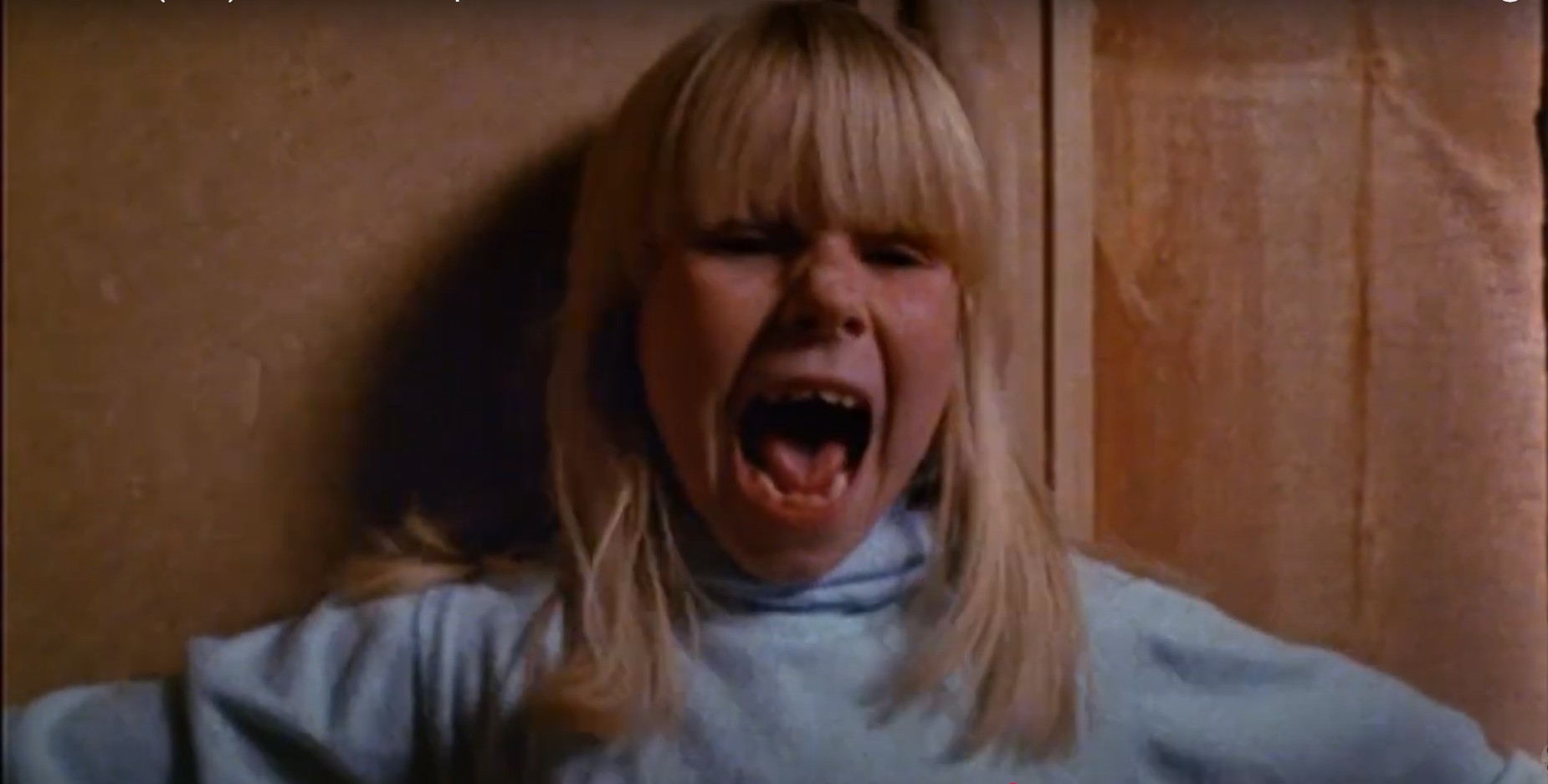
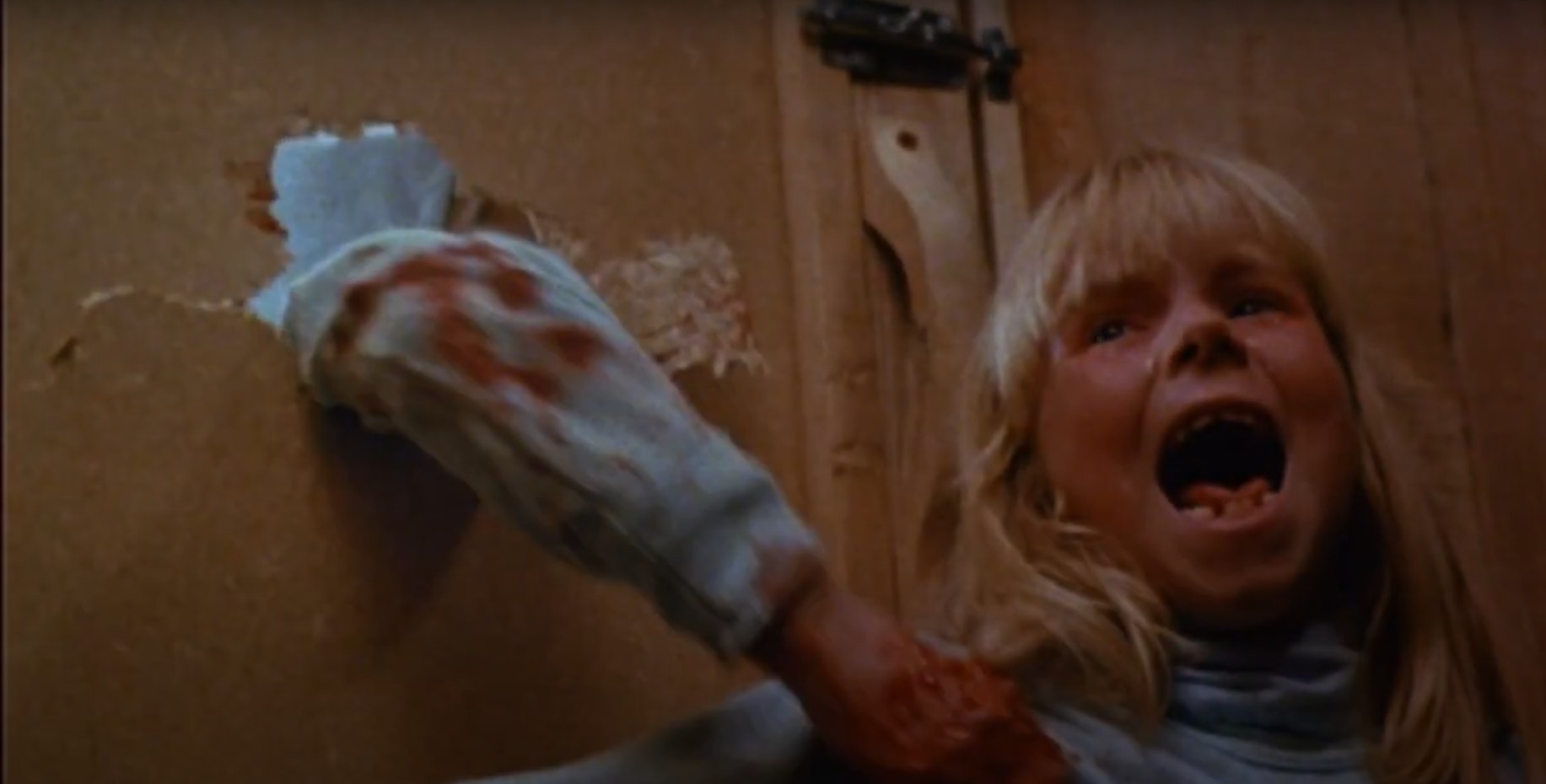
Art Hindle is in the role of Frank Carveth, a father initially skeptical and frustrated with his wife’s supervised treatment and care.  The “Black Christmas” and “Invasion of the Body Snatchers” actor Hindle plays the role of a hinged investigative husband-parent involved into something far more unbelievable than initially imagined.  Next to his on screen dazed and mentally tarnished wife by Samantha Eggar, of “The Exterminator” and “Demonoid,” Hindle enacts normal responses that carry over into extreme situations when those around him – his mother-in-law (Nuala Fitzgerald, “Obsession”), his father-in-law (Henry Beckman, “Side Roads”), and his daughter’s teacher (Susan Hogan, “Phobia”) who might have had a little something-something with while on the rocks with the misses – dies a violent death at the hands of kid-sized mutants that resemble, partially, his own daughter Candace (Cindy Hinds, “The Dead Zone”).  As Nola Carveth, Eggars is only present in a few scenes alongside Dr. Raglan, played by the formidable British actor Oliver Reed (“Paranoiac,” “Gladiator”), as a staring into space, emotionally compromised woman struggling to cope with her past that makes her angry and upset and, in turn, makes her inexplicably conjure do-bidders in the birthing means of advanced evolution or in a parallelism to eusocial insects, like bees or ants.  Reed is the monkey in the middle of all of this between fending off Frank Carveth who challenges the results of his unorthodox psychological methods while also using those methods to unearth the root cause of Nola Carveth’s strange and unusual behavior and, eventual, psychic abilities.  Reeds delivers his typical stoic indifference which makes him ideal for a confident character of the scientific community eager for results rather than feeding his motivations with emotional fodder by empathizing with Carveth’s concerns.  Gary McKeehan (“Rabid”) and Robert A. Silverman (“Naked Lunch”) costar.

In his 50-year plus career, David Cronenberg has evolved in style, substance, and story that dip into more of alternate universes and deliver new ways to blend the future into an organic composite with commercial and social sub context.  While technology and personal and professional growth have developed the director into what he has accomplished and known for today, especially on the verge of his latest release with the living and dead connection theme in “The Shrouds,”  the core of what David Cronenberg does best and still does today has an etiology leading back to his earlier work and “The Brood” is definitely an archetype of his niche.  Cronenberg works the narrative up to his reveal of body horror, and “The Brood” is dangerously on the edge of being atypical, subjecting audiences to more of a buildup in the story and the delimitation of character  disclosure without a steady course of the maladjusted, mutated or modified human body as the villain or the escape, only for that theme to be quasi hinted and then unveiled at the end in a shocking reveal.  “The Brood” plays more of the slasher tones, using the children, dwarfs, or however you want to describe the little, mutant minions to be unknown villain tropes, even when one is laid up on a morgue slab for examination of its biology, or lack thereof.  Cronenberg’s directed ambiguity tees up one of the best endings of his career and, perhaps, even horror cinema as “The Brood” is queen sized stomach-churner, literally.

David Cronenberg’s “The Brood” arrives in 4K on a Ultra HD Blu-ray from UK boutique label Second Sight Films.  The BD100 is HEVC encoded with a 4K resolution or a pixel count of 2160 with Dolby Vision HDR10 and presented in a widescreen 1.85:1 aspect ratio.  On the back cover, the 4K restoration is approved by David Cronenberg.  There’s definitively a more positive treatment of the restored transfer that brightens with a slightly tweaked color grading compared to other DVD or Blu-ray releases, improving delineation as well as rectifying intended details to burst through what’s been long frustrating by a darkened wall of low-resolution definition.  Retaining and sustaining cinema coarse grain, the picture looks and feels incredibly natural without the presence of compromising touchups and smoothing overs that do more harm than good in the plastic-like approach to restoration.  The UHD reinforces the coloring with vibrant richness and range, boosting the once little Canadian film that could into an expensive-appearing optical overhaul that puts to shame previously shelved videos.  Audio fidelity is too retained with a LPCM 1.0 mono that although funnels through a single output is more than an adequate mix all in thanks to the competent sound engineering of Peter Burgess and team to amalgamate recorded sound and post-production ADR into a brawny singular unit that meshes nicely.  Dialogue foots the bill as a clean and clear presentation, the ambient sound design renders distinctly over without ambiguity, and longtime David Cronenberg collaborator and friend Howard Shore conducts an orchestra score that breaks through and keeps the course with an unforgettable amount of tension build.  English subtitles are available.  Special features are aplenty with a new audio commentary by film critics and historians Martyn Conterio and Kat Ellinger, a second commentary with film academic William Beard, interviews with actors Art Hindle and Cindy Hinds moderated by Fangoria’s editor Chris Alexander Meet the Carveths, an interview with executive producer Pierre David Producing the Brood, interview with cinematographer Mark Irwin The Look of Rage, interview with composer Howard Shore Scoring the Brood, an interview with actor Robert A Silverman Character for Cronenberg, a new video essay by film journalist Leigh Singer Anger Management: Cronenberg’s Brood and Shapes of Cinematic Rage, and an archived David Cronenberg interview The Early Years.  The standard Second Sight release comes in the traditional 4K UHD black Amaray case with new unnamed, unsigned illustrated cover art.  The UK certified 18 film is presented region free in this release and has a runtime of 92 minutes. 

Last Rites:  Cronenberg’s play on the word Brood is next level genius with litter rage as a result of mental health and a broken home.  The director’s filmic roots have proved time-and-time again his mastery of moviemaking as his body horror and thought-inducing stories, intermixed with social commentary, are complex visual and narrative devices braised an organic edge. 

“The Brood” Available Now from Second Sight!

EVIL Wants You Tour Your Own Personal Hell! “Trapped Ashes” reviewed! (4K UHD and Blu-ray / Deaf Crocodile)

4K and Blu-ray “Trapped Ashes” from Deaf Crocodile. Available Here!

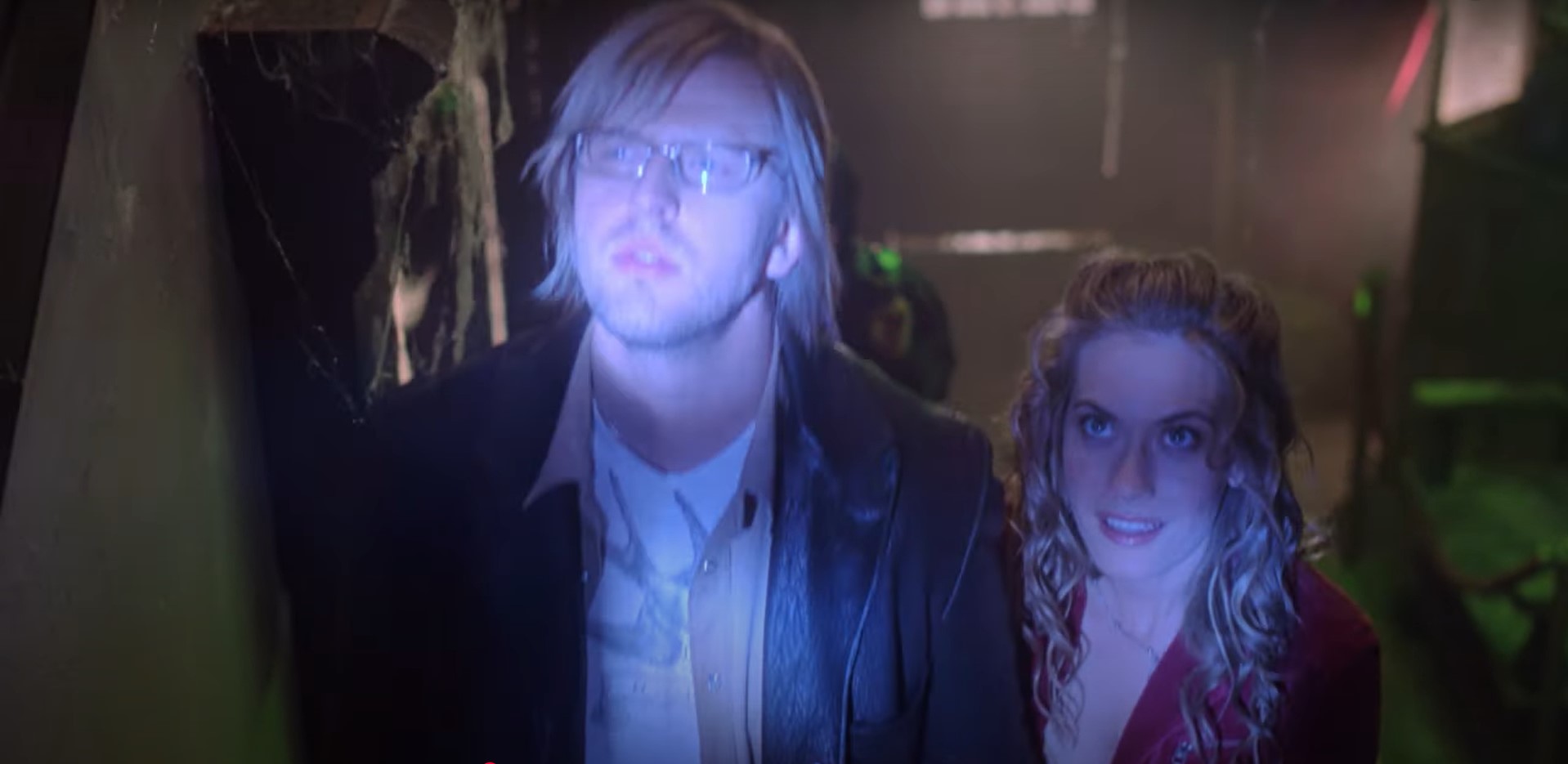
The VIP package for a historical studio backlot tour gives seven strangers a behind-the-scenes look at how movies were made and the background behind them.   When their cart pulls up to one of the more infamous movie houses for Desmond Hacker’s fright flick Hysteria, the tour group are eager to explore what’s typically off limits for normal, non-VIP tour attractions.  Once inside the backlot house, much of the Hacker’s funhouse tricks and odd designs are although covered in cobwebs are still very functionally practical as the group separates and goes room-by-room to peruse a movie house.  When they all gather in what looks to be the commune dining area, they find themselves unable to locate the way out no matter which unlocked door they choose, which circles them back.  The tour guide mentions Hacker’s movie had similar parallels and that the only way to free themselves would be to tell their own personal horror story.  With nowhere to go and nothing to lose, the stories begin their descent into terror. 

For someone who doesn’t go out of their way to watch horror anthologies, I’ve been on a kick lately with a decent string of short film compilation feature, starting with the latest entry from the popular “V/H/S” franchise, “V/H/S/Beyond.”  Next up takes us back to 2006 with “Trapped Ashes,” a campy horror anthology that not only brought together legendary genre directors, such as “Friday the 13th’s” Sean S. Cunningham, “Gremlins’s” Joe Dante, “The Matrix” visual effects arts John Gaeta, “Silent Night, Deadly Night 3:  Better Watch Out’s” Monte Hellman, and the late director of “Altered States,” Ken Russell, but also brings together aged, yet still legendary, familiar faced actors that have since past that short time between 2006 and 2025   Dennis Bartok wrote the anthology piece and is his brainchild, producing the film.

Those aforesaid actors have a combined nearly centuries (plural!) of experience with careers spanning an average of 50 years each.  Henry Gibson (“The ‘burbs”), John Saxon (“A Nightmare on Elm Street”), and Dick Miller (“Gremlins”) all together in one film.  Granted, Dick Miller’s cameo was so short that all three were only together for a brief scene but the trio alone should bring in genre fans to witness Henry Gibson in a persona he does best, a round faced under stark white hair and with puppy dog eyes that draws one closer to his innocence only to have the rug snatched right from under you when he turns sinisterly dark as the seemingly harmless tour guide.  Saxon also plays true to his conventional character archetype as a wise-cracking tough guy too cool for school; this time, he plays a screenwriter haunted by his own betrayal toward his best friend while being infatuated with a bewitching beautiful woman.  Unlike most horror anthologies, “Trapped Ashes’” individual tales contain mostly the same cast as the wraparound with Saxon, Jayce Bartok (“Founder’s Day”), Lara Harris (“The Dogfighters”), Rachel Veltri (“Pray for Morning”), Michèle-Barbara Pelletier (“Brainscan”), and Scott Lowell as the tour guests with personal hell to tell.  The heterogeneous group convey their supernatural-laced anecdotes that mingle inside the context of their being or life whether body image, marriage, friendships, and childhood, subjective intimacies that shape their excruciating experiences that, if audiences see them on screen for the first time, wouldn’t be clear how deeply burdened or troubled they are at first glance.  Once the story is told, moods and personalities shift, or perhaps seemingly normal habits are made clearer, and this is made possible by the eclectic bunch of actors to carve away their characters’ exterior shells to see who they really portray.  Ryo Ishibashi (“Audition”), Yoshinori Hiruma, Mina E. Mina (“Eastern Promises”), Winston Rekert (“Eternal Evil”), Ken Russell, Tahmoh Penikett (“Trick r’ Treat”), Tygh Runyan (“Disturbing Behavior”), Amelia Cooke (“Species III”), Luke Macfarlane, Deanna Milligan, and Matreya Fedor (“Slither”).

Riffling through the obvious camp “Trapped Ashes” touts very proudly, there are nuggets surrounding the unsavory themes.  Body dysphoria within “The Girl with Golden Breasts” is one of these topics, where an actress feels compelled to enhance her bosom for better, younger roles, and that speaks the relevance ill of the movie industry’s perverse tidings of late as actors and actresses continue to fill, inject, scar, and manipulate themselves into being their unnatural self to satisfy producers, execs, and audience likes and expectations when, in reality, hurts nothing but themselves.  Dissatisfaction marriage, or perhaps better labeled stagnant marriage, leads into invasive third party to sate long neglect passion and in this case, that third party is an ancient Japanese demon named Seishin (Japanese for Spirit) who lures the wife’s sexual appetite down to the pits of the netherworld.  From there, themes love triangles, obsession, cheating, and dysfunctional family structures formulate a pod of personal pate smeared with victimization, the victims being the storytellers stuck in the Desmond Hacker’s Hysteria backlot house.  “Trapped Ashes” isn’t about being victim, it’s more about playing the victim and those playing may not be victims of their own tales at all that adds a morsel of supernaturality to the recipe that changed the course of the idiosyncratic anecdotes that are close to their emotions and mental well-beings as well as proximally physically hazardous. 

Our first time covering the Dennis Bartok and Craig Rogers founded Deaf Crocodile release and it doesn’t disappointment with a sleek new 2-Disc 4K UHD and Blu-ray of “Trapped Ashes,” scanned and restored in 4K for its Blu-ray debut.  Presented in a widescreen 1.85:1 aspect ratio, the Deaf Crocodile UHD is HVEC encoded, 2160p Dolby Vision, BD66 and the Blu-ray is AVC encoded, 1080p high definition, BD50.  For an early 2000 production, “Trapped Ashes” doesn’t have the digital veneer of early 2000s film besides some visual effects work of the image manipulation drooping effect.  The extra pixels of UHD really brighten and elevate the image to today’s standards to surface the most inconspicuous details lost in standard definition.  Color saturation and skin tones appear natural and organic with no signs of compression issues or imbedded problems with the digital equipment.  Depth has really opened up in areas like the funhouse illusions of the Hysteria house in the wraparound segment and or in “Twin” when reality of the situation is made clear to put the explanation in one single medium-to-medium closeup frame.  Blu-ray copy mimics a lot same UHD accolades with a less fine tune edge around the background.  The English DTS-HD 5.1 surround sound is the only audio option available on both formats.  More than ample, the lossless provides a deepening immersion the deeper you go into stories with balanced side and back channels complimented by an even-keeled LFE to register the bass near the front while whispery events hover around a surrounding backside, such as with Cunningham’s “Jibaku’s” drawing-in hallucination moment of a Japanese painting that instills reverberating echoes and Shepherd tones.  English SDH subtitles are available.  Bonus features include threw new interviews – Dennis Bartok moderates a feature-length, online platform interview with director John Gaeta, cast members Jayce Bartok, Scott Lowell, and Lisi Tribble, producers Yuki Yoshikawa and Yushifumi Hosoya, and cinematographer Zoran Popvic, a second feature-length interview with cast members Tahmoh Penikett and Tygh Runyan and production designer Robb Wilson King, and the last approx. 40-minute interview is with producers Mike Frislev of Nomadic Pictures.  Extras do not stop there with a director’s cut of Monte Hellman’s “Stanley’s Girlfriend,” the original full-length cut of Ken Russell’s “The Girl with the Golden Breasts,” and a 5-part making-of with cast and crew archive interviews, a new visual essay Hollywood Parasite:  Hysteria in Trapped Ashes by journalist and physical media expert Ryan Verrill and film professor Dr. Will Dodson.  This is the so-called standard release compared to its Deluxe Limited Edition companion release, but this release is also pretty deluxe physically.  There’s no limited O-slipcover but the unique, almost 70’s-eseque cover design is appealing yet simple with a reverse side depicting an image of the wrapround characters inside the Hysteria house dining room or commune area.  The UHD and Blu-ray overlap each other in their differentiated locking mechanism on the ride of the clear Amaray case while the left insert portion holds a Deaf Crocodile QR code for access of the transcribed bonus content.  This release has the rated R cut with a runtime of 104 minutes and is region encoded A playback only.

Last Rites: Anthologies can be the antithesis of horror – building and dropping tension, an innate broken narrative, different stylistic choices that disunify the entire film, etc., but if campy enough, if not taken too seriously, if cast John Saxon, Henry Gibson, and Dick Miller, “Trapped Ashes” can find a home in the genre and in our collections with a new and extra-loaded Deaf Crocodile 4K UHD and Blu-ray set.

4K and Blu-ray “Trapped Ashes” from Deaf Crocodile. Available Here!