Master Chen and his EVIL, Alien Clan Try to Take Over the Powers of the Astral Plane! “Furious” (Visual Vengeance / Blu-ray)

Get “Furious” Now on Blu-ray from Amazon.com!

After the murder of his sister who sought pursuit and protection of the astral plane power, the mourning and grief-stricken Karate instructor Simon is summoned to Master Chan’s space-age dojo where’s he’s tasked to track down four connecting pieces of a necklace artifact that will lead him to his sister’s murderer.  As soon as Simon leaves the building, his friends join his quest only to be confronted by Howard, a martial arts henchman with a throng of skilled fighter to descend upon Simon and killing his friends.  Simon finds himself in constant battle against not only Howard but also other highly skilled sub-bosses with ties to Master Chan in a devious and traitorous plot to obtain the power of the astral plane for himself.  Simon uses his Karate discipline to kick and punch his way through hordes of trained fighters to reach Master Chan to stop him and exact revenge for his sister. 

A martial arts movie with aliens, astral plans, a dragon’s head, evil fire-shooting magicians, and more, “Furious” lives up to the moniker as one punch after another action and completely ambitiously and guerrilla style on a miniscule 30K budget.  Entirely helming “Furious’s’” creative control and securing actors and stuntmen willing to take risks on their own accord and dime are USC film students Tim Everitt (visual effects animator and composite artist who would go on to work on “Deep Blue Sea” and “Red Planet”) and Tom Sartori (a career film editor) looking to break into the film industry with their own rapscallion production of a marketable chopsocky genre film at the tail end of its string of success coming out of the 1970s and into the early 1980s when horror began it’s rise.  Everitt and Sartori produced the all-American made martial arts production with funding from a motel entrepreneur.

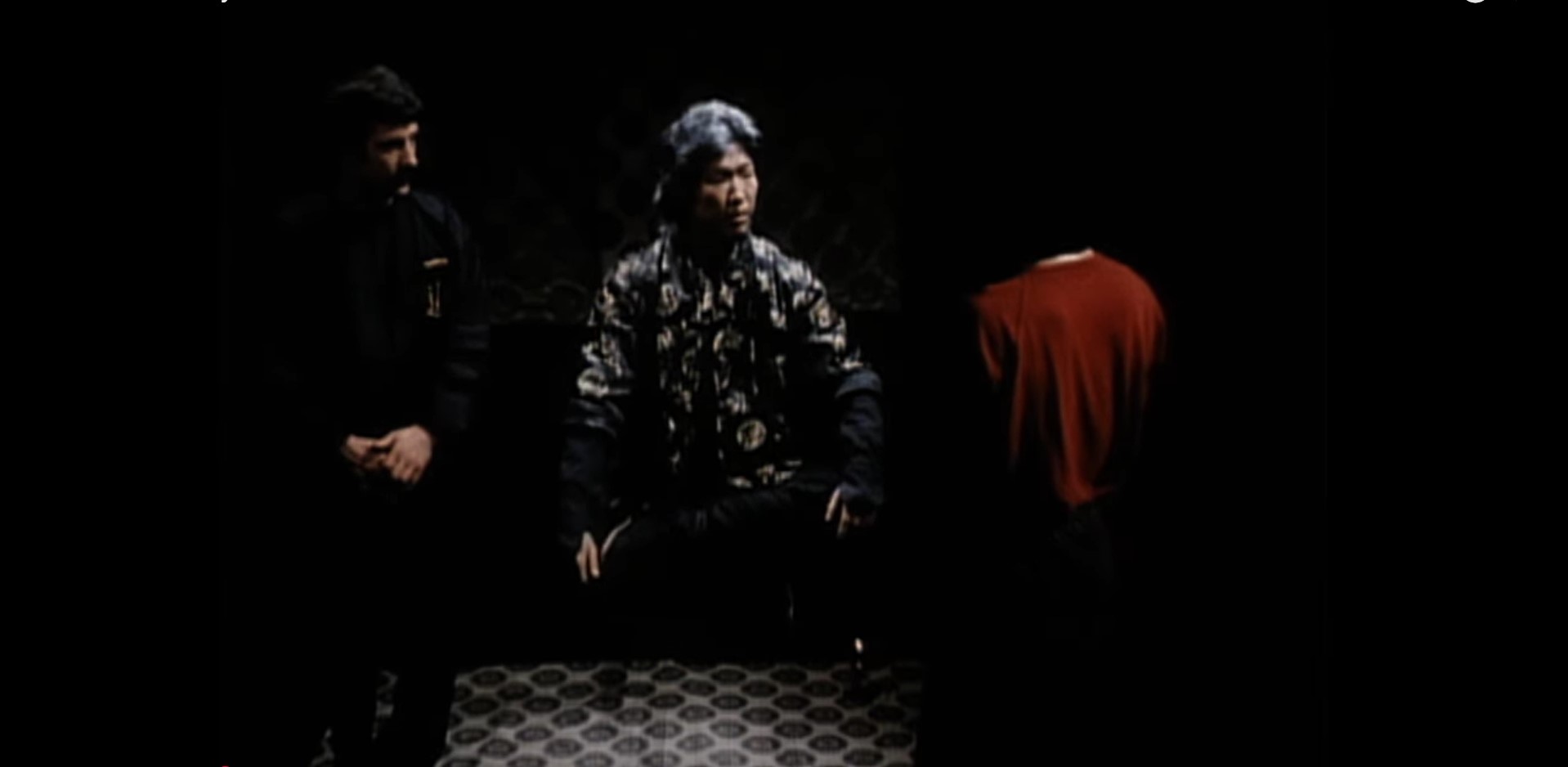
At the center of “Furious” are two Korean-American brothers, Simon and Phillip Rhee, experts in Karate and dojo sensei who, like Everitt and Sartori, were looking break into the business.  The California-born Rhee brothers play the protagonist and antagonist roles with Simon playing the namesake hero thrust into doing evil’s biding while avenging his sister’s death and Phillip donning Master Chen’s white hair and manically, ruthless plot to exploit not only Simon to obtain astral plane summoning necklace pieces but also his henchmen who carry the pieces that must hold the essence of death.  Virtuosos in karate, the Rhee brothers show and pull off incredible difficult moves done practically, especially in the early 1980s without the help of high-flying wires and only a little help with some camera angle movie magic.  The sparring is fast and realistic without being pull-punching obviousness.  All of the sound was done in post, so the Rhee’s real voices are not used to either replicate the martial arts jagged voice synchronicity or sound design was not in the budget.  Likely, a little of both.  The lower-level bosses are a medley bunch and have a range of talents from a staff wielding wilderness man (Bob Folkard), to a tiger style soul fighter (Howard Jackson, “The Delta Force”), to a crazed wizard (Mika Elkan) with flaming projectiles Simon has deal with, one-on-one, in order to reach the pyramidal top, Master Chen.  “Furious” is purely an action film, casting no love interest for Simon resulting in no emotional or romantical arch.  The former is emphasized more intently by Simon’s lack of expressiveness for revenge; there’s a sliver of poignant energy when Simon has visions of his dead friends’ severed heads served to him on a food platter that could warrant retribution attributions.  Jon Dane, John Potter, and Joyce Tilley who are quicky established as character friends to Simon and are equally as quickly dispatched to place Simon in a world of loneliness against an aliens and evil karate master alliance for astral plane domination.
From the depths of Tubi comes a curation for the ages release of “Furious” for the first time ever having a proper package that’s not related to pornography, as was the first and only VHS issuance by VCII, a well-known adult film distributor at the time who released “Debbie Does Dallas.”  “Furious” is an odd, unpredictable, mashup of throwing darts to see what sticks and in that volatility, anticipation of what’s to come next is considerably high, especially when a shoestring budget production surprisingly opens with incredible helicopter shots tracking a foot chase sequence.  From there, “Furious’ keeps astonishment alive with high-level increments of bizarre alien in human skin behavior, punitive human to animal transformations, talking pigs, astral plane battles, Superman flying, and Devo band mania coupled with extensive and coherent editing to flesh out a feature on the front and back ends.  Granted, the plot’s very puzzling and motives are dubious at best to why Master Chen would task a competent fighter like Simon to track down pieces of a unifying necklace when Chen’s own men possess all of them and could easily have killed them himself for the death essence.  There’s also the alien aspect that goes by the wayside in a lack of explanation or exposition by jumping into assumption just by weird behaviors and flashy, ultra-modern buildings to serve as extraterrestrial evidence.  Even with that ambiguity, seeing Simon Rhee perform a triple-hit kick amongst a slew of other highly impressive stunts and special effects relative to the budget has “Furious” become a cult fan favorite. 

Visual Vengeance curates another title from out of the shadows and into our Blu-ray players with “Furious,” encoded with AVC, presented in a high-definition 1080p of the original fullscreen aspect ratio 1.33:1, on a BD50.  Sourced from the original tape elements, which I’m assuming was the original VHS release a few years later as the film was shot on an Arriflex camera that used film stock, the Blu-ray contains a new, director-approved SD master print.  Cleaned up to get some color saturation into the anemic picture, the image doesn’t look as washed as the monochromic qualities of VHS and this is a vast improvement in picture quality as well with some better delineation around objects.  There’s quite a bit of aliasing and ghosting that leaves object trails and rough edging but not enough to warrant visual concern for texture properties, such as the pig stubble or the decapitated heads on a pater that show coarseness where it matters.  Print damage, such as virtual scratches and some rough editing room splices and re-tapings, are present but not profound.  All of this is covered in the technical forewarning, regularly at the beginning of ever Visual Vengeance film so the expectation is set.  The English language LPCM stereo is all postproduction additions with ADR and foley artistry.  The first instances of dialogue don’t come up in the mix until the 13-minute mark, leaving much of the opening left to Foley work to build kinetic and atmospheric sound.  With any early postproduction work, three will always be space in between the synchrony and that can be said here but on slightly jagged edge which says something positive about Everitt and Sartori’s handling of the audio track.  Optional English subtitles are available.  Obscurity doesn’t mean less supplement goodies either and Visual Vengeance has proved that over time again and again with their amazing stockpile of exclusive and archived special features.  New interviews with directors Tom Sartori, High Kicking in Hollywood, and Tim Everitt, The Kung Fu Kid begin the exclusive content with length editing discussions from the directors about their time before, during, and after “Furious.”  Filmmaker and podcaster Justin Decloux provides a slew of material, including a feature length commentary, cohosted with Peter Kuplowsky of Toronto International Film Festival.  Decloux does a pair of video essays – North American No-Budget Martial Arts Cinema Primer and Rhee Brothers career overview. The buck doesn’t stop there with an archive commentary with co-director Tim Everitt, an archive podcast with Everitt circa 2013, Super 8 behind-the-scenes footage of “Furious,” Scorched Earth Policy 1987 EP with full six tracks, Cinema Face live in concert, Tom Sartori’s 80’s music video reel and Super 8 short films, original film trailers, and Visual Vengeance trailers. That’s not all! New slipcover artwork brings together an illustrated compilation of what to expect with the same art on the inside Amaray case. The cover art is reversible, depicting the original VHS cover art that’s not as charismatic, or good. Insert section houses a folded mini-poster reproduction of the original one sheet, a double-sided acknowledgement advert with alternate art, Visual Vengeance’s retro VHS sticker sheet, and a ninja star keychain accessory! The 17th Visual Vengeance title comes region free, has a runtime of 73 minutes, and is unrated.

Last Rites: Anomalously action-packed with a fantasy element, “Furious” is a one-of-a-kind, indie martial arts production that has everything, even the kitchen sink, thrown at with a journeyman tale of alien butt-kicking, astral plane dogfighting, and anthropomorphic black arts.

Get “Furious” Now on Blu-ray from Amazon.com!

100-Year Return Brings a Plague of Flesh-Eating EVIL to a Small Town! “Messiah of Evil” reviewed! (Radiance Films / Blu-ray)

The “Messiah of Evil” has Come to Blu-ray Home Video!

Arletty travels up the California coast to a small beach town known as Point Dune.  The reason for her visit is to find her artisan father after a series of bizarre letters came to an abrupt stop.  She arrives at his mural-graffitied home to discover it empty and decides to stay a few days to ask around town about his whereabouts and to be present for his return home.  Her inquiries at art gallery shopkeepers lead to a motel where Thom, a wealthy collector of urban legends and spooky stories, and his two travelling female companions, Laura and Toni, have also sought out Artletty’s father for his bizarre experiences.  As the days pass, Point Dune slowly becomes a literal ghost town that forces Thom and his companions to stay with Arletty and, together, they experience the horrible truth of what’s really happening to the  residents of the west coast community who eagerly await the arrival of the dark stranger. 

Once married filmmakers Willard Huyck and Gloria Katz are the creative minds behind the stories of “Howard the Duck” and “Indiana Jones and the Temple of Doom.”  They also wrote “American Graffiti” in what was to become their link toward working on Steven Spielberg’s Indiana Jones sequel since both “American Graffiti” and “The Temple of Doon” were both produced by the father of “Star Wars,” George Lucas.  Yet, in the midst of “American Graffiti,” the couple also penned and Huyck came into the entrance of directing with the 1974 horror-thriller “Messiah of Evil” that pulled from various themes of mindless consumerism and the rising fears of dangerous and deadly cults in the U.S.  Also known by a variety of titles around the world, including “Dead People,” “Night of the Danmed,” “Messiah of the Evil Dead,” “Revenge of the Screaming Dead,” and “Blood Busters” to name a few, the Californian coast shot film is a production of the International Cine Film Corp and V/M Productions with Gatz producing and Alan Riche (“Deep Blue Sea”) serving as executive producer. 

“Messiah of Evil” slinks into the soul leaving behind dread’s unwashed pull against what we know as conventional horror.  In order to accomplish such a fear-induced feat, a cast must envelope themselves fully in world of weird and irregularities that nestle an uneasiness stemmed not solely from their performances but from how they react to the eccentric environment, to the crumbling small town society, and to ghastly behaviors of normal-looking people.  Like most daughters, Arletty has concerns for her father and seeks to understand the truth behind his unhinged letters.  Marianna Hill (“Schizoid,” “The Baby”) plays the quietly curious at a cat daughter dabbing residents with barely an effort in interrogational questioning of her father’s whereabouts.  Hill floats Arletty through stages of a slow descent into madness that simmers slowly to a boiling point understanding of what’s taking shape around her.  The same happens to Thom, played by Richard Greer (“The Curious Female”), who initially is a fraction of the nonconformity surrounding Point Dune with his obsession toward collecting strange stories and his polyamorous collection of women.  Of character, Greer is resoundingly in control without being dominating with Thom who has wealth and magnetisms but isn’t someone to be beholden to forever as we see with Laura (Anita Ford, “The Big Bird Cage”) who deserts him for his open-door intimacy policy in his pursuit of Arletty and with the childish Toni (Joy Bang, “Night of the Cobra Woman”) in her infinitely naïve opinions surrounding the dull Point Dune.  One actor I wish we had more of but is utilized perfectly as Arletty’s father and a harbinger of what’s coming is Royal Dano (“Ghoulies II,” “Spaced Invaders”) in a non-humorous nor drunken idiot role that seemed to typecast him later in his career.  Dano’s short but sweetly terrifying stretch divulges a man torn between his previous life and a new terror that now occupies him as he interacts with Marianna Hill as concerned and contaminated father holding it all within toward his frightened, confused daughter.  “Messiah of Evil’s” cast rounds out with Elisha Cook Jr (“Rosemary’s Baby”), Bennie Robinson, and Charles Dierkop (“Grotesque”). 

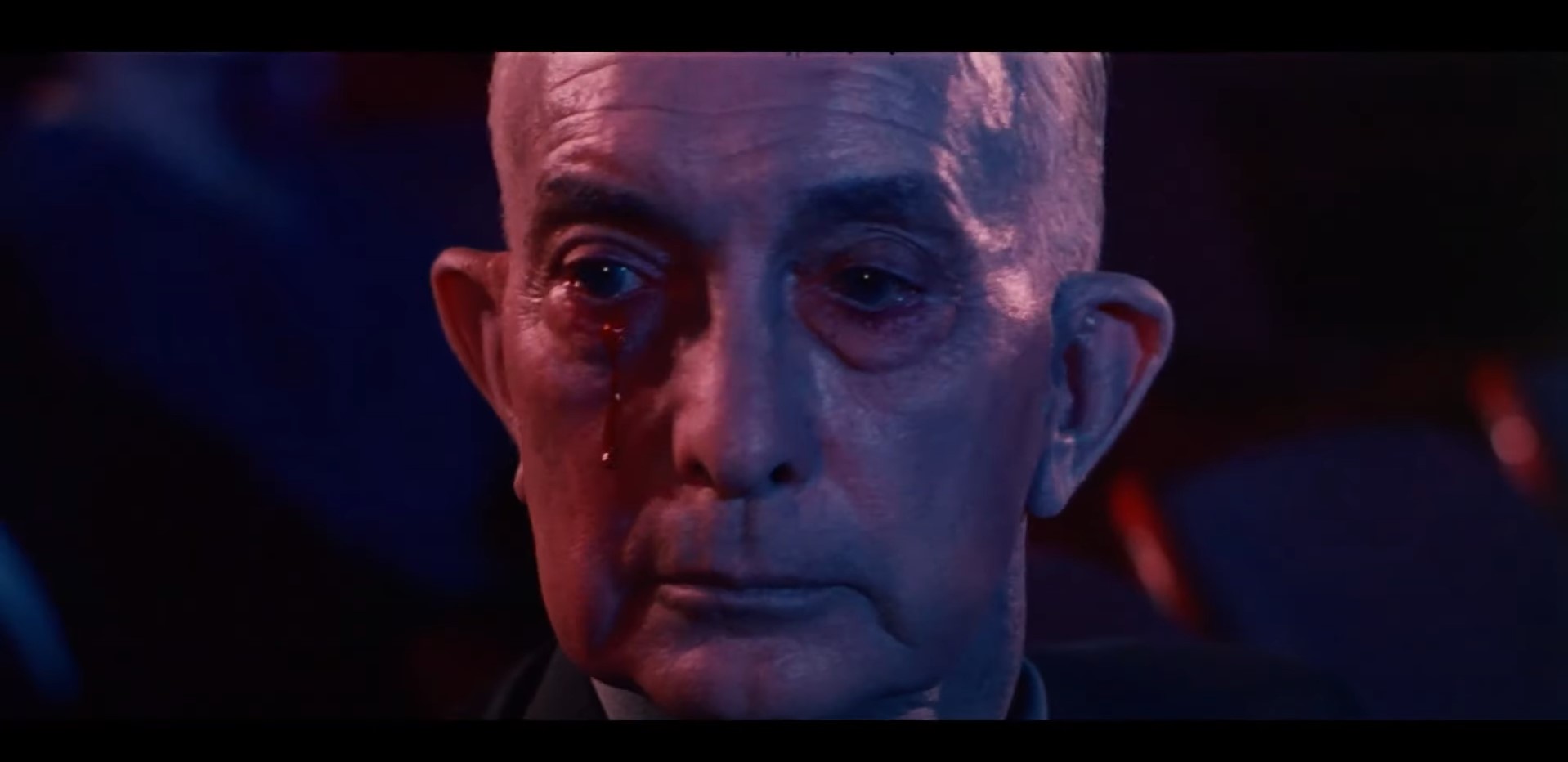
Huyck directs with colorful and verismo synergism that takes the positives of what should be life’s routine pleasures and turns them against us as fantastical and harrowin deadly elements of false securities.  The rolling crashes of Point Dune’s waves takes on a constant cacophony of sinister foreshadowing, a bright and welcoming supermarket becomes a vacant trap in every aisle, the entertaining movie theater darkens with blood on the screen, and an artist’s home, full realistic murals and colors, is an oppressive feast of lifeless eyes.  Point Dune becomes a dead town, literally, as the inhabitants succumb to dark forces from beyond their years, turning primeval in their contemporary three-piece suits and evening blouses.  Huyck and Gatz story pulls inspiration from U.S. history and folklore to mark the 100-year return of spreading evil amongst the land, an evil that resorts to cannibalism by either spellbinding archfiend, an internal infection, or the rise of the undead and not just any mindless, shuffling, flesh-eating zombie but a transmogrified plotter able to move fast and think as a single unit with the touched by evil masse with telltale signs of a single rivel of blood seeping from out of their eye and their insatiable need to consume other people. ”Messiah of Evil” is not overtly graphic like George A. Romero zombies or like the unbridled number of zombie films to follow inspired by Romero’s zombie game-changing wake for the last 60 plus years, separating the flesh-eaters from Romero’s gut-gnashing, pale faced, and slow-walking undead and Huyck and Gatz’s transmitted pestilent receiving horde running fast in their best church shoes with vastly different traits. Huyck and Gatz dip into more eldritch means with the return of a paganistic dark stranger in a pared down explanation without explicitly being definitive who or what the dark stranger (a demon?Antichrist?) is that is driving foreboding signs to a doomsday-disseminating end. ”Messiah of Evil” thrives as the mysterious and strange fulcrum of the beginning of the end told through the point of view of young woman left to tell the world of what’s to come only to be about as believed as much as a man wearing a polka-dotted tutu who has delusions of unicorns dancing the waltz with garden gnomes in his front yard. 

United Kingdom distributor Radiance Films releases a new restoration transfer of “Messiah of Evil” also on their U.S. line. The AVC encoded, 1080p high-definition, BD50 presents a 4K scan of the best-known surviving 35mm print from the Academy Film Archive in a widescreen 2.35:1 aspect ratio. As noted in the release’s inserted booklet, the restoration processes used was the Digital Vision’s Phoenix Finish and DaVinci Resolve was used for color correction, under the supervision of Sebastian del Castillo at the Heavenly Movie Corporation. Audio was also restored with the Izotope RXB. For a surviving print, the original elements look pretty darn good with barely any celluloid hiccup. No vinegar syndrome, not significant tearing, or exposure to name a few issues of possibility. There are a few minor blemishes and missing or damaged frames that seem to provide an unwanted cut but most of “Messiah of Evil’s” film problems stem mostly behind the camera with a rework of the story during the stop-and-go production and conflicts in marketing the film, hence the various title aliases of the film from around the globe. Other detail low points are when the film is bathed in blue and purple gels and tint for to set an apprehensive wander and wonder while retaining more natural grading in its majority throughout. The resorted audio is a lossless English LPCM mono mix. Really focusing on the electronic score of Phillan Bishop (“The Severed Arm”), the low-frequency score sets a perpetual and durable tone of dread out of place in a prosaic small town, much like the Arletty’s father’s work-of-art home that sticks out amongst the mediocrity. In design, dialogue remains robust yet delicate when the scene calls for it, such as Elisha Cook Jr. story of how he was born in what is essentially him, as a vagrant paid for his story, making the only noise in the room. Dialogue in these moments is greatly discernible with negligible electronic interference. Depth layers the permeating isolation of a town gone mad in unison with the range stretching from the distressing design of rolling, crashing, oppressive waves to the scuffles of zombies’ consuls and heels scuffing against asphalt, pavement, and shattering through panes of glass. Radiance provides English subtitles with their release. Bonus features include a new audio commentary by film historian and horror archetype authors Kim Newman and Stephen Thrower, an archived interview with director Willard Huyck, and a new, feature-length documentary showcasing “Messiah of Evil’s” background, themes, production, and influences by various horror scholars, including Kat Ellinger who also voiceovers a visual essay on American Gothic and Female Hysteria, which if I’m being honest, parallelly treads on similarities with Ellinger’s Motherhood & Madness: Mia Farrow and the Female Gothic on Imprint’s “The Haunting of Julia.” Radiance has in the short time poured their heart and soul into their releases and “Messiah of Evil” is no different with a sleek cladded and clear Amara Blu-ray case that’s subtle in showing less but feeling more on the cover art, opposite of the reverse side that houses a classical black and white compositional illustration of characters. Inside the 28th release for the label is a 23-page color booklet insert with the appraisal writings of Bill Ackerman, transfer notes, release credits, and acknowledgements. The disc is pressed red, much like the red moon in the film, with a stark black title. The Radiance release is unrated, region free, and has a runtime of 90 minutes. ”Messiah of Evil” uses cult fears, satanic panic, and the loss of ordinary life to penetrate the spirit by way of slowly eating at it. The crawling, creeping dread meanders, much like Artletty who is seemingly held in place at Point Dune, and we’re glued to the engrossing rate of the terror to come orchestrated by the captivations of a once married couple on a fast track toward success.

The “Messiah of Evil” has Come to Blu-ray Home Video!

Pandemic EVIL Is Just Not For Dry Land Only! “Virus Shark” reviewed! (SRS Cinema / DVD)


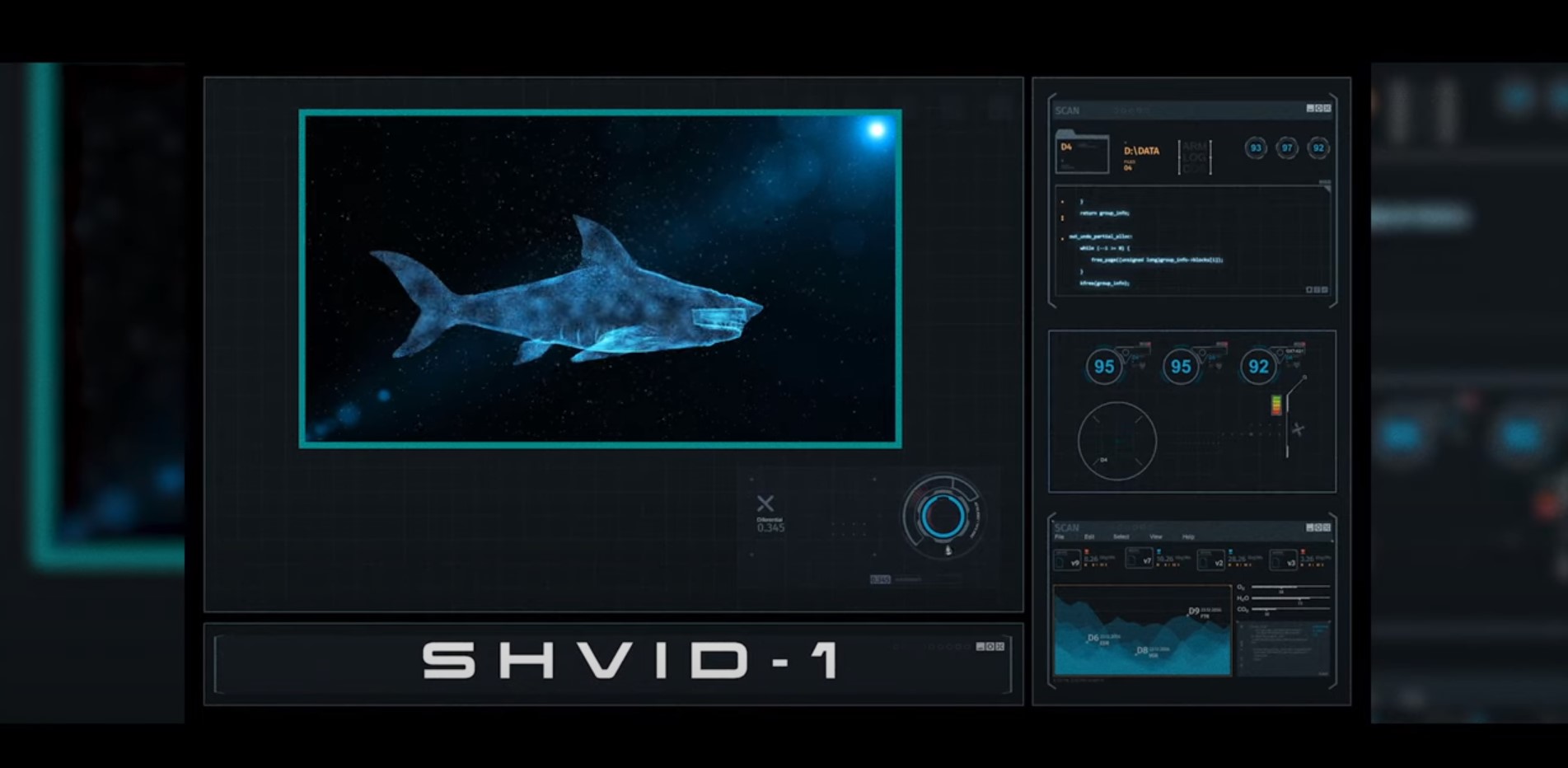
Deep at the bottom floor of the ocean is CYGNIS, a research laboratory retrofitted to be a race against the clock in finding a cure for a world devasting virus called SHVID-1.  Spread by infected oceanic sharks, a handful of shark attacks on unheeding beachgoers turns the world’s populace into mutated marauders and blood thirsty, zombified killers.  Running quickly out of time, the handful of scientists, a maintenance chief, and a security guard find themselves under pressure, literally, as the 30-year-old antiquated CYGNIS station is beginning to show signs of buckling under the ocean’s immense weight.  Factor in virus-mad sharks chomping at the station’s life sustaining systems and a betrayal by the project leader looking for cure glory in greed, a perfect storm brews 1000 leagues down overshadowing the severe global pandemic that has swallowed the world whole.  Survivors must surface topside with the cure before all hope comes crumbling down on top of them.

Okay!  I’m pretty sure director Mark Polonia parallels or exceeds my own unhealthy obsession of the sharksploitation genre with his own series of outrageous D-flicks dedicated to the gross profit of the monstrous shark rampage stigma seen in the Pennsylvania born filmmaker’s previous works in “Sharkenstein,” “Land Shark,” “Amityville Island,” “Shark Encounters of the Third Kind,” and the soon-to-be-released, the vampire and shark alliance, “Sharkula.”    Polonia’s latest, “Virus Shark,” is written by Aaron Drake and echoes the pro-Trump public ideology of willful ignorance in snubbing governmental official warnings about staying away from large crowds unmasked during the COVID-19 pandemic.  Polonia throws Megalodon-sized shade at partygoers and right wing conspiracists with SHVID-1, an obvious play on the real virus, and the sun and sand worshippers who venture into the shark infected and infested waters despite the recommended counsels to stay on shore.  Aside from the social commentary lampooning, the rest of “Virus Shark” is in shambles as a super low-end indie production from Polonia Bros. Entertainment and produced by SRS Cinema’s Ron Bonk. 

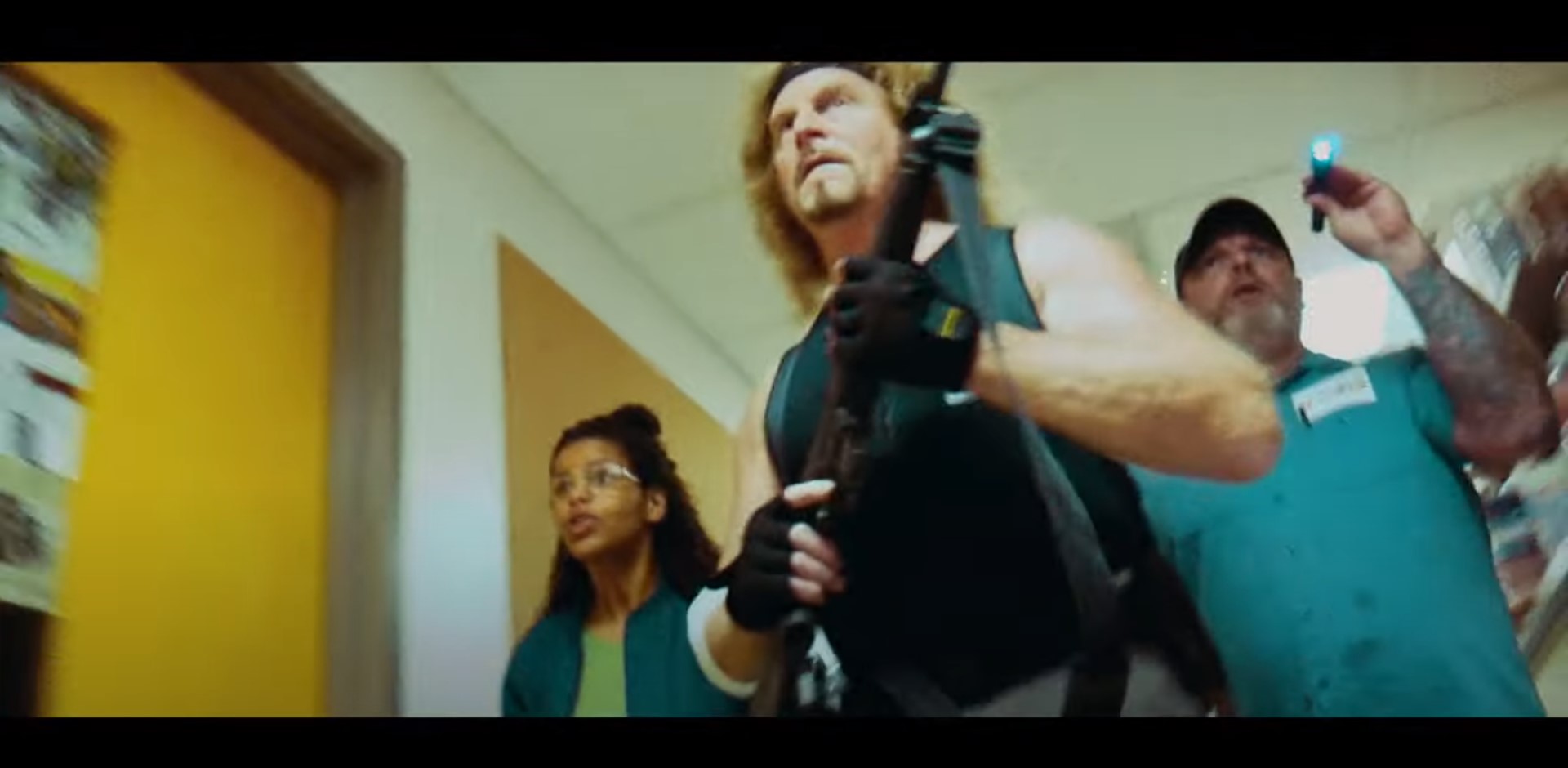
Served up as chum for contagious sharks are a troupe of regular independent staples beginning with lead actress Jamie Morgan entering her second bout with a killer shark after surviving another SRS Cinema gem, “House Shark.”  In the role of marine biologist Kristi Parks, Morgan is not free diving into the vivarium pens and wrangling or bareback riding the maneaters like “Deep Blue Sea’s” Thomas Jane; instead, the actress has a more meek stance as her limiting character transforms into a protective shield over mankind’s last known hope – a cure for the virus.  Fellow scientists Anne Satcher (Natalie Himmelberger, “Shark Encounters of the Third Kind”) and Gregory McLandon (Natalie’s real life husband, Titus Himmelberger, “Sharkenstein”) don the lab coats and spectacles to look the researcher part without actually seemingly doing anything of importance, or anything that makes sense anyway.  The team is rounded out with “Queen Crab” actors Steve Diasparra as the maintenance man Rickter D’Amato, an homage to Joe D’Amato who has helmed a trashy sharksploitaiton film himself with “Deep Blood” (read our recent coverage review here!), and the awesomely 80’s hairdo’d Ken Van Sant the dated commanded-cladded security guard and horn ball, Duke Larson.  Deliveries and any sense of conveyed emotions are a smidge above forced as if reading straight from a cue card.  The off camera stare has to be my favorite gaze into space moments, especially when an aggressive Great White beelines right toward them and the reactions are nothing more than a gaping mouth.  Van Sant wins top prize for at least giving a half-hearted attempt at empathy for a character completing a character arc.  “Virus Shark” fleshes out with Yolie Canales, Noyes J. Lawton, and Sarah Duterte who are also a part of the tight knit celluloid circle of deep-six cinema. 

Speaking of deep six, as in “DeepStar Six,” a semblance toward notable underwater horror films of the deep really do crest through “Virus Shark’s” stagnant flat surface.  Little bits of adulation toward “”DeepStar Six” with the jettisoned escape pod, “Deep Blue Sea” with the shark pool, and “Leviathan” with the topside communication sans Meg Foster sprinkle a blanket of welcoming derivativity amongst a cheaply endeavor.  When I say cheaply, I mean “Virus Shark” scrapes the bottom of the barrel with embarrassingly bad shark hand puppets, interior locations of the underwater sea lab are about as realistic as the innards of your run of the mill High School building, and every single gunshot is the same soundbite stuck on repeat, no matter the gun or the caliber.  I do admire the innovation at times.  An example I would pull would be the two miniaturized pincers matted on top of a live-action still frame used as hydraulic clamps to pickup the rather rigid shark figurine from the “pool.”  You can call it sloppy, but on a pea-sized budget, I call it thinking outside the box.  Much of the story felt underdressed, missing parts pivotal to the impelling actions that either progress cataclysmically or just drop off the face of “Virus Shark’s” malfunctioning sonar.  Under the table deals and sexual innuendos made between project head Dr. McLandon and topside liaison Shannon Muldoon are skimpy at best as well as Kristi Parks’ all for naught endgame to saving the world.  Everything seemed and felt pointless, senseless, and without merit that the “Feeders” and “Splatter Farm” director shouldn’t be totally judged by as we’ve seen much better on much lower budgets from Polonia who he and his late twin brother, John, have been around for decades making movies up until 2008 when John passed away.  Mark Polonia continues to carry the torch but the lack effort has seemingly been replaced with chugging out one scab film after the next to the tune of tone deaf gratification.

Wash your hands, wear your mask, and maintain a social distance of 6-feet from the television when swimming with the “Virus Shark,” that has beached itself onto DVD home video courtesy of SRS Cinema.  The unrated DVD is an AVC encoded single layer DVD-5 and presented in a widescreen, 1.85:1 aspect ratio.  The image quality appears relatively sharp without a hefty loss from compression, especially around the spectrum of low-cost effects that range from rigidly clean to absolutely warped and absurd, but what do you expect from a release that has the cameraman’s reflection visible in the shot and spells region with an extra I – reigion 0 – on the back cover?  Underwater sea lab shots filtered through an oceanic blue hue make due the illusion of a domed research station on the sea floor bed whereas the insides lack a production manager’s personal touch as much of the interior scenes look to be a school with an obvious swimming pool setting and many insipidly sterile hallways and rooms.  Extras on the 74 minute film include a commentary track and SRS trailers with no bonus scenes during or after the rehashed intro credits for the end credits.  The English language 2.0 mono track isn’t the peak of fidelity with the lossy audio compression and inadequate mic placement made apparent by the limited depth and range in  dialogue tracks.  The overlaid narrow foley remains on one level from start to finish finished by stock soundboard snippets.   As far as Sharksploitation goes, “Virus Shark” ranks near the bottom of the food chain.  Of course, there have been far worse killer shark films threshing in the genre pool, but the COVID parodied subaqueous actioner wades underneath the skills of Mark Polonia.

Get Infected by the “Virus Shark” on DVD Home Video!

When EVIL Runs The Show, That’s When the Reality Sets In. “Funhouse” reviewed! (Magnet Releasing / Digital Screener)

Eight C-grade social media celebrities sign a contract for a new reality show, Furcas’s House of Fun.  The reality show streams worldwide on all electronic devices in an exhibition of different and standoffish personalities locked together in apartment-size living quarters.  Contestants will have to face challenges and weekly viewer voting to be the last one standing for a chance to win a 5 million dollars cash prize  Instead of sexy making out sessions, drunken brawls, and contestant melodrama to boost viewer ratings, Furcas’s House of Fun is in actuality a syndicated snuff reality show where a contestant is voted out is a contestant receiving a brutal death in front of the entire world.  Survivors watch behind paned glass as one-by-one their castmates are dispatched in the most gruesome way possible, directed by a screen animated panda bear helmed by a sadist eager for the show to go on.

Ready to have a little fun?  The “Funhouse” is open for what is a variety show of horrors in this 2019 shot, 2021 released reality show of encroaching aggravation and gore from writer-director Jason William Lee.  “The Evil In Us” filmmaker plays his hand at personifying internalized resentful rage for hack, do-nothing, inconsequential to society celebrities by feeding them gladly and enthusiastically to the bloodthirsty wolves.  “Funhouse” isn’t your typical social media or tech horror film as Lee dishes out a thought-provoking disgust covered in a powdery sugar and popcorn veneer that’s surely to please the broad range of horror fans.  The co-ventured Canadian-Swedish story of shallow fame nihilism is shot in the Providence of British Columbia and in Stockholm, home base of Ti Bonny Productions under executive producer Henrik Santesson, in collaboration with Lee and producer Michael Gyorl’s Sandcastle Pictures.

With the surname Skarsgård, acting is in certainly in the blood.  Valter Skarsgård, the youngest son of “Nymphomaniac” and “Deep Blue Sea’s” Stellan Skarsgård’s first marriage and the brother of terrifyingly frighteningly Pennywise actor, Bill Skarsgård (“It”), branches out following his ancestral destiny by headlining as the lovable and misjudged Swede, Kasper Nordin, who leeched fame by being the ex-husband to a renowned singer.  Nearly the spittin’ image of his older brother Bill, Valter brings his name and family looks to the table while showcasing his own talent amongst a motley crew of nationalities.  That’s one of “Funhouse’s” main messages about social media stardom as a plague that has spread to every corner of the world symbolically infecting each contestant from a different country:  Dayleigh Nelson (“Island of the Dolls”) of Britain, Khamisa Wilsher of America, Gigi Saul Guerrero (“Puppet Killer”) of Mexico, Amanda Howells of the Philippines, Mathias Retamal (“The Source of Shadows”) of Chile/Canada,  Karolina Benefield of Poland, and Christopher Gerard of Ireland.  The roles of wannabe celebrities is an ostentatious representation of click bait influencers who will sell essentially their soul and show their skin to be noticed and this turns the clear antagonist villain, a merciless gamester and contract abider with business dealings more vile than from the Devil himself, to be a subtle antihero of sorts as the cast rounds out with Jerome Velinsky’s wickedly sophisticated performance as Nero Alexander that is urbane nihilism at its best. 

Outrageous, fun, and gory – “Funhouse” has all the hallmarks of a 90’s horror on cruise control.  With a bedazzling rudimentary shell of a panda bear avatar animation and blend of practical and digital blood over the simplicity of a small location and indie production, Lee is able to fly through the narrative at whiplash speed and still drop animosity-awarding and empathetic traits to believe in the cast of characters.  In the middle of the chaos of axe splitting heads and being dunked into a barrel of highly corrosive acid, a topical theme of the detrimental social media and influencer stardom to society really positions “Funhouse” on the frontline for inflammatory and anti-social media messages, harping on the noncontributing and unbeneficial role of these money-generating, like-focusing, click baiters in culture and society other than selling to their audiences sex, gossip, and violence.  Speaking of violence, I was pleasantly surprised by the right amount of gore that didn’t shoot for extravagant levels despite some smoothing around the digitally added sinew and guts, keeping a modest amount of realism to the dystopian gameshow construct.  Initially, there are dubious first act moments that quickly shuttle hapless soon-to-be-casualties into the same location, much like in “Saw II” when characters all wake up in the room together and we have no idea who they are, where they come from, and what their backstory is, but as the film progresses we learn more about them and the roles they play in the maniacal puppeteer’s design.  The twist, almost meta-like, ending leaves “Funhouse” on a low note that doesn’t fulfill any void for its existence, but a good chunk of the story is really meaty with a revolving door of plights and a small, yet efficient, compassion outpouring spicket.

Not your traditional participatory surprise-laden and mirror maze attraction, “Funhouse” will still bring old-style thrills with some new blood spills in it’s grand opening release in theaters and on demand on May 28th courtesy of Magnet Releasing. Shawn Seifert (“Dead of Night”) lays out a smorgasbord of cinematography techniques that includes rich, un-matted color filters, isolating characters in darker, dim rooms in making them seem centerstage for their own grand demise, and cultivates stationary, handheld, tracking, and some drone shots for an extremely vibrant and glossy approach and feel for reality television version 2.0. Lee edits the digital reel himself and, honestly, the pacing wanders quickly to the overly rushed section like a quick-spit-it-out story wanting to be finished before it even begins and is compounded with another intrusive quality in the hyperactive back-and-forth of shots that aims to resemble the irksome flight in and out of reality shows that speed up and slow down like a nervous teenager behind the wheel of their parents and continuously presses down on the brake pedal. Stay tuned after credits for a gag bit scene that ties into the main story but promises nothing more. No more being voted off the island or nixed by expert judges, “Funhouse” cleans house with deadly eliminations and a message of the unyielding power granted to many so easily through a rapidly reshaping medium that has become too influential on a braindead scale.

Evil Met With Resistance! “Occupation” review!


A small Australian town experiences a small, yet devastating portion of a world invasion by a hostile alien race during a night of carnival festivities and a rugby football game. A small group of locals band together to form a resistance against the alien occupation that seeks to turn mankind’s world into their own, using captured humans as slave labor for their own agricultural harvesters. After each liberation of prisoners, the resistance fighters train others as rebels to strike back, and strike back hard, against their oppressors while they continuously search for their missing loved ones, but for some, at the cost of their own humanity and compassion when only killing becomes the most instantaneous gratification toward taking back their home planet. A select few of rebels try to find common ground in peace with a homeless alien race that desperately seeks an inhabitable world, but red and green blood must be shed on both sides before amity ever becomes a realistic ideal between two humanoid races.

“Occupation” is the 2018 alien invasion action-thriller and the sophomore feature film from Australian director Luke Sparke. Sparke, who also wrote the script, shares additional dialogue credits with Felix Williamson of “Nekrotronic.” What could be considered as “Red Dawn” meets “Independence Day,” “Occupation” has wealthy production value breadth that kisses the line of being something constructed from the flashy and gleam-laden Michael Bay with grand scale visual effects that blend fairly seamlessly with ground level practical makeup. Explosions, weapons fire, and spray patterns of alien blood put a significant dent into the storyline that follows the nearly-a-year course of the ragtag team of human resistance fighters, firmly solidifying “Occupation’s” action status and large pocket budget on a this foreign science fiction film.

Not one actor headlines “Occupation,” but, rather, follows the subjective motives from each of the motley crew of survivors. If had to choose, the pill addicted and rugged rugby footballer Matt Simmons, played by “Beast No More’s” Dan Ewing, is shown some favoritism as he becomes the naturally unspoken for leader of the resistance team that includes his girlfriend, Amelia, played by Stephany Jacobsen. “The Devil’s Tomb” actress doesn’t quite mesh well with Ewing; her forced performance is uncomfortably ungraceful during action and melodramatic scenes of her perspectives on the alien culture and Matt’s audacious bravery. Temuera Morrison is a familiar face amongst the mix; the “Speed 2” and regular “Star Wars” mythology actor across many platforms is the passionately driven father, Peter, who desperately searches for his son and wife from whom he was separated during the invasion and Morrison does what the accomplished actor has always done best, being the aggressor and the muscle behind his character, especially when Peter mercilessly caves in alien craniums with scrap piping. When Peter is bashing skulls, he’s being an overprotective daughter to Izzy Stevens, a young actress from Sydney, who provides the teenage angst and, in a rather bizarre move, goes down a road of fixation with the local, older looking bum, played by Zac Garred. The chemistry only sparks here and there until their tunnel of love sequence; by then, they’re full throttle, ripping off clothes like cotton is contagious. Rhiannon Fish, Charles Terrier, Felix Williamson, Jacqueline McKenzie (“Deep Blue Sea”), Trystan Go, and Sci-fi genre vet Bruce Spence (“The Road Warrior”) make up the remaining cast.

Much of “Occupation’s” hefty flaws come from simply being forced. From the acting to the storyline, the pace doesn’t convey authenticity and where the characters should be within the stages of a post-invasion Earth. Oppressive occupation desolate inhabitants and landscape, but the majority of the human race remain not weathered by the conflict and Sparke doesn’t necessarily express that well with still very much clean shaven, well-kept, and strength-retaining displaced survivors with fat bellies and no sign of disease or starvation. In 8 months, the resistance is able to completely organize against an advanced alien race despite being taken by complete surprise. Dynamics are a bit off as well as many motivations abruptly change; for example, Amelia’s brother, Marcus, has a crush fixation with Izzy Stevens’ character during invading period, but the interaction between them go un-nurtured and wither to where a sudden connection between her and the bum form at a rapid pace without so much of a flicker of jealousy Marcus, losing any hope for an internal, tangent subplot. Same can be said between Matt and Amelia; they’re hot and cold relationship teeters on psychotic behavior and bi-polar tendencies that result in questioning where exactly their position lies in this conflict that’s nudges them to wedge apart but pulls them together again like nonchalant magnets without really tackling head-on their own issues.

Lionsgate and Saban Films release “Occupation” on Blu-ray home video. The transfer is in 1080p hi-definition with a 2.39.1 widescreen presentation. Nothing really to note here about the image quality other than the cleanliness of the digital video that sheds many landscape and personal details in the day and the night sequences. The English 5.1 DTS-HD Master Audio track has copious qualities for an explosive-laden borderline A/B movie from Australia. Dialogue is prominent and the LFE is quiet sparse though explosion heavy; ships whizzing through the air maintain on a level playing field audio track shared with human’s scampering frantically for their very lives. Spanish subtitles and English SDH are also available. For a two-hour runtime flick, surprisingly, there are no bonus features with this release. Luke Sparke’s “Occupation” is masterfully formulaic as we’ve all experienced this movie before whether be “Red Dawn” or “Independence Day.” Nothing under the satisfactory visual effects is awesome enough to rattle or challenge the mind with the venture of a militia of Australian resistance fighters pitted against ghastly, rubber looking extraterrestrials and that’s the ultimate and fateful bullet in Sparke’s sci-fi action film.