The EVIL Clown Takeover is Has Begun! “Helloween” reviewed! (101 FIlms / Blu-ray)

Just in Time for the Season. “Helloween” on a 101 Films “Bluray!

October 31, 1996 – A disturbed 10-year-old Carl Cane, donning red and white lashes and slashes clown makeup, slayed his fostered before brutally axing down a healthcare social worker assigned to his case. Twenty years later, Cane has been locked away at Morton Psychiatric Prison for most of his life but still manages to be a high-risk inmate wearing the same clown makeup.  In ward of his care is Dr. Ellen Marks who endorses stringent safety protocols and has a stern bedside care for her dangerously persuasive patient.  Flash forward 20 years later during the 2016 #clownpanic craze, the mass clown sightings provide cover for Cane to mastermind his escape and influence the disenfranchised to wear his lashes and slashes maquillage and rise against all of Britain, Dr. Marks must race home to protect her daughters as they become marked in Cane’s chaos scheme of nationwide epidemic violence.  This year, Halloween is more tricks than treats in a manipulative game of incited rise against authority with a murderous madman at the helm. 

Not to be confused with the German metal band of the same name, the 2025 film “Helloween” is a UK production that’s been compared to “The Purge” meets “The Joker” from writer-director Phil Claydon (“Vampire Killers,” “Within”).  “Helloween’s” story pans briefly from 1996 to primarily set in 2016, the year when clown panic was a national news item where mysteriously scary clowns would show up in random places and projecting a menacing way about them, enough so to cause public concern.  Claydon expands upon the year-specific-craze with a killer clown motif and a coordinated attack on a nation’s infrastructure, creating national havoc while the mastermind of ceremonies stays with his bubble of motive, to completely destroy his psych ward physician in charge of his austere care.  “Helloween” is a production of Shogun Films under the producing eye of Jonathan Sothcott with Lance Patrick co-producing. 

For “Helloween” to be centered around an incitive massive violent force, one that’s purely evil, demented, wicked, etc., that character is required to be bigger than life in a show of calculated malevolence and will be ultimately the driving juggernaut key to the film’s success.  Carl Cane is that described character, an educated mental case hellbent on being a reign of chaos from the very moment his 10-year-old self, fostered and abused through the social childcare system, chops up his foster parents and social worker without blinking an eye of hesitation.  However, the 1996 boy and the 2016 man of Carl Cane showcase two different genus of the same sociopathic species as adult Carl Cane has a knack for the flamboyant flair and is a talkative taskmaster whereas his younger version is about as quiet as a calculating church mouse.  Forever the bridesmaid and never the bride, Ronan Summers finally receives his time to shine and expel his talent to the world as a prominently gaudy villain donning edgy Joker-esque clown face makeup and sporting a dirty inmate jumpsuit.  There’s always the expectations Batman will be coming down from the rooftop or creeping from out of the shadows at any moment!  Summers, who did have a small role in “The Dark Knight” as well as be a supporting actor alongside Richard Brake in “The Dare” and had numerous voice acting roles in notable videogames, such as “Dead Island 2,” “Wolfenstein:  The Old Blood,” and “Cyberpunk 2077,” has tremendous presence with a spine-shattering laugh and creates a dark arura around Cane’s ambivalent supernatural abilities.  Jeanine Nerissa Sothcott, wife of Shogun Films producer Jonathan Sothcott, goes up against the antagonist playing Summers as Dr. Ellen Marks, head of Cane’s psychiatric ward.  The “Peter Rabid” actress finds herself on the precipice of a clown barrage against her family that has its own secrets and troubles teenagers (or adult?) as there is divisive tension between the planned daughter of Leah (Caroline Wilde, “Ghost”) and the unplanned and resentful daughter Alice (Megan Marszal).  Michael Paré (“Streets of Fire”) is perhaps the biggest name, an American name, attached to the project as an investigative reporter unearthing a theorized connection between Cane and the coordinated clownpanic sightings and Paré’s about as straightforward and conventional unimpactful in performance as they come.  The cast rounds out with Shanton Dixon, Samantha Loxley (“Hosts”), and Tamsin Dean (“Everyone is Going to Die”).

Though “Helloween” borrows pieces of “The Purge” and “The Joker,” another generous portion of the inspirational pie is “Halloween.”  Not only does “Halloween” and “Helloween” share similar titling but also certain “Helloween” plot points and framed shots that resemble a clown costumed Micheal Myers expressionlessly exiting his family home after murdering older sister Judith.  Claydon’s nods may dilute the original story some but the mashup manages to curate an interesting tale of a large scale terror on a small time budget by using televised media to indicate Cane’s grandiose scheme from the confines of his impenetrable holding cell and creation tension with good, old-fashioned editing and framed shots for those jump scare and distressing moments.  One thing is for sure that hinders the large-scale scenario but doesn’t obliterate the affect it has in its entirety is the small number of locations used.  Much of the story takes place between two locations:  the Morton Prison and Dr. Ellen Marks’s home.   These two primary locations service most of the story’s core elements and, perhaps, Claydon relied too heavily on news media to spread the clown carnage rather than have it unfold in frame with not only more locations of active aggressive assaults, like we see in “The Purge” series but also hire more extras as clown faced Cane acolytes and have a number of victims suffer at the hands of clownpanic.  Set designs, colorful lighting, stark contrasting features, the rapid pace storytelling, and the performances do pick up the slack and hold onto that collapsing of society sensation in more of a localized manner rather than widespread.  The twist ending pops disjointedly with a welcomed turn of events but isn’t setup with a crucial visual or expositional detail, leaving on the table the one important puzzle piece of the considerable why rather than focusing on the exposed when and how. 

101 Films isn’t clowning around with their new Blu-ray release of “Helloween.”  AVC encoded, 1080p high-definition resolution, and stored on a BD50, “Helloween” has plenty of picture quality positives going for albeit the film’s primary color spectrum, a Spirit Halloween store amount of haze and smoke machines, and plenty of negative area shadows all of which wreak havoc of the encoding of data.  One way to judge video compression is the ability to delineate every object in the feature from inanimate to animate and there’s no questioning in the presentation as all objects have an elucidation effect that doesn’t work the mind harder than it should.  Claydon works depth to create effective highly taut moments while staying in the purge of light and hope atmospherics of omnipresent darkness.  Curiously, the Blu-ray back cover mentions the feature containing an English uncompressed Stereo PCM and a compressed English DTS-HD MA 5.1 with the extras solely being a Stereo PCM.  However, the Dolby audio icon is stamped on both back cover and DVD art.  While there’s no menu option to toggle between either feature track, my play listed the encoded audio as the PCM Stereo and DTS-HD MA 5.1 which can be concurred with by the uninhibited punchiness that heightens the scares and the eerie hallmarks of lightning cracks, creaky floors, and other loud bang sounds.  Ronan Summers’s is a proper English speaker with great emphasis on his pronunciations, much like Paré’s classic westerner approach to any situation and role, but there are some UK dialects that skirt the cockney accents and though difficult to cling to, the mix greatly makes clear the intended word or sentence without any issues.  UK English subtitles are optionally available.  Special features include a commentary track with director Phil Claydon, a behind-the-scenes featurette with cast and crew interviews going through their experiences and roles, and the film’s theatrical trailer.  There is also listed deleted scenes but there’s an issue with the encoded playback as when pressed, the option glitches back to the bonus features scene, never moving forward into the deleted scenes.  The clear Amaray case with one-sided art has a less-is-more cover art with a face closeup of Summers in a sinister expressed Cane makeup with a blade silhouette just in front-right of him.  While we’ve seen a few inconsistencies with these release – the audio track conflicts and the deleted scenes bug on the encoding – there’s one more variance with the UK rating.  The case has a UK rating of 15 for Strong Violence, Bloody Images, Threat, and Language; however, the disc is pressed with a UK 18 classification.  “Helloween” clocks in at 93 minutes and is locked with a region B playback. 

Last Rites: The energy from Phil Claydon’s “Helloween” amps up and matches Ronan Summers’s intellectual madman persona with a smoke and mirrors widespread mayhem and reliable jump scares that breed infectious tension for clowns and the disenfranchised in this quaint and modern day clownsploitation.

Just in Time for the Season. “Helloween” on a 101 Films “Bluray!

Enjoy The Last Night in EVIL’s Hotel. “The Innkeepers” reviewed! (Second Sight Films / 4K UHD Blu-ray)

Book a Copy of “The Innkeepers” on 4K Ultra High-Definition!

The Yankee Pedlar is a historic hospitality hotel with over 100 years of service that comes with its own notorious past and haunted tidings.  On the verge of closing for good, the Yankee Pedlar has one more weekend to remain open and house guests but with only a handful of rooms occupied, there’s not much else to do for the two innkeepers, Claire and Luke.  As a way to pass the time, Claire is eager to video capture spooky events to feed into Luke’s website based off the hotel’s history in the death of Madeline O’Malle, a bride to be who committed suicide on her wedding day when the finance no-showed and her corpse was left to rot for 3 days in the basement as hotel owners feared for bad publicity, but when eerie begin to plague, call for her, with visions of a bloodied O’Malle in a white gown, Claire finds herself in the dangerous company with a permanent guest at the dying hotel. 

Ti West, the established genre director with the famed “X” trilogy, kept audiences pale in fear and the hairs on the back of their neck stiff and straight up with his written-and-directed horror films that retained staying power amongst fans.  2009’s “The House of the Devil” is considered one of the more recent better throwback horrors of our time surrounding classic tropes like a satanic cult and a home alone babysitter.  West’s 2011 film  “The Innkeepers” comes at a rebound time when his commercial picture, “Cabin Fever 2:  Spring Fever”, sequel to Eli Roth’s breakthrough hit from 2002 about a flesh-eating virus, didn’t quite feel like his film and “The Innkeepers” also hit a little different by shielding audiences from any type of horrific, on screen splatter violence and be concentrated on pure fear of the senses.  Though narratively set in perhaps Pennsylvania due to some references of towns an hour outside of Philadelphia, “The Innkeepers” was actually filmed more North in Connecticut with the real-life Yankee Pedlar building.  Larry Fessenden (“The Last Winter,” “Rehab”) of Glass Eye Pix and Derek Curl of Darksky Pictures co-produce the film along with Peter Phok and Ti West. 

In the two principal roles of Claire and Luke is “Barbarian’s” Sara Paxton as an unmotivated hotel clerk coasting until the very, bitter end and “Cheap Thrill’s” Pat Healy as a blasé and uninterested front desk colleague interested in getting on the popular haunted house train with his own website about their employer’s centenarian hotel.  Paxton inarguably shoulders much of the screentime as the girl who cried wolf when she experience’s the sounds of a wolf, aka the spooky serenades of one Madeline O’Malle, and the visual eviscerations of her bloodied corpse that would scare the bejesus out of anyone.  However, the frights are not enough to seemingly strike fear in Paxton’s shield of composure or even enough to put West’s story to rest with a simple I’m outta here as most of us chickens would flock toward the exit on the first instance waking from a vivid dream too real for comfort.  Healy ultimately steals the primary performance away from Paxton with his own gruff and irritated by everything:  the hotel, the guests, his own pitiful existence.  Healy does a nice job creating that subtle tension between Luke and Claire, knowing Luke’s own hangups lie somewhere in between and haven’t been exposed yet, all the while being a sarcastic boor for most of the time.  There are also side characters in the form of random guests occupying the skeleton-crewed hotel bringing with them their own set of baggage.  One of guests is Kelly McGillis and the “Top Gun” actress, in a bit of a meta-role of an aging actress turned mystic.  There’s also Alison Bartlett (Gina from various Sesame Street shows and specials) and Jake Ryan (“Asteroid City”) as scorned wife and her son and the peculiar older gentlemen, played by George Riddle, who requests a special room and will not take no for an answer.  One of the more curious castings is Girls’ Lena Dunham as a coffeeshop barista in a one and only brief scene that doesn’t add really anything to the whole in a pointlessly random interaction with Claire that, perhaps, plays off Claire’s repetitiveness and stasis life of going there everyday but not really knowing much about the barista, who is apparently always there too. 

Juggling between the blended tones of comedy and horror, Ti West doesn’t commingle the two directly into one scene, keeping distinction for one or the other in their individualized moments.  This leaves little room for alleviating dread levity inside the scare moment after building tension and fear of being chased or waiting for the silence to be broken but an unsuspected jump scare.  Outside the context of the fright-filled moment, back and forth quips and playful antics between Luke and Claire as two bored and starved for company innkeepers in the hotel’s waning days are delivered in brightly lit rooms and mostly shared with another person to be a telltale safe space against the malevolence of serrating spook-house intensity that often lingers and waits on with bated breath.  In the innermost between is Claire’s internal struggle to cope with the impending outcome that there is nothing on the horizon for her.  No secure job, no ambitions, no plans of any kind are seemingly providing the character with no hope and in that stagnation, she desperately holds onto what’s nearby – Luke’s interest in the Yankee Pedlar’s hauntings.  Enhanced by the odd actions and placement of the modicum of guests – McGillis as a crystal charm intuitive and Riddle as a strange-enough older man with a specific room fascination – Claire motivation to reveal Madeline O’Malle becomes tenfold because of her unconscious lack to move forward in life, which then spurs the question, is Claire’s experiences grounded in truth or are they just a downspout of manifestations induced compensation?  You’ll have to be the judge.

Like “House of the Devil,” another of Ti West films makes the Second Sight Film cut onto a newly restored 4K scanned UHD Blu-ray release.  “The Innkeepers” HVEC encoded, 2160p ultra high-definition, BD100 has the true presence of quality video with a gradual improvement in the finer details of a greater pixel count inside the HDR with Dolby Vision.  Though digitally recorded with a no imperfections to note from previous releases, Second Sight’s release does appear sharper and deeper around the black levels that often improve with better resolution and suitable compression and with a good portion of the story taking place in the dark recesses of a hotel basement and the in the shadows of unlit rooms, there’s no visual compression issue or loss of expected detail.  Contrastively, darker scenes appear more lit by a lower contrast but still, the details are there in depth and in closeup.  The English DTS-HD 5.1 surround sound audio track diffuses the spread of atmospheric creepiness – ghosts whispers, nondiegetic bangs and clangs, and a Jeff Grace building orchestral score that keeps the heart bumping (think Richard Band’s “Re-Animator” but with more lulls”).  Dialogue is prominently clear and in front of the aforesaid layers with depth mostly between Claire and Luke’s conversing in the lobby and range limited to, again, the aforesaid.  English subtitles are available.  Though this review is catered to the limited edition, rigid slipbox release full of tangible goodies, the standard release does have encoded a small army of special features that has two audio commentaries with the first including Ti West, producer Larry Fessenden of Glass Eye Pix, producer Peter Phok, and sound designer Graham Reznick and the second commentary also West but with principal actors Sara Paxton and Pat Healy.  A slew of new interviews provide a well-rounded, in-depth look at the creative design as It West A Lasting Memory, Pat Healy Let’s Make This Good, Larry Fessenden Our Dysfunctional World, director of photography Eliot Rockett Living in the Process, composer Jeff Grace Cast a Wide Net, and line producer Jacob Jaffke A Validating Moment contribute to the retrospective.  Special features round out with archival behind-the-scenes and the trailer.  The physical presence of Second Sight’s “The Innkeepers” keeps in-line with previous standard edition 4K releases with a black Amaray case and a monochromic grayish illustrative cover art setting audiences up for ghostly expectations.  The UK certified 15 release contains strong horror, gore, language, and sex reference – though the gore is subtle and definitely not over-the-top or even explicit.  This particular UK release, that has a runtime of 101 minutes, is region free and presented in a widescreen 2.40:1 aspect ratio.

Last Rites: “The Innkeepers” works, if not wriggles, into the brain, much like the invasive worthlessness inside Claire’s swirling mind, and the Second Sight Films’ 4K UHD Blu-ray is an ultimate celebration of not only the film itself, but also the venerable work of the horror genre’s freshest master Ti West.

Book a Copy of “The Innkeepers” on 4K Ultra High-Definition!

An EVIL Taxi That Requires Your Baby for Payment! “Black Cab” reviewed! (Acorn Media International / Blu-ray)

Anne has lingering reservations about getting back together with cheating boyfriend Patrick but half-heartedly agrees to take him back and even merry him.  The announcement comes as a surprise to dinner friends, including Anne’s best friend Jessica, but before talking out the situation that clearly has the two women upset, Anne is eager to leave and return to her home.  The embattled couple jump into a cab driven by Ian, a gabby cabby prying into the couple’s heated discussions.  When Ian drives down a dark alley and stops to retrieve a map from the trunk, Anne and Patrick realize they’re locked inside the cab.  A returning Ian reveals his true intentions with a purpose still ambiguous why the couple has been abducted but a desperate Ian will do anything, even kill, to get what he loves back from a wistful countryside spirit, and he needs disordered Anne for a trade. 

Should have taken an Uber.  “Black Cab” is the 2024 British abduction and supernatural horror-thriller from serial television and made for TV movie director Bruce Goodison, with a career credits that specializes mostly in tales of international military conflict and British murder mystery, and a screenplay by “Reawakening” writer-director Virginia Gilbert, incorporating into the relationship couple’s discordant flame a sliver of kidnapping, electrical prodding torture, and a desperate act inside the context of an old ghost tale as well as inside the English’s famous hackney carriage of black taxis, using the popular public mode of transportation as a device to market the film’s story for the sordid cab driver.  Filmed in the city of Manchester and the surrounding greater area, the Shudder exclusive presented film is produced by Jan Roldanus of Stolen Pictures and executively produced by Sony International Pictures’s former strategic producer Lucy Robison and current producer Michaela Fereday.

When a moviegoer familiar with actor Nick Frost runs through a mental checklist of the actor’s filmography, comedies like “Hot Fuzz,” “Shaun of the Dead,” “Monster Family,” and “Paul” come to mind with the often lighthearted, sometimes heart wrenching or darkly humorous, storylines in the presence of physicality and fun, done nearly most of the time alongside Frost’s usually entourage and friends, actor Simon Pegg (“Star Trek,” “Run Fatboy Run”) and director Edgar Wright (“Shaun of the Dead,” “Last Night in Soho”), but Frost has been frequently rooted at the base in horror, science fiction, and, well frankly, genre films in general, with the perfect examples being the aforementioned with shoot’em up polizias, zombies, classic monsters, and an Earthbound alien features.  Frost’s comedic genius is all about timing and the way he carries himself jovially and nonchalantly through tough situations, but Frost can also use those same qualities and twist them to enact a man of deeply troubled anguish behind a masked funny face and viperous wit.  That’s his role in Ian, a cab driver with the gift of gab but turns on a dime with forced aggressive intent to take what he needs from Anne, emoting her character’s already internalized troubles with now a threatening abduction conflict from actress Synnove Karlsen (“Last Night in Soho”).  While Anne is poised as can be in the situation, her disagreeing fiancé Patrick has little-to-no merit as a character being a bit of a bully, cheat, and coward.  Luke Norris (Poldark) gives his best unpleasant rendition of a dirtbag white male with misogynistic issues, but the poorly written aspects of Patrick never fully amount to anything but a weighted towline and an extra body to do what what Ian thinks best with.  Tessa Parr and Tilly Woodward make up the rest of the cast. 

“Black Taxi” subsidizes good suspense over the supernatural calling cards that slowly, yet continuously, shows Anne through an emotional struggling, involving a rather vocally rambunctious boyfriend in Patrick, as well as building the tension inside the cab by hinting at its unusual state of tinted windows, child locked doors, and a more than nosy driver, mostly gone unnoticed by Anne and Patrick due to their bickering and heated love life, or lack thereof.  The first two acts slowly feel out where this story is aiming to drive the audience as Ian’s true intentions are well covered and contained and not fully delineated by the baby clues Ian hints at along the way.  There’s an elemental theme of family and protection, loss and heartache, and how that torment is divergently depicted by both the lead principals Ian and Anne, with the latter being more at a crossroads of choices whereas Ian has already made his choice and it’s one he won’t or can’t come back from.  The third act is mostly where the supernatural factors come into play with the infamous haunting of Mabel Hill, a fiction road supposedly paranormal charged with the ghost of a woman who lost her baby fleeing an abusive relationship and continues to search for the child through bypassing passenger vehicles.  The third act is also where things get murky under the black and white essence of Ian’s motivations as the Ian, Anne, and the ghost are nebulously intertwining on Mabel Hill in some sort of supernatural netherworld dimension that plays mind tricks and is foggy with phantom, falling apart at the seams to support a porous ending.

“Black Cab’s” fare is prenatally pricy in this new release from Acorn Media International and presented as a Shudder exclusive. The UK release is AVC encoded, 1080p high-definition, BD25 that renders a softer image quality that, in all fairness, was already foggy and murky being set in the darkness of the English countryside, presented in a widescreen 2.35:1 aspect ratio. Lots of shadows and silhouetted surroundings drowns out the delineated city structures that blend to the spooky forest as the focus is significantly on the interiors, the cab and the abandoned hotel, and not even those highlighted inmost sets solidified specifics. There’s quite a bit of banding from compression and that’s not to be surprising given the format size and the profound amount of tenebrous tone. Textures along Frost’s dressed-in-black casuals or in contrast to Karlsen’s cocktail outfit that’s more nightgown than ritzy, they’re just not there to extensively define Ian and Anne other than being the epitome of differing the dark and light of loss. “Black Cab” has more of a cityscape than a landscape though the story heavily hits upon Mabel Hill as ghost central and yet lacks the elucidation as well as the finer points to flesh out the haunted area. The ghost too is more a cheap visual effects trick than the implementation of palpable practical patience with an overlaid layer of overexposed blues and whites over top the actress to be then augmented into the scene for ethereal effect. The English language DTS-HD 5.1 surround mix is a better outfit, more so in the clean and clear dialogue exchanges between the trio of Nick Frost, Synnove Karlsen, and Luck Norris but does whittle down to the Nick Frost exposition hour when his vague maligned venture is made with more understanding through his broken man diatribes and Anne just sitting and listening as any good abductee would do to avoid saying or doing the wrong thing. Light atmosphere hubbub caters to just that with the night, likely late, shoots inside the city and rural settings but the localized car actions, taser zaps, and character efforts are effective enough to entice a palpable action. English subtitles are optionally available. Acorn’s releases are not chockfull of special features, and “Black Cab” harbors the same slimmed down supplements with a behind-the-scenes gallery. The UK release has a slightly thicker than normal Blu-ray Amaray with an encompassing composition of a rearview mirror peering Frost and a shadowed Karlsen in the fear of the mirrored frame while a ghost hovers above the presumed Mabel Hill Road. UK certified 15 for strong threat, horror violence, domestic abuse, and very strong language, “Black Cab” is hard encoded for region B playback only and has a runtime of 87-minute runtime.

Last Rites: “Black Cab” starts off as an unpredictable ride of mystery and suspense that quickly loses gas to keep up with the swerving supernatural vehicle.

This One Has the EVIL Touch! “The Hand” reviewed! (Synergetic / DVD)

“The Hand” Pops Onto DVD at Amazon! Click Here to Purchase.

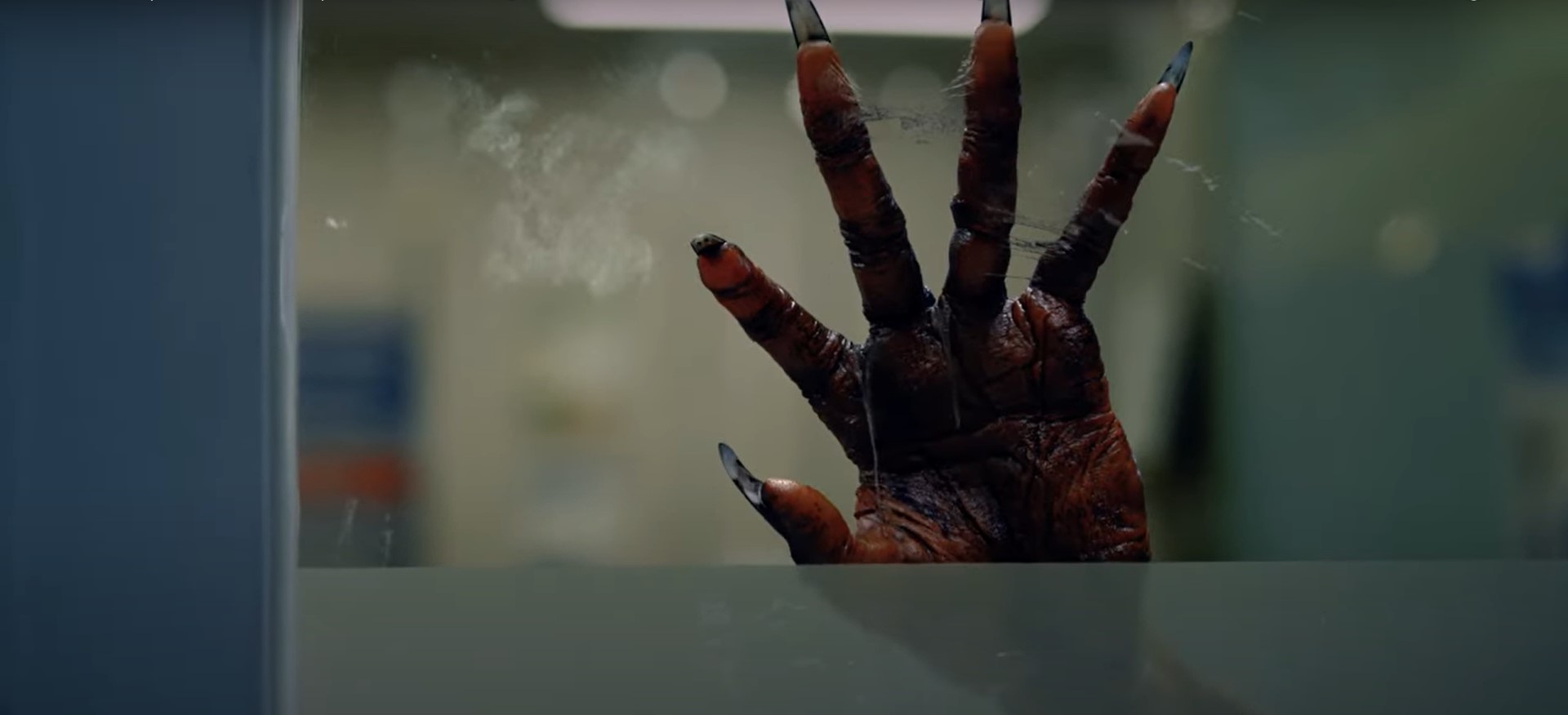
After a night of heavy drinking, Bong-soo wakes up from a strange nightmare.  The nightmare continues when he habitually walks into the bathroom and discovers a grotesque hand sticking up and out of the toilet bowl.  The confused yet calm Bong-soo wakes his wife who passes out at the sight after the hand twitches right in front of them.  Bong-soo calls 911 to report the strange occurrence and when his residence’s security guard and the dispatched EMTs check out the scene and see his wife passed out on the floor and a supposed severed hand sticking out of the toilet, the unbelievable scenario spirals into suspicion and Bong-soo is detained for suspected gruesome acts of foul play, but when the hand violent moves again and the bathroom door suddenly becomes stuck, those left standing, out of the hand’s deadly reach, are left with only toiletries at their disposal to do battle against the a force their unable to flush.

Preying on one of the more irrational fears that something will slither up the toilet while you make the business, “The Hand” extends that fear with a supernatural startlement.  Shot in 2020 but released in 2023, “The Hand,” or “The Hand:  Attack of the Things” is to the degree of a ghostly-demonic thriller sprinkled with dry humor from South Korea by writer-director Choi Yun-ho, claustrophobically shot inside an apartment bathroom which, and let’s be being honest, is roomier than most bathrooms in two-story houses.  Toilet horror is a subgenre that’s not everyone’s cup of eau de toilette but has resiliently found a niche audience and continues to live quietly in the indie shadows, such as with Evan Jacob’s “Death Toilet” films, Matthew Mark Hunter’s “Killer Poop” franchise, and the Asian market, specifically, has an interest in potty horror-humor, “Zombie Ass:  Toilet of the Dead” instantly comes to mind.  However, the absurdity of these titles doesn’t infect Choi Yun-ho’s less feces-filled horror, focusing more on the curled, demonically-skinned hand from out of the toilet.  “The Hand” is a feature presented by Korea Creative Content Agency and Inoi Media and a production of Spooky House, and R202 studio.

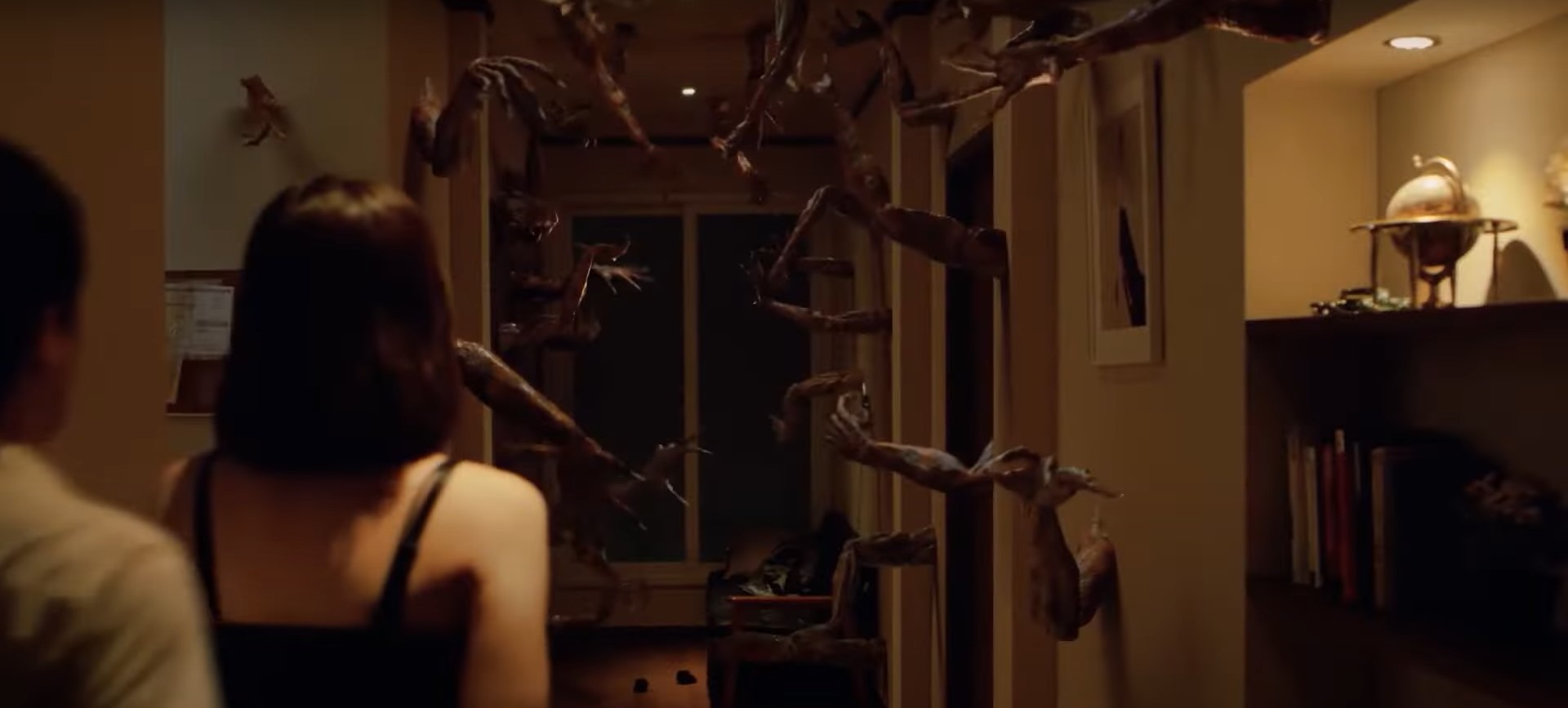
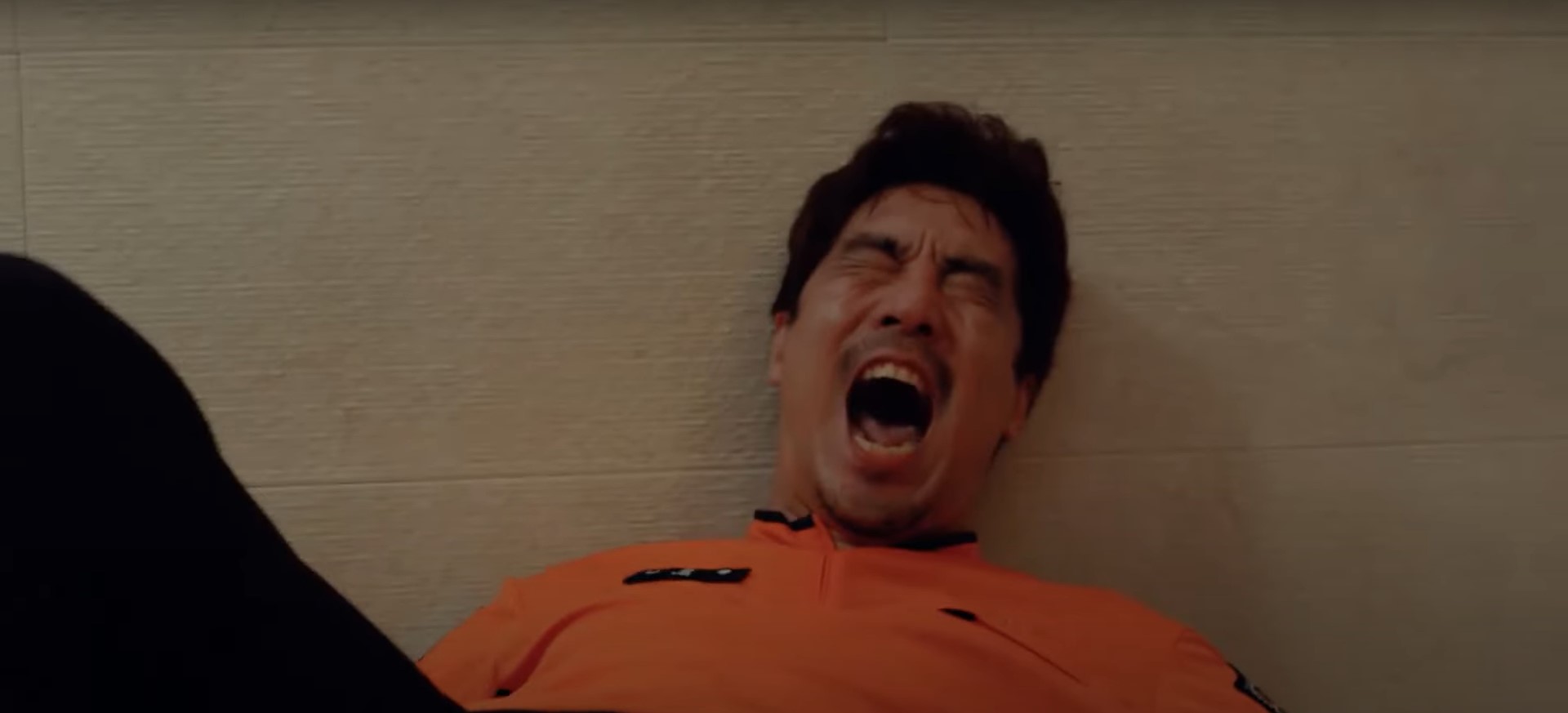
With an intimate setting comes an intimate cast to do battle with the mysteriously unknown monstrous hand.  Lee Jae-won is up to the task, or, well, placidly taking in the situation with subtle caution, as the expressionless alcoholic husband Bong-soo.  The regular Korean television actor infiltrates into his first leading man feature, or perhaps barely a feature with a film runtime of under 60-minutes, tackling close-quarter dynamics and a computer-generated thing with finger fingers, elongated fingernails, and a reach that turns the already compact bathroom into practically the size of a coat closet.  Considering the mention of his drinking problem more than once, Bong-soo’s alcoholism isn’t one of the more centric elements, especially at the chagrin of his wife Joohee (Jeong Seo-ha) to create a dynamic hurdle to arc over.  Once the building security guard (Soo-ho Ahn) and 3-person 911 team, with Park Sang-wook portraying lead paramedic, the energy devolves to a humorous suspicion of Bong-soo and the pigeon-hearted presence of the lead paramedic as the two men ever so lightly buttheads in a confounding position and through the progression of the ordeal, the squabbling pair form along the way a bond out of insta-desperation.  When the wife finally revives, another breakthrough moment between Bong-soo and his wife becomes realized that they’ll never take each other for granted again as they do slow motion poses and battles with an army of apartment wall-protruding hands who carry a deadly touch.  The jagged line graph tone maintains a comedic constant right through the heart of “The Hand” that lets the characters sway freely in various complexions without jarring their principles too flippantly. 

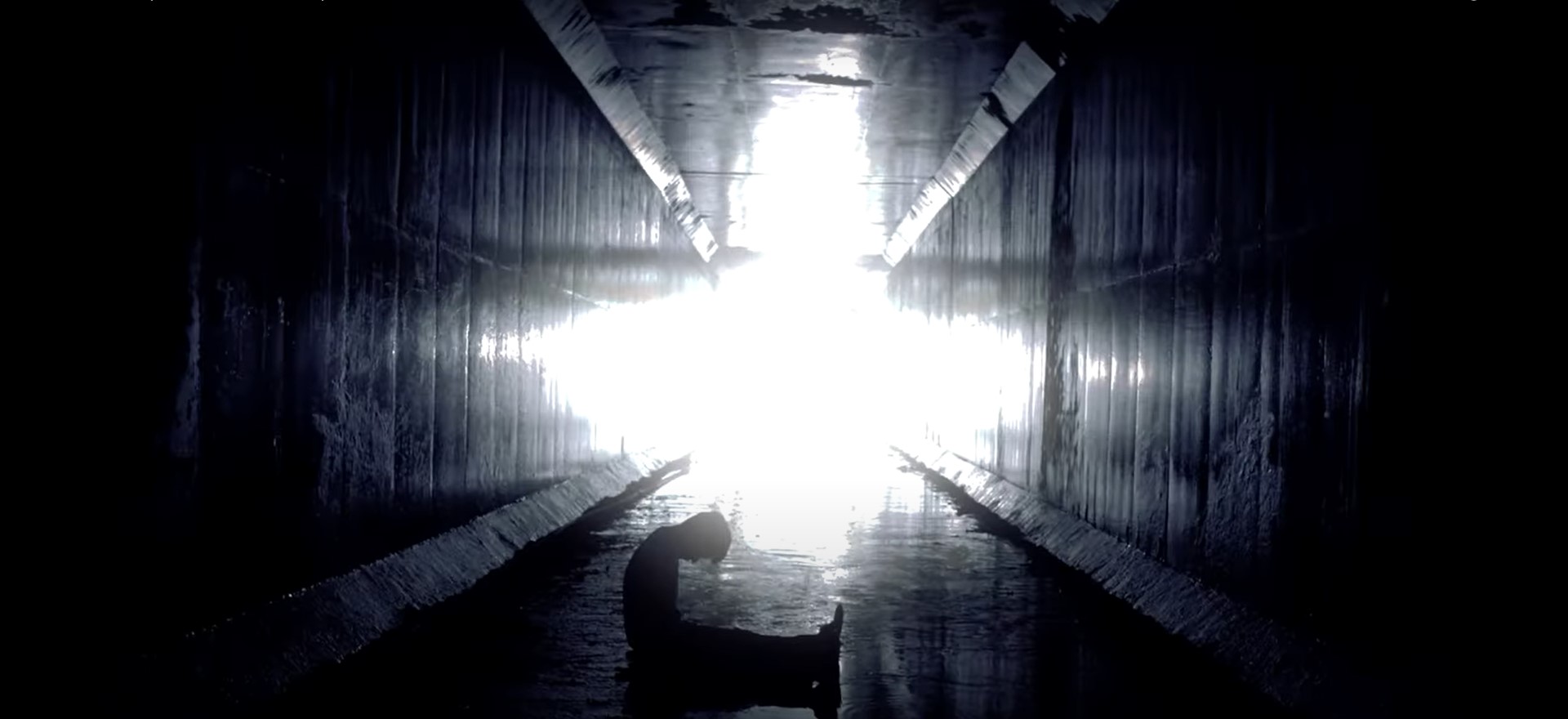
The titular hand is a fully operational character in itself.  A complete CGI mockup straight from the backstory sewers of Hell, conceived from a threadbare anecdote of a woman found dead in a nearby sewer tunnel with her arm missing a few days prior told by the paramedic leader.  That arm, with gnarled hand attached, is thought and assumed to be the same wretched one sticking ominously straight up and out from the toilet bowl.  Texturally, the synthetically composited hand looks pretty darn good with barely a trace of smoothed over plastic-splash veneer.  These scenes are also intermixed with a rubber hand cast with obvious contrast against the CGI hand.  That is until the arm extends feet beyond its chamber pot dwelling to tightly grip unsuspecting prey, like a crocodile lying in wait.  When in more a realistic scale, the hand’s movements are tremendously naturally looking with the help of green-suited animator and between appearance and mobility, the captured result, though miniscule in size appropriate for the indie film, has realistic attraction that edges “The Hand” out of the absurdity of circumstances and into more thrilling territory while still focus lit by comedic lighting.  The characters themselves are the more farcical models in comparison with representatives often aloof or arrogantly confident with ostentation as terror responses straddling between nonsensical and pragmaticism.  

“The Hand” arrives onto DVD home video from Synergetic, presented in a widescreen 1.78:1 aspect ratio on a MPEG2 encoded, standard definition, DVD5.  Decoding at a fairly high compression rate of 7 to 8Mbps, image quality has a fair amount of detail and color saturation from off the lesser disc capacity.  Facial details can appear soft throughout, sometime blotchy or waxy that fuses the contours and skin without delineation, and the CGI hand, though textured nicely, can have an early day video game blockiness about it in a handful of scenes.  The surround locations, such as bathroom and apartment, are hue balanced and display distinct visual variation.  The Korean Dolby Digital 2.0 mix is the only audio option available that comes with burned in English subtitles.  Dialogue renders over clearly inside the natural digital recording and prominent amongst the rest of the mix, isolating the changing levels of inflections and tones of what the moment calls for.  The English subtitles synch consistently with the action, but there are spot grammatical errors.  Aside from the play and chapter menu selection on the static menu, there are no selectable bonus features.  The after credits contains how the CGI scenes are composited together so stay tuned after the movie.  The scroll-like artwork with a monstrous hand, illustrated with a mock age-fading, is really neat visually and well-done.  Inside the bendy Amary case is just the disc with the same artwork in concise form.  With the region free playback, the Synergetic release runs at 62 minutes and, assumingly, comes unrated, as the rating is not listed on the back cover.

Last Rites:  Comedy and horror create stationary white-knuckle tension in “The Hand” despite not reining in a tightfisted backstory on the hand itself which ultimately turns the five fingered paw into more of a marginal footnote. 

“The Hand” Pops Onto DVD at Amazon! Click Here to Purchase.

Become Lost with the EVIL in Your Head. “Faye” reviewed! (Reel 2 Reel Films / Digital Screener)


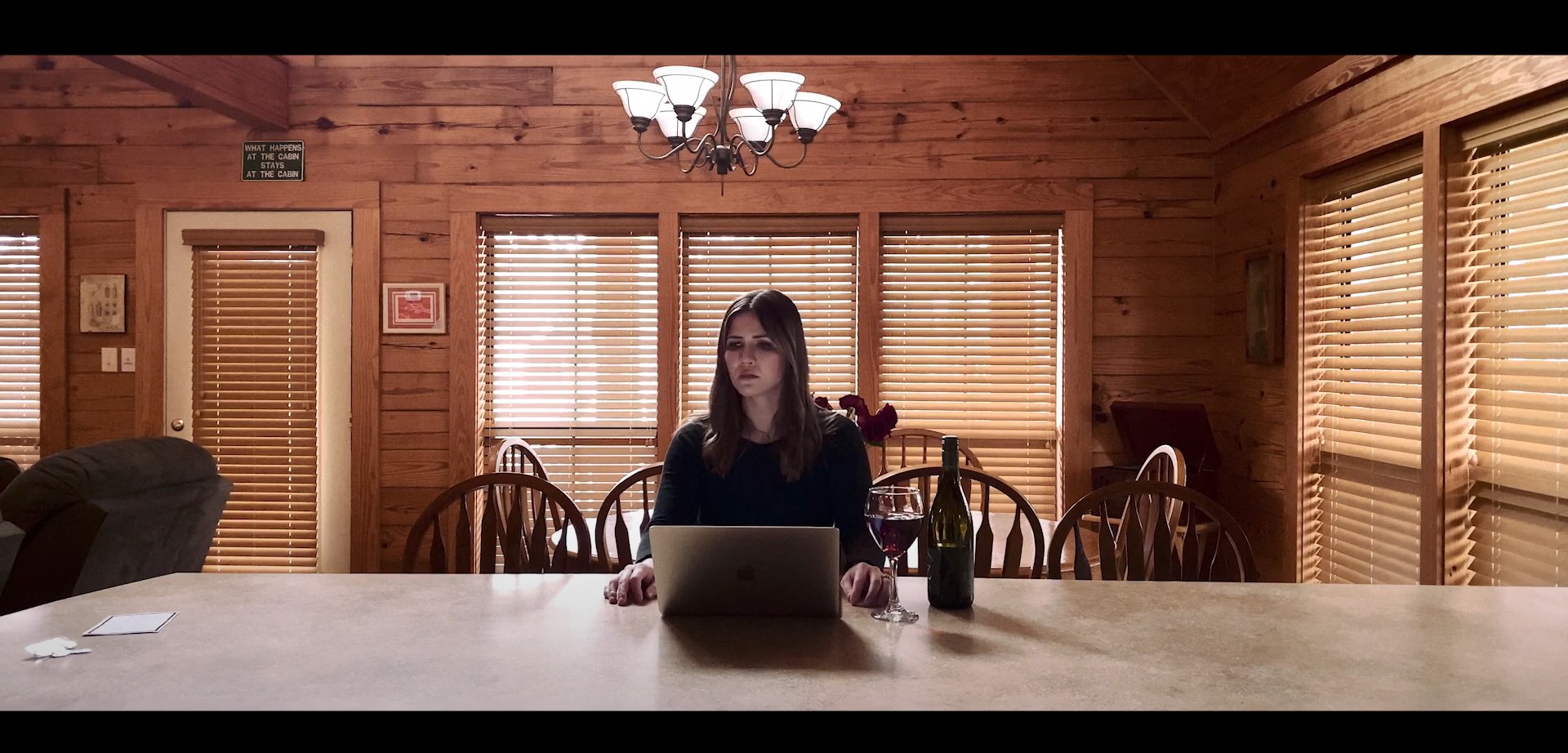
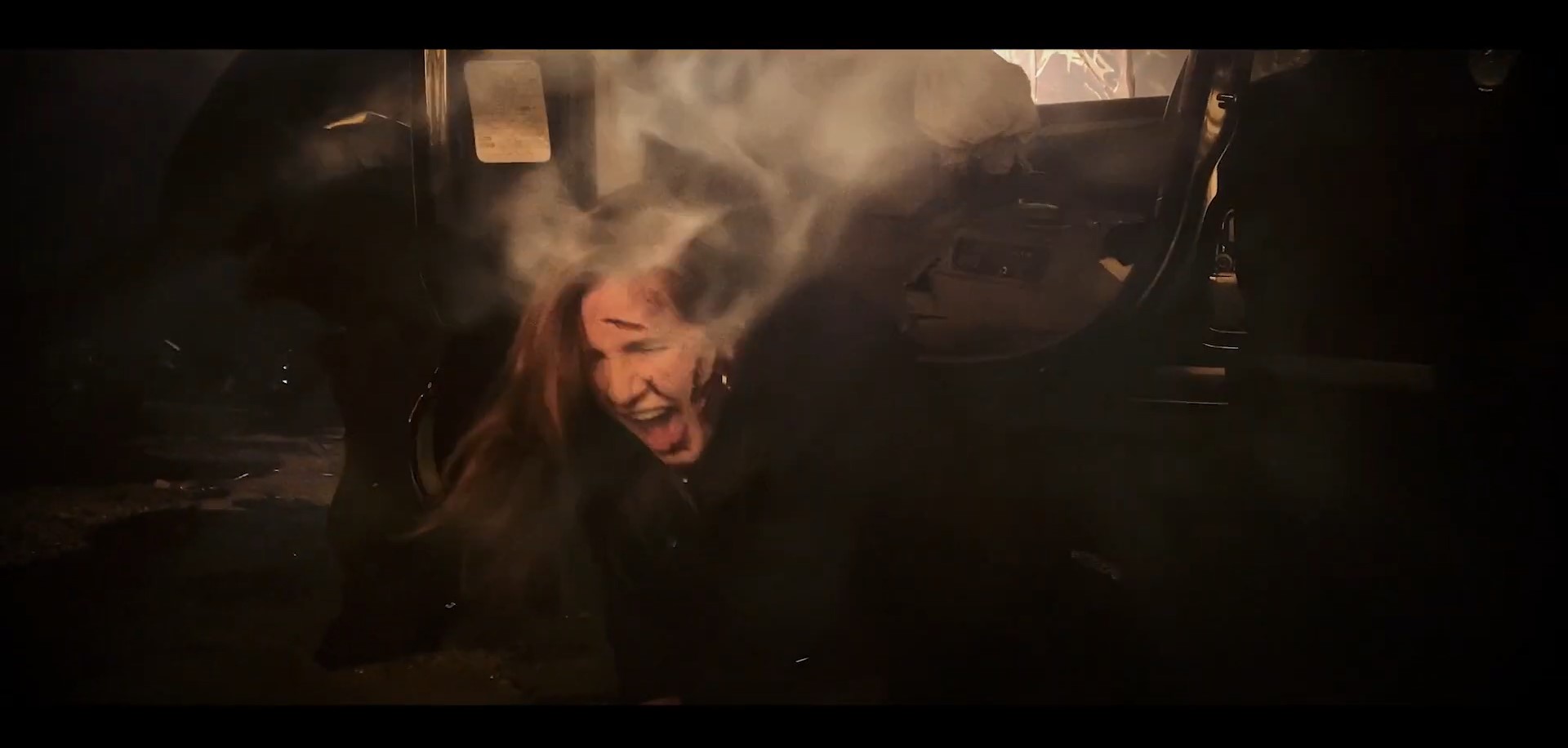
Author Faye L. Ryan has found success as a career writer penning personal growth and self-assurance books, but the renowned author has hit a mental wall in growing out of the process of mourning for her deceased husband, killed in a car accident in which Faye was at the wheel.  Scarred physically and mentally with painful reminders of that fateful night, Faye struggles to focus on her next new book, threatened to be dropped by her publisher if she doesn’t meet their deadline, and interacts with her husband as if he was still with her in person.  In a last ditch effort to get Faye back to writing before cutting her loose, the publisher offers up a lakeside vacation house to help focus on her work, but as Faye settles into her new, quiet writing space, she finds herself unable to escape a haunting presence tormenting her. 

Working solo is tough.  Having no one to bounce off dialogue or react to their disposition can be daunting and unnatural for most actors and actresses.  Yet, the titular character in “Faye” must do very that to ensure Kd Amond’s 83-minute feature directorial about loss, grief, and the supernatural representation that braids into a broken reality will exist without suffering stagnation.  “Faye” is a 2021 female-driven horror-drama written by Amond and the film’s lone wolf star Sarah Zanotti as the two filmmakers reteam from the previous year’s dysfunctional family thriller, “Rattled.”  Shot between Nashville, Tennessee and the cabin resort of Lacombe, Louisiana, “Faye” is cut from an all-female producing team of by Amond, Zanotti, Sara DelHaya, and Nicole Marie Lim under Amond and Zanotti’s independent film production company AZ if Productions.

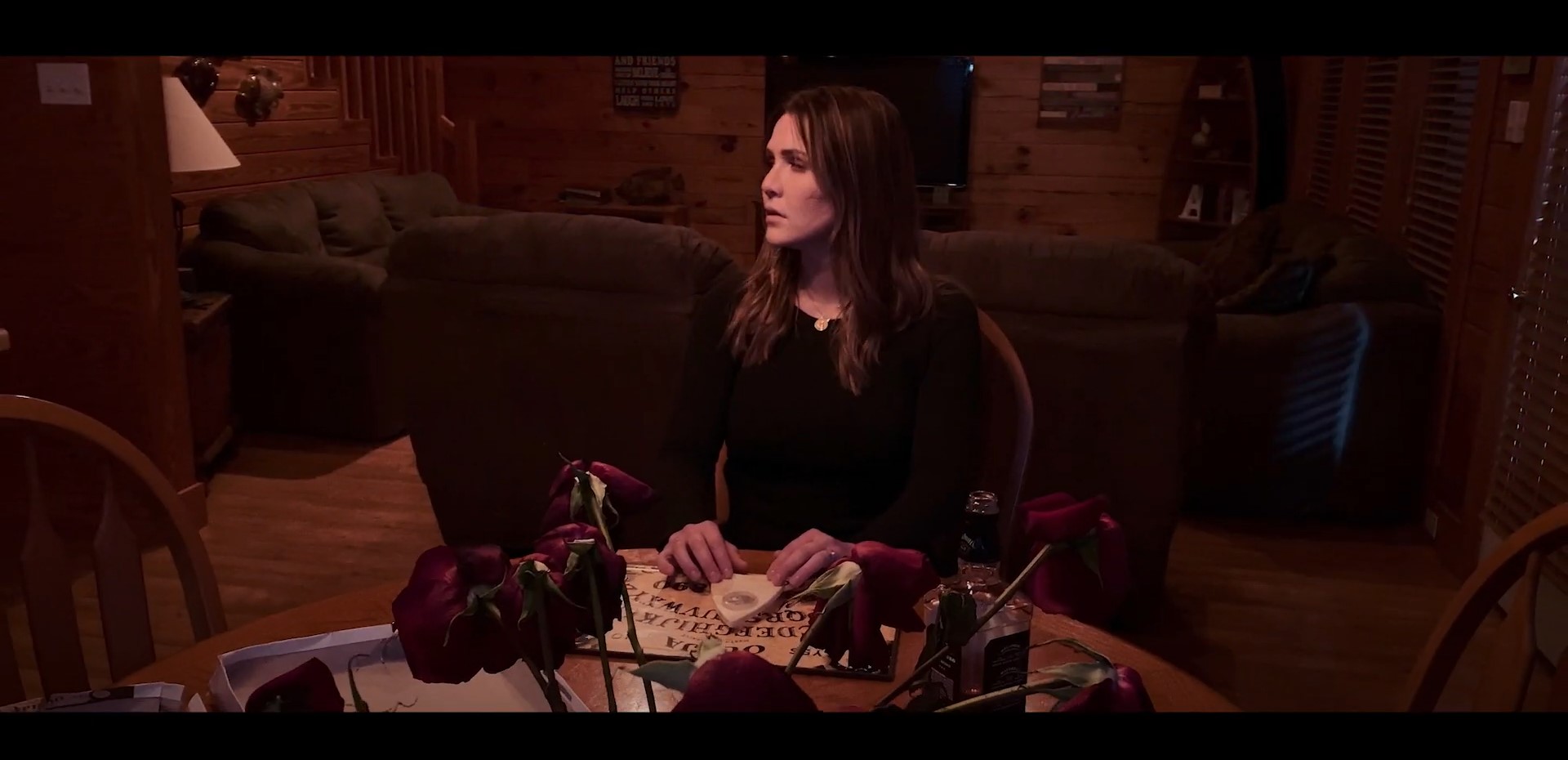
So, how did Sarah Zanotti perform going at the role alone with not another single body in sight?  Aside from the performance scale, initial first thoughts about an emotionally processing Faye rings clear that she is definitely alone with her thoughts without ever confronting her past head-on.  Faye, more or less, brushes the incident to the side, drowning herself in wine and loathing, until vague, intermittent memories pull her back down to reality every so often.  The role gratifies a sense of a struggling individual’s unintended and deeply personal isolation stemmed by unable to grasp with the hard to deal with issues to where’s she’s invented an imaginary friend in the form of her late husband in this pretend world of being normal, routine, and safe.  Looking from the outside in, Faye invokes pity on the saddest level as she converses with thin air as well as drinking large quantities of wine alone. There’s even the suggestion in either flashback scenes or maybe representational moments of despair that she, at one point in time, committed to, or thought of, suicide. As for the “Archaon: The Halloween Summoning” actress Zanotti? The actress, singer-songwriter, and proud cat mother (as stated on her personal website) breathlessly engrosses herself in Faye’s darkest moments with a ramble of insecurities that skate around the main issue until that issue manifests as a specter of duality, haunting “Faye” with her own scarred image that won’t allow her to leave until she combats the guilt eating her away. However, Zanotti’s a bit one tone through the entire storyline, never zig-zagging in a full range on emotive spectrum when face-to-face with the emulated specter. There are guest voices in the film whenever Faye takes or makes a phone call, including vocals from Corri English as Emory the publisher, Dean Shortland as Bobby, Brian Vance as Jacob, Kd Amond as Faye’s mom, and Zanotti as Elle.

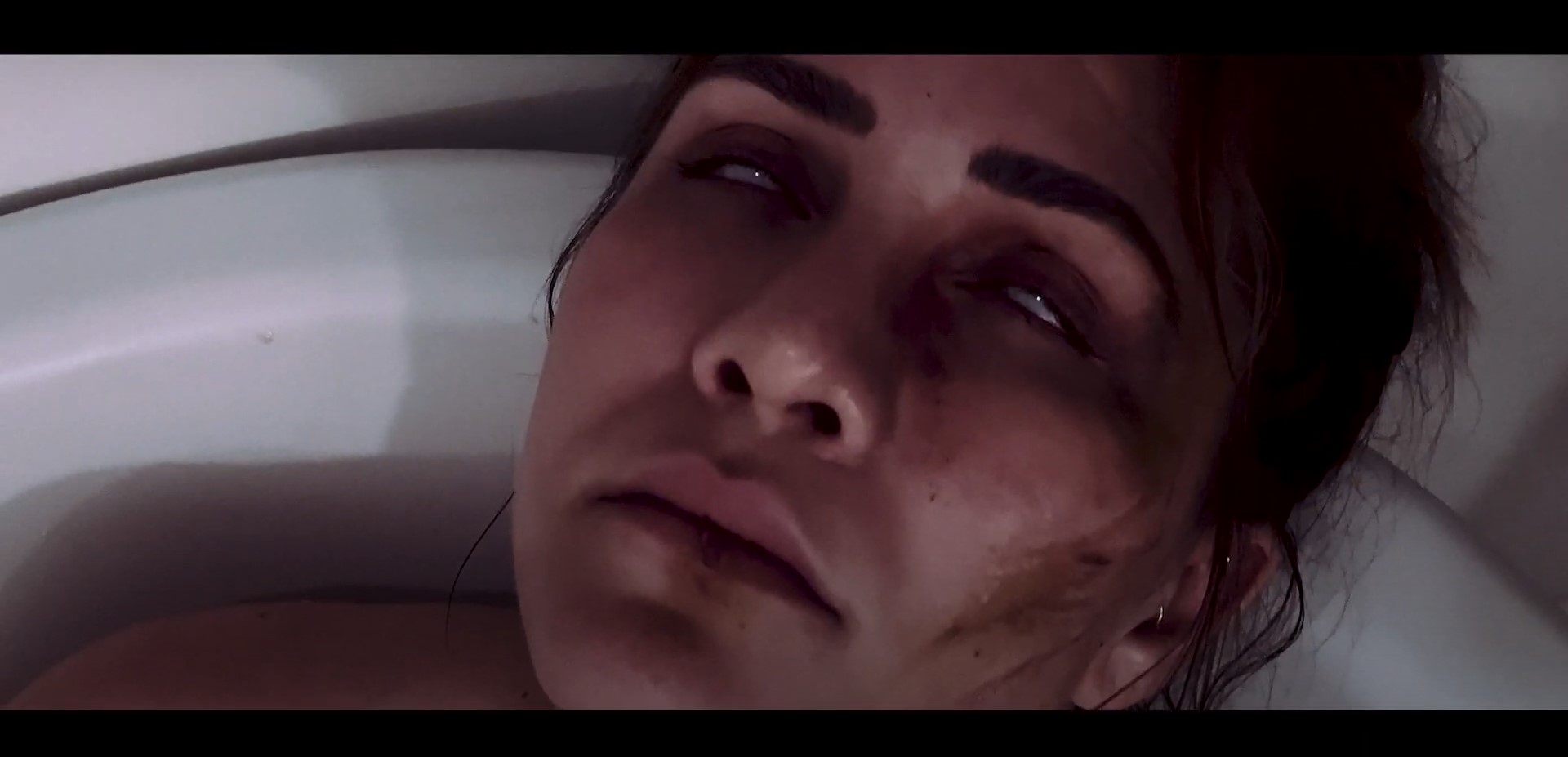
To carry an entire feature film on your shoulders is empathetically tough for the one and only principle lead Sarah Zanotti and also the director Kd Amond as well and I wouldn’t declare “Faye” to be an overstimulating visual film albeit snazzy editing and makeup effects when sucked into supernatural self-reproach and suffering. “Faye” leans heavy into self-centered conversation in an acerbic chaptered and non-linear context that can be difficult to follow it’s pathway structure at times when the titular character is not framed in the cabin but rather sitting, speaking on a well-lit platform that fits her personal growth expatiate, like a Tony Robbins-type, connecting back to Faye’s mindset or actions in the cabin. Though much of the conversion is directed toward herself or the mental image and two-way communication of dead husband, a good chunk of the dialogue is the unwavering tough love business-speak between agent and client. Faye publisher rakes in money based off book sales and if Faye isn’t writing up drafts than a publisher does not care about your personal tragedy. That dynamic during the calls feels utterly cold with no pity or sympathy for Faye in the voice of the agent who cares solely about client image for publicity and is determined to nag a draft out of a woman who has lost her best friend in life – grief and guilt be damned. As a spook show, “Faye” whips up a few moments of fearful highlights but does little to the film’s self-proclaimed horror label when more of the acidity of internalizing the death and destruction of her life becomes more manic without the monster that’s introduced too late or comes too little often to be integrated into the story properly and stands out as negative concentrated symbolism.

Oozing with heartbreak and melancholy, the fracturing viability in “Faye” calls forth the detrimental impact and for reinstation back in the society, one needs to fall before getting back up. Reel 2 Reel Films brings the American-made, woman-driven, atmospheric and apparitional “Faye” to the United Kingdom on digital home video come May 9th. Since a digital screener was previewed, there will be no critique of the audio or video qualities. Kd Amond was really a one woman show behind the camera by taking on not only the directing duties but also many others, including cinematography and visual/practical effects and for “Faye,” the film was mostly captured with natural lighting outside the cabin, practical lighting for cabin interiors, and key lighting of Faye on stage. There’s use of a filters during the more supernatural plights and to tell night scenes that don’t look natural, leaning toward a more style-choice purple. For any extras, there were no bonus scenes during or after the credits. “Faye” has strong bones for a good grief and guilt ghost film in the indie realm and while it doesn’t have the star-laden power of other similar themes of its kind in “The Babadook” or “Hereditary,” “Faye” still invokes the power of hurt and the summoning of self-condemnation.