EVIL Versus EVIL to the Death! “Mad Foxes” reviewed! (Cauldron Films / Limited Edition 4K UHD and Blu-ray)

“Mad Foxes” LE 4K UHD and Blu-ray Still Available to Get Before X-Max!

Playboy Hal drives fast cars and enjoys a good time.  While driving his girlfriend out for a night on the town, a road rage run-in with a Nazi biker gang leaves one of biker’s dead and Hal continues on his way to the nightclub for bubbly and music.  The bikers track him down, beating Hal to a pulp and raping his date as the night ends.  Not to roll over and be passive take to insult, Hal recruit’s a friend’s dojo class for an all-out brawl during the outside funeral ceremony for the biker’s fallen comrade, taking violence to the extreme by castrating the gang leader.  In retaliation, the entire dojo class is gunned down in a vengeful massacre days later.  Hal and the biker gang continue their back-and-forth as they embark on a short-term blood feud aimed to annihilate each other’s lives, spilling violence beyond friends and into family ties without mercy. 

A tale of perpetual revenge and exploitation from Spain, “Mad Foxes” takes one-upping to a whole new grotesque level.  After production manager Paul Grau worked on the tantalizing pictures “Secrets of the French Maid,” “Caged Women,” and “The Amorous Sisters” and before helming the comedic sexploitation “Six Swedish Girls in the Alps,” the Nordic born filmmaker debuted with tit-for-tat terror in the streets film cowritten between Grau and softcore, erotic film producers Hans R. Walthard (“Six Swedes in Paradise”) and Jaime Jesús Balcázar (“The Couple’s Sexual World”), leaving no surprise to the shocking and provocative nature of this Euro-nasty that castrates Nazi bikers, shotguns old ladies in wheelchairs, and blows up entire apartment buildings all in the name of spite.  Erwin C. Dietrich and Hans R. Walthard serve as producer and executive producer under the production collaboration of Jaime Jesús Balcázar’s  Balcázar Producciones Cinematográficas and Reflection Film.

A biker gang revenge story sounds right up there with “Death Wish” starring Charles Bronson, but instead of Bronson’s character going up against the impossible odds by way of an organized and self-controlled planning, executing, and removing the threat for good, “Mad Foxes” strikes impulsively while the iron is hot with such ferocity it’ll make your head spin right off the neck.  José Gras (“Hell of the Living Dead,” “Conquest”) envelopes himself to the solo side as Hal in contra the larger Neo-Nazi biker gang.  Hal’s a bit of a philanderer though it’s not entirely explicit but his raped date Babsy (Andrea Albani aka Laly Espinet, “The Hot Girl Juliet”) is a quickly and inexplicably out of the picture before he picks up free-spirited nomad Silvia (Laura Premic) and, by then, Hal seemingly doesn’t have any other care in the world though the aforesaid date Babsy, or perhaps it was his young girlfriend, was raped, and his good friend’s entire dojo, plus said friend (Paul Grau), are massacred in an open fire execution of bullets after they wipe the floor with the Neo-Nazis in a karate skirmish that ends in the gang leader being gratuitously castrated.  Having already cross paths with the gang at least four times, Hal hops in his fast car and drives to the countryside to get away from it all, picking up Silvia on the way, but he inadvertently leads the ruthless camo and leather-cladded gang, led by character played by Peter Saunders and Eric Falk (“Blue Rita,” “Ilsa:  The Wicked Warden”), to his wealthy, elderly, and impaired parents and their house servants.  From there you can imagine the bloodshed that quickly spirals into payback but all throughout the retaliatory strikes, one begins to question who the actually is the good guy in all of this because Hal actually initially ran one of the biker’s off the ran and to his death, driving away with speed and a serene sense of no remorse or concern.  Does Hal bring an ill-fated war upon himself?  One could argue a case for it.  “Mad Foxes” rounds out with Helmi Sigg, Brian Billings, Garry Membrini, Ana Roca, Hank Sutter, Iren Semmling, Hans R. Walthard, Esther Studer and Guillermo Balcazar.

“Mad Foxes” is a gratuitous showcase of trashy Euro cinema, the grindhouse champagne of Spanish sleaze, and has little worth toward elevated commentary or technical grandeur.  Yet, within our miniscule cinema-thirsty molecules and riding along our less trodden synapse highways, a spark of interest can’t keep our eyes off the lurid lunacy that’s unfolding before us.  Paul Grau has invested, produced, and released an entertaining indelicate that won’t bore, won’t tire, and won’t be a total waste of time in its eye-for-an-eye format.  Does one man’s need for revenge need to make self-preservation sense?  No.  Does a bike gang have the wherewithal to track down one man from city-to-rural without breaking a sweat?  No.  One aspect of the story that holds relatable consistency through the years, decades, or even millennia is that violence remains a universal truth, and “Mad Foxes” has plenty of teeth to tout when an act of pettiness turns into the next World War for one man and a biker gang.  The story is no “Death Wish” or “Death Sentence” but it does remove rationality from the shackles of a rancorous reality and plops viewers into the throes of an odd quarrel that won’t seemingly end until the very last standing have turned vertical, and all signs of life has ceased.  Hal’s no rogue ex-cop or former elite marine, just a regular playboy with friends in karate places and has a stubborn will to take on the gang singlehandedly on their own sordid turf.  Grau’s unabashed violence never stumbles or wanes to be implied with the Switzerland director helming a Spanish produce movie that churns out Italian-like shock with the closeup carnage and the cynical nature of a fatalistic bout. 

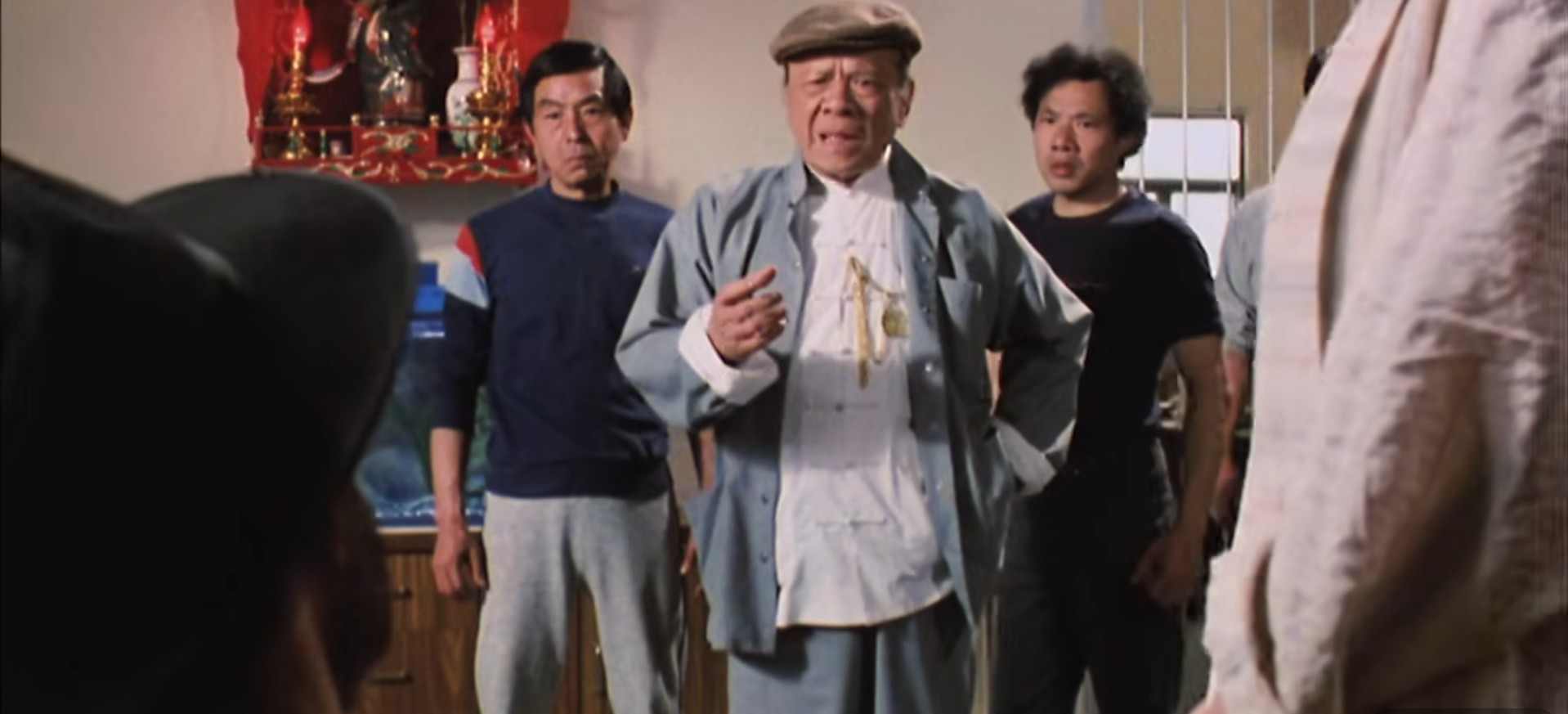
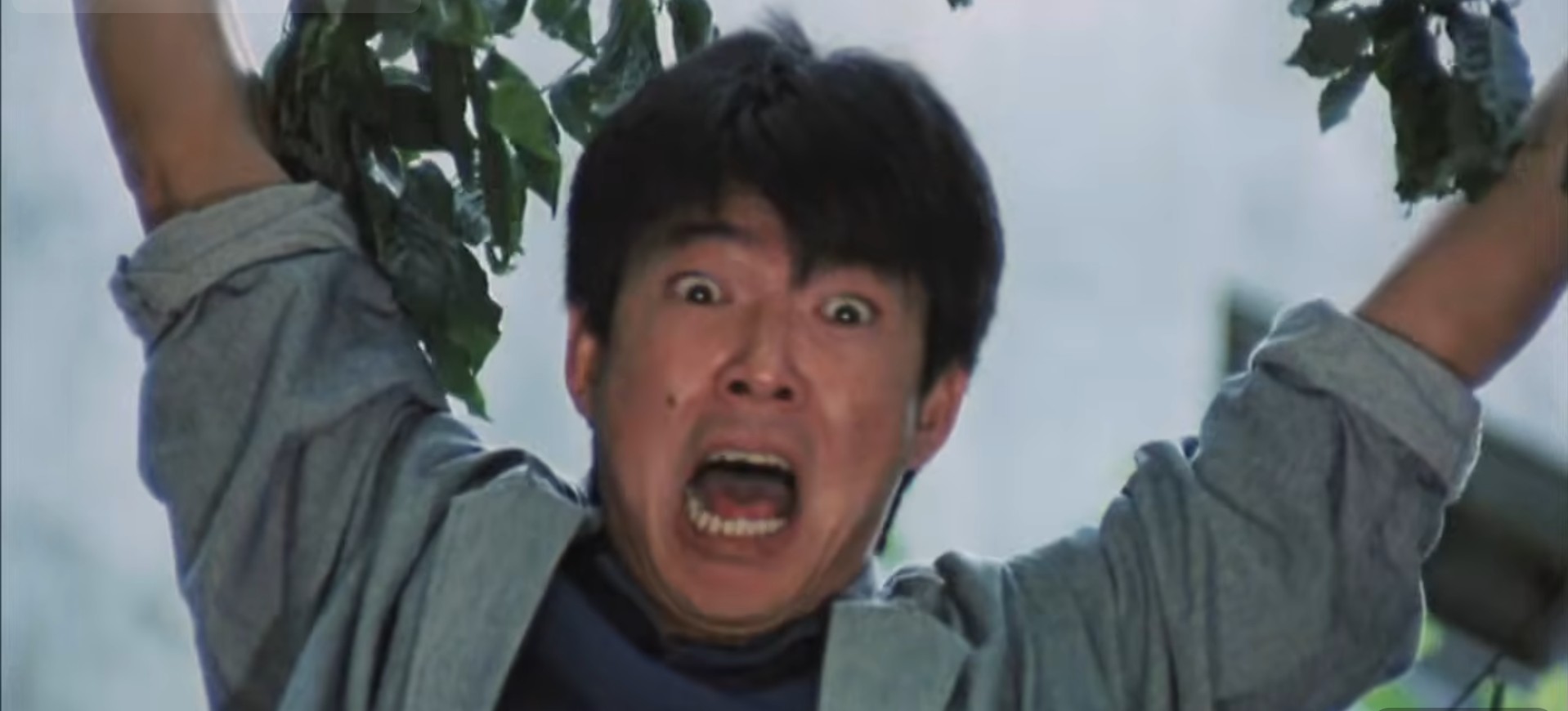
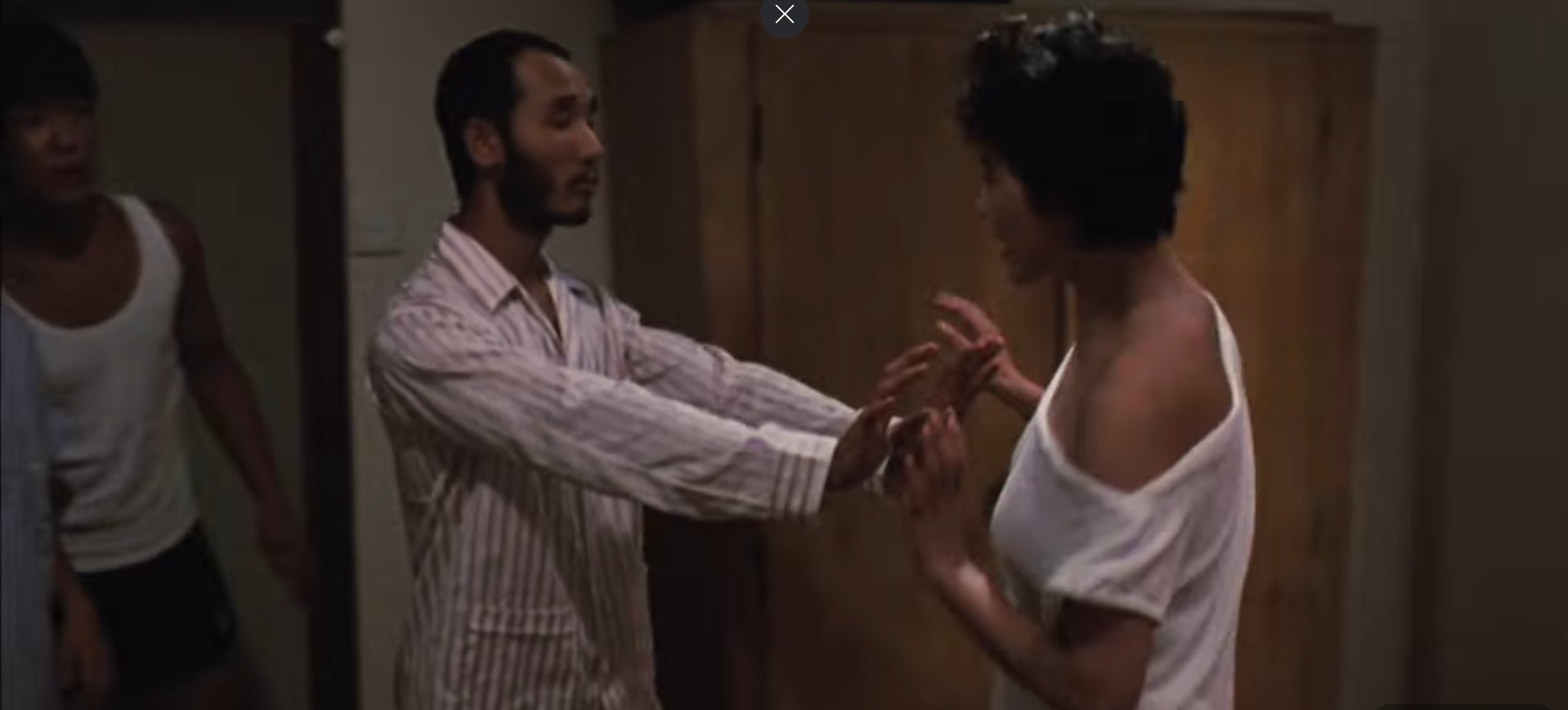
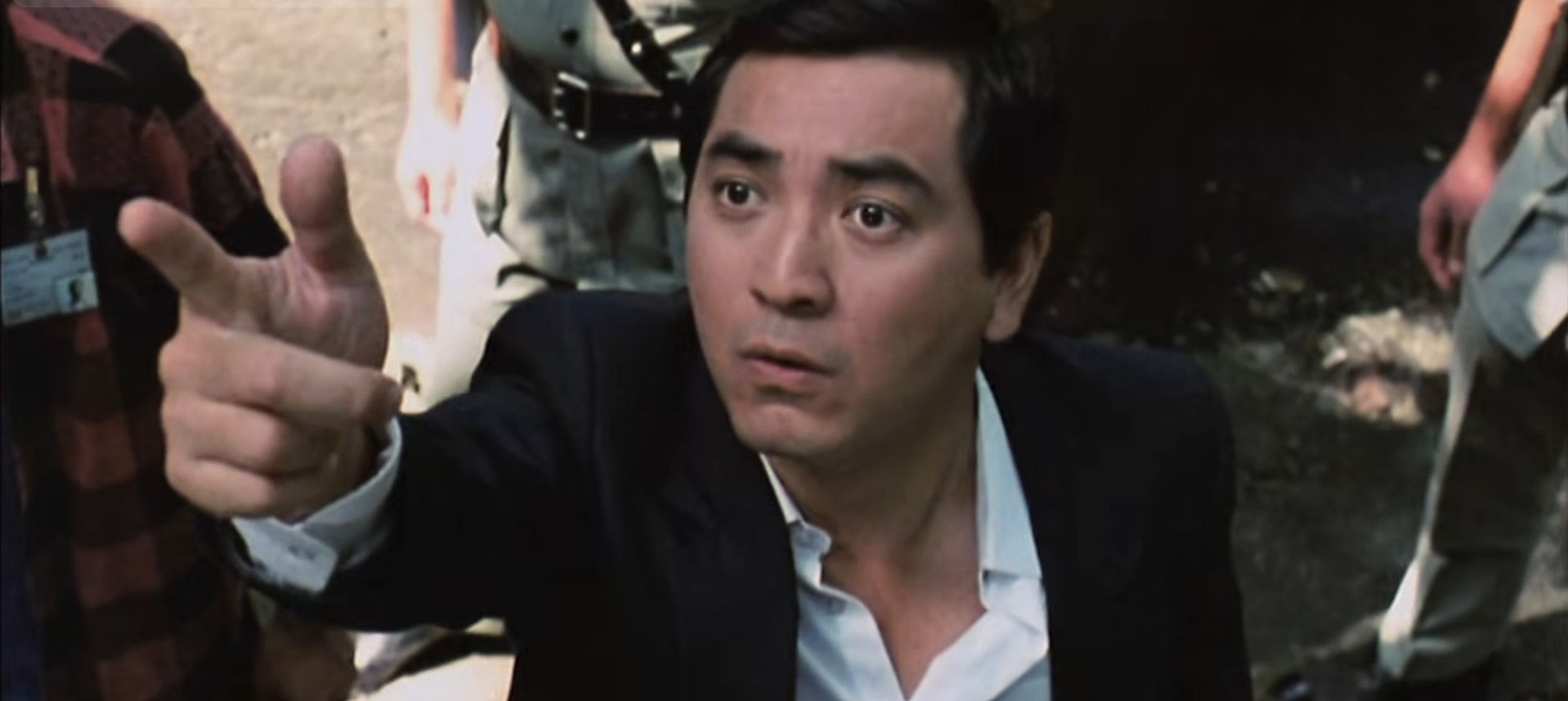
Cauldron Films proudly presents “Mad Foxes” Ultra High-Definition debut to the world featuring a new 4K restoration with Dolby Vision HDR color grading on an HVEC encoded BD66 with 2164p.  This limited-edition 2-disc set also includes a standard Blu-ray presentation that’s AVC encoded on a BD50 with a 1080p resolution.  The Dolby Vision HDR 10 offers extensive and immense saturation that’s balanced, stable, and more vibrant in it’s support of a wider pixel range.  Without compromising the story’s gritty nature with an unflexed amount of detail, textures retain their respective fabric types from the sheen of Hal’s silveresque bomber jacket to the taut leather of the neo-Nazi bikers.  The skin tones appear organic with a surface appeal that denotes and defines body hair, wrinkles, and other skin imperfections, more notably in close ups.  Focal depth does not completely wash out objects or landscapes with careful delineating a sandy beach and wavy ocean with distinction while the cityscape has the light and tone range in clarity of the object.  Only the UHD was covered for the image review, but the Blu-ray pulls from the same 4K restoration that I suspect has most of the same results but with a lesser pixel count in the quality that may be not as perceptible.  Both formats include an English DTS-HD 5.1 Master Audio, a DTS-HD 2.0 mono, and a Spanish DTS-HD 2.0 mono mix.  All include optional English subtitles in, what I consider horrendous, ADR mixing.  Dialogue has clarity and is clean throughout, but the voice acting is just beyond reproach with drab inflection to express the right emotion during the scene, its all fairly monotonic and automaton deliveries through the asynchronous matching of voice and mouth.  With no innate recording during filming, the milieu sounds are limited to the immediate action of post-production kick and punch skirmishes, a volley of gunshots, car and motorcycle engines, and murderous snikts of blade strikes.  This, in turn, limits and relegates the surround sound channels to mostly the front with only a flutter of immersive quality, mostly with the revving car engines and the occasional gunfire.  Special features on the UHD only include the commentary by film critics Nanni Cobretti and Merlyn Roberts.  The commentary is also on the standard Blu-ray along with additional content in The Untold Story of Robert O’Neal:  a near feature-length interview with leading man José Gras discussing his career in Europe, Erwin and the Foxes offers interviews with producer Erwin C. Dietrich and actors Eric Falk and Helmi Sigg discussing their roles and the production, an additional interview Mad Eric has a second interview with actor Eric Falk, and Troy Howarth provides a video essay with stills and video snippets in Nazi Fox Bikers Must Die.  The special features round out with an image gallery and a feature trailer.  The curated packaging comes in a rigid slipbox with new compositional artwork by Justin Coffee.  Inside, is a clear Amaray Blu-ray case that display same primary artwork and is accompanied with an adjacent folded mini poster, also of Coffee’s art.  The UHD is region free and the Blu-ray is region A for playback as both films carry an unrated designation and have na 80-minute runtime in their widescreen, 1.85:1 aspect ratio, presentation. 

Last Rites: Revenge films are often formulaic but “Mad Foxes” is no ordinary payback thriller that continues to the hit back well into last man standing. The new Cauldron Films’ limited-edition boxset pushes the media technology to max superiority sure to squash any rival, unlike Paul Grau’s ceaseless chaos.

“Mad Foxes” LE 4K UHD and Blu-ray Still Available to Get Before X-Max!

EVIL is the Will of the Gods. “Malpertuis” reviewed! (Radiance Films / Limited Edition Blu-ray)

“Malpertuis” Now Available at Amazon!

Jan, a young sailor returns home from a voyage to find his family home gone.  After getting into a scuffle with pimp at a night club, he’s knocked unconscious by a blackjack and wakes up to his sister Nancy taking care of him and in the bed inside the Malpertuis home of his draconian uncle, Cassavius, a wealthy, stern, and impatient man on the verge of death with terminal illness.  The sailor finds they’re not alone in the large labyrinth estate with peculiar relatives, nearby acquaintances, and longtime servants.  Before his death, Cassavius has his will read with everyone present bedside, announcing the distribution of the immense inheritance amongst the close assembly who’ve either worked and slaved hand and foot for Cassavius or have been on the outside clawing up into his good graces for their greed.  Yet, to receive their portion, they must abide by one stipulation:  they can never leave the Malpertuis.  Jan plunges himself into Cassavius’s unfathomable parting will and design, seeking to unearth Malpertuis’s warren secrets, but all a while, a killer begins to pluck away potential beneficiaries.

The 1943 gothic novel of the title by Belgium author Jean Ray serves as the film adaptation source for Harry Kümel’s 1971 gialli-like and surreal maddening “Malpertuis.”  Released in the U.S. as “The Legend of Doom House,” the Belgium and Dutch co-production creates phantasmic journey down the rabbit hole that unravels a mystery of pantheon proportions.  The “Daughters of Darkness” directing Belgium filmmaker helms the faultlessly fantastical adaptation and script by Jean Ferry, who would also collaborate with Kümel on “Daughters of Darkness” as well as pen original and adaptations of Franco-Italiano melodramas from “The Wayward Wife” to “The Foxiest Girl in Paris.”  Pierre Levie (1969 “The Witness”); and Paul and Ritta Laffargue (“The Mushroom”) produce the gothic and Greek movie under Artemis Film and Les Productions Artistes Associés.

“Malpertius” houses an international cast that ranges from the native English-speaking countries of Britain and America to the European republics of France, Belgium, Germany, and the Netherlands.  The biggest headliner out of the bunch, and perhaps the biggest drunk at the time too, is none other than “Citizen Kane’s” Orson Welles in the boisterous patriarchal role, Cassasvius, on the brink of death.  Welles commands the screen in his short lived but striking hard every note performance that simply overpowers an otherwise Eurocentric cast fashioned with off the wall characters.  The narrative circles around the ingenuous Jan freshly off the boat for a little R&R.  Played by Mathieu Carrière in one of his earliest performances of his copiously filled career that includes horror-based credits like “Born for Hell,” “Nurse Massacre” and “The Murdered Young Girl,” Jan refrains from mostly having a voice but rather actions his will to discover Cassavius’s secrets within Malpertius’s walls as well as extract his fellow beneficiaries aenigmas, such as why the lovely Euryale won’t ever look him in the eye though she’s destined to be his wife per Cassasvius’ will, his sister Nancy’s inexplicable need to leave Malpertuis with her lover, and Alice, one of three intrusive and gossipy sisters, with her cozy up urge to bed Jan while also sating the sexual desires of his greedy cousin and sneaky creep Charles Dideloo (Michael Bouquet, “The Bride Wore Black”).  All three women are played by a single actress.  Hailing from the UK, “The Violent Enemy” actress Susan Hampshire goes into complete incognito mode that disguises her physical attributes and character personalities with mere makeup and temperament tonal shifts too genuine to easily notice Hampshire being all three women.  Hampshire deserves much of the credit and earns a trifecta win by facing down the challenge without compromising character.  Perhaps a little unfair to single out Hampshire as such but the entire “Malpertius” cast deserves recognition for their titan acts, representing humanity-cladded divinity in the most simplistic of human limitation that none of them, apart from one being more recognizable against the others, can be pinpointed definitively who they’re roleplaying.  Charles Janssens, Jean-Pierre Cassel, Walter Rilla, Dora van der Groen, Daniel Piol, Sylvie Vartan, Jenny Van Santvoort, Jet Naessens, Cara Van Wersch, Fanny Winkler, and Bob Storm fill out the cast.

There’s nothing quite like a good film adaptation of a novel.  Author Jean Ray’s four-part narrative isolates characters more exclusively that delineates the individual storylines of the whole gothic affair inside , and outside in parts, of the crumbling Malpertuis estate.  The Harry Kümel and Jean Ferry vision set out to make “Malpertuis” cinematic by collapsing the subset storylines into a single perspective narrative bestowed upon Jan, who is also the main protagonist in Ray’s novel under Jean-Jacques Grandsire, but less involved in comparison to the film version.  This forces audiences to see through Jan’s eyes, a curious, naïve and perhaps good nature fellow, a nationalized sailor of sorts who cares more about his home and sister than the depravity of sailors on shore leave, and what Jan experiences is nothing short of exploitation, sexualization, and torment amongst Cassasvius’s most prized collection of heirs.  Which brings me to uncle Cassavius who is set up, through the remarks of his nephew Jan, as nothing more than a gruff and stern, ill-tempered man living in the gloomy prison-like structure that is Malpertuis, but Cassavius transforms in a postmortal light as no longer a wealthy grouch but as an omnipotent collector that instills a great power upon him albeit his once feeble condition that took his life.  His house is very much like himself, confounding, mysterious, and surreal now pact with peculiar beings that look, sound, and feel human, or at least to Jan, and in appearances to the audiences too.  There’s a theme of limitless power over power itself but with the caveat that everything must come to an end and “Malpertuis” has one Mount Olympus-sized end. 

What’s also definitive is the limited-edition Blu-ray set from Radiance Films.  A beautifully curated boxset encasing a dedication to the undervalued “Malpertuis” with a AVC encoded, 1080p resolution, BD50 set that’s presented in a 1.85:1 widescreen aspect ratio.  In the midst of Malpertuis’s dark corridors and staircases, its classically drab common rooms, and a bleakly deserted grayness to the seaport town that exemplifies the intentionally restored stark and severe grading overseen by director Harry Kümel, the 4K scan, compiled by the shorten Cannes cut and Kümel’s directors cut, depicts quite a bit of localized saturation that pops into play that creates stand out characters in tandem with their eccentric personalities.  There’s a meticulousness in the details that greatly heighten Malpertuis into a prison-like character, one that is personified holding the living, breathing characters into a stasis though they’re freedom to leave is unobstructed, the Lamplighter is a good example of this by appearing to be a near skin and bones, unkempt in appearances, and wailing in disquietude about Cassavius putting out the light, as if Cassavius himself was some sort of jailor and, in a way, he is.  No compression issue within the dim-lit black areas, the ruckus of various action, or any macroblocking during the decoding.  Though there is a language version somewhere in the world, Radiance Films supplies only the original Dutch ADR mono.  The post-production dialogue does have an asynchronous measure between picture and sound, especially between the non-native Dutch speakers, but the track is clear and prominent overtop a mysterious and unobtrusive Georges Delerue (“Platoon”) soundtrack, letting the actors and the action take the helm of the narrative with a low-toned menacing as well as hopeful score pieces that drive their curiosity and individual pecularities.  The diegetic dynamism denotes a defined design to be character driven rather than creating the immense suspense built by an edge of your score and omnipresent nondiegetic sounds.  The faultless and well-paced UK English subtitles are available and can be toggled.  Encoded special features include a 2006 audio commentary from director Harry Kümel and assistant director Françoise Levie, new interviews with Kümel and gothic horror writer Jonathan Rigby, an archival and behind-the scenes documentary on the making of the film with interviews Kümel, lead actor Mathieu Carriere, and director of photography Gerry Fisher, archival interviews with Kümel, Michael Bouquet, and Jean Ray with an archival featurette on Orson Wells and actress Susan Hampshire, Malpertuis Revisted takes audiences on location where the movie was shot with Kümel’s descriptions, the Cannes cut of the film, which is approx. 20 minute short than Kümel’s director’s cut and is viewable in the English and French language for selection, Kümel’s short film “The Warden of the Tomb,” and the trailer. Limited to 3000 copies, “Malpertuis’s” physical presence is palpable with a hard cardboard slipbox with Greek themed compositional artwork with a wraparound Obi strip denoting synopsis, bonus features, and technical aspects. Inside, a clear Blu-ray Amary comes primarily with a front and back still image cover given the artistic liberty treatment. The cover can be flipped from more traditional cover artwork, and all artwork provided is by Time Tomorrow. Heavier than the slipbox and the Amaray is the accompanying 78-page booklet with cast and crew acknowledgements, transfer notes and special thanks credits, and 2025 produced essays by Jonathan Owen, Willow Catelyn Maclay, Lucas Balbo, Maria J. Perez Cuervo, and David Flint. The region free release is region free and houses two runtimes with the main feature being the 125-minute producer cut and the Cannes cut, domiciling in the special features, clocking in at 100-minutes.

Last Rites: No one can top Radiance Films’ “Malpertuis” limited-edition Blu-ray set with its comprehensive insight into one of the more original adaptations surrounding Greek mythology, the harnessing and control of great, immense power, and the how that power is transposed and shaped into the human context where greed, sex, and love are the core contentions.

“Malpertuis” Now Available at Amazon!

EVIL’s Path to being a Psychopath. “The Beast to Die” reviewed! (Radiance Films / Limited Edition Blu-ray)

“The Beast to Die” on Limited Edition Blu-ray from Radiance Films!

Former war journalist, Kunihiko Date, stabs a veteran police investigator to death.  He then uses the detective’s revolver and guns down three, after hours casino employees in cold blood and steals the day’s earnings.  Date’s seemingly random acts of violence and theft from a respected war journalist and photographer are not just random acts but part of a methodical plan for an upcoming heist of a bank in Tokyo’s Nihonbashi district.  Casing the bank’s security, personnel, and layout, Date’s perfect plan has one hitch; Because of the bank’s size and bustling busines, he’ll need a little help.  By chance, he comes across Tetsuo Sanada at an annual school alumni dinner with his closest friends who have a violent run-in with Sanada as their antagonistic waiter.  Seeing the same potential disregard for life and disdain for existence conventions, Date approaches Sanada and mentors him under a nihilistic wing.  Now with a plan and an accomplice, Date’s violent holdup can move forward but to what end is the length of his sociopathic carnage. 

“The Beast to Die,” aka “野獣死すべし, Yajū shisubeshi,” is the intense and violent noir-thriller from Japan, directed by “Dead Angle’s” Tôru Murakawa and a script by Shoichi Maruyama (“The Triple Cross”).  The 1980 released feature would be Murakawa and Maruyama’s second feature length production together behind 1979’s “The Execution Game,” the second film of a trilogy known as “the Japanese Game Trilogy is a visceral yakuza tale of a kidnapped hitman unable to escape the criminal underworld. “The Beast to Die” is a step away from the Japanese gangster film; instead, focuses on the interpretation of war trauma, the cynical views of precious life, and has subtle presences of U.S. big brothering, asexual themes, and coarse, unforgiving violence at the highest level of sophisticated society.  Adapted from the Haruhiko Ôyabu novel of the same name, the written origin mirrors the vehemency of visual art with the film produced by Haruki Kadokawa (“Virus”) and “The Resurrection of the Golden Wolf’s” Mitsuru Kurosawa and Tatsurô Shigaki under the Toei Company and Kadokawa Haruki Jimusho.

Undoubtedly one of the best sociopathic performances of our lifetime, “Horror of the Wolf” and the Japanese Game trilogy’s Yûsaku Matsuda is a cool, awkward, and, if not, plotting cucumber amongst the masses of jovial and hustling Tokyo denizens.  There’s a serenity about Matsuda’s Kunihiko Date that’s unparalleled, represented by blank stares, a patient demeanor, and precise movements that come in stark contrast in the film opener where Date takes down four people in one night in a show of murderous inexperienced bravado.  Even in the thick of combative survivalism, there’s only objective goal in his sweat infused brow and focused eyes while others gesture and make an invitational show of his attack or of their pleas for mercy.  Date becoming lost in classical music is a formidable way of grounding himself, not only from the high of excitement and thrills of killing, but also a way to retain sanity in the notes, an aspect he quickly unravels from when not exposed to classic music for an extended period.   Oppositely, Tetsu Sanada is full of pent-up anger as if he’s constantly hitting his head on the wall aiming to break free of the surroundings that confine his wild tiger attitude, yet Takashi Kaga (“Isle of the Evil Spirits”) maintains a personal struggle lock on the full emergence of Sanada as Kunihiko’s equal.  This dichotomy between the anger and tranquility of two sociopaths is immensely palpable that leads to a purposeful instability in a number of areas – hesitation and certainly, the sweat-inducing fear and the cooled fearless, and, eventually, the relationship’s ultimate internal destruction.  Thrown into the Kunihiko and Sanada tango is a potential love interest in the puppy-eyed Asami Kobayashi (“Sixteen Years Old:  Nymphets’ Room”) and her shared classical music and tenderness connection with Kunihiko and a happenstance Detective, played with casual approach by Toshie Negishi (“The Rapacious Jailbreaker”), being in Kunihiko’s consciously aloof presence as a pressuring force that suspects something between something off with Kunihiko and the murder of his detective colleague. 

“The Beast to Die” explores various themes around the indirect damage of post-war trauma and living and feeling like an outsider of the what’s consider the normal societal collective, but there’s another avenue to look down when consider Murakawa’s villainous protagonists.  Kunikhiko Date may have been scarred by war, but his mind always had an inkling for bloodthirst, sated through the images of a photographic lens that captured the horrors of global conflict from military losses to the collateral damage.  Upon his return to Japan, Date had lost the exciting sensation of death that has exceled his rationality beyond being Godlike, able to take life without conscious due reproach.   Sanada, in a way, is similar in his radical viewpoints but Date finds him more talk than action, held behind the line he has yet to cross unlike Date’s journalistic meatgrinder and his self-drive to kill the detective and casino workers.  As far as vices go, neither men have an appetite for sex:  Kunikhiko  watches a sex worker masturbate with little interest and his connect with Reiko doesn’t go beyond the gazes into each other’s eyes and Sanada’s fortunate relationship with his girlfriend provides him with well-off opportunity in money, business, and romance but because she dapples in rendezvous with a U.S. sailor, Sanada finds himself engrossed with spite.  Both men become essentially sexually impotent with seeing red, in anger and in blood, replacing that primal need or ravenous appetite.  The last scene between the two men becomes a crucial turning point in their cruel comradery as the forceful sex act with an unconscious woman sends the other unravelling their partnership for good.  “The Beast to Die” is a cynically cold narrative without regard for human life in the traumatizing belief one can surpass the omnipotent Gods by ending the existence of others.

A compelling dark thriller relatable to contemporary trauma feeding mentally warped violence, “The Beast to Die” arrives onto a limited-edition Blu-ray from Radiance Films.  The UK label produces a Kadakawa Coprporation-created digital 4K restoration transfer from the original and pristine 35mm print.  AVC encoded onto a BD50 and presented with 1080p high-definition resolution in a 1.85:1 widescreen aspect ratio, this Stateside edition is the picture of health with a rich palate that’s stark with contrast.  Skin tones and textures, as well as fabrics, emerge into perspicuousness without missing or dropping a beat.  Negative spaces and shadows enshroud appropriate with the keyed lit dim levels.  The grain is pleasant, stable, and natural and there are no real issues with the print itself, withstanding the test of time.  The uncompressed Japanese PCM 2.0 Stere track offers a reasonably ample sound design and fidelity with post-production dialogue, foley, and ambience recordings that creates some mismatch and distancing space between the action and atmosphere audio and the character diegetic dialogue.  There are no rough patches to mention within the audio recordings, producing more than fine discernible quality to the technical threshold.  Japanese to English translator Hayley Scanlon provides newly translated English subtitles that are spotless in the Blu-ray’s world premiere with English subtitles.  Limited to 3000 units, Radiance offers exclusive special features, including new interviews with director Toru Murakawa, screenwriter Shoichi Maruyama, and a film critique and analysis from novelist and screenwriter Jordan Harper.  The newly commissioned artwork by TimeTomorrow revamps with a new look and layout on the classic, original poster art as the primary Amaray front cover with a reversible side housing an alternate rendition.  There are new and archival essays and archival in the limited edition booklet with 27-pages of color stills, a Tom Mes Yusaku Matsude:  Lost Rebel essay from 2004 showcasing the art and films of the lead actor, a new Tatsuo Masuto essay Shadow of the Beast, cast and crew acknowledgements, and transfer notes and Blu-ray release acknowledgements.  Encoded with a region A/B lock, Radiance Films release has a runtime of 119 minutes and is not rated.

Last Rites: Radiance Films’s limited edition run of “The Beast to Die” is immaculate in every aspect – filmically, technically, packaging – and is an important piece of Japanese culture and cinematic criterion.

“The Beast to Die” on Limited Edition Blu-ray from Radiance Films!

An EVIL Alien Blob Storms Earth in Search for Space Feline! “The Cat” reviewed! (88 Films / Limited Edition Blu-ray)

If you missed the Blu-ray, “The Cat” Standard Edition is Available!

Storytelling author Wisely recounts one of his more fantastical pieces originating from more truth than fiction.  The writer reminisces investigating the mysterious occurrences surrounding a black cat and a young woman involved in a museum heist of an ancient, unknown artifact and, previously, in a strange encountering with Wisely’s friend Li Tung involving strange hammering noises and strewn about cat guts in an adjacent apartment.  Wisely soon discovers he’s bitten off more than he can chew becoming mixed up in extraterrestrial battle between the gentile but fierce fighting space cat and the young woman from another world versus a vicious and imposing orange alien blob that can inhabit dead humans and slip through tight confining spaces, leaving a burn trail of electrified bodies in its wake.  Wisely and his girlfriend, Pai so, decide to help the girl retrieve a second piece of the artifact that be used as a weapon against the relentless alien aggressor before the cat and girl can return to their home planet.

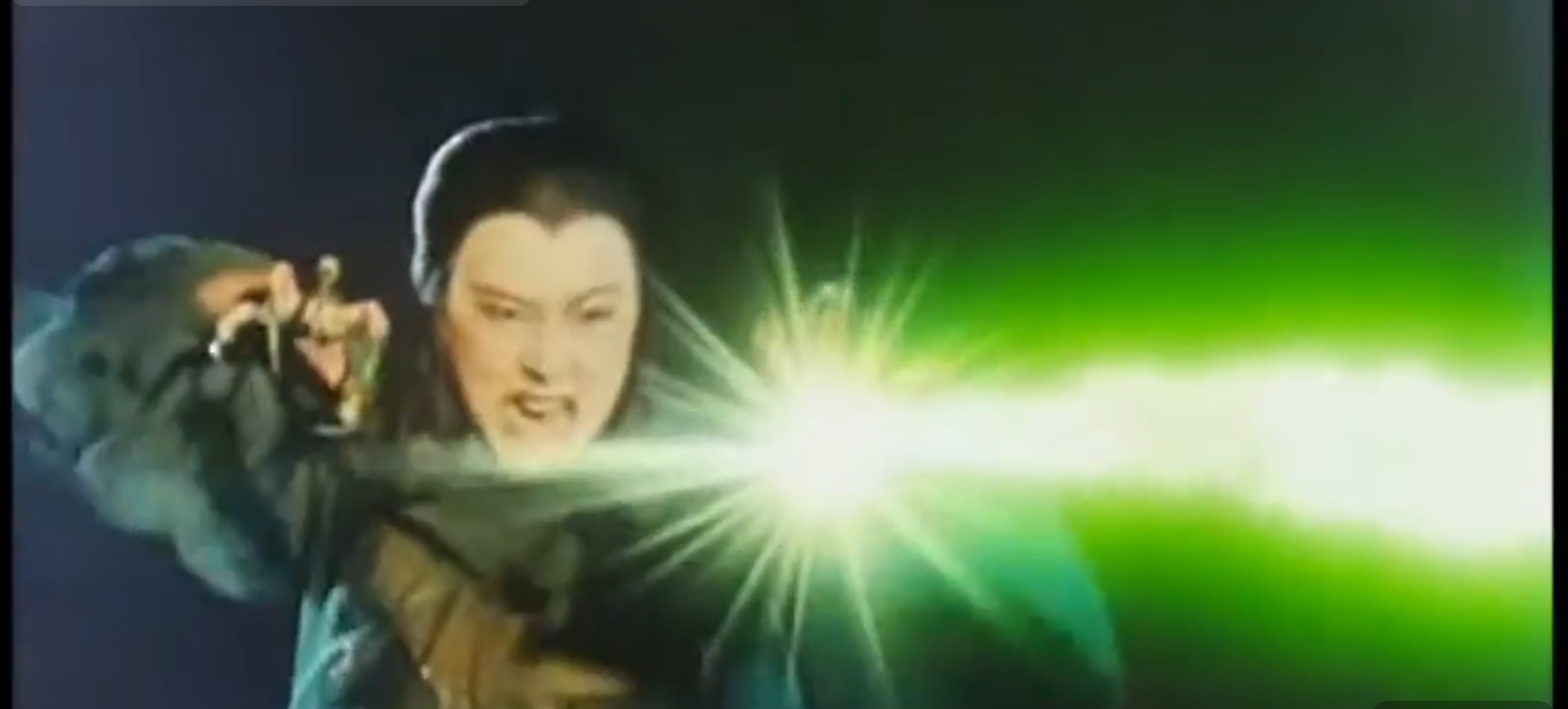
A strange science fiction thriller hailing from Hong Kong, “The Cat,” or “Lo mau,” is the 1991 filmic adaptation of author Ni Kuang’s “Old Cat” from a part of the Wisely adventure series of novels.  Written by frequent collaborating screenwriters Hing-Ka Chan and Gordon Chan (“Cat and Mouse,” “Behind the Yellow Line”) as well as numerous team-ups of Hing-Ka penning Gordon director helmed works (“Beast Cops,” “Thunderbolt”) and directed by “Riki-Oh:  The Story of Ricky” director Ngai Choi Lam, “The Cat’s” bizarrely unraveled as it is unrivaled but evokes a commingling of Hong Kong mysticism, science fiction, horror, and creature personification that’s hard to find not entertaining in its converging Daoism with creature feature movies!  Golden Harvest and Paragon Films, in association with Japan’s Nippon Television Network as a Hong Kong-Japanese alliance, are the companies behind the picture production with Chan Tung Chow (“Riki-Oh:  The Story of Ricky”) and Seiji Okuda (“Pulse”) as producers.

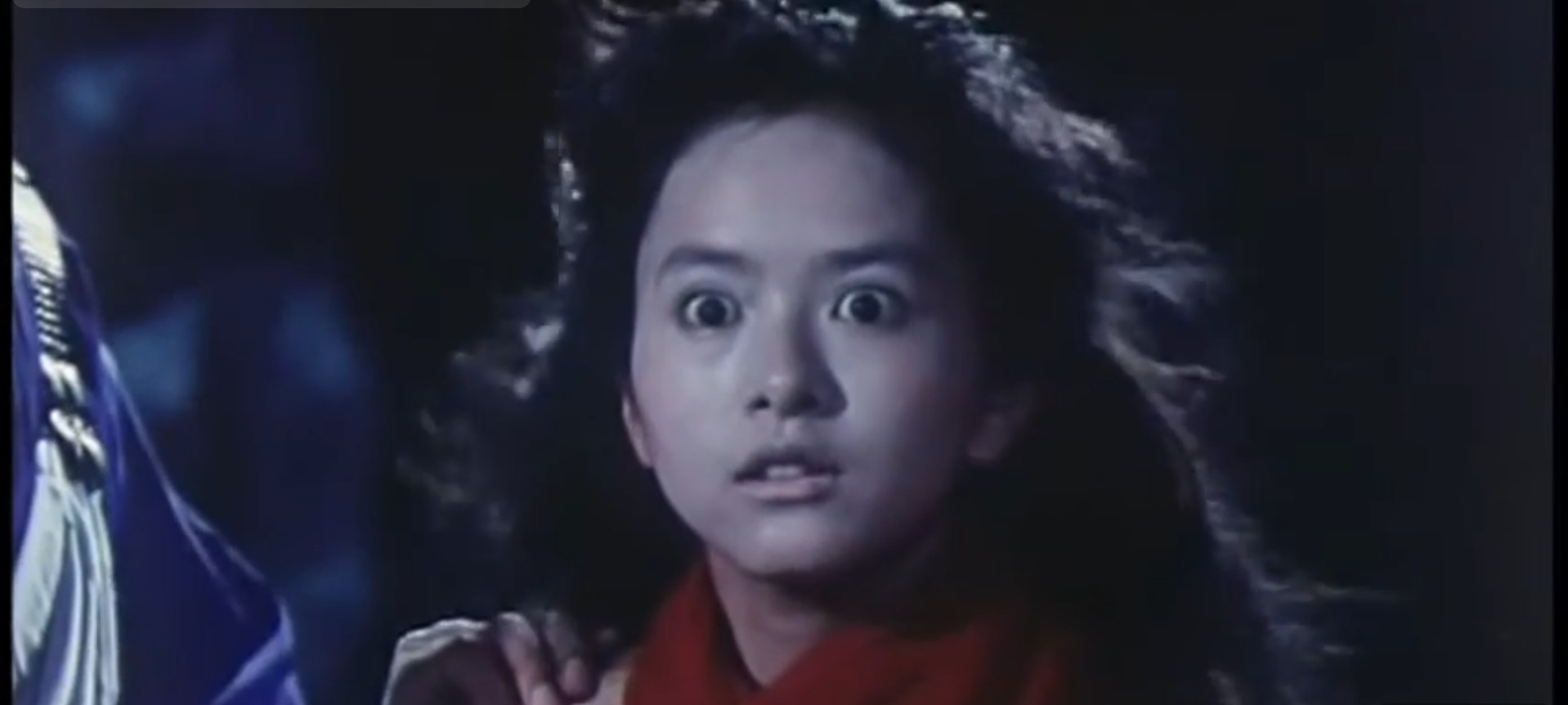
Hong Kong beauty Gloria Yip (“Riki-Oh:  The Story of Ricky,” “The Blue Jean Monster”) took Hong Kong cinema by storm in the early 90s before quietly taking a step back from acting to focus on building a family when newly married in 1995.  Since her divorce, Yip has been active in the last decade and half but to experience her best, early work, “The Cat” is a good start to behold her natural girl-next-door charisma and attractive attributes as an alien inside a human body.  Where she obtains this human form is unknown and her species social status, her name or how she became trapped on Earth is also vague, but Yip’s character can float waltz and is seemingly the caretaker of the Cat, who is a general of sorts in the alien race.  Her alien sidekick, Errol (Siu-Ming Lau, “Shaolin vs Evil Dead:  Ultimate Power,” “A Chinese Ghost Story”), too has an equivocal backstory as they search for weaponry relics and evade the caustic and electrically charged blob monster that threatens their world.  The story falls in more in tune with the three friends buried by the extraterrestrial struggle for survival and dominance with “A Chinse Ghost Story II and III’s” Waise Lee as principal lead character Wisely, a humble story writer living off the riches of girlfriend Pai So (Christine Ng, “Crime Story”), at least based on their dialogue of her owning a big house, playing tennis, and providing.  It’s an oddly laid out relationship that shows no quarrel or being tested when up against alien beings.  Li Tung (Lawrence Lau, “3-D Sex and Zen:  Extreme Ecstasy”) is Wisely’s first friend to encounter the girl and cat as noisy above neighbors but it’s their cop friend, Wang Chieh-Mei (Philip Kwok, “Hard Boiled”) who takes the unfortunate brunt being inhabited by the alien blob and becoming a Rambo-arsenal assassin.  The last piece to “The Cat’s” cast is actually the “Old Cat” author Ni Kuang having a cameo appearance as a warrior dog handler, Processor Yu.

Did I mention already that “The Cat” is beyond bizarre?  The campy story suffers from connective tissue deficiency syndrome, meaning there’s not enough exposition or explanation in the subdued, mild-manner interactions to really bring together and segue the really cool action and creature sequences that involve, but not limited to, pyrotechnics, forced perception effects, stop-motion, blood squibs, prosthetics and makeup, and high-flying wire acts involving not only people but cats and dogs!  The cat versus dog fight is a rough-and-tumble showstopper.  The special effects and choreographic teams of Hong Kong’s special makeup effects artist Chi-Wai Cheung (“Riki-Oh:  The Story of Ricky”) and stunt coordinator Philip Kwok taking their cogs and working into the grand effects design along with Japan’s f/x crew from visual effects artist Takashi Kawabata (“Dark Water”) and special effects Shinji Higuchi (“Gamera, the Guardian of the Universe”) is a masterful amalgamation of two cultures and two styles into one, blending high-flying acrobatics with the strange, bold stop-motion and visual effects that incorporate puppets and molds is optical buffet aimed stimulate and confound.  Nearly experimental in its narrative and effects while bordering being derivative, such as from the 1988 “The Blob” remake, “The Cat’ prowls, growls, and meows as a welcoming hot mess of feline phantasmagoria. 

On a new limited-edition Blu-ray set with exclusive, new artwork by graphic artist Sean Langmore, “The Cat” purrs with a fully-loaded, out of this world high definition release from UK label 88 Films and distributed by MVDVisual in the North American market.  A new 2K restoration of the original 35mm negative is encoded on a AVC encoded BD50 with a 1080p resolution in an aspect ratio of 1.85:1 widescreen.  Image presentation has the stellar glow of regular Hong Kong film stock, a stock that doesn’t dilute the defining particulars but only softens them slight.  The original negative has withstood the test of time and any improper handling providing the restoration effort with a focus-driven goal of grading and detail. The other side of that coin is that all the rubbery and irregular textures are now more in the spotlight instead of being lost in the lower resolution and more opaque video qualities.  Brilliant gel lighting and a comprehensive range of primary reds and blues coupled with an electric orange and blood red of the antagonistic monster seduces contrastingly inside a dark atmosphere with a story mostly told during the nighttime hours.  Remastered with a Cantonese DTS-HD mono track, the compositional track is about as good as it’s going to get but that’s not saying the audio is bad at all.  Clean and clear in ADR dialogue and distinct in the ambience and action, “The Cat’s” remastering is mighty without being punchy with broad-range, consistent audio that doesn’t have any holes poked into it and has an epic, original score by Phillip Chan (“Her Vengeance”).  Newly translated English subtitles are burned onto the only video file feature.  The encoded special features include an audio commentary by Asian film expert Frank Djeng of the NY Asian Film Festivial, a new interview with writer Gordon Chan in Cantonese with an English introduction, the Japanese cut of the film in standard definition, an image gallery, and theatrical trailer.  All of the encoded features will be available on the limited-edition and standard release sets.  Langmore’s artwork graces the LE O-ring slipcover and rigid slipbox with a crazy illustrative arrangement that details how bonkers “The Cat” gets.  Inside the slipbox, a full-bodied colored and detailed booklet with more original Langmore artwork, one sheets, stills, and other contents that include cast and crew acknowledgements, a Paul Bramhall retrospective essay on director Ngai Choi Lam That Cat is Dangerous, a second essay in regard to Nai-Choi’s niche cinematic credits by Matthew Edwards entitled Body Horror, and a special thanks roundup and more acknowledgements in the making of the Blu-ray release.  There’s also a collectible art card stuffed in between the clear Amaray case and the booklet.  The reversible cover art’s secondary slip-shell is of an original poster art, a good alternative to an already overused Langmore illustration that’s on the O-Ring and slipbox.  While not a numbered limited-edition release, news of the set already being or nearly sold out at most retailers is circulating, but there will be a standard edition slated for release late November ICYMI!  The not rated release has a 89-minute runtime and is encoded region A and B for playback.

Last Rites: Ngai Choi Lam’s science fiction, body horror, and creature feature inundated “The Cat” has all the weirdness and practical prosthetics, including deeply bizarre force perception visuals, that’s beyond our galaxy and capacity for understanding, landing with great precision onto a well-deserved, highly anticipated, and must own 88 Films’ limited-edition boxset!

If you missed the Blu-ray, “The Cat” Standard Edition is Available!

20-Years or More Incarcerated is No Match for Tenacious EVIL! “The Rapacious Jailbreaker” reviewed! (Radiance / Limited Edition Blu-ray)

Break From Your Cage With This New LE Blu-ray of “The Rapacious Jailbreaker”

Masayuki Ueda is nabbed after murdering a drug dealer’s girlfriend during a botched meeting.  Ueda faces a 20-year prison sentence for his crime but after being processed, nothing can change his mind nor his determination to escape.  Willing to sacrifice blood for freedom, Ueda escapes and visits his lover in Kobe for a quick conjugal stop and money only to be caught again when he returns, tacking on additional years to his sentence.  His next escape plan joins forces with two other inmates and, again, his route to freedom is cut short when a brothel visit, while laying low in his sister’s village, turns into a violent brawl with another patron and the authorities round him up in the aftermath, adding more years to his sentence.  While incarcerated, Ueda must kill rival gang bosses who threaten him.  By now, Ueda’s sentence is up to 40-years, and not to be defeated by the prospect of a long term sentence, Ueda has one more desperate attempt for freedom, putting his life on the line.

“The Rapacious Jailbreaker,” aka “Escaped Murderer from Hiroshima Prison” or “脱獄広島殺人囚,”is the crime black comedy from one of the Toei Company’s aggressively eclectic and paced directors Sadao Nakajima (“The Kyoto Connection,” “Female Ninja Magic”).  The prolific yakuza and exploitation filmmaker takes the Tatsuo Nogami (“Father of the Kamikaze”) script, centered on an incessant career criminal hellbent on not spending his days in prison, and runs with it, fashioning the smidgen stitchwork of a nonfictional individual into the post-War World II, American occupation of Japan and adds inner teetering and play-by-play thought narration and the always welcoming gallows humor amongst the exploits of a stubborn felon.  Gorô Kusakabe (“Hell,” “The Red Silk Gambler”) produces the production, which is part of an unofficial Sadao Nakajima trilogy along with “Shimane Prison Riot” and “The Man Who Shot the Don.

Hiroki Matsukata, a prolific yakuza actor from the 1960s to the 1980s with such credits as “Survivor of the Massacre,” “Dangerous Trade in Kobe,” and “Battles Without Honor and Chivalry,” breaks intermittently through the gang wars and boss-laden wall of tattooed violence and varying levels of respect that’s inked the individualized stories’ skin with “The Rapacious Jailbreaker” as the titular lead character under the character’s God-given name of Masayuki Ueda, a tenacious criminal personality type with yakuza-like transgressions of drug peddling and black market trade.  However, Ueda is not a criminal without honor, even if he’s a little rough around the edges, as his loyalties lie with those who are loyal to him: a fellow partner in crime he didn’t rat out, his suffering wife (Yōko Koizumi ), his sister Kazuko (Naoko Ohtani, “Apartment 1303”), and also those who help him escape, such as  Tatsuo Umemiya’s (“Spoils of the Night”) brazen law challenger Yuji.  Yuji and Ueda match well in traits, both eager to test and take risks going against a rather lax authority grain.  Aside from the opening montage of prison routines depicting minor torture from the guards, you don’t get the sense the prison guards have much domination or enough aggressiveness to match the kind of zeal the inmates have to either run a sneaky scheme or take them on toe-to-toe to get what they want, as we see with Yuji’s disgracing efforts against the warden in order to obtain rights that are quickly dismantled by the warden’s reneging, but at the cost of his humiliation.  Matsukata never wavers or deviates from Ueda’s singular drive, layering intensity overtop his thin film of civility with every additional time added to his sentence that eventually goes beyond four decades, but you can see it not only in Ueda’s resolute eyes but in Matsukata’s as well that nothing will stop him from escaping.  The film fills out with Hiroshi Nawa, Gorô Ibuki, Tatsuo Endô, Shigeru Kôyama, Hideo Murota, Harumi Sone, and Akira Shioji in various rolls of yakuza, fellow inmates, and those crossing Ueda’s path in the outside world.

Staying on the theme of Ueda’s loyalty, which is incredibly beyond reproach given his heinous crimes, there’s something to be said for his commitment to be free as a bird but also to the people who do right by him, no matter the circumstances. His wife pledges endless loyalty despite his flaws and felonies, his estranged sister welcomes him with food and shelter, and his opening criminal accomplice provides him a weapon before thanking him for not ratting when Ueda was apprehended by police. There’s an underlining code of respect and duty intertwining the utter most wicked and those blood relations in the field of collateral damage. Ueda’s responsibility for his actions never wanes, never deflects, and never becomes a weight of guilt as the only object, or maybe even obsession perhaps, on his mind is to escape prison and make quick, easy money. His loyalty does come at a fault when his trust reaches into the weeds, especially amongst those he’s already collided head-vs-head against, such as the former head of the black market beef butchers who turns on Ueda for false promises, but it’s in that one and only instance that everything becomes clear, much more to the audience than perhaps Ueda himself, is that in order to remain just out of arms’ length of the law, he must walk his path alone as depicted at the finale moments. The post-World War II American occupation time period has an interest facade to “The Rapacious Jailbreaker’s” context. In fact, the American presence is rarely present at all with Ueda feeling the squeeze mostly in-house within the Japanese penal system with the Americans only rearing their heads in obstacle of his escape attempts in a negative light: Ueda’s standoff against Japanese officers, who won’t shoot him surrounded by a crowd in fear and respect of bystanders, comes to a quick surrender when the Americans, who are perceived to shoot on sight no matter the circumstances arrive on the scene or when his fellow escapee tries attempts to befriend American forces in a military truck only to be runover and killed without remorse or even a slow down. These seemingly insignificant instances spoke volumes against the American occupation as a non-character in Ueda’s tale of total resistance that, one that either represents the American cold passive care of the Japanese under their rule or switch the ironfisted from Japan to America to favor a more lenient system of control.

Radiance Films’ transatlantic “The Rapacious Jailbreaker” lands in the U.S. for the first time on any format, and first on this particular format globally, with a new limited-edition, AVC encoded, 1080p high definition, 50-gigabyte Blu-ray. The dual layer allows for steady color timing and pristine picture quality image that’s leans into its attractively grained 35mm stock and presented in its original widescreen aspect ratio 2.35:1. The original print, transferred into HD from the Toei Company, is nearly faultless with only minor instances of vertical scratching around the theater scene in an otherwise near clean and clear element print. Nakajima’s lower contrast allows for softer coloring and the touch points on Radiance’s treatment showcase a more relaxed but harsh grayish blue with surrounding aspects from the prison’s hoary cement floors and walls to the prison’s steely cell bars and the prisoner’s blue attire. The uncompressed Japanese language PCM mono track offers clearcut dialogue and ambient markers with a clarity on both fronts that render an intelligible layered track without any compromising issue. Kenjirô Hirose (“The Last Dinosaur”) brings a 70’s cop-and-crime swanky score with undertones of traditional Japanese Hyōshigi, the striking of sticks to create that brief and stark crack sound. New translated English subtitles are available, pacing well and are error-free. Encoded special features include a visual essay by film critic Tom Mes and an audio commentary by yakuza film expert and Sadao Nakajima historian, Nathan Stuart. Radiance’s limited-edition set comes in a clear Amaray case with a reversible cover with original and new artwork, the latter commissioned by layout designer Filippo Di Battista (primary). Also included is an obi stirp with the release’s contents, technical specs, and film plot. Limited to 3000 copies, the release comes with a 23-page black and white booklet with stills, an essay Escape as Vocation by Earl Jackson, and a 1974 review by Masaharu. The 97 minute feature comes region A-B locked and unrated from the UK label.

Last Rites: “The Rapacious Jailbreaker” is hardboiled tough as nails while being a series of comedic follies that make this tenaciously titled story of one man’s pursuit of freedom a breakout hit.

Break From Your Cage With This New LE Blu-ray of “The Rapacious Jailbreaker”