Romance, Arsenic, and EVIL from the “Coven of the Black Cube” reviewed! (Blood Sick Productions / Blu-ray)

Don’t Take a Drink from “The Coven of the Black Cube!” See On Blu-ray!

In a romantic tale brewed in turmoil and death metal, Violet’s relationship with girlfriend Gumby has spiraled into rocky territory.  Meanwhile, a coven of witches, the coven of the black cube, use a façade storefront to sell their arsenic infused potions to women who patron the store looking for spells, elixirs, or anything they can get their hands on to give them their just desserts.  Along with a steep price for the potion, the coven’s intent is to also extract the hearts from the corpses for black ritual purposes.  When Violet meets Clover, one of the coven witches, she’s smitten with their newfangled friendship, entrusting Clover enough to naively purchase the potion that only truly works if the other person actually loves them back.  Violet’s plan backfires when the potion takes Gumby’s life but in tragedy she finds solace, warmth, and love from Clover as the two find a stronger connection than before.  Yet, Clover’s coven doesn’t see their amorousness as conducive and plot against Violet and her inner circle who know a little too much of their murderous plans. 
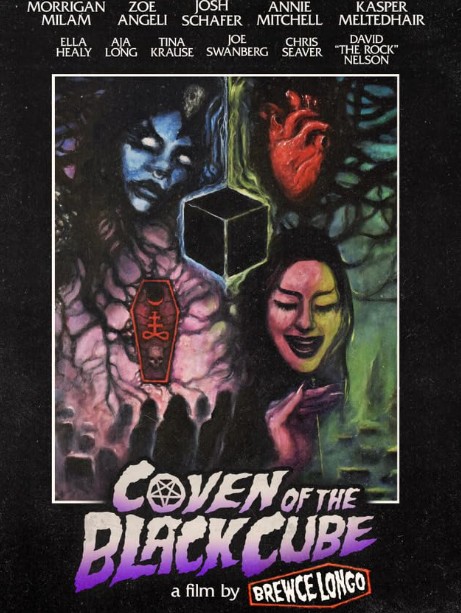
“Coven of the Black Cube” is the 2025 alternative-goth romance horror from Brewce Longo.  The 2024 released film is Longo’s third full-length feature film behind “Blood Sick Psychosis” and that timeless – or was it tasteless – holiday classic, “A Corpse for Christmas.”  Longo pens the shooting script from a story concept by Longo, the film’s costar Zoe Angeli, and Josh Schafer, a VHS aficionado with producing involvement in the VHS documentary “Adjust Your Tracking” and videotaped themed adult animation film in “The Magnificent Kaaboom!!! VHS.”  “Coven of the Black Cube” takes a shine to Schafer’s enthusiasm for the antiquated media format as Longo devises an analog appearance from shooting with a VHS camcorder.  Longo and cinematographer Michael DiFrancesco serve as executive producing financiers of the lo-fi and underground horror production with “Busted Babies’” X Menzak and Charles Smith as co-producers. 
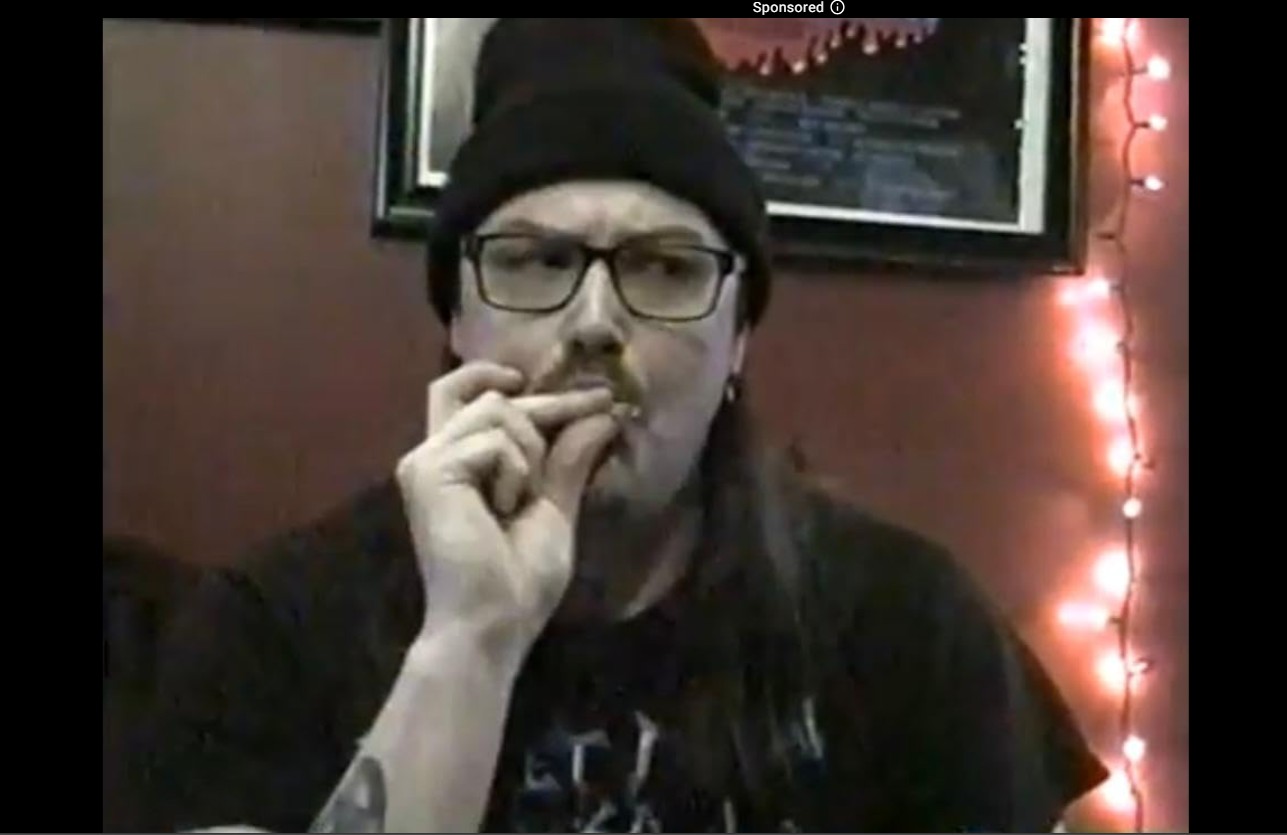
At the dark heart of the story, two women devoid of true love are a piece of a larger pie of characters and while Morrigan Thompson-Milam (“Debbie Does Demons,” “XXX-mas”) and Zoe Angelis (“Flesh Eater X,” “A Corpse for Christmas”) play the characters on opposing sides of the morality scale who find a connection of desire for each other’s comfort and company, there is often a focus on Milo, the laissez faire pot shop, VHS, and pizza-making entrepreneur, and his frustrated wife looking for husband humiliation.  Milo’s a long haired, mustached, glass-wearing, dope smoker with a penchant for Carl J Sukenick movies and the finest college combo of cold pizza and warm beer.  “Pigshit’s” Josh Schafer cowrites in his character’s love for the underground and obscure horror in a retro-VHS format and instills an uncouth yet gentle behavior for a likeable Milo, but Milo’s is benign to “Coven of the Black Cube’s” theme as well as his wife’s (Annie Mitchell, “A Corpse for Christmas”) distaste for his uncivilized and disinterested spousal conduct.  There’s segment has little value other than to be another coven case of trying to get rid of one’s husband and to be not a good friend, but just a floating friend to Violet and Gumby (Kasper Meltedhair, “Darbie’s Scream House”) that supplies them weed from time to time.  We’ve seen Angelis before in more X-rated material from extreme indie filmmaker SamHel’s short films “Vania” and “LoveDump” but her role as Clover takes it down a notch by only going full nude for a steamy moment, exposing just enough yet plenty for a lead into sex scene that fades to a black transition just before getting down with Violet.  Clover and Violet relate to effectual romance that’s organically not sustainable due to the coven’s strict unwritten policies on privacies with Luna (Aja Long) as the representational face of the coven head who will do what is necessary to keep their practices a secret.  The cast fills in with Tina Krause (“Bloodletting”), Joe Swanberg (“You’re Next”), David ‘The Rock’ Nelson (“Blood Sick Psychosis”), and Chris Seaver (“Scrotal Vengeance”).
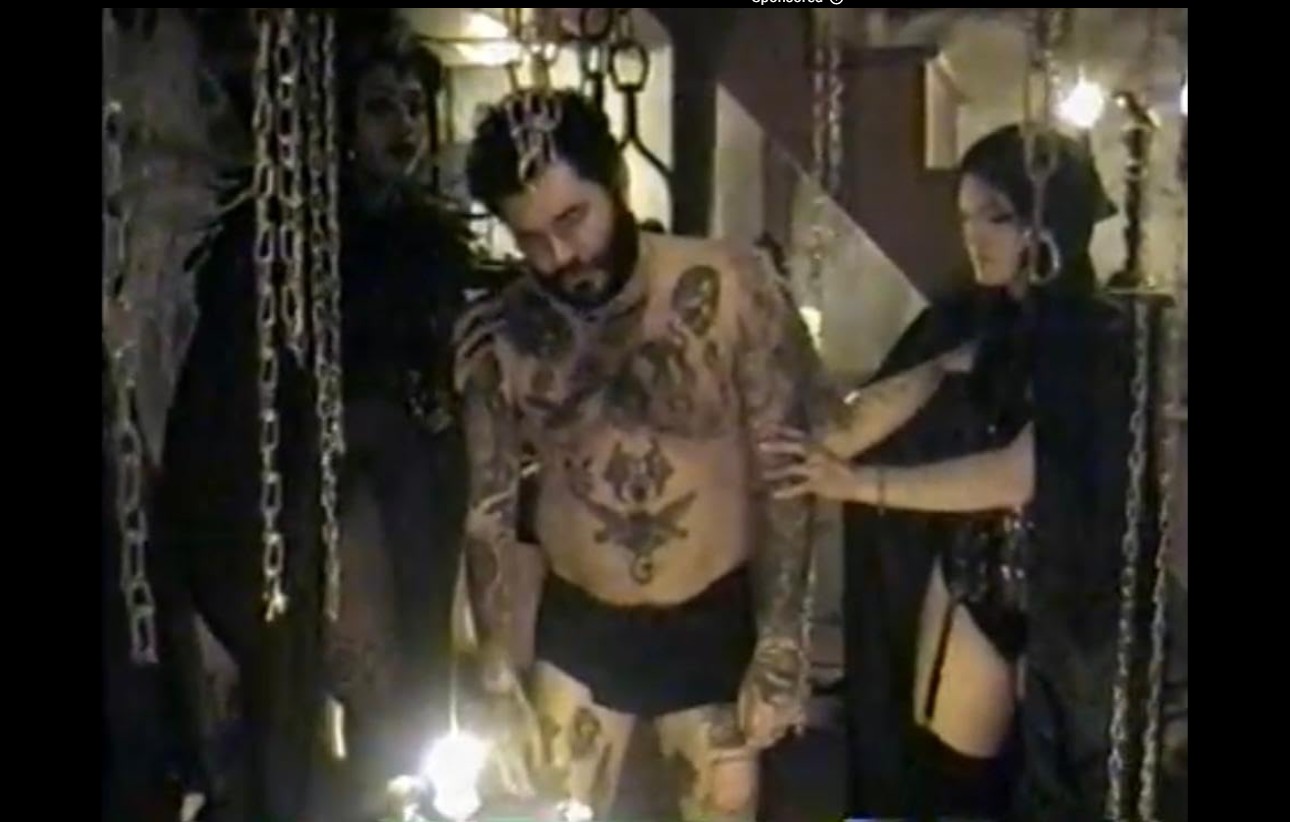
Underneath the darkling foundation and it’s deathrocker-and-hillbilly rock scene, “Coven of the Black Cube” has perfected the notes of being an analog horror in the modern, digital age by actually using era specific filming equipment to achieve a natural aesthetic with tracking lines, interlaced blocking, and a low-bandwidth process with magnetic tape decay resulting in color shifting and bleeding of the warmer tones produces a nostalgic exactness, an infinite times better aged look through proper medium than a digital image could ever try to reproduce through  being played back through a VHS recorder or any VHS filter.  High praise for a more than accomplished film aesthetic can only push its success so far as the story, a dark-and-grim queer romance, struggles to keep focus with a disjointed narrative, diluting too much of the Violet and Clover rising relationship within the killer-coven context.  Sidebar scenes of Milo’s substory, subjecting his wife’s disdain for his change over the course of the marriage and the subsequent consequence of her plot to do harm to him, dissent the story’s core queer love affair tone too much and too heavy-handily while keeping an overtop cloud of wicked witchcraft whirling about between murdering men, selling pernicious beauty products and services, and holding dark rituals involving a coffin, torture of manhood, and ill-effect open-heart surgery.  Gore effects are moderately effective, especially with the back alley penile canal probing that’ll have all the men cross their legs in fear but also include disemboweling and heart removals.  One item that really digs under the skin, nagging for it to be further explained, is the significance of the black cube.  It’s symbol is worshipped but is still an ambiguous cause or idol the coven sees fit to follow; however, a little research suggest Longo’s story pulls inspiration from the occultist and magical religion Cult of the Black Cube that has been segmented over he course of time, one of those segmentations being blood sacrifices in order to harvest souls for possibly Satan and that closely resembles the filmic plot. 
Blood Sick Productions receives the high-definition Blu-ray treatment for “Coven of the Black Cube,” distributed by MVD Visual.  Encoded onto a BD25, the AVC encoded, 1080p Blu-ray, presented in a 1.33:1 aspect ratio, is an analog enthusiasts wet dream being shot on magnetic tape rather than digital, creating all sorts of color bleeding, interlacing issues, and fuzzy imaging that can both be an instilling nostalgia of reminiscent low-budget 1980s horror and a videophile’s ultimate night for apex image quality.  Longo’s intentions were for the former, a love letter to the VHS era, under the cinematography of Michael DiFrancesco who knew how to correctly light and angle certain shots ot appear vivid, such as in the nightclub scene where Violent and Clover meet eyes, and for the rest of the film use the inherent camcorder’s constraints to let the low resolution and limited color range to take the wheel.  The English PCM 2.0 stereo has a stronger mix than expected in contrast to the video quality, filling in the dual output with unrefined and flat but clear and prominently forefront dialogue, nonetheless.  A killer metal soundtrack is the film’s pride and joy, dispersed throughout appropriately emotionalizing and accentuating the type of scene, with performances from Sing Slavic, Fishgutzzz, Slasher Dave, ShitFucker, Blank Spell, Xarissa, Sorrow Night, deleter, Heavy Temple, Soft Teeth, and more, a full list is inside on an inserted one-sided sheet in their respective band fonts.  Other physical properties of include a harsh pastel and crudely demonic illustration by Paul Barton.  Inside with the insert sheet, the disc is pressed with a giant black cube, bordered with archaic rue figures in a bloodred backsplash.  Encoded special features include a commentary writer-director Brewce Longo, writer-star Zoe Angeli, writer-star Josh Schafer, and director of photography Michael DiFrancesco, a behind the scenes look, and the trailer.  The region free encoded disc has a runtime of 97 minutes and is not rated.

Last Rites: An alternative witchy tale for the alt-scene, “Coven of the Black Cube’s” nostalgia for the analog and the misandrist femme-fatales marks a different kind of cauldron-stirred potion for the black cat and broomstick subgenre but there’s an imbalance of story here that’s difficult to ignore with its wandering path that takes focus away from the significance of the black cube, trading defining substance around the coven’s existence for a quick cementing romance.

Don’t Take a Drink from “The Coven of the Black Cube!” See On Blu-ray!

Yorgos Lanthimos Early Day EVIL is Not to be Missed! “Dogtooth” reviewed! (Visions Home Video / 4K UHD)

“Dogtooth” Available on 4K UHD Blu-ray from Visions Home Video!

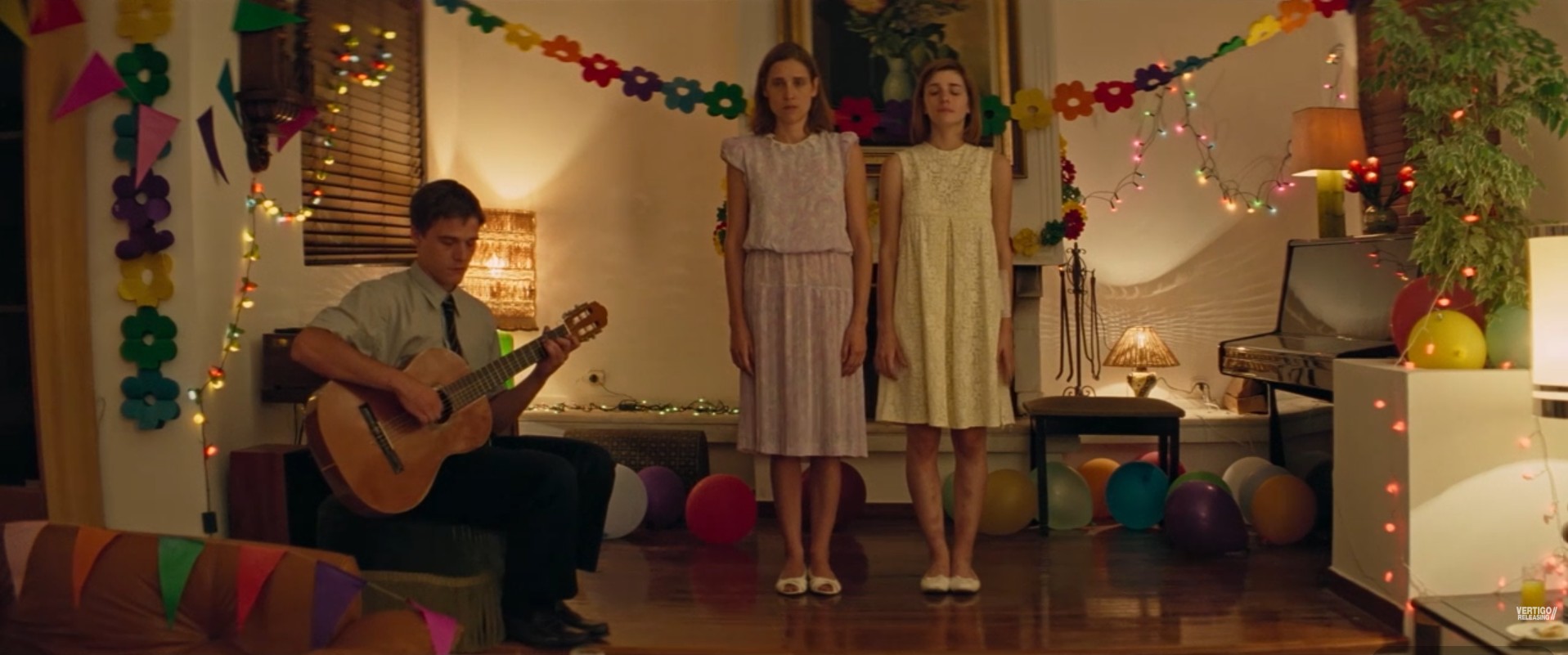
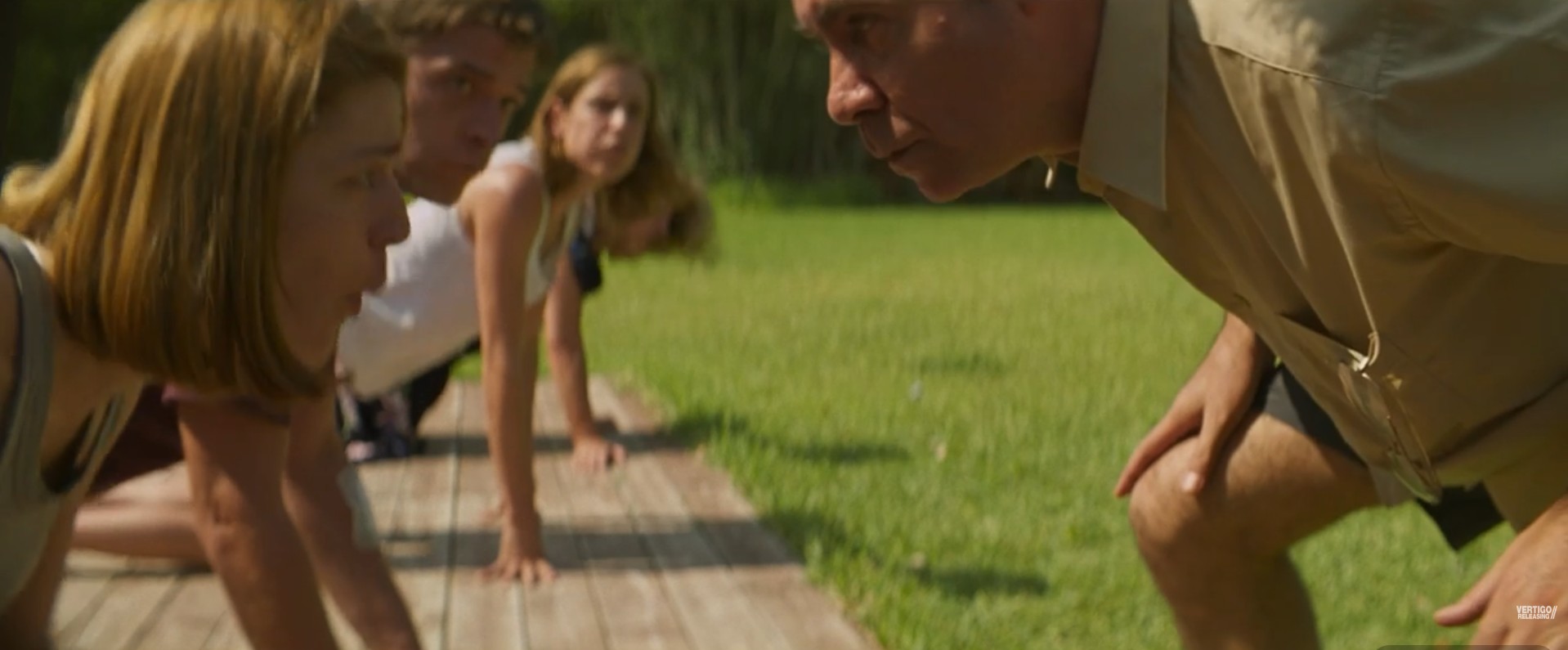
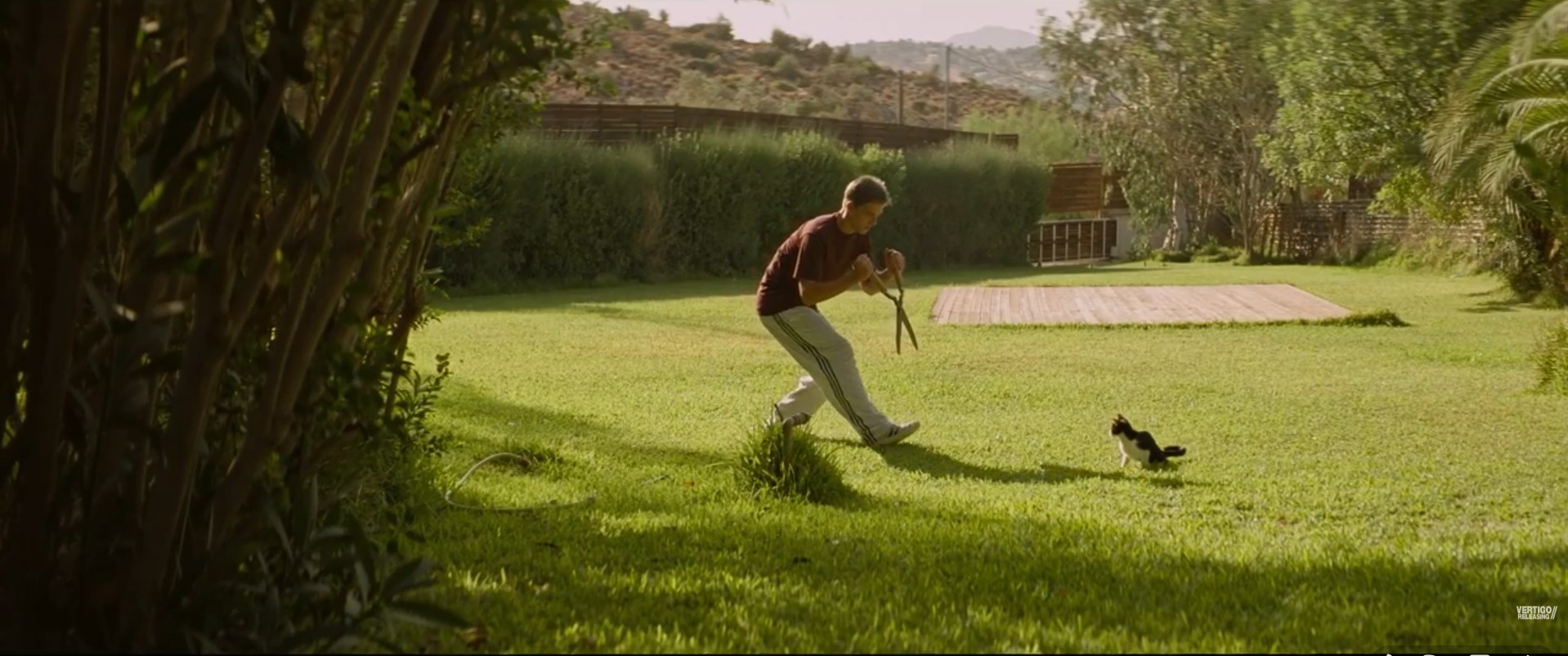
Three adult children remain on home grounds by their manipulative father to protect them from the outside world and keep them suspended in a childlike state.  Educated on a basic level and even educated incorrectly to strategically keep their spongy intellect pure and from asking too many questions about the curiosities beyond the front gate, the children must complete chores and workouts under their father’s regimental thumb, earning tokens to keep them engaged with simple activities and rewards, but the outside can’t be stopped from seeping in with exterior influences raising more questions than the father can keep up with lies, excuses, and fabricated stories.  If he finds his children entertaining an inspiration, his immediate reaction is to manipulatively redirect or even use violence if necessary to put his children back in a stationary line, scaring them of dangers outside the home, such as the killer ferocity of a household cat as it’s curiosity that killed the cat.  Or is it the other way around, did the cat kill the curiosity? 

Way before his 2026 Oscar nominated film “Bugonia,” way before his quicky dark-comedic Frankenstein variation “Poor Things,” way before the shapeshifting deadline of forced relationships in “The Lobster,” offbeat and provocative Greek filmmaker Yorgos Lanthimos directed “Dogtooth,” the 2009 psychological horror-drama that displayed a disturbing power-dynamics of a nuclear family by a manipulative father of three.  Lanthimos co-wrote the script alongside Efthimis Filippou, a regular collaborator with the director from Filippou’s debuting “Dogtooth” script up until 2017 psychological, life invasion thriller “The Killing of a Sacred Deer.”  “Dogtooth,” or “Κυνόδοντας” in the native Greek vernacular, is filmed in the heart of Athens, coproduced between Lanthimos, Yorgos Tsourgiannis, and “Do It Yourself” producer Katerina Kaskanioti, and is a collaborated studio project of Boo Productions, Greek Film Center, and Tsourgiannis’s Horsefly Productions. 

“Dogtooth” consists of a tight cast of six actors between the parents, three kids, and a security guard employed at the father’s manufacturer.  Some would say Christos Stergioglou plays one of the worst manipulating parents on screen of our generation with a calm demeanor and a convincing nature while having a ferocious side of physical punishment against those going against the grain.  With a small cast, those taking the beatings can be his children.  “Singapore Sling’s” Michele Valley is in the mother role, an equal schemer in her abetting of the problematic parenting, but it’s quite unclear whether the Mother is either in on the Father’s paranoic protective plan or whether she too is a victim of his deceit.  While she can be seen deriding her children in seldom words and violence, she too follows Father’s strange ways:  pretending to be a four-legged guard dog like her kids, never leaves the house, succumbs to Father’s sexual habits, etc.  The sex never extends from parent to child, leaving most of Father’s perversities kept intact by Mother and a good old fashion VHS stag tape, but there’s still exploitation done amongst the children.  Treated to his own arranged woman to bed, overseen by his Father, the son’s sexual hormones and desires are made docile by the security guard Christina (Anna Kalaitzidou) from his father’s work and is seen as an act of transactional duty rather than having a presence of affection.  Christos Passalis does embody his character with a young, pre-adolescent boy with tempers, sibling competitiveness, and appropriate reactions to all things that accompany a young boy.  Eventually, after Christina is let go exploiting and influencing the younger daughter with sexual tradeoffs and forbidden contraband, the son is forced to have sex with one of his sisters to maintain the stability of a pure environment.  Angeliki Papoulia and Mary Tsonia are the Older and Younger Daughter with similar appearances and attributes, too exemplifying childlike qualities, that make them also like twins in how they act and how they act with each other with the Eldest naturally, without purposeful intent, trying to break free of her father’s grip in the way children do – in irritational and hurtful ways.  Other than Christian, none of the main principal characters have a name, leaving them to be a representation of any family of any kind out in the world.  Steve Krikris, Sissi Petropoulou, and Alexander Voulgaris round out the film’s supporting parts.

Yorgos Lanthimos takes helicopter parenting to the extreme but in subtle, death-by-a-thousand cuts techniques simply by sheltering in place his entirely family for years and himself teaching his children lessons of his own fabrication.  Taught the world is a dangerous place, where cats are the most feared and deadly animal who killed their exiled “brother”, the children fear what’s beyond their sprawling compound so much they don’t dare cross the gate line.  Vulgar worlds like pussy are defined with innocuous objects, such as lamp light, and lesser provocative vocabulary, in this case zombie, is given the designation to little yellow flowers.  The children’s minds are so brainwashed, their identity is also erased along with their names, mostly busying themselves in the same sterile clothing that evokes no emotion whatsoever.  Lanthimos extends this common place sense of being into the character interactions, whether between family members or the supporting characters, that make the entire tone feel that more unsettling and perfunctory.   The sexual tension is chronic, even between the siblings it’s uncomfortably prevalent, but never malicious on the surface as the acts are kept dutiful and necessary to sustain dominion over the children and perhaps even the wife despite its icky film coating.  The whole idea of the titular dogtooth is a rite of passage from childhood to adulthood, the latter suppressed by the weaponization of sex, education, and threat, for when the permanent adult canine, or dogtooth as Father puts it, falls out is when a child can leave the next and in that is manipulative false hope that one day, the strongest tooth, it’s ability to rip through meat and sinew, will fall out on its own accord, essentially making the children a metaphorical dogtooth that needs forceful extraction from its rigid system of enameled manipulation.

Courtesy of Visions Home Video, a premium home media label from Vertigo Releasing, “Dogtooth” arrives on 4K UHD Blu-ray in the UK-Ireland.  Presented with 2160p in the original aspect ratio of 2.39:1, the HEVC encoded BD100 has a superior encoding compared to previous models and other region 4Ks with a Yorgos Lanthimos approved transfer of the 35mm negative that’s contains and controls the grain that once had issues in previous releases with ill-defining effects on darker sections of the scene, establishing corrected contrast where intended and needed other releases failed to accomplish.  A natural light grading shines through with immersive coloring from the monochromic, or achromatic, outfits to the saturation of greens of the compound estate, a dynamic range of the metadata, DolbyVision.  There’s very minor speckling off some individual cells on the stock but the overall product is the best “Dogtooth” has looked and deserves it.  There are a pair of audio layers available:  a DTS-HD Master Audio 5.1 and a LPCM 2.0 Stereo both in Greek with optional English subtitles.  The monotonic dialogue alleviates many issues associated with these tracks as there are no inflections, tones, forced accents, or any other shaded types of vocal manipulation.  The plainspoken, forth-right conversing creates a naturally prominent layer that’s clean and concentrated above all else.  That’s not the say the soundtrack or the ambience drags or lacks behind though it is slightly less dynamic in its diegetic range.  You won’t be fully immersed with audio hits through side or back channels, but every layer has a stronger and bolder presence than before in previous releases.  Special features include a film in tandem audio commentary with stars Angeliki Papoulia and Christos Passalis, an archived interview with Yorgos Lanthimos from 2009, a 2025 London Film Festival stage interview with more in-depth insights from Lanthimos, three deleted scenes, and two original trailers.  Visions home video release is a vision in itself starting with the beginning layer, a cardboard O-ring slipcover with a somewhat glossy, upscaled image of one of the female children locked behind a bar-cell of bare legs.  The same image is represented as the primary sleeve art inside a Scanova case (no Blu-ray logo at the top).  Inserted inside are four collectible cards of high-quality stills from the film and a double-sided folded mini-poster.  The region free release is UK certified 18 for strong sex and nudity inside the duration of 97 minutes. 

Last Rites: “Dogtooth’s” disturbing fan outs, spreads like an infection of manipulation, but is localized in and around the property that’s become a cage, or an invisible fence, with the latter being more poignant to the storyline with the father having them bark and be on all fours like a dog, a pet symbolism indictive of egocentric power over those one can control from the beginning. The new Visions Home Video 4K UHD release is a new and improved upgrade for any collector’s wall.

“Dogtooth” Available on 4K UHD Blu-ray from Visions Home Video!

Cinderalla’s Beauty Evokes an EVIL of Jealously, Obsession, and Beauty Standards. “The Ugly Stepsister” reviewed! (Second Sight Films / Blu-ray)

“The Ugly Stepsister” on 4K UHD Blu-ray from Second Sight!

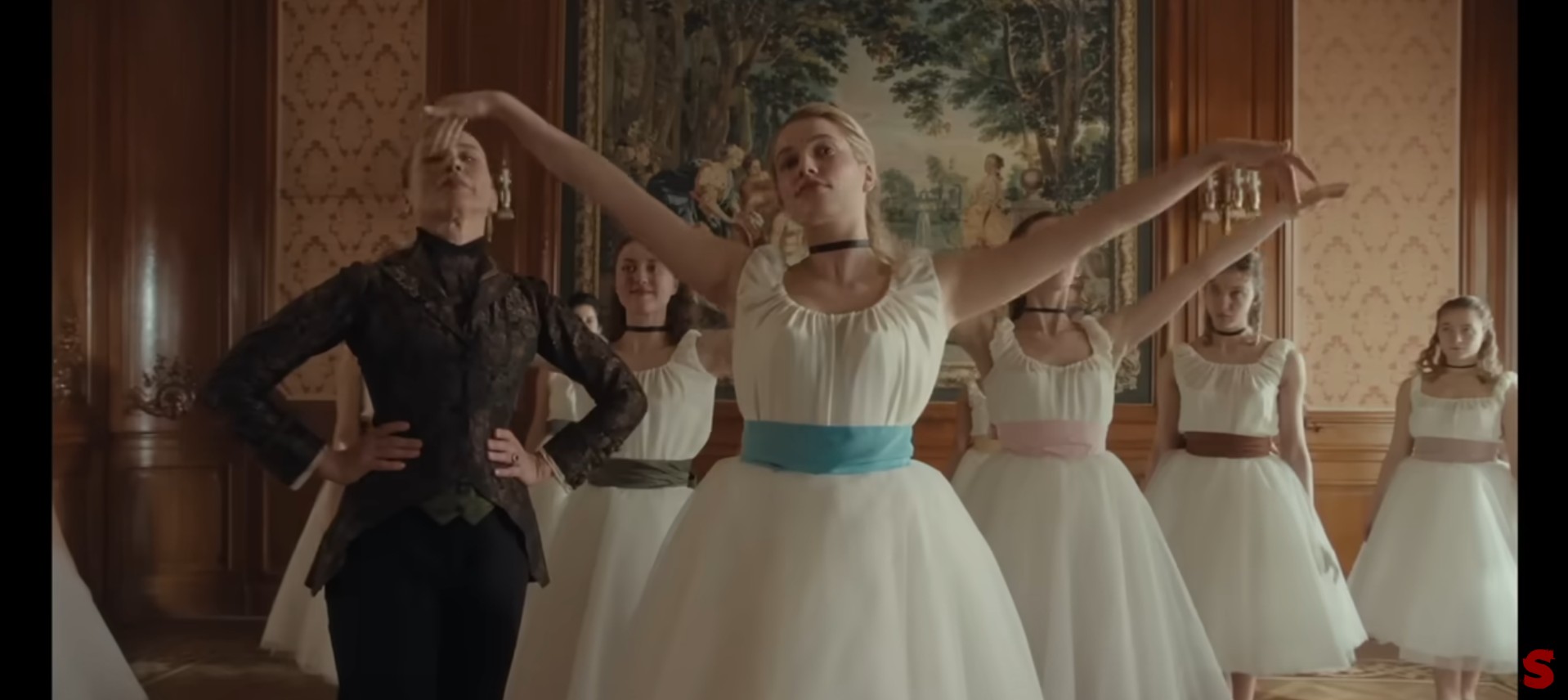
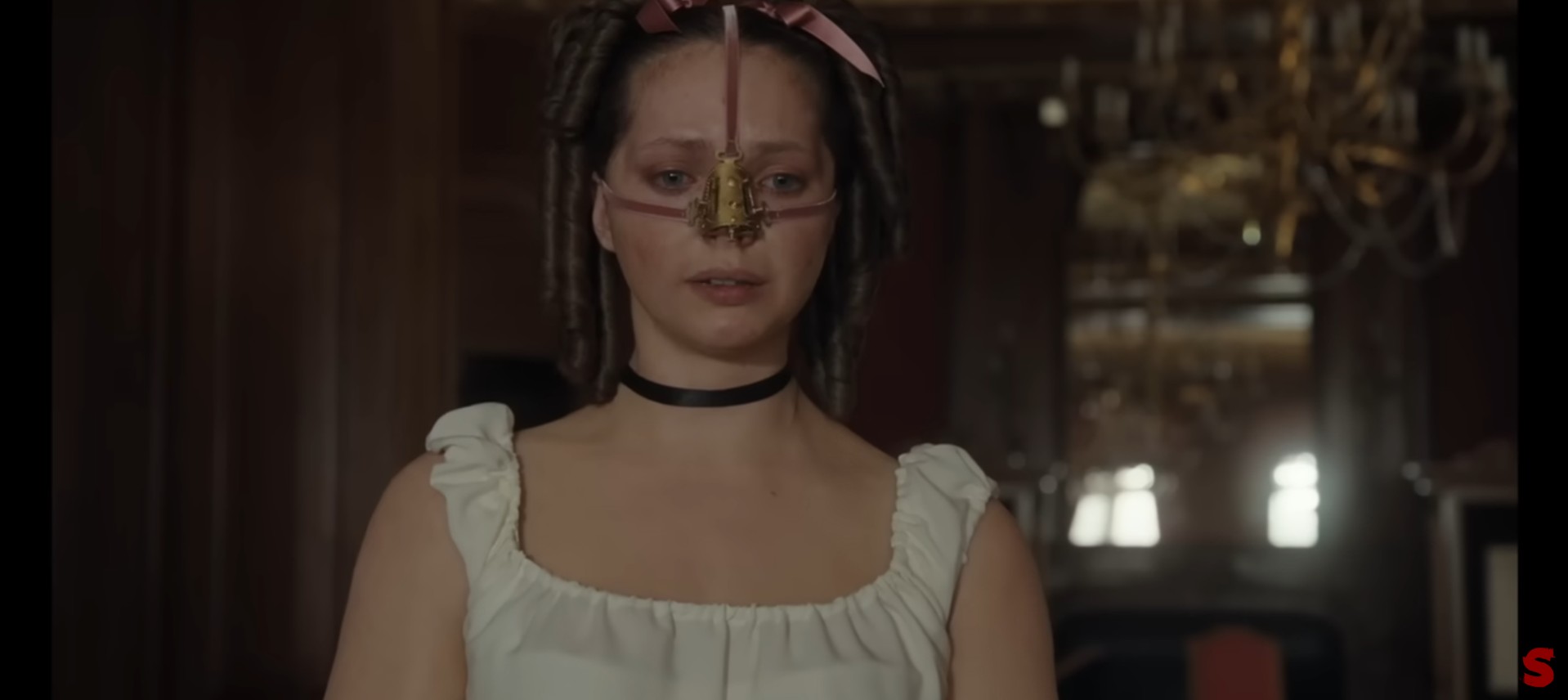
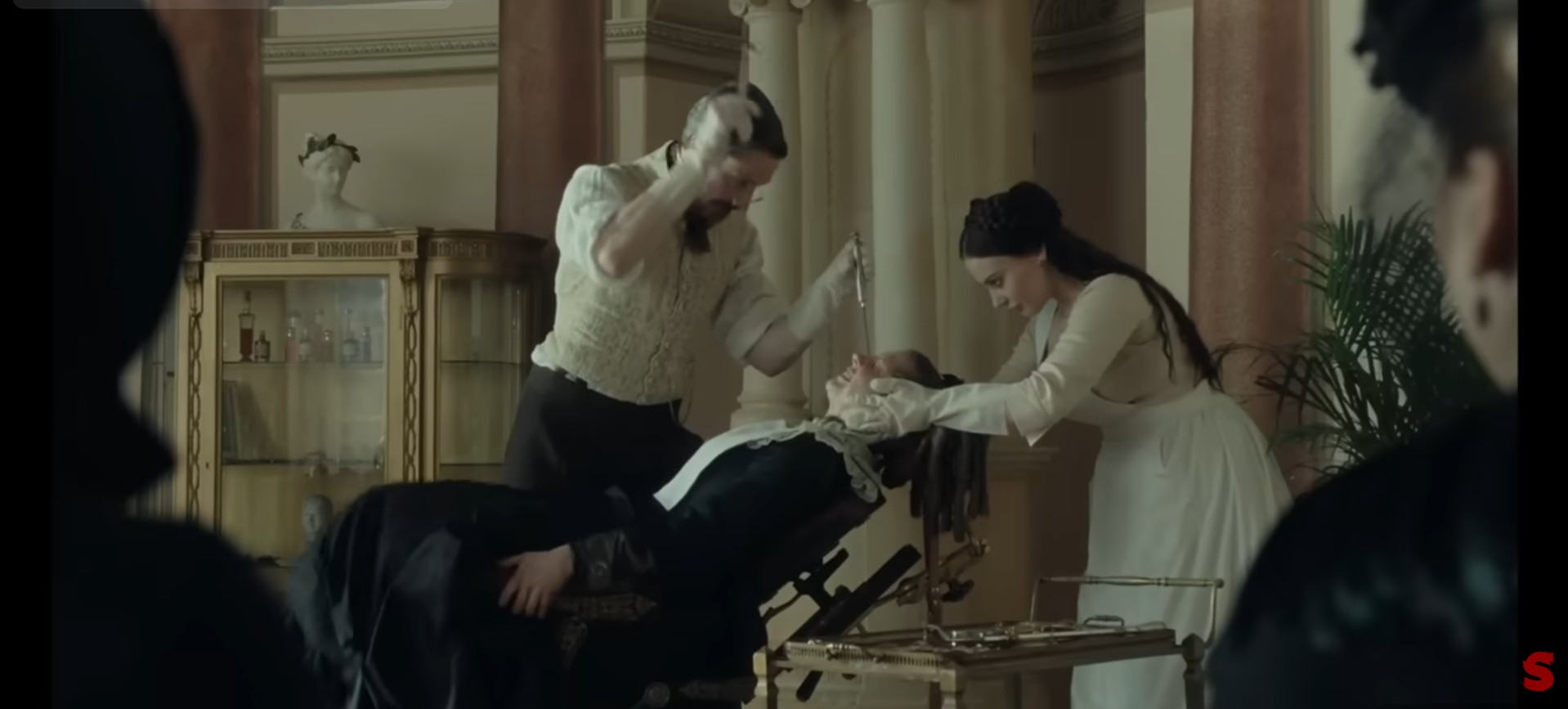
Elvira’s mother weds a wealthy estate owner to re-establish life and permanence in high society.  Alongside living with her sister Alma and her new, beautiful stepsister Agnes, Elvira keeps on smile on her braced teeth though she’s passively mistreated by those around her.  When Agnes’s father suddenly passes away and it’s unearthed the estate has no money to its name, the opportunity to attend the monarchy ball for the prince to select a wife from a pool of available the virginal maidens is Elvira’s persistent dream to marry a prince and get her family back in wealth and power.  Elvira attends finishing school to learn proper lady etiquette but her braces, round nose, and pudgy exterior pushes her aside of teacher’s attention in favor of the beautiful, blond Agnes.  Primeval cosmetic surgeries, tape worms, and no sympathy from her mother send Elvira down a path of obsession despite the harm to herself as she eyes the prize of landing the prince of her dreams over her stepsister. 

Based off the classic folk and fairy tale Cinderella, debut feature film director Emilie Blichfeldt takes a different perspective on the story that retains its roots in happily ever after but redirects the core narrative to the eldest stepsister in immense obsession, pain, and suffering to obtain the seeming unobtainable, to marry a prince.  “The Ugly Stepsister” the 2025 dark comedy and body horror from Norway that emphasizes the lengths one will take to become noticeably perfect in every aesthetic way.  Blichfeldt regularly visit the concept of a deranged perception of beautiful in her short films from the 2013 documentary “Do You Like My Hair?” that aims to spin a reinvention on beauty standards by finding it from within and the more body fantastical “Sara’s Intimate Confessions” that follows a big and tall disproportional woman exploring what it means to be feminine with her overly talkative vulva.  “The Ugly Stepsister” also tackles beautiful in a more painfully, cathartic way in order to achieve, much the same way a cheerleader sustains a lower body weight to make the squad or the self-harm models put themselves through to stay thin and beautiful.  The film, entitled in it’s native Norwegian as Den stygge stesøsteren, is a coproduction between Lava Films, Film i Väst, Scanbox Entertainment, Zentropa International Sweden, and Mer Film with Lizette Jonjic, Ada Soloman, Mariusz Wlodarski, and Maria Ekerhovd in the role of international producers. 

Though a beauty already in her own right, Lea Myren donned prosthetics and makeup for the titular Elvira to make the appearance of later teen, early 20s woman just on the verge of losing the baby fat.  Other personal traits added to Elvira’s character are braces, dark corkscrew curls, and muted toned outfits to further and contrast as a perceived ugliness within the context of the era, but in reality, Elvira’s beautiful young woman already with soft, large eyes, a curvy physique, and a natural gift of goodness within her that’s twisted by exterior conventions on what is defined as beauty. Shedding some of those elements, like the braces and weight, transform Elvira into a more desirable young lady now visible to all, from her draconian etiquette teacher who initially wouldn’t give her the time of day to the Prince who first looked upon Elvira with disgust in her natural state before become an exquisite creature stemmed from surgery and other unnatural body manipulations.  Myren wonderfully careens the character right into the dirt as Elvira cuts off her nose to spite her face, damn near literally, on the quixotic quest to change her outer shell that ultimately changes her from the inside.  Constants in Elvira’s life, or way, are Agnes, who’s only referenced as Cinderella once in a look that isn’t too cinder-y, played by Thea Sofie Loch Næss (“Arctic Void”) who doesn’t struggles with her character’s looks but contends with her new family’s acute empowerment, mostly rooted in family favoritism and jealousy, as well as Alma, Elvira’s younger sister with a by far majority much more comfortable in her own skin despite having dressed similarly with frizzier, unkempt hair by way of Fo Fagerli’s approach. Loch Næss doesn’t portray the as pure and innocence of the Disney classic, with her passionate romance with the stable boy in the hay barn, but the character is fairly close in all other regards with the more significant change to the characters being the stepsisters, especially Elvira’s reserved notions turned bitter when being compared to Agnes.  Alma is altogether out of the equation with no bitterness in her heart nor with any malice whatsoever to anybody but tends to her sister’s rise and downfall with little pushback.  Ane Dahl Torp (“The Wave”) is in the role of the mother Rebekka who will do anything to advance her daughter in society, mostly for selfish reasons as we’ll gather later on through a course of characters, such as the Prince Julian (Isac Calmroth), stable boy Isak (Malte Gårdinger), brutal plastic surgeon Dr. Esthétique (Adam Lundgren), and finishing school head mistresses/lesbian lovers (Katarzyna Herman & Cecilia Forss) who have contrasting approaches, both negative, toward Elvira’s waistline. 

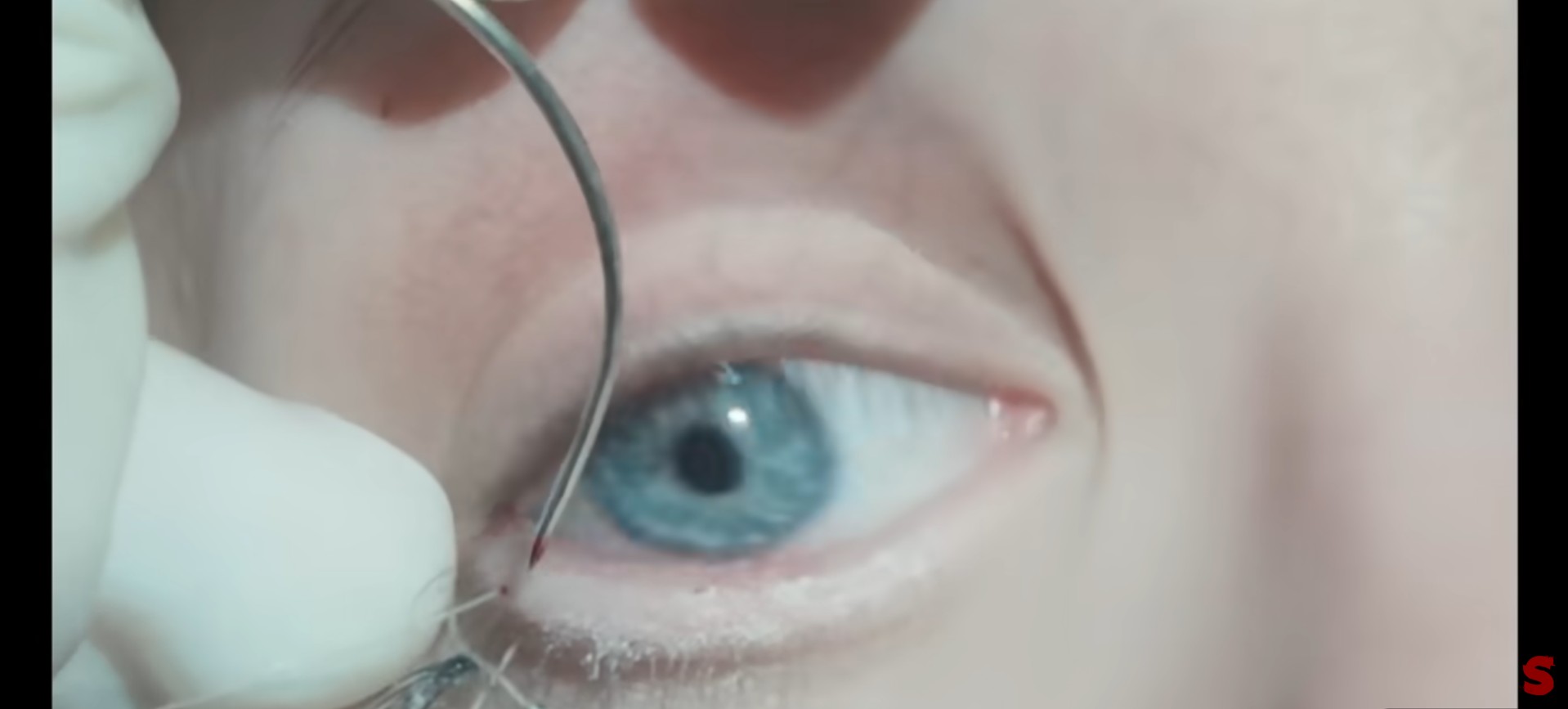
“The Ugly Stepsister’s” body horror is more than just a serious manipulation in losing weight and cutting more than corners toward image perfection.  The real horror is in the shame, the shaming of the body that’s overlooked, called out, and humiliated and to make matters worse for Elvira, her body type is by all of today’s standards curvy in the right places and beautiful albeit a body double was used for her pre-trim down nude scene.  Prosthetics are in place around the face and arms to make Lea Myren appear a little weightier, but the difference is extremely negligible and that’s the real power of horror when it’s terribly subtle, an already beautiful young girl succumb to peer and societal pressures that induces crazy self-harm for opinionated ideals and appearances.  Blichfeldt’s ideas of body-shaming extreme measures done by Elvira are not a far stretch from what self-conscious people do today about their weight.  Instead of swallowing a tape worm egg, one can stick a figure down their throat to achieve the same effect.  Instead of breaking a nose to re-mold with a hammer and chisel, surgery and medicines are abused ot be the new, easy, fast weight lost solution.  Blichfeldt comparative shots linger on Agnes with Elvira seething with envy and with the director’s bold choice of provocative nudity, exposing genitalia and depiction of X-rated acts, engages an alluring perversity that sheds light on a superficial world of beauty and sex, shielding the core, deeper problem of societal shame. 

Second Sight Films brings the Shudder and Vertigo Releasing North American marketed  “The Ugly Stepsister” to 4K UHD Blu-ray.  The ultra high-definition release is HVEC encoded onto a BD66 and presented in HDR10 with Dolby Vision, at 2160p, and in it’s the original aspect ratio, a European 1.66:1 widescreen.  Match the dark toned nature, the grading also exacts a somber coating with mahogany and ebony wooden structures and dimly lit castles of a Victorian era to bask in an austere state were, more so with personal happiness, is hard to come by.  Details are hard to stomach, in a good way, with proximate detail in the special effects closeups, such as in the mutilation scene where a nearly severed toes are hanging on for dear life by what little skin in left tethered to the foot, that go into macrolevel detail and is accentuated by the additional pixels.  Skin tones appear natural and unique to each individual in a purposeful contrast of fair and tanned skin along with different layers of texturing between organic qualities and the fabric outfits they wear, such as Agnes more single block outfit with a smoother design compared to Elvira’s multiple layers and pattern garb.  The Norwegian DTS-HD Master Audio 5.1 has an eclectic powerhouse soundtrack of synth and string orchestra from John Erik Kaada and Vilde Tuv.  The story doesn’t have a great deal of direction use for the 5.1 mix with mostly a conversating piece with mostly diegetic ambience, leaving the 5.1 less immersive than required, but there is vitality and strength behind the dialogue and action, clear and unobscured in its clean presence.  The multitude of squishiness, again the severed toes and also the removal of the tape worm through an orifice, is highly emphasized more max effect.  Areas of depth mostly lingers around the front but there are opportune moments in medium shots for audio expression.  English subtitles are clean, accurate, and well-paced.  Special features on the standard 4K release include a new audio commentary with director Emilie Blichfeldt and filmmaker Patrik Syversen, a new audio commentary with critic Meagan Navarro, a new interview with Blichfieldt This is my Ball, a new interview with star Lea Myren Generational Trauma, a new interview with Cinderella actress Thea Sofie Loc Naess Take Up Space, a new interview with special effects artist Thomas Foldberg Character and Gore, a special effects featurette The Beauty of Ugly:  The Effects of the Ugly Stepsister, a visual essay from Kat Hughes A Cinderella Story, deleted scenes, and both the Blichfiedt short films mentioned earlier in this review:  “How Do You Like My Hair?” and “Sara’s Intimate Confessions.”  The review here is for the standard 4K UHD Blu-ray set but there is a limited edition set that includes the 1080p Blu-ray as well.  The black Amaray case features a character still of Elvira on the front cover in all her dark maiden and sweet-faced glory.  There are no physical extras inside.  UK certified 18 for strong sex, nudity, and gore, “The Ugly Stepsister” from Second Sight Films is region free and has a runtime of 109 minutes. 

Last Rites: “The Ugly Stepsister” is a yarn not yet explored in other Cinderella tales, especially when it involves body horror and a sexually explicitness that that will forever make watching the Disney classic now uncomfortable when a recalled thought from Blichfeldt’s film pops into the visual cortex. Yet, it’s a remarkably twisted story from a different perspective that isn’t magically fantastical but grim and tragic.

“The Ugly Stepsister” on 4K UHD Blu-ray from Second Sight!

Never Steal EVIL’s Dead Body and Think to Get Away Scot-Free! “Frightmare” reviewed! (Troma / Tromatic Collector’s Edition)

It’s not a Nightmare. It’s a “Frightmare” on Blu-ray!

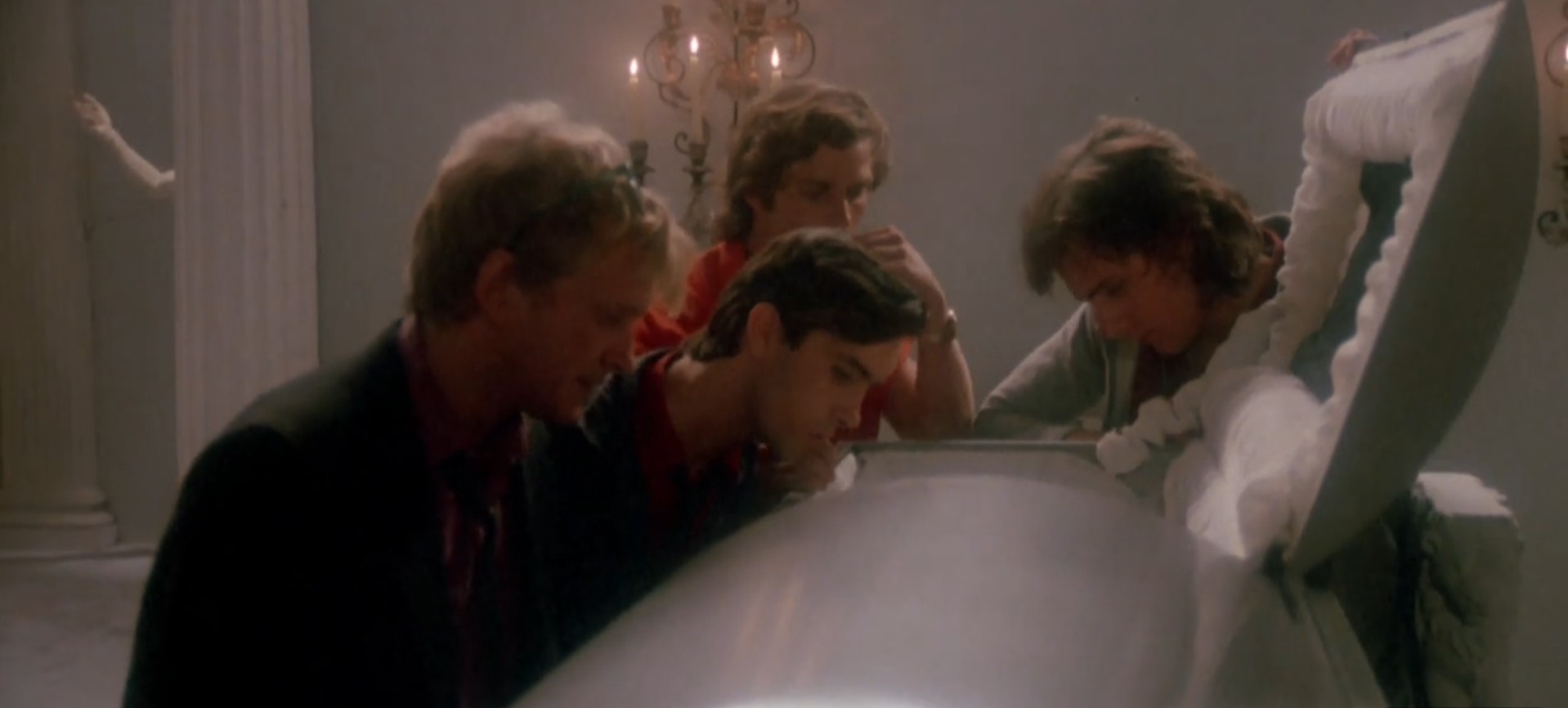
Aging horror icon Conrad Radzoff is on the verge of being forgotten by all except for a few handfuls of diehard fans who gather around a horror society that appreciate classics that are quickly fading from public view.  Arrogant and conceited, Radzoff doesn’t take criticism all too well.  In fact, he kills over it.  After murdering a commercial director and his longtime collaborating director, both of whom loathed his tyrannical, prima donna attitude, Radzoff dies of heart failure shortly after.  The youthful members of the horror society steal his body from Radzoff’s elaborate decorated and booby-trapped mausoleum on a whim and spends the night dining, dancing, and photographing with his lifeless corpse until Radzoff’s wife uses a medium to locate her late husband’s body and inadvertently resurrects him from dead with supernatural psychic powers to pick off his naïve graverobbers one-by-bone in what will be his last great horror performance. 

“Frightmare,” aka “The Horror Star,” is the supernatural slasher that tears into the fabric of being forgotten with a lasting impression, one with deadly consequences for a mischievous teens disrespecting the past in order to live with impunity in the present.  The 1983 picture is written-and-directed by Norman Thaddeus Vane, co-director of “The Black Room” and the Elvira-inspired 1988 film “Midnight.”  Shot mostly in the Los Angeles area, “Frightmare’s” principal photography and wrap was completed during 1981 but the film itself was not released until two years later and is not a remake of and has no connection to the Pete Walker film of the same title years earlier in 1974, which focuses on a seemingly mentally disturbed rehabilitated woman released years after committing deadly crimes.  This more necromancing and resurrecting slasher “Frightmare” is produced by Callie and Patrick Wright and with “Shadow of the Hawk’s” Henry Gellis serving as executive producer under the Screenwriters Production Company. 

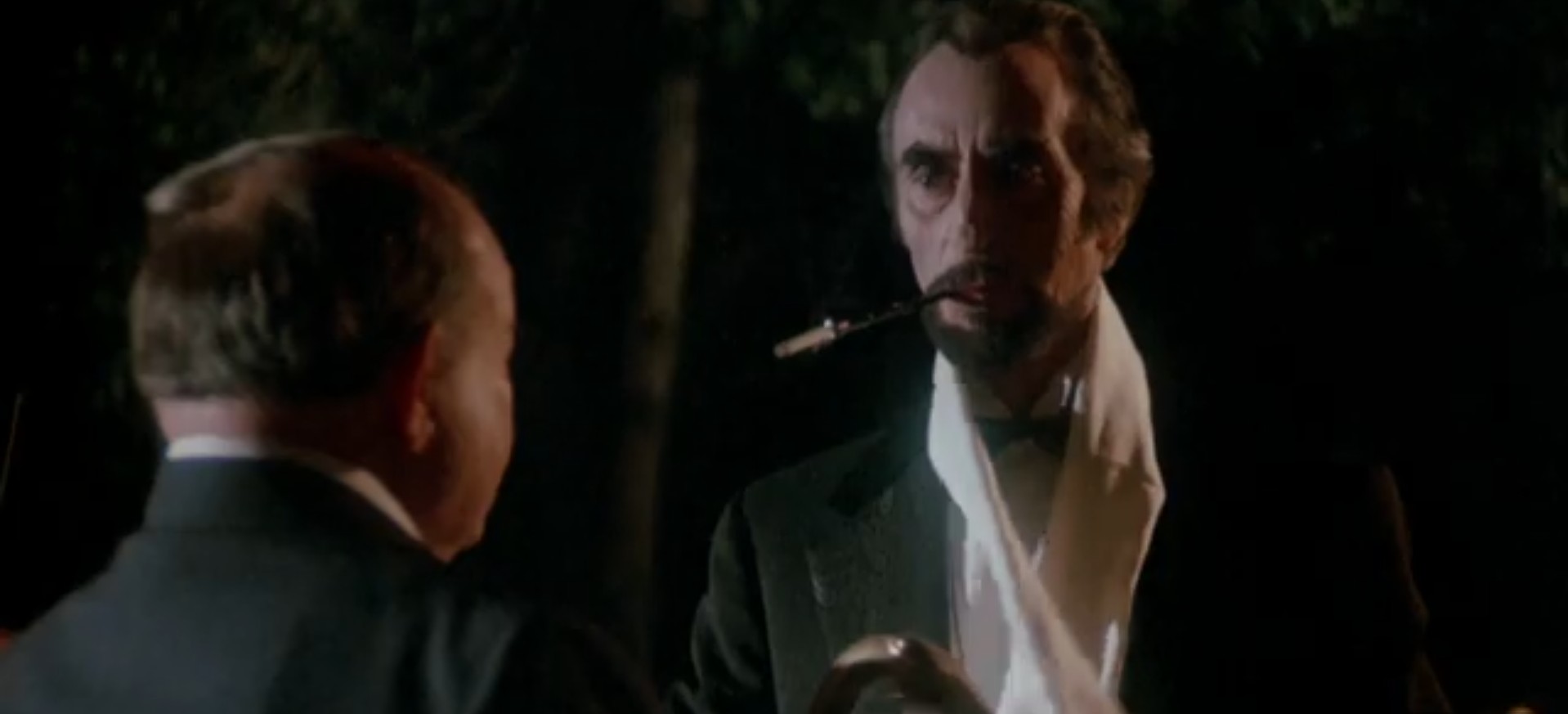
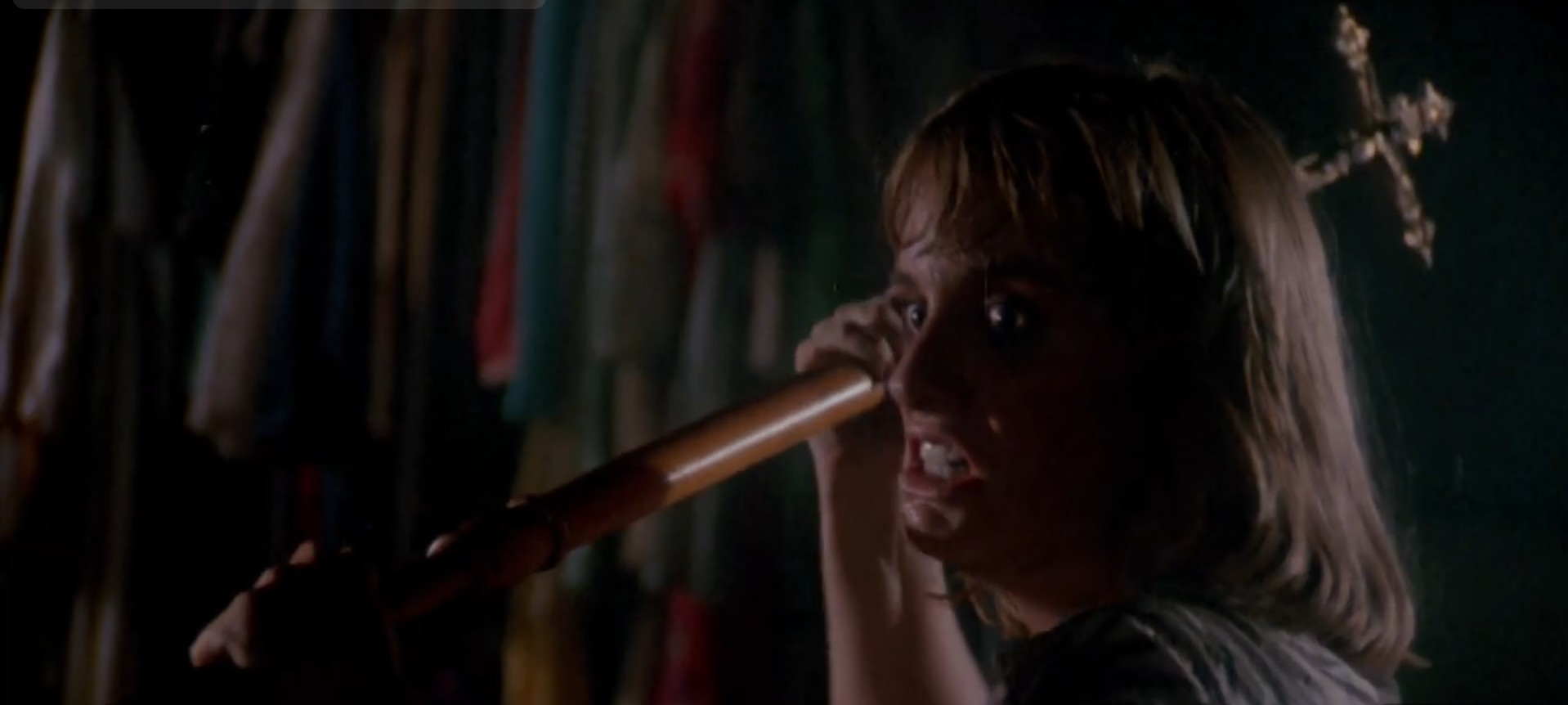
“Frightmare” would undoubtedly become director Norman Thaddeus Vane’s first attempt at replicating a horror icon shell that would later inspire him to direct “Midnight” that pulls influences off horror hostesses, such as Elvira or Vampira.  The centralized character, one who’s prim-and-proper snobbish attitude and flair for the theatrical in film and in life, is loosely, in Conrad Radzoff is loosely based off the Vincent Prices and the Christopher Lees of the genre, classically trained method actors astute to the craft.  Radzoff is, however, embellished with a hellish soul, unlike Price or Lee who sustained a rather indifferent or benevolent character.  There’s a lot to take in and enjoy from Ferdy Mayne’s performance as Radzoff.  Mayne’s first role of it’s kind for the actor with its meta intent to be an actor playing a horror actor reawakened as psychic sociopath from the depths of Hell groomed and garbed as a Vincent Price/Christopher Lee-like gothic vampire, in which Mayne was quite trained for having starred in vampiric films such as “The Vampire Lovers” and “The Fearless Vampire Hunters” in the 1970s, and he crushes the performance with profound effect with Vane’s Euro-style slasher that keeps tabs on the killer as he lurks through the property of the horror society, consisting of going from contravening teens to the unfortunate victims played by Luca Bercovici (“Parasite”), Jennifer Starrett (Run, Angel, Run!”), Alan Stock (“Poison Ivy”), Scott Thomason (“Ghoulies”), then Michael Biehn’s now ex-wife Carlene Olson, Donna McDaniel (“Angel”), and one Jeffrey Combs that would be one of his first films pre-“Re-Animator.”   Narratively, this laid out is the core cast of characters but there are peripheral support characters that are introduced and have key moments but are quickly diminished or erased from completing their story arc.  Radzoff’s wife Ette (Barbara Pilavin, “Maniac Cop 3:  Badge of Silence”) barely has five minutes of screentime but provides the undead Radzoff the key, go-ahead directive to kill his body snatchers but after that intense moment where they psychically connect, her scenes are no more other than one moment with a lightly knotted loose end.  Same can about the intensity of Mrs. Rohmer (Nita Talbot, “Puppet Master II”) that it pops clean off after connecting with Radzoff.  Leon Askin (Doctor Death:  Seeker of Souls”), Chuck Mitchell (“Porky’s”), and Peter Kastner (“Steambath”) fill in the cast.

If only one element stood out as “Frightmare’s” most redeeming characteristic, Joel King’s cinematography takes the top spot on the podium with a diffused fog machine backlighting that’s out of this world, angles and movements that complex the simplest and most stationary scenes, and an ingenuity that manifests the magic of a macabre movie also assisted by both of the aforementioned lighting techniques and the camera placements.  “Frightmare’s” also heavily infused with Gothic nuances that pay tribute to the subgenre as well as add to the sinister and oppressive tone of a rapidly enclosing atmosphere of darkness, shadow, and vaulted architecture from Radzoff’s Victorian-era, aristocratic black and white attire to the wood dark-toned and concreated exterior, two-story mansion that becomes the prison to the horror society they can’t escape from, in life with their hobby and in death with Radzoff hunting them through secret passages, dumbwaiters, and its delicately antiquatedly trimmed rooms and hallways.  Blood is accentuated with slow motion and splatter along walls and out of gash wounds with practical effects constructed by “Critters’” Chuck E. Stewart who can build a ghastly looking burned up and smoking body dead on the ground.  “Frightmare” isn’t a narrative that’ll strike fear around every corner but is rather a campy, supernatural slasher with hammed performances and a solid method for one-by-one offing.  The story’s a bit thin with motivations that keep Radzoff’s egocentric boasting about his last performance in death, his deathtrap mausoleum as if the actor knew there would be intruders, and the whole stealing of the corpse that just seemed to be a fruitless, ill-advised whim where there would be no escape from authorities or even the smell of an actively rotting corpse being stowed away in a non-climate controlled attic. 

Troma re-releases the Vinger Syndrome transfer onto their own Blu-ray through a partnership contract where Vinegar Syndrome receives first dibs on the upgraded, high definition 1080p, 2K transfer from the original amera negative with the title holding partner, Troma, releasing their own Blu-ray upon after the agreed term and the VS edition now out of print circulation.  The identical AVC encoded onto a BD50 “Frightmare” is presented on a Tromatic Special Edition set that retains the same quality as the Vinegar Syndrome 2021 release even, carrying over some Vinegar Syndrome special features.  Graded toward a dark tone, Joel King’s diffused backlighting and primary color tint elevates “Frightmare’s” kitschy, campy posture toward saturated spooky atmospherics.  Details are more than generally reproduced with deep absorbing in the smaller aspects of eliciting skin surfaces and object textures, such as the mansion wood-grain aesthetic and cobweb strung attic.  There are darker scenes that have unavoidable crush outside the colorful haze key lighting, but most retain pitchy space in the 1.78:1 aspect ratioed framing.  The English audio mix is a DTS-HD Master Audio Mono mix that also the same as Vinegar Syndrome’s release that has adequate audio propagation and diffusion without the lift of distinct layer and multi-channeling.  All through single channel can collide at times, especially between Jerry Mosely’s (“Bloodtide”) inclusively gothic score and the dialogue, but despite the rough audio patches, the single-conduit tracks are constructively discernible for a better part of the runtime.  English subtitles are available.  Special features are blend between Vinegar Syndrome produced historical commentary with David Del Valle and David DeCoteau, a now historical commentary by The Hysteria Continues podcast hosts, an archived interview with director Normal Thaddeus Vane, and a video interview featurette with director of photography Joel King and Troma exclusive supplementaries that are not entirely related to the feature, those include an old Debbie Rechon and Lloyd Kaufman generic intro from the original DVD version (Rechon and Kaufman a years younger), Lloyd Kaufman gives his personal lesson opinion to aspire indie filmmakers from the set of “Meat for Satan’s Ice Box,” the music video for “INNARDS!,” an artwork gallery, the original theatrical trailer, and the ever included Troma Radiation March.  “Frightmare” receives new Troma sleeve art that covers the macabre more than the usual campy slapstick with a horror flair, slipped inside a Blu-ray Amaray with no extra accoutrements inside or on the reverse side the sleeve.  The 86-minute Troma release is region free and is like the R-rated version, much like the Vinegar Syndrome was, but is unlisted on the backside or on the disc.

Last Rites: A supernatural slasher gothic in tone and crude around the edges, “Frightmare” is one of Troma’s more earnest acquirements into the horror genre that looks now leagues better in high-definition with Joel King’s hazy effervescent lighting, Norman Thaddeous Vane’s looping self-referential narrative, and reliable physical gore.

It’s not a Nightmare. It’s a “Frightmare” on Blu-ray!

EVIL’s Blonde, Beautiful, and Without Genitalia! “Darbie’s Scream House” reviewed! (Wild Eye Releasing / DVD)

Uh Oh Darbie! “Let’s Go Buy “Darbie Scream House” on DVD!

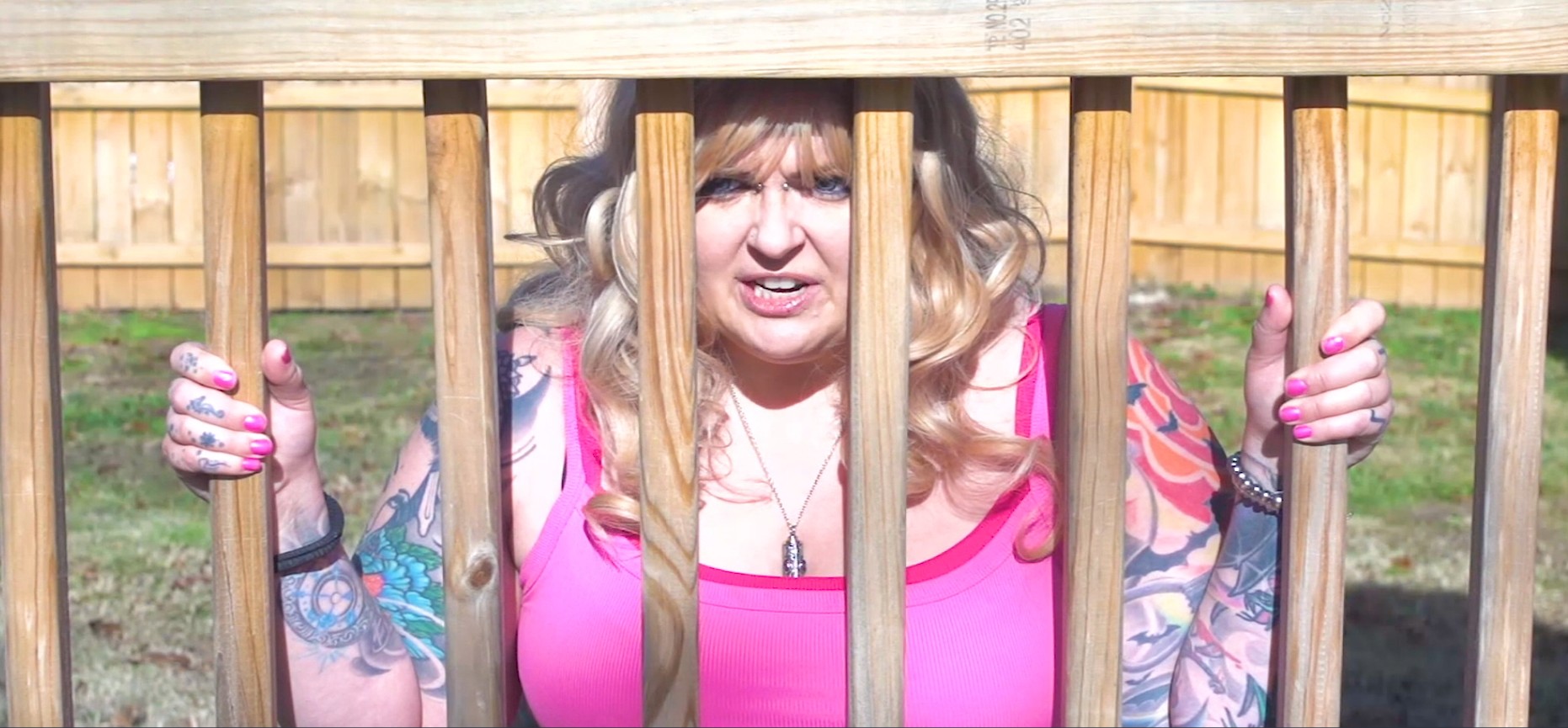
In Doll Town, Darbie is the most popular doll around.  Blonde, beautiful, and busty, Darbie lives a perfect plastic existence.  When her boyfriend Ben wants to plan a surprise birthday bash for Darbie, Tripper, Darbie’s helpful yet gossipy little sister, interprets Ben’s interactions with Darbie’s friends – Danger Darbie, Ditzy Darbie, and Rodeo Darbie – as infidelity despite no evidence of sexual activity, as well no doll in Doll Town having genitalia, and reports back to Darbie with the unpleasant news.   With her perfect world seemingly crumbling down, Darbie pledges to rid Doll Town of her now ex-best friends by taking a big knife to them in vengeful spite, turning her dream life into a spiral nightmare based off a simple misunderstanding and an obsession with contentment, that drives her insane and no one from her friends to boyfriend Ben, to even her sister Tripper, are safe from her accessorial wrath.  

Former, or current depending on how you look at it, alternative adult content creator turned this next generations cult film scream queen, Jessa Flux (“Murdercise,” “Onlyfangs”) co-writes and co-produces her latest venture “Darbie’s Scream House,” a comedy-horror lampooning of Mattel’s Barbie universe.  Flux’s independent film talents hop aboard a legendary name of the same market in Donald Farmer.  The “Cannibal Hookers,” “An Erotic Vampire in Paris,” and “Hi-8 (Horror Independent 8)” filmmaker co-writes and produces with Flux while helming at the seat of the director’s chair.  Together, Flux and Farmer materialize a plastic doll world full of jealousy, rage, scandalmongering, debauchery, and homicidal tendencies.  Crowdfunded through Indiegogo, the campy horror parody.  The 2026 film is a production of Stratosphere Entertainment. 

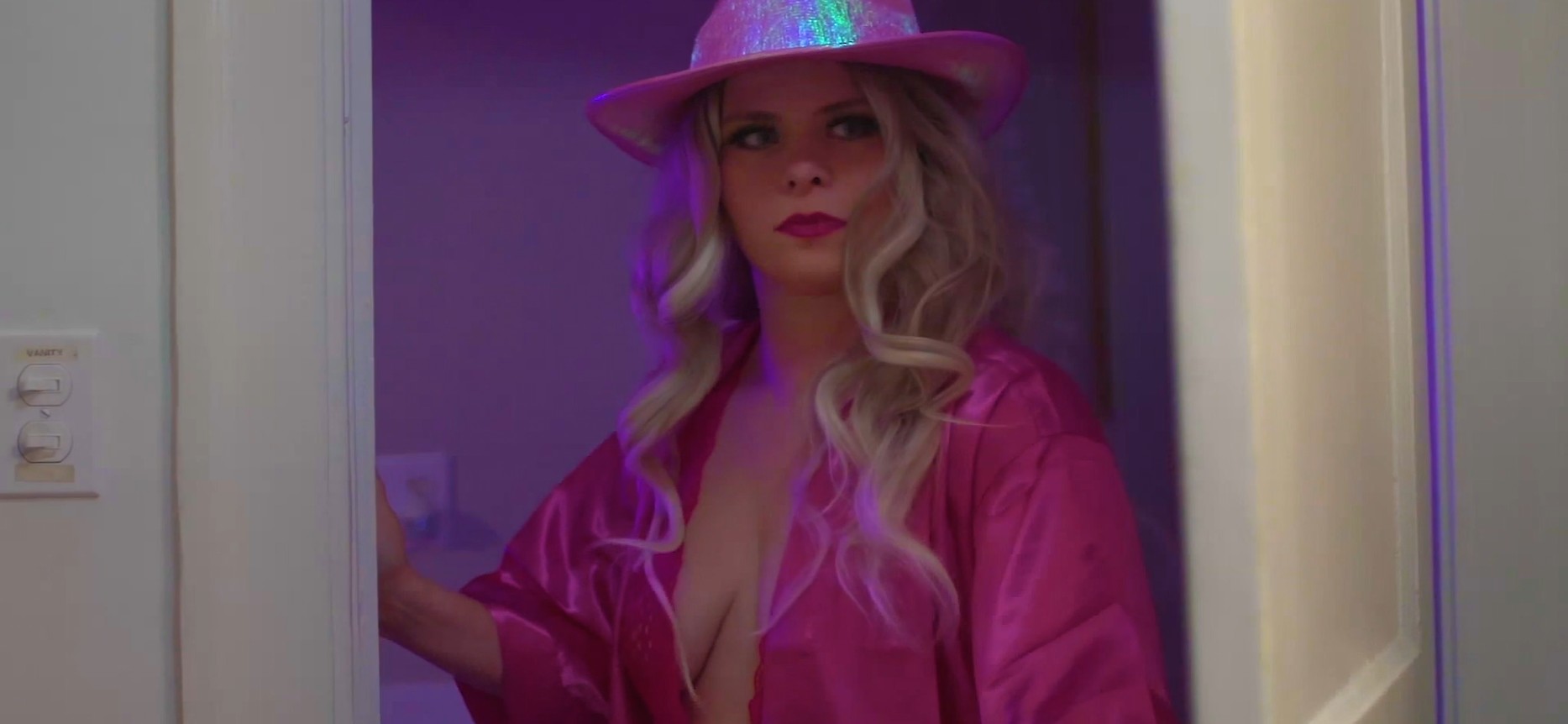
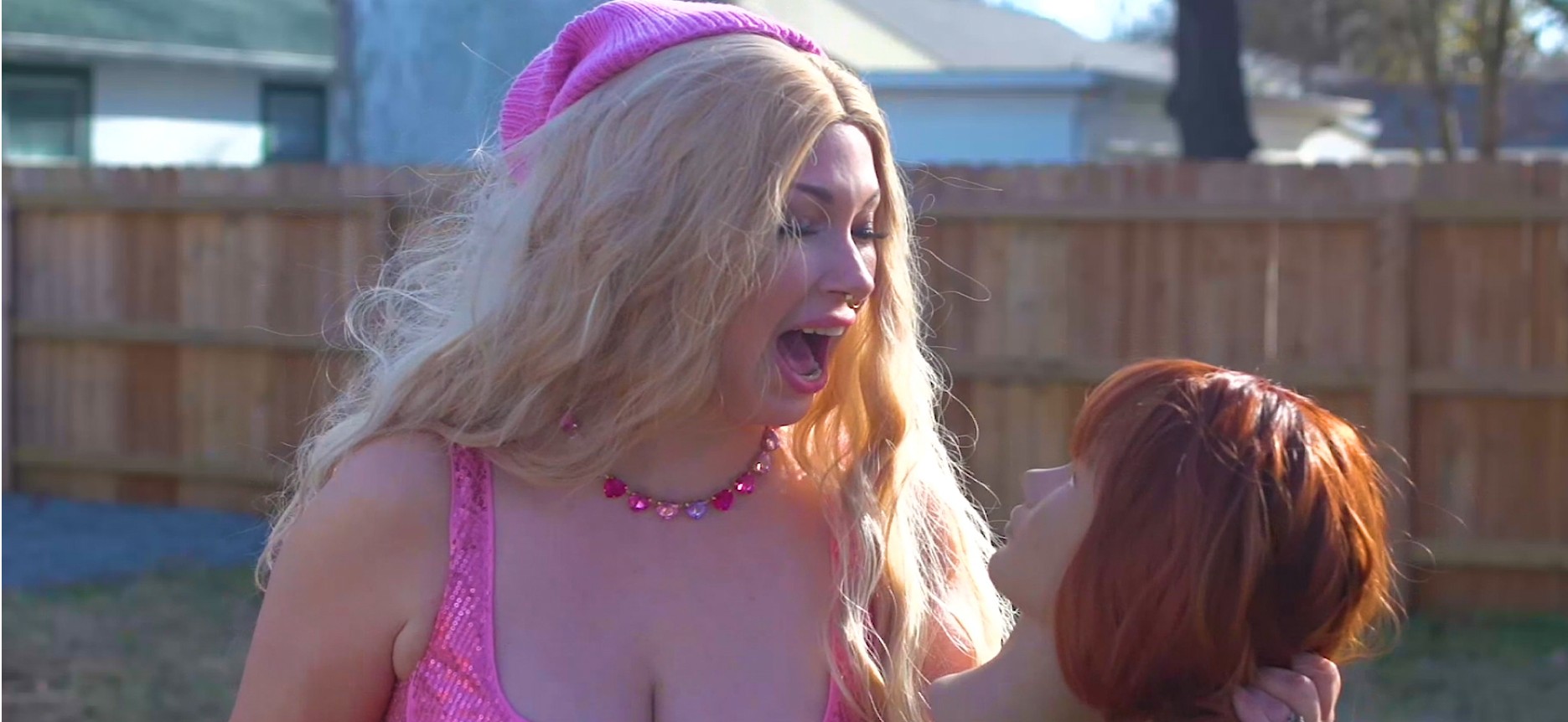
Not only collaboratively writing and producing the feature, but Jessa Flux also stars as the titular character Darbie, the buxom queen of Doll Town with an amiable personality up to a point.  That point is when boyfriend Ben comes under the scrutiny of Darbie’s nosy, troublemaking sister, Tripper.  Claude D. Miles has collaborated with Farmer and Flux on a few other projects, such as Donald Farmer’s “Debbie Does Demons” and “Scream Queens Weenie Roast,” and between Flux and Miles, their rapport doesn’t seem forced as it’s flexed to work as comedic love interests in a parody setting.  Ana Xaden, another indie alternative horror actress, also has worked with Farmer, Flux and Miles on “Scream Queens Weenie Roast” from the year prior, turning the trio into a regular entourage for the “Cannibal Hookers” director.  Xaden also busts out along with Flux as the two become elementary with their dialogue, by that I mean their conversations, whether written in the script like this or just the style of acting incurred by spontaneity upon filming, has an artificiality to it with monotonic delivery and exposition.  Funny thing is, you only really see this flat conjecture between Darbie and Tripper, and maybe even a little bit from Ditzy Darbie (Ashleigh Amberlynn, “Night of the Dead Sorority Babes”) but that’s more expected because of her dunce character.  Ben conversing with Beach Blanket Ben (Joe Casterline, “Shark Exorcist 2”  Unholy Waters”), or any other minor male character, has more natural back-and-forth without any fabricated flavoring, and it’s curious to think that maybe “Darbie Dream House” has a layered depth to that nuisance that speaks to the fake talk and gossip associated generally around women and men letting it, generally again, hang all out.  The cast rounds out with Mel Heflin (“Scarlet Rain”) as aggressive lesbian Rodeo Darbie, Fallon Maressa (“Bloodrunners:  Vampire Wine”) as Dream Date Darbie, and Kasper Meltedhair (“Hooker with a Hacksaw”) as a Doll Town reporter with Kimberly Lynn Cole (“Bloodthirst”) listed in the credits but her scenes cut and placed in the special features’ deleted scene. 

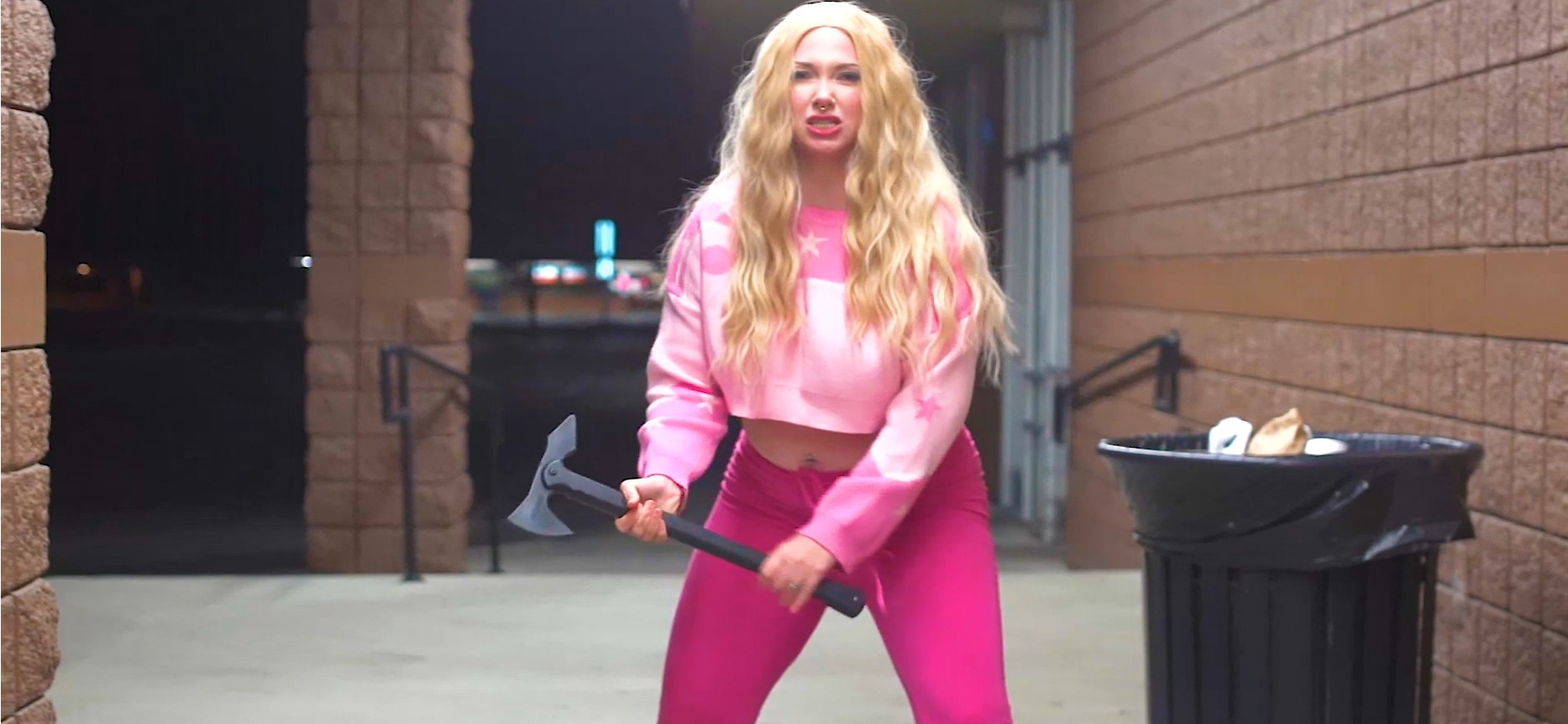
This is not one of those This Is Not Barbie:  An XXX Parody type of film but “Darbie Scream House” very much cold have been with it’s dolled up and naked-positive female cast, male characters with bad wigs and depraved names like Sleazy Steve, and a premise around creeping sexual promiscuity.  However, blood axe-wielding aggression, reared by jealousy, fill in the gaps to level up a cheap stag production to a barebones indie horror that doesn’t take itself very seriously in this meta-existences for the chief characters who are playable dolls of a young, imaginative young girl but who are also moving autonomous with their movements and affairs that are not sanctioned by Barbie or Mattel for that matter.  “Darbie” is a different kind of female empowering doll but in the same breath lacks the informed judgement of a jump-to-conclusions partner, insecure and obsessive over people and ideals.  “Darbie Scream House” caters to that what if scenario if Barbie didn’t have mental positivity and broke into sociopathic tendencies?  The core of the story is there but does heavily rely on the gratuitousness of Jessa Flux, Ana Xaden, and Ashleigh Amberlynn to carry it over the finish line, yet the shoddy effects, poor acting, and mishandling of the meta perspective sink this Donald Farmer production like cemented pink platform and rhinestone shoes. 

This is a no playtime, you can be anything Barbie movie with a house in Malibu and driving a pink convertible.  This is “Darbie’s Scream House,” a bizarro, alternative universe mined form the same vein as the classic children’s characters, such as Winnie the Pooh, Mickey Mouse, and The Grinch, turned into monstrous villains of your nightmares.  “Darbie’s Scream House” is right up Wild Eye Releasing’s alley with plenty of against-the-grain filmmaking, attitude, and shlocky satire, now available on a DVD home video that’s an MPEG2 encoded DVD5 with 720p resolution.  Even if you’re player + television combo can upscale the quality, the image quality is limited to the commercial grade equipment with passable delineation and detail that offers immersive detail but gets the job done. Lots of the details are washed away also but the use of blue or pink saturating gels that flood tense moments of Darbie’s life on the downspin and much of the exteriors are ungraded, using natural the deflection of natural light to the best of their ability.  The English PCM Stereo 2.0 carries an unbalanced depth that’s inconsistent on keeping characters dialogue level within the shot.  Those closer to the camera often have strength priority with the second person only a step or two back sounding as if they’re a good ten yards away in the closeup-to-medium marked shots.  The recording mic also can’t sustain sounds beyond its limitations, such as screaming that breaks the reproduction into bits of static and distortion at high peaks.  Special features contain a blooper reel, a deleted scene, and feature and other Wild Eye Releasing trailers with the physical package sporting an embellished, AI generated cover, which I aways appreciate the fluffing-up of an indie film.  In this instance, the art doesn’t stray from the truth per se but aggrandizes the finer details quite a bit; however, the nice touch here is the Barbie font used for the title.   The reverse sleeve image inside the clear Amaray isn’t afraid to be gory with a severed head from the story that has been lightly touched up for effect.  The not rated DVD is region free for all players and has a runtime of 75 minutes, enough to satisfyingly slay. 

Last Rites: Jessa Flux’s “Darbie’s Scream House” skewers Barbie into an unperfect, deranged universe of emotional unstable killer toy dolls but leaves much on the table of possibility and has a hard time gluing together an airtight campy story that’s too reliant on the kink than the gore.

Uh Oh Darbie! “Let’s Go Buy “Darbie Scream House” on DVD!