Pinksploitation EVIL is Transgressional Passion! “Love and Crime” reviewed! (88 Films / Limited Edition Blu-ray)

Limited Edition and Numbered Blu-ray / DVD Set Available at Amazon!

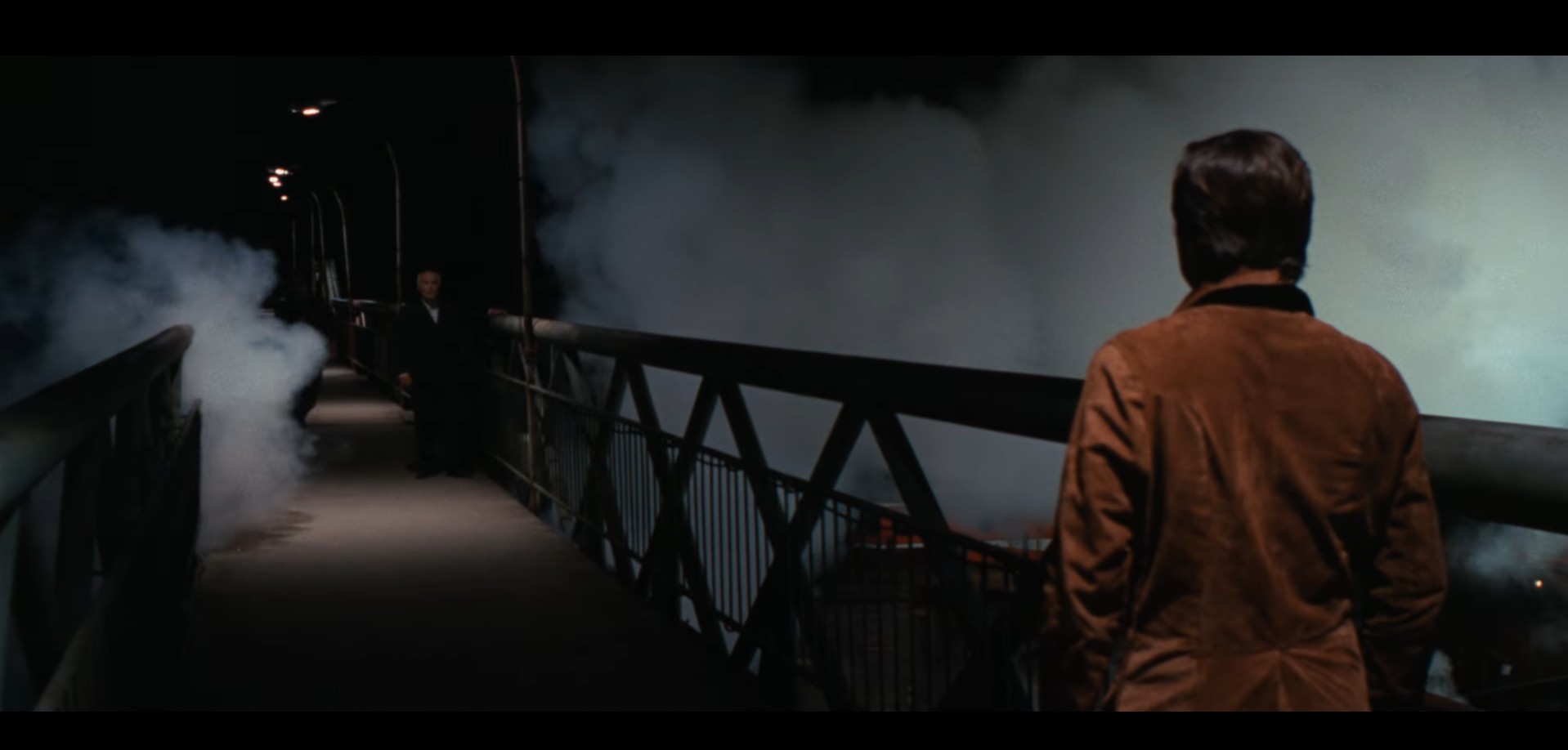
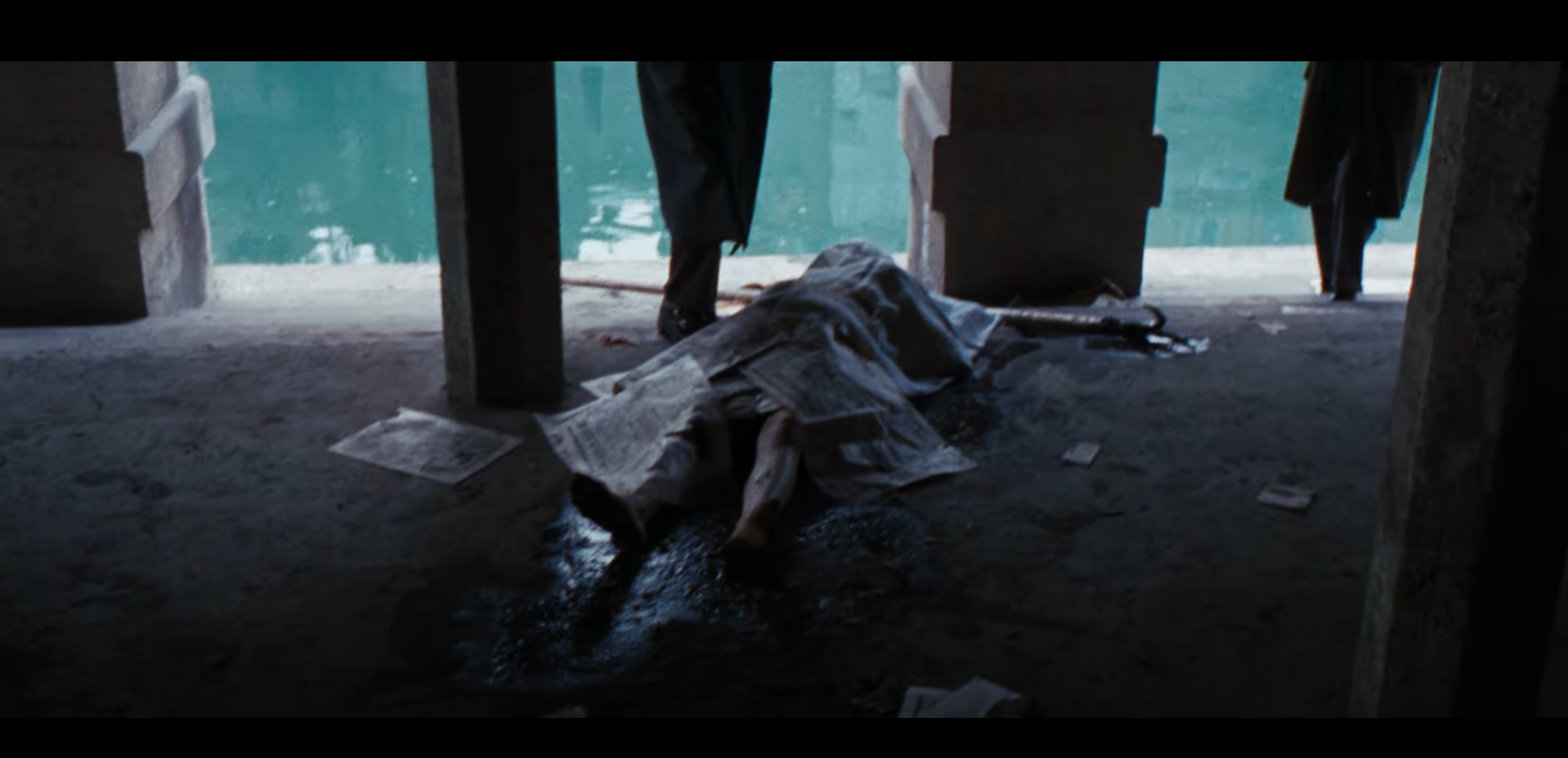
The dead body of a young woman arrives at pathology for post-mortem autopsy.  A victim of a heinous crime, the bare corpse already informs the head pathologist of sexual activity before, or after, death because of the fresh semen that’s inside her.  As he toils over her to open the chest, separate the ribs, and get a good look inside to see how and why she perished, the pathologist remains in disbelief that the semen inside her, inside his lifeless wife before him on the cold medical table and under the bright lights, is not his own.  Digging deeper into how someone could kill his beloved wife, the researcher in him hits the books, selecting and scouring through records of similar cases of murderers and rapists from over the years.  Each one under different circumstances concludes in a sentence that reflects the person they have become.  Inside the mind of a killer is a long hard look at ourselves in how far we go for treasure, love, and to quench our insanity. 

“Love and Crime,” or officially known under the Japanese title as “Meiji Taishô Shôwa: Ryôki onna hanzai-shi” aka “Showa Era:  History of Bizarre Female Crimes,” is the Japanese anthology from 1969 that pictorializes true crime narratives of mostly women transgressors, as the title suggests.  Yet, the Teruo Ishii helmed anthology is not entirely female perpetrator centric as the anthology jumps ship briefly to explore crimes against female victims for a crossover, comparative distinction.  Ishii, who played his hand in producing late 1960s sexploitation and violence by directing films in Toei Company’s pinku series that showcased the two subcategories, such as “Orgies of Edo,” “Shogun’s Joy of Torture,” “Inferno of Torture, and among many other titles with similar salaciousness, was thrust into “Love and Crime’s” consolidating short film escapade with a wraparound monologuing narrative that was just as intriguing as the sordid stories themselves.  Shigenu Okada produces “Love and Crime” as well as many of the films aforementioned.

Yoshida Teruo kicks off the wraparound with a mater-of-fact narration running through the head of Murase, the anatomist examining his dead wife’s corpse (Ritsuko Nakamura), in what would be the grisliest part of the anthology, especially when that chest snaps during separation.  Having worked with Ishii previously with “Abashiri Bangaichi,” a crime thriller about a reminiscing criminal aimed to reform himself, Teruo only worked a short stint with the Toei Company but his time spent on such films like “Crime and Love” discerns a piece of the dramatic devotion that would be otherwise missing in these purely exploitative films.  As Marase puts nose to book, he unearths and internally narrates the start of his true crime story journey research, beginning with the cut-throating scheme of the Toyokaku Inn case.  Chiyo (Aoi Mitsuko, “Melancholy Flesh Business:  Sensuous Zone”) and Kosuke (Kenjire Ishiyama, “Kwaiden”) own and run the humble Toyokaku Inn but when Chiyo seeks to changes businesses and cut ties with her philandering husband Kusuke, a treacherous and murderous plot against her is formed between Kusuke, spearheaded by assistant manager Kinue Munekata (Rika Fujie, “Outlaw:  Heartless”), and executed by maintenance man Shibuya (Takashi Fujiki, “Shin Godzlilla”).  From there, the film transitions to other female intertwined crime tales of Sada Abe, a woman who would kill her lover because of love and insistence during alternative sex, the case of Kunihiko Kodaire, a serial rapist and murderer spilling tricks of his trade to authorities, and the last known female murderer executed by katana beheading, Takahashi Oden, for poisoning her husband.  Each performance plays into the intricate patterns described by their true life counterparts with either a chilling contentment in taking a life or hurdling the obstacles inward to do the unpleasantries of what is asked of them  Circumstantial opportunities and conniving plots bury bodies six-feet under in a multifacted range of expression, greed, lust, and all the other deadly sins that plague mortals right to the very end.  “Crime and Love” fill out the pinksploitation anthology with Yukie Kagawa (“Female Prisoner Scorpion:  Jailhouse 41”), Eiji Wakasug (“Inferno of Torture”), Tomoo Koike, Tatsumi Hijikata (“Orgies of Edo”), Yumi Teruko (“Horrors of Malformed Men”), and a special appearance by the actual, reclusive, convicted murderer Abe Sada herself, shot from a distance while being interviewed by Yoshida Teruo.

As anthologies go, especially one rare as true-life crime and love, or in this case sexploitation,” “Love and Crime” has an unsystematic design when it comes to the stories and how they relate to the wraparound narrative.  For starters, not all the bizarre crimes are female centric.  The story of Kodaire revolves about a male serial rapist and murderer divulging his collected anecdotes to investigating confessors and are depicted in monochromatic flashback, the same as his present yarn telling scenes.  Though the case involves multiple women victims, Kodaire greatly stands out amongst the compilation of crimes for the very fact he is a man in an anthology literally entitled History of “Bizarre Female Crimes.”  Was the case of Kordaire a gap filler? Perhaps the uniquity of Japanese serial killers is so low and rare in their culture and history that this particular short story had enough estrogenic blood spilled it avoided the short list cut.  Each story’s relationship toward the wraparound is also thin as neither story suggests a same or remotely similar pattern to death of Maruse’s wife in what is more of a random-generator selection of stories read and worked through for better understanding of the killer female psyche rather than what makes the male killer tick to hit-and-run his wife.

“Love and Crime” is 88 Films’ answer to opening the door of the wonderfully violent and sexually charged world of pinksploitation.  A limited edition and numbered dual-format, AVC encoded, 1080p, 50-gigabye Blu-ray and standard definition, MPEG encoded, dual-layered DVD, set presents the 1969 film in the original aspect ratio of 2.35:1.  With various stylistic color grading outfits, such as grayscale image for the Kadaire case story or the last case of Takahashi Oden that’s starkly cold rooted in blue and green.  There’s not a lot of mention of what kind of work went into restoration but the print has kept in excellent condition with age or damage wear kept to a minimum with nominal vertical scratching and dust speckling.  Colors appear to be handled with true reproduction of the dyed processing, rich and bold leaves no room of ambiguity of image or object representation.  Skin tones appear natural that do flirt a lighter shade of orange at times, textures are coarse and greatly apparent, even in the black-and-white story, and there’s tremendous environment or background distinction that creates an organic depth between character and their setting rather than them being crushed into an all-in-one image.  The encoded audio is the original Japanese language LPCM mono 2.0 that captures the soothing project whir during post ADR.  Dialogue retains prominence with a clean enough clarity albeit some negligible hissing sporadic throughout.  Ambience is not as enlivened within what’s mostly an isolated dialogue mix but is there to complement to composition when necessary, such as the blustery snowfall during the execution that sets a tumultuous tone of desperation and severity.  The improved English subtitles are timely synched and error-free.  Special features include an audio commentary by the 88 Film’s Japanarchy release fire starter and Midnight Eye’s co-editor Jasper Sharp and Fangoria staff writer Amber T., a brand-new film introduction and conversation by film critic and journalist Mark Schilling, a still gallery, and trailer. The Obi-striped 88 Films packaging has a very familiar feel to what Radiance Films, another boutique UK label, is doing with their Blu-ray releases nowadays and “Love and Crime” could be confused for a Radiance resemblance, but clear UK Amary has a gorgeous, commissioned, newly designed artwork from Ilan Sheady that brings all the sordid shades of this anthology to life. The cover art is also reviersible with the original Japanese one-sheet. Inside, the Blu-ray and DVD overlap in a dual-disc lock system on the right while the left stashes 15-page black-and-white-and-colored pictured adorned essay by Nathan Stuart prologued with cast, crew, and release acknowledgments and bounded by the same Sheady artwork without the Obi strip obstruction. 88 Films release comes both in region A and B playback, is not rated, and has a runtime of 92-minutes.

Last Rites: “Love and Crime” will be a love-it or hate-it anthology of early pink violence and sexual discordance because of its broad stroke theme but the 88 Films’ limited edition, Japanarchy debut is an exciting and eager look toward the future of the label’s dive into Japan’s exploitational cinema.

Limited Edition and Numbered Blu-ray / DVD Set Available at Amazon!

Snuff is the New EVIL Industry Fad! “Snuff Queen” reviewed! (Dark Arts Entertainment / DVD)

“Snuff Queen” on DVD from Dark Arts Entertainment!

Snuff, a hot commodity amongst patrons of the black market and dark web provides real violence and real death for real morbid viewers.  Laws are challenged and circumvented by consent of women willing to die for money through various ways of asphyxiation in front of the camera and sold under the controversial snuffing genre.  A Ten-minute window of revival separates the actors and actresses from permanent brain damage or certain expiration.  A snuff performer interfaces with the complexity of thrills and easy money that counterbalances against relationship troubles, social stigma, and the constant threat of actually dying hanging over their heads, or more literally, pressed against their throats.  A handful of willing performances lets a documentarian illustrate their niche profession, lifestyle, and personal struggles to the world with included behind-the-scenes footage on set and in their private spaces as they put on their line mind, body, and soul have to survive.

Those who seek out snuff, even if represented in a sensationalized, fictious way to glorify gore, violence, violence against women, and a fascination, obsession need to satisfy murder lust, likely need to have their heads thoroughly scoured for the tiniest ounce of sociopathic tendencies.  Films like “Effects,” “Faces of Death,” “8MM,” “A Serbian Film,” and the like all contribute to that black desire of control of another person’s existence and getting off perversely on the sadism.  Films like Sean Russell’s “Snuff Queen” are nothing like those more aberrant productions of cruel reproductions.  The 2023 pseudo-documentary and mockumentary hybrid began in 2008 with AVN interviews with porn stars and their take the matter of snuff or overall rough sex.  Shelved for many years because no producer at the time deemed the material worth making a movie out of it, Russell is approached by Dark Arts Entertainment’s Brian Yuzna and John Penney to finish the film with new scenes based off the 2008 script but cut most of the comedy out for a darker tone.  David Navarro producers the film.

Previously shot 2008 AVN interview footage with some of the then biggest talent in the industry, such as Sasha Grey, Bree Olson, Stormy Daniels, Jenna Haze, Stoya, Faye Reagan, Jesse Jane, Belladonna, Aurora Snow, Jessica Drake, Sunny Lane, and even Larry Flynt, is cut into snippets of a montage as they comment on death and sex in various contexts.  The series of comments and quips puts into perspective individual limitations, mindsets, behaviors, and an unfiltered truth underneath the layers of makeup, fake breasts, and forged happiness in the adult entertainment industry masked in glitzy red lights, supersized sex drives, and a prospecting tease of getting laid.  As the 2008 prologue interviews ends, the 2023 interviews begin with mostly scripted talk following the daily lives of a handful of snuff performing women, 4 principal female characters to be exact.  Moxie Owens (“Girl Lost:  A Hollywood Story”) as Jane Doe, Lexie Leone (“It Don’t Bother Me at All”) as Amy Doe, Juliet Kennedy as Angela, and Lindsay Normington (“Anora”) as Audrey Doe become the diverse batch of short-listed actresses of controversial and law-bending snuff films. These core cast of women are joined by gap-filling support, ranging from gays, to blacks, to Asians, and so forth by extenuating out from just a white female dominated industry in touching cultural and race by the less promoted numbers of adult entertainment. Much of “Snuff Queen’s” inauthenticity garb comes from the acting that’s densely overplayed and exaggerated because of the less-comedic directive by shot-calling distributors and performances stand out amongst a darker theme as too watery and less potent, like off-brand prescription drugs. Ironically enough, IMDB.com gives in the title’s controversial nature by not listing the film under any of the actor’s individual credits as to say or allure “Snuff Queen” documentary as real evidence and content based. Tuesday Knight (“A Nightmare on Elm Street: The Dream Master”), Josie Hung (“Staycation”), Gina DeFlilippo, Captain Dare, Zac Mendoza, Neill Flemming (“It Kills at Midnight”), Christopher Parker (“Spider”) and Jake Holley costar.

Much of what is laid out in “Snuff Queen,” all the provocative and debatable ethics, legality, and portentous aspects of Snuff, is all a load of crap and the director, Sean Russell, would be the first person to tell you that.  What Russell intends to convey is an allegorical emotional evaporation in adult entertainment performers and how apathetic the industry is toward the safety and responsibility for its talent who battle with low self-esteem and anger issues that either drive wedges between friend and family or ensue verbal spouts.  There’s also the treatment or being seen as just a bag of meat for the slaughter when getting the shot is important than the person taking all the risk for little reward.  Russell achieves that endgame message despite the cuts of levity humor that do squeeze through every so often but with that squeeze-in of a dark humor chuckle, coincided with a reserved approach to a documentary surrounding Snuff of all things extreme, in lies an off-putting characteristic going against the grain of the film’s black toned nature and Russell’s indelicate undercurrent theme.  “Snuff Queen” is nowhere near the shock level its required to have, especially being bestowed a taboo title, with little-no-effort in the thickness of the story’s creative girth; instead, the 2008 interviews, snipped scenes from previous controversial films, and one atypical scene at the heart of the story teases with stark nudity and blood are the only edgier content of a rather dull feature length pseudo-documentary. 

Presented in a widescreen 1.78:1 aspect ratio, Dark Arts Entertainment distributes the home release of “Snuff Queen” on DVD.  The MPEG2, 720p and 1080p, DVD9 has stark grade resolutions due to the 2008 recorded interviews and footage shoot 15-years later in 2023 with the former a blockier, less-pixelated digital camcorder for ease of AVN, working the crowd, person-to-person use.  Recent footage has the polished look of a high-dollar digital recording sans any artistic grading or stylistic lens.  No issues with compression codec that produces a very fine, detailed image reproduction that sinks into inky blacks and retains a natural color palette.  “Snuff Queen” is authored with a LPCM English stereo mix that’s an imitation of a hot mic of continuous dialogue, as many real, pseudo, and mock documentaries are, that renders cleanly through from one bookend to the other.  There’s also not a ton of interference other than in the 2008 interviews at the AVN with perhaps more commercial equipment or audio setup.  The onboard mic snags the milieu sounds with the raw range and depth.  English subtitles are available.  Encoded special features include a director’s commentary that goes through the first planned steps for the film and its subsequent rejections from producers back in 2008, deleted scenes, and the film’s trailer.  Physical features are stark and spartan with a convention DVD Amaray that has a mock polaroid border and the redacted eyes and mouth of a faceless, chest high naked woman that draws attention in conjunction with the title.  Dark Arts Entertainment presents the release not rated, region free, and has a runtime of 92 minutes. 

Last Rites: “Snuff Queen” might have worked 15-years ago with the old footage that contained real pornstars and real enough gore effects that could have turned this concept onto a creative machination in illusion of the truth or a clever black comedy that really pokes the porn industry in the ribs, but instead time and too many hands the creative pot has relinquished any power “Snuff Queen” may have wielded, dethroning it definitly out of shock contention.

“Snuff Queen” on DVD from Dark Arts Entertainment!

A Memory Fuels EVIL’s Sexualized Resurrection. “Scream of the Blind Dead” reviewed! (Full Moon Features / DVD)

“Scream of the Blind Dead” Now on DVD!

Arriving by train to the deserted, medieval ruins of a once great 14th century town, a woman wanders aimlessly through the dilapidated structures left standing and eventually finding a peaceful resting spot on a church pew before the Holy Trinity.  Alone with her amorous thoughts for another woman, her very presence stirs the awakening a blind undead corpse out from the slumbering, Earthly tomb, the resting place of a once righteous Templar knight of a prestigious order once assigned to protect Christian values with sword and shield but disbanded and accused of occult heresy.  Being chased from dark corner to dark corner inside the ruins’ isolated, labyrinth wall, the woman narrowly escapes the relentless knight’s bloodlust blade.  She is not only frightened by the razor-sharp sword of the ghostly, ghastly figure, a dirtily shrouded, mummified corpse, but what evokes within her, her own dark, secretive past of love, murder, and vengeance, will haunt her to death.  

Director Chris Alexander has settled himself in the realm of the homage.  The Canadian filmmaker is well-known for his tribute films toward specific directors and trope styles within the creepshow genre that allow him to express his own artistic take on a classic.  “Scream of the Blind Dead” is Alexander’s latest to follow suit based off the original concept and characters by Amando de Ossorio and the Spanish director’s Blind Dead series, beginning with “Tombs of the Blind Dead” in 1972 which is the featured inspiration of Alexander’s short remake film.  The 2021 homage is penned by the “Girl with a Straight Razor” director but is also progresses forward without dialogue in what is like a music video for Ossorio’s original film, slimmed down to the principal character and one blind undead knight for much of the story.   Alexander created Delirium Films, a Full Moon sublabel to release his own productions under, conjoining the once Fangoria editor to the hip of Charles Band, as coproducer, to stretch the imagination of terror even further.  Kevin Cormier and Cheryl Singleton also coproduce the short.

You won’t see a herd of horses or a horde of blind, rotting knights on horseback in the “Scream of the Blind Dead” nor will you there be a collective degree of humans fighting for against the dead for their very lives.  Instead, two women and one knight consist of the entire cast, pared down to the two chief female characters Betty and Virginia, though they’re not explicitly named in the story, but the gist of designation is there.  Betty is played by Ali Chappell, a mainstay regular in many of Chris Alexander directorial repertoire, having roles in “Necropolis:  Legion,” “Girl with a Straight Razor,” and “It Knows Your Alone” while also being quite the scream queen in other horror projects from the 2019 anthological “The Final Ride” to last year’s “Malediction” which she debuted as a director as well.  As Betty, the short-lived role sets the dark synth soundtrack-driven tone lengthened by use of slow-motion and additional edits to build suspense and does harp back to the premise and spirt of Ossorio’s brand of Spanish horror.  Not as seasoned as Chappell in credits, the casting of Virginia goes to Stephanie Delorme, a brunette in contrast to Chappell’s blonder shade, who finds herself being chased, melodramatically I might add, by an undead knight.  Delorme’s frightful face and lumbering getaway cadence have the hallmarks of a good final victim being pursued on common horror of past, present, and future but her direction to stop and stare, almost waiting in frozen terror, is reminiscent of yore when the act of escape is negated by the sheer shock.  These are the moments audiences yell at the screen, pleading for movement, to do something other than just stand there and gape at the monster before them.  Chasing Virginia is no ordinary templar knight but a female templar knight, played by all-things-horror enthusiast, musician, and another of Alexander’s on-screen regulars Thea Faulds, under her showbiz name of Thea Munster.  Munster dons two parts connected by death as Virginia’s lover in flashback and the ghoulish knight chasing Virginia. 

“Scream of the Blind Dead” has haunting connotations of past guilt or along the lines of the soul-touching past catching up to one’s beleaguered conscious, hence why Virginia wanders the countryside in search for answers, stopping or resting along the way into a state of pain or melancholy of a memory, and comes upon a church, perhaps unintentionally to confess her darkest sins or find solace in forgiveness.  However, it wouldn’t be a horror show without some fort of graveside penance from an unearthing corpse, slowly sauntering to seek eviscerating Virginia’s regret from her exposed, beach chic-cladded abdomen.  Right before being engrossed in the standard chase fair, scenes of Virginia self-groping from fantasizing the physical touch her female lover add a layer of sensuality yet to have context other than a strong passion within Virginia, whether it’s in her heart or loins is indeterminable, but shortly after singlehandedly pleasuring herself, a female knight, with pursed mummified lips, resurrects from inside the church where Virginia rests and the slow-motion macabre begins, moving about different backdrops within the ruins and field exteriors that are basked in neon gelled key lighting that creates a smokey psychedelic, or hallucinogenic, fever dream atmosphere, a nightmare experience only fabricated in deep-seeded guilt-trips.

“Scream of the Blind Dead” short salute to Amando de Ossorio and the “Blind Dead” series is honorable enough to keep the always nitpicking fanbase from picketing. Full Moon Features distributes the MPEG2 encoded DVD5 presented in 720p resolution and a widescreen 1.78:1 aspect ratio. Picture quality through a lower resolution and a patchwork of sizzling vibrant neon lights scores across a refined image with fuzzy details and indiscernible outlines. On the color scale, there’s plenty of range through the assortment of abrasive key lighting that illuminates the rustic, rundown church and surrounding area of mostly greens and browns. Sound selection offers a lossy English Dolby Digital 5.1 and Stereo 2.0 that absolutely has a soundtrack that trades the tings of a fortepiano for a theremin but still digs into the familiar tones of Antón García Abril’s ominous industrial-synth score that lingers eerily with resonating vocals. Very few moments do in-frame sounds from the actresses come over, entirely all screams in what was mostly done in post with a clear separation from action. Because of the music video approach with no dialogue, the lossy format is nulled by what’s really a psychosexual visual experience. English closed captioning is available. Special features a feature-length director’s commentary with Chris Alexander, two music videos including Thea Munster with her thermin solo entitled Werewolfry and the other track Burial Ground from her band Night Chill, the official trailer, and the Delirium Films’ trailers. Full Moon’s No. 355 title comes in a standard DVD Amary with a mixed illustration and live photo cover art that befits the body of work. There are no slipcovers, inserts, or other tangible materials set next to the disc pressed with the same knight silhouette but with a buzzing blue outline. At feature length, “Scream of the Blind Dead” would have been too long with Alexander’s stylistic outlet but at a crisp 40 minutes has a greater success rate for a not rated, region free releases that mostly lambent lights and ethereally evil sans actor dialogue.

Last Rites: “Scream of the Blind Dead” is not blind to the Ossorio source material and captures the core center of the Spanish director’s picture of history crusades on the ignoble never dies while Chris Alexander twists into it a fever dream of sexual fervor, slenderized for a post-impressionist style.

“Scream of the Blind Dead” Now on DVD!

To Do EVIL or To Do Good? “Men of War” reviewed! (MVD Visual / Blu-ray)

“Men of War” are Men now in High Def! See It Here!

Living like a pauper on the frozen street of a snow Chicago, ex-special forces soldier Nick Gunar has no desire to return to his former life, but when he’s referred a mercenary job to visit an island off the South China sea, he’s assured by the man that referred him, his fatherlike former colonial, that there will be no bloodshed in his all for show and intimidation situation that needs more finesse than firepower.  His mission is to assemble a team and negotiate with armed persuasion to get the unwilling, combative locals to sign over the rights to a mineral rich underground cave system.   Gunar’s expected confrontation turns out to be a small village of unarmed men, women, and children, peacefully refusing to sign over their land for excavational exploitation of their ancestral home.  While Gunar weighs his morality, a second team lead by Gunar’s more ruthless brother-in-arms, Keefer, sets to make sure the job is completed one way or another. 

Set off the coast of Thailand, “Men of War” is the 1994 U.S. mercenary action film that induces the ethics and morality question of armed-to-the-teeth hired guns against a small village of mostly helpless residents going to sit with an honorable conscious.  Perry Lang, actor in such films as “Teen Lust,” “The Hearse,” and “Alligator” who then turned director in the early 90s, helmed his sophomore picture after directing Catherine O’Hara in “Little Vegas” four years prior.  “Men of War,” which had a working title of “A Safe Place,” is penned by a trifecta of writers in “The Howling’s” John Sayles, “Demon Knight’s” Ethan Reiff, and Reiff’s longtime screenwriting partner Cyrus Voris.  Seasoned writers and an upcoming director garnered studio funds by Moshe Diamant and Stan Rogow to take a chance on the abroad militant-action subgenre that was dwindling at the time of the mid-90s.  Mark Darmon Productions Worldwide, in association with Grandview Avenue Pictures, served as coproduction studios with Arthur Goldblatt, Andrew Pfeffer, and David C. Anderson producing.

The big name that attracted financial support and give the title a boost was Dolph Lundgren who, at that time, was one of the biggest action stars of the late 80s into the 90s with “Rocky IV,” “Masters of the Universe,” “The Punisher,” and “Universal Soldier” all under his 6’ 3” Swedish, muscular frame topped with blonde haired and gentle blue-eyes.  Lundgren tackles his next role as conflicted mercenary looking to get out of the game all together as former special forces soldier Nick Gunar.  Perhaps one of the more complex roles Lundgren has portrayed in his career, Gunar fights the uphill battle of a pressurized existence that always leads him back to what he does best, being a soldier of fortune.  Yet, the well-trained combatant’s heart has softened and changed to not be an elite killer anymore and his new mission, assigned to him by venture capitalist Lyle (Perry Lang) and Warren (Thomas Gibson, “Eyes Wide Shut”) and referred by Colonial Merrick (a true typecasted bad guy in Kevin Tighe of “K-9”), will put his trained tactics and newfound compassion to the test.  However, for obvious cinematic reasons, things will not go as smooth as Gunar obliviously hopes with nudges from a diversely skilled team of assembled gung-ho comrades, deceived by those he’s trusted, and antagonized vehemently by an unstable, former fellow special forces brother-in-arms Keefer, played by one of my favorite Aussie actors, the late Trevor Goddard (“Mortal Kombat,” “Deep Rising”).  Lundgren usually brings with his large and imposing self to the table with every role he slips into, but Gunar feels different partly because of two very different reasons:  Gunar lacks defining confidence and maintains the fierce façade to keep the assignment afloat under the aforesaid pressures, but Lundgren doesn’t look physically all there as he appears hunched over for a better part of downtime scenes.  “Jurassic Park’s” B.D. Wong plays the village wisecracking’ spokesperson Po who welcome Gunar and his team’s arrival with respect and with a little humor.  Wong’s cavalier style for Po works to cut tension and to showcase the natives as peaceful and unassuming but steadfast in their beliefs.  “Embrace of the Vampire’s” Charlotte Lewis, as Loki the the native island single mother and love interest to Lundgren, is the second credit name of the film yet has perhaps the shortest screen time of all the characters that fill out “Men of War” with Tony Denison (“Wild Things 2”), Tommy “Tiny” Lister Jr. (“The Fifth Element”), Thomas Wright (“Tales from the Hood”), Tim Guinee (“Vampires”), Don Harvey (“The Relic”), and Catherine Bell.

Cast ensemble of familiar faces makes “Men of War” easier to digest when considering the threadbare sensical plot.  If taking the trouble to hire mercenaries to negotiate the signature surrender of property, the company investors might as well have used extreme force instead of finesse as the good Colonial Merrick suggests to Gunar.  “Men of War’s” setup is not very sexy to establish a radical rational to plot against the native denizens, fast-forwarding and skirting through the first act’s purposed goal and recruitment of characters is sullied by that dilution of plot device.  The recruiting montage is what hurts the most that shows Gunar travelling across the globe to handpick past acquaintances for his team, but the history markers are not in place to establish characters behaviors, past or present undercurrents, or anything that really ties them together or tears them apart which eventually happens when a line in the sand is drawn.  Even Keefer’s neglected volatile bad juvenile behavior is crucified by zero backstory substance.  “Men of War” bravely relies on the future to flourish and does so quite well by creating a dichotomy between a paid duty and a moral deed, especially when falling in love with a native girl is involved.  Explosions, bullets, and various kinds of melee skirmishes rock the story’s intended searching for inner peace theme and there’s no shortage or pulled punches with the pyrotechnics or squib-popping gunplay.  Perry Lang and producers make no qualms about the product their peddling by offering a detonating spectacle on a wafer-thin plot to razzle-dazzle on the silver screen and that’s okay. 

Coming in as title number 62 on the MVD Rewind Collection, a boutique banner for MVD Visual, is “Men on War” on a new Blu-ray release that’s an AVC encoded BD50, presented in a widescreen 2.35:1 aspect ratio and high-definition 1080p. This one looks pretty darn good for a 2K scan of a well-kept 35mm film. Picture retention shows just how clean as a whistle it is with no sign of a damaged original print. There also appears to be no issues with compression, such as banding or macroblocking, to gunk of visuals in what is a clean sweep of texturized objects from skin to fabric, even the island jungle setting has a rich green and a variety of sedimentary rock and soil to a real organic coloring that creates the tropical paradise around as seen on vacation brochures. When cinematographer Rohn Schmidt (“The Mist”) does go for more aesthetic, “Men of War” turns into panoramic escapism brilliant with warm colors and a composition too impressive for the likes of a picture teetering between being a B- and A-lister. The English language dialogue comes with two lossless audio options: A DTS-HD 5.1 surround sound and a LPCM 2.0. An explosive film requires free range fidelity and “Men of War” and its sound design package prowls the ambit of discharging and cannonading that hit fast and hard. Dialogue runs through-and-through clean and clear without interrupt or folly against it, as well as being layered properly to have heavy volley suppress the dialogue to a muffled scream. The score of Gerald Gouriet (“Grand Tour: Disaster in Time”) has a pretense of a militaristic stanza that wonders into an idealistic romance choon which downgrades to a pedestrian level at times but there’s also a hint, or even possibly sampling, of Alan Silvestri lurking in the mix from the score of “Predator” when Lundgren stealthily storm the beach with his team. A Spanish 2.0 stereo is available and English and Spanish subtitles are available for toggle. For the MVD release, Perry Lang provides a new, from his living room introduction. The remainder of the special features are archival pieces, such as An Unsafe Place: Making Men of War, a brief doc with Dolph Lungren enthusiast Jérémie Damoiseau going over the genesis of the film, raw footage and dailies from the feature, a photo gallery, and the theatrical trailer. If looking for tangible collectibles, you’re in luck because, like most of the MVD Rewind Collection catalogue, “Men of War” comes with a cardboard O-slipcover with printed faux VHS rental stickers and a mini folded poster of the slipcover image tucked inside. The clear Amaray Blu-ray mirrors of slipcover and has a reversible composition. Region free with a 103-minute runtime, the MVD release is not rated.

Last Rites: An ensemble of colorful characters spearheaded by the towering Dolph Lundgren and shot in the serenity beaches of Thailand lends “Men of War” to be a luxury good of the cinematic armament rhubarb and the presentational transfer by MVD, on their Rewind Collection, breathes fresh and favorable for a solid screening of campy chaos.

“Men of War” are Men now in High Def! See It Here!

The Blind Leading the EVIL. “Oddity” reviewed! (Acorn Media International / Blu-ray)

“Oddity’s” Blu-ray from Acorn Media International is Here!

Dani Timmins spends many nights renovating her and her husband’s new country home.  While her psychiatrist husband Ted works long nights most nights at the mental hospital, Dani spends her time in solitude and isolation to fixup their future home.  When a strange man knocks on her door and warns someone is inside her house, Dani must make the difficult decision to either trust the stranger into her home or dismiss his warnings as subterfuge to get inside.  The next day Dani is dead, brutally murdered.  A year later, Ted and his new girlfriend reside in the country home and Darcy, Dani’s twin sister with retrocognition abilities, arrives at the country home with supernatural suspicion toward the couple, bringing with her a trunk containing a family heirloom of a life-size wooden mannikin.  Threatening to expose him, Darcy appetite for blind justice is stronger than Ted’s need to convince her otherwise when the plot against her sister thickens beyond the plane of the corporeal world.  

“Oddity” is the 2024 release supernatural haunt and golem thriller from “Caveat” writer-director Damian Mc Carthy.  The sophomore feature from the Ireland born filmmaker is a mishmash of culture inspired heavily on the Jewish folklore of the inanimate, human formed material being commanded to animate a task, such as being bewitched for wicked transgressions and this commingles with twin superstitious beliefs of extrasensory connection, and, I’m going to stop your train of thought right there, just because this is an Irish production with an Irish actress playing twins doesn’t make this a movie about the derogatory Irish twins concept.  Filmed in the County Cork, Ireland, “Oddity” is produced by “Come to Daddy” producers Evan Horan, Katie Holly, Laura Tunstall, and Mette-Marie Kongsvad with Lisa Kelly as co-producer and Keeper Pictures and Shudder serving as co-productions presenting as a Shudder Exclusive film.

Carolyn Bracken (“You Are Not My Mother”) dons the double role of twin sisters Dani Timmins, murdered housewife to doctor Ted Timmins, and Darcy Odello, a blind psychic who owns an oddity emporium called Odello Oddity, as partly in the title.  When we think of twins in films, we think identical down to the very last mannerism and hair fiber, but for Dani and Darcy, they’re similarities are in blood and face structure alone.  The differences are stark with Dani sporting dark, long hair whereas Darcy’s is nearly white and cut pixie short., Dani’s health is more intact whereas Darcy’s afflicted with blind caused by a brain tumor, and the aforementioned results in Darcy’s gift whereas Dani lacks in that department.  Lastly, Darcy exudes more confidence for a blind woman who’s able to read the room without her known unnatural ability, possessing a separate superhuman knowledge left without the power of sight.  While Bracken only plays Dani for a short period of time a lot can be said between the two women who are portrayed perfectly contrasted; yet a connection between forms an invisible bond through Darcy’s practice of learned witchcraft that involves the wooden manikin.  Opposite Bracken is Gwilym Lee as Ted Timmins, a man unable to escape the haunting of his deceased wife and start again with new girlfriend Yana (Caroline Menton).  Lee’s an absolute pragmatic when it comes to being psychiatrist Ted Timmins in a good display of when a rational doctor plays a rational plan on how to do something irrational and while Timmins and Bracken share not a ton of screentime together within either of Bracken’s dual roles, the thick tension formed between their characters is palpable wrought.  Yet, the real award-winning performance should be handed to Ivan de Wergifosse, the unsung face and movements of the wooden man.  Menacingly still like a large Pinocchio doll ready to come to life at any second, Wergifosse’s golem movements erratically alter the tone of drama-thriller to creature-thriller, coupled with an intense sound design that will resonate in nightmares.  “Oddity’s” principal cast fills out with Steve Wall (“Dune:  Part Two”) as an unscrupulous orderly and Tadgh Murphy (“Boy Eats Girl”), who really does have an artificial eye, as the red flagging mental patient.

A confluence of componential folklores doesn’t stale “Oddity’s” unique brand of Mc Carthy storytelling.  Shrouded deep in shadows, an underlining sense of intense dread, and colorful in diverse characters, the film truly represents the meaning of the title despite its adopted resources and, to be honest, that’s how most stories survive nowadays when the familiar is rebranded with fresh frights dwindling every second.  Sometimes, being too novel can have the reverse consequences of being too odd for most general fans.  “Oddity” provides balance with a slow burn buildup by chopping out exactly what happens to Dani, creating a cliffhanger right at the beginning to get the investigative wheels turning.  Where I do believe Mc Carthy suffers to retain a truth uncovered is in the story’s predictability.  We already know who the bad guy and we’re just waiting to see how he did it.  That takes a good chunk of suspenseful whodunit away from the narrative when it’s practically spelled out for you.  The mysteriousness around witchcraft and the supernatural twin sibling bond, coupled and accentuated with the manmade blunt force apathy, carries the weight, and can overshadow what’s missing and purposefully omitted to keep a sense of the unknown palpable. 

Acorn Media International presents “Oddity” on an AVC encoded, 1080p high resolution, BD50. Mc Carthy and director of photography Colm Hogan’s first collaboration together in a horror feature that results in the graveness of blanketing shadows and an aged, speckled, and muted color scheme solemnity. Graded in undertones of green, blues, and yellows, “Oddity” contrasts nicely and frighteningly against an object, like the brown wood of the mannequin, is in juxtaposition of the norm.  Detailing is superb around said golem with tree notices and grooves despite looking like a man in a suit in certain angles.  There’s also finesse detailing around skin textures, costuming, such as Darcy’s intricate green and white outfit, and other concepts implemented into the story’s narrative, such as Tadhg Murphy’s false eye that’s been accentuated with a bright iris or the leathery strap around another patient’s ravenous mouth.  The British and Brogue English DTS-HD Master Audio 5.1 courses through the individually marked rear, side, and front channels for full surround effect of the mannequin’s wailings and joint creeks, relying more on the discordant higher pitches than minor chord LFE to scare wits.  Oppositely, an earnest and tense stillness is achieved when all sound ceases to exist without the faint hint of interference and or other noticeable popping, humming, or generated soft noise.  English subtitles are available under the static menu selection.  Special features include a behind-the-scenes with cast and crew, a storyboard to screen vignette of one’s scene’s storyboard conceptual illustration compared to the final scene’s cut, and the the making of the wooden mannequin told through an image gallery.  The standard release comes in a thicker than normal North American Amaray Blu-ray case with Darcy and the wooded mannequin in spiritual positioning cloaked partly in darkness, similar to the shadow work in the film.  Inside does not contain any inserts or other physical accompaniments but there is a more detailed facial depiction of the mannequin’s face on the disc pressing.  Hardcoded for region B PAL playback, Acorn Media’s Blu-ray clocks in at 98 minutes and is UK certified 15 with no certification qualifications but the story has violence, strong language, and intense situations.

Last Rites: “Oddity” may not feel like nothing new but it’s nothing new done well in its reenvisioning of folklore and the standard horror tropes to give this Damian Mc Carthy’s filmmaking career an open door and a blank check to scare us with something far more novel and next level in the Irishman’s films yet to come.

“Oddity’s” Blu-ray from Acorn Media International is Here!