What’s Fashion Without a Little EVIL Behavior? “Helter Skelter” reviewed! (Radiance Films / Limited Edition Blu-ray)

Beauty is Pain. “Helter Skelter” from 88 Films!

Lilico is the hottest Japanese fashion icon.  Fans adore her, brands want her, magazines crave her, and paparazzi and photographers yearn to shoot and work with her beauty that inspires all and commands undivided attention.  However, her astonishing beauty isn’t entirely organic as multiple surgeries through unorthodox surgical procedures that enhance her from a forgettable nobody to an unforgettable somebody.  Her radical surgeries begin to show blight side effects of the surface of her skin, sending her into vanity driven sociopathic spiral of sex, mental torture, and self-destruction, also affecting those closely around her, especially her assistant Hada who takes the brunt of her maltreatment.  When a new, hot model is presented by her manager and the world begins to fall in love with her, seemingly dropping Lilico from being the face of the fashion industry, the model’s snowballing and necrotizing surgical side effects can’t be stopped from becoming all but public. 
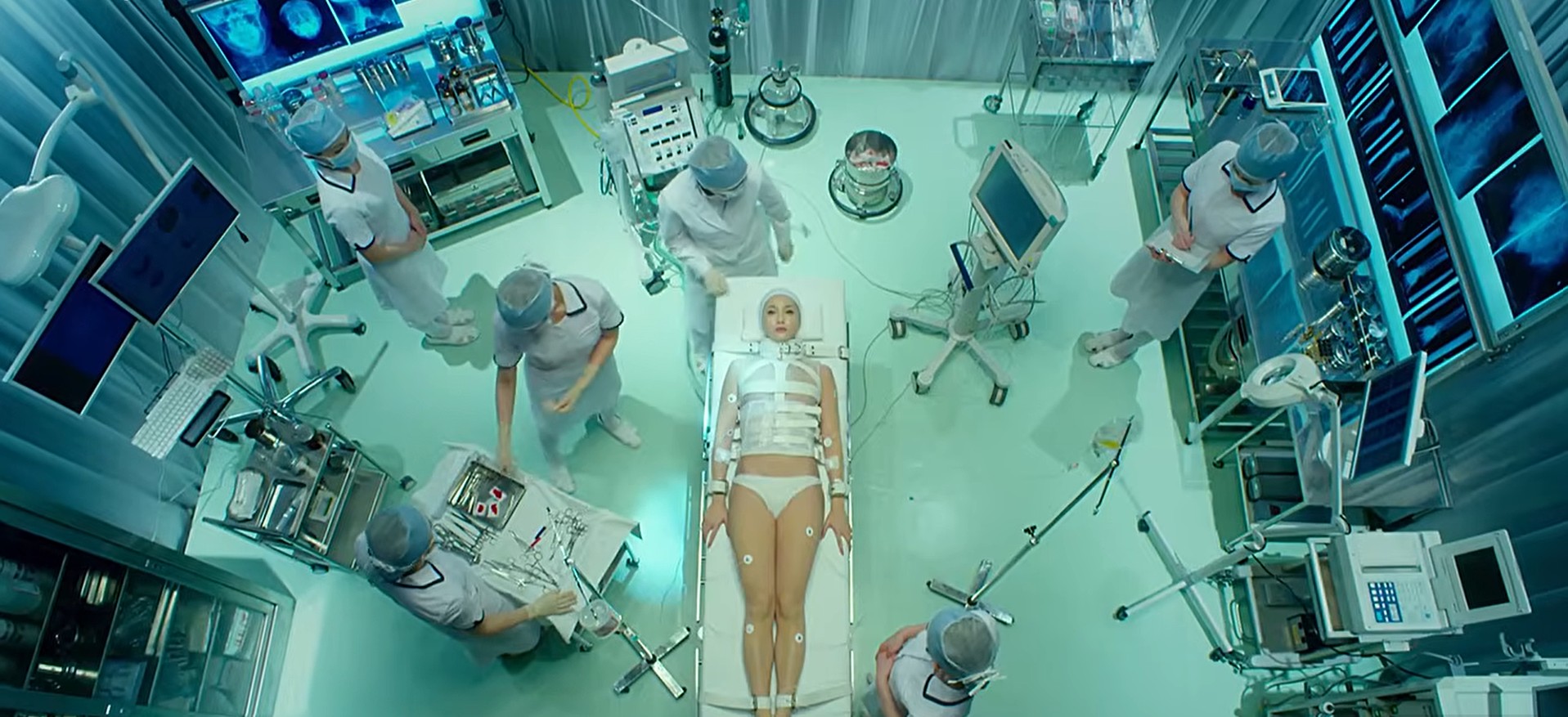
Social commentary horror movies like “The Substance,” “The Neon Demon,” and “The Ugly Stepsister” underline the vast awfulness and extreme lengths of beauty standards.  How to keep youthful, how to manipulate the face and body, and how envy can be weaponized from the worst of counterparts are just some of the attributes, which are very accurate outside the cinema, used as tropes for the body horror subgenre where attractiveness is the core catalyst that motivates monstrosities.  These late 2010s and early 2020 films might not have been directly inspired by Mika Ninagawa’s “Helter Skelter” but definitely pulls from the same cloth.  The 2012 Japanese fashion industrialized body and psychological horror is adapted by Arisa Kaneko based off the Kyôko Okazaki manga of the same name with established manga-to-film experienced producers, Morio Amagi (“Cutie Honey”) and Mitsuru Uda (“Xxxholic”), producing the WOWOW, Parco Co. Ltd, and Asmik Ace Entertainment film.

Objectification perspective isn’t always from the outside looking in but can be looking out as well.  In “Helter Skelter,” model Lilico believes in her self-importance, treating others in subordinate to her illustriousness career as the hottest flavor in Japan’s fashion society.  Society objectifies Lilico as nothing more than a stylistic Goddess who can do no wrong and even have the smallest bit of her in their space, whether be the hot topic of conversation or to the be face of their magazine cover, whereas Lilico objectifies those all around her with eviscerating self-proclaimed eminence and dominion over their mind, body, and soul.  “Ghost Train’s” Erika Sawajiri has the perfect look and approach to celebrity derision without blatancy toward others as her expressionless face never contorts with anger, never smiles without the devilish smirk and piercing eyes, that makes the fashion icon unreadable and to sway of control during bi-polar scenes where happiness and disgust swing rapid on a totalitarianism pendulum.  Personal assistant Michiko Hada, under the performance of “R100’s” Shinobu Terajima, takes the brunt of abuse during on-the-clock and off-the-clock professional and personal time.  Terajima’s ordinary bearings for Hada make the character an easy target in contrast to Lilico’s ornate wardrobe and lavish style of living spurred by ruthless nature to be best and most beautiful, taking an authoritative sovereign stance of control in the fashion hierarchy.  Lilico’s spoiled prince behavior coincides by a fueling Kaori Momoi in a queen-like mother figure as the talent agent who mostly advises her star pupil an instigating misconduct mindset with pro-surgical advice and like-minded guidance that artificially influences her body despite the pain and dangers as well as providing a mimicking behavior of dejecting and downcast harm.  Nao Ōmori (“Ichi the Killer”), Gô Ayano (“Woman Transformation”), Kiko Mizuhara (“Attack on Titan”), Hirofumi Arai (“The Neighbor No. Thirteen”), Anne Suzuki (“Returner”), and Mieko Harada (“Ran”) all play a role in the rise and fall of Lilico.
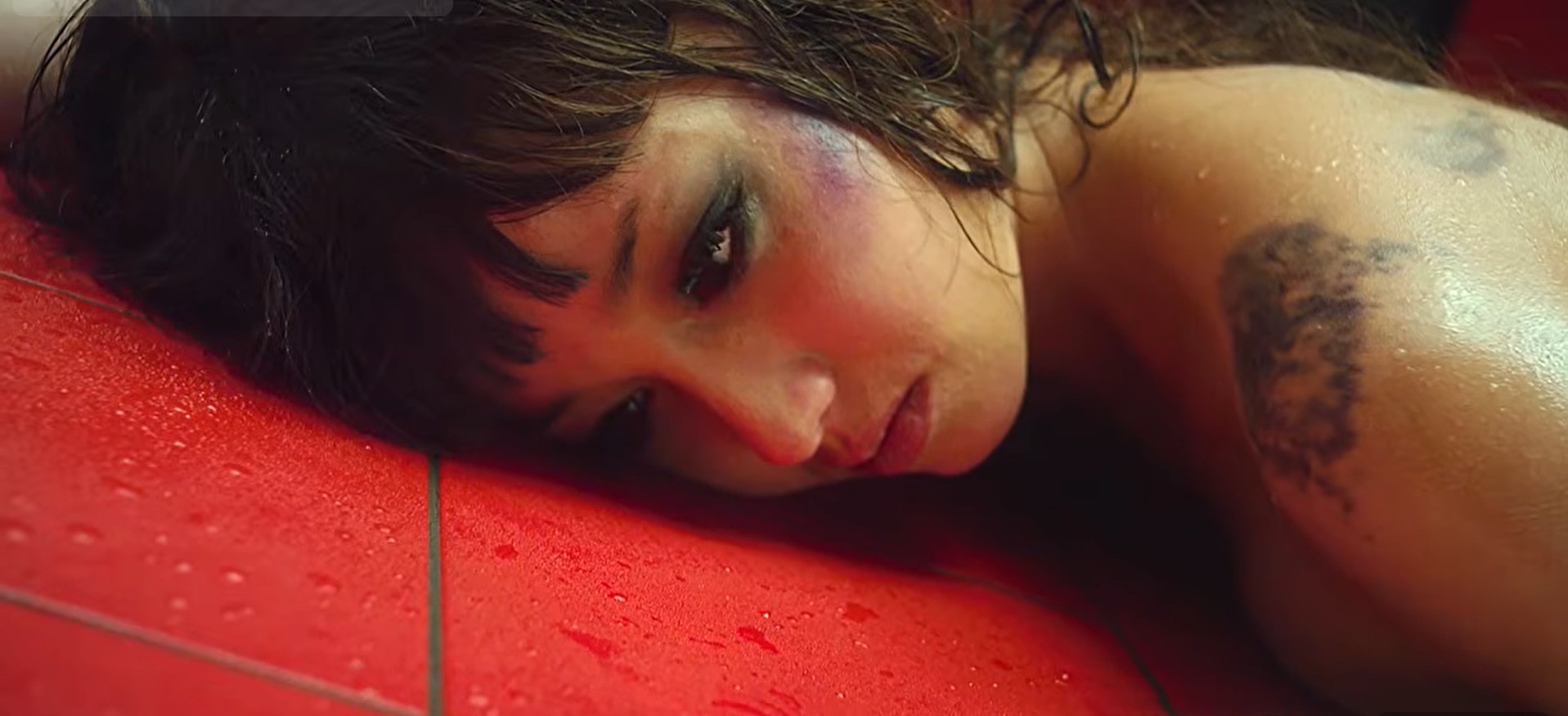
Much like Lilico’s quickly deteriorating fractured state of mind, and body, Ninagawa utilizes a cinematic style that’s overly brilliant with neon colors and a sharp polished look that contrasts reality and distorted perception, creating a disjointed narrative digression Lilico experiences.  The hyper stylization keeps in tandem with the fashion world of flash photography and gaudy maximalism, the ultra-violence and promiscuous behavior depict the cutthroat competition of remaining beautiful and the ugliness that’s truly inside, and the sheer flaunting of indifference and superficiality lingers throughout in and out of favor of our terrible protagonist who is actually the villain and the victim of her own tale.  Each character is flawed beyond reproach and having no redeemable qualities that make them appear strong or promising to be a virtuous type.  Not even the meek and eager-to-please personal assistant Hada who takes the punishing commands of her employer and manager in a purely pitiful subjugation of oneself to not lose a job position and be in the presence of stardom.  Hada even lets Lilico invade her personal life and continues to let it happen with no choice in the matter.  “Helter Skelter” embodies the very definition of the term with its confused and hurried chaotic state in design and in story while, in the same baroque breath, disenchanting the illusion of the fashion industry and beauty standards as not glamourous and genuine but fickle and fabricated with a heavy dish of backstabbing and self-destruction. 

In the same spirit as photogenic magazine models, UK label 88 Films releases a beautifully crafted, limited-edition Blu-ray release.  The numbered release Blu-ray is AVC encoded, 1080 high-definition resolution, onto a BD50 that was already shot digitally with a Red One MX camera through Zeiss Ultra Prime and Angenieux Optimo lenses under cinematographer Daisuke Soma.  This gave “Helter Skelter” a glamorously polished look to accentuate the hyper-stylized and contemporary look that starkly discolor the centralized characters as ruthless people of fashion and high society.  When good finally enters the picture, a young model stepping to Lilico’s high heels as the next young, hot model, the harsh design of modernism is scaled back to simple and sterile aspects with more of the dramatics being held locally to the downfallen characters.  Higher contrasts create deeper shadows amongst a medium-heavy color saturation that primaries strong statement colors like fire-engine red and Duke blue.  The curvature of the anamophoric lenses, presenting in a 1.85:1 aspect ratio, do show intentional signs of wrapping at the sides to capture the entirety of the wide shots in smaller spaces but adds to the surrealistic effect and is implemented at the right moments to make it all sensible.  No compression issues to note.  The Japanese DTS-HD 5.1 Master Audio and 2.0 Stereo tracks are the only two formats encoded.  The 5.1 has formidable attention to the side and back channels with the chaotic fashion-industry ambiance with erratic behaviors steering the scene.  Every action detail is highlighted to bring quieter scenes more tension and every tumultuous moments a fuller body.  The dialogue is crystal clear and layered appropriate with environmental track and soundtrack.  Moods rise up and down with the fluctuation soundtrack that pulsates in breath-holding, provocative, turning-point scenes that while melodies play in more of shocking portions to entice attention during climatic notes.  The newly translated English subtitles have no synchronization or grammatical issues to note and pace well with the visuals.  Special features include a feature in tandem audio commentary with Tori Potenza and Amber T., interviews with star Erika Sawajiri and director Mika Ninagawa, a behind the scenes of raw footage making the film, the Japanese premiere stage greeting, an opening day stage greeting, the Q&A from the Taipei Film Festival with director Mika Ninagawa, the original rehearsal footage, an image gallery, and the teaser and official trailers.  Like Ninagawa’s film, 88 Films tangible release is also hyper-stylized with newly commissioned art by Luke Insect that’s surreal, color, and slightly disturbing.  The clear Scanavo cases comes with an gold Obi strip with film and Blu-ray details and the sleeve is dual sided with original Japaense compositional design on the inside.  Inserted inside is a 23-page color booklet with a chaptered essay by Violet Burns, complete with color photo stills and promotional photos with the front and back art contrasting the two model women in a good and evil, light and dark, way.  The not rated, limited-edition Blu-ray has a runtime of 127 minutes and is A and B encoded to support playback in the Americas as well as Europe. 

Last Rites: There are plenty of horror as well as commentary films about fashion, but none do it with style quite like Mika Ninagawa and still develop an unrivaled cynicism of self-implosion.
Beauty is Pain. “Helter Skelter” from 88 Films!

EVIL’s Arms, Legs, Head…All Fall to Pieces and Want a Piece of You! “Colony Mutation” reviewed! (Visual Vengeance / Blu-ray)

“Colony Mutation” Literally Gives an Arm and a Leg for Blu-ray release!

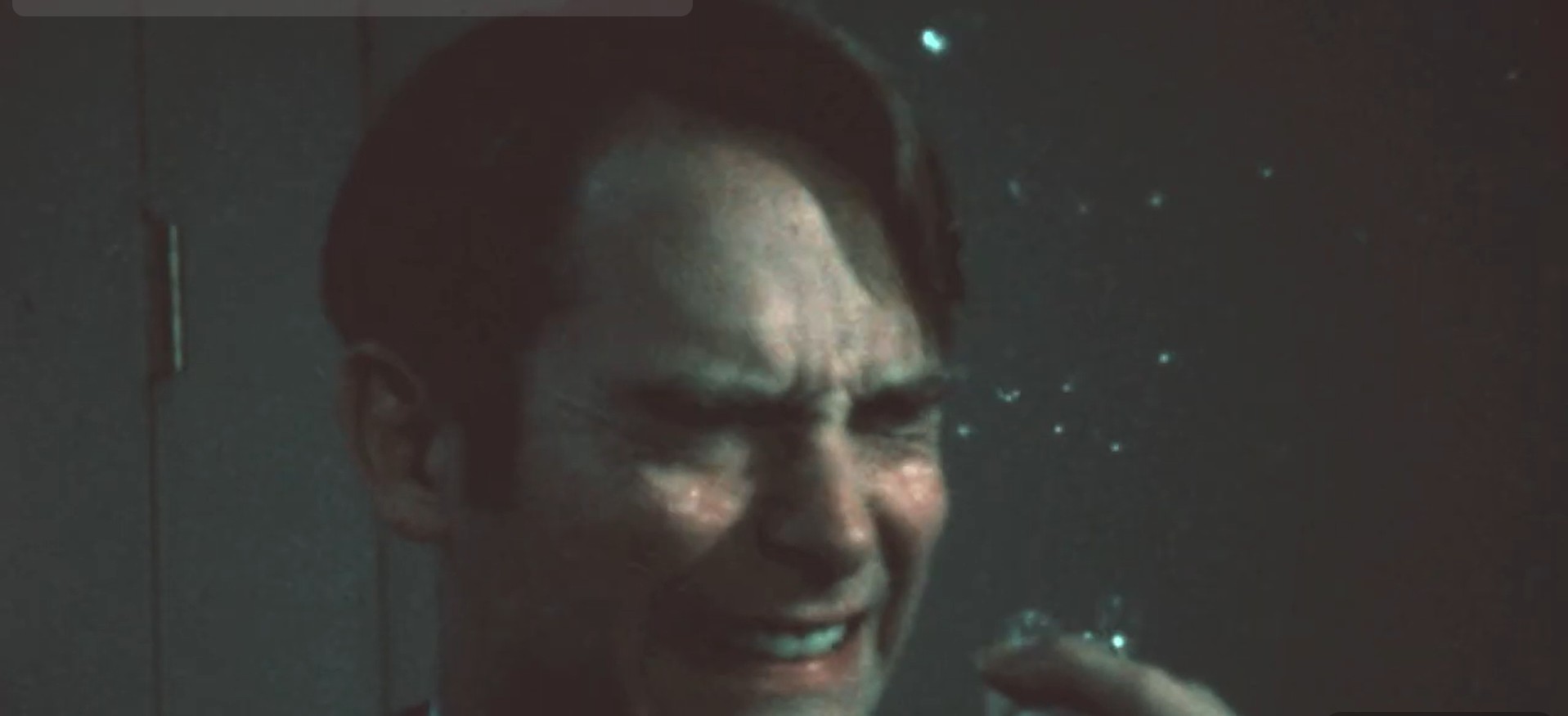
A genetic scientist working on test batches of a resurrection formula finds out her public relations executive husband, both of whom are working for the same research company, is having a clandestine affair with another colleague.  In a fit of rage, she splashes the latest test batch liquid onto his face when confronting about his illicit affair.  As time passes, the side effects of the experimental drug crave raw red meat but requires the meat to be fresh and, more grotesquely, his appendages are able to separate and become monstrous to do his bidding driven by his impulsive need for meat.  He stalks young women, luring them into hope of a romantic evening, to feed his need.  With no cure existing, he throws caution to the wind and continues the monstrosities against the women, even against his contentious ex-wife and his side woman until he comes face-to-face with his lover’s gun-carrying sister who never trusted the married man in the first place.

Tom Berna’s one and only directorial and screenplay feature film, “Colony Mutation,” takes womanizing and sexual assault to a whole new disturbing level, mutating toxic masculinity for severe severed limb bedlam against young women.  Berna, who went on to having acting credits in independent productions of “Go to Hell,” “Vengeance of the Dead,” and, perhaps the most notable feature, “Jigsaw,” not the “Saw” spinoff story, from the late 90’s and into the early 2000s, shot the film in the Milwaukee metropolitan area to be the background for masculine predatory behavior, finding and integrating influence from body horror films from the likes of John Carpenter’s “The Thing” or David Cronenberg’s “Rabid” to show extremities with aggressive, mutated autonomy and parasitical symbiosis hungry for other humans.  Berna self-produced the film and listed as a film from Tyger Brand Coffee Productions.

David Rommel plays as Jim Matthews, a PR exec having a romantic affair with Jenny Dole (Joan Dinco) at the workplace.  Also at workplace is Jim’s wife, genetic scientist Meredith Weaver (Anna Zizzo).  While Meredith works nights or is away for business, Jim’s able to sneak away and play with Jenny, building a relationship that’s quickly getting serious for Jim, much to his chagrin.  A workplace triangle, by all means, will run to a confrontational head and does with Meredith confronting her husband’s credit card statement that lists hotel stays.   Rommel, Zizzo, and Dinco play to their character’s ability extremely well.  Rommel’s not the epitome of machoism as he’s favors a selfish and cowardice side that doesn’t allow him to break his union with wife Meredith and he doesn’t fully commit to Jenny’s head-over-heels love for him, we see this when Jim stutters and becomes reclusive when the mention of having future children come into the conversation.  Meredith’s rage causes her to toss her experimental resurrection and growth serum into his mouth agape face and this climatic act acts like a metaphor for Jim’s breaking point between the contentiousness with wife and his side piece’s neediness for more than just sex, sending Jim into sexual assault airspace where even his wife Meredith falls victim to a forced oral sex that results the mutation to blow a hole through her head.  Jim goes on to pick up bar women to then kill them for the fresh meat of his mutated biology but mostly done off screen or in the shadows and implied, which could be said as a double entendre for off screen sexual assault.  “Colony Mutation” rounds out the indie cast with Tammy Andersen, Nancy Brown, Clyaton Simchick, Tom Fugina, Yeng Monroe, Carri Krehl, J. Elizabeth Marhal, and Susan L. Cane as Jenny Dole’s sister who had a bad feeling about her new boyfriend Jim in the first place. 

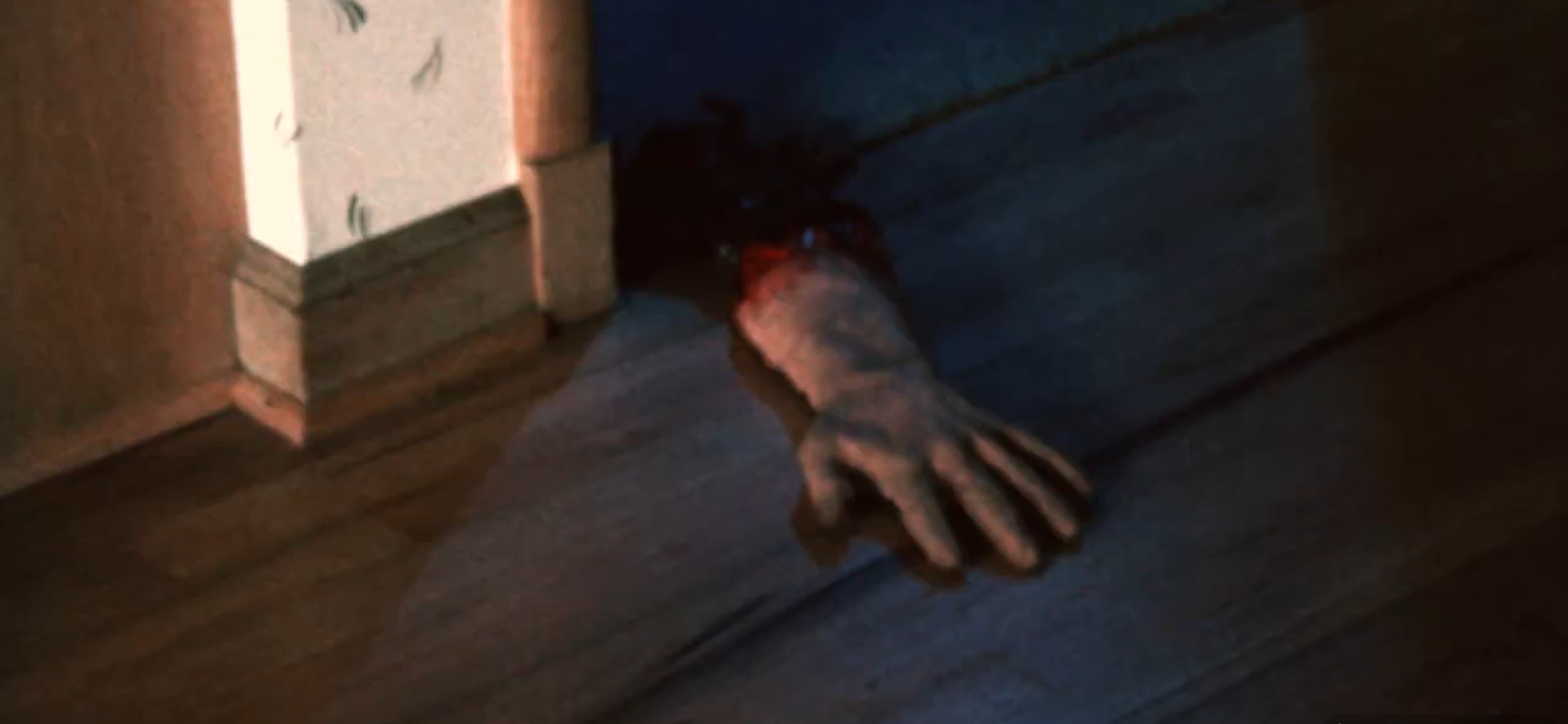
If looking for a DIY body horror with plenty of ambition but short on cash, look no further than “Colony Mutation” that harnesses the B-movie mayhem of an appendage detaching, young woman feasting, monster of a man which, ironically enough, is created by a woman and is innately obsessed with devouring raw meat.  The curious about this modified man-thing, who can appear normal until time to strike then all parts detach into a feasting frenzy, is that he only attacks women, suggesting single-sex predator behavior.  Jim’s detachable limbs and other suggestive parts celebrate the independent spirit with crude construction, inventive editing and imaginative conceptions that appears antiquated on the outside but surely heartfelt in its objective – a David Cronenberg tiered body horror.  The unicellular organisms can be arms, legs, manhood, and even his head in a scene very reminiscent to John Carpenter’s spider-head moment in “The Thing” but the scene stand on its own two idiosyncratic pereopod legs, or rather four legs.  Shot on Super 8mm, the harsh details and near monochromic complexion with all the cell’s imperfections associated to provide the Tom Berna film a classic monster movie façade and since the film was shot in the early 1990s, there are very minimal period specific details that pin down a modern decade.  “Colony Mutation” could be set in the 1980s.

“Colony Mutation” is not longer detached from the body of filmic society with a new, director-supervised Blu-ray release from the Wild Eye Releasing associated company, Visual Vengeance.  The AVC encoded, 1080p resolution, BD50 is pulled, transferred, and restored from the original Super 8mm elements.  The 2K transfer retains plenty of the Super 8mm innate aesthetic with desaturated color palette, cell transparency bleed, and the dust, dirt, and scratches but never do anything of those distort the overall viewing experience.  “Colony Mutation” is a quintessential rare gem of indie filmmaking setting the bar high with practical and stop-motion special effects and pulling off a rough cut of said effects.  With the new and upped pixel count, many of the special effects scenes render over as cheesier than ever with all the minute details now exposed.  While that’s low-hanging fruit, the more problematic issue with Berna’s film is Brad Snowball’s choppy editing that often feels key scenes being cut too short or omitted for crucial continuity.  “Colony Mutation” is presented in the original full screen aspect ratio of 1:33:1. The uncompressed LPCM dual channel English Stereo offers a directionless and flat track that often sounds mono designed but the synched post-production dialogue, ADR, is evident with not an exact detailed synchronization between lips and vocals in its isolated and omnipresent attendance that never feels like it’s within the scene.  Range and depth are loss with the accompany audio track with often loss of Foley that creates moments of silence, typical with films shot on Super 8mm and kept on tighter purse strings.  Optional English subtitles are new and provided for optional selection.  Visual Vengeance always comes out swinging with supported special features on all their releases and this feature includes feature parallel audio commentary with Tom Berna, a second commentary with Weng’s Chop Magazine’s Tony Strauss, a new interview with director Tom Berna, new interview with star David Rommel, new interview with music composer Patrik Nettesheim, archived public access interview with Tom Berna In the Director’s Chair, alternate cuts from the original VHS and DVD releases, the original completed script, an image gallery, “Producer” teaser trailer, and Visual Vengeance preview trailers along with their trademark motion title menu.  The physical release comes with a Justin Coons illustrated slipcover art that’s “The Thing”-esque with additional artwork from Belgium artist STEMO.  The reversible sleeve art also includes the original VHS artwork.  Inside, there’s a sex-risky promotional illustrated mini-folded poster, a tri-folded booklet with an essay by Tony Strauss Of Milwaukee Mutations and Men:  Tom Berna’s Colony and Blu-ray acknowledgements, and a retro sticker sheet.  The region free product is not rated and has a runtime of 83 minutes.

Last Rites: Visual Vengeance brings out of the depths of obscurity Tom Bern’s “Colony Mutation” for a special features packed Blu-ray of body horror bonanza saturated with predatory male sexual addiction.

“Colony Mutation” Literally Gives an Arm and a Leg for Blu-ray release!

Invincible-Seeking EVIL Loves to Hide Behind Strip Clubs! “Decadent Evil 2” reviewed! (Full Moon Features / Blu-ray)

The Sequel “Decadent EVIL II” Bites Hard! Check It Out!

After barely surviving Morella, Dex and Sugar, along with carrying around the homunculous Marvin, traverse across the country to find a vampire master.  Their plan is to take a drop of his blood needed for a resurrection ritual to bring vampire hunter and Marvin’s son Ivan Burroughs back to life after sacrificing himself to stop the deadly, megalomaniac Morella.  Ivan’s golden tracking cross brings them to midwestern gentleman’s club full of possible seedy suspects as the master vampire – the vampiric-attributed club owner Janos, the stern and scary club manager Burke, or even the club’s beautiful top dancer Lena are all suspects.  To uncover the master vampire, Dex and Sugar work their way to being hired at the club in order to snoop around.  Meanwhile, dancers and customers are winding up dead nearby.  As the investigation continues, Dex, Sugar, Marvin, and even the undead Ivan must work together to find the master vampire and stop him from continuing what Morella started. 

“Decadent Evil II” is a direct sequel to the 2005 original that returns Full Moon founder Charles Band (“Puppet Master”) to the director’s chair and writer Domonic Muir to pen the follow-up.  Same vampire tricks, more topless strippers, and a ragtag team of vampire trackers has this 2007 subsequent feature feel like a heel biter by keeping the story going without a lot of time lapsed.  Band retains his personal interest in pint size creatures and nude women in the sequel while keeping costs down as much as possible with limited locations and special effects fields filled in mostly with strippers doing their routines in between.  Band also returns as producer alongside Bill Barton (“Blood Forest”) and Joe Magna (“Dangerous Worry Dolls”) with James Synder, Jon Morrey, and Dana K. Harrloe serving executive producer under Band’s Wizard Entertainment, now Full Moon Productions.

Jill Michelle and Daniel Lennox return to their respective roles of being a vampire-human love story couple, Sugar and Dex.  No longer hiding secrets from one another and on-the-road together, going from one dingy hotel to the next, the carry around the corpses of Ivan Burroughs in hopes to one day resurrect him by securing master vampire blood.  Ivan Burroughs, unfortunately, is played by a new actor, one who in my opinion is an upgrade from the already great Phil Fondacaro (“Land of the Dead”).  Ricardo Gil replaces Fondacaro as the vampire hunter with a vindictive vendetta.  Gil does have similar features to Fondacaro but has more personality in his delivery, making Ivan Burroughs more sarcastic and rougher around the edges than the first subdued portrayal with less snarkiness, and that gives the sequel more notability against the first film.  The vampire lot doubles in villainy with a master vampire purposing sporting his beastly side of a red vampire bat head, complete with pointy airs, conical snout, and elongated fangs, and which, in all honesty, makes him look more like the Prince of Darkness of traditional appearance.  The master vampire hides amongst the human pool of the gentleman’s club to mist the air with mystery of who it is with a suspect list including a club owner Janos (Jon-Paul Gates, “Alice in Terrorland”), club’s top stripper Lena (Jessica Morris, “The Haunted Casino”), and club manager Burke (James C. Burns, “A Haunting at Silver Falls”).  Mike Muscat, Lillie Nyx, and Rory Williamson make up the rest of the cast.

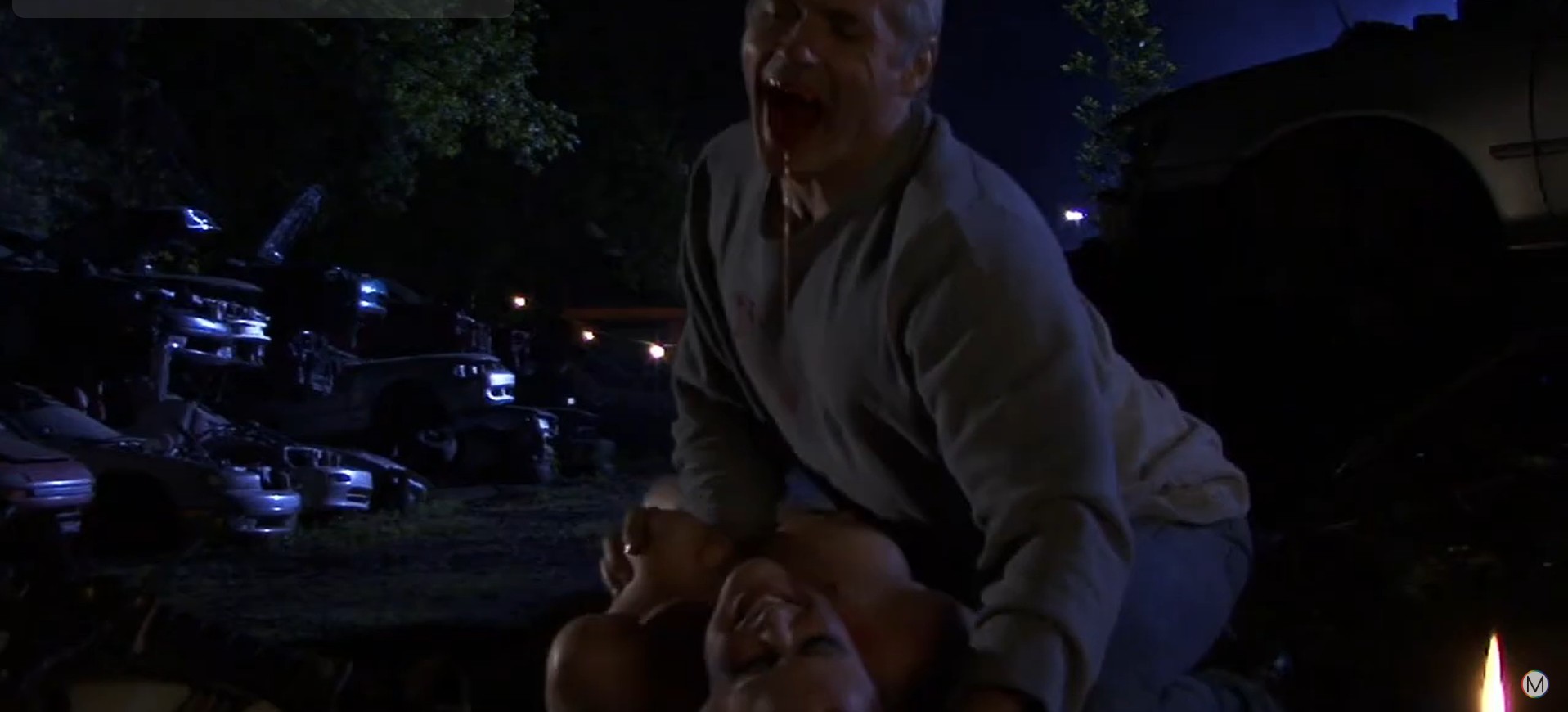
“Decadent Evil II” is comparable to the original film with both being watermarked by Charles Band need for small creatures, campy horror, and substantial number of topless women, the latter being more prominently risky in the sequel with extra suggestive stripper poses that focus on the crotch area to lay gingerly into that filmmaking golden role of bigger and better for a sequel.  “Decadent Evil II” does teeter that idea with also a doubled antagonist pool and a higher body count but not necessarily containing, and also being a sorely lack of, gore that more-or-less stays the same from the original film with a rivulet trickles of blood running down necks and chins.   Band and Muir do take the vampire out of the Gothic setting, one that Morella had resided herself into living at a mansion of marble and stone, and they trade it for an automotive junkyard, an ill-fitting home for a well-dressed vampire whose lived centuries in human culture.  One locale that has remained constant throughout both Band’s films are strip clubs and channeling the success of such gentleman’s club with bloodsuckers as “From Dusk till Dawn, both films prominently display them with great grandeur for the B-roll stripper moves.  With being a sequel, I held quite a bit of disappointment for the story that follows the same thematics as the first, the main being a singular master vampire garnering souls to become invincible and there’s nothing to accentuate that idea even further as it’s surrounded by, again, much of the same – Dex, Sugar, and Ivan, the inexplicable homonculous and his strange attributes, and a strip clubs.  Even the final scene remains familiarity with instead of Marvin making love to another homunculous, he makes doggy love to a full-size person in a cringy and uncomfortable last scene moment.

Charles Band’s “Decadent Evil II” receives it’s Hi-Def Blu-ray as a part of a long and arduous of converting Full Moon’s films to Blu-ray.  The AVC encoded, 1080p resolution, BD25 offers Full Moon’s catalogued 239 title a new pixel perspective of a saturated color palette inside its darker shaded tone.  The details are mediocre as much of the finer points are lost in low light, gel lighting, and haze but the compressions aim to be stable without any artefacts to note on lowest capacity Blu-ray.  Plenty of inky and less visible delineating contrast is a credit to the gaffing and director of photography Terrance Ryker for a soap opera-noir aesthetic.  For the first time ever, the film is presented in HD in a widescreen 1.78:1 aspect ratio.  The audio options are an English LPCM 5.1 surround and a stereo 2.0 that caters to District 78’s alternative, indie rock during the club sequences but elucidates and livens up the dialogue to where nothing obstructed with ambiguity.  Hardly any depth to the sound design as characters never wade beyond medium shots and range is limited to mostly the dialogue track along with imitation actions one would see in a low budget production or cartoon.  English subtitles are not available on the Blu-ray.  Extra features include a behind-the-scenes, a 42-minute featurette Battle of the Bands with a little stroll down memory lane for Charles Band as well as musical ventures for the film, stripper auditions for the Visions Night Club, the original trailer, and Full Moon trailers.  The physical presence is much of the same from Full Moon with a standard Blu-ray Amaray with relatively new artwork focusing on the homunculous rather than the vampires.  The sleeve is one sided with no inserts inside.  The region free Blu-ray has a runtime of 81 minutes and is not rated.

Last Rites: Like stuck on repeat, “Decadent Evil II” doesn’t offer a different type of narrative but ups the amount of nudity and vampires without much formidability in this lackluster sequel.

The Sequel “Decadent EVIL II” Bites Hard! Check It Out!

EVIL Has a Sweet Tooth for Children! “The Devil’s Candy” reviewed! (Second Sight Films / 4K UHD and Blu-ray)

“The Devil’s Candy” 4K UHD and Blu-ray Is Now Available from Second Sight Films!

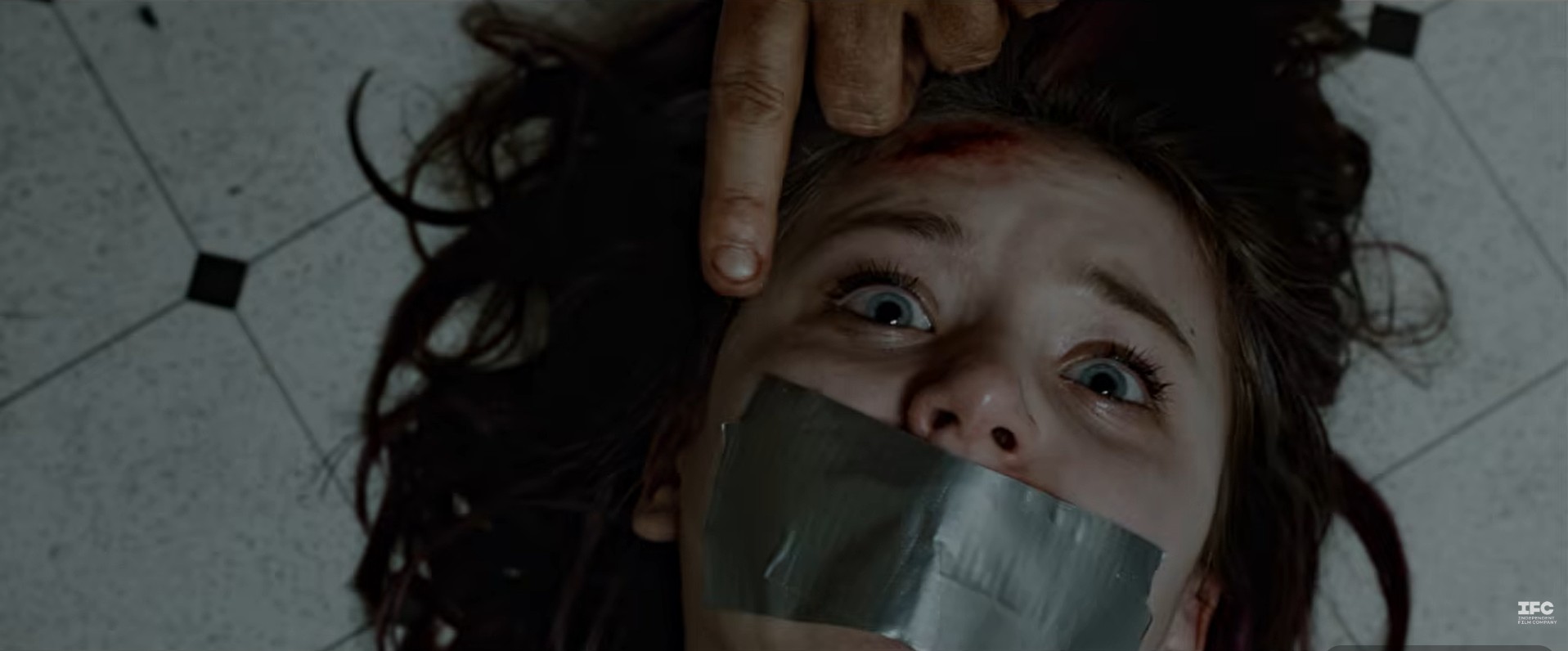
A financially struggling, heavy metal inspired painter buys a bargain country house with an adjacent studio to work toward commissions and to home his wife and daughter in a bigger, lighter space.  When an unstable man with a child-like intellect disability arrives at their doorstep, wanting to come home to play his electric axe guitar to drown out the Satanic chants he continues to hear, he becomes the beginning of the family’s nightmare in their new home.  The man is a child serial killer, an unwilling agent of the Devil, who believes children are the Devil’s candy and when he can’t muffle out the continuous chanting in his ear, he must obey the commands to supply his master with more hacked up adolescence.  A couple of near miss encounters with the painter’s young daughter put the family on edge and into police witness protection but that won’t stop him from coming for her.

Sean Byrne, the Australian filmmaker who debuted with the insane prom queen killer in “The Loved Ones” and who turned Jai Courtney into a shark-obsessed serial killer in “Dangerous Animals,” directed “The Devil’s Candy” in between those two productions and is his only solely U.S. produced film to date.  The 2015 film that mirrors the Satanic Panic era with its heavy metal and its unspecified yet strongly suggested 1980’s motif is written by Byrnes to symbolize the contentious efforts to divide family bonds in the best and worst of times with the killer representing the invasive and dangerous wedge when the painting father suddenly develops a muse for his work, losing track of time while working and neglecting his family responsibilities.  “The Devils Candy” is produced by Jess Wu and Keith Calder (“You’re Next,” “The Guest”), Chris Harding (“You’re Next,” “The Guest”), and Roxanne Benjamin (“Southbound”) under HanWay Films and in association with Snoot Entertainment.

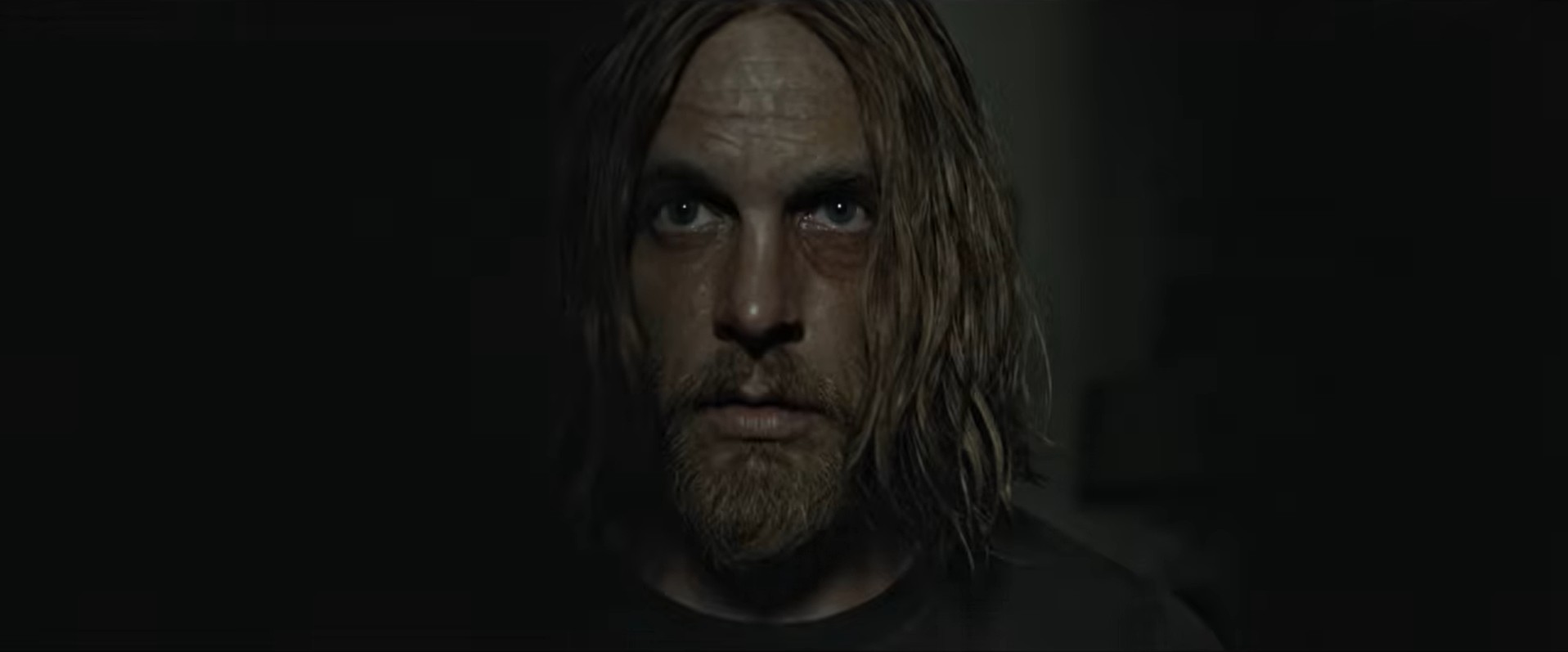
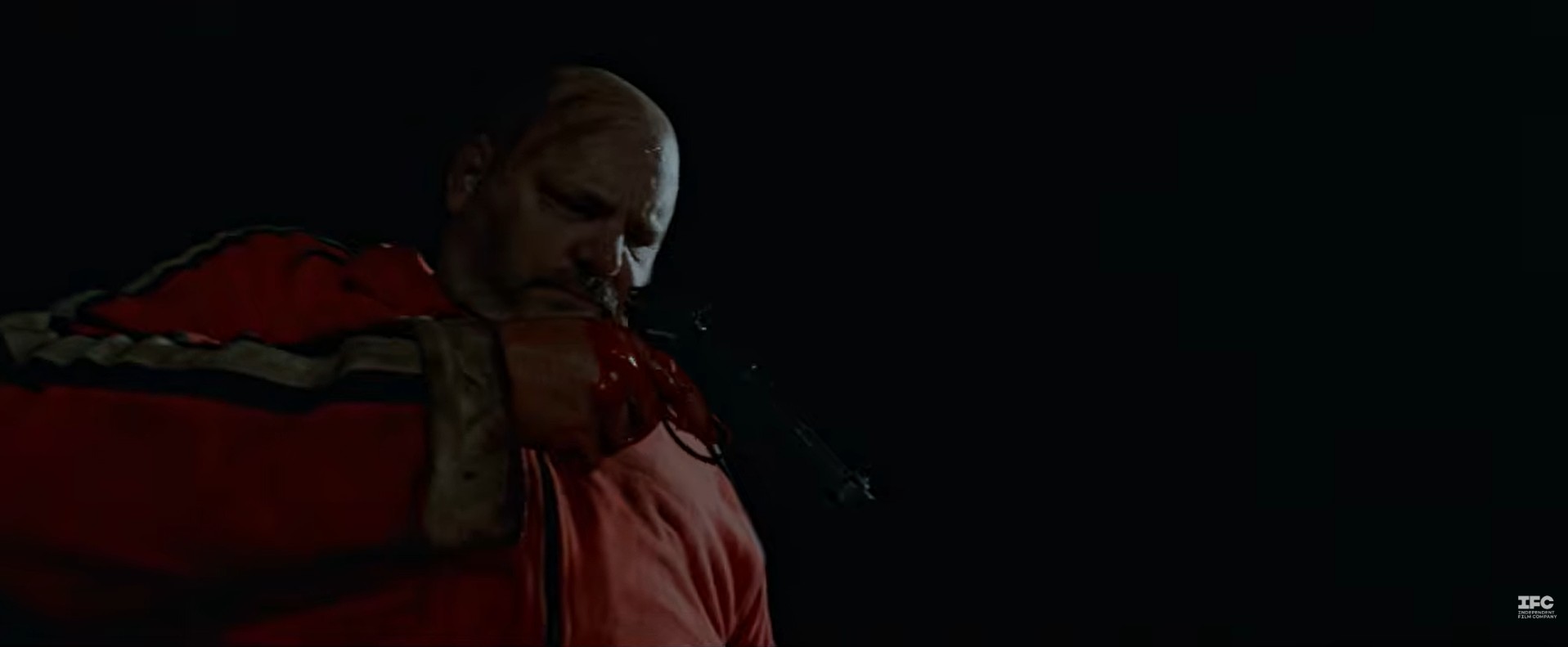
Ethan Embry is an interesting casting choice to be play principal father Jesse, a father-painter with a heavy metal music edge who becomes possessed to paint disturbing images of upside crosses and children burning.  Embry, who has the softest, puppy-dog eyes in the industry, fits remarkably as the likeable Jesse, sporting a long hair wig overtop his scruffy facial hair and athletic and muscular toned body that becomes a character in itself to display his intensity as a normal painter and more so as a possessed painter but never leaning toward being malevolent under the influence of possession, just a bad dad to daughter Zooey (Kiara Glasco, “Maps to the Stars”) that jeopardizes their close bond.  I found it curious that Shiri Appleby, “The Killing Floor”) is mostly out of the narrative picture as wife Astrid.  There are a couple of heart-ot-heart scenes between her and husband Jesse but from the most part, Astrid is absent working across town and leaving much of the family relationship strain in the hands of Zooey and Jesse without Astrid weighing on Jesse’s lapse in judgements:  forgetting to pickup Zooey from school, leaving the door open late at night while painting, etc.  Astrid is written with too much understanding and not enough mother bear ferocity.  My personal favorite supporting actor, who has been around for decades and here has a bigger antagonist role, is Pruitt Taylor Vince finding and exhibiting his inner calling to kill children.  “The Identity” and “Mississippi Burning” actor with noticeable nystagmus that moves his eyes involuntarily, mostly side to side, has in his firm grip one of the more subtle yet disturbing characters with layers, struggling with the Devil’s speak commanding his ear and becoming violent went his attempts to subside the viperous, chanting tongue hit roadblocks.  “The Devil’s Candy” rounds out the supporting pars with Tony Amendola (“The Curse of La Llorona”), Leland Orser (“Alien Resurrection”), Craig Nigh (“Terror Birds”), Oryan Landa (“Hollow Scream”), Jamie Tisdale (“From Dusk till Dawn:  The Series”), Mylinda Royer, Marco Perella, and Sheila Bailey Lucas.

Satan and heavy metal are nearly synonymous in the horror assemblage – Charles Martin Smith’s 1986 “Trick or Treat,” John Fasano’s 1987 “Rock ‘n’ Roll Nightmare,” Jason Howden’s “Deathgasm,” and even “Bill & Ted’s Bogus Journey” blends Hell with Rock ‘n’ Roll! – and all give a villainy credit to the God antithesis known as the Satan.  “The Devil’s Candy” is a poster child for the Metal and Satan genre, as part of the dubbed “Metalsploition” or “Rocksploitation.”  Yet, the Sean Byrne film plays a different kind of setlist, one that doesn’t slap Satanic right into your face but rather plays to the tune of possible mental illness with a subtle flavor of supernatural forces at work, behind the veil of derangement and delusion.  Hell and brimstone, corporeal demons, or any kind of the depths emerging from the fiery pits of the underworld are greatly and purposefully omitted from “The Devil’s Candy” and that is a welcome change from the aforesaid films, grounding this terrifying exchange more onto the fabric reality, as seen in news reports of child kidnapping and murder.  This instability doesn’t only apply to the Pruitt Taylor Vince’s Devil whispered, child-killing character but also applies to Embry’s Jesse, a family man with a metal edge who flirts with temptation, tempted to the darker side of metal, by being influenced with a malevolent muse to draw disturbing images and skirting responsibility that threatens the stability of his family, causing trust severing discord.  He also toys getting in bed with an artist curator who thrives and lusts after dark, provocative, profane art, with his gallery name being Belial – another name used for Satan in other cultural and religious beliefs.  Jesse must resist fame, fortune, and the guile techniques of Satan on Earth, another pointblank theme mentioned in the movie with a televangelist and return to his roots of connecting with his daughter and wife instead of selling his soul, or selling out, to the Devil. 

Second Sight Film’s dual format, 2-disc, 4K UHD and Blu-ray set of “The Devil’s Candy” is a tremendous gift to the physical media world.  The HVEC encoded, 2160p resolution, BD100 and the AVC encoded, 1080p resolution, BD50 are strikingly peak picture quality for their respective formats.  The limited edition contains a new, producer-approved 4K restoration of the original digital print and, while there’s likely not a massive different between the digital master and the restoration, Second Sight’s imaging for the release is superb, nonetheless.  Hovering a settled moody and low-key tone, creating an abundance of shadows and underexposure, Simon Chapman’s cinematographer creates the necessary anxiety that nowhere is safe away from a maniac driven by the dark Lord.  There’s beauty in the hard contrast with a cooler tone in more lit areas with details coming through greatly in these scenes that warrant them.  Skin tones and fabric textures have organic tactile and reflective presence.  Both formats are presented in a widescreen 2.40:1 aspect ratio that gives it a tighter yet lengthier exhibition for the high-def resolution.  The English audio on the both discs is an encoded lossless DTS-HD 5.1 Master Audio and it rocks!  Metal is master for the metalsploitation picture with great emphasis on the low-tone and harsh electric guitar strumming while a heavy rock soundtrack, consisting of metal band tracks from Metallica, Goya, Slayer, Pantera, and Machine Head to name a few, is infused with the satanism scenario and Jesse and Zooey’s metalhead lifestyle.  Dialogue is clean and clear with prominence above the layers where appropriate, never conflicting with the metal rock.  Range and depth play a factor with off-screen action told through key non-diegetic sounds that can almost paint a picture in your head, and this also goes toe-to-toe with the non-diegetic chanting inside the mind/ear of our principal characters because of its omnipresence, which seemingly engulfs the entire space in frame and then some.  Optional English subtitles are available.  All the special features are encoded on both discs, which is quite unusual for a UHD to have the full list of extras and perhaps suggests a more efficient HVEC compression.  These extras include an audio commentary with director Sean Byrne, Into the Fire a new intro interview by director Sean Byrne, new interviews with actor Ethan Embry Those Fragile Things, director of photography Simon Chapman Devil in the Details, editor Andy Canny The Cutting Room, production designer Thomas S. Hammock A Big Step Forward, and Sean Byrne’s short films: “Advantage Satan” and “Work?”  Like other limited edition sets from Second Sight Films, “The Devil’s Candy” receives a rigid slipbox with warm illustrated art by graphic artist Huan Do that extends beyond the slip box onto the bi-fold UHD and Blu-ray tall jewel case, a front and center lobby card of six with the rest being images from the film, and the book, a 120-page read of new essays from Aton Bitel, Reyna Cervantes, Becca Johnson, Joe Lipsett, Mary Beth McAndrews, and Zoe Rose Smith.  The book also includes production artwork of potential paints, cast and crew credits, and physical media acknowledgements.  This is a heavy (metal) set!  The UK certified 15 release for strong threat, violence, and language has a region free UHD and a region locked B standard Blu-ray with a runtime on both discs clocking in at 79 minutes.

Last Rites: “The Devil’s Candy” is a hard-rocking, hard-hitting thriller on the cusp of Satanic Panic but submerged fully in dangerous mental illness surrounding the welfare of children.

“The Devil’s Candy” 4K UHD and Blu-ray Is Now Available from Second Sight Films!

“The EVIL Dead of Hawaii!” “Day of the Wicked” reviewed! (Wild Eye Releasing / DVD)

“Day of the Wicked” Now on DVD!

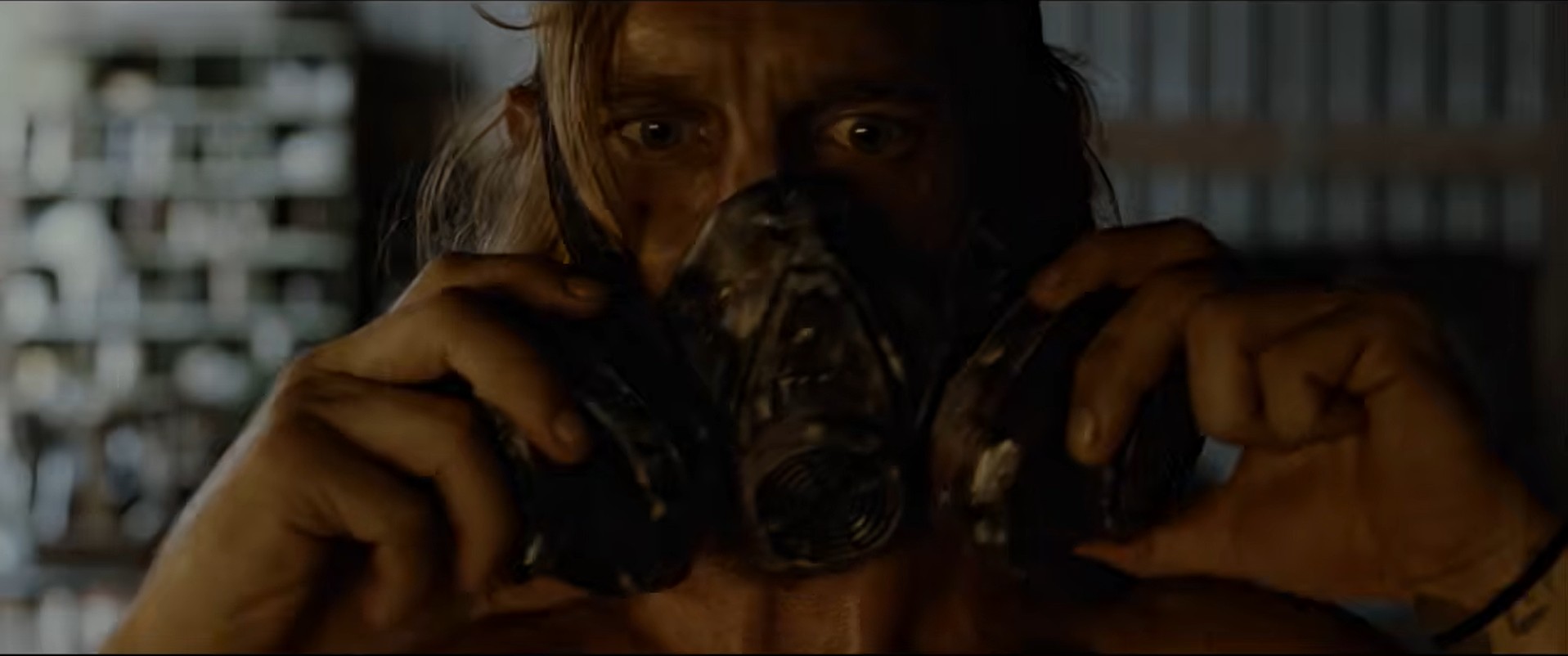
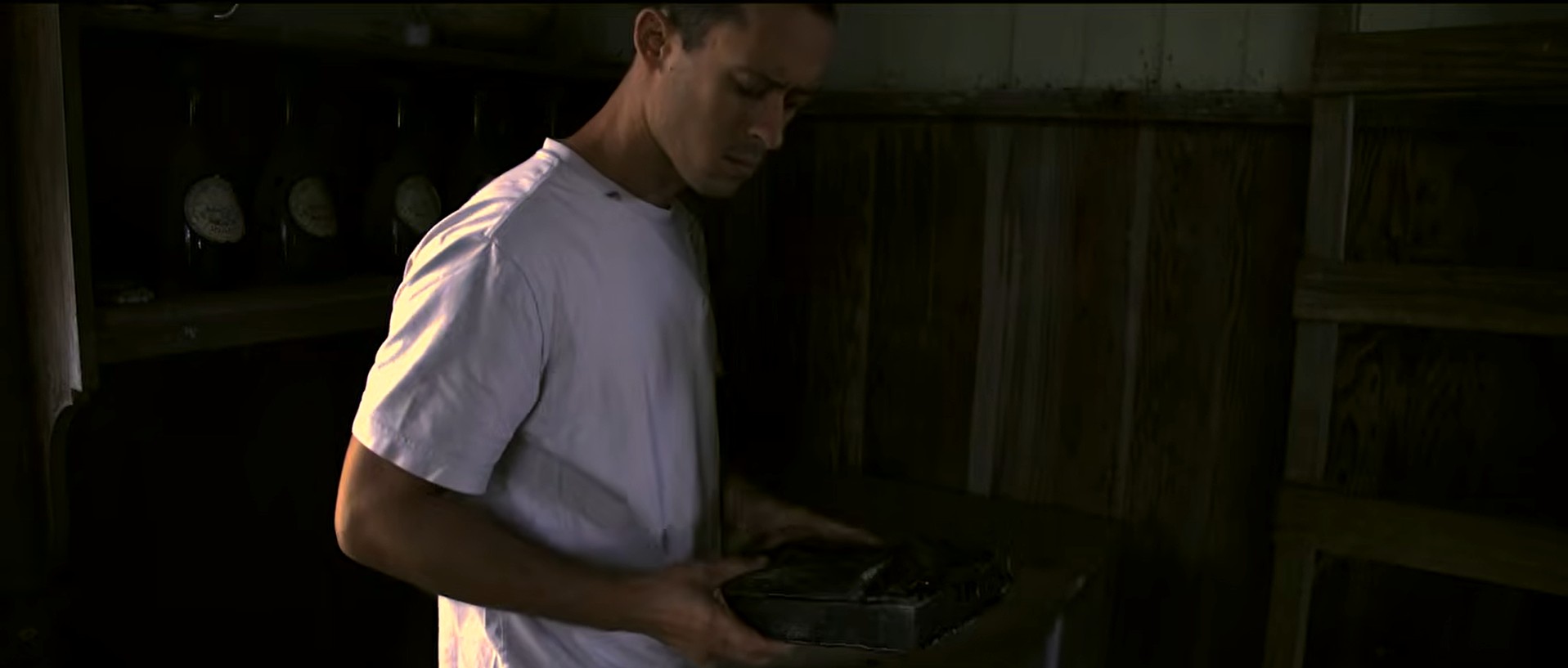
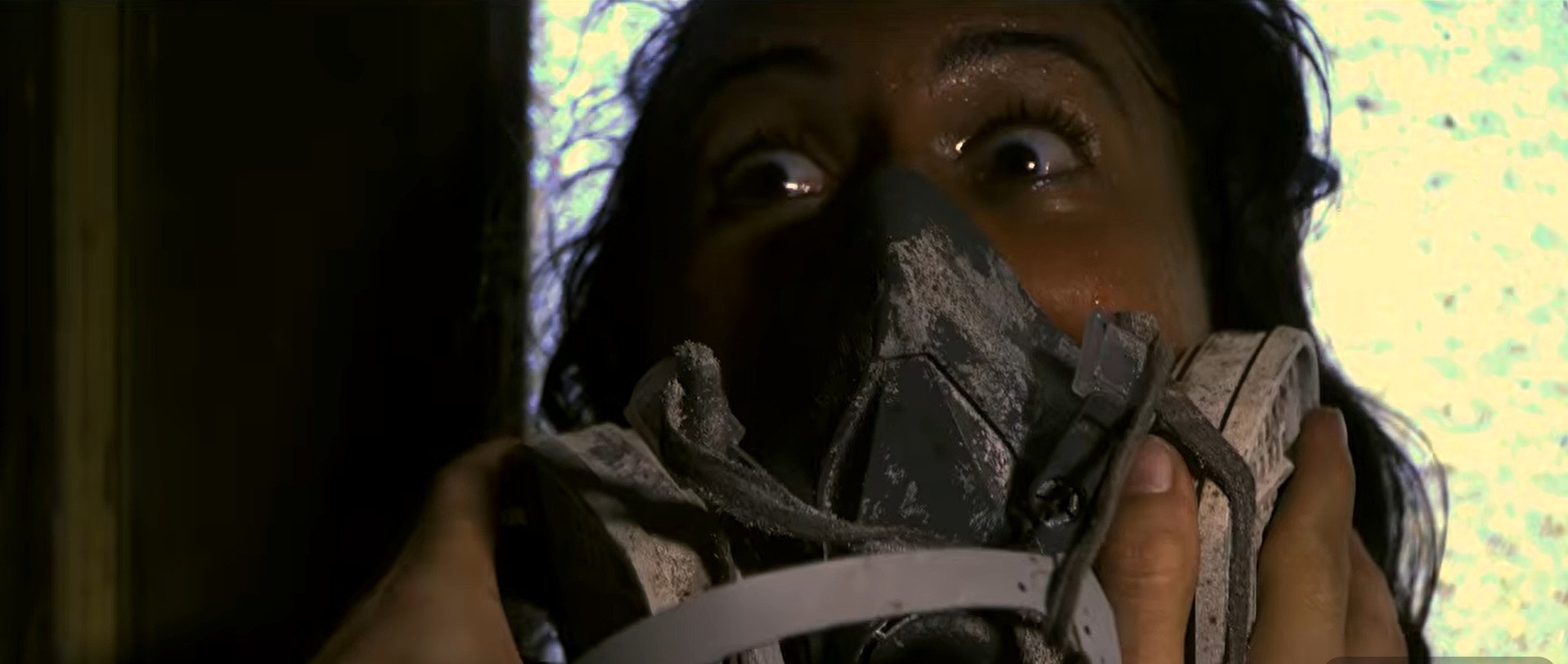
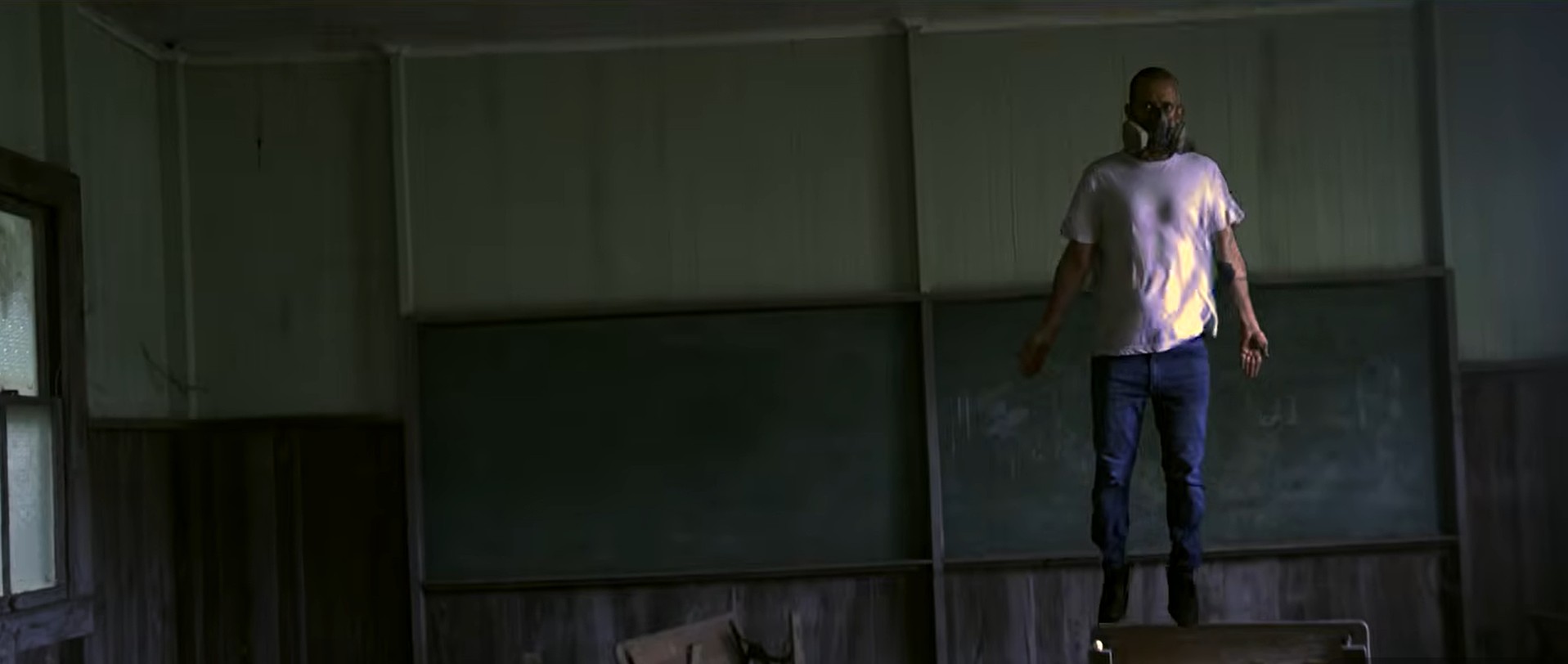
Down on his luck John Jones finds work at a special construction job, restoring an old Japanese school house in the outskirts of Hawaii.  Excited to work with his longtime friend Chelsea, he arrives days ahead to stay in the old schoolhouse after going through an ugly divorce and losing his car to maintenance issues.  Jones stumbles upon the book of the dead, the Necronomicon, and it consumes his soul to do the bidding of an evil Kane, the former school master who took the soul of 35 school children and looks to return to the corporeal realm to do more soul taking.  When the rest of the workers arrive days later, Jones’s already peculiar behavior is magnified by call of the Necronomicon’s influence, and he is constantly bullied by the other workers to a breaking point of Jones using the book to summon demons from out the netherworld and possess them.  All hell breaks loose on the school grounds and with bodies succumbing to evil possession, those left will have to stop Jones and Kane before it’s too late. 

Borrowing concepts and ideas to integrate, pretty deliberately, into their own film, Blake and Brent Cousins, under their merged directorial title of the Cousin Brothers, director the demonic action-horror  “Day of the Wicked” where a group of unfortunate souls find themselves isolated in the middle of the woods during the opening of a gateway to hell.  In fact, the 2024 U.S. feature is a squeal or remake of their 1991 SOV debut film “Slaughter Day” that roughly follows the same plotline with construction workers in Hawaii.  The two films are  written by the brothers who have since specialized over the years helming extraterrestrial documentaries, such as “Who Saw Men in Black” and “Nexus to Disclosure:  The Truth is Classified,” as well as navigating their own individual talents with Blake Cousins’ editor role on “Rising Dead”” and Brent Cousins taking on the cinematography role with mostly in the documentary field.  Like its predecessor, The Cousins Brothers remake was too filmed on the Big Island of Hawaii.

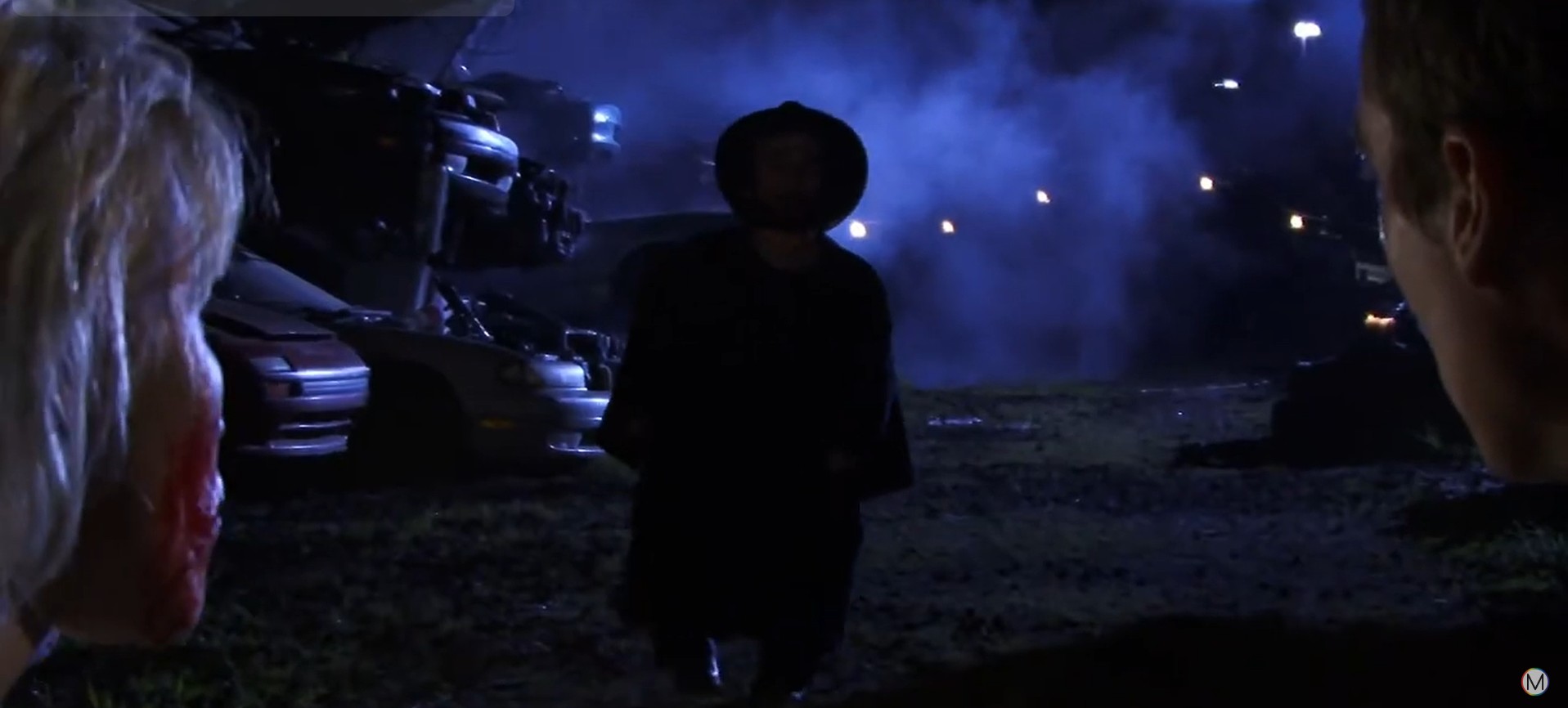
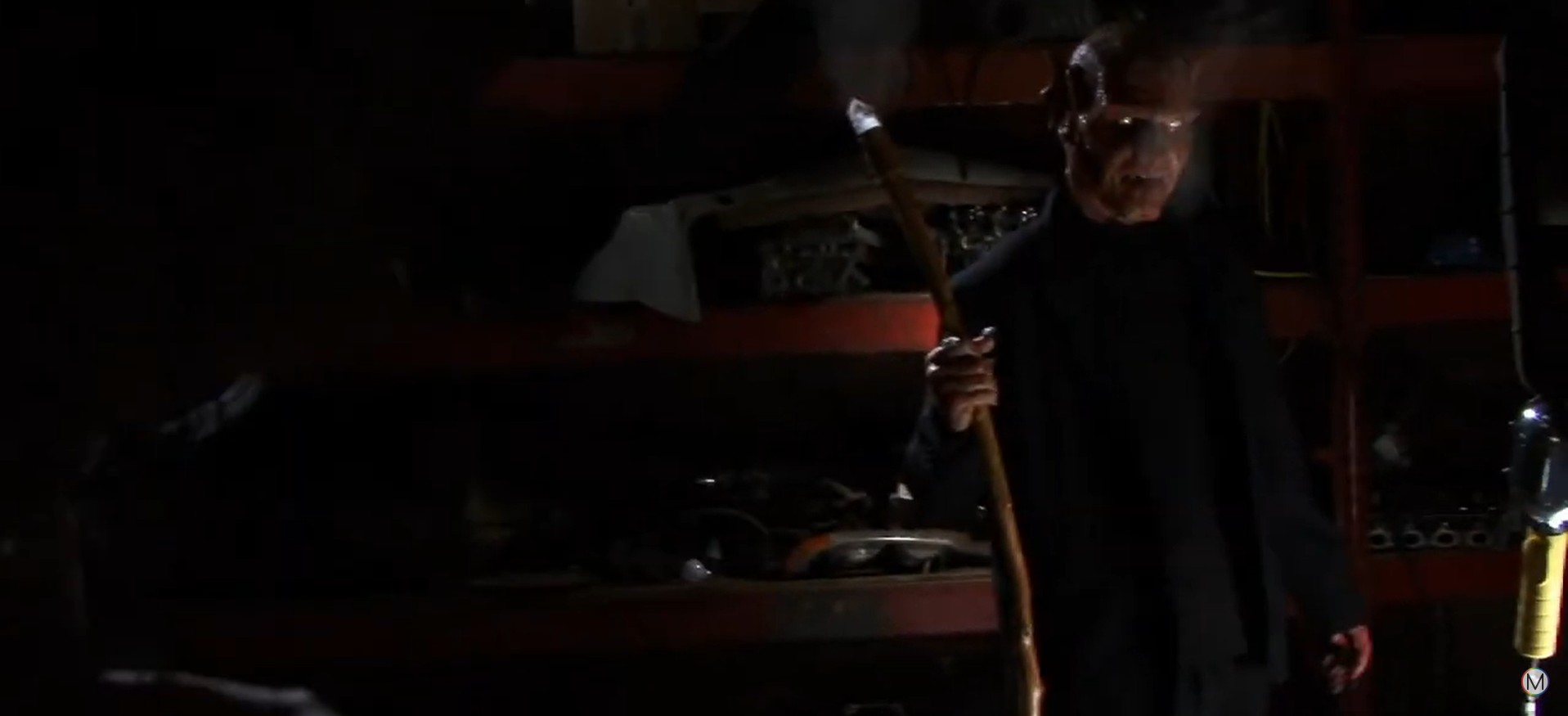
“Day of the Wicked” is mostly filled with island locals who’ve only worked with the Cousin Brothers or haven’t seen the front end of a lens before.  The story surrounds centralized sympathetic villain John Jones, played by Gabe Hernandez who last worked with the brothers on “Rising Dead” over 25 years ago, who must teeter the line on being the oddball punching bag for blue collar construction workers and the driving force that unleashes unholiness in dimension-splitting troves.  Like the rest of the cast, Hernandez has forced articulation that’s more exclamatory than natural as he splices the efforts between good guy and bad guy.  Jones serves the rousing Kane (Jean Louis Goff), a 3rd world knockoff of Julian Beck’s “Poltergeist II” character of the same name.  Named the same and dressed very similar with long black church clothes and wide brim hat, Kane seldomly evokes the same sinister strength witnessed by a very feeble Julian Beck at the time of filming “Poltergeist II,” resulting in one of the most unforgettable and haunting characters haling from the 80s.  “Day of the Wicked’s” Kane doesn’t have the lingering appeal and is barely skimmed at the surface, heavily relying on Gabe Hernandez to be the vessel of evil.  The vessel of good is another story as there’s no real hero or protagonist for the role other than Gabe’s childhood friend Chelsea, a fruit stand shift worker who doesn’t express her qualifications working at a construction site other than her electrician friend Gabe.  Actress Chelsea J. Schaffer, in her namesake role, has slightly better acting intuition compared to some of her cast mates but her primary objective in the movie is to defend John Jones against the bullies with her secondary objective to flee the quickly succumbing demonic supernaturality structure.  The cast fills out with construction workers doing more horseplay and gossip than actual work with Cameron Cousins, Bryan Gazaui, Trent Carrier, Orlando Smith and rounding out with the local Sheriff in Doc Skinner with Guy Pohlman and Apolla Asteria as Hollywood-based researchers of the Necronomicon. 

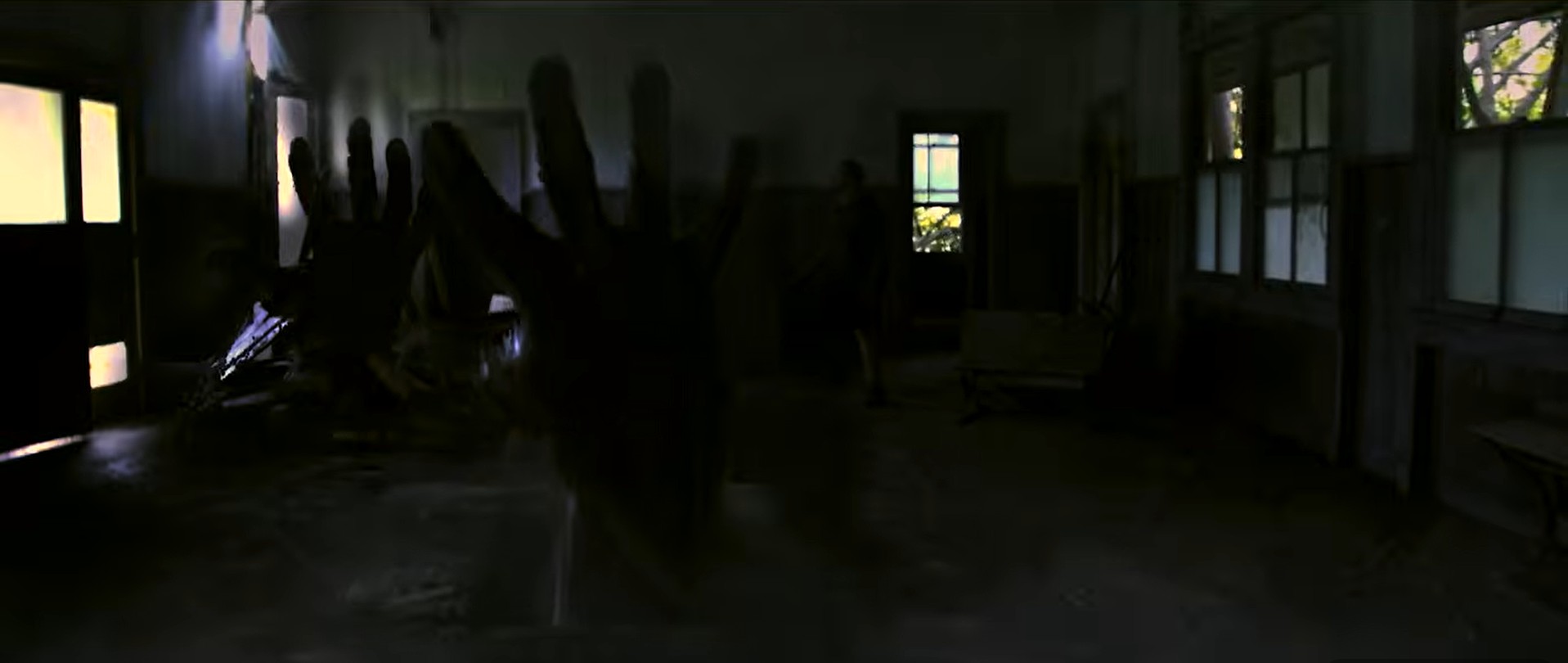
“Slaughter Day” draws from “The Evil Dead” series with unmistakable measure but it’s three decades later sequel and/or remake, “Day of the Wicked,” adds a plumpier version of “Poltergeist II’s” Reverend Henry Kane to the mix, down to the full black pastor suit, wide brim hat, and white hair, to be the in tandem driving evil force with the shoddily constructed, Temu version of The Book of the Dead, the Necronomicon, that supplies the unstable and unloved Joe Jones his sinister powers of conjuring and psychokinetic manipulation.  From there, the Cousin Brothers’ endearing effort to re-envision their 1991 film, an endearing effort in itself, aims to reach a different, more contemporary, audience generation that make retroactively work toward their debut production.  Another difference, and perhaps even a downgrade to an extent, is “Day of the Wicked” shies away from most practical effects for more visual effects that does no harm to structures, puts no actors in compromising makeup, sprays Coke can’s worth of blood, and looks about as authentic as a backwards Nike logo.  Yet, with all the cringy acting and dialogue, the rehashed storyline, and little-to-no practical effects whatsoever, I’m not totally turned off by the VFX that involves large hands, monstrous heads, and opening fissures to be composited into the frame along with the actors and there’s an entertaining blend of the two images that so ridiculously bad, it’s good. 

Wild Eye Releasing picks up “Day of the Wicked” for DVD release that’s been written onto a MPEG2 encoded, 720p standard resolution, DVD5 and presented in a widescreen 1.78:1 aspect ratio.  “Day of the Wicked’s” digital image is clean, no surprise, but the what’s more amazing is the detail comes over nicely, especially on facial features and the dilapidated schoolhouse structure.  In appraising facial features, the contours are greatly defined, sweat has isolating gleaming that doesn’t spread, and all the hair, pore, and distinct facial molecules are evident as well as their foreign bodies, such as piercings.  The visual effects are the only exception to mastering details overall as they’ve been manipulated into the frame and can provide a blurry integration when in composite action. The uncompressed LPCM Stereo 2.0 is ample but not as refined with a subtle crackling breakage in the higher dialogue and action.  Dialogue renders good with clarity but struggles within the hierarchy as the soundtrack can be absorbent.  Not a ton of opportunity for depth as much of the narrative is held inside the old schoolhouse, which does manage flexing some echo here and there, and the range is plentiful between the composited effects busting out of the ground, walls, and ceilings with a few roaring exclamations from the demonic creatures.  The only downside is there no punchy impact to these effects, limited by the dual channel output.  There are no option subtitles.  Essentially, the Wild Eye Releasing is feature-only except for a trailer for others in the Wild Eye Releasing catalogue.  “Day of the Wicked” is not rated, has a runtime of 97 minutes, and has region free playback.

Last Rites: A remake of a film that was already pulling heavy influence from a cult classic. It’s enough to make your head spin like a Kandarian demon. “Day of the Wicked” doesn’t break the mold or redefine the narrative and is pretty careless with it but horror is supposed to be fun, inspiring, and outrageous and the Cousin Brothers check all three boxes.

“Day of the Wicked” Now on DVD!