The EVIL Clown Takeover is Has Begun! “Helloween” reviewed! (101 FIlms / Blu-ray)

Just in Time for the Season. “Helloween” on a 101 Films “Bluray!

October 31, 1996 – A disturbed 10-year-old Carl Cane, donning red and white lashes and slashes clown makeup, slayed his fostered before brutally axing down a healthcare social worker assigned to his case. Twenty years later, Cane has been locked away at Morton Psychiatric Prison for most of his life but still manages to be a high-risk inmate wearing the same clown makeup.  In ward of his care is Dr. Ellen Marks who endorses stringent safety protocols and has a stern bedside care for her dangerously persuasive patient.  Flash forward 20 years later during the 2016 #clownpanic craze, the mass clown sightings provide cover for Cane to mastermind his escape and influence the disenfranchised to wear his lashes and slashes maquillage and rise against all of Britain, Dr. Marks must race home to protect her daughters as they become marked in Cane’s chaos scheme of nationwide epidemic violence.  This year, Halloween is more tricks than treats in a manipulative game of incited rise against authority with a murderous madman at the helm. 

Not to be confused with the German metal band of the same name, the 2025 film “Helloween” is a UK production that’s been compared to “The Purge” meets “The Joker” from writer-director Phil Claydon (“Vampire Killers,” “Within”).  “Helloween’s” story pans briefly from 1996 to primarily set in 2016, the year when clown panic was a national news item where mysteriously scary clowns would show up in random places and projecting a menacing way about them, enough so to cause public concern.  Claydon expands upon the year-specific-craze with a killer clown motif and a coordinated attack on a nation’s infrastructure, creating national havoc while the mastermind of ceremonies stays with his bubble of motive, to completely destroy his psych ward physician in charge of his austere care.  “Helloween” is a production of Shogun Films under the producing eye of Jonathan Sothcott with Lance Patrick co-producing. 

For “Helloween” to be centered around an incitive massive violent force, one that’s purely evil, demented, wicked, etc., that character is required to be bigger than life in a show of calculated malevolence and will be ultimately the driving juggernaut key to the film’s success.  Carl Cane is that described character, an educated mental case hellbent on being a reign of chaos from the very moment his 10-year-old self, fostered and abused through the social childcare system, chops up his foster parents and social worker without blinking an eye of hesitation.  However, the 1996 boy and the 2016 man of Carl Cane showcase two different genus of the same sociopathic species as adult Carl Cane has a knack for the flamboyant flair and is a talkative taskmaster whereas his younger version is about as quiet as a calculating church mouse.  Forever the bridesmaid and never the bride, Ronan Summers finally receives his time to shine and expel his talent to the world as a prominently gaudy villain donning edgy Joker-esque clown face makeup and sporting a dirty inmate jumpsuit.  There’s always the expectations Batman will be coming down from the rooftop or creeping from out of the shadows at any moment!  Summers, who did have a small role in “The Dark Knight” as well as be a supporting actor alongside Richard Brake in “The Dare” and had numerous voice acting roles in notable videogames, such as “Dead Island 2,” “Wolfenstein:  The Old Blood,” and “Cyberpunk 2077,” has tremendous presence with a spine-shattering laugh and creates a dark arura around Cane’s ambivalent supernatural abilities.  Jeanine Nerissa Sothcott, wife of Shogun Films producer Jonathan Sothcott, goes up against the antagonist playing Summers as Dr. Ellen Marks, head of Cane’s psychiatric ward.  The “Peter Rabid” actress finds herself on the precipice of a clown barrage against her family that has its own secrets and troubles teenagers (or adult?) as there is divisive tension between the planned daughter of Leah (Caroline Wilde, “Ghost”) and the unplanned and resentful daughter Alice (Megan Marszal).  Michael Paré (“Streets of Fire”) is perhaps the biggest name, an American name, attached to the project as an investigative reporter unearthing a theorized connection between Cane and the coordinated clownpanic sightings and Paré’s about as straightforward and conventional unimpactful in performance as they come.  The cast rounds out with Shanton Dixon, Samantha Loxley (“Hosts”), and Tamsin Dean (“Everyone is Going to Die”).

Though “Helloween” borrows pieces of “The Purge” and “The Joker,” another generous portion of the inspirational pie is “Halloween.”  Not only does “Halloween” and “Helloween” share similar titling but also certain “Helloween” plot points and framed shots that resemble a clown costumed Micheal Myers expressionlessly exiting his family home after murdering older sister Judith.  Claydon’s nods may dilute the original story some but the mashup manages to curate an interesting tale of a large scale terror on a small time budget by using televised media to indicate Cane’s grandiose scheme from the confines of his impenetrable holding cell and creation tension with good, old-fashioned editing and framed shots for those jump scare and distressing moments.  One thing is for sure that hinders the large-scale scenario but doesn’t obliterate the affect it has in its entirety is the small number of locations used.  Much of the story takes place between two locations:  the Morton Prison and Dr. Ellen Marks’s home.   These two primary locations service most of the story’s core elements and, perhaps, Claydon relied too heavily on news media to spread the clown carnage rather than have it unfold in frame with not only more locations of active aggressive assaults, like we see in “The Purge” series but also hire more extras as clown faced Cane acolytes and have a number of victims suffer at the hands of clownpanic.  Set designs, colorful lighting, stark contrasting features, the rapid pace storytelling, and the performances do pick up the slack and hold onto that collapsing of society sensation in more of a localized manner rather than widespread.  The twist ending pops disjointedly with a welcomed turn of events but isn’t setup with a crucial visual or expositional detail, leaving on the table the one important puzzle piece of the considerable why rather than focusing on the exposed when and how. 

101 Films isn’t clowning around with their new Blu-ray release of “Helloween.”  AVC encoded, 1080p high-definition resolution, and stored on a BD50, “Helloween” has plenty of picture quality positives going for albeit the film’s primary color spectrum, a Spirit Halloween store amount of haze and smoke machines, and plenty of negative area shadows all of which wreak havoc of the encoding of data.  One way to judge video compression is the ability to delineate every object in the feature from inanimate to animate and there’s no questioning in the presentation as all objects have an elucidation effect that doesn’t work the mind harder than it should.  Claydon works depth to create effective highly taut moments while staying in the purge of light and hope atmospherics of omnipresent darkness.  Curiously, the Blu-ray back cover mentions the feature containing an English uncompressed Stereo PCM and a compressed English DTS-HD MA 5.1 with the extras solely being a Stereo PCM.  However, the Dolby audio icon is stamped on both back cover and DVD art.  While there’s no menu option to toggle between either feature track, my play listed the encoded audio as the PCM Stereo and DTS-HD MA 5.1 which can be concurred with by the uninhibited punchiness that heightens the scares and the eerie hallmarks of lightning cracks, creaky floors, and other loud bang sounds.  Ronan Summers’s is a proper English speaker with great emphasis on his pronunciations, much like Paré’s classic westerner approach to any situation and role, but there are some UK dialects that skirt the cockney accents and though difficult to cling to, the mix greatly makes clear the intended word or sentence without any issues.  UK English subtitles are optionally available.  Special features include a commentary track with director Phil Claydon, a behind-the-scenes featurette with cast and crew interviews going through their experiences and roles, and the film’s theatrical trailer.  There is also listed deleted scenes but there’s an issue with the encoded playback as when pressed, the option glitches back to the bonus features scene, never moving forward into the deleted scenes.  The clear Amaray case with one-sided art has a less-is-more cover art with a face closeup of Summers in a sinister expressed Cane makeup with a blade silhouette just in front-right of him.  While we’ve seen a few inconsistencies with these release – the audio track conflicts and the deleted scenes bug on the encoding – there’s one more variance with the UK rating.  The case has a UK rating of 15 for Strong Violence, Bloody Images, Threat, and Language; however, the disc is pressed with a UK 18 classification.  “Helloween” clocks in at 93 minutes and is locked with a region B playback. 

Last Rites: The energy from Phil Claydon’s “Helloween” amps up and matches Ronan Summers’s intellectual madman persona with a smoke and mirrors widespread mayhem and reliable jump scares that breed infectious tension for clowns and the disenfranchised in this quaint and modern day clownsploitation.

Just in Time for the Season. “Helloween” on a 101 Films “Bluray!

Enjoy The Last Night in EVIL’s Hotel. “The Innkeepers” reviewed! (Second Sight Films / 4K UHD Blu-ray)

Book a Copy of “The Innkeepers” on 4K Ultra High-Definition!

The Yankee Pedlar is a historic hospitality hotel with over 100 years of service that comes with its own notorious past and haunted tidings.  On the verge of closing for good, the Yankee Pedlar has one more weekend to remain open and house guests but with only a handful of rooms occupied, there’s not much else to do for the two innkeepers, Claire and Luke.  As a way to pass the time, Claire is eager to video capture spooky events to feed into Luke’s website based off the hotel’s history in the death of Madeline O’Malle, a bride to be who committed suicide on her wedding day when the finance no-showed and her corpse was left to rot for 3 days in the basement as hotel owners feared for bad publicity, but when eerie begin to plague, call for her, with visions of a bloodied O’Malle in a white gown, Claire finds herself in the dangerous company with a permanent guest at the dying hotel. 

Ti West, the established genre director with the famed “X” trilogy, kept audiences pale in fear and the hairs on the back of their neck stiff and straight up with his written-and-directed horror films that retained staying power amongst fans.  2009’s “The House of the Devil” is considered one of the more recent better throwback horrors of our time surrounding classic tropes like a satanic cult and a home alone babysitter.  West’s 2011 film  “The Innkeepers” comes at a rebound time when his commercial picture, “Cabin Fever 2:  Spring Fever”, sequel to Eli Roth’s breakthrough hit from 2002 about a flesh-eating virus, didn’t quite feel like his film and “The Innkeepers” also hit a little different by shielding audiences from any type of horrific, on screen splatter violence and be concentrated on pure fear of the senses.  Though narratively set in perhaps Pennsylvania due to some references of towns an hour outside of Philadelphia, “The Innkeepers” was actually filmed more North in Connecticut with the real-life Yankee Pedlar building.  Larry Fessenden (“The Last Winter,” “Rehab”) of Glass Eye Pix and Derek Curl of Darksky Pictures co-produce the film along with Peter Phok and Ti West. 

In the two principal roles of Claire and Luke is “Barbarian’s” Sara Paxton as an unmotivated hotel clerk coasting until the very, bitter end and “Cheap Thrill’s” Pat Healy as a blasé and uninterested front desk colleague interested in getting on the popular haunted house train with his own website about their employer’s centenarian hotel.  Paxton inarguably shoulders much of the screentime as the girl who cried wolf when she experience’s the sounds of a wolf, aka the spooky serenades of one Madeline O’Malle, and the visual eviscerations of her bloodied corpse that would scare the bejesus out of anyone.  However, the frights are not enough to seemingly strike fear in Paxton’s shield of composure or even enough to put West’s story to rest with a simple I’m outta here as most of us chickens would flock toward the exit on the first instance waking from a vivid dream too real for comfort.  Healy ultimately steals the primary performance away from Paxton with his own gruff and irritated by everything:  the hotel, the guests, his own pitiful existence.  Healy does a nice job creating that subtle tension between Luke and Claire, knowing Luke’s own hangups lie somewhere in between and haven’t been exposed yet, all the while being a sarcastic boor for most of the time.  There are also side characters in the form of random guests occupying the skeleton-crewed hotel bringing with them their own set of baggage.  One of guests is Kelly McGillis and the “Top Gun” actress, in a bit of a meta-role of an aging actress turned mystic.  There’s also Alison Bartlett (Gina from various Sesame Street shows and specials) and Jake Ryan (“Asteroid City”) as scorned wife and her son and the peculiar older gentlemen, played by George Riddle, who requests a special room and will not take no for an answer.  One of the more curious castings is Girls’ Lena Dunham as a coffeeshop barista in a one and only brief scene that doesn’t add really anything to the whole in a pointlessly random interaction with Claire that, perhaps, plays off Claire’s repetitiveness and stasis life of going there everyday but not really knowing much about the barista, who is apparently always there too. 

Juggling between the blended tones of comedy and horror, Ti West doesn’t commingle the two directly into one scene, keeping distinction for one or the other in their individualized moments.  This leaves little room for alleviating dread levity inside the scare moment after building tension and fear of being chased or waiting for the silence to be broken but an unsuspected jump scare.  Outside the context of the fright-filled moment, back and forth quips and playful antics between Luke and Claire as two bored and starved for company innkeepers in the hotel’s waning days are delivered in brightly lit rooms and mostly shared with another person to be a telltale safe space against the malevolence of serrating spook-house intensity that often lingers and waits on with bated breath.  In the innermost between is Claire’s internal struggle to cope with the impending outcome that there is nothing on the horizon for her.  No secure job, no ambitions, no plans of any kind are seemingly providing the character with no hope and in that stagnation, she desperately holds onto what’s nearby – Luke’s interest in the Yankee Pedlar’s hauntings.  Enhanced by the odd actions and placement of the modicum of guests – McGillis as a crystal charm intuitive and Riddle as a strange-enough older man with a specific room fascination – Claire motivation to reveal Madeline O’Malle becomes tenfold because of her unconscious lack to move forward in life, which then spurs the question, is Claire’s experiences grounded in truth or are they just a downspout of manifestations induced compensation?  You’ll have to be the judge.

Like “House of the Devil,” another of Ti West films makes the Second Sight Film cut onto a newly restored 4K scanned UHD Blu-ray release.  “The Innkeepers” HVEC encoded, 2160p ultra high-definition, BD100 has the true presence of quality video with a gradual improvement in the finer details of a greater pixel count inside the HDR with Dolby Vision.  Though digitally recorded with a no imperfections to note from previous releases, Second Sight’s release does appear sharper and deeper around the black levels that often improve with better resolution and suitable compression and with a good portion of the story taking place in the dark recesses of a hotel basement and the in the shadows of unlit rooms, there’s no visual compression issue or loss of expected detail.  Contrastively, darker scenes appear more lit by a lower contrast but still, the details are there in depth and in closeup.  The English DTS-HD 5.1 surround sound audio track diffuses the spread of atmospheric creepiness – ghosts whispers, nondiegetic bangs and clangs, and a Jeff Grace building orchestral score that keeps the heart bumping (think Richard Band’s “Re-Animator” but with more lulls”).  Dialogue is prominently clear and in front of the aforesaid layers with depth mostly between Claire and Luke’s conversing in the lobby and range limited to, again, the aforesaid.  English subtitles are available.  Though this review is catered to the limited edition, rigid slipbox release full of tangible goodies, the standard release does have encoded a small army of special features that has two audio commentaries with the first including Ti West, producer Larry Fessenden of Glass Eye Pix, producer Peter Phok, and sound designer Graham Reznick and the second commentary also West but with principal actors Sara Paxton and Pat Healy.  A slew of new interviews provide a well-rounded, in-depth look at the creative design as It West A Lasting Memory, Pat Healy Let’s Make This Good, Larry Fessenden Our Dysfunctional World, director of photography Eliot Rockett Living in the Process, composer Jeff Grace Cast a Wide Net, and line producer Jacob Jaffke A Validating Moment contribute to the retrospective.  Special features round out with archival behind-the-scenes and the trailer.  The physical presence of Second Sight’s “The Innkeepers” keeps in-line with previous standard edition 4K releases with a black Amaray case and a monochromic grayish illustrative cover art setting audiences up for ghostly expectations.  The UK certified 15 release contains strong horror, gore, language, and sex reference – though the gore is subtle and definitely not over-the-top or even explicit.  This particular UK release, that has a runtime of 101 minutes, is region free and presented in a widescreen 2.40:1 aspect ratio.

Last Rites: “The Innkeepers” works, if not wriggles, into the brain, much like the invasive worthlessness inside Claire’s swirling mind, and the Second Sight Films’ 4K UHD Blu-ray is an ultimate celebration of not only the film itself, but also the venerable work of the horror genre’s freshest master Ti West.

Book a Copy of “The Innkeepers” on 4K Ultra High-Definition!

Rage EVIL Leads to A Legion of Drone Dwarfs! “The Brood” reviewed! (Second Sight / 4K UHD)

“The Brood” Available Now from Second Sight!

After a series of mentally abusive behavior, Frank Carveth’s wife Nola resides under the unorthodox psychology of Dr. Hal Raglan whose controversial impersonation techniques to break down his patients’ dissociative psychological hangups and destructive blocks.  After months of therapy and witnessing Dr. Raglan’s methods in action, Frank is ready to pull the plug on the doctor’s sideshow sessions he deems are doing more harm than good when his daughter shows signs of physical abuse after a visit with her mother.  The prolonged verbal bout to get his wife out of Raglan’s care leads to Frank confiding in Nola’s mother who is found brutally murdered soon after.  When Nola’s estranged father comes into town to oversee the burial arrangements, he’s also brutally murdered.  Frank begins to connect pieces, theorizing that Dr. Raglan’s procedures and the murders may be linked and as he investigates further, the truth is more terrifying than he could ever imagine. 

Surging with emotional turmoil through a bitter divorce with ex-wife Margaret Hindson, Canadian body-horror director David Cronenberg pulled the rancorous inspiration from that turbulent time to write the originial screenplay for “The Brood,” a 1979 released thriller between an estranged couple, the effect of their ascending troubles upon their only child during the separation, and the sort of radical and systematic behaviors and practices used to reform a relationship bond that actually divides the emotional expanse even further.  Sprinkle a little of the unknown and grotesque abilities of unnatural corporeal world in there and you have yourself one hell of a dysfunctional and undomesticated horror only the unconventional David Cronenberg could conjure.  “The Brood” is produced by Claude Héroux, who would go on to produce Cronenberg’s next series of films, “Scanners” and “Videodrome,” and the Ontario filmed production is a studio venture from the CFDC (Canadian Film Development Corporation), Elgin International Films, and Mutual Productions.

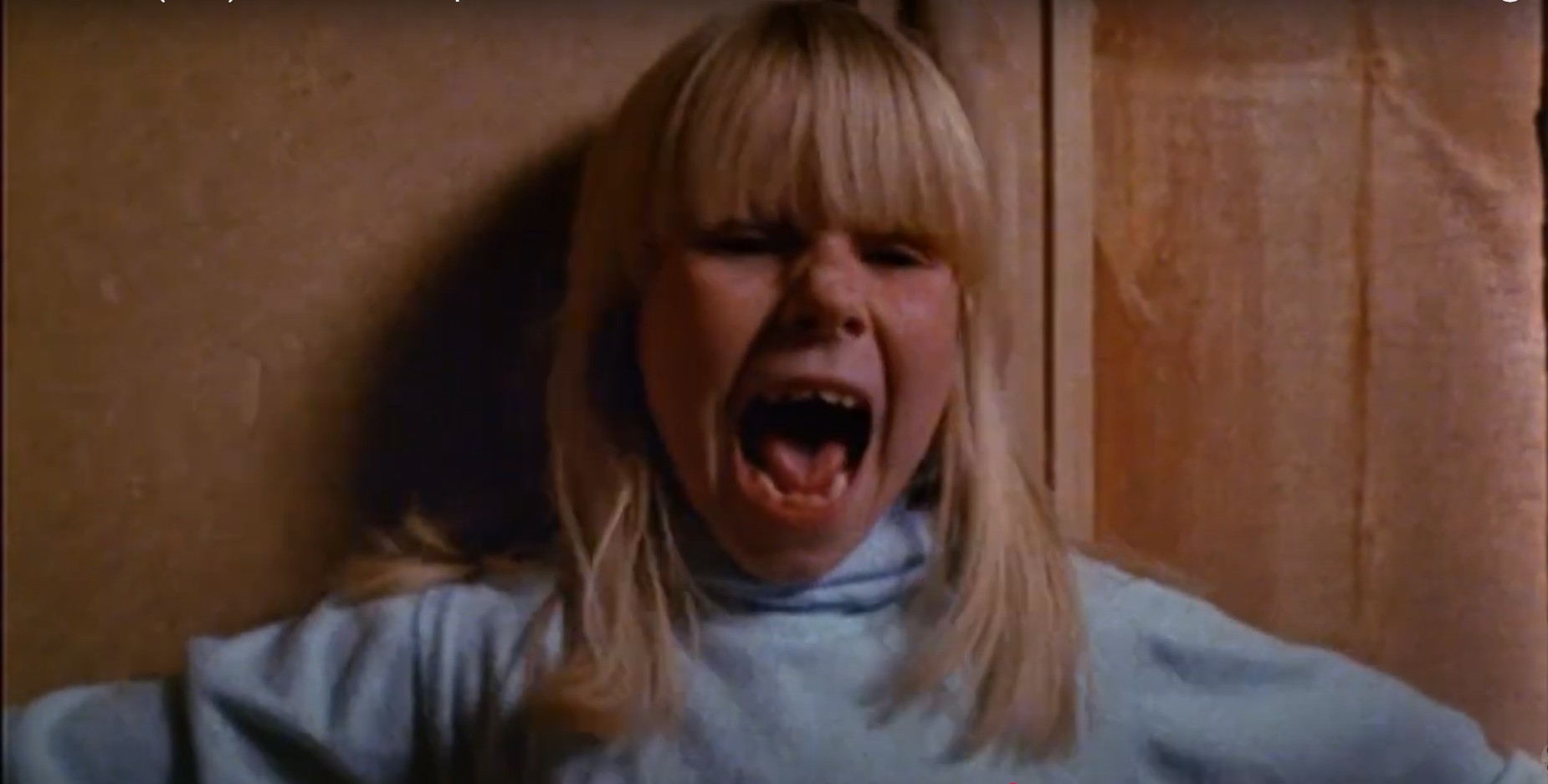
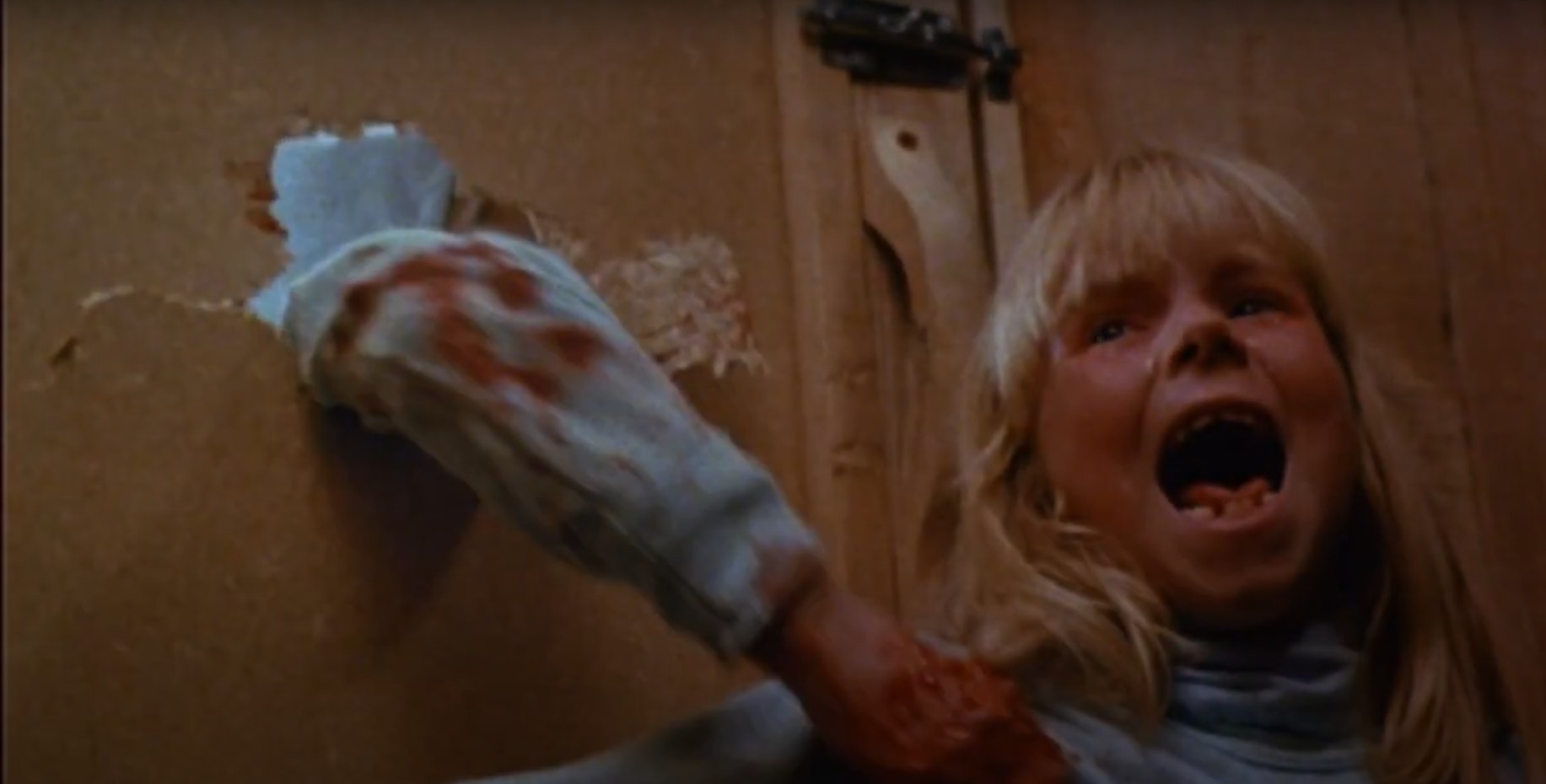
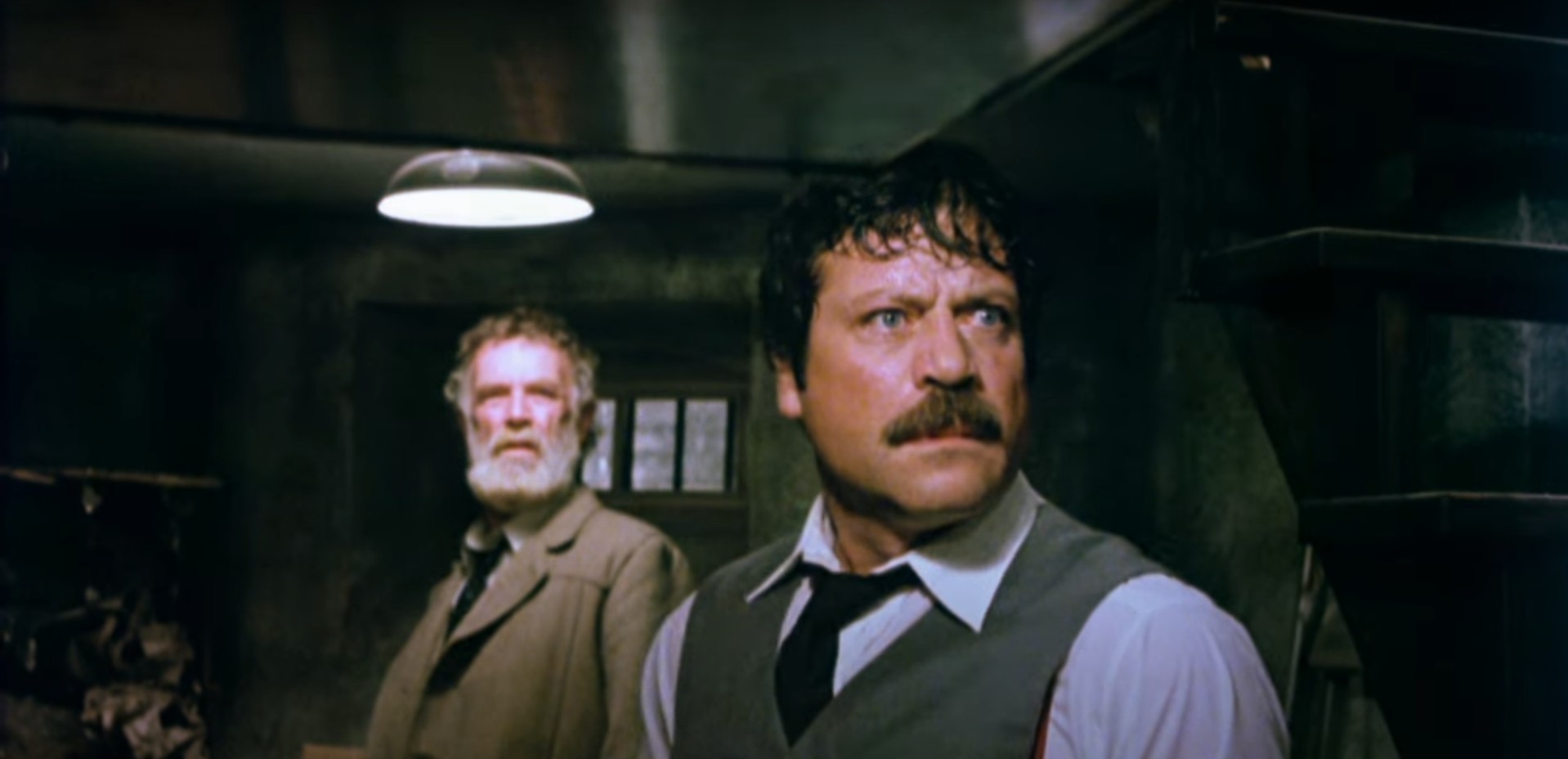
Art Hindle is in the role of Frank Carveth, a father initially skeptical and frustrated with his wife’s supervised treatment and care.  The “Black Christmas” and “Invasion of the Body Snatchers” actor Hindle plays the role of a hinged investigative husband-parent involved into something far more unbelievable than initially imagined.  Next to his on screen dazed and mentally tarnished wife by Samantha Eggar, of “The Exterminator” and “Demonoid,” Hindle enacts normal responses that carry over into extreme situations when those around him – his mother-in-law (Nuala Fitzgerald, “Obsession”), his father-in-law (Henry Beckman, “Side Roads”), and his daughter’s teacher (Susan Hogan, “Phobia”) who might have had a little something-something with while on the rocks with the misses – dies a violent death at the hands of kid-sized mutants that resemble, partially, his own daughter Candace (Cindy Hinds, “The Dead Zone”).  As Nola Carveth, Eggars is only present in a few scenes alongside Dr. Raglan, played by the formidable British actor Oliver Reed (“Paranoiac,” “Gladiator”), as a staring into space, emotionally compromised woman struggling to cope with her past that makes her angry and upset and, in turn, makes her inexplicably conjure do-bidders in the birthing means of advanced evolution or in a parallelism to eusocial insects, like bees or ants.  Reed is the monkey in the middle of all of this between fending off Frank Carveth who challenges the results of his unorthodox psychological methods while also using those methods to unearth the root cause of Nola Carveth’s strange and unusual behavior and, eventual, psychic abilities.  Reeds delivers his typical stoic indifference which makes him ideal for a confident character of the scientific community eager for results rather than feeding his motivations with emotional fodder by empathizing with Carveth’s concerns.  Gary McKeehan (“Rabid”) and Robert A. Silverman (“Naked Lunch”) costar.

In his 50-year plus career, David Cronenberg has evolved in style, substance, and story that dip into more of alternate universes and deliver new ways to blend the future into an organic composite with commercial and social sub context.  While technology and personal and professional growth have developed the director into what he has accomplished and known for today, especially on the verge of his latest release with the living and dead connection theme in “The Shrouds,”  the core of what David Cronenberg does best and still does today has an etiology leading back to his earlier work and “The Brood” is definitely an archetype of his niche.  Cronenberg works the narrative up to his reveal of body horror, and “The Brood” is dangerously on the edge of being atypical, subjecting audiences to more of a buildup in the story and the delimitation of character  disclosure without a steady course of the maladjusted, mutated or modified human body as the villain or the escape, only for that theme to be quasi hinted and then unveiled at the end in a shocking reveal.  “The Brood” plays more of the slasher tones, using the children, dwarfs, or however you want to describe the little, mutant minions to be unknown villain tropes, even when one is laid up on a morgue slab for examination of its biology, or lack thereof.  Cronenberg’s directed ambiguity tees up one of the best endings of his career and, perhaps, even horror cinema as “The Brood” is queen sized stomach-churner, literally.

David Cronenberg’s “The Brood” arrives in 4K on a Ultra HD Blu-ray from UK boutique label Second Sight Films.  The BD100 is HEVC encoded with a 4K resolution or a pixel count of 2160 with Dolby Vision HDR10 and presented in a widescreen 1.85:1 aspect ratio.  On the back cover, the 4K restoration is approved by David Cronenberg.  There’s definitively a more positive treatment of the restored transfer that brightens with a slightly tweaked color grading compared to other DVD or Blu-ray releases, improving delineation as well as rectifying intended details to burst through what’s been long frustrating by a darkened wall of low-resolution definition.  Retaining and sustaining cinema coarse grain, the picture looks and feels incredibly natural without the presence of compromising touchups and smoothing overs that do more harm than good in the plastic-like approach to restoration.  The UHD reinforces the coloring with vibrant richness and range, boosting the once little Canadian film that could into an expensive-appearing optical overhaul that puts to shame previously shelved videos.  Audio fidelity is too retained with a LPCM 1.0 mono that although funnels through a single output is more than an adequate mix all in thanks to the competent sound engineering of Peter Burgess and team to amalgamate recorded sound and post-production ADR into a brawny singular unit that meshes nicely.  Dialogue foots the bill as a clean and clear presentation, the ambient sound design renders distinctly over without ambiguity, and longtime David Cronenberg collaborator and friend Howard Shore conducts an orchestra score that breaks through and keeps the course with an unforgettable amount of tension build.  English subtitles are available.  Special features are aplenty with a new audio commentary by film critics and historians Martyn Conterio and Kat Ellinger, a second commentary with film academic William Beard, interviews with actors Art Hindle and Cindy Hinds moderated by Fangoria’s editor Chris Alexander Meet the Carveths, an interview with executive producer Pierre David Producing the Brood, interview with cinematographer Mark Irwin The Look of Rage, interview with composer Howard Shore Scoring the Brood, an interview with actor Robert A Silverman Character for Cronenberg, a new video essay by film journalist Leigh Singer Anger Management: Cronenberg’s Brood and Shapes of Cinematic Rage, and an archived David Cronenberg interview The Early Years.  The standard Second Sight release comes in the traditional 4K UHD black Amaray case with new unnamed, unsigned illustrated cover art.  The UK certified 18 film is presented region free in this release and has a runtime of 92 minutes. 

Last Rites:  Cronenberg’s play on the word Brood is next level genius with litter rage as a result of mental health and a broken home.  The director’s filmic roots have proved time-and-time again his mastery of moviemaking as his body horror and thought-inducing stories, intermixed with social commentary, are complex visual and narrative devices braised an organic edge. 

“The Brood” Available Now from Second Sight!

Black Mamba Wriggles Only for EVIL! “Venom” reviewed! (4K UHD and Blu-ray / Blue Underground)

Slither into “Venom” on 4K UHD and Blu-ray Combo Set!

American family, the Hopkins, live in London and while Mr. Hopkins travels the globe to attend to his international hotel business, Mrs. Hopkins and son Philip, live wealthy in their three-story row home along with visiting, Safari-expert grandfather Howard Anderson.  When Mrs. Hopkins plans a trip to see her husband after a month a part, she’s worries for Philip’s severe asthma attacks but with the assurances of the grandfather, the housekeeper, and Philip’s rudimentary zoo in his room, full of furry creatures in vivarium cages, Mrs. Hopkins half-heartedly boards her international flight.   Not everything is going to fine, however, when the housekeeper schemes with the family chauffeur and an Interpol criminal Jacmel to kidnap Philip for ransom.  The foolproof plot commences to plan with departure of Mrs. Hopkins and the arrival of Jacmel but one little mishap causes the plan to quicky unravel when a Black Mamba, one of the most aggressive and poisonous snakes in the world, is mistakenly crated and provided to exotic animal enthusiast Philip instead of his harmless ordered common variety garden snake and when the Black Mamba gets loose, it slithers in the house’s ventilation system, the house they’re all hold up in when the police swarm the outside perimeter. 

What was once going to be a Tobe Hooper (“Texas Chainsaw Massacre”) directed production before his eventual and sudden departure from the film after a few weeks, the 1981 crime-thriller with a creature feature twist, “Venom,” is then picked up by the late director of  “The Blood on Satan’s Claw,” Piers Haggard, to finish the Robert Carrington (“Wait Until Dark”) adapted screenplay off the Alan Scholefield novel of the same title.  The American screenwriter Carrington writes nearly a faithful iteration of the Scholefield novel but with more emphasis on the serpent’s over-lurking presence as an important reptilian character to the story, serving as a catalyst for the upended kidnapping plot and determining the fate of certain characters.  The UK film is American produced by Martin Bregman, the spear runner for “Dog Day Afternoon” and “Serpico” as well as “Scarface” and “The Bone Collector” later in his career.  Morison Film Group served as production company on the mostly LLC entrusted venture.  

If the American Tobe Hooper did helm this picture, directing Leatherface as an actor would been child’s play in comparison to what would had been if he had to corral a pair of strong-willed, A-type personality Europeans in Germany’s Klaus Kinski and Britain’s Oliver Reed, both with well-known and formidable career of not only in genre films but also to be problematic and difficult to work with.  The “Nosferatu the Vampire” and “Aguiree, the Wrath of God” Kinski was perhaps mostly misunderstood for his not understanding of inflections, innuendos, and gestures of the English language that made him often sounds gruff and antagonistically questioning the director’s every choice whereas the “Paranoiac” and “The Brood” Reed was plagued with alcoholism and was equally gruff in his own right as a dedicated actor saturation with austere method stratagem.  Yet, on screen, Piers Haggard manages to get the two hurricane forces to be on-the-edge cooperating, backed-into-a-corner kidnappers without cutting any tension when interacting with each other.  Distinct in demeanor, Kinski as a calm, trench coat KGB-type and Reed as an anxiously and trigger-happy, hotheaded brute put on a good show in their respective performances and beat the odds of two notorious personas colliding.  Haggard doesn’t coddle them either and lets them loose to exact the carrier in their own right even if off-book and they’re even more vilified by taking hostage a young boy Phillip, the introduction of Lance Holcomb (“Christmas Evil,” “Ghost Story”), his Safari-seasoned grandfather Howard Anderson, played by beard-laden and serial gesticulating Sterling Hayden (“Dr. Strangelove,” “The Long Goodbye”), and a zoo toxicologist named Dr. Marion Stowe who is caught in the middle when checking up on the mishap switcheroo of the snake, played by Sarah Miles (“Blow-up”), neither in shape or in vigor to be a proactive hero.  The no-nonsense Police Commander William Bulloch, shoed with “The Exorcist III” actor Nicol Williamson, a brazen candor and stoic expression with Williamson offering frank wit and a sarcastic dryness that barely gets him one step into the house; instead, it’s the Black Mamba that’s the real and unintentional hero that seemingly only has a fork tongue and fangs for villains, leaving the other hostages alone.  “Venom’s” also has Susan George (“Straw Dogs”) as the traitorous housekeeper, Mike Gwilyn, Paul Williamson, Hugh Lloyd, and the first Butler of the 1980s-1990s Batman quadrilogy Michael Gough playing real life snake wrangler David Ball in tribute. 

From the pages of Alan Scholefield’s novel to the big screen, “Venom” has a slithery way about slipping into between the crosshairs of a crime-thriller and a venomous creature feature.  Leading “Venom’s” charge is an undoubtedly great, if not iconic, cast giving their all to a farfetched plot of bad luck Ophidiophobia.  While the snake seems to have heat vision eyes only for the Klaus Kinski, Oliver Reed, and Susan George trio of kidnap-for-ransom criminals, who amongst themselves are in a deceitful love triangle that’s doesn’t quite come to a head as one would expect, there’s no animal kingdom peril to the other victimized threesome who, on a physical, first glance surface, are less equipped to handle a dangerous snake with a young, asthmatic-plagued boy, an elderly grandfather, and a nerve-bitten woman but, in reality, Phillip Hopkins, Howard Anderson, and Dr. Marion Stowe are respectively the best equipped to handle the black mamba as an small animal atrium hobbyist, a former African safari survivalist and animal expert, and a venomous snake toxicologist.  Perhaps, this is why the Black Mamba avoids these three at all costs and never interacts with them on a perilous level.  The fantastical mist that’s sprays us lightly with a crimefighting snake has comical properties that standout against what is a palpable thriller involving an international criminal, cop killing, child abduction, and the mutilation of a corpse. 

Blue Underground continues to update their catalogue with a 2-disc, 4K UHD and Blu-ray combo set of ‘Venom.” The UHD is HVEC encoded, 2160p ultra-high-definition, BD66 and the Blu-ray is AVC encoded, 1080p high-definition, BD50. In regard to picture quality, both formats are nearly identical transfer that’s stems from an all new 4K 16-bit restoration from the original 35mm internegative, with the UHD receiving Dolby Vision HDR. UHD is slightly sharper around delineation when gliding between dark and light, which is often inside a merge of a half-lit house to draw more tension toward the potential presence of a deadly snake. The 1080p presentation also provides a pleasing clarity that offers little to negatively note. Color grading and saturation between the two formats show signs of varying quality by a thread with the 4K saturating that much more intently across the board with a better control over the grain levels with the Blu-ray appearing a touch thicker for the pixels to flare optically. The native 4K and 1080p come with an English Dolby Atmos as well as options for either an English DTS-HD 5.1 or a DTS-HD 2.0 stereo. Speaking only to the Atmos, the all-encompassing mix shepherds in a clean, discernible quality without any audible seams. Skirmishes, dialogues, and all the commotions in between find isolated channels of distinction that can put you immerse you into the action. And there’s plenty of action to be had coupled with a Michael Kamen’s brass horn and string score that’s both memorably building with excitement and thrilling that preludes Kamen’s orchestrated composition work of “Die Hard,” starring Bruce Willis. Despite the circumference of sound spaced mostly in interiors with a hodgepodge medley of a street full of police, reporters, and gawkers, the dialogue is equally distinct, discernible, clean, and clear without signs of hissing and crackling strains. Subtitles included are in English, French, and Spanish. The 4K special features include a new audio commentary with Film Historians and Blue Underground commenting regulars Troy Howarth, Nathniel Thompson, and Eugenio Ercolani, an archived commentary with director Piers Haggard, and film trailers. The Blu-ray disc contains the same commentaries and trailers but extends further with new exclusives in an interview with editor-second unit director Michael Bradsell Fangs For the Memories, an interview with makeup artist Nick Dudman A Slithery Story, a film historian point of view interview with British critic and author Kim Newman, and an interview with The Dark Side’s Allan Bryce providing his in-depth two cents and historical surveying. TV Spots are finish out the encoded extras. “Venom” 4K and Blu-ray combo set is physical appeasing to hold and behold with a muted black slipcover with tactile elements on both sides of embossed letters and stark coloring that’s striking in its simple snake fang design arraignment. The black, thick Amaray case has the original “Venom” artwork with the optional reverse cover art. I’m not a fan of the inside design that houses a disc on both sides as there is no room place for 18-page collectible, color picture booklet which just floats inside. The booklet features an essay by Michael Gingold, cast and crew acknowledgements, and chapter selection on the back. The discs are pressed with one or the other cover arts. This gorgeous-looking release, on the outside and inside, comes region free, has a runtime of 92 minutes, and is Rated R.

Last Rites: “Venom” might have been snakebitten back when selling book adaptations of crime capers stopped by a single snake might have seemed farfetched but, today, the 1981 film remains a cult classic of the ophidian nature being one of the earliest serpentine creature features with an imposing, impressive cast. Blue Underground proudly presents the film with a new, and improved, ultra high-definition release.

Slither into “Venom” on 4K UHD and Blu-ray Combo Set!

Josef’s Little One-Day Video Diary Bares Unnerving EVIL! “Creep” reviewed! (Second Sight Films / Limited-Edition Blu-ray)

“Creep” on a Limited Edition Second Sight Films Boxset!

Aaron, a videographer, travels to a lakeside cabin in Crestline, California after responding to an online ad for a single day’s worth of work.  There is where he meets Josef, a husband and soon-to-be father dying of terminal brain cancer who wants to film the entire day as a memoriam video for his unborn child.  As the camera rolls, Aaron captures Josef’s strange yet sad behavior in an outpour of unstable emotions that put Aaron in an uncomfortable spot.  When Aaron learns Josef might not be sane, he’s able to elude the creep’s attempts to hold Aaron captive, but the videographer hasn’t entirely escaped Josef’s obsession with video recordings and unusual gifts being sent to Aaron’s home address.  The call to the police proves pointless when Aaron can’t provide detail information about his former, one-day employer and he often feels not alone in his home, but Josef’s last recording shows a different, desperate side of Josef Aaron can’t ignore. 

What happens when two guys with a camera try to shoot a comedy about two strangers having an awkward encounter?  They end up making one hell of an awkwardly scary horror film.  That’s what happened to Patrick Brice and Mark Duplass on their 2014 found footage film “Creep.”   Brice directed the feature along with co-writing the unsettling dark human nature story with Mark Duplass that proved to be more than just another found footage folly as the original film spawned an expansive, 2017 sequel and this year’s Shudder series “The Creep Tapes” with both Brice and Duplass returning to fill their original, multi-capacitated roles in front and behind the camera.  When those close to Brice and Duplass had screened the originally intended comedy, the feedback was to pivot to an uneasy loner and a serial stalker and that’s where producer Jason Blum of Blumhouse Productions came into play that secured additional shots and reshoots to recut and expand upon the creepy creeper.  “Creep” is also a production Duplass Brothers Productions with another “Creep” franchise regular, Christopher Donlon, serving as co-producer.

With a cast of two, the story must be engaging, interesting, scary, and above in order to continuously captivate or induce edge of your seat anxiety-riddled anticipation.  Brice and Duplass control the narrative by being on both ends of the camera that could only go in one of two directions – be a disastrous outcome of looping and stagnant underdevelopments really about nothing at all or could be evolve constantly, but slowly, to build upon, but not reveal to hastily, a slow burn of psychopathic tendencies toward one person.  Duplass as the dying Josef leaves a frightening, unsettling impression of a man glowing with mania and he’s ever effervescent in trying to playfully scare Aaron, played by Patrick Brice looking through the lens, anyway he can, such as running off into the wilderness to pop up and scream, put on a ferocious-looking wolf mask and do a song and dance act that pinches the nerves, and tell him secretive stories of his life that would disturb any listener.  Amid the craziness, we’re not sure why the character of Aaron would stay and film while being subjected to Josef’s impulses.  Yes, Josef pays him handsomely for a one-day gig but there’s no desperation in Aaron to warrant what seems to be frisky abuse at hands of a grown man on the verge of breakdown.  Audiences from the get-go will experience Aaron’s painful staidness of passivity while Josef just runs him like a high school track and while internally thinking how absent Aaron’s situational awareness is, this act of humoring another person can be totally plausible to a fatal flaw.

Found footage has been mostly overused, misused, and abused for the better part of 20-or-so plus years thanks to the global success of “Blair Witch Project,” but there are diamonds in the rough that stand out amongst the murky muddied subgenre and “Creep” is one of those sparkling few to emerge.  What’s fascinating about the design is it doesn’t try to do too much within the frame.  Simple jump scare gags, such as popping out behind doors, are heart-jarringly effective without all the razzle dazzle of visual effects or practical makeup effects.  Another star quality is the story’s music soundtrack, there is none.  Silence is golden.  One of my personal pet peeves with found footage is the use of a musical score that instantly eliminates the realism the subgenre naturally wants to perceive.  “Creep’s” longevity as a realistic scary situation within the unembellished optical camera nerve lasts because of the smaller things, such as having no soundtrack alongside the raw video recording that creates a deafening, shivering quietness and enhances those basic jump scares to a pee-your-pants level.  There’s no overcomplication of material, no unnecessary enhancing, just two guys with a camera trying to make a comedy and come out with a “Creep” of a film. 

“Creep,” the small film that could, receives a new limited-edition Blu-ray set from UK label, Second Sight Films.  The AVC encoded, 1080p resolution, BD50 is collaborative product with Kaleidoscope Home Entertainment and denotes a picture-perfect home video quality found footage always strives to reflect with a 24 FPS run and an image decoding that averages in the mid-30s.  A wide variety of healthy raw-for-realism shots from a Panasonic AG-DVX100 B version digital handheld that allowed to shoot in a widescreen 1.78:1 aspect ratio.  Darkened shades, contrasting variables, and an ungraded finish is a part of the found footage game, but the way Brice handles the camera is less shaky than most of the subgenre, completed with steadier, tracking shots or left-in-place recordings.  Details are not always going to be defined but for this subgenre, a subtle interlacing effect is appropriate and welcoming.  The lossless English DTS-HD Master Audio 2.0 Stereo mix is recorded from the DVX100’s onboard external microphone that captures the natural elements as well as a softer dialogue track for those in front of the camera compared to behind, creating an organic depth where needed, such as when Josef runs off into the woods we hear the fading crackling of brush under running footsteps.  There are some added elements into the sound design for long shots that need more than what the microphone can offer and those are meticulous placed to work with the images.  The softer dialogue does not give away to intelligible or obstructed dialogue as conversation, whether at a slower speech delivery or a heighted yell or scream, maintains prominence and, occasionally, does feedback slightly into the external microphone, adding to the realism of found footage.  English subtitles are optionally available.  Second Sight boxset are jammed packed full of succulent, exclusive content and “Creep” is not exception to the rule.  The set houses a new audio commentary with director Patrick Brice, editor Christopher Donlon, and actor Mark Duplass, an archival commentary with Brice and Duplass from the initial home video release, a new interview with Patrick Brice Peachfuzz, a new interview with Mark Duplass Into Darker Territory, a new interview with editor Christopher Donlon Expand the Universe, a live Q&A with cast and crew 10 Years of Creep, and deleted and alternate scenes and ending that hark back to the “Creep’s” original intention of an awkward and sad comedy.  The limited-edition contents include a rigid slipcase with new artwork by Luke Headland that plays into the fuchsia coloring motif we’ve seen lately with Second Sight front covers, 6 collectible art cards, and a 70-page colored book with additional Headland art and new essays from Kat Ellinger, David Kittredge, Amber T, Sarah Appleton, and Blu-ray acknowledgments and credits.  The release comes region free with an open licensing and so the 78-minute film, which is UK certified 15 film for strong violence, and references to sexual violence, can be enjoyed globally.

Last Rites: “Creep” will definitely creep you out. Second Sight’s highly anticipated and supplemental heavy set contends to be the last best physical release of this calendar year, closing 2024 by showcasing a troublesome and quirky sociopath and his unforgettable aberrant fixations.

“Creep” on a Limited Edition Second Sight Films Boxset!