The Most Dangerous EVIL Isn’t the Hunter! “Slave Girls from Beyond Infinity” reviewed! (Full Moon Features / Blu-ray)

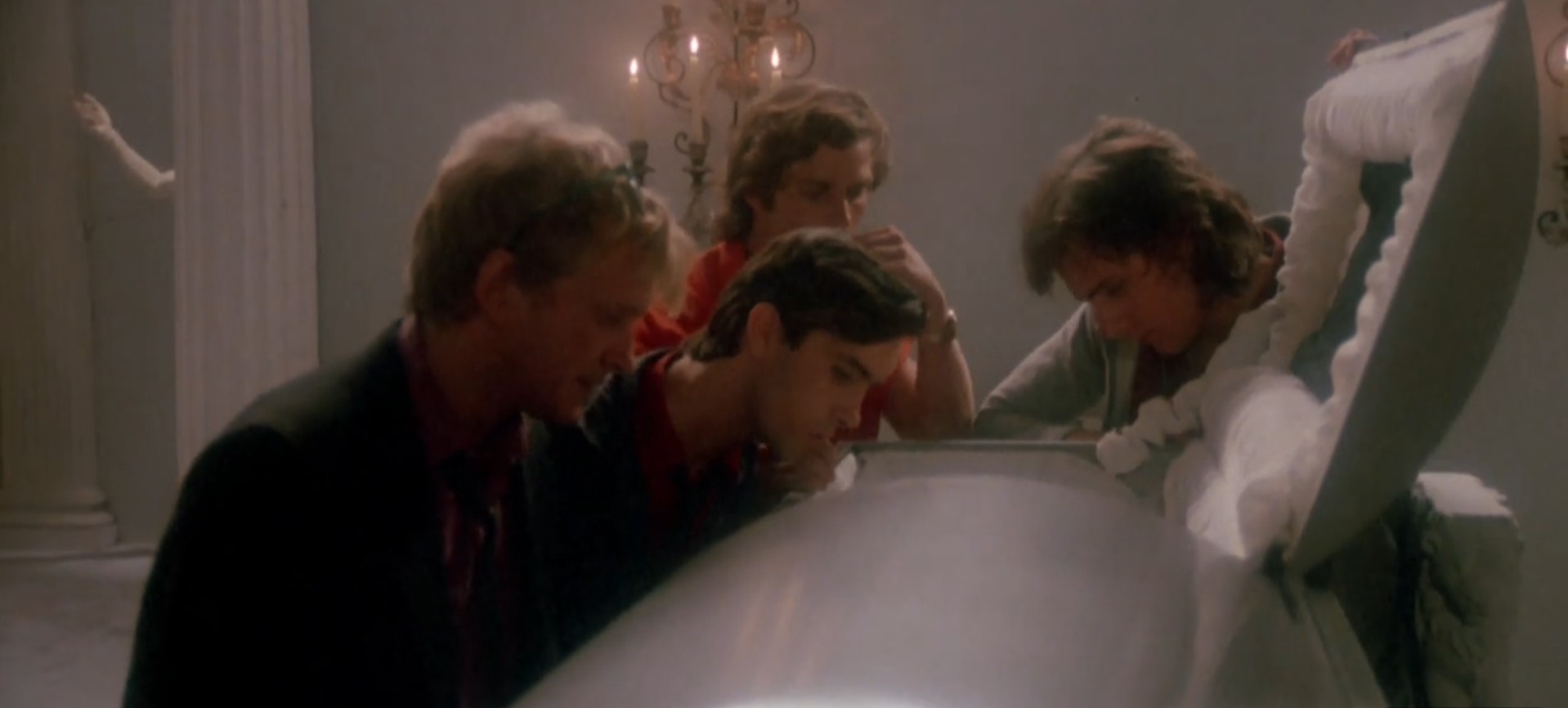
The future for beautiful women holds little promise as they are slaves across a patriarchal-oppressed galaxy.  Daria and Tisa are two of those women, scantily cladded and stowed away in shackles on a galactic starship.  Their harrowing escape crash lands them on the shores of a jungle planet where they’re recovered and hosted by game hunter Zed and his two robot servants in his lavish castle abode.  Dressing, feeding, and providing them comfortable room accommodations, Zed appears to be Daria and Tisa’s savior against those who have enslaved them and from the wreckage of their getaway ship, but along with another couple of salvaged survivors from another ship, Zed has nefarious plans for each one of them.  Plans that put the survivors back into the mutant-infested jungle where fervent game hunter Zed’s need for worthy sport aims to capture and kill his pampered and mount their heads on his trophy room wall.

In a male-controlled universe, the battle of the sexes rages on!  “Slave Girls from Beyond Infinity” takes gender warfare into the jungle thicket with assumed male insuperability going up against the strength and will of woman.  The amalgamating sex, violence, and horror director Ken Dixon, known for his credits in exploitation with “The Erotic Adventures of Robinson Crusoe,” “Filmgore,” and the documentary “The Best of Sex and Violence,” helmed his last entry in 1987 with this underclothed and campy science-fiction chase of human game.  Dixon, along with John Eng, Mark Wolf, and Don Daniel produce progressive gender boundaries with the film’s opposition to the laid ideology of Charles Darwin who once said man have a higher eminence, in whatever he takes up while woman intuition powers are characteristic of a lower race.  “Slaves Girl from Beyond Infinity” worked to balance the scale with women who won’t lie down and die because of man-favored gifts of sexual selection.  Beyond Infinity and Titan Productions served as the co-production companies and distributed theatrically by then Charles Band’s Full Moon Entertainment subsidiary, Urban Classics, until It’s sequential acquisition by Band and its assimilation into the Full Moon collective.

With the title like “Slave Girls from Beyond Infinity,” there better be a skimpy garbed cast of gorgeous women pew-pewing with futuristic laser guns and using their sexual promiscuity as a dangerous weapon.  Fortunately for us, Ken Dixon doesn’t drop the ball fulfilling the fantasy or, how I see it, is necessary for such a midnight showing title.  The film follows the imprisonment, escape, and into the hands of a human hunting madman story of Daria and Tisa, played by the super fit, super sexy blondes Elizabeth Kaitan (“Necromancer,” “Friday the 13th:  The New Blood”) and Cindy Beal (“My Chauffeur”).  Kaitan edges out Beal as the lead set early with Daria’s relentless confidence and better adept at taking advantage of a situation but both women play into the strong female heroine as they knock out well-armed and body-armored male guards, intoxicate the male, and even to the implied extent of a male identifying robot, gaze, and take on the murderous Zed in his own devious game albeit both barely having any clothes on for most of the duration in the cold of space and in the heat of the jungle.  Kaitan and Beal are not the only bodacious bods in the cast with the 80’s household scream queen Brinke Stevens (“The Slumber Party Massacre,” “Sole Survivor”) puts a foot out of the girl in a shower and other unnamed nude girl role and into a more principal character with Shala, a fellow planet stranded survivor from a previous crash told anecdotally, and in an opening, nonspeaking minor role, but definitely bursting with screams, and at the seams, of a barely covered flesh, is the unknown beauty Sheila White.  Stevens is sister to whom would become the “The Dark Half’s” special and visual effects supervisor, Carl Horner, as he plays Rik, a handsome, young man with a sneaking suspicion about their too-gracious of a host and a toying, on-the-brink love interest to a firm and more confident Daria in a steamy show sex scene to throw Zed off their conniving scent toward his do-no-good plans.  Zed’s a hard card to turn over and understand his true nature.  Played with impeccably classy and sporting glittery adorned, gun metal leather like a Niel Diamond on-stage outfit, Don Scibner has a traditional charm about him that he’s carried with him from his debut role in this Dixon film to other B-pictures laced with cult impression, such as “Moon of Scorpio,” “Night Shade,” and “Witchcraft XI: Sisters in Blood,” and really sells it as a game hunter giddy with the opportunity for new blood to track – male and female.  Between starship guards, robots, and planetoid mutants, Kirk Graves, Randolph Roehbling, Bud Graves, Jeffery Blanchard, Fred Tate, Jacques Schardo, Mike Cooper, and Gregory Lee Cooper fill in the supporting role gaps. 

“Slave Girls from Beyond Infinity” sounds like a busty-bust-up from the likes of Jim Wynorski but whereas Wynorski goes after a blend of buffoonery and boobs, and we’re talking about to the likes of really big, Russ Meyer-sized voluptuousness, Ken Dixon’s takes on a more earnest and natural approach, to an extent that “Slave Girls from Beyond Infinity” feels like a science fiction film of yore, circa 1950s with starship models, impractical attire, men in creature suits, and a timeless tone that is at odds with a futuristic setting.  A subtle whiff of campiness keeps the film from being monotonically stale.  The story itself is constructed from a historical literary framework, loosely based off the 1924 short story “The Most Dangerous Game” by Richard Connell with a big Russian aristocrat and game hunter, bored out of his gourd hunting animals, has turned to hunting shipwrecked people that find themselves stranded on his island.  Dixon replaces the Russian aristocrat with a lavishly leathered bachelor served by robots and skilled with a laser crossbow and the prey is technically shipwrecked but no longer worthy game man bur rather half-naked women comfortable in their loincloths and confident in their survival in an alien jungle amongst mutants, zombies, and a deranged hunter.  “Slave Girls from Beyond Infinity” certainly has that sublevel of sexual objectification and fantasy, or even perhaps is on par level with the murder of another human for sport premise as Kaitan, Beal, and Stevens not only bare most of their bodies, but their bodies are used as tools to subvert Zed’s snooping and are used by Zed in an exploitational sex act stemmed for this post-hunt thrill.

Full Moon delivers the most dangerous game in space down to insatiable fans of 80’s sex symbols and sci-fi oddities with a new Blu-ray release.  Unlike previous re-issue catalogue releases, either from standard definition to high-definition or high-definition to high-definition, “Slave Girls from Beyond Infinity” does not notify of any restoration or remastered efforts onto the AVC encoded, 1080p resolution, BD25.  However, not much needed to be improved on the already stellar picture from a virtually clean 35mm film.  I will say that the transfer did buffer out the natural grain of the film stock, but the details appear greatly featured amongst bronze and near blemish free skin tones from the model-esque actresses with big, teased hair down to the stubble and scarred faces of Rik and Zed, respectively.  Fabrics also come out on top with Zed’s outfit showing the stress marks of a leathery hide to the entirety of jungle epidermis, and even the forced perspective effects of composite mattes to enlarge the jungle setting, though an obvious matte effect, looks positively punctuated in detailed.  The soft lighting used to make the women stargazing eye candy does go against the detail grain but more accentuates the warm tones of a portrayed early science-fiction capture-and-kill.  The English LCPM audio comes in two formats:  a 2.0 stereo and a 5.1 surround sound mix.  The latter immerses you quite effectively but keeping the bass level and handled by the subwoofer reigns, dialogue comes over clean and clear in the front channels, and the sides offer atmospheric chitter of a strong world jungle.  Plus, all the laser fodder presents a satisfactory electric discharge familiar with the genre over the decades.  This suggests an optimization of the audio design for a full package of a sci-fi sonic palette.  This release does not contain a subtitle option.  The modest special features bundled with the feature include a skin-idolizing tribute to Elizabeth Kaitan that showcase her most memorable clothes-on and clothes-off moments from her film credits, the original theatrical trailer, and other Full Moon Features trailers.  The new HD suffers from the company’s consistent business structure of re-issue the film onto just a standard release with barely an encoded special features and little-to-no physical content, but the original film one sheet for the one-sided cover art offers an illustrated sexy and science-fiction splendor and the disc is pressed with select faces from the cover art floating amongst the stars in near translucency.  “Slave Girls from Beyond Infinity” Blu-ray is the R rated cut with a well-paced 75-minute runtime and is region free for global players, presented in a 1.78:1 aspect ratio.

Last Rites: Entertaining and easy on the eyes, “Slave Girls from Beyond Infinity” is an homage to the old science fiction psychotronic that’s vixenly sexy and savagely saucy under the guise of a cruel and deadly hunt on another world.

“Slave Girls from Beyond Infinity” Blu-ray Now Available! Order Here!

EVIL Versus EVIL to the Death! “Mad Foxes” reviewed! (Cauldron Films / Limited Edition 4K UHD and Blu-ray)

“Mad Foxes” LE 4K UHD and Blu-ray Still Available to Get Before X-Max!

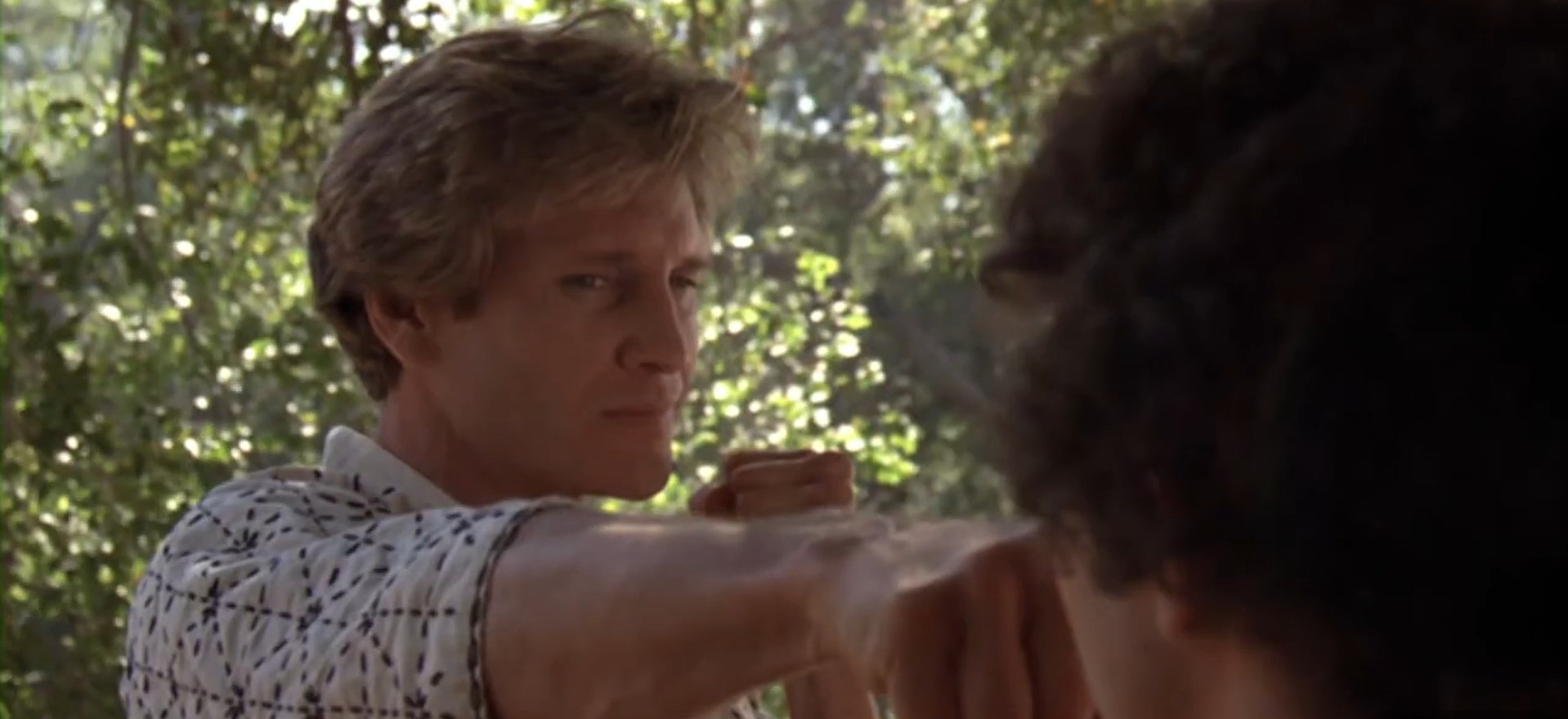
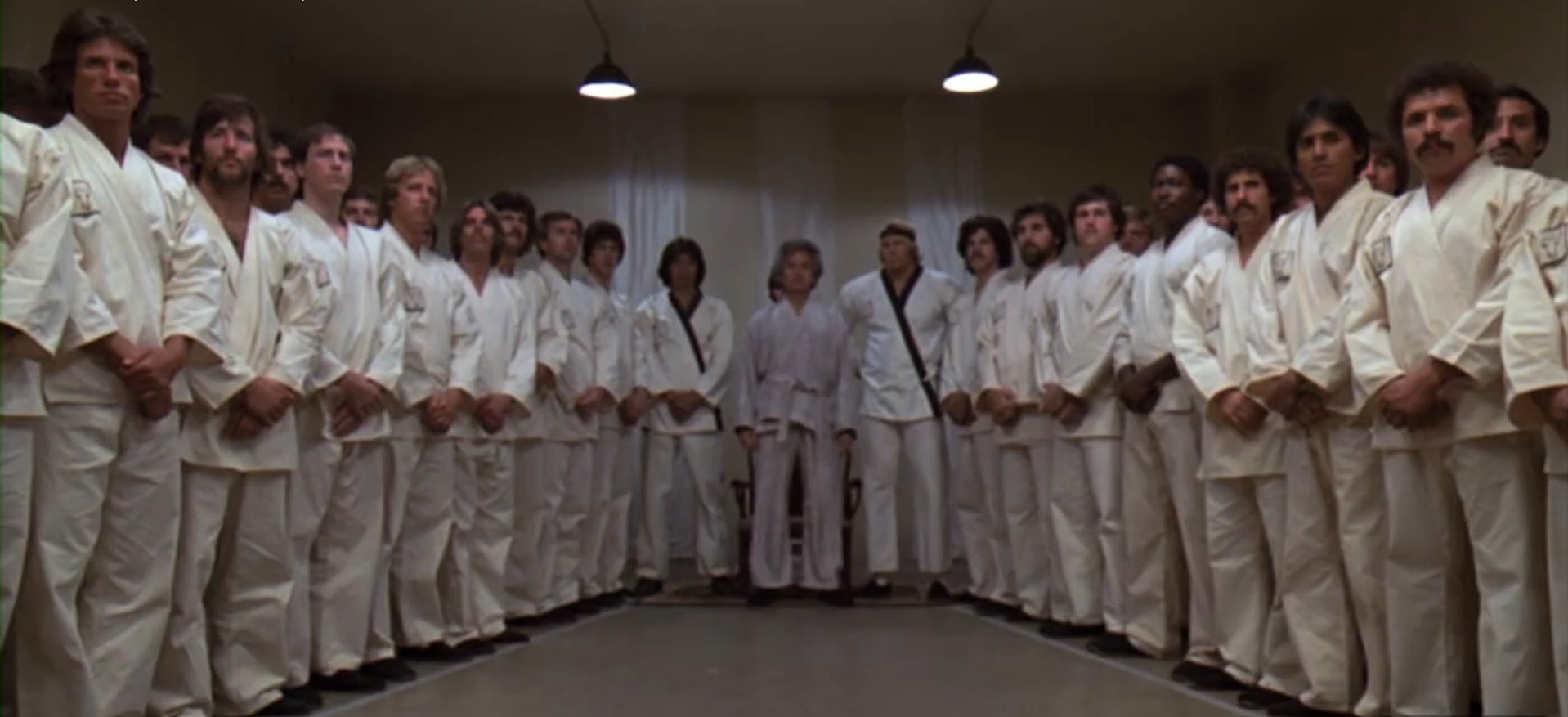
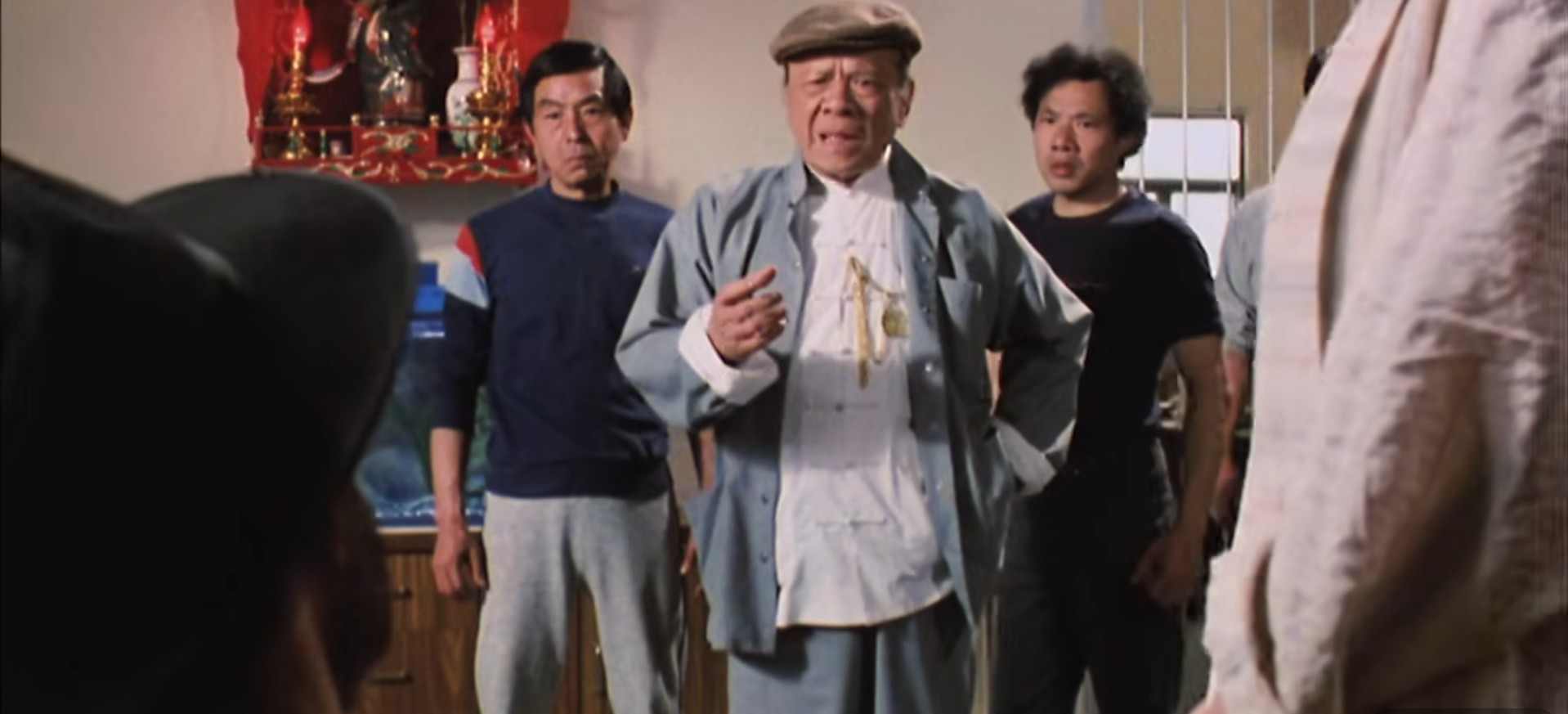
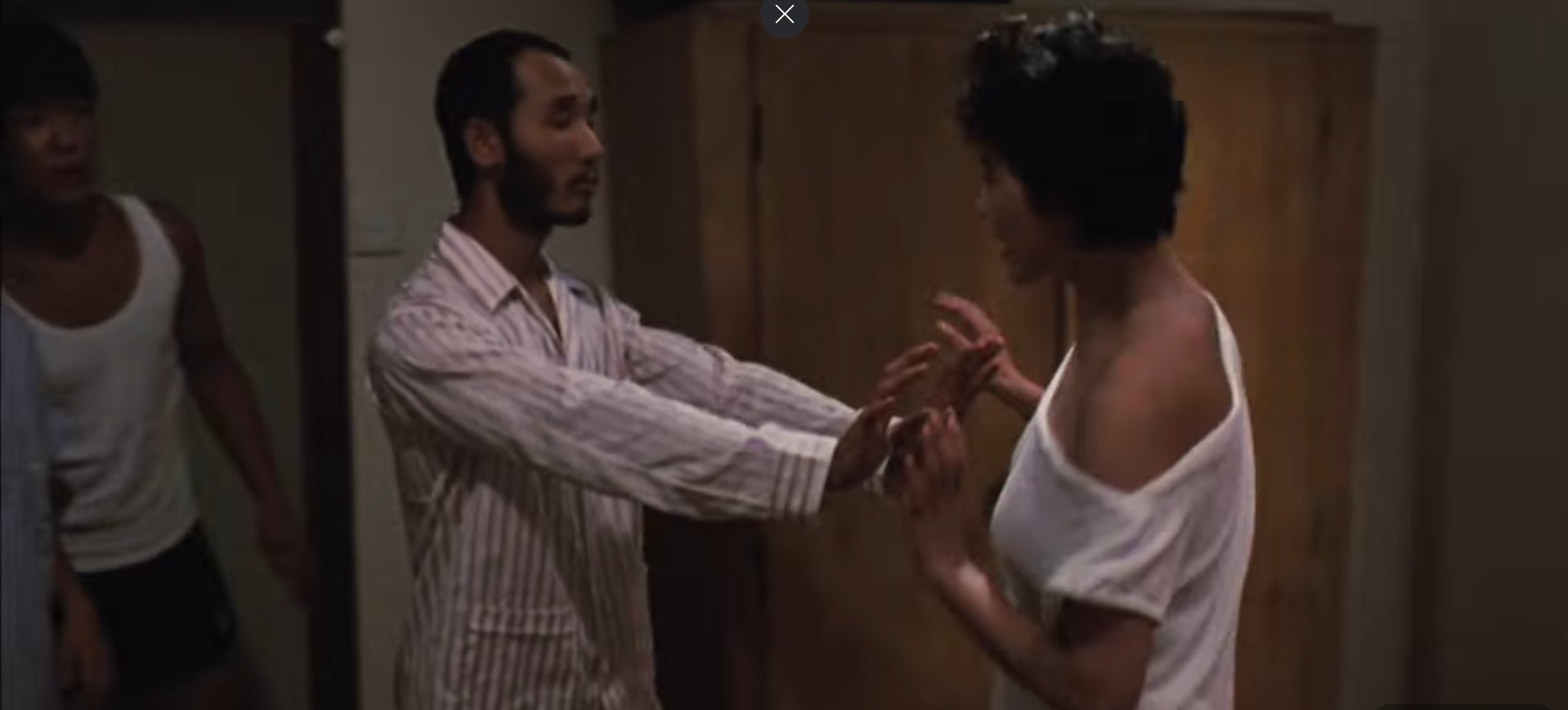
Playboy Hal drives fast cars and enjoys a good time.  While driving his girlfriend out for a night on the town, a road rage run-in with a Nazi biker gang leaves one of biker’s dead and Hal continues on his way to the nightclub for bubbly and music.  The bikers track him down, beating Hal to a pulp and raping his date as the night ends.  Not to roll over and be passive take to insult, Hal recruit’s a friend’s dojo class for an all-out brawl during the outside funeral ceremony for the biker’s fallen comrade, taking violence to the extreme by castrating the gang leader.  In retaliation, the entire dojo class is gunned down in a vengeful massacre days later.  Hal and the biker gang continue their back-and-forth as they embark on a short-term blood feud aimed to annihilate each other’s lives, spilling violence beyond friends and into family ties without mercy. 

A tale of perpetual revenge and exploitation from Spain, “Mad Foxes” takes one-upping to a whole new grotesque level.  After production manager Paul Grau worked on the tantalizing pictures “Secrets of the French Maid,” “Caged Women,” and “The Amorous Sisters” and before helming the comedic sexploitation “Six Swedish Girls in the Alps,” the Nordic born filmmaker debuted with tit-for-tat terror in the streets film cowritten between Grau and softcore, erotic film producers Hans R. Walthard (“Six Swedes in Paradise”) and Jaime Jesús Balcázar (“The Couple’s Sexual World”), leaving no surprise to the shocking and provocative nature of this Euro-nasty that castrates Nazi bikers, shotguns old ladies in wheelchairs, and blows up entire apartment buildings all in the name of spite.  Erwin C. Dietrich and Hans R. Walthard serve as producer and executive producer under the production collaboration of Jaime Jesús Balcázar’s  Balcázar Producciones Cinematográficas and Reflection Film.

A biker gang revenge story sounds right up there with “Death Wish” starring Charles Bronson, but instead of Bronson’s character going up against the impossible odds by way of an organized and self-controlled planning, executing, and removing the threat for good, “Mad Foxes” strikes impulsively while the iron is hot with such ferocity it’ll make your head spin right off the neck.  José Gras (“Hell of the Living Dead,” “Conquest”) envelopes himself to the solo side as Hal in contra the larger Neo-Nazi biker gang.  Hal’s a bit of a philanderer though it’s not entirely explicit but his raped date Babsy (Andrea Albani aka Laly Espinet, “The Hot Girl Juliet”) is a quickly and inexplicably out of the picture before he picks up free-spirited nomad Silvia (Laura Premic) and, by then, Hal seemingly doesn’t have any other care in the world though the aforesaid date Babsy, or perhaps it was his young girlfriend, was raped, and his good friend’s entire dojo, plus said friend (Paul Grau), are massacred in an open fire execution of bullets after they wipe the floor with the Neo-Nazis in a karate skirmish that ends in the gang leader being gratuitously castrated.  Having already cross paths with the gang at least four times, Hal hops in his fast car and drives to the countryside to get away from it all, picking up Silvia on the way, but he inadvertently leads the ruthless camo and leather-cladded gang, led by character played by Peter Saunders and Eric Falk (“Blue Rita,” “Ilsa:  The Wicked Warden”), to his wealthy, elderly, and impaired parents and their house servants.  From there you can imagine the bloodshed that quickly spirals into payback but all throughout the retaliatory strikes, one begins to question who the actually is the good guy in all of this because Hal actually initially ran one of the biker’s off the ran and to his death, driving away with speed and a serene sense of no remorse or concern.  Does Hal bring an ill-fated war upon himself?  One could argue a case for it.  “Mad Foxes” rounds out with Helmi Sigg, Brian Billings, Garry Membrini, Ana Roca, Hank Sutter, Iren Semmling, Hans R. Walthard, Esther Studer and Guillermo Balcazar.

“Mad Foxes” is a gratuitous showcase of trashy Euro cinema, the grindhouse champagne of Spanish sleaze, and has little worth toward elevated commentary or technical grandeur.  Yet, within our miniscule cinema-thirsty molecules and riding along our less trodden synapse highways, a spark of interest can’t keep our eyes off the lurid lunacy that’s unfolding before us.  Paul Grau has invested, produced, and released an entertaining indelicate that won’t bore, won’t tire, and won’t be a total waste of time in its eye-for-an-eye format.  Does one man’s need for revenge need to make self-preservation sense?  No.  Does a bike gang have the wherewithal to track down one man from city-to-rural without breaking a sweat?  No.  One aspect of the story that holds relatable consistency through the years, decades, or even millennia is that violence remains a universal truth, and “Mad Foxes” has plenty of teeth to tout when an act of pettiness turns into the next World War for one man and a biker gang.  The story is no “Death Wish” or “Death Sentence” but it does remove rationality from the shackles of a rancorous reality and plops viewers into the throes of an odd quarrel that won’t seemingly end until the very last standing have turned vertical, and all signs of life has ceased.  Hal’s no rogue ex-cop or former elite marine, just a regular playboy with friends in karate places and has a stubborn will to take on the gang singlehandedly on their own sordid turf.  Grau’s unabashed violence never stumbles or wanes to be implied with the Switzerland director helming a Spanish produce movie that churns out Italian-like shock with the closeup carnage and the cynical nature of a fatalistic bout. 

Cauldron Films proudly presents “Mad Foxes” Ultra High-Definition debut to the world featuring a new 4K restoration with Dolby Vision HDR color grading on an HVEC encoded BD66 with 2164p.  This limited-edition 2-disc set also includes a standard Blu-ray presentation that’s AVC encoded on a BD50 with a 1080p resolution.  The Dolby Vision HDR 10 offers extensive and immense saturation that’s balanced, stable, and more vibrant in it’s support of a wider pixel range.  Without compromising the story’s gritty nature with an unflexed amount of detail, textures retain their respective fabric types from the sheen of Hal’s silveresque bomber jacket to the taut leather of the neo-Nazi bikers.  The skin tones appear organic with a surface appeal that denotes and defines body hair, wrinkles, and other skin imperfections, more notably in close ups.  Focal depth does not completely wash out objects or landscapes with careful delineating a sandy beach and wavy ocean with distinction while the cityscape has the light and tone range in clarity of the object.  Only the UHD was covered for the image review, but the Blu-ray pulls from the same 4K restoration that I suspect has most of the same results but with a lesser pixel count in the quality that may be not as perceptible.  Both formats include an English DTS-HD 5.1 Master Audio, a DTS-HD 2.0 mono, and a Spanish DTS-HD 2.0 mono mix.  All include optional English subtitles in, what I consider horrendous, ADR mixing.  Dialogue has clarity and is clean throughout, but the voice acting is just beyond reproach with drab inflection to express the right emotion during the scene, its all fairly monotonic and automaton deliveries through the asynchronous matching of voice and mouth.  With no innate recording during filming, the milieu sounds are limited to the immediate action of post-production kick and punch skirmishes, a volley of gunshots, car and motorcycle engines, and murderous snikts of blade strikes.  This, in turn, limits and relegates the surround sound channels to mostly the front with only a flutter of immersive quality, mostly with the revving car engines and the occasional gunfire.  Special features on the UHD only include the commentary by film critics Nanni Cobretti and Merlyn Roberts.  The commentary is also on the standard Blu-ray along with additional content in The Untold Story of Robert O’Neal:  a near feature-length interview with leading man José Gras discussing his career in Europe, Erwin and the Foxes offers interviews with producer Erwin C. Dietrich and actors Eric Falk and Helmi Sigg discussing their roles and the production, an additional interview Mad Eric has a second interview with actor Eric Falk, and Troy Howarth provides a video essay with stills and video snippets in Nazi Fox Bikers Must Die.  The special features round out with an image gallery and a feature trailer.  The curated packaging comes in a rigid slipbox with new compositional artwork by Justin Coffee.  Inside, is a clear Amaray Blu-ray case that display same primary artwork and is accompanied with an adjacent folded mini poster, also of Coffee’s art.  The UHD is region free and the Blu-ray is region A for playback as both films carry an unrated designation and have na 80-minute runtime in their widescreen, 1.85:1 aspect ratio, presentation. 

Last Rites: Revenge films are often formulaic but “Mad Foxes” is no ordinary payback thriller that continues to the hit back well into last man standing. The new Cauldron Films’ limited-edition boxset pushes the media technology to max superiority sure to squash any rival, unlike Paul Grau’s ceaseless chaos.

“Mad Foxes” LE 4K UHD and Blu-ray Still Available to Get Before X-Max!

EVIL’s Ready to Rock! “Hard Rock Zombies” reviewed! (MVD Visual / DVD)

“Hard Rock Zombies” Rocks out on DVD! Check it Out Here!

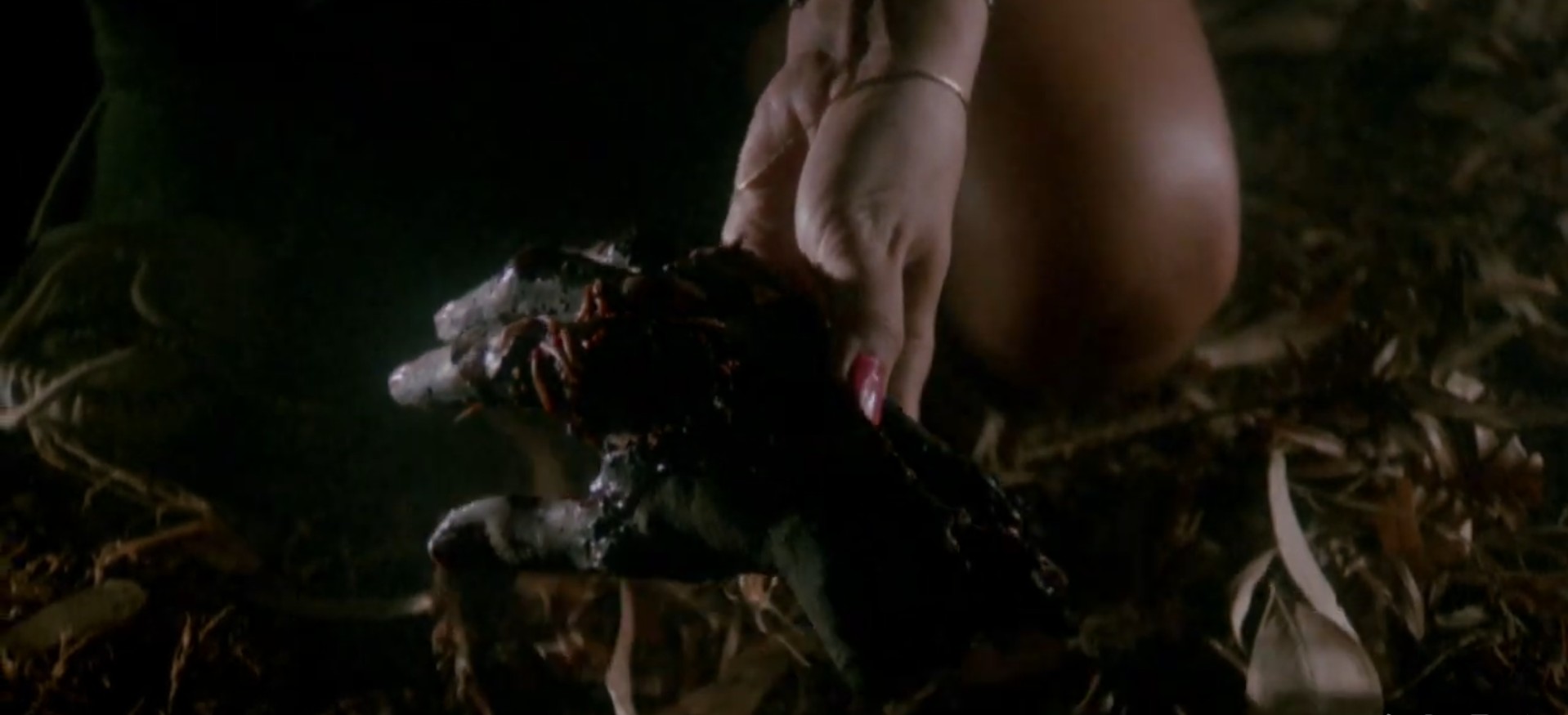
A hair metal rock band will a killer ballad Holy Moses is on the verge of making it big time.  With a scouted gig at a venue in the small-town of Grand Guignol, Jesse, Tommy, Robby and Chuck are ready to rock the house with the help from band manager Ron but Grand Guignol’s narrowminded men and women, including the sheriff and government officials, will stop at nothing to cancel the show that has their children and teenage daughters enthralled with what the parents call scandalous rock’n’roll.  In favor of canceling and to sate their unquenchable bloodlust, a strange but wealthy eccentric family of perverse killers invite the band to play at their mansion only to kill them one by-one in a horrible death.  The town is not all full of bigots and murderers as Jesse’s rockin’ romance with Cassie, a daughter of Grand Guignol, plays an incantation cassette tape that rises them from the grave to seek hang-banging revenge! 

Femme fatales.  Dwarf-sized ghouls.  Werewolves in wheelchairs.  Voyeuristic snuff photographers.  Gas-crazy Nazis!  “Hard Rock Zombies” may thematically state rock’n’roll lives forever by way of tuneful necromantic resurrection, but the 1984 comedy-horror is a complete smorgasbord of absurdity.  Helmed by the India-born and Ivy League educated Krishna Shah  “Hard Rock Zombies” is a multifaceted vaudeville act set to the rock is the devil music trope.  Also alternatively known as “Rock Zombies” or “Heavy Metal Zombies,” Shah cowrites the metal music metastasizing script alongside David Allen Ball, both of whom would collaborate once and final more with the follow year’s teen comedy “American Drive-In.”   The in and around Los Angeles shoot is a production of the Patel/Shah Film Company with Shah producing and Shashi Patel serving as executive producer along with the debut of “Candyman” and “Lord of Illusion’s”  Sigurjon Sighvatsson and Steve Golin as associate producers. 

E.J. Curse, Geno Andrews (“Dr. Alien”), Sam Mann (“Roller Blade”), and Mick McMains make up the hair metal band Holy Moses and none of them had real acting experience.  The novice lot do their best to express themselves as an 80’s metal with large and heavily teased hair to produce maximum body and volume, tight and outlandish leather and revealing clothing, and apart from the competent and skilled skateboarding, move in antiquated dance moves familiar to the era.  They may not have a single convincing acting bone in their performance but credit to their overall appearance that speaks to the film’s title.  Though the band is intended central focus, they share a copious amount of screentime and development with the family of frightening agendas and secret identities.  The story even begins with attractive blonde Elsa (Lisa Toothman, “Witchcraft III:  The Kiss of Death”) seducing two young men to their demise while a slicked dress man takes pictures from the nearby bushes alongside two playful, dressed-in-black dwarfs, one human Mickey (Phil Fondacaro, “Willow”) and one monster Buckey (Gary Friedkin, “Cool World”).  It’s like a scene straight out of a David Lynch movie.  We learn this group belongs to an eccentric grandfather patriarch (Emanuel Shipow, “Biohazard”) and his wheelchair bound wife Eva (Nadia, “Dark Romances Vol. 1”) eager to strike down their next victims with clandestinely goosestepping and small mustache fervor.  Frazzled but loyal band manager Ron (Ted Wells) and Jesse’s Grand Guignol lover girl Cassie (Jennifer Coe) are seemingly the only two sane and rational characters who favor the sweet ballads of Holy Moses rather than the sinister genocide of an experiment happy dysfunctional family.  “Hard Rock Zombies” has an abundance of supporting characters and extras to give weight toward a Shah and company’s first-time production with a select secondary cast list of Jack Bliesener (“Crime Killer”), Richard Vidan (“Scarecrows”), Vincent Albert DiStefano, Christopher Perkins, David Schroeder, Michael David Simms (“Scarecrows”), David O’Hara (“Star Worms:  Attack of the Pleasure Pods”), and Donald Moran.

“Hard Rock Zombies” was probably more fun writing and performing in than it was piecing together a coherent narrative that spins like an unruly top going in unpredictable and varied wandering ways.  The amount of subplots against the core resurrection of a metal band erode the very essence of their supernaturally charged revenge because the primary focus on their rise from dead and how that resurrection incantation came into the rockers’ possession can quickly be forgotten as the exposition and the defining titular moment can be easily missed if you blinked for 0.0002 of a second.  There’s also the aforementioned circumstantial subordinate themes of adults and/or parents unwavering, harsh rebelliousness against the adolescent swooning hard rock and of the concealed true malevolent nature of the town’s murderous hodgepodge of a family that turn out to be bloodlust Nazis with an assumed case of monstrous, experimentational evil coursing through their veins, as seen with the unexpected shape-shifting wheelchair bound grandmother who can transform into a werewolf, complete with dual switchblades, and the ghoulie-like dwarf who eventually feasts upon himself into nonexistence.  “Hard Rock Zombies” transcends viewers into a bizarro world where, initially, seemingly plausible issues around an older generation’s labeling of infernal rock’n’roll music, stirring up townhall meetings and protests they see has harmful influence of the younger generation but then the topsy-turvy and screwball antics of heinous villainy goaled with and having already done committing atrocities is a complete farce on the actual, factual, historical events of ethnic cleansing.  Shah definitely makes light with the tone-deaf analogy with great zest and jest but without a more honed in effort and concentration on just the rockers back from the dead, this absurd 80’s comedy-horror fails to address its intentions.   

If not looking to spend a ton of money on the Vinegar Syndrome’s Blu-ray “Hard Rock Zombies,” the MVD Visual DVD is an economic alternative that won’t downsize your wallet.  The MPEG2 encoded, standard definition 720p, DVD5 suits this eccentric horror-comedy just fine, retaining its campy nature in the ballpark of an unrestored scan into 2K territory but still have the working print Vinegar Syndrome used for their high-def transfer, still presented in a widescreen 1.85:1 aspect ratio.  What’s encoded has not been sheened into an apt color correction and buffed with a higher pixel count for better, digital vivid saturation and better, digital defined textures, but “Hard Rock Zombies” is innocuous as the scenes require less eye squinting for finer details and a perverse need for range of color in what’s more of a surface-level squall of rock-infused, nonsensical horror.  Again, a technical spec that won’t knock your socks off and does muddle the fidelity quite a bit, the English Dolby Digital 2.0 Stereo has less amp, and this is where any kind of impact “Hard Rock Zombies” would have had hurts the most.  Extended Holy Moses montages and concerts, alive and dead, should be an unharnessed power of ballad rock and supernatural discords for a story driven by monsters and music, especially one that uses an Iggy Pop-like mumbling incantation to rise Jesse and his band mates from the grave.  English subtitles are available for selection.  MVD’s release is a purely a feature only substitute with no special feature and the standard DVD case has the same artwork as the Blu-ray counterparts, nicely tinged on its rad rock’n’roll and death illustrated cover art.  Another difference is the rating with MVD’s release coming in at a R-rating versus the NR Blu-ray from Vinegar Syndrome, yet this is most likely either incorrect rating or a re-cut of the film as both format features have a runtime of 97 minutes.  MVD’s DVD has region free playback. 

Last Rites: Rock’n’roll never dies! For “Hard Rock Zombies,” the phrase rings true with undead rockers seeking revenge from beyond the grave. For the DVD, there’s not enough overall elan behind the release to bang your head to in this barebones and untouched alternative that’s a good budget friendly option for the features only enthusiasts.

“Hard Rock Zombies” Rocks out on DVD! Check it Out Here!

You, Me, and EVIL Makes Three on “The Island” reviewed! (Eureka Entertainment / Special Edition Blu-ray)

“The Island” from Eureka Entertainment and MVD Visual! Order Here!

Geography teacher Mr. Cheung faith in his student’s studies lacks encourage and their grades likely won’t improve.  He decides to take his class on a field trip to an isolated island he once visited more than a decade ago as a young man.  With the intended purpose of relaxation, Mr. Cheung refuses his students of mentioning any schoolwork and studies to try and enjoy the coasting waters and the native nature the island has to offer.  However, there’s more than just animals and plants inhabiting the island as a family of three eccentric brothers welcome them with strange behavior and creepy vibes.  When the younger brother selects one of the student girls as his bride to carrier on their lineage, the once ideal getaway traps Mr. Cheung and his students without a way of escaping the irrational whims and delusions of the three brothers.  With a retrieval boat still a day out, the cornered teacher must keep his party alive at all costs. 

Considered Hong Kong’s answer or version of the backwoods pursuers of cutoff society people, 1985’s “The Island” secludes normal kids and their acquiescent teacher on an island where inbreeding has corrupted the copies of three brothers who’ve recently interred their adamant mother to rest and who’ve been searching for mainland women suitable to be the unsterile youngest’s wife.  Leung Po-Chi, or Po-Chih Leong, director behind “He Lives By Night” and “Hong Kong 1941,” produces a Jekyll-and-Hyde contrasting tale that’s sad and bleak to the core with a script not pinpointed to one particular writer but rather to a creative team within the production company D & B Films, aimed to capitalize on the western grim nature of the deranged and callous upon the unsuspecting and innocent seen in such exploitation and other B-pictures as Hong Kong shifts from the longstanding yet now waning Kung-Fu pictures.  Dickson Poon, Sammo Hung Kam-Bo, and John Sham, the founders of D & B Films, produce the film. 

John Sham may not be the ideal looking or sounding hero with a receiving hairline close to Three Stooges’ Larry Fine, thick, round spectacles, and about as average build of a middle-aged man as they come, but for “The Island” the ‘Yes! Madam” actor and D & B Films’s cofounder is suitable and ideal to be the pliantly, run-of-the-mill geography instructor looking to leave the woes of education behind him for a chance to revisit a place from his youth.  Unfortunately, Sham’s inadvertently the head of the snake as everyone remembers the exposed poisonous fangs threateningly elongated from with out the jowls underneath the reptilian beady and glowing eyes.  No one really remembers the slithering body unless there’s a warning rattle connected at the end.  That’s how the rest of the student body reproduces in trying to portray characters to care about but not really achieving the level of sympathy needed to rise about that film of understanding.  One of the more prominent kids is Phyllis, labeled the chunkier one by youngest aggressive, the snotty-simpleton Sam Fat (Billy Sau Yat Ching, “Scared Stiff”) and she’s targeted for Sam Fat’s procreation affections.  Played by Hoi-Lun Au, Phyllis has a working but tiffed relationship with Ronald (Ronald Young, “Sex and Zen III”) and see the untimely death of Ronald sends Phyllis into seeing red, being a formidable survival combatant against the remaining Fat brothers Tai (Lung Chan, “Encounter of the Spooky Kind”) and Yee (Jing Chen, “Riki-Oh:  The Story of Ricky”).  Billy Sau Yat Ching, Lung Chan, and Jing Chen are distinctly diverse to the best possible way, and each deliver their own dish of crazy that gives “The Island” an inescapable locked inside a padded cell substructure all too familiar on its base componentry but alien enough to master a new diverging kind of terror.  Che Ching-Yuen, Chan Lap-Ban (“Hex After Hex”), Kitty Ngan Bo-Yan, Lisa Yeun Lai-Seung, and Timothy Zao (“Diary of the Serial Killer”) costar in the relatively fresh faced and unknown at the time casted film. 

Leung Po-Chi wets our whistle with an opening of an intense forced marriage ceremony involving shuddering sexual exploitation and personal space invasive mistreatment of a mainland young woman, a swimmer who swam her way into trouble with the island’s inhabitants – an elderly mother and her three disturbed sons with the goal of using her for breeding a new bloodline.  This ultimately sets up the tone for a bleaker story that tells of nihilist cruelty with a thematic division between the urban educated and the unsophisticated rural folk, in this case the rural Bumpkins are isolated island inhabitants, but then Leung switches gears with a lighthearted introduction of frolic scurrying teacher and his students as they spread amongst the island’s sandy beaches wearing brilliantly colored skin tight swimsuits and bask in the island’s natural beauty with a couple of them going tangent into their own personal secondary storylines.   Those subplots never vine out and upward to flower fully but there’s enough stem and leafing groundwork between the good old gay times and a few individual internal affairs to setup sympathy for at least a select few as the relationship between visitors and residents quickly sours with Sam-Fat’s eyes growing bigger and bigger and his drool becoming slobbery and slobbery for Phyllis.  There’s not a ton of autonomy for the brothers who do their mother’s bidding long after she expires, committing themselves to the original plan of marrying off Sam-Fat in a show of take and force that robs Mr. Chueng’s dual purpose plan of a good time of fun and nostalgia.  Leung acutely abrupt faces again, back to the cruel inklings from the beginning, that displays unsettling camera shots, dark and low-warmth lighting, and a ferocity that’s always been with the brothers now more evident and growing inside the remaining survives who must fight for each other as well as themselves.  Leung’s style feels very much like a blend between the quick editing and fast action of a martial arts production but has the lighting and chaos-laden horror of an Italian video nasty that does see and lingers onto blood spilled. 

“The Island’s” a terror-riddled getaway that has arrived onto a new Blu-ray from UK label Eureka Entertainment routed through North American distributor MVD Visual.  For the first time on the format outside of Asia and as part of the company’s Masters of Cinema series (#324), Eureka’s Special Edition release is AVC encoded, 1080p high-definition resolution, BD50 and presented in the original widescreen aspect ratio 1.85:1.  With a brand new 2K restoration scan, “The Island” has impeccable quality measure that emerges the most minute details in every frame.  Skin tones have inarguable organic quality and a true-to-form reactionary sweat-gleam look induced when the chase is on.  The textures pop through in garb, foliage, and in dilapidated structure that gives certain discernibility and depth of object.  The original print has virtually no wear or tear as well as any aging problems, appearing to be a fresh off the reel transfer with natural appeasing grain.  The original Cantonese mono track is the only track available and is really the only mix we could expect and receive without a remastering, but, in all fairness, the mono works well enough to satisfy dialogue, ambient, and soundtrack integrity in its limited fidelity box  Dialogue is clean and clear on the encoding with no damage or other verbal obstructions but the modulation favors the antiquate characteristics of the era and the paralleling ADR offers little synchronous value, both to not fault of Eureka.  The optional, newly translated English subtitles by Ken Zhang pace well and are in flawless transcription.  The special edition is encoded with a new commentary with East Asian film expert Frank Djeng, a second new commentary by genre connoisseurs Mike Leeder and Arne Venema, a 2023 interview with the director Po-Chih Leong Surviving the Shoot, East Asian film expert Tony Rayns provides an appreciation video essay Tony Rayns on “The Island,” and the film’s trailer.  The limited-edition set comes with a red and yellow pastel colored O-card slipcover with new beaitfully illustrated artwork by horror graphic artist Ilan Sheady, whose supplied extreme and gory “Terrifier” franchise artwork to European media books, and delivers “The Island” a warm glaze of trouble-in-paradise, capturing the essence of what to expect from the story.  Original poster art graces the clear Amaray façade with a sepia image of John Sham from the opening scenes on the reverse side.  The limited set also includes a 19-page color booklet containing photos of “The Island” as well as other Leong productions, cast and crew credits, To Genre and Back:  The Cinema of Po-Chih Leong program notes by Roger Garcia for a strand celebrating Po-Chih Leong at the 2023 Far East Film Festival, an interview with the director conducted by Roger Garcia All Within the Same Film:  An Interview with Po-Chih Leong, and bring up the booklet’s rear are viewing notes and release credits.  The not rated feature has a runtime of 93 minutes and is region A/B locked for playback.

Last Rites: Director Po-Chih Leong’s trip to “The Island” is beyond bleak in social commentary and in of dire situation of nothing but pure innocence being destroyed by those left forgotten on the outskirts of mainlanders and of sanity. Eureka Entertainment’s Blu-ray honors “The Island” with praise upon praise for its slick high-definition picture, solid extras, and beautifully designed O-slipcase and design.

“The Island” from Eureka Entertainment and MVD Visual! Order Here!

Fascist EVIL Takes on Freedom of Expression! “School in the Crosshairs” reviewed! (Cult Epics / Blu-ray)

“School in the Crosshairs” on a Cult Epics Blu-ray! Purcahse here at Amazon.

Yuka Mitamura is the smartest, most well-rounded student at her high school that’s embattled by a constant debate on whether physical edition and clubs are a necessary requisite for academic success, jeopardizing physical activities such has her best friend Koji’s Kendo club.  When Mitmura’s latent psychokinetic powers emerge, she struggles to cope with the change that’s out of her control and the new acquaintances with similar powers that show up in her life, such as with new female student Michiru Takamizawa whose sudden enrollment sees a quick rise in the ranks of school politics and sparks an insidious need for a totalitarian and fascist reign to control dissident and unapproved behavior within the school.  As an oppressive crack down on the total student body sparks a civil war amongst the students, Michiru and her mentoring demon Kyogoku aim to enslave the human race and it’s up to Mitamura, unknowingly Earth’s champion, to fight against the forces of evil. 

Adapted from the 1973 science fiction and fantasy novel “Psychic School Wars” by Taku Mayumura, “School in the Crosshairs” is every ounce those Japan famous hyper-intensity and colorfully assertive commercials with visual sparkle and great enthusiasm for their hawked products.  You know them well when they go internet viral.  The 1981 Japanese adaptation is helmed by Nobuhiko Ôbayashi, director of “Hausu” and “His Motorbike, Her island,” from no script but rather from Mayumura’s novel as script.  Keeping faithful to nearly the entire novel and adding Ôbayashi’s variegated touch, “School in the Crosshairs” is a flamboyant Earth invasion in its divisive influence of the study body, especially between the studious academics and physical clubs.  Also known as “The Aimed School” and “School Wars” elsewhere in the world, as well as titled “ねらわれた学園,” ”School in the Crosshairs” is produced by “Island of the Evil Spirits’” Haruki Kadokawa, who also produced our last Japanese reviewed title, the traumatically powerful and wonderfully performed “The Beast to Die,” under his company Kadokawa Haruki Jimusho.

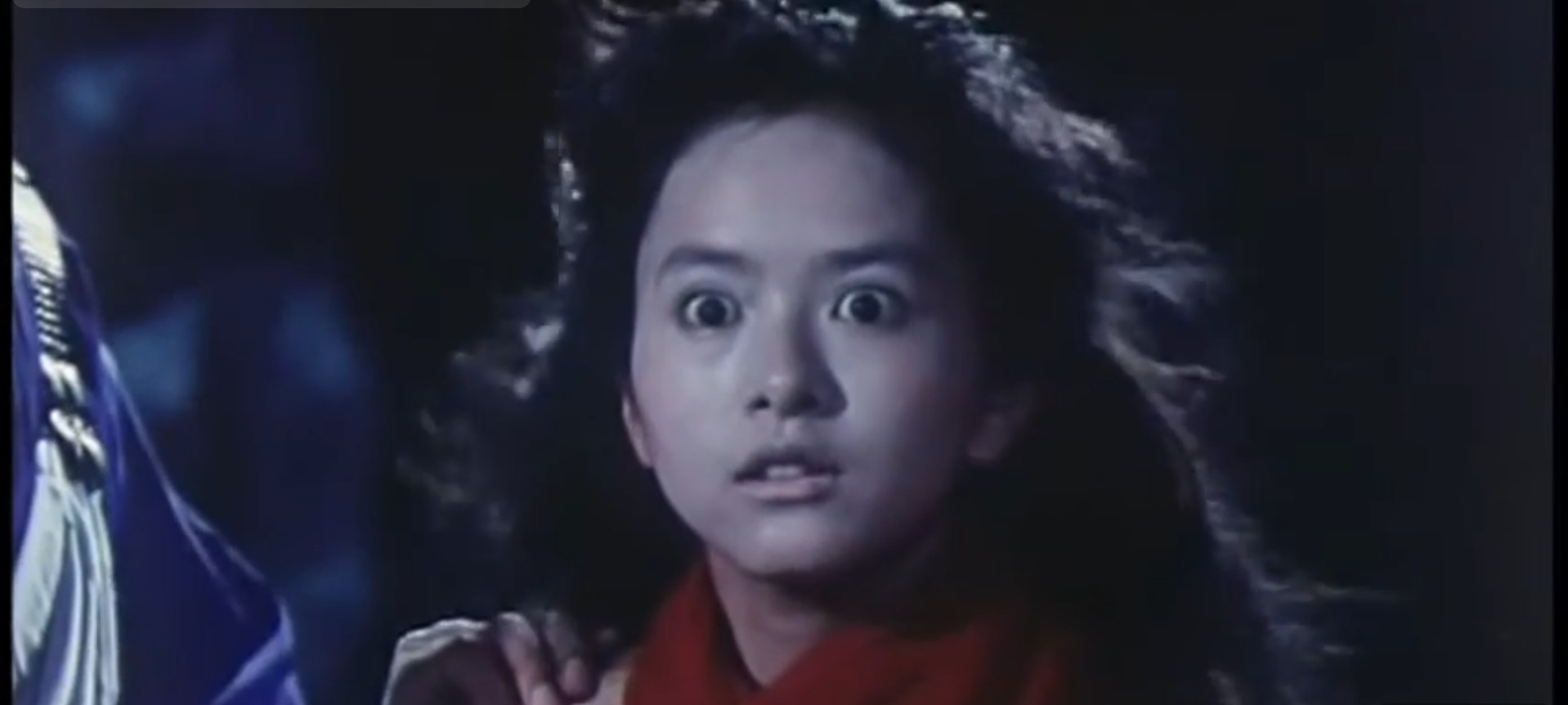
“School in the Crosshairs” circles around principal character in film and in book Yuka Mitamura as she juggles her newfound powers.  Between feeling like a stranger in her body as well as the weird visitations of her powers and of the otherworldly figure with a cap and green skin and having to not only rebel against an authoritarian rule overtaking her high school but also to save all of the world from that said otherworldly and powerful figure, Mitamura’s plate is undoubtedly full for a teenage girl.  Hiroko Yakushimaru (“Sailor Suit and Machine Gun”) comes to the role as a teenage girl herself at the age of 16-17 years old by the time of principal photography and seizes the high school melodramatics with ease as the carefree smartest kid in school.  Yet, finding Yakushimaru a formidable character stemmed by her performance is not so easily rendered in an indifference projection toward her newfound abilities; Yakushimaru is unable to really compel audiences with body language or even in her dialogue on why the teen has to soul search cope when she discovers she’s different.  We get more out of Ryôichi Takayanagi (“His Motorbike, Her Island”) as the quasi love interest and Kendo club leader Koji as his kendo tournament matches and failings in academics that affect his beer story-owning family dynamics are heavily emphasized and given more weight against a floundering leading lady character with superpowers and uses those powers to put Koji in good standing amongst the Kendo culture with win-after-win.  Not until the world starts to unravel at the hands of fascist student leader and fellow telekinetic Michiru Takamizawa (Masami Hasegawa, “The Tragedy in the Devil-Mask Village”) and her despot leader, the manipulative demon Kyogoku (Tôru Minegishi, “Main Line to Terror”) in a technicolor brilliance of a cosmic showdown held within the interdimensional layers but even then the last gasp of defeat has lackluster strength after a mountainous buildup of dictatorship control and potential student civial war.  The cast fills out with Keiko Mitamura, Noriko Sengoku, Yûsuke Okada, Kôichi Miura, Hiromitsu Suzuki, Macoto Tezuka, and Kôichi Yamamoto.

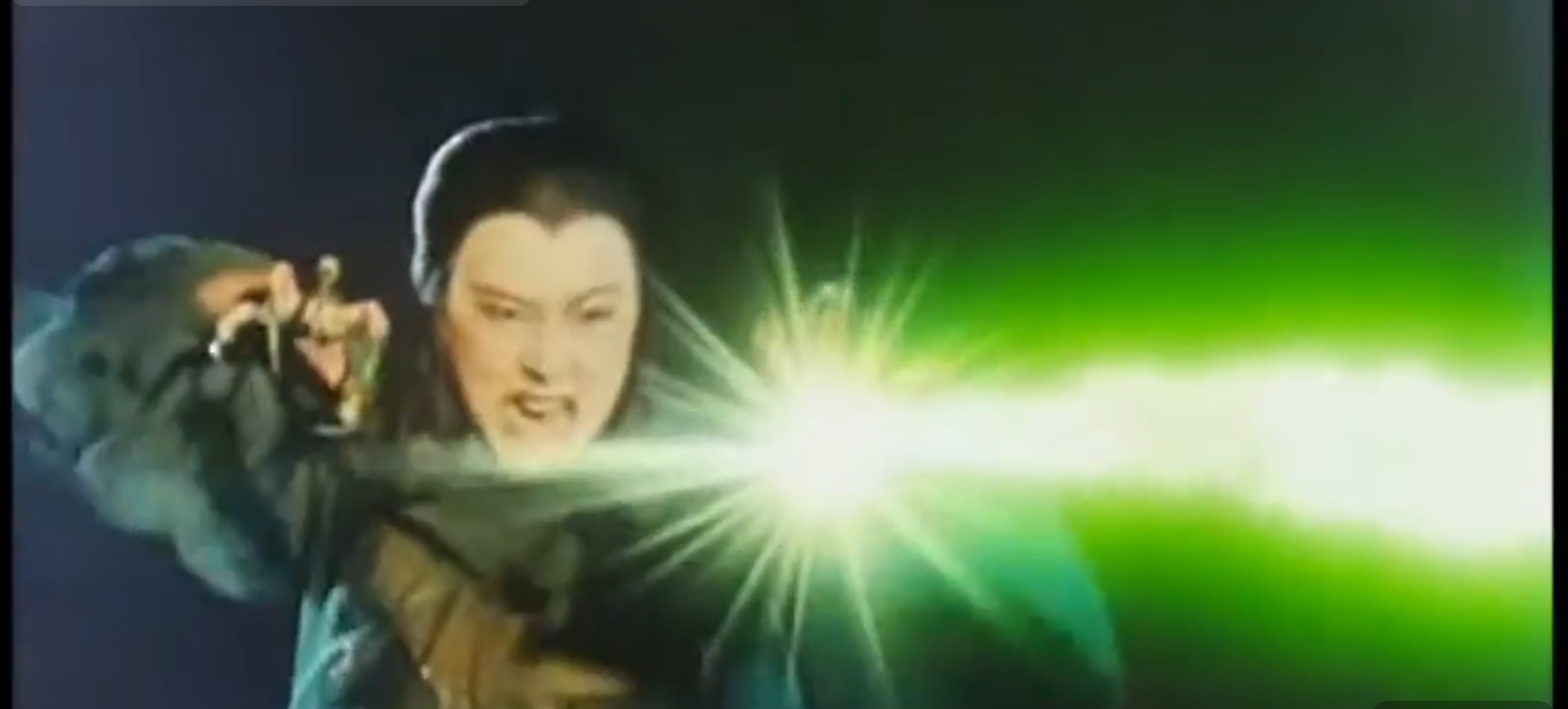
Pushing a few of the acting and character flaws aside and off the table, “School in the Crosshairs” is essentially manga embodied by live-action film.  There’s stellar mass group choreography near the beginning when the clubs merge for a rush invite to encourage recruitment, there is an extravagantly caped character in green makeup and a white afro wig, and there’s the painted-on-cell colorization I’ve mentioned a few times already that really ups the fantastical sci-fi features of Mayumura’s novel with a director like Nobuhiko Ôbayashi unafraid to get deep with saturation and long in experimentation.  Themes on fear of individualism, forced conformity, friendship, and the rise up out from that powerlessness feeling for what’s right showcase through metaphorical fascism, akin to the likes of the evil Nazi Germany party with a fear mongering nationalist’s convincing motivational speeches and confidence commands that seduce the ears of the waning high school minority, the academic kids, seeking alternative solace and a way to regain control as they are not as popular in contrast to those in clubs.  The Nazi tropes don’t end there as rounding up nonconformists, Nazi-like uniforms, and even a modified heil make their way into the overall story and that’s the darkest part in “School in the Crosshairs” light and airy jeopardizing of innocence and individuality. 

Catching a glimpse of Nobuhiko Ôbayashi’s pre-“Hausu” filmmaking brilliancy is now as easy as catching “School in the Crosshairs” on a North American Blu-ray release from Cult Epics.  The dazzling high-definition and an equally impressive, supplemented release is AVC encoded onto a BD50 with a 2K transfer and restoration of the original 35mm print and presented in a widescreen 1.85:1 aspect ratio.  The “School in the Crosshairs” restoration visuals need to be seen to be believed in a newly graded touch up that offers a glassy darker side within the fascism themes and a richer color palette to make the hued pinwheel spectrum a living, breathing character between good versus evil.  The grain comes through naturally on nearly all scenes with some of the shadowy moments favoring less delineation through the consistent optical texture.  The composited effects are boldly vibrant inside a creative streak that’s idiosyncratic only to Ôbayashi and are implemented into the live scenes with precision that doesn’t make it awfully clumsy or clunky.  Cult Epics made sure to cover any and all viewer’s at-home audio setup with three Japanese language options:  an uncompressed LPCM 2.0 Stereo, a Dolby Digital 5.1 Surround Sound, and a DTS-HD MA 5.1 Surround Sound.  Each carry their own weight and attributes with the LPCM 2.0 and DTS-HD 5.1 similar in fidelity, but the DTS offers an expansive girth that fills in the left and right channels of interdimensional ambience with laser strikes and gameshow tonal keys.  Dialogue is constructed through ADR that carries a level and balanced layer field and holding its own against the fantasy ambient that sometimes rises to meet the dialogue decibel; however, dialogue is clean and clear without any issues in clairaudience.  Newly improved English subtitles are optionally availably.  The set is quite complete, and likely comprehensive, with the physical and encoded special features.  Film critic Max Robinson offers a feature parallel commentary track, Phillip Jefferies provides a video essay on Nobuhiko Ôbayashi’s body of work in Sailor Suits and Sound, an Ôbayashi film poster gallery, and the theatrical trailer.  Physically, the clear Blu-ray Amaray case keeps inside the reversible cover art with both sides featuring the Japanese poster arts and housing that package is the limited edition cardboard O-slip with a fantastic compositional design by Sam Smith.  Inserted inside is the back cover unlisted, 22-page booklet full of black and white as well as color adverts, feature stills, characters bios, and other writings but all in Japanese, no English.  The 90-mean feature comes no rated and is region free.

Last Rites: More so now than ever in the current political climate, freedom of expression endangerment is the critical theme for Ôbayashi’s “School in the Crosshairs,” a color melange of resistance against the forces of evil hard to differentiate looking like our friends, family, and the everyday student.

“School in the Crosshairs” on a Cult Epics Blu-ray! Purcahse here at Amazon.