To be a Rich and Famous Rockstar, You Must Sign with EVIL! “Hell’s Bells” reviewed! (SRS Cinema / Blu-ray)

Sign Your Soul To Satan for the “Hells Bells” on Blu-ray!

A pair of middle-aged best friends and rockers named Arthur and Herb have minimum waged jobs, no ambitions, and two level-headed wives on the brink of divorcing them if nothing changes.  All the friends have is their band, Devil Music, and their glam rock music. Out of the blue, a music talent agent signs them in a heartbeat and before they know, Devil Music is rocking out to a packed-full arena full of adoring fans and obsessed groupies, raking in money beyond their capabilities of higher counting.  What they’re oblivious to is the band’s collective souls now belong to the Devil under the contract terms with the servile music agent doing the Devil’s fear-based bidding and whose life and soul hangs in the balance.  When the Devil comes to collect, sending his demonic minions to slay each member of the band, Arthur and Herb must find a way to save themselves from the Devil cancelling their life show forever. 

For over a decade now, filmmakers Jim O’Rear, who’s minor zombie role in George Romero’s “Dawn of the Dead” has launched a career in indie horror in front and behind the camera with “Hayride Slaughter,” “Three Tears of Bloodstained Flesh,” and the “Cruel Summer” trilogy,” and Scott Tepperman, who’s more recent filmography into the indie market also saw highlights of horror, have been in business together ever since co-starring in the 2013 haunted hospital flick, “Hospital.”   From then on, the two had formed their own production company, Los Bastardz Production, specializing in low-budget horror with a select entourage of talent.  The devil and his contract film, underscored with a rock-n-roll fame theme, released in 2020 is duo’s “Hell’s Bells,” a horror-comedy built around if it seems too good to be true, it probably is narrative.  “Hell’s Bells” is also produced by the two filmmakers.

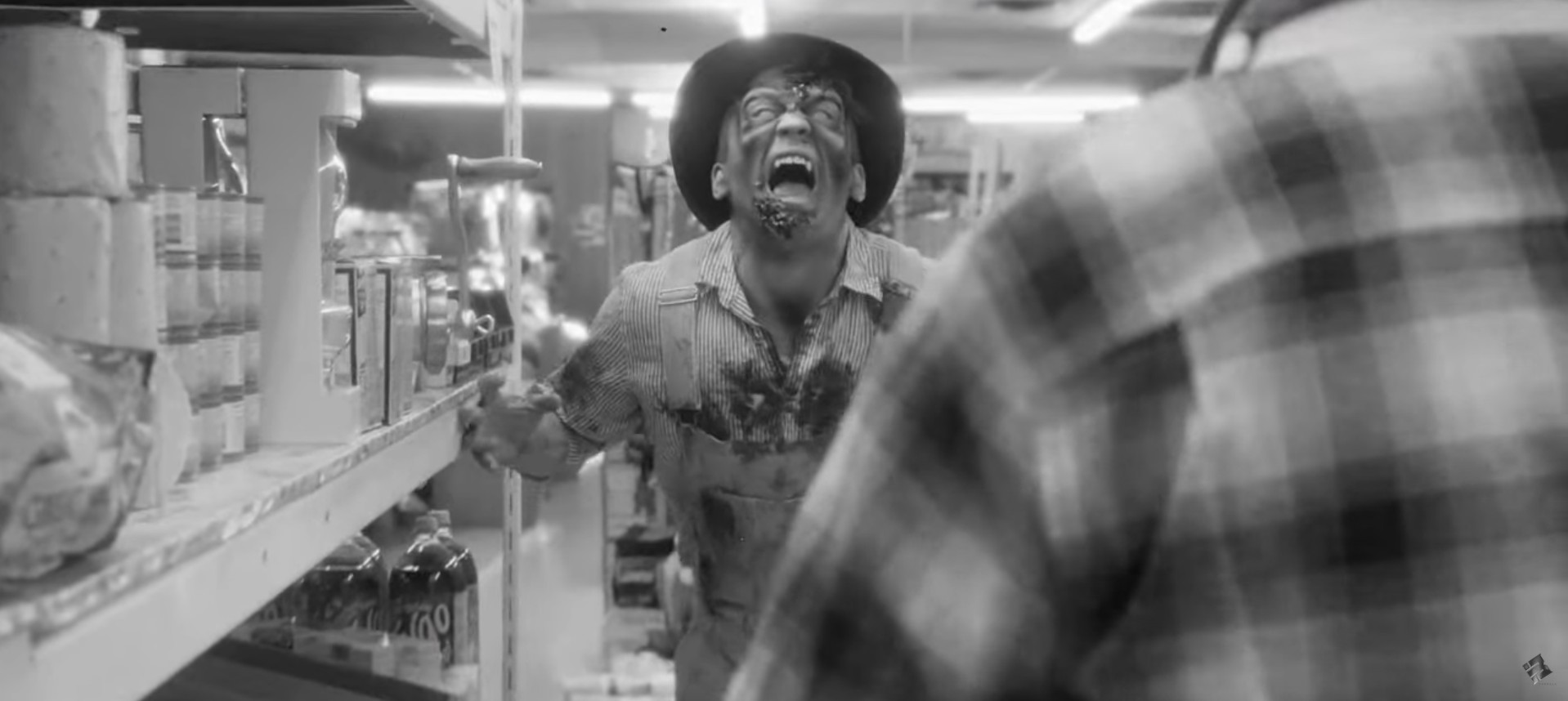
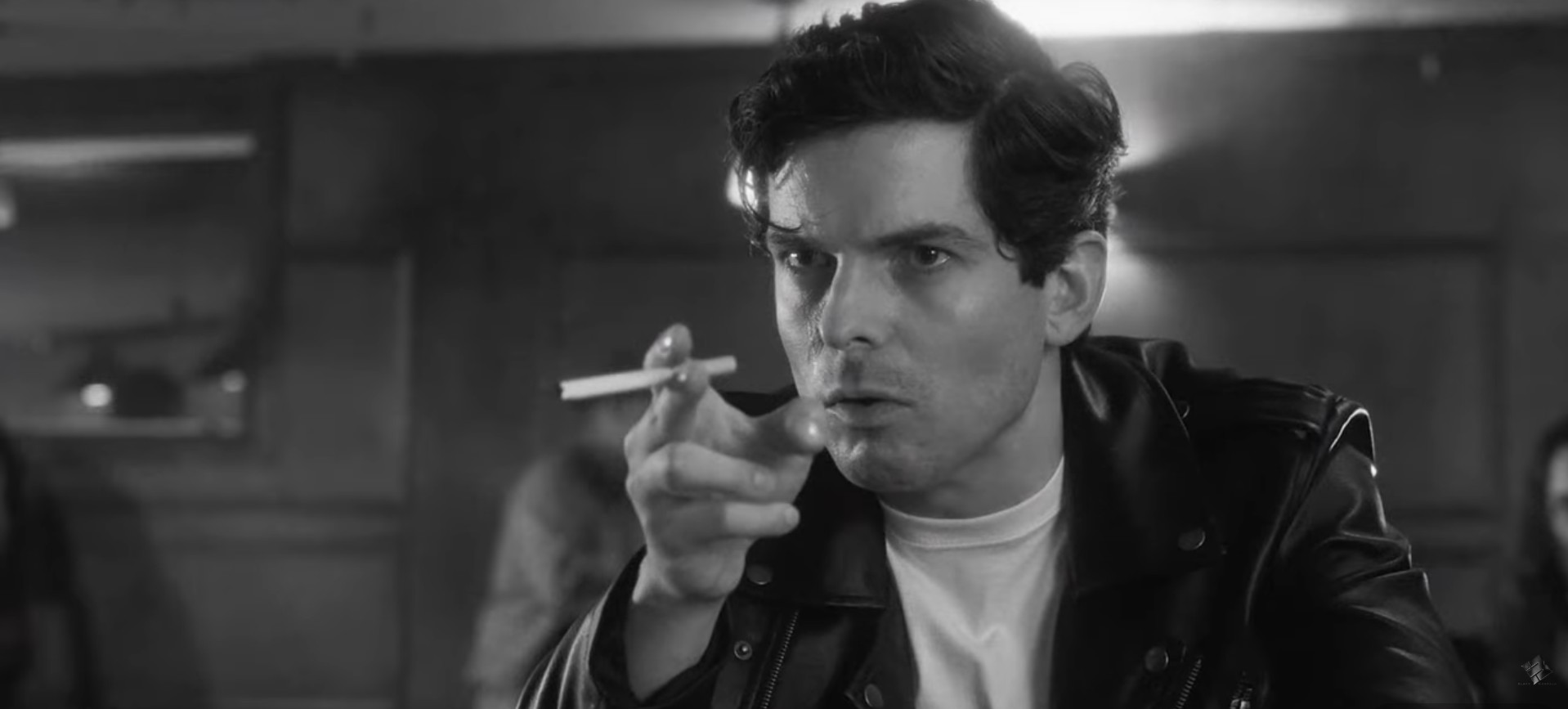
Like most of their produced product, it comes to no surprise that the Los Bastardz themselves, Jim O’Rear and Scott Tepperman step in the principal leads of a Beavis & Butthead or Bill & Ted type of heavy metal music centric duo who are daft beyond repair.  Any innovation aimed for the setup is instantly dissolved by the derivative tepidness as we’ve seen these characters before over the decades now, but O’Rear and Tepperman make for a good dimwitted and guileless pair with a gullibility and an innocence that makes them appear sympathetically simpatico, even when their levelheaded wives (Rebekah Erb, “Death Care,” and pornstar Layla Dawn. “Slumber Party Slaughter Party”) use threatening divorce language to motivate their one-track mind toward another desire in life.  The jokes are a bit long in the tooth and there are a handful of needless fart jokes, but the overall gags do land even if the terrain they contextually touch down on is rocky at best as they play to their individual character strengths of being a grocery bagger enthusiastic about making it big and a loafer who actualy has some intelligence underneath his Jesus hairstyle.  Their band mates, the cocky loudmouth drummer Vic (Paul Van Scott), the butch backup singer Shirley (Lisa Kirk), and the catatonic bassist Gary (Cameron Scott), all have their own quirks, and all are played by actors familiar with El Basterdz having donned roles in previously produced films from the company, such as the “Cruel Summer” series.  As the band Devil Music, they are targeted for soul reaping as a part of a contract byproduct against their music agent Caleb (Tom Komsar), drawn up by the devil himself in Marc Price (“Trick or Treat”) by duplicitous means with deceitful promises.  Without the horns, pitchfork, and red skin, Marc Price makes for a good Devil in human skin with only the economized visual effects fashioned glowing eyes.  Harold McLeod II preludes the story as a victim of contract, Cayt Feinics draws attention with a show of toplessness as Shirley’s lover, Jerry Reeves plays the demon x many going after Devil Music, and a sorely underutilized Jimmy Maguire, as the exasperated grocer manager tired of Arthur and Herb’s lack of common sense, fill out “Hell’s Bells” cast.

To preface with my previous experience with El Basterdz films, “Cruel Summer” didn’t do it for me with a dowdy slasher that’s didn’t leave impression.  Yet, “Cruel Summer” has two sequels plus a 4th soon to be on home video, making this series their most popular commodity.  What can I say?  Cinema is subjective.  That bad taste didn’t deter “Hell’s Bells” from the ever-growing review pile and a second chance to get this long-time horror fan aboard with Jim O’Rear and Scott Tepperman’s blithe outlook toward the horror genre, one that doesn’t take itself too seriously.  With that understanding, going into “Hell’s Bells” was rather easy with no expectations for commentative material and top-notch gags and laughs, but what El Basterdz provides has been long appreciated and continuously favored in genre films:  decent VFX, decent practical effects, and, of course, the provocation of nudity.  There may be times when films can get away with having only one of those key elemental pieces present with great immensity and intense projection that the film can’t be denied it’s due right to seen and heard as a well-made film but have all three and the formula works like a charm amongst genre fans no matter how bad the storyline gets and no matter how bad the acting is portrayed, leveling up a mediocre production to potentially the penthouse of the independent skyscraper.  To be fair, neither the story nor the acting in “Hell’s Bells” is atrocious but the technical aspects during principal photography and post-production throw the film off-balance into slapdash hogwash and that can be rather off-putting right out the gate for most audiences.

“Hell’s Bells” finds itself being a story having been told before, many times over in its airheaded budding duo faced with great task none think possible to complete, but O’Rear and Tepperman manage to befit themselves satisfactorily in archetype with a rock-n-roll nightmare by sticking to their character quirks and incorporating the backbone preferences of shoestring genre filmmaking.  SRS Cinema is a distributing house built on shoestring films and “Hell’s Bells” is another brick in its schlock-sturdy foundation with a Blu-ray release.  Encoded with AVC compression, presented with 1080p high-resolution, on a 25GB BD-R with the purple underbelly, “Hell’s Bells” looks pretty good for commercial grade encoding and minimal capacity.  Details are sharp enough to cause no concern to capture skin variations, the contrasting wardrobe textures, and the shifting compositions between reality and fantasy stemmed from visual effects and fade-in/fade-out montage sequences.   Scenes are mixed bag of grading, some more intense than others that are set with a brighter natural veneer, but all retain their intended quality without any substantial issues from compression.  The English language LPCM 2.0 stereo renders a mix of feeble commercial equipment and green technical knowledge that permits a large noticeable swing in all areas of principal sound recording with most of the pain points affecting dialogue with retreated vocal presence in certain scenes while robust in others, and even an in-moment change of the same scene at times.  Post sound design isn’t marred by the same scenarios that’s a clear as crystal with the added rock soundtrack, crowd cheers, and demonic gutturals.  No English subtitles are offered.  Special features include a commentary track with writer-directors Jim O’Rear and Scott Tepperman, a behind-the-scenes featurette, Arthur and Herb’s Devil Music music video, blooper reel, the feature trailer, and SRS Cinema catalogue trailers.  SRS Cinema’s Blu-ray mirrors their limited 100 count release without the director’s signatures, retailed with a regular Blu-ray Amaray case with illustration composition artwork of mostly the chief principal characters, and as always, the graphic artistry SRS uses is always 100x better the film.  There are no other physical accompaniments.  The not rated release has a runtime of 80 minutes and has region free playback. 

Last Rites: Throw up the sign of the devil horns for “Hell’s Bells’s” comedic contract with a hair metal Satan, but don’t let this narrative fool you by hawking new something old and done before.

Sign Your Soul To Satan for the “Hells Bells” on Blu-ray!

A Bond of Friendship Formed Over an EVIL Annual Contest. “The Long Walk” reviewed! (Lionsgate / Blu-ray)

“The Long Walk” on Blu-ray for the Holidays!

Over a decade ago, a divisive civil war nearly tore the United States of America apart, leaving in it’s wake a country on the brink of financial ruin and its place in the world behind other nations.  To help heal the nation back into an industrial superpower, an annual long walk was enacted to be a show of encouragement, an act of bravery, and to instill a sense of duty and production amongst the citizens of America.  Voluntary participants of young men, one from each state, must walk continuously at 3 ore more miles per hour with a military escort.  Last man standing will be bestowed a large cash prize and granted one wish of their choosing.  Those unable to continue their trek at the required pace will be issued three warnings before being gunned down, punching out their ticket.  Home state’s Ray and Georgia’s Peter form a bond on their walk that’ll test not only their friendship but their will to live in hopes to change the contest’s cruelty.  

“The Long Walk” has itself been on a long walk to being adapted on film from the first official novel by the prolific and renowned suspense writer Stephen King under his pseudonym of Richard Bachman.  I’ve italicized official because the late 60’s novel wasn’t published and released until 1979, five years later after “Carrie” was published in 1974.  Through the hands of George Romero and Ridley Scott, neither could materialize a filmic rendition of what is considered his most grim work.  That is until “Constantine,” “I Am Legend,” and “Hunger Games” director Francis Lawrence came along, acquired the rights, hired “Strange Darling’s” JT Mollner to script the project, and produced perhaps the most disturbed dystopian film of 2025.  “The Long Walk” feature is a collaborative production from Spooky Pictures, Electric Lady, and Miramax, is produced by Steven Schneider, Francis Lawrence, Roy Lee, Cameron MacConomy, Rhonda Baker, Ellen Rutter, and Carrie Wilkins, and has been given executive producer Stephen King’s blessing for minor, yet impactful, creative control.

“The Long Walk” courses with a young but up-and-coming cast with a veteran icon bringing up the rear as coxswain spurring the unpleasant action.  “Licorice Pizza’s” Cooper Hoffman, son of the late Philip Seymour Hoffman, and English actor David Jonsson whose just came off his part in a big science-fiction horror franchise with “Alien:  Romulus” from last year.  Together, Hoffman and Jonsson play the central characters of Ray Garrity and Peter McVries, two young men who formulate a bond while voluntarily participating in the annual deadly contest that traverses for hundreds of miles through heartland portions of an undisclosed state.  Right from the get-go, Ray and Peter hit it off as the check in for the contest simultaneously upon arrival with the story quickly introducing and discerning a select sundry of other walkers that are either in it to make friends, be an in-it-to-win-it antagonists, or be a formidable indifferent with a spectacular end to their ticket or otherwise arc toward either direction.  In these walk-along parts are Ben Wang, Charlie Pummer (“Moonfall”), Joshua Odjick, Tut Nyuot, Roman Griffin Davis, Garrett Wareing (“Independence Day:  Resurgence”), and Jordan Gonzalez supporting the Ray and Peter narrative with their own in-state regionalism and dialect backstories and motives for sacrificial strutting, which their exit that much more poignant.  Then you have Mark Hamill, who needs no introduction, in a performance on a totally different plane of existence than the young man walking for their very lives.  Blind to compassion and stern on his belief sacrifice is necessary for the greater good of the nation, Hamill as no nonsense brass, known only as The Major,” is a mythical figurehead initially held in high esteem and awe or overall indifferent amongst the young men.  All except one with Ray being the firm outlier of contrarian using passive aggressive measures that build to an endgame goal.  Sporting large aviators, green fatigues, and occasionally holding and firing a sidearm, Hamill’s method ways really come alive within The Major’s gung-ho disposition inside an authoritarian America.  Judy Greer (“Jurassic World”) and Josh Hamilton (“Dark Skies”) round out the cast as Ray’s parents. 

No matter how grim “The Long Walk” spans the 108-minute runtime, the story isn’t necessarily all bleak.  While the time period is unknown and the war that has seemingly divided the nation goes unsaid, one can assume the decade is late 1960s to early 1970s based off the military fatigues and weaponry, the dialect and slang vernacular, and the outer shell of the world with clothing, cars, and storefronts that speak to a simpler time where no cell phone exists, transmitter radios are the news and music, and the presence of any modern-day convenience lost amongst the vast fields and deprived brick-and-mortars of small town America.  Yet, the story walks along the lines of some alternate, dystopian reality, pre-dating a “Hunger Games” like contest involving the permanent elimination of young people in effort to better society.  Fortunately for “The Long Walk,” director Francis Lawrence directed “Hunger Games” and that gives him a leg up on the tone this adaptation needed for the big screen but although the two share a similar theme, the differences between them are vast with “The Long Walk” set in a past instead of a future dysphoria, objects and places are established and grounded by reality rather than creative fiction, and the violence is by far the grislier.  Often, violence can be gratuitously supplemental and unaffecting but Lawrence’s intention to show closeup executions contrasts with weight against the boys’ bond building during their fear and their ambition test.  With every explosion of brain matter and bits of flesh the stakes are real and the tension is thick even if the panic is subdued amongst the walking competitors.  Yet, with every ticket punched, that tightness starts to show signs of shuttering in conjunction with fatigue and that carries on for miles.  Much like the film adaptation of Frank Darabont’s “The Mist,” the ending for “The Long Walk” has been altered from the novel with prior Stephen King approval and while “The Mist” absolutely shatters all the hope with tons of despair and irony in a blaze of glory ending where one’s heart drops like a cannonball in the ocean, “The Long Walk’s” finale barely fizzle to make the same impact and can even be said to be a predictable modern moving ending. 

“The Long Walk” puts one foot in front of the other toward a new Blu-ray release from Lionsgate.  The AVC encoded, high-definition presentation in 1080p, is stored on a BD50 with a widescreen 1.39:1 aspect ratio.  Sharp detail in the small percentage desaturated picture offers a mid-20th century America air along with the costuming and production sets and locations.  Fabric textures result better in sweat-induced cotton Ts overtop a variety of muted shaded pants and solid army fatigues while the rest of the landscape has a green, brown, and tan landscape of a scarce Midwest, harnessing widescreen and medium shots for the open terrain that equally freeing and beautiful yet also confining and harsh in the grim, dystopian contest; however, the textures take a back seat to the chunky bits of exploded flesh, blood, and brain matter splattering either in gray and painted asphalt or spreading amongst the wind.  While the detail doesn’t provide all the gory bits and pieces there’s enough there to really cause alarm from within.  The English Dolby Amos is the primary English track for best to enclose the immediate space surrounding the 50 State participates feet hitting the pavement and the escorting military convoy tank and wheel tracks.  Gun shots are jolting that tear into the audio senses in step with the graphic nature of the scene of apathetic militaristic executions.  There are curious post-execution sounds from the blood pooling on the street in what sounds like a continuous gush of blood that hits the side channels; its an odd action for sound to take audible shape, especially in scenes that are not an extreme close up but rather materialize out of medium shots.  Dialogue is perfectly suitable in the conversational piece between the young men and the gruff Major.  Other audio format choices include a Spanish Dolby Digital 5.1 and a French Dolby Digital 5.1.  There are also an English 2.0 descriptive audio and subtitles in English, Spanish, and French.  Special features include feature length documentary Ever Onward:  Making the Long Wal” with crew – such as director, writer, and DP – and cast – including Cooper Hoffman, David Jonsson, Garrett Wareing and more – interviews discussing the depths of “The Long Walk” from A-to-Z, from it’s previous adaptation concept rights held in limbo down to the individual character mindsets.  Two theatrical trailers are the only other special features encoded.  Lionsgate Blu-ray Amaray case is encased a O-slipcover with straightforward (pun intended) artwork that’s also on the case artwork.  The digital copy leaflet is inside for digital moving watching pleasure.  The 108 minute film is encoded region A and is rated R for strong bloody violence, grisly images, alcohol, pervasive language and sexual references. 

Last Rites: An intense and somber America born out of division and fear is a reverse reality, an alternate take on what could have been or could be soon, as “The Long Walk” glorifies sacrifice as a scapegoat for national pride, strength, and the greater good in a warped sense of authoritarian rule and industrial encouragement.

“The Long Walk” on Blu-ray for the Holidays!

No One Can Hear You Scream in EVIL Found Footage Space! “V/H/S/Beyond” reviewed! (Acorn Media International / Blu-ray)

Go Beyond the Limit with “V/H/S/Beyond.” Now on Blu-ray!

Six new tapes push the boundaries of what we know is true and what we know as reality.  Six new tapes confirm that we are not alone on this Earth or even in this universe.  Sex new tapes shows the horrors beyond our plane of existence and into another dimension of fear of the unknown.  A special tasked police force raids a house horded by violent, brainless baby-nappers only to discover the horrible creature lurking in the attic.  A megastar under the pressures to perform breaks from the mortal chains of human greed and power.  Skydiving friends encounter an alien attack miles above the Earth surface.  A doggie-daycare aims to transfigure and train people to sit, rollover, and behave like good, obedient hybrid canine creatures, a woman determined to find proof of extraterrestrial’s in the Mojave desert found curiosity didn’t just kill the cat, it also brought it back to life to kill it again and again and again, and a two flea market bought VHS self-tapings quite possibly reveal the horrifying truth of if we are alone in the world.

The next grand tour through “V/H/S” horror has entered orbit!  “V/H/S/Beyond” abducts and probes our fear receptors with invasive and terrifying cold instruments of science-fictional horror tales.  “Beyond” marks the 7th entry into the found-footage anthological franchise formed over a decade ago in 2012, created and produced by genre devotee Brad Miska under his founded, longstanding horror website Bloody Disgusting, and this entry’s theme “Beyond” denotes a sci-fi flare from the hellish man-made creations to vicious visitors from the void above.  Miska returns as producer alongside Josh Goldbloom, James Harris, and Michael Schreiber all of whom have been a part of the series since 2022’s “V/H/S/99.”  Cinepocalypse Productions, Studio71, Spooky Pictures, and Shudder serve as coproduction companies for the shorts directed by Jay Cheel “Abduction/Adduction,” Jordan Downey “Stork,” Virat Pal “Dream Girl,” Justin Martinez “Live and Let Dive,” Christian and Justin Long (yes, that Justin long from “Jeepers Creepers” and “Tusk”) “Fur Babies,” and Kate Siegal “Stowaway.”

“Beyond” introduces a variety of situations, mostly flipping between man-made mistakes to alien encounters, with a medley of spirited characters to shepherd the shorts where they need to end in a timely outcome.  Each found footage story is inherently different with no two situations nearly alike, keeping to the same synonymous rhythm that has garnered fandom for the “V/H/S” anthologies.  The wraparound segment has the facsimile of a mystery documentary of two flea market purchased tapes that are believed to be evidence of alternate life beyond this universe with mock interviews given by the actors casted in the film – Brian Baker, Gerry Eng, Sam Gorski, Mitch Horowitz, Wren Weichman, and Trevor Dow discussing the history of tapes and the house they’re filmed in, social alien background and perception, and determining if the tapes are authentic.  Like all the other wraparounds, story progression is interspersed between the five other shorts with the first being “Stork” where the special police task force W.A.R.D.E.N. takes the fight to the paranormal.  Officers Broome (Thom Hallum, “Bull Shark”), Aubert (James C. Burns, “Lake Dead”), Bennet (Jolene Andersen, “Doctor Death”), Ivy (Tyler Andrews), and E.T. (Vas Provatakis, “Children of the Pines”) storm an infested monster house with rookie Segura (Phillip Andrew Botello, “Devil’s Revenge”) to save stolen infants.  From here, paparazzi Arnab (Sayandeep Sengupta) and Sonu (Rohan Joshi) find themselves at the mercy of an all-powerful and vengeful goddess in megastar Tara (Namrata Sheth), birthday boy Zach (Bobby Slaski, “White Terror”) finds himself free-falling into an alien invasion, doggie daycare owner Becky (Libby Letlow) is dead serious about Frankensteining the purrfect fur babies, and UFO researcher Halley (Alanah Pearce) will find that discover the truth will be a painful purgatorial experience.  “Beyond” brings a wide range of talent to the table with ensemble casts, streamers, Bollywood actors, and solo preformists to exact another side of fear for the franchise with a principal supporting cast rounding the anthology with Virat Pal, Rhett Wellington, Hannah McBride, Matthew Layton, Braedyn Bruner, Phillip Lundquist, and Kevin Bohleber.

One would think an anthology series built upon the idea of a found footage would eventually become stale amongst the public who are feeling the fatigue of an overused subgenre, much like the zombie subgenre in the early 2000s to early 2010 where every George Romero wannabe with a handheld camera set out to either homage or hit it big with the next undead head success.  Found footage is currently, or rather vaguely, in the throes of being overworked because of how cost efficient and effective films of its ilk can be to those inspired to create.  However, the “V/H/S” series hits differently.  For one, it’s an anthology series that brings a fan of imagination to its whole and we’re not subjected the one type of found footage narrative as dissimilar styles, tastes, direction, writing, etc., converge by means of short films.  Another element of “V/H/S” staying power is the series created and developed by genre admirers, such as Brad Miska whose veins course with literally nothing else but the blood cells of the horror.  Lastly, “V/H/S” continues to evolve by colliding past and present, nostalgia and current, and myth and fact together with a serrated surrealism that can thrill you with, often times, hell on Earth entertainment as well as scare the living bejesus out of you.  “Beyond” maintains the trend by coming out of the 80’s and 90’s vibe from the last three installments and diving headfirst into beyond the scope of traditional monsters, terrestrial creatures, and iconic monsters for nothing born of his Earth, such as with the wraparound story, “Stork,” “Live and Let Dive,” and “Stowaway,” and nurturing more a mad-science madness in “Dreamgirl” and “Fur Babies.”  A possible detriment to “Beyond’s” ability to connect with fans of fear and frights with the latest entry leaning heavily on the physical side of action-gore that sometimes is a tall order of campiness rather than the instillation of underlaying, psychological terror aside from the Mike Flanagan (“Oculus,” “Doctor Sleep”) penned “Stowaway” that evokes some segregated space isolation and a death-defying situation that still feels the repetitive painful sting.

“V/H/S/Beyond” lights up the night sky with blood red intergalactic splatter and takes mad science to a whole new abominable level with a new Blu-ray from the UK label Acorn Media International.  The AVC encoded, 1080p high-definition, BD50 presents the film in a widescreen 1.78:1 aspect ratio with an occasion retro-slip into pillar box 4:3 for that VHS façade.  Image presentation ranges because of the home movie, handheld camera, and body cam found footage trope that’s this series bread-and-butter.  Through the intended static, interlacing and tracking lines, fuzzy darkness, quick movements, and mostly whichever video interference objects one can think of, minus authentic celluloid print damage, to pseudo-sell found footage realism.  The outcome is superbly effective and highly captivating albeit moments that are too agitated to understand and connect objects and sounds in the narrative, another part of the collective that makes it effective yet also makes it wasted runtime space for viewers.  What’s not wasted is the chainsaw point of view in “Stock” where ripping through and decapitating monsters has DOOM inspiration all over it. A majority English with some Hindi DTS-HD 5.1 surround sound mix is, too, designed to mimic the gimmick of handheld found footage. Distortions and other audio mic cuts and external interference on the audio system are included to sell the illusion and are often done at great detail in time, overlay, and spatial fractions in-between viewer and what the view is experiencing on screen. Depth is mostly front loaded within the context of first-person viewpoints while the surrounding channels take a subtle backseat but whisper through when there’s a sound behind the camera. LFE charges in during more rambunctious moments, which there are a lot of, and are not quelled for the sake of dialogue that’s mostly discernible when necessary. English subtitles are available. The encoded special features on a static menu include the pre-visuals of explosions, disintegrations, and free-falling bodies on the practical skydiving of the cameraman explain how many jumps were needed to put the pieces altogether for that breathtaking scene at 20,000 miles in the sky, actress Libby Letlow’s audition tape for Becky in the “Fur Babies” short, the making of “The Dreamgirl,” a behind the scenes of “Stork” with IGN, and the how the timelapse was created in “Stowaway.” Physical areas of the releases are about the same other Acorn Media Releases with the thicker UK Amaray casing that has the illustrated cover art of the “V/H/S” thematic skull worked into the swirling steller-laden of scary space. Inside is just the disc pressed with the same image art. UK certified 18 for strong violence and injury detail, “V/H/S/Beyond” has a runtime of 114 minutes and is not noted on the back cover in regard to the region playback, usually Acorn Media releases are hard encoded with region B, but this particular release play on a Region A setting and could be very well region free.

Last Rites: The “V/H/S” team continues to maintain a sustainable supply of fresh meat for the grinder in relation to its current theme. Plenty of splatter, mayhem, lunacy, and backbone quivering chills to get lost in “Beyond’s” cosmic Hell. Can’t wait to see what’s next in store for the anthology!

Go Beyond the Limit with “V/H/S/Beyond.” Now on Blu-ray!

Is He an EVIL Vampire or a Just a Disturbed Young Man? “Martin” reviewed! (Second Sight / 4K UHD & Blu-ray)

Note:  Screen Caps do not reflect the Second Sight's A/V on this release.

“Martin” Limited Edition Second Sight Release Available at Amazon.com! 

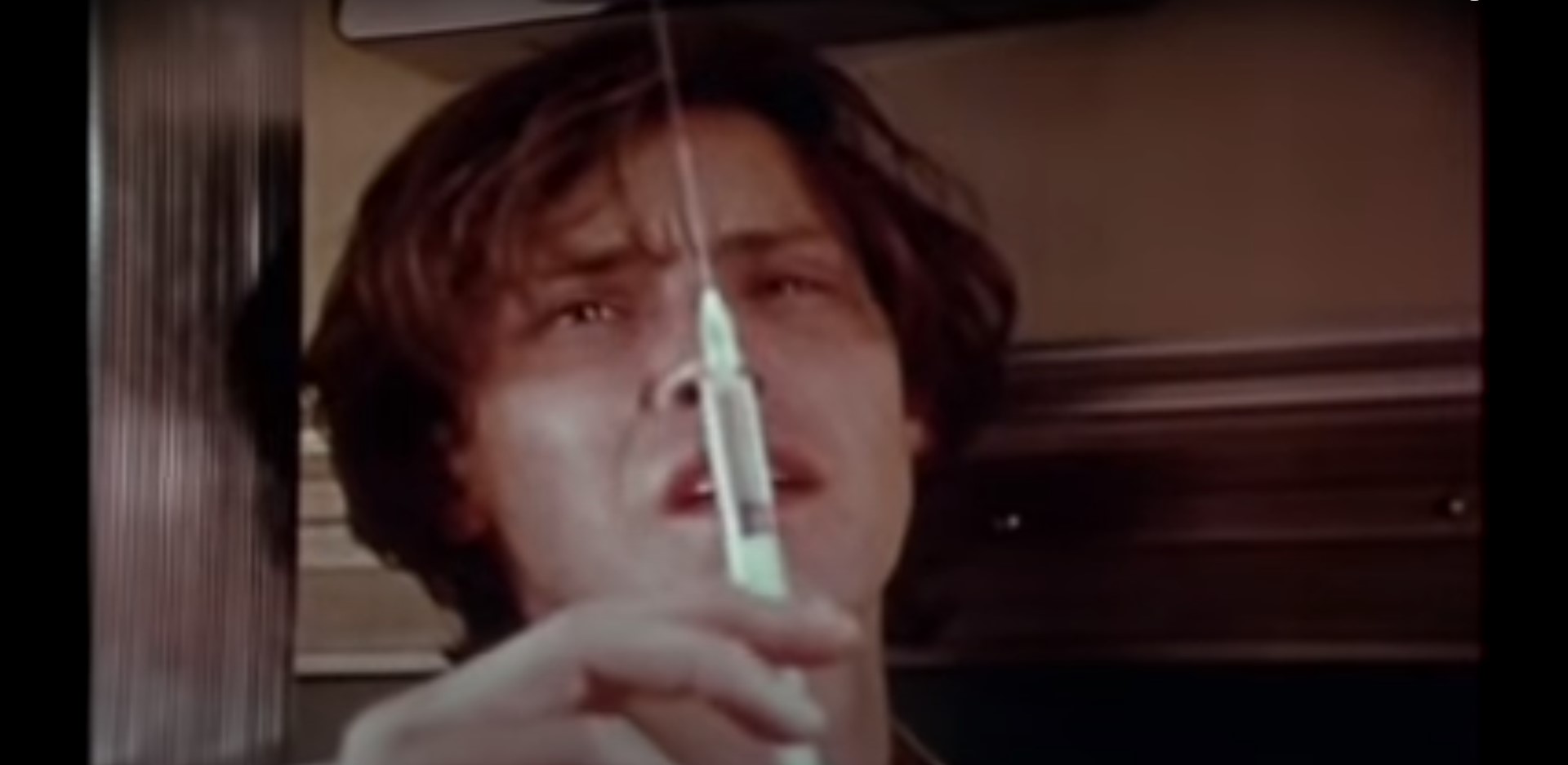
Martin, a young man from Indianapolis and upon recently lost his mother, travels by train to Braddock, Pennsylvania where he’s greeted by his elderly cousin Cuda, an old world believer that Martin has been selectively plagued by the family curse of vampirism and will take Martin in under his roof to cleanse his soul of evil, even if that means destroying him.  Though he doesn’t believe in the vampiric superstitions and the movie depictions, Martin truly believes he’s an 84-year-old vampire and does kill young, beautiful women to intimately drink their blood.  Being reserved and shy gives Martin an advantage to observe his potential victims from afar after gaining employment working as a delivery boy out of his cousin’s shop.  Cuda’s granddaughter, Christina, believes her lonely cousin’s mental illness is being exacerbated by grandfather’s archaic and draconian beliefs, fostered by a family history based off tradition rather than science.  When Martin meets an interested housewife on one of his delivery runs, the need to consume blood trickles when sex enters the picture, but also induces slipups in his well-oiled drug and drink operation whenever the need to feed becomes too much.

By now, “Martin” needs no introduction.  The father of the flesh-eating zombie, George Romero, delivered a neo-realism take on the vampiric mythology nearly 50 years ago in 1977.  “Martin” became the writer-director’s first all around filmic success after being royally screwed by the Walter Reade Organization for having failed to copyright the prints on the trailblazing and timeless classic “Night of the Living Dead,” the reason why you see so many Tom, Dick, and Harry remakes, revisions, sequels, and such of the 1968 black-and-white film that introduced zombies as flesh eaters, and a pair of box office failures that kept Romer in severe debt until slipping into business bed with producer Richard P. Rubinstein, the associate producer for Romero’s “The Amusement Park” and who would collaborate with Romero as a producer for the next subsequent decade years.  Filmed on location in the societal and industrial crumbling Western Pennsylvania town of Braddock, “Martin” remains one of George Romero’s quintessential and provocative pieces of work outside The Living Dead series under Rubinstein and Romero’s The Laurel Group production company.

In the titular role is the introduction of John Amplas who was discovered by Romero after watching Amplas in a play and the entire lead principal was reworked to accommodate Amplas boyish youth.  Amplas is instrumental to Martin’s success in a handful of ways:  the Pittsburgh native knew how to properly slink in an unsuspecting manner, he also didn’t overbear scenes and costars with a larger-than-life presence and could dip into this awkwardly retrieved guilt for the premediated murder to fulfill a need that either’s supernatural or unnaturally mental.  Amplas could walk that thin line that keeps the audience wondering how much Martin says and does is actually true or a misconception because of mental illness and this is coupled nicely with Romero’s direction, splicing in black-and-white scenes of gothic-laden, theater-esque vampire flashbacks that could either be a delusional reality or a very real backstory to Marin’s cursed heritage.  Polarizing external family forces in his elderly cousin Cuda (Lincoln Maazel, “The Amusement Park”) and age akin cousin Christina (Christine Forrest) combat on an emotionally taut and verbal levels between their corresponding character qualities of superstition and science that parallel Martin’s eventual damnation or salvation.  The principal trio are tightly compacted to strain the dynamic with a back-and-forth debate over which truth is behind Martin’s troubles.  Romero pens a good case for both by never fleshing out a legitimate truth all the way through to the end; instead, it’s a battle of save Martin from himself who understands the problem, wants to deal with it, but barely takes up arms to combat or even face his issues.  Special F/X legend Tom Savini, pre-trademark inky black mustache and goatee, makes his debut role as Christina’s boyfriend Arthur who serves only as a device to pull reason away from the table in a conflicted measure to pressurize Christina’s capacity beyond the limits of also caring for herself.  Eventually, Christina has to make a decision and, ultimately, choses herself to save, leaving Martin to fend against a sternly superstitious and old world Cuda.  Sara Venable, Roger Caine (“Dracula Exotica”), Donaldo Soviero, Francine Middleton (“The Love-Thrill Murders”), and Elyane Nadeau make up the supporting cast.

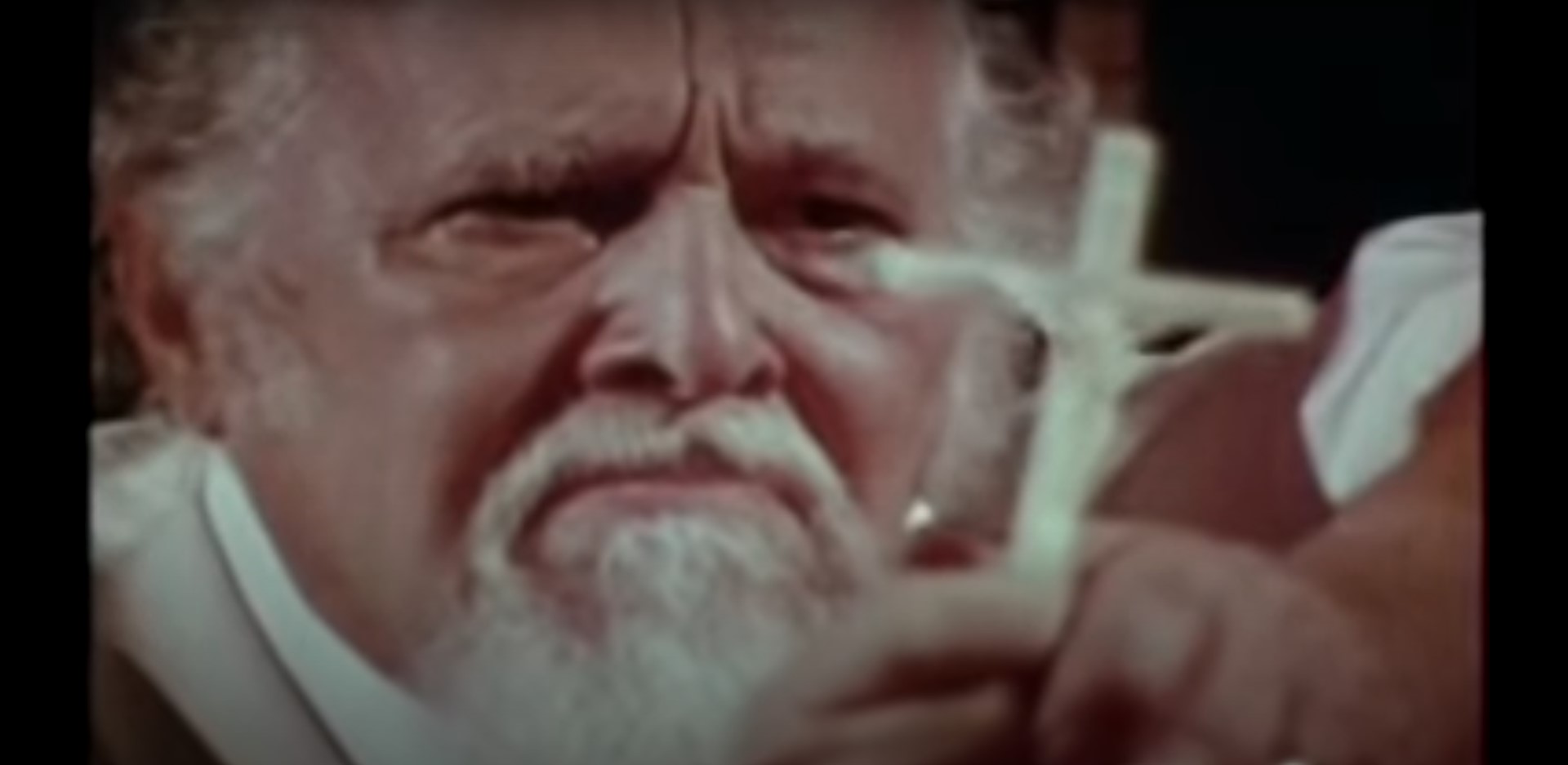
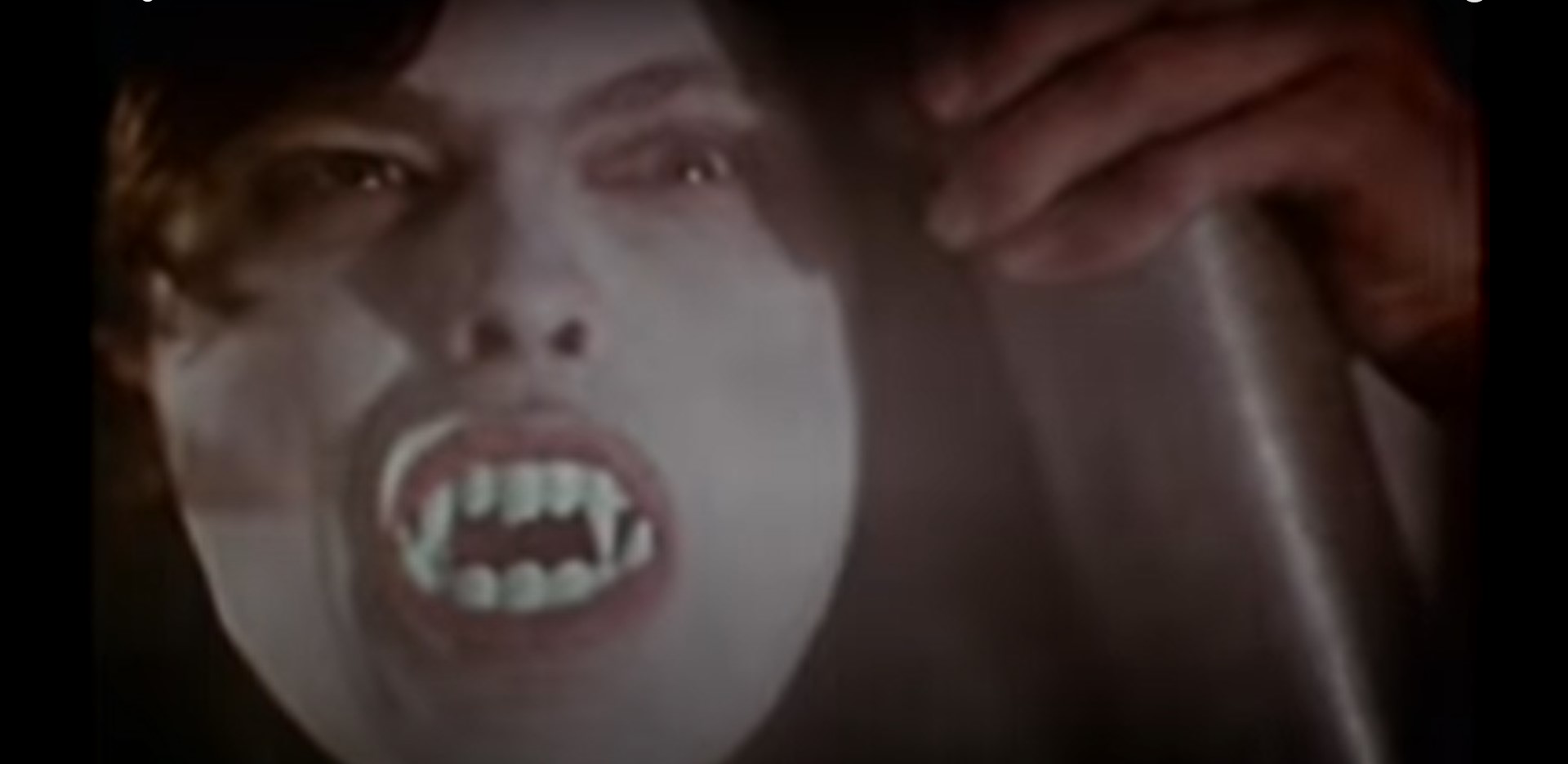
George Romero, again, redefines, or in a more fittingly descriptive – revamps, classic horror villainy that replaces the supernatural element with a realistic approach to weave the very fabric of horror into possibility while still hinting at something beyond the limits of reason.  “There is no real magic.  There’s no real magic, ever!” says Martin about the theatrical stereotypes used to display vampires in attempt by Romero to disenchant us from the ideologized mythos, the habitual characteristics, and the physiognomies of what we consider to be a night bloodsucker.  During that scene between him and Cuda, the words are potently effective in disapproving myths about vampires, but the words are supported with fact as Martin casually debunks garlic, crosses, and sunlight as vampiric weaponry at the expense of humiliating and entertaining Cuda.  “Martin” is at the forefront of being an allegory for loneliness and is a driving reason for presumably the real vampire’s gruesome habit to slice open wrists and drink blood.  Martin only targets young, beautiful women and becomes intimate with them while they are limp under sedation.  When he meets an equally lonely Mrs. Santini, a depressed housewife on the verge of an emotional collapse, and the two embrace each other with comfort against what dispirits them; disinterested in stalking her, Martin’s need to kill dampens and Mrs. Santini unhappy marriage in nullified by the young who listens more than speaks.  Maturity and youth meld together in a moment of peace between them but their bond still shows micro fissures of incompatibility that puts doubts into Martin’s 84-year, carefully planned practice and also doesn’t save Mrs. Santini completely from her too-little-too-late despair.  Braddock, Pennsylvania, a small town sinking into the slumps of becoming forgotten, is a once industrious backdrop integrated as a metaphor for being a forsaken place where things go to die.  Martin is sent to Braddock to paradoxically be cared for by a cousin determined to destroy him because of a family curse that afflicts select generations in what can be perceived as butting of heads between the defiance of angsty youth versus the traditions of an older individual set in the world with their linear ways of thinking.  

As aforementioned, “Martin” is a cult classic from one of the most notable masters of horror and as a film, “Martin” can stand on its own two feet on any format.  However, with that being said, UK home entertainment distributor, Second Sight, celebrates this early George Romero razor-edged thriller with a definitive 3-disc, 4K and Blu-ray release jammed back with software and firmware bonus content that fans can really sink their teeth into for a lifetime.  The limited edition UHD and Blu-ray O-slip box presents a 4K and 2K scan and restoration of a 35mm duplicate negative (note:  not from the original 16mm source) that has been supervised and approved by director of photography Michael Gornick and presented in the Academy aspect ratio of 1.37:1.  Considering the blown duplicated source of a 16mm grade, the 4K UHD scan on the BD66 won’t live up to 4K potential, as some may expect.  There’s quite a bit of varying levels detail discernibility, some shots look better than others, but the overall restoration renders a better than it’s ever looked product with natural grain and damaged reduced to some blue stock flaring around the side and edges, especially during night scenes.  Shadows looked deeper than previous versions, meaning that tenebrism isn’t lost amongst a softer image but rather creates depth with the additional of better sharpened edges to outline objects between the light source  Some speckle debris filters through at times but not enough to cause major concern with the overall experience watching and enjoying the restoration that has HD enhanced grading to make blood that richer technicolor coral color used in my subsequent Romero “Living Dead” films up to “Day of the Dead.”  The Blu-ray’s 2K works just as well due to the scrappy source equipment of what the budget allowed, delivering a fine product of the best transposed transfer known to fan kind and beating out the Lionsgate’s warming grading with a cooler, more hardline detail and delineation picture. The massive release comes with three audio options – an English DTS-HD 5.1 surround sound, an English DTS-HD 2.0 stereo, and an English DTS-HD 1.0. Though Martin audiophiles will likely gravitate toward a multiple channel output, “Martin” is one of those select features that does better in a less-is-more return by not forcing the limited and stronger signals, such as the dialogue and Donald Rubenstein’s experimentally spiritual score, to encoding competition with the milieu ambient and boom recorded sound effects, that for the most part, are background support for the bigger, better one-two punch of clean, clear, and presently full dialogue and a consciously curated soundtrack to walk with Martin every step of his journey. There’s a pinch of popping and a low-emanating droning that very discreet and negligible that won’t affect the experience on bite…I mean bit. English SDH are optional. Bonus materials are what shape the Second Sight releases to be greatly desirable amongst fans as the company continues to produce high-quality encoded bonus features as well as carefully and professionally organized tangible items inside the box. Both 4K UHD and Blu-ray have the same encoded bonus features that include four audio commentaries of old and new. The two archived commentaries include George Romero, John Amplas, and Tom Savini in one set and the other with Romero, Savini, Richard P. Rubenstein, and Michael Gorrick. The new commentaries are with Kat Ellinger, editor-in-chief of Diabolique Magazine, and the second with the recently deceased film curator, Travis Crawford. A vintage 2004 documentary from the Lionsgate release is included in the set with remarks from Romero, Savini, Gorrick, Donald Rubenstein, and Christine Forrest along with a new documentary echoing much of the 2004 doc, in collaboration with Severin Films, with John Amplas, Michel Gorrick, and Tom Dubensky strolling through Braddock, which hasn’t seemingly changed from the depths of poverty, on a raining day recalling nearly every moment of production during principal photography. The new doc includes other insights from Forrest, Savini, Tony Buba, and Sarah Venable in what feels like a complete celebration and overview of their entire journey through Romero’s personal favorite film. Donald Rubenstein also has a new interview discussing his score and meeting and working with Romero on a positive level. The disc features round out with one of Tony Buba’s short films “J. Roy – New and Used Furniture” revolving around the town of Braddock and the trailer, TV and radio spots. The third disc is the CD form of Donald Rubenstein’s soundtrack laid out in 22 distinct musical numbers. The limited-edition exclusive contents include a rigid O-slip case with a simple, yet effective sterile while and red font color contrast with MADE IN U.S.A. augmented razor blood with vampire teeth and blood dripping from the bottom right corner and a blood dripping cross squarely centered on the back. Inside the slipcase, a thick 104-paged color booklet with new in-depth essays and insights from Daniel Bird, Miranda Corcoran, Heather Drain, Kat Ellinger, Andrew Graves, Alexandra Heller-Nicholas, Elena Lazic, Stephen Thrower, Jon Towlson, Simon Ward, Tony Williams and an interview with Tony Buba by Travis Crawford. The booklet also contains colorized, behind-the-scenes photos of production and numerous one-sheets, promotion poster and ads, and a beautifully, expressionistic illustrated front and back cover. Adam Stothard illustrates 5 character lobby cards, including John Amplas’ Martin, Christine Forrest’s Christina, Tom Savini’s Arthur, Lincoln Maazel’s Cuda, and George Romero’s Father Howard. All 3 disc arts are the same as the front cover the release and contained a trifold, punch-lock case in reverse colors of the slipcase. The 4K UHD is region free but the Blu-ray is confirmed region locked B so you’ll need a region free or region B player. The runtime clocks in at 95 minutes and is certified 18 for sexualized violence and sexual threat. Second Sight must be a Disney fan with their monstrous beast of a limited edition that is also a thing of beauty; “Martin” deserves every square inch of this physical and digital display of expressionistic vampirism of underrated performances and from the mind’s eye of a dauntless George Romero, unafraid to take risks, show blood, and understand the human condition.

“Martin” Limited Edition Second Sight Release Available at Amazon.com! 

A Family of EVIL Walks, Talks, and Comes in a Putrid Shade of Blue! “Super Z” reviewed! (Synergetic / DVD)

“Super Z” Has Bites and Baffoonery!  Amazon.com Has it on DVD!

A genetically produced, made-to-order zombie foursome are grown in a private laboratory and continue to be experimented on by a greedy CEO and his team of mad scientists from conception to create a group of governable, intelligent, and unstoppable do-bidders.  The latest batch of untested cultivating serum provides the four with the ability to think and talk, the only severe drawback side-effect is the  foulmouthed and uncivilized behavior makes them spitefully aggressive.  Able to speak for the first time, the zombies are actually a family of four and are able to use their undead abilities to escape with their undead lives to plot a revenge on all of humankind for all the cruelty brought down upon the zombie gene.  Feasting on a nearby couple to stave their hunger and infecting the couple’s white-boy rapper son to join the family as one of their own, a male heir of sorts amongst two older sister siblings, the now nuclear zombie family forages for human flesh while turning a rundown cabin in the woods into a place they can call home and plan their worldwide retribution, but as mother and father work on their relationship issues, a son finding love to become a man, and two sisters with an uncontrollable bloodlust, the impatient CEO hires mercenaries to hunt them down as retrievable property.

Who better to create an absurd, over-the-top zombie comedy than the people of France, the national birthplace of the absurdism philosophy.  That is what the gonzo-gory “Super Z” reflects, a heightened realization of life and intelligence after many years of being a docile dead becomes the basis for French writer-directors Julien de Volte and Arnaud Tabarly in their first feature length film.  Grossly saturated with explicit pejoratives, zany antics, and is hairbrained on a level I never would have thought could be achieved, “Super Z,” short for Super Zombie, is based off the filmmakers’ 17-minute 2014 short film “The Foodies” and now in 2022, the film unlocks yet again a very seldomly explored narrative that walks the same flip-the-script lines on taking the George Romero-style zombie perspective, such as with 2007’s “Aaah! Zombies!!” or 2013’s “Warm Bodies,” and laces it with an unrestrainable absurdist style.  To be honest, “Super Z” will repel the majority of audiences who can’t embrace its border crossing childishness and cartoon consorting pursuance.   Following the success of the short film, Tabarly and Volte’s Orléans, France based La Ruche Productions is the production company’s first feature film outside the regular shorts and documentaries accomplished by the company and is produced Laura Townsend.

The story engrosses us into the ebb and flows of family dynamics, but not just any kind of family dynamics as it’s made up of genetically modified zombies.  Yet, Arnaud Tarably and Julien de Volte don’t divide the extremities of the living and dead too far apart.  Family dinners are still held together around the table, the purpose of existence within the fragile relationship construct comes into question quite about between father and mother, and even a teenage boy coming into manhood when washed over with an overpowering smitten sensation at first sight of a farm girl are all the things the zombie family experience making a life away from human interaction with the only human interacting being the one where the zombies have the upper hand as well as the severed torsos, the castrated genital organs, or the decapitated heads as a full table spread with dad’s special gravy (aka blood) as the secret sauce.  While their performances won’t win any kind of awards, at all, I do believe “High Lane’s” Johan Libéreau as the father Gertre and “Savage State’s” Julien Courbey as the mother Stephana cater to the bloody nub of gnarly passion between two also covered in filth and body fluid zombies lovingly trying to protect their unique family at a normalized primal cost and formulate a monumental revenge against humans.  One question that rises out of Gertre and Stephana’s relationship is is Stephana supposed to be a man actor playing a woman character assigned gender by genetic disposition or a zombified gay man in transition?  It’s never clear but it also doesn’t really matter as it adds to Stephana idiosyncratic comedy as she removes a female corpses breast to sew to her own chest but also pees blood standing up!  It becomes just a curiosity that arises but the crux of the character is nailed down by Courbey who shows a sensitive and savage side being a cabin-wife to three children and providing for Gertre’s quest to queen her zombie world domination.  Gertre and Stephana’s children are played by returning “The Foodies” actors Fabien Ara as the baby boy Yvon and Florence Bebic-Veruin as sister Georgette with the addition of Audrey Giacomini being adopted into the ferociously multifaceted family cast as the second sister Marcelline.  Ara and Bebic-Veruin reprise their colorfully blue necrotic-skinned and blood-red splattered characters as squabbling siblings as the babied Yvon is coddled to the point of seeking love in a local farmer’s verbally abused but carefree and nearly toothless daughter Augustine, another reprised performance by Marion Mezadorian who was also a farm gal in “The Foodies.”  “Super Z” fills out the cast with lots of zombie fodder but also includes Jean-François arises, (“Time Demon”), Ludovic Schoendoerffer (“Crime Scenes”), Jacques Boudet (“Dracula and Son”), Laurent Bouhnik, and Jo Prestia of “Irreversible” as the mercenary’s very much alive cousin and the zombie family’s bodiless uncle!  Wait, and you’ll see what I mean.

“Super Z” will not sate everyone’s thirst of comedy nor will be gripping horror, but the French absurdist film will quench with gore galore with a setup that’s real light on its feet, swiftly making haste through a narrative that if you blink or didn’t hear a certain part of the dialogue, or read the subtitles if you don’t understand French, than you’re left holding the bag trying to play catchup on what the hell is going on.  Not your fault by any means as “Super Z” goes at a super breakneck speed that aggressively aggregates zombie intelligence, a laboratory escape, a zombie-turned-son, and a quiet, secluded abode to make camp all within the first 15 minutes or so.  From there, we ease into the zombie family country life, getting to understand their troubles, their ambitions, and their family squabbles more-and-more while father and his daughters hunt down bypassing humans with a machete and make a smorgasbord of homecooked organs, blood, and flesh out of them that is fit for an undead king while the wife cooks the food and showers the biologically unrelated brat with pet names and adorable little hairdos to much of his disgust.  Zany can’t describe “Super Z’s” overzealous rubbish yet within that zany overzealous rubbish, a thin stream of guilty pleasures can result in keeping attentions from pressing the off button and burning the disc to a crisp.  “Super Z” is not a too terrible horror-comedy as long as understanding the premised background helps focus on the filmmakers’ key conveyances within an absurdist designed paradigm that just happens to have lots of blood and guts. 

If the zombie subgenre was becoming too stale as week old bread, then “Super Z” keeps the rotting bags of walking meat fresh with a managing ménage of the uncouth undead. Synergetic distribution goes international with domestic releases with “Super Z” on DVD. The Smart-Ass Zombies are presented in a widescreen 2.39:1 aspect ratio with a picture quality that renders clean just like many modern-day digital models. The Synergetic DVD has consistent Mbps decoding reliability on the DVD5, decoding at a rate of 8.9 Mbps with hardly a blip on compression. In regard to the coloring, the zombie family’s forest background pops with lush greenery that becomes invariably evident in other mise-en-scene aspects as a higher contrast delineation defines the boundaries super well, materializing emerging imagery with deep shadows and a vibrantly eclectic color palette resembling near comic book visuals that luckily absorb Cyril Féron’s cut-and-paste visual effects into the crass configuration. The French Stereo 2.0 offers free from nuisance tracks but definitely output in a two-dimensional standard that, since there’s more range than one might expect, softens the punch of this madcap zombie mayhem to a par mix that works well enough. The zombified autotune adds a layer of obstruction over the dialogue track but if reading the burned in English subtitles, then there’s nothing lost in that respect. The entire mix is an overall healthy dose of ambient bustle, sprightly dialogue, and lots of buffoonery snaking in between. The Synergetic DVD doesn’t support bonus material with only the feature and a chapter selection on the main menu but there is an after credits stinger of a cow and a severed head that attempts one last quick chuckle out of the viewer. Supporting all region codes, the DVD has a runtime of 80 minutes and is seemingly unrated, there is no stated rating on the back cover. Speaking of which, Synergetic DVD covers skirt the cost with slapdash compositions an eighth grader learning AutoCAD could have completed for a solid C+. The mustard yellow with black, nearly indistinct, vignettes don’t provide any kind of appetizing stimulation and, oppositely, can snuff out any sort of enthusiasm toward checking this French absurdist piece out, but don’t let the lackadaisical cover art dishearten a peak into what could be a considerably wild and gory experience. Just be warned that “Super Z” isn’t for everyone and everyone isn’t for “Super Z” living on a different, bizarro plane of existence.

“Super Z” Has Bites and Baffoonery!  Amazon.com Has it on DVD!