Mesozoic Era EVIL and the Cavegirl Beauties! “Dinosaur Valley Girls” reviewed! (Visual Vengeance / Blu-ray)

“Dinosaur Valley Girls” Visual Vengeance Collector’s Set Available Here!

Action movie superstar Tony Markham’s relationships exploit him of his actor status as women will only surround him for even just a bit part in one of his films.  Tony continues to have reoccurring dreams of a prehistoric place where a beautiful cavewoman allures him with mysterious passion.  Unable to get the images out of his head, he visit’s a natural history museum that conjures familiarities within the dinosaur bones and cave drawings that look awfully similar to the cavewoman of his dreams.  When he wishes upon a supposed magically talisman, Tony is transported to prehistoric past where he encounters dangerous dinosaurs, brutish cavemen, and bosomy cavewomen looking for love, even Hea-Thor, the one from his nightly visions.  As Tony tries to figure out a way to return home, he finds Hea-Thor has become infatuated with the man from the future for not his movie stardom and seeks to reestablish relationships between the men and women tribes after years of loveless contention.

A time-travelling, dino-tastic romp with also a whole lot of rumps, “Dinosaur Valley Girls” is the voluptuous, velociraptor sex-comedy of the mid-1990s during the post-Jurassic Park Dinosaur craze.  Filmmaker and paleontology enthusiast Donald F. Glut combined his love for making practical movies and the inscrutable dinosaur biota together into one hairbrained comedy “Dinosaur Valley Girls.”   Glut, who established himself as a short film and television writer, especially in animation, had worked on “Spider-Man and His Amazing Friends,” “The Transformers, and even “Scooby-Doo” and “Captain America,” and then, after his feature length debut on “Dinosaur Valley Girls,” continued on to write and direct more sexploitation features, such as “The Erotic Rites of Countess Dracula” and “The Mummy’s Kiss.”  Film in mostly in the Bronson Canyon and Dinosaur Valley State Park of California and Texas, “Dinosaur Valley Girls” is produced by Kevin M. Glover (“Sisterhood of the Shewolf”) and is a production of the Donald F. Glut, Kevin M. Glover, and Executive Producer Daniel J. Mullen cohort company Glut Mullen Productions in association with Frontline Entertainment for distribution rights.

Jeff Rector, who has a classic look circa 50s or 60s in style and mannerisms, principally leads as Tony Markham, the hot flavor of the month actor within a franchise of martial arts films and is in the weeds of women yearning to be with him only in hope for a small role in one of his hit movies.  The “Hellmaster” and “Legion of the Night” actor hams up the humble, good-lookin’ good guy act with smooth as butter suaveness and silky speech that drives his dream cavegirl Hea-Thor up a Brachiosaurus neck.  Actress turned television and column journalist Denise Ames rocked out with her chest out for nearly all her filmic career before going into the celebrity news reporting profession with securing her only principal lead in Hea-Thor to head Glut’s “Dinosaur Valley Girls,” a gaggle of fed-up cavewomen who have separated from their male counterparts because of their abusive, brutish behavior.  Denise Ames (“Danger Zone III:  Steel Horse War,” “Slash Dance”) was typically typecasted as the sexy girl and as Hea-Thor, the role is no different with a big hair-don’t care, easy-on-the-eyes early woman whose half nude or topless for much of her scnees.  Glut’s comical pen plays as much into the satirist spirit as it does into the gratuitousness of a rather harmless sexploitation.  For instance, all the cavegirls have that play on stereotypical valley names like Hea-Thor with Bran-Dee (Staci B. Flood), Tor-Ree (S.G Ellison), Bar-Bee (Caree), Tam-Mee (Tammy Lee Jackson), Mee-Shell (Donna Spangler), Bam-Bee (Lauryn Vea), and Buf-Fee (Michelle Stanger).  There’s also Ro-Kell, played by the late cult actress Karen Black  (“Trilogy of Terror,” “House of a 1000 Corpses”), trying to keep her girls safe from a longing Ur-So, played by Ed Fury in a name homage role to his days playing the titular hero Ursus.  Black and Fury are fine apart but together they’re like two playful puppies enjoying each other company and making their characters be the catalyst for change Tony strives for amongst the long feuding cave people.  In the casting mix, Harrison Ray plays Beeg-Mak, leader of the semi-food monikered cavemen, the late “Blacula” actor William Marshall as a museum scientist, and softcore actress Griffin Drew (“Sex Files,” “The Blair Wench Project 2:  Scared Topless”) showing off her breast assets as Tony’s hand-and-foot, yet superficial, girlfriend.

“Dinosaur Valley Girls’ is not rocket science but it is science-fiction at its genre core with an ancient magical talisman transporting Tony to a bosomy, featherheaded, primordial time where stop motion and forced perspective dinosaurs roamed and the people population live simply in what is considered a primal culture that’s more creature than comfort.  You can see the fun Glut instills into the writing and the filming with little-to-no serious peril thrusted upon the characters in either facing off in a gender war or going toe-to-toe with an allosaurus.  Instead, Glut focuses more effort into the sexy and lighthearted campiness by theme of running gags and a love story plotline between a man and a woman from different time periods.  Does Glut explain why Tony is haunted by dreams of Hea-Thor and the prehistory.  No.  Do we need to care about that?  Nah.  Suggestive and silly sexploitation is genetically trimmed to be less tensioned and more stimulating with comedic relief and attractive nudity and “Dinosaur Valley Girls” delivers both commodities inside a lost world, fantasy-driven framework bred out of the mid-90s out from the wake of the mega blockbuster and special effects Tyrannosaur that was Steven Spielberg’s “Jurassic Park.” 

Visual Vengeance, masters of the ostentatious obscurity and understated SOV films, transport us to the past with “Dinosaur Valley Girls” on a New American debut Blu-ray collector’s release! The BD50 is AVC encoded, 1080i upconverted from 720p, transferred from the original standard definition tape elements, with the pre-film caveat of potential A/V issues to set the bar. Presented in a 1.33:1 aspect ratio, the image is a mix of 35mm and tape that produces a mixed bag of quality standard with some scenes harnessing the film grain while other scenes get a sense of the interlacing aspects of tape. The grading if often muted yellow or a warm greenish tint inside and outside caves that often indicates the yellowing effect caused by either an aging tape or poor record quality but “Dinosaur Valley Girls” is actually one of Visual Vengeance’s better looking products when considering the image. The English Dolby Digital 2.0 stereo mix offers front channel effects without seemingly too fixed. Instead, there’s plenty of distinct isolation between ambience, Foley (including non-diegetic sound effects), dialogue, and soundtrack. Ripping farts and boob-dropping boings take precedence in the layering scheme for the running gags unless there is dialogue than that’s untouched and unmolested with a clear and clean track that can take an anemic turn at times through the dual channels. Optional English subtitles are available for selection. Visual Vengeance supplies substantial supplementals with a new 2023 commentary with director Don F. Glut and director of “Lurking Fear” C. Courtney Joyner along with an archive commentary with same two. Extras continue with a 2023 interview with Dinosaur Valley Guy Don F. Glut, Don Glut: The Collection a look inside Don’s home that doubles as a dinosaur museum, deleted and alternate scenes, the Making of Dinosaur Valley Girls, a music video reel Dinosaur Tracks, Jurassic Punk film soundtrack with music and lyrics, Dinosaur Valley Girls soundtrack music and lyrics, the original storyboards, production stills, go-go dancer and model Mu Wang in Don F. Glut music videos Mu-Seum and Dance Prehistoric, original promotional trailer along with other Visual Vengeance trailers, and a PG-13 (boo) cut of the film. Visual Vengeance’s encoded animated loop menus are always a joy to just watch as well. If you want to talk about marketable physical media content, the limited o-slipcover on this collector’s set alone will turn head and catch eyes with illustrated, half-naked cavegirls running and following over as a monstrous, man-eating Dinosaur roars in the backdrop, credited to graphic artist Rick Melton. If you missed out on the slipcover, the same artwork is pressed on the Blu-ray disc and is on a mini-folded poster tucked in the insert. The clear Blu-ray Amaray case has additional, uncredited artwork that’s more sensationally adventurous than the actual film and the reverse side has the original cover art of a smiling Denise Ames as Hea-Thor pulled from previous releases. Inside is packed with the aforenoted poster plus a “Dinosaur Valley Girls” sticker, retro VHS sticker sheet, and a plotline, release acknowledgement, and Denise Ames image insert sheet. The unrated release is region free and has a runtime of 94-minutes.

Last Rites: Campy, schlocky, and plenty of T&A, “Dinosaur Valley Girls” beats out the Flintstones any day of the week with another Visual Vengeance awesomesaurus release.

“Dinosaur Valley Girls” Visual Vengeance Collector’s Set Available Here!

Trapped Inside His Own Body While EVIL Buries Him Alive! “Short Night of Glass Dolls” reviewed! (Celluloid Dreams / 4-Disc 4K UHD and Blu-ray)

Collector’s Run to Grab Celluloid Dreams’ “Short Night of Glass Dolls” on 4K UHD and Blu-ray!

Gregory Moore’s body is found motionless and wide-eyed in a Prague Plaza and is confirmed deceased by local doctors, but Moore is actually alive, paralyzed and trapped inside with only his inner voice able to cry for help.  As his mind races about how to communicate with those around him, Moore must recall the previous days events to see how he ended up this way.  Days before, the American journalist, currently stationed in Prague and soon to be relocated in another European country once his assignment comes to term, is visited by his beautiful girlfriend Mira and they attend an affluent party hosted by socialite Valinski.  Soon after, Mira disappears from his apartment late a night, leaving all her belongings behind in his apartment and as the police begin to suspect Moore as primary suspect, the journalist uses his trade to discover a powerfully mysterious and sexually depraved organization, known as Klub99, may be behind her disappearance.

Aldo Lado’s written-and-directed murder mystery goes by many Italian and English names:  “Short Night of Glass Dolls,” “La Corta Notte Delle Bambole di Vetro,” “Malastrana,” “La Corta notte delle Farfalle,” “The Short Night of the Butterflies,” and, finally, “Paralyzed.”  Doesn’t matter what you call it, “Short Night of Glass Dolls” needs very little title nomenclature as Lado, a dark sided and rich yarn spinner of Italian cult cinema with credits like “Who Saw Her Die?” and “Last Stop on the Night Train,” debuts his 1971 tale of mystery with precision and style that speaks global themes of affluent power for the sake of retaining that power as well as their youth.  The Italian production is a cross-country affair being filmed in not only Italy but also in Croatia, Slovenia, and Prague and is a production of Doria Cinematografica, Jadran Films, and Dieter Geissler Filmproduktion with Enzo Doria (“Beyond the Door,” “Tentacles”) and Dieter Geissler (“Kill! Kill! Kill! Kill!,” “The NeverEnding Story”) as producers.

“Short Night of Glass Dolls’” American protagonist was actually not played by an American but by French actor Jean Sorel with a handsome stached face, bronze swagger, and whose taste of giallo carried into the Lado film after acting in “The Sweet Body of Deborah” and Lucio Fulci’s “A Lizard in Woman’s Skin.”  It’s not surprising or even uncommon for a 1970s through the 1980s Italian production to cast non-native Italians to star and perform as Italy sought foreign talent to be highly marketable abroad and “Short Night of Glass Dolls” is bursting with international talent from America, Yugoslavia, and Sweden to perform alongside Italians.  The only American in the film is the petite and lovely Barbara Bach whose career was mostly a decade and half of Italian films, including “The Great Alligator,” “The Humanoid,” and “Black Belly of the Tarantula.”  Bach’s short stint as Moore’s girlfriend, Mira, is the epitome of innocence and cherished love, an quality lost by Moore because of his work blindness and his philandering with colleague Jessica, “Salon Kitty’s” Ingrid Thulin entrenched into Jessica’s passion for Moore but also keeping a stark low-profile on her looks against Mira with Thulin’s naturally blond hair contained in a colorful headwrap for most of the film.  The love triangle is downplayed from the early revealing signs that Moore may be playing both sides but from the moment Mira vanishes, Moore and Jessica, along with fellow journalist Jacque (Mario Adorf,  “What Have You Done To Your Daughters?”) become a single unit of vocation to find Mira and they bitterness drains from Jessica to just despair by the shocking finale when all the cards laid upon the table.  Lado neatly keeps a tight lid on Klub99’s patrons with only the assures of Valinski as the organization’s ringleader of undisclosed purpose.  José Quaglio (“The Eroticist”) dons well as the oligarchal head keeping a low profile that emerges out like sordid serpentine of perversion and wickedness.  Daniele Dublino, Fabijan Sovagovic, Relja Basic, Piero Vida, and Semka Sokolovic-Bertok are the Croatian and Italian support actors that fill out the cast. 

Aldo Lado’s debut film pins him as a productional prodigy with a naturally gifted cinematic eye and a phenomenal storyteller.  “Short Night of Glass Dolls” sallies forth in an untraditional, nonlinear narrative through the perceptive procession of a paralyzed man’s thoughts and recollections.  That man being journalist Gregory Moore who audiences are first introduced lying motionless in the bushes of the plaza morning and, from the start, Moore is at the mercy of bystanders, medical professionals, and friends who mostly believe he’s dead but, on the inside, is in his thought’s echo chamber screaming for help.  Every frame captures the act and emotion, amplified even more so when Jean Sorel is absolutely still, eyes open, and withstanding forces upon, such as chest compressions, to which he doesn’t even flinch.  Lado finds beauty in the macabre imagery when dead women are laid out nude, splayed with an arrangement of flowers or juxtaposed wet against a dry paved ground.   Lado also doesn’t cater to a fixed position and, instead, tracks the characters with smooth movements, coalescing at times a back-and-forth or side-to-side to get lengthier, more dialogue and dynamically enriched, scenes with director of photography, Giuseppe Russolini (“Firestarter”), achieving a naturally dissemination of lighting and color.  “Short Night of Glass Dolls” is not a film without flaws as Moore’s investigation takes the easy pickings route as if briefly glancing over the reported missing, naked women list is an automatic ladder to the winner’s circle for unearthing mostly everything of an deprave inner circle of the powerful rich and so Aldo cheats a little to give his story’s theme of flightless butterflies some much needed wings.

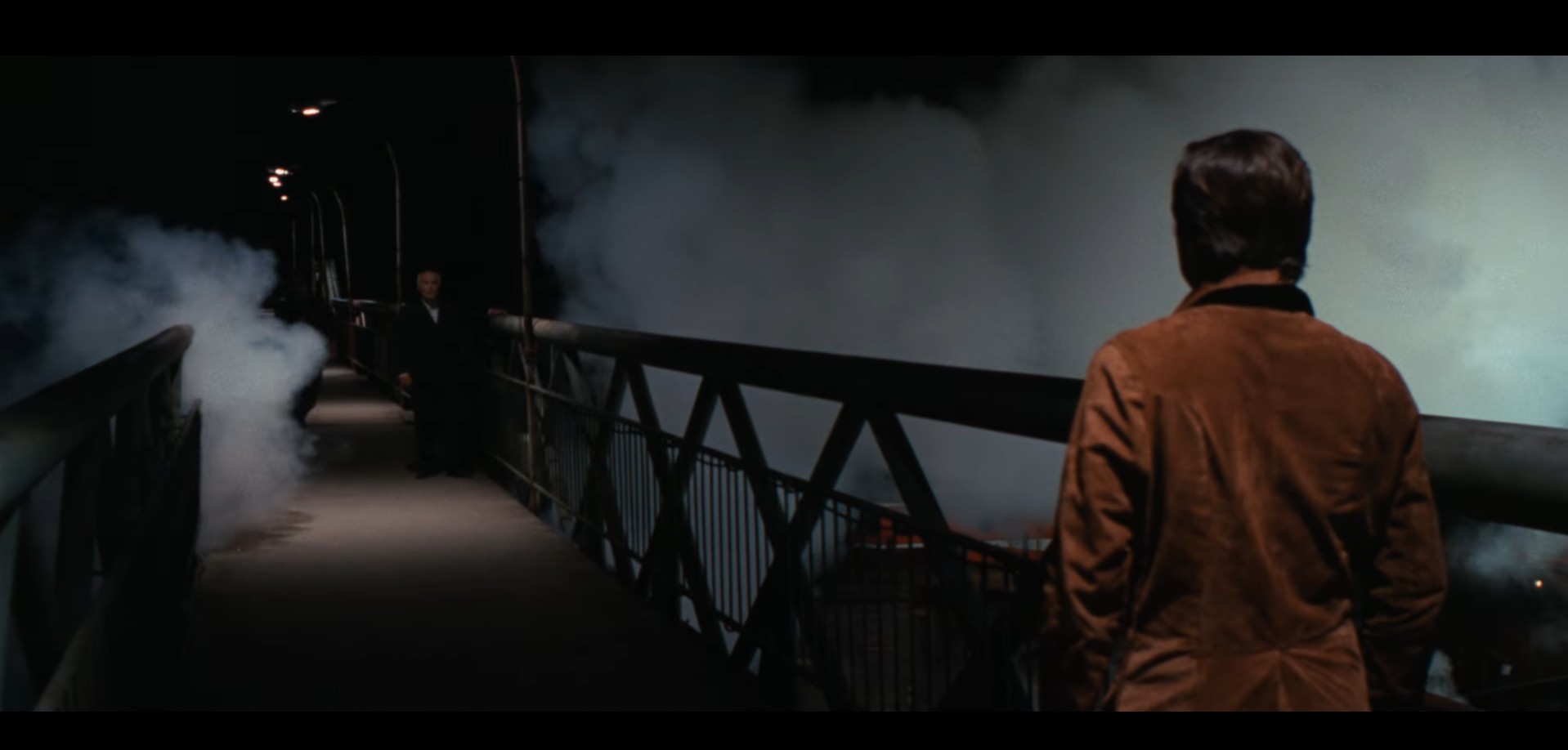
Following up on their definitive, carefully curated, stunning release of Giuliano Carnimeo’s 1972 giallo “The Case of the Bloody Iris,” Celluloid Dreams doesn’t pump the breaks delivering their latest “Short Night of Glass Dolls” with an all-encompassing, 4-disc collector’s edition set that includes 4K UHD and Blu-ray. Scanned and restored in 4K from the original camera negative, the UHD is an HVEC encoded BD100 with 2160-pixel resolution and the Blu-ray is AVC encoded BD50 with 1080-pixel resolution. It goes without saying that both transfers are impeccable in their damage and blight free form for those who might have owned or once owned the cropped, VHS-sourced release under one of its many titles, “Paralyzed.” The grading blends a natural, dynamic pop with peppered psychedelic trips down the dark rabbit hole with Klubb99 is open for business and the color is diffused with balanced, natural saturation, adapting to lighting of all varieties. UHD offers a richer depth of focus with the increased pixel Dolby Vision seizing better delimitation around objects, but that doesn’t mean the Blu-ray doesn’t do the same, the UHD just enhances it by a quarter approximate percentage, while still keeping healthy, transpicuous grain. Two fidelity-true 1.0 DTS-HD offers mostly a dialogue entrenched mix that, audibly, has an imbalance against a rather omitted ambience and that’s not the release’s doing but rather a lack of Foley work amongst an ADR English or Italian track. Ambience hits where it counts but there are times when establishing shots or slow pans of Prague go nearly into a coma state, letting the dialogue and the renowned Ennio Morricone’s piano, triangle, and melodic vocal score take flight through the course of the mystery. English subtitles are available for the Italian language track. Disc one and two not only contain the feature but also contain identical extras with writer-director Aldo Lado & and Freak-O-Rama’s Frederico Caddeo feature-running commentary, a second parallel commentary track with Celluloid Dream’s founder Guido Henkel, an assortment of trailers labeled as grindhouse, Italian, English, and the Catalepsis, with an isolated score that pedestals Ennio Morricone’s score. Disc three delves into the Italian-language, English-subtitled feature documentaries and featurettes with a 2015 archived interview The Nights of Malastrana, clocking in over 100 minutes, that have isolated discussions with Aldo Lado and actor Jean Sorel, All About Aldo is another archived interview with the director circa 2018, The Quest for Money is an interview with producer Enzo Doria, To Italy and Back touches base with producer Dieter Geissler’s perspective and historical context, The Most Beautiful Voice in the World interviews Italian singer Edda Dell’Orso’s haunting vocalizations on Morricone’s score, Cuts Like a Knife speaks to editor Mario Morra, the Flying Maciste Brothers’ video essay The Man on the Bridge: Philosophy, Perception and Imprisonment in Aldo Lado’s ‘Short Night of Glass Dolls,’ the alternate title Malastrana’s German export credits, and an image gallery. Finally, disc four brings the encoded special features home with not one, but two alternate cuts of the film, a 35mm Grindhouse version and the cropped Paralyzed VHS version. If you thought the encoded special features weren’t hefty enough, Celluloid Dream’s physical presence is certainly imposing with a rigid slip box with newly designed cover compositional cover art on back and front, a massive 64-page color picture and poster booklet features a retrospective essay from Andy Marshall-Roberts as well as reprinted column and magazine reviews from the film’s initial release, and, of course, the thick Amaray case, which is surprising in the traditional Blu-ray blue rather than the 4K UHD black. The cover art is an original rendition that brings all theme elements of giallo into the illustrated fold in circling chaos of catalepsy with the reverse side displaying the same image but titled in Italian. Inside, an advert for “The Case of the Blood Iris” and their upcoming third title “La Tarantola dal Ventre Nero” is inserted. The 4K is region free while the Blu-ray is hard coded region A. The unrated main feature has a runtime of 97 minutes.

Last Rites: Celluloid Dreams pursues excellence and strikes twice achieving it with a heart-and-soul poured release that by far has blown all other limited-edition copies, collector sets, definitive releases out of the water and “Short Night of Glass Dolls” deserves every bit of the attention.

Collector’s Run to Grab Celluloid Dreams’ “Short Night of Glass Dolls” on 4K UHD and Blu-ray!

An EVIL Auction Decides One Girl’s Self-Inflicted Fate or the Entire School Massacre of Goth Students. “Eating Miss Campbell” reviewed! (Troma Films / Blu-ray)

“Eating Miss Campbell” on Blu-ray from Troma Films and Refuse Films!

Vegan-goth Beth Connor contemplates suicide daily while attending a high school with a student body that’s cliché to a 90’s horror film and living with her grossly affectionate father and stepmother who are nonchalant and oblivious to her own self-destruction.  When a new, radical, American headmaster is hired at her British school, he creates the “All You Can Eat Massacre” contest that grants one winner a chance at a fully loaded handgun to either kill those of the winner’s choosing or blow their own brains out.  Apart of the accompanying American contingent on school staff, a new English teacher, Miss Campbell, catches Beth’s eye, and she falls heads-over-heels for her.  The contest is Beth’s way out of this clichéd life but her feelings for a morally complicated Miss Campbell and Beth’s sudden urge to consume human flesh puts a small damper on her chances to win the “All You Can Eat Massacre” that’s also highly sought after by a trio of stuck-up, TV themed-named girls aimed to eradicate every freak, geek, and goth on campus grounds.

“Eating Miss Campbell” is the meta-horror-comedy that amplifies stains of the American way, history, and culture in a concurrent saturation of satire.  The Liam Regan film is everything Lloyd Kaufman and Troma Films dreams of in a Troma presented production with a goal to subvert the routine machine of mostly rightwing establishments and conventional, cherry-coated filmmaking.  The United Kingdom film, shot in Yorkshire, is a sequel to Regan’s “My Bloody Banjo” of 2015 but only with a few returning characters in a new situation rather than direct follow-up.  Regan’s sophomore film is the second chapter to what’s being labeled as the Bloody Banjo saga and is a production of Troma, Refused Films, and the “Bad Taste” inspired-company name Dereks Don’t Run Films with Regan and Kaufman producing and Dereks Don’t Run Films’ Danny Naylor serving as executive producer.

A cast made up UK and US actors, “Eating Miss Campbell” marks the return of some familiar faces and character names from Regan’s “My Bloody Banjo” with Vito Trigo (“Return to Nuke ‘Em High Vol. 1,” “Assassinaut”) as Mr. Sawyer now the progun, proviolence American headmaster of Beth Cooper’s school, Laurence R. Harvey (“Human Centipede 2,” “Frankenstein Created Bikers”) as Mr. Sawyer’s indelicately charming number one Clyde Toulon, Dani Thompson (“No Strings 2:  Playtime in Hell,” “Rock Band vs. Vampires’) as Mr. Sawyer’s well-endowed lover with an affection for younger high school boys, and, of course, no Troma production would be complete without a Lloyd Kaufman appearance or cameo as he re-enters the role of Dr.  Samuel Weil for a brief spell on a how-to dispatch oneself.  These returning personalities are integrated into a new grotesque story that surrounds high school goth and aware of the third wall girl Beth Cooper, played by “Book of Monsters” actress, and who has killer bangs, Lyndsey Craine.  Coopers looking to break out of the horror movie cliché by nixing herself before being consumed by the prosaism of it all, and she expositions this all to the camera, talking right to the viewers, to express her discontent and reasoning.  The tongue and cheek affair doesn’t end there with Emily Haigh (“The Lockdown Hauntings”), Sierra Summers, and Michaela Longden (“Book of Monsters”) playing into that 90’s theme by being Clarissa, Sabrina, and Melissa, all different television role iterations of one of the 90’s most iconic actresses Melissa Joan Hart.  The film rounds out with real life couple James Hamer-Morton (“Dead Love”) and Charlie Bond (“The Huntress of Auschwitz”) playing Beth’s parents, Justin A. Martell (“Return to Nuke ‘Em High Volume 1”) as school board member Tusk Everbone, Annabella Rich (“Powertool Cheerleaders vs the Boyband of the Screeching Dead”) as Nancy Applegate the bloodthirsty racist, Alexander J. Skinner as the girl chaser jock Ethan Rembrandt (Hotel Paranoia), and Lala Barlow in the titular role of English teacher, flesh eater Miss Campbell.

“Eating Miss Campbell” is completely satirical, completely outrageous, complete overtop, and a Troma contemporary classic.  Director Liam Regan understands the Lloyd Kaufman’s market audience to provide an unfiltered, unfettered independent production careening with uncontrollable momentum of bloody cannibalism, screwball antics, and topless gratuitousness and, in turn, solidifies himself as a Troma archetype director.  “Eating Miss Campbell” is a practical effects believer that implements squibs, prosthetics, and buckets of stainable blood to use in borrowed locations and while gruesome aspects work for the film, the pacing and storytelling is quite patchwork.  Covid-19, like the virus did for most films in production prior to 2020 lockdown, halted Regan’s progressive flow and caused a year-and-half, 18-month gap, that required additional weeks’ worth of shots, disrupting the flow in story and in character. There’s not a ton of filler to build history, storylines, or even give a moment to connect the pieces and absorb Regan’s revolving madcap that include references to cherry-picked scenes from “My Bloody Banjo” and the whole meta concept that beleaguers audiences with rants and rancorous tudes about reliving a certain period in time, such as a cliched 90’s horror movie for example, or a culture bastardized by violence and grotesque, maligned shapeshifters, and this becomes more than providing protagonist insight and protest propaganda no matter which way you slice and rearrange the story, and that goes without saying that’s most of Troma’s cuckoo-tastic catalogue.

Troma Films and Refuse Films proudly presents “Eating Miss Campbell” onto a Lloyd Kaufman introductory stated unrated director’s cut, Hi-Def Blu-ray. The AVC encoded, 1080p, BD25 presents the film in a 1.85:1 aspect ratio. A feature and a trunk load of extras on the lower shelf of capacity format, keeping in tune with most Troma home releases, shouldn’t surprise or phase the physical media aficionados to know there are compression issues along the darker tones with banding and some posterization, smoothing out textures in poor lighting. When details do emerge, they’re noticeable and visually enriching a right-to-rebel indie production without going overboard into the clarified butter that is major studio glossiness and precision. Often heavy shadow contrasting doesn’t dispel the vivid and appeasing coloring scheme that pops intermittently and skin tones, though skin texture in general bleeds into the adjacent shade, appear about as natural as initially captured without filter, gels, or post work enhancements. The British/American English track in a lossy Dolby Digital 5.1 surround sound mix lessens what should be a quite robust hitting of every audible mark. The scale of “Eating Miss Campbell” is quite expansive from start to finish, carrying over into a number of interior and exterior sets, as well as a lucrative range of diverging, differentiating noisemakers but what’s at hand does the job adequately with plenty of emphasis on the more foolish sense of humor. Depth is rarely utilized in what’s mostly medium-to-closeup scenes and replaced with just a level playing field loading of dialogue, which is clean and clear. An English Dolby Digital 2.0 Stereo is also available. Troma releases are good for special features and “Eating Miss Campbell” is another testament to a haul of extra content, including an audio commentary by director Liam Regan, editor Jack Hayes, and foley artist Finn Brackett, a 7 Days of Hell behind the scenes documentary that looks at the making-of the film with the post-COVID pickup shots, deleted scenes and outtakes, a gag highlight reel, raw b-roll footage, even more behind-the-scenes footage that’s nearly an hour long, the FrightFest premiere, cast interviews, VFX reel, the Troma radiation march against pollution, Troma in Time Square takes a look at Troma’s streaming service, Abbie Harper’s music video Tromatized, and the trailer. There are also a couple of prologue introductions with a Ukraine support intro and a Lloyd Kaufman as character Dr. Samuel Weil with intercut video of director Liam Regan. The traditional Amaray has a dim cover with colorful lettering in a compilation of characters overtop the high school. The disc is equally black with the same colorful lettering and a black and white penciled razor blade encircled by stark red blood. The region free release has a runtime of 94 minutes.

Last Rites: “Eating Miss Campbell” has edge that favors, or even flavors, Troma’s taste with a high school shooting, cannibalistic, no holds barred, teacher-student affair alternate societal universe that’s tough to digest but easy to chew.

“Eating Miss Campbell” on Blu-ray from Troma Films and Refuse Films!

Who is This EVIL Named “Dariuss” reviewed! (SRS Cinema / DVD – Extreme and Unrated)

Find Out Who “Dariuss” Is With this SRS Release!

An experimental vision quest of loss, grief, and death takes refuge in a small English town, inside an old and quaint English house.  A mother grieves for the loss of her child, sobbing uncontrollably and mindlessly wanders with distant stares as the heart pains for her child.  The grandmother, doing what she can, comforts her daughter’s newfangled distraught nature while the husband, grieving in his own isolated way, stays out late at night to drink himself into a stupor.  When madness lurks about their home and intrudes upon their privacy, a vile and heinous loss of life bathes a depraved lunatic in their fluids.  Neither mother, father, nor grandmother is safe from terrific travesty in corporeal form.  A sickness has arrived to cure the inconsolable, eradicating them slowly of the pain in the most painful of ways imaginable, and doing it all with a bloodstained maniacal grin stretching from ear-to-ear.

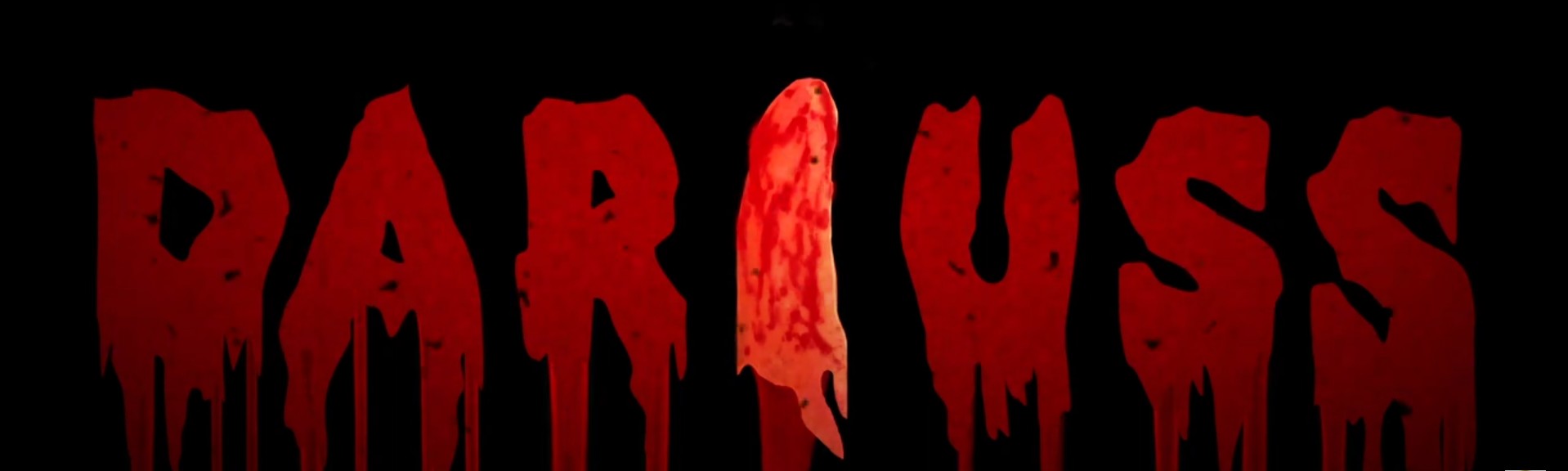
A hellish loop of defeating pessimism, “Dariuss” fringes the black void areas around reality and escapism that evoke the uncomfortable nature of people and the unpredictable tides that turn for the worst when already at rock bottom.  “Dariuss’s” brackish, brainsick narrative is the brainchild of Guerrilla Metropolitana, an Italian artist crafting his underground and dark cinemaverse of misanthropic mayhem and esoteric eroticism.  The writer-director Metropolitana lives and creates out of London, UK and “Dariuss” is his 2023, debut feature-length film behind an oeuvre of distressing shorts of human imperfection and immortality encroached by a constant line of madness.  Metropolitana not only self-funds and produces his film, where he achieves total control to push back against not only major studio norms but also conventional independent stratagem, but provides the avant-garde cinematography, unorthodox editing, an experimental score and sound design, and even costars the trench coat covered naked body of the antagonistic killer. 

One element to not forget to mention before going through the cast is that “Dariuss” is completely without dialogue.  Metropolitana’s sound design manipulates and repeats many sound clips, such as the plops of water droplets or the high-pitch lip trilling, to fashion an uncomfortable audio sensation sporadically strung throughout that parallel’s the coupled low tumbling score and baby laughter, the later more so when referring to child loss or the abhorrent reincarnation of the child.  Ila Argento holds the majority screen time, especially since the pregnant woman credited as Sarah Isabèl is also Argento as well in some sort of meta crafting or illusion, and she plays the grieving, depressed wife wailing, screaming, and just distantly starring in vast quantities and in a daze of mirrored or painted inversions about the English home.  “Dariuss” is more than just extreme performance art as it embodies interval wretchedness associated with trauma, or in this case more specifically, loss through a reverse world looking glass.  As the wife is tended to by the grandmother, played with apneic conditions and posturing concern is Marie Antoinette de Robespierre, Archibald Kane’s the husband role is scantily around for a father who just lost a child and when the father is in frame, he’s idling in his car drinking, or rather gulping, from a bottle.  Both the grandmother and father roles are a part of Metropolitana’s message of a shattered family structure of insincerity and disconnect. Feeding on that dysfunction is the childlike maniac, played by Metropolitana himself, with rapacious amusement off the back of the household’s suffering.  Almost as if the maniac is a reincarnation of the lost child, perceived by play like antics in a nearly naked and hairless state and audible by the babylike, post-introduced laughter, returning home to exact horrific horseplay on his family involving rape and murder and cannibalism alongside the frolicking and breast milk chugging.  

Let’s preface with an important fact that “Dariuss” will not be everybody’s cup of tea; in fact, Metropolitana’s film is more like bitter black coffee with a pungent, sour smell as a narrative series of images, like a splayed, taped together string of polaroids, giving godawful glimpses of grief and gore.  Sounds and images repeat that beg for madness to emerge out of the nouvelle vague filming style, experimenting with various inverted images, mirrored and angled shots, different types of aged filters and strange lighting, various camera speeds, and oddly framed shots will subject audiences to pricklier sensory sensations than the depicted violence and gore, which is graphically ghastly and extreme with necrophilia and cannibalism.  Story structure also veers into non-linear territory but the gist of the acts is present, if not loose and equivocal for open interpretation and choice cinema characteristics that stray from normal convention, to mold a beginning, middle, and end in only a way Metropolitana can construct by contrasting melancholic grief with stagnating indifference, with a maniacal pleasure of a sandbox of sinew, and, in way, comical by way of the insanity with disturbing imagery mixed with playful mischievousness. 

Just who is Dariuss?  That’s the obstruse person perhaps at the centermost of this ghastly, grisly story that’s now on DVD from SRS Cinema as a part of their Extreme and Uncut label.  The DVD comes MPEG2 encoded, 480p standard definition, 5-gigabyte DVDR that showcases a wide-range of filters, inversions, lighting designs, grading, and you name it, “Dariuss” likely did it of cinematography techniques that stay in the rough patches of eccentricity rather than being comfortable in the fairways.  Picture quality fluctuates and varies depending on the aesthetic chaos methods being deployed, leaving behind not the sharpest looking picture with noticeable pixelation on anything above a 32″ television but not enough of an eyesore to be an imperceptibly deterrent.  Depth has fair spatial qualities but range and saturation is pretty limited to an anemic neutral palette to only when the monochrome or higher contrasts are not in play. The LPCM 2.0 stereo contains no organic matter, meaning that none of the sound is captured within the scenes, as Metropolitana modulates, manipulates, and modifies singular notes and tones for creepy and ear-splicing effect. This also pertains to the soundtrack being completely devoid of dialogue to give the auteur complete authority of how his film she be heard and every bit of that sound design is front loaded and high-powered but to an intended unrefined audio art. English captioning for the deaf and hard of hearing is available. Special features encoded are a behind-the-scenes still gallery and SRS trailers while the standard Amaray comes with an SRS illustration of the film’s original one-sheet, transposed to the disc pressing. There are no inserts included nor slipcover. SRS Cinema’s release is region free and has a runtime of 62, ideal, or even a tad bit too long, for this type of experimentation.

Last Rites: Not to be confused as a nail-biting, popcorn thriller, “Dariuss” will only speak to a select few able to bend the mind to impressionistic, dark eroticism and savagery, both qualities of which Guerrilla Metropolitana has and depicts in droves.

Find Out Who “Dariuss” Is With this SRS Release!

EVIL Wants You Tour Your Own Personal Hell! “Trapped Ashes” reviewed! (4K UHD and Blu-ray / Deaf Crocodile)

4K and Blu-ray “Trapped Ashes” from Deaf Crocodile. Available Here!

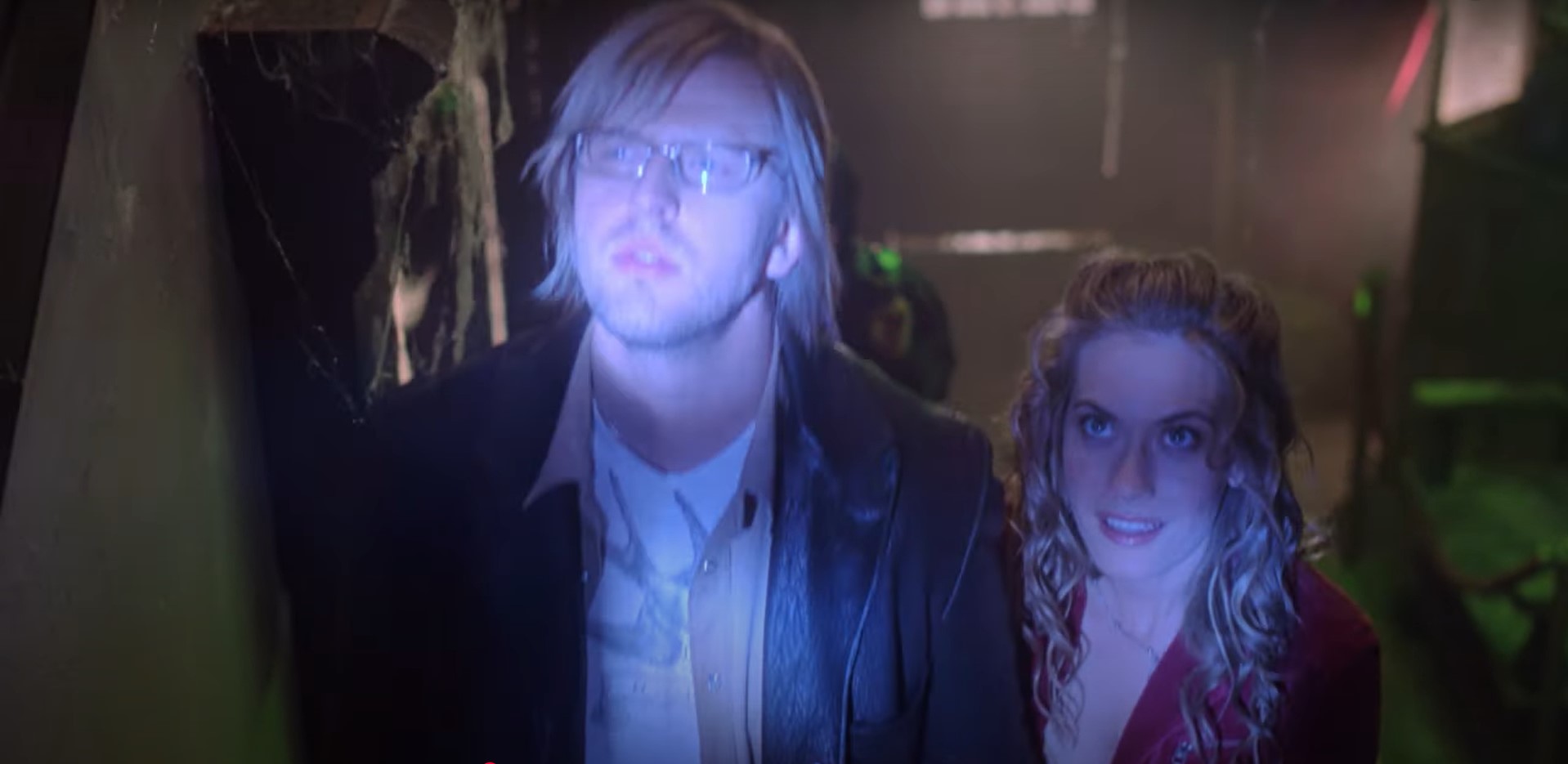
The VIP package for a historical studio backlot tour gives seven strangers a behind-the-scenes look at how movies were made and the background behind them.   When their cart pulls up to one of the more infamous movie houses for Desmond Hacker’s fright flick Hysteria, the tour group are eager to explore what’s typically off limits for normal, non-VIP tour attractions.  Once inside the backlot house, much of the Hacker’s funhouse tricks and odd designs are although covered in cobwebs are still very functionally practical as the group separates and goes room-by-room to peruse a movie house.  When they all gather in what looks to be the commune dining area, they find themselves unable to locate the way out no matter which unlocked door they choose, which circles them back.  The tour guide mentions Hacker’s movie had similar parallels and that the only way to free themselves would be to tell their own personal horror story.  With nowhere to go and nothing to lose, the stories begin their descent into terror. 

For someone who doesn’t go out of their way to watch horror anthologies, I’ve been on a kick lately with a decent string of short film compilation feature, starting with the latest entry from the popular “V/H/S” franchise, “V/H/S/Beyond.”  Next up takes us back to 2006 with “Trapped Ashes,” a campy horror anthology that not only brought together legendary genre directors, such as “Friday the 13th’s” Sean S. Cunningham, “Gremlins’s” Joe Dante, “The Matrix” visual effects arts John Gaeta, “Silent Night, Deadly Night 3:  Better Watch Out’s” Monte Hellman, and the late director of “Altered States,” Ken Russell, but also brings together aged, yet still legendary, familiar faced actors that have since past that short time between 2006 and 2025   Dennis Bartok wrote the anthology piece and is his brainchild, producing the film.

Those aforesaid actors have a combined nearly centuries (plural!) of experience with careers spanning an average of 50 years each.  Henry Gibson (“The ‘burbs”), John Saxon (“A Nightmare on Elm Street”), and Dick Miller (“Gremlins”) all together in one film.  Granted, Dick Miller’s cameo was so short that all three were only together for a brief scene but the trio alone should bring in genre fans to witness Henry Gibson in a persona he does best, a round faced under stark white hair and with puppy dog eyes that draws one closer to his innocence only to have the rug snatched right from under you when he turns sinisterly dark as the seemingly harmless tour guide.  Saxon also plays true to his conventional character archetype as a wise-cracking tough guy too cool for school; this time, he plays a screenwriter haunted by his own betrayal toward his best friend while being infatuated with a bewitching beautiful woman.  Unlike most horror anthologies, “Trapped Ashes’” individual tales contain mostly the same cast as the wraparound with Saxon, Jayce Bartok (“Founder’s Day”), Lara Harris (“The Dogfighters”), Rachel Veltri (“Pray for Morning”), Michèle-Barbara Pelletier (“Brainscan”), and Scott Lowell as the tour guests with personal hell to tell.  The heterogeneous group convey their supernatural-laced anecdotes that mingle inside the context of their being or life whether body image, marriage, friendships, and childhood, subjective intimacies that shape their excruciating experiences that, if audiences see them on screen for the first time, wouldn’t be clear how deeply burdened or troubled they are at first glance.  Once the story is told, moods and personalities shift, or perhaps seemingly normal habits are made clearer, and this is made possible by the eclectic bunch of actors to carve away their characters’ exterior shells to see who they really portray.  Ryo Ishibashi (“Audition”), Yoshinori Hiruma, Mina E. Mina (“Eastern Promises”), Winston Rekert (“Eternal Evil”), Ken Russell, Tahmoh Penikett (“Trick r’ Treat”), Tygh Runyan (“Disturbing Behavior”), Amelia Cooke (“Species III”), Luke Macfarlane, Deanna Milligan, and Matreya Fedor (“Slither”).

Riffling through the obvious camp “Trapped Ashes” touts very proudly, there are nuggets surrounding the unsavory themes.  Body dysphoria within “The Girl with Golden Breasts” is one of these topics, where an actress feels compelled to enhance her bosom for better, younger roles, and that speaks the relevance ill of the movie industry’s perverse tidings of late as actors and actresses continue to fill, inject, scar, and manipulate themselves into being their unnatural self to satisfy producers, execs, and audience likes and expectations when, in reality, hurts nothing but themselves.  Dissatisfaction marriage, or perhaps better labeled stagnant marriage, leads into invasive third party to sate long neglect passion and in this case, that third party is an ancient Japanese demon named Seishin (Japanese for Spirit) who lures the wife’s sexual appetite down to the pits of the netherworld.  From there, themes love triangles, obsession, cheating, and dysfunctional family structures formulate a pod of personal pate smeared with victimization, the victims being the storytellers stuck in the Desmond Hacker’s Hysteria backlot house.  “Trapped Ashes” isn’t about being victim, it’s more about playing the victim and those playing may not be victims of their own tales at all that adds a morsel of supernaturality to the recipe that changed the course of the idiosyncratic anecdotes that are close to their emotions and mental well-beings as well as proximally physically hazardous. 

Our first time covering the Dennis Bartok and Craig Rogers founded Deaf Crocodile release and it doesn’t disappointment with a sleek new 2-Disc 4K UHD and Blu-ray of “Trapped Ashes,” scanned and restored in 4K for its Blu-ray debut.  Presented in a widescreen 1.85:1 aspect ratio, the Deaf Crocodile UHD is HVEC encoded, 2160p Dolby Vision, BD66 and the Blu-ray is AVC encoded, 1080p high definition, BD50.  For an early 2000 production, “Trapped Ashes” doesn’t have the digital veneer of early 2000s film besides some visual effects work of the image manipulation drooping effect.  The extra pixels of UHD really brighten and elevate the image to today’s standards to surface the most inconspicuous details lost in standard definition.  Color saturation and skin tones appear natural and organic with no signs of compression issues or imbedded problems with the digital equipment.  Depth has really opened up in areas like the funhouse illusions of the Hysteria house in the wraparound segment and or in “Twin” when reality of the situation is made clear to put the explanation in one single medium-to-medium closeup frame.  Blu-ray copy mimics a lot same UHD accolades with a less fine tune edge around the background.  The English DTS-HD 5.1 surround sound is the only audio option available on both formats.  More than ample, the lossless provides a deepening immersion the deeper you go into stories with balanced side and back channels complimented by an even-keeled LFE to register the bass near the front while whispery events hover around a surrounding backside, such as with Cunningham’s “Jibaku’s” drawing-in hallucination moment of a Japanese painting that instills reverberating echoes and Shepherd tones.  English SDH subtitles are available.  Bonus features include threw new interviews – Dennis Bartok moderates a feature-length, online platform interview with director John Gaeta, cast members Jayce Bartok, Scott Lowell, and Lisi Tribble, producers Yuki Yoshikawa and Yushifumi Hosoya, and cinematographer Zoran Popvic, a second feature-length interview with cast members Tahmoh Penikett and Tygh Runyan and production designer Robb Wilson King, and the last approx. 40-minute interview is with producers Mike Frislev of Nomadic Pictures.  Extras do not stop there with a director’s cut of Monte Hellman’s “Stanley’s Girlfriend,” the original full-length cut of Ken Russell’s “The Girl with the Golden Breasts,” and a 5-part making-of with cast and crew archive interviews, a new visual essay Hollywood Parasite:  Hysteria in Trapped Ashes by journalist and physical media expert Ryan Verrill and film professor Dr. Will Dodson.  This is the so-called standard release compared to its Deluxe Limited Edition companion release, but this release is also pretty deluxe physically.  There’s no limited O-slipcover but the unique, almost 70’s-eseque cover design is appealing yet simple with a reverse side depicting an image of the wrapround characters inside the Hysteria house dining room or commune area.  The UHD and Blu-ray overlap each other in their differentiated locking mechanism on the ride of the clear Amaray case while the left insert portion holds a Deaf Crocodile QR code for access of the transcribed bonus content.  This release has the rated R cut with a runtime of 104 minutes and is region encoded A playback only.

Last Rites: Anthologies can be the antithesis of horror – building and dropping tension, an innate broken narrative, different stylistic choices that disunify the entire film, etc., but if campy enough, if not taken too seriously, if cast John Saxon, Henry Gibson, and Dick Miller, “Trapped Ashes” can find a home in the genre and in our collections with a new and extra-loaded Deaf Crocodile 4K UHD and Blu-ray set.

4K and Blu-ray “Trapped Ashes” from Deaf Crocodile. Available Here!