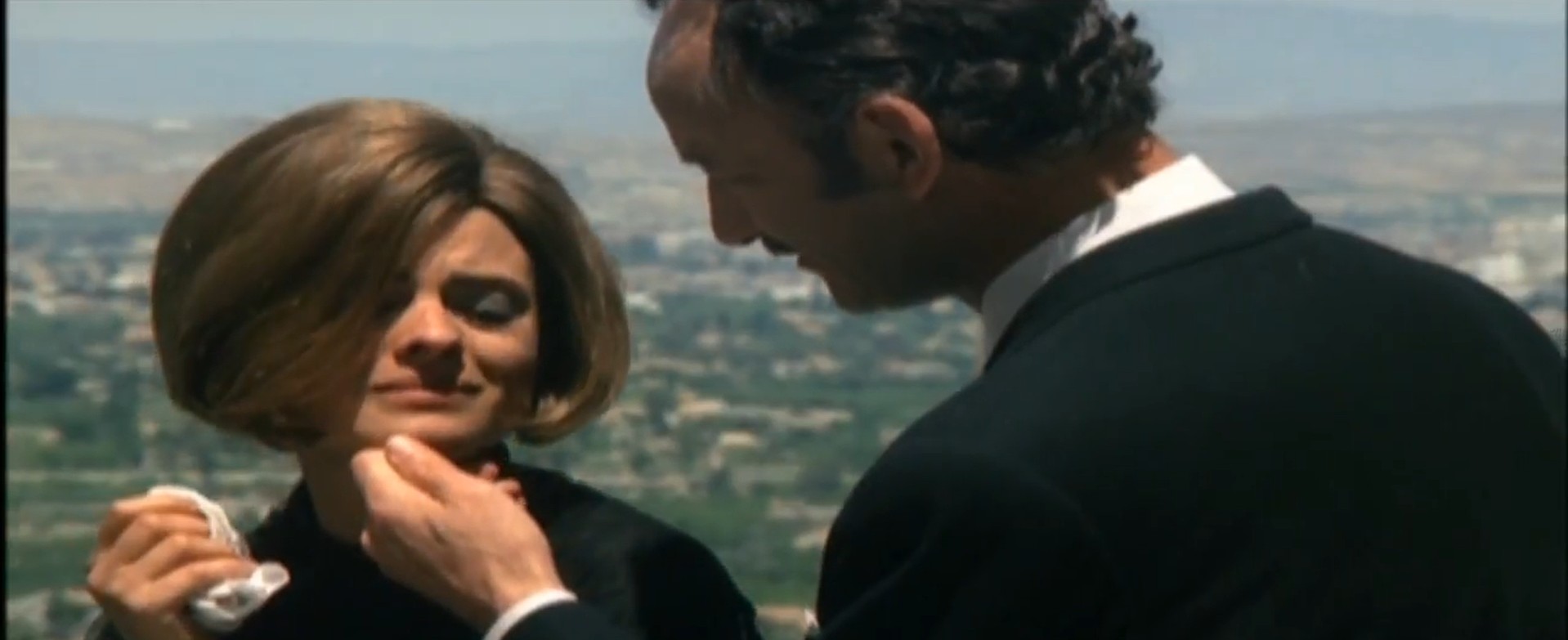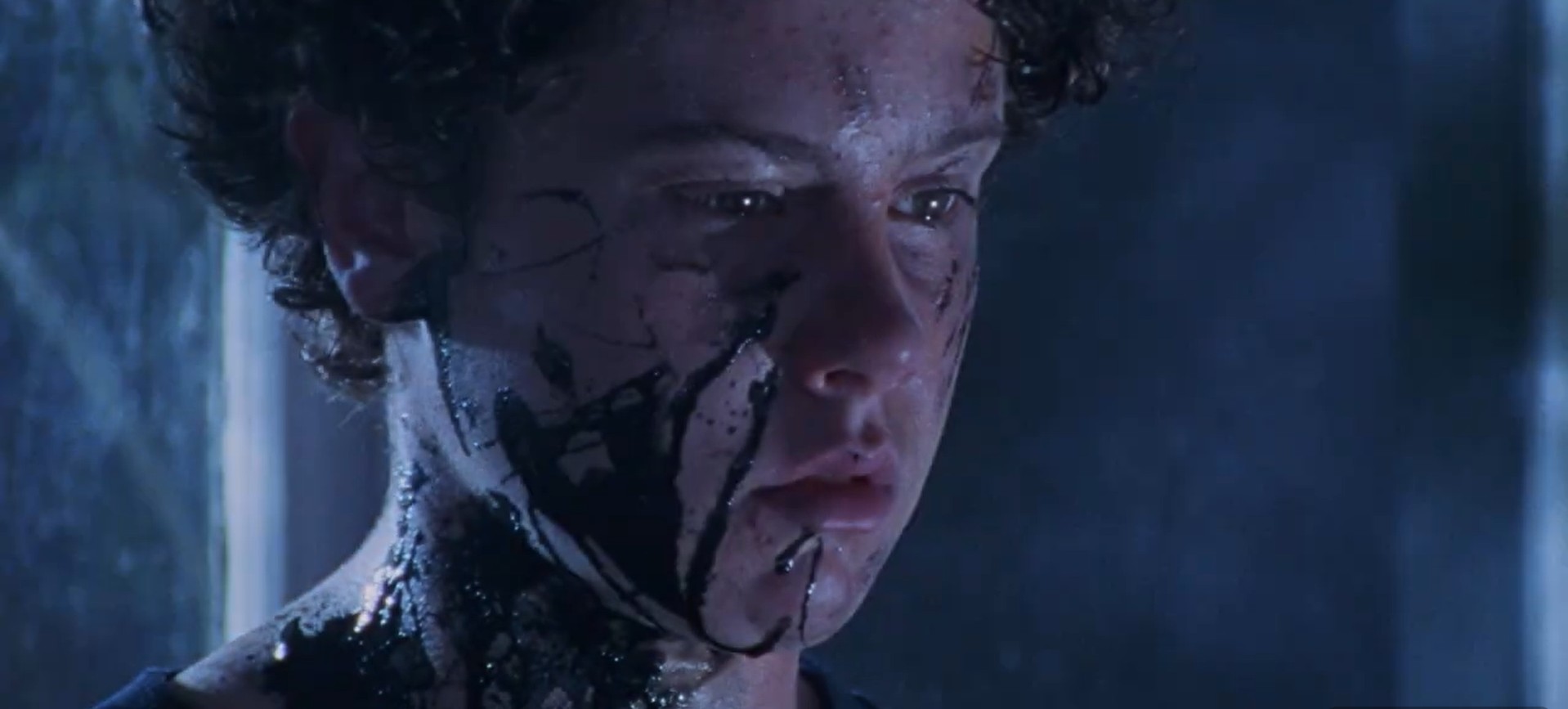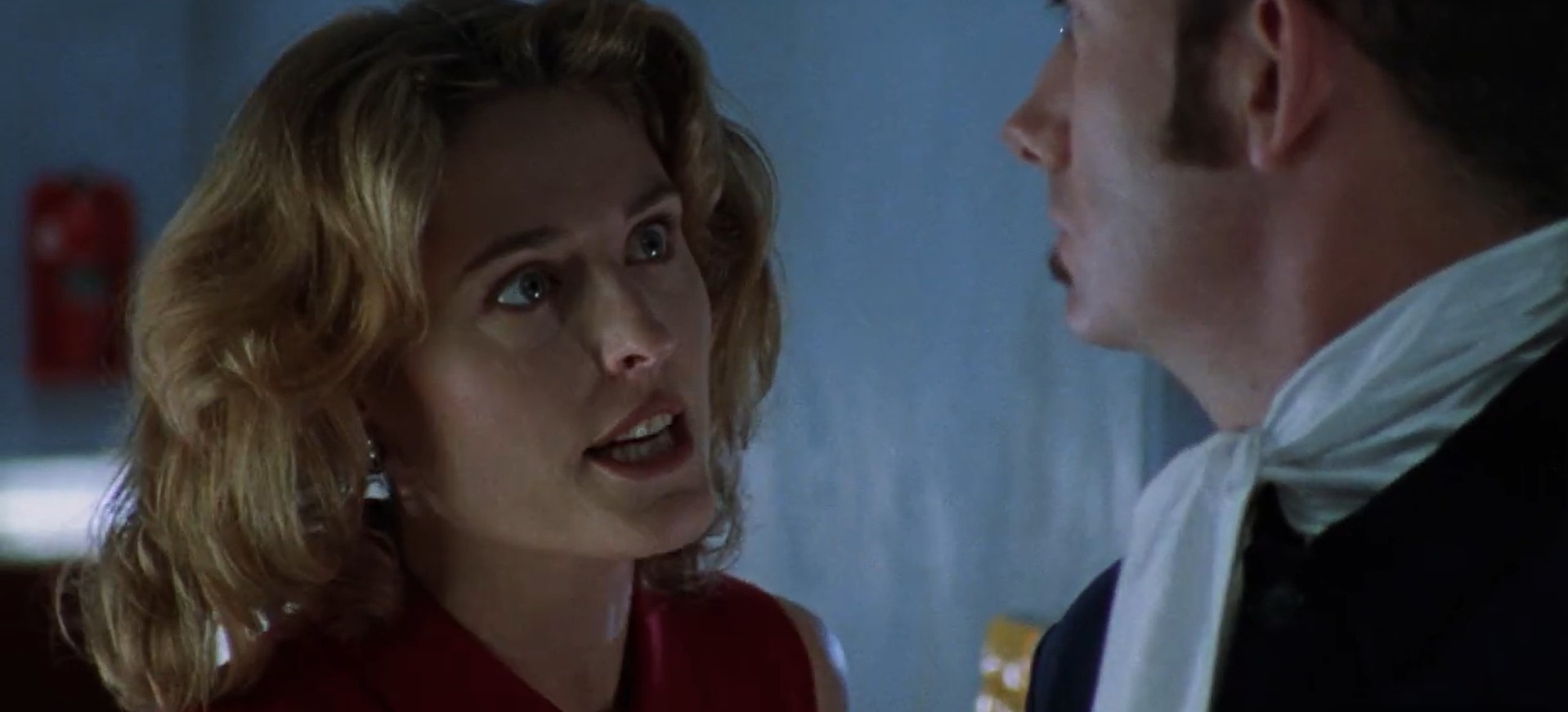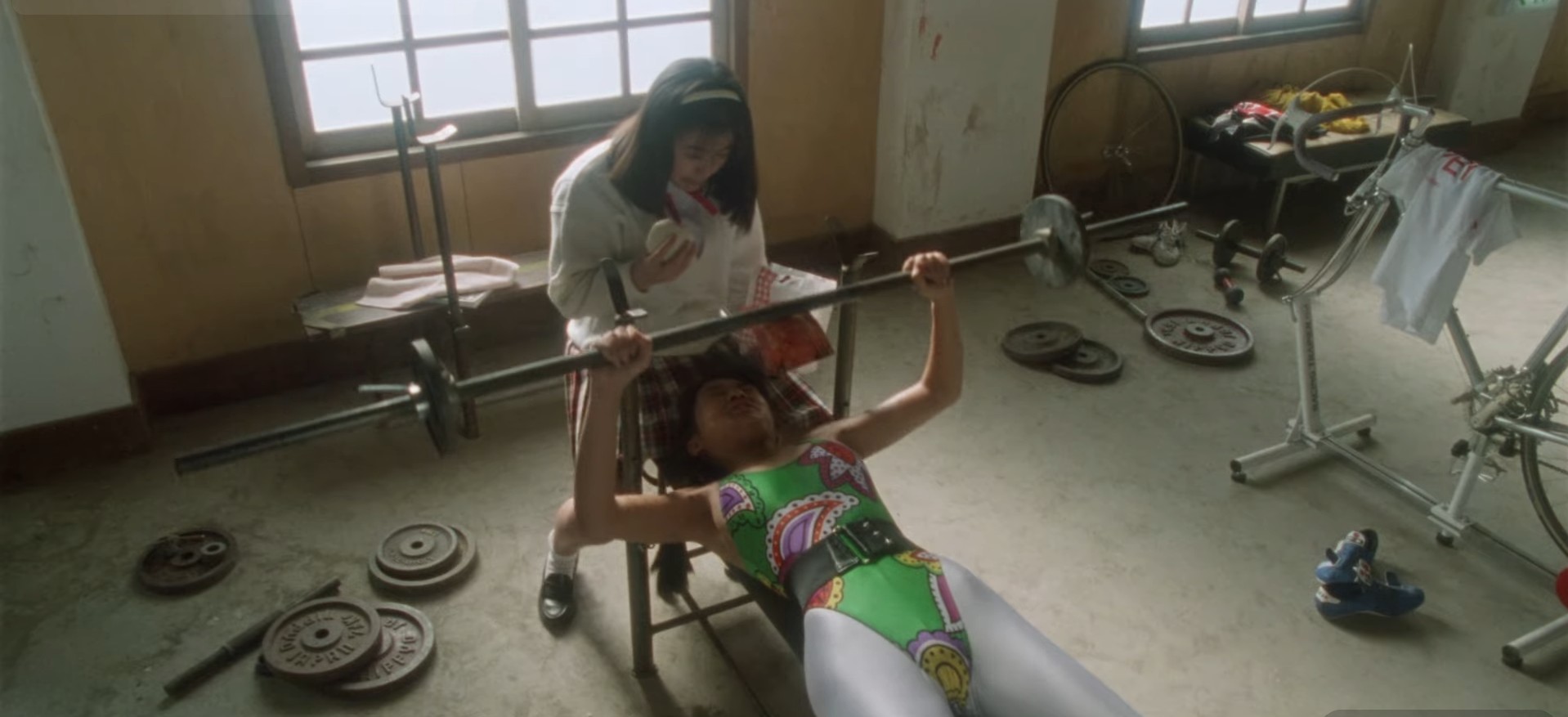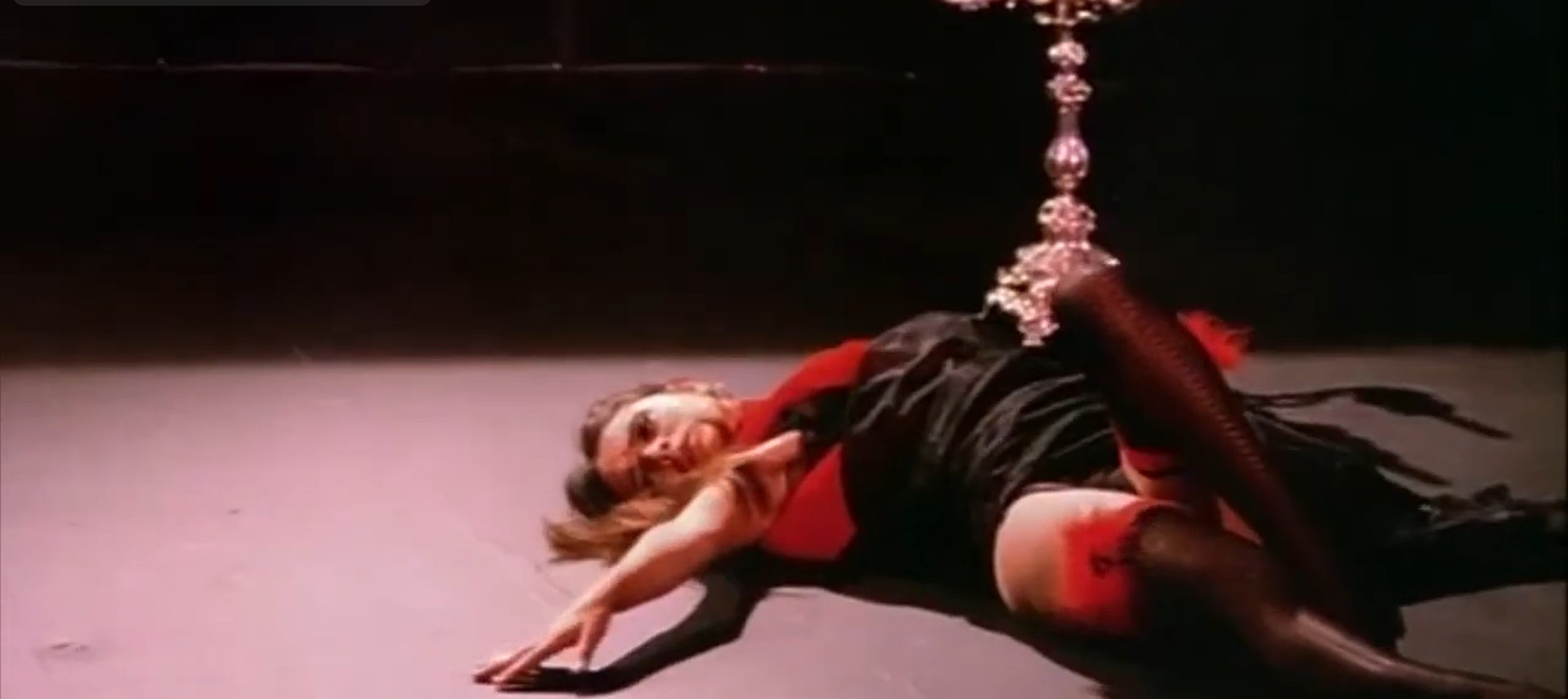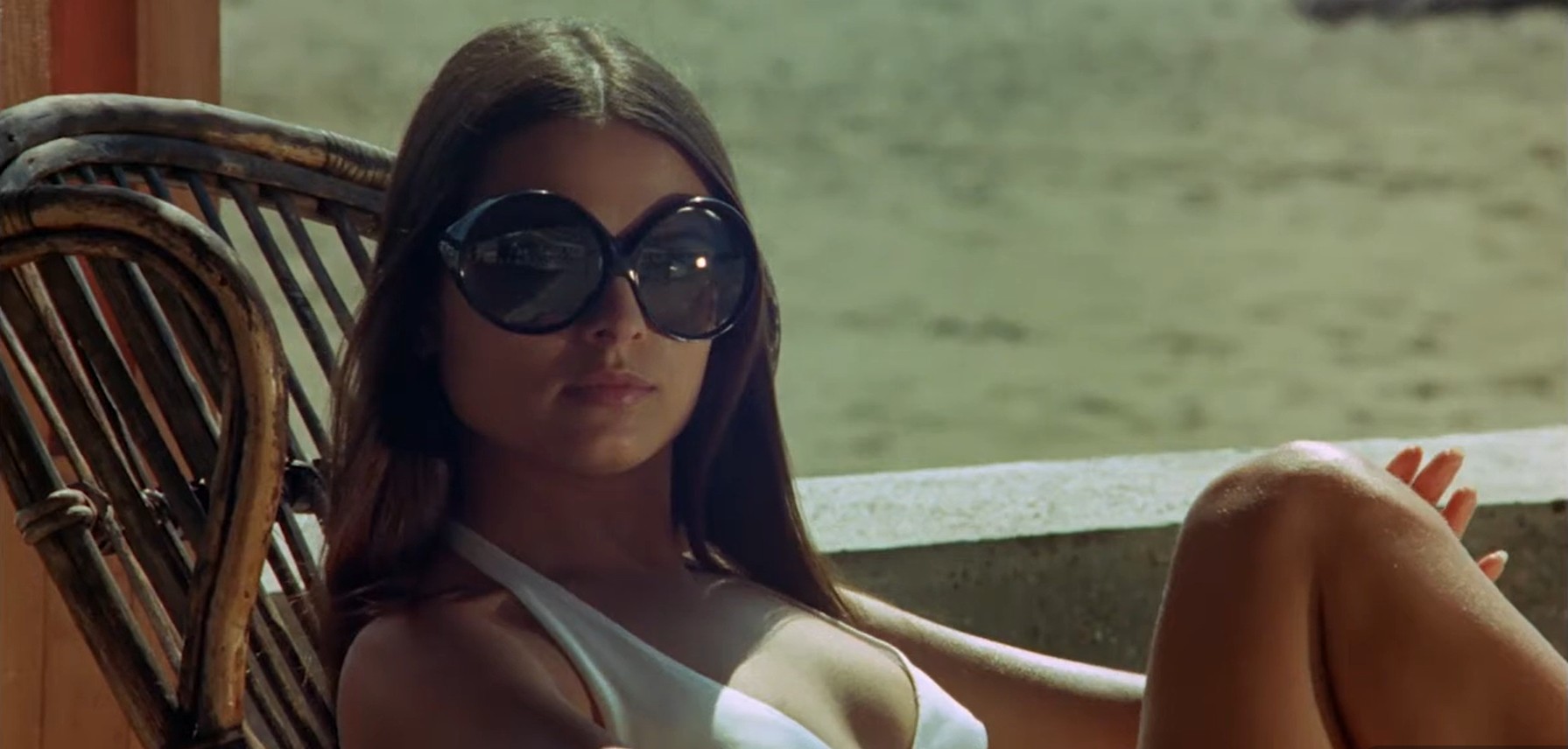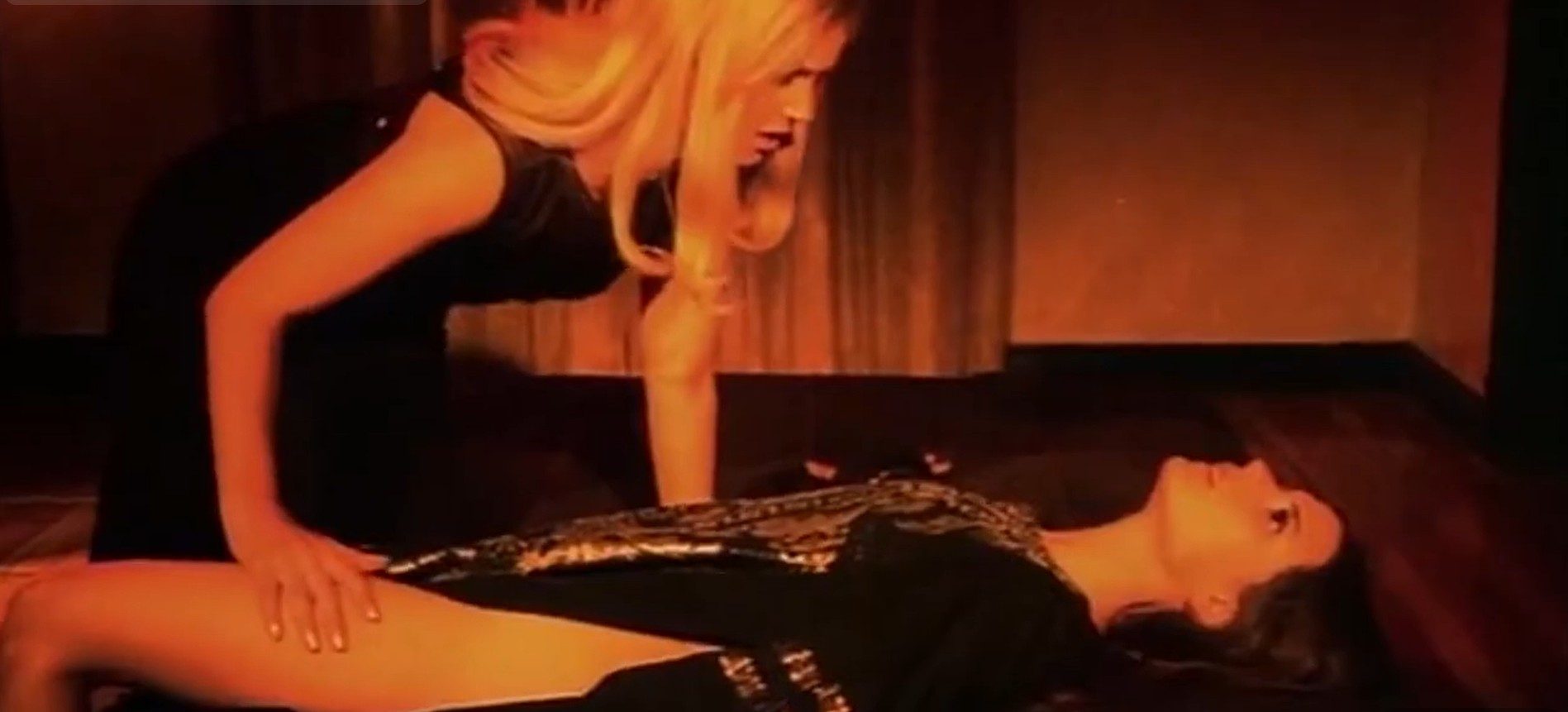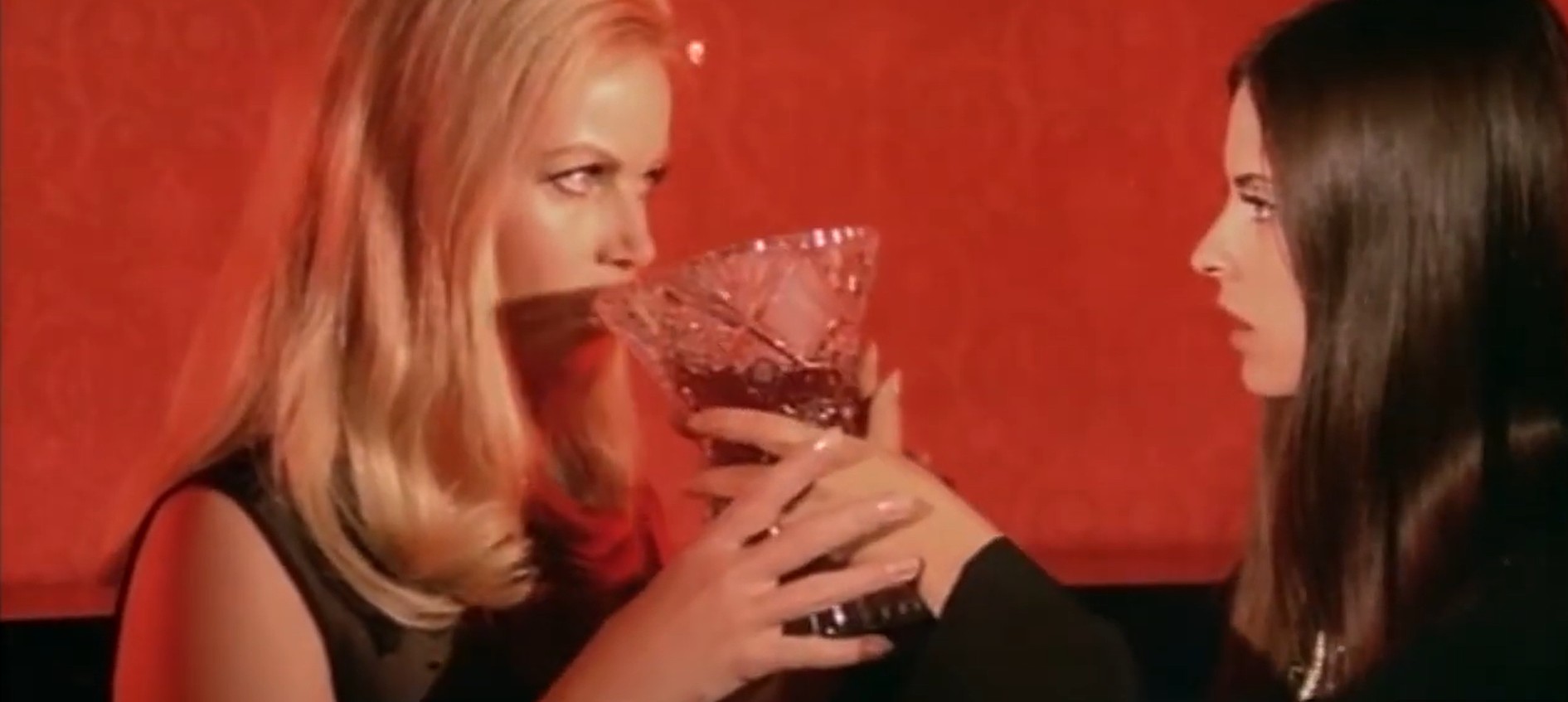
EVIL’s Counterfeit Products are the Bomb! “Knock Off” reviewed! (MVD Rewind Collection / 4K UHD and Blu-ray)

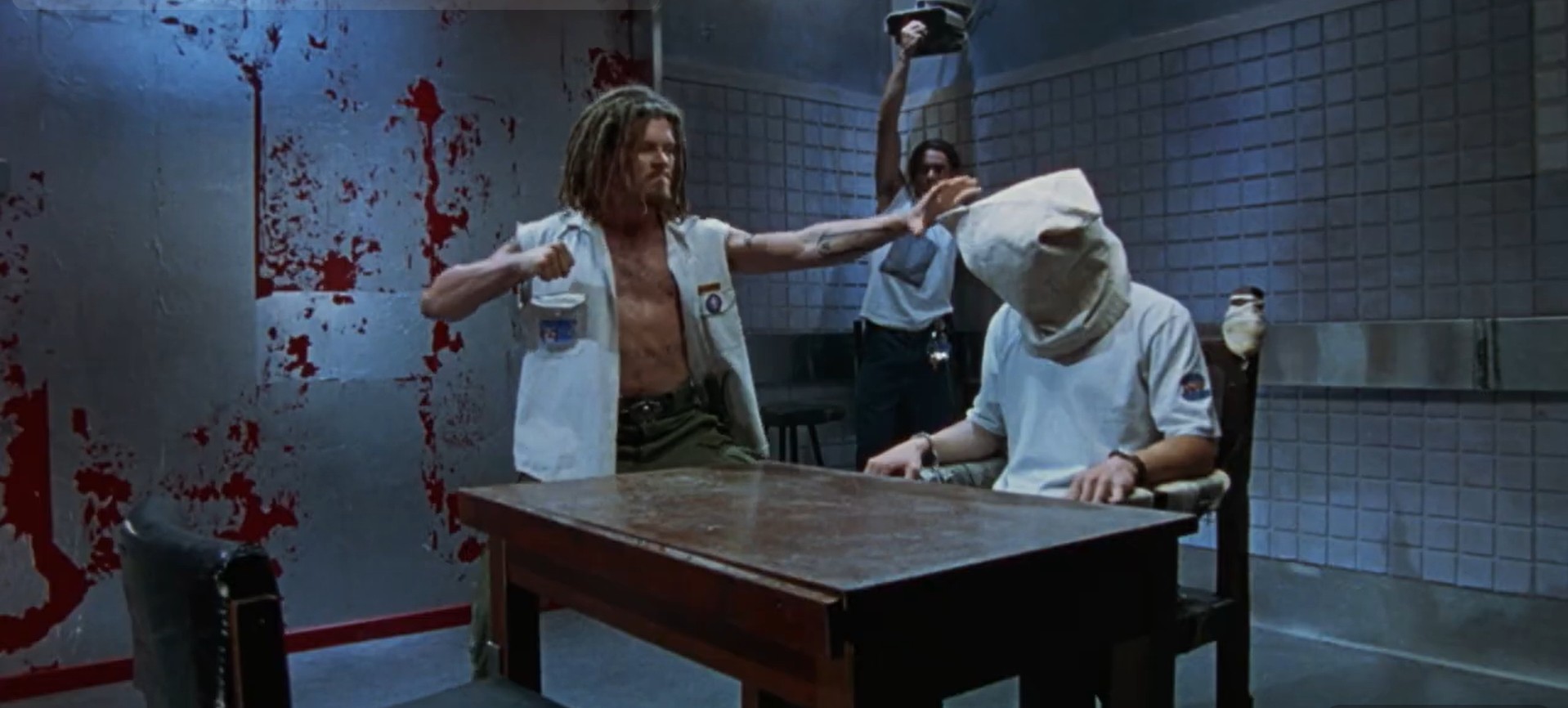
When confronted with product forgeries by Hong Kong police and company representative, Ray, a longtime Hong Kong counterfeiter trying to go legit by partnering up with Tommy to be a distributing fashion designer of V-Six Jeans, becomes embroiled in a Russian smuggling operation of hiding powerful micro explosives in counterfeit goods being sent around the globe.  With their ability to be activated by satellite waves, the devices can be hidden in all types of products.  The CIA, using Ray to track down another notorious counterfeiter, becomes involved and exploit Rays connection to Hong Kong’s criminal underbelly but double-crossing twist and turns has Ray struggling to trust an ally in his mission to not only find out who is counterfeiting his denim goods but also save the world from infiltrating Russia explosives.  He’ll have to rely on his fighting skills as well as hesitantly trust those who’ve deceived him to unearth the person responsible to clear his name and stop the deadly outbound shipments. 

To start this review with a personal anecdote, I recently sold Air Jordans to an eBay customer and come to my surprise and dismay, eBay’s authentication process determines the shoes a forgery.  I’ve sold many Air Jordan and Nike shoes in the past, successfully through the authentication process, and pride myself on knowing what to for when determining fake product.  This one had me fooled.  An exact lookalike of the Air Jordans that passed my authenticity examination with the company tag that has all the production information including the product identity number, had the correct Air Jordan logo, and the material passed the visual and feel test with substantial promise to confidently market.  Now, what eBay found is completely without reason as I don’t know what they saw or found but what I found in the 1998 campy-action-thriller “Knock Off” surely reminded me that there is always more than what meets the eye.  “Once Upon a Time in China” and “Twin Dragons” action film director Hark Tsui works with western actors to achieve a nonstop, impractical, and fun to watch film that doesn’t letup or provide any downtime.  The script is penned by Philadelphia born screenwriter Steven E. de Souza, the same de Souza behind “Commando,” “Die Hard,” and “Street Fighter,” orders another supersized helping of action on a Hong Kong reality-defying scale and is produced into an extremely 90’s-laden existence by Raymond Fung, Kamel Krifa (“Universal Soldier”), Moshe Diamant (“I, Madman”), and Nonsun Shi (“Double Team”).  “Knock Off” is a production of Film Workshop and MDP Worldwide. 

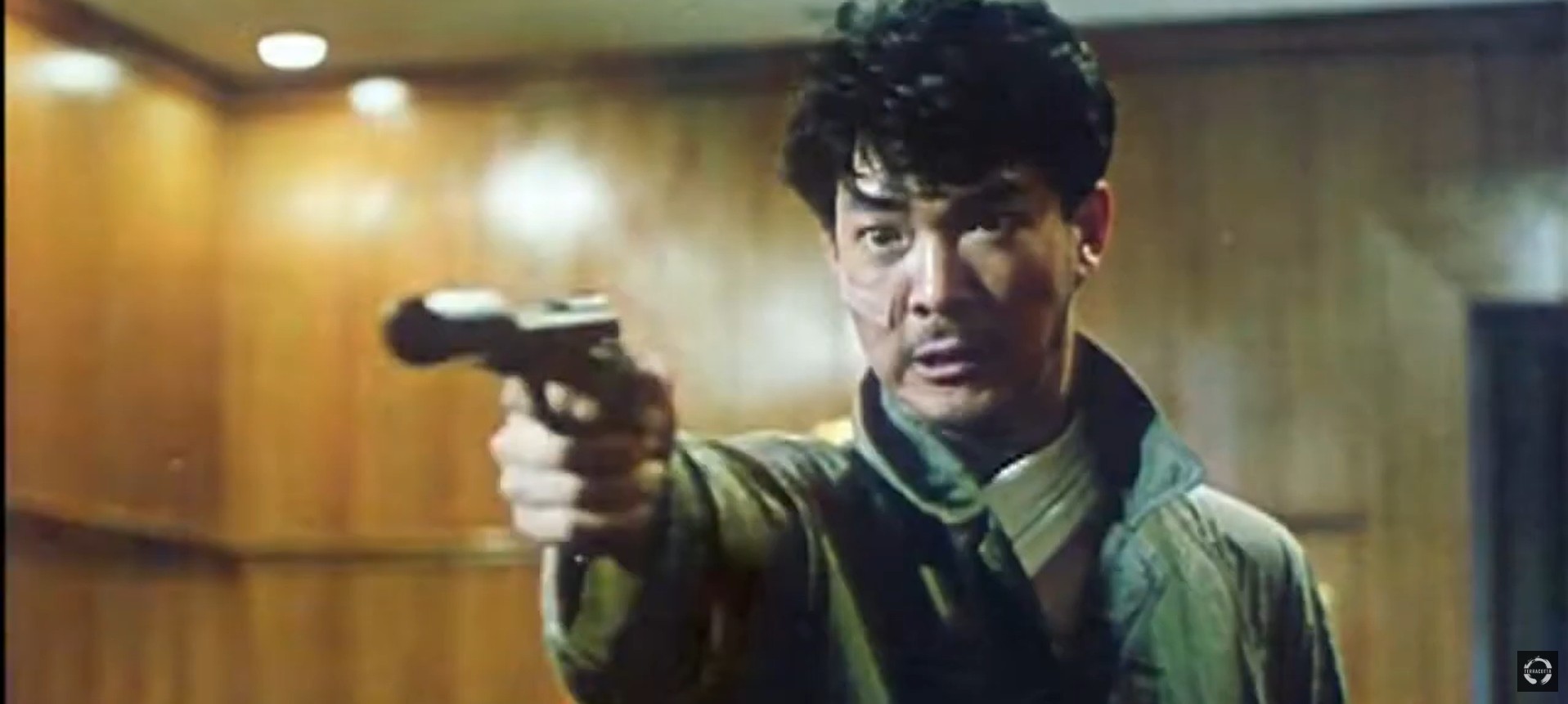
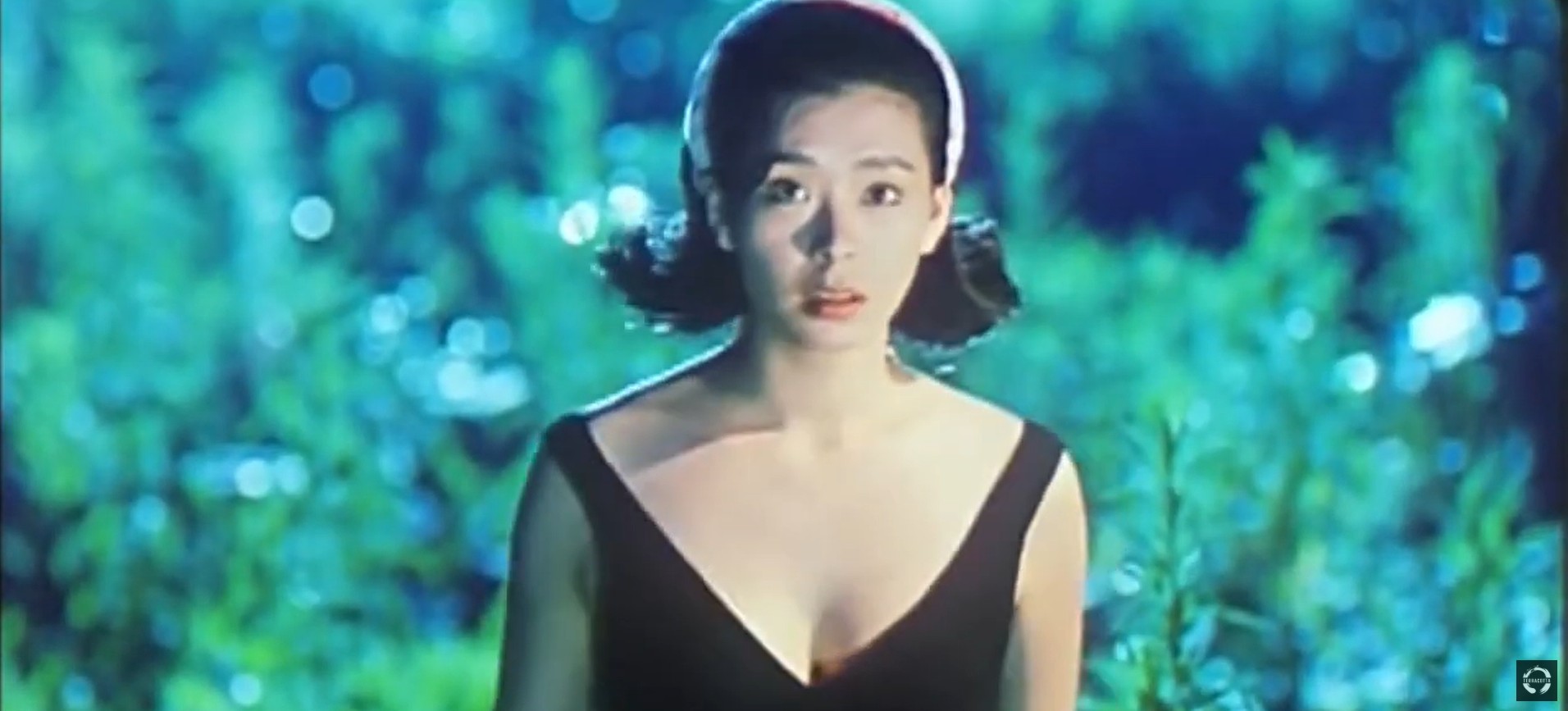
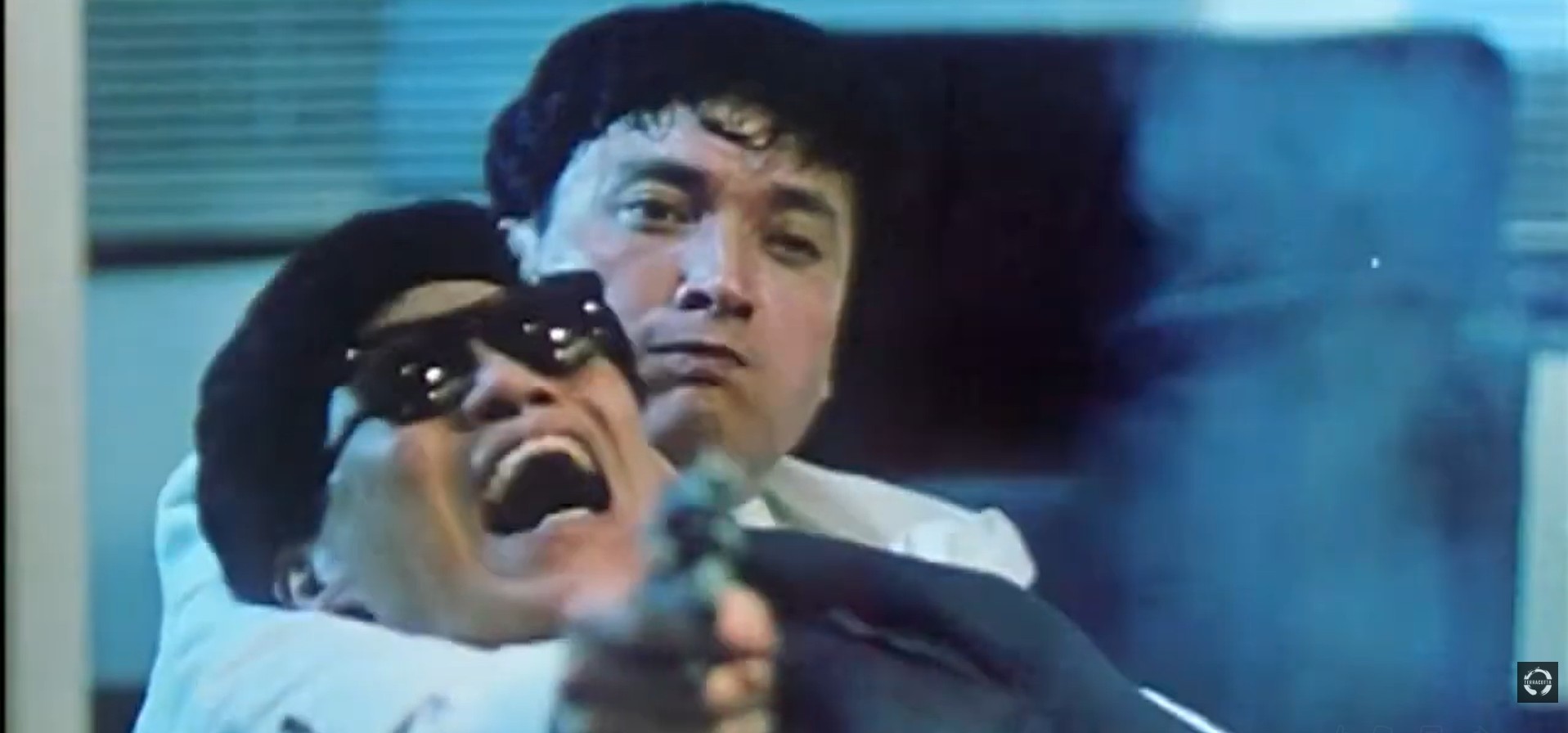
At the tail end height of his career, the Muscles from Brussels, Jean-Claude Van Damme (“Bloodsport,” “Universal Soldier”), finds himself in a self-deprecating lead role that’s campy toward showcasing his own physique but in a slapstick way.  His character Ray is a likeable, affable, cool type with a tragic past, only touched upon ever so briefly and delicately in conversation, who has resorted to selling counterfeit items to make a living.  Yet, Ray’s trying to pull himself into a straightened arrow by jumping at the opportunity to partner with Tommy (Rob Schneider, “Deuce Bigalow:  Male Jiggalo”) for legit business.  Van Damme and Schneider become a buddy action duo with Van Damme knocking around bad guys with jump kicks and parkour while Schneider provides the comic relief with very few, and pale in comparison, combative fighting moments in what is also the same kind of role from Sylvester Stallone’s “Judge Dredd.”  To Van Damme’s credit, the usually unintentionally funny action star arises some comedic chops in a devil-may-care persona that eventually hammers down to a determined save lives ambition, but not before Van Damme egregiously has to thematically remove his shirt for nearly every action scene or strip down to his boxer-briefs so all can good a good view of his athletic, muscular physique.  The whole course is an objectifying tragicomic, especially when he starts to rip through Tommy’s Hawaiian shirts simply by turning his body or being whipped in the rear by Tommy during a rickshaw race with Schneider commenting about his big, beautiful ass.  Yes, men do get objectified as well.  Van Damme and Schneider are eventually joined early on by Lela Rochon (“The Meteor Man”) as a V-Six Jeans Representative from North America with a covert agenda and the iconic Paul Sorvino (“Dick Tracey”) as a CIA operations supervisor taking on counterfeiting, both Rochon and Sorvino subdue their performances initially for twisted knots in the storylines later on that makes his evolving ensemble that much more entertaining.  Moses Chan, Wyman Wong, and Glen Chin, Carmen Lee costar.

“Knock Off” isn’t your typical Jean-Claude Van Damme beat’em up action-thriller though it follows the same principles as one.  Hark Tsui puts forth a kinetic ball of continuous energy, ever evolving and dynamic to keep scenes from getting stale.  From the opening illegal rickshaw race through the streets of Hong Kong city to the massive Budha temple explosion to the cargo ship container toppling scenes, there’s plenty to behold in Tsui stunt and special effects juggernaut.  A less serious Van Damme with Rob Schneider joined at the hip is the peculiar buddy action-comedy we never knew we wanted, brush stroked with late 1990’s superimposed fireballs and the legendary pushed to the limit Hong Kong stunt effects that look quite expensive and detailed beyond belief.  Some of Van Damme’s swift movements are aided by a stunt wire that’s briefly visible in hi-def and a few of Tsui’s stylistic edits, ones that zoom in, try to seamless transition, and give an interior view of a sniper’s scope or a barrel of a gun is heavy handed in it’s editing.  While Tsui gets his filmic credit as the one-and-only director, it’s stunt supervisor Sammo Kam-Bo Hung (“Ip Man”) who should receive recognition for helming the camera for the stunt scenes.  You can see the different styles being pushed together between Tsui’s unconventional down shot angles and Hung’s more straightforward impact in an action shot, creating an eclectic design that adds to the intrigue, especially in Tsui’s downtime moments of conversation that’s not only witty and fast but at an off centered framing that’s more vertically skewed while keeping the concentration on the actors in a wider anamorphic lens in an environment that seemingly wraps around them. 

They say imitation is a form of flattery but this legit MVD Rewind Collection release of “Knock Off” fawns clear adulation with a 2-Disc, 4K UHD and Standard Blu-ray release.  Coming in as the 6th title on the company’s 4K LaserVision Collection, cojoined with the Rewind Collection label, the HEVC encoded, BD66 4K UHD, presented in 2160p in a widescreen 2.35:1 aspect ratio, is noted having a hi-def restoration with a 16-bit scan of the original camera negative that provides more a dynamic color range and saturated depth.  There’s definitely an improvement and a difference in contrast to the standard Blu-ray with a vivid offering of a multihued Hong Kong cityscape from the HDR10 that’s not offered in 8-bit or even 10-bit color depth.  Interiors are subjected concreated warehouses of the colorless and dark variety but no banding to note and no block distortions.  Textures are surprising not there at the level we’d expect but likely due to Tsui’s heavy use of superimposition effects with green fireballs and other types of overlayed explosions, and the action scenes often retract a good amount of detail too.  The 1080p Blu-ray is an AVC encoded BD50 with the same aspect ratio as the 4K.  It too offers a solid presentation but not to the extent of the 4K and still suffers from the same wishy-washy texturing, but the overall presentation is solid and worth the value.  The English language tracks available on both formats are a DTS-HD 5.1 Surround Sound Mix and an uncompressed LPCM 2.0 Stereo.  For any action film with lots of range, depth, and conversation, you certainly want to go with the surround sound option that harnesses every direction and that’s the clear choice with “Knock Off” as it opens the lines of directional communication with the back and side channels, leaving all the dialogue and heavy LFE lifting with explosions primary in the front and clear immersive resonation.  Dialogue has no issues with the original audio track albeit being ADR but used with the original cast’s voices.  English subtitles are available for selection.  The 4K special features include only an archival commentary from action film experts Mike Leeder and Arne Venema.  The Blu-ray contains te same in tandem audio commentary plus a new interview with producer Moshe Diamant, an archived interview with screenwriter Steve E. de Souza, the original making-of featurette, and the original theatrical trailer.  MVD’s Rewind and LaserVision Collection set comes with a thin, cardboard O-ring slipcover that has faux crinkled front image, the original cover art of the highly original Van Damme with a gun (my hint at sarcasm) like a laserdisc paper sleeve would have.  Inside is the black Amaray with the same primary image for the sleeve art sans crinkling but if you reverse the sleep, you’ll see the classic Rewind Classic design with the same Van Damme image.  The Amaray has snaplocks on each side of the case on the inside – 4K UHD on the right and Standard Blu-ray on the left – with an insert containing a mini-folded poster of the LaserVision Collection artwork.  “Knock Off” is rated R, has a runtime of 94 minutes, and is A region locked.

Last Rites: “Knock Off” is no cheap…knockoff. The Hong Kong production is action-packed, outrageous, and campy fun with Van Damme in taking a step back from being the stoic hero and charismatic hero to be the anti-hero caught in the middle who just knows how to roundhouse his way out of an nefarious Russian plot involving nano-explosives.

You Better Damme Believe It! “Knock Off” on 4K UHD and Blu-ray from MVD Rewind Collection!

Yorgos Lanthimos Early Day EVIL is Not to be Missed! “Dogtooth” reviewed! (Visions Home Video / 4K UHD)

“Dogtooth” Available on 4K UHD Blu-ray from Visions Home Video!

Three adult children remain on home grounds by their manipulative father to protect them from the outside world and keep them suspended in a childlike state.  Educated on a basic level and even educated incorrectly to strategically keep their spongy intellect pure and from asking too many questions about the curiosities beyond the front gate, the children must complete chores and workouts under their father’s regimental thumb, earning tokens to keep them engaged with simple activities and rewards, but the outside can’t be stopped from seeping in with exterior influences raising more questions than the father can keep up with lies, excuses, and fabricated stories.  If he finds his children entertaining an inspiration, his immediate reaction is to manipulatively redirect or even use violence if necessary to put his children back in a stationary line, scaring them of dangers outside the home, such as the killer ferocity of a household cat as it’s curiosity that killed the cat.  Or is it the other way around, did the cat kill the curiosity? 

Way before his 2026 Oscar nominated film “Bugonia,” way before his quicky dark-comedic Frankenstein variation “Poor Things,” way before the shapeshifting deadline of forced relationships in “The Lobster,” offbeat and provocative Greek filmmaker Yorgos Lanthimos directed “Dogtooth,” the 2009 psychological horror-drama that displayed a disturbing power-dynamics of a nuclear family by a manipulative father of three.  Lanthimos co-wrote the script alongside Efthimis Filippou, a regular collaborator with the director from Filippou’s debuting “Dogtooth” script up until 2017 psychological, life invasion thriller “The Killing of a Sacred Deer.”  “Dogtooth,” or “Κυνόδοντας” in the native Greek vernacular, is filmed in the heart of Athens, coproduced between Lanthimos, Yorgos Tsourgiannis, and “Do It Yourself” producer Katerina Kaskanioti, and is a collaborated studio project of Boo Productions, Greek Film Center, and Tsourgiannis’s Horsefly Productions. 

“Dogtooth” consists of a tight cast of six actors between the parents, three kids, and a security guard employed at the father’s manufacturer.  Some would say Christos Stergioglou plays one of the worst manipulating parents on screen of our generation with a calm demeanor and a convincing nature while having a ferocious side of physical punishment against those going against the grain.  With a small cast, those taking the beatings can be his children.  “Singapore Sling’s” Michele Valley is in the mother role, an equal schemer in her abetting of the problematic parenting, but it’s quite unclear whether the Mother is either in on the Father’s paranoic protective plan or whether she too is a victim of his deceit.  While she can be seen deriding her children in seldom words and violence, she too follows Father’s strange ways:  pretending to be a four-legged guard dog like her kids, never leaves the house, succumbs to Father’s sexual habits, etc.  The sex never extends from parent to child, leaving most of Father’s perversities kept intact by Mother and a good old fashion VHS stag tape, but there’s still exploitation done amongst the children.  Treated to his own arranged woman to bed, overseen by his Father, the son’s sexual hormones and desires are made docile by the security guard Christina (Anna Kalaitzidou) from his father’s work and is seen as an act of transactional duty rather than having a presence of affection.  Christos Passalis does embody his character with a young, pre-adolescent boy with tempers, sibling competitiveness, and appropriate reactions to all things that accompany a young boy.  Eventually, after Christina is let go exploiting and influencing the younger daughter with sexual tradeoffs and forbidden contraband, the son is forced to have sex with one of his sisters to maintain the stability of a pure environment.  Angeliki Papoulia and Mary Tsonia are the Older and Younger Daughter with similar appearances and attributes, too exemplifying childlike qualities, that make them also like twins in how they act and how they act with each other with the Eldest naturally, without purposeful intent, trying to break free of her father’s grip in the way children do – in irritational and hurtful ways.  Other than Christian, none of the main principal characters have a name, leaving them to be a representation of any family of any kind out in the world.  Steve Krikris, Sissi Petropoulou, and Alexander Voulgaris round out the film’s supporting parts.

Yorgos Lanthimos takes helicopter parenting to the extreme but in subtle, death-by-a-thousand cuts techniques simply by sheltering in place his entirely family for years and himself teaching his children lessons of his own fabrication.  Taught the world is a dangerous place, where cats are the most feared and deadly animal who killed their exiled “brother”, the children fear what’s beyond their sprawling compound so much they don’t dare cross the gate line.  Vulgar worlds like pussy are defined with innocuous objects, such as lamp light, and lesser provocative vocabulary, in this case zombie, is given the designation to little yellow flowers.  The children’s minds are so brainwashed, their identity is also erased along with their names, mostly busying themselves in the same sterile clothing that evokes no emotion whatsoever.  Lanthimos extends this common place sense of being into the character interactions, whether between family members or the supporting characters, that make the entire tone feel that more unsettling and perfunctory.   The sexual tension is chronic, even between the siblings it’s uncomfortably prevalent, but never malicious on the surface as the acts are kept dutiful and necessary to sustain dominion over the children and perhaps even the wife despite its icky film coating.  The whole idea of the titular dogtooth is a rite of passage from childhood to adulthood, the latter suppressed by the weaponization of sex, education, and threat, for when the permanent adult canine, or dogtooth as Father puts it, falls out is when a child can leave the next and in that is manipulative false hope that one day, the strongest tooth, it’s ability to rip through meat and sinew, will fall out on its own accord, essentially making the children a metaphorical dogtooth that needs forceful extraction from its rigid system of enameled manipulation.

Courtesy of Visions Home Video, a premium home media label from Vertigo Releasing, “Dogtooth” arrives on 4K UHD Blu-ray in the UK-Ireland.  Presented with 2160p in the original aspect ratio of 2.39:1, the HEVC encoded BD100 has a superior encoding compared to previous models and other region 4Ks with a Yorgos Lanthimos approved transfer of the 35mm negative that’s contains and controls the grain that once had issues in previous releases with ill-defining effects on darker sections of the scene, establishing corrected contrast where intended and needed other releases failed to accomplish.  A natural light grading shines through with immersive coloring from the monochromic, or achromatic, outfits to the saturation of greens of the compound estate, a dynamic range of the metadata, DolbyVision.  There’s very minor speckling off some individual cells on the stock but the overall product is the best “Dogtooth” has looked and deserves it.  There are a pair of audio layers available:  a DTS-HD Master Audio 5.1 and a LPCM 2.0 Stereo both in Greek with optional English subtitles.  The monotonic dialogue alleviates many issues associated with these tracks as there are no inflections, tones, forced accents, or any other shaded types of vocal manipulation.  The plainspoken, forth-right conversing creates a naturally prominent layer that’s clean and concentrated above all else.  That’s not the say the soundtrack or the ambience drags or lacks behind though it is slightly less dynamic in its diegetic range.  You won’t be fully immersed with audio hits through side or back channels, but every layer has a stronger and bolder presence than before in previous releases.  Special features include a film in tandem audio commentary with stars Angeliki Papoulia and Christos Passalis, an archived interview with Yorgos Lanthimos from 2009, a 2025 London Film Festival stage interview with more in-depth insights from Lanthimos, three deleted scenes, and two original trailers.  Visions home video release is a vision in itself starting with the beginning layer, a cardboard O-ring slipcover with a somewhat glossy, upscaled image of one of the female children locked behind a bar-cell of bare legs.  The same image is represented as the primary sleeve art inside a Scanova case (no Blu-ray logo at the top).  Inserted inside are four collectible cards of high-quality stills from the film and a double-sided folded mini-poster.  The region free release is UK certified 18 for strong sex and nudity inside the duration of 97 minutes. 

Last Rites: “Dogtooth’s” disturbing fan outs, spreads like an infection of manipulation, but is localized in and around the property that’s become a cage, or an invisible fence, with the latter being more poignant to the storyline with the father having them bark and be on all fours like a dog, a pet symbolism indictive of egocentric power over those one can control from the beginning. The new Visions Home Video 4K UHD release is a new and improved upgrade for any collector’s wall.

“Dogtooth” Available on 4K UHD Blu-ray from Visions Home Video!

Cinderalla’s Beauty Evokes an EVIL of Jealously, Obsession, and Beauty Standards. “The Ugly Stepsister” reviewed! (Second Sight Films / Blu-ray)

“The Ugly Stepsister” on 4K UHD Blu-ray from Second Sight!

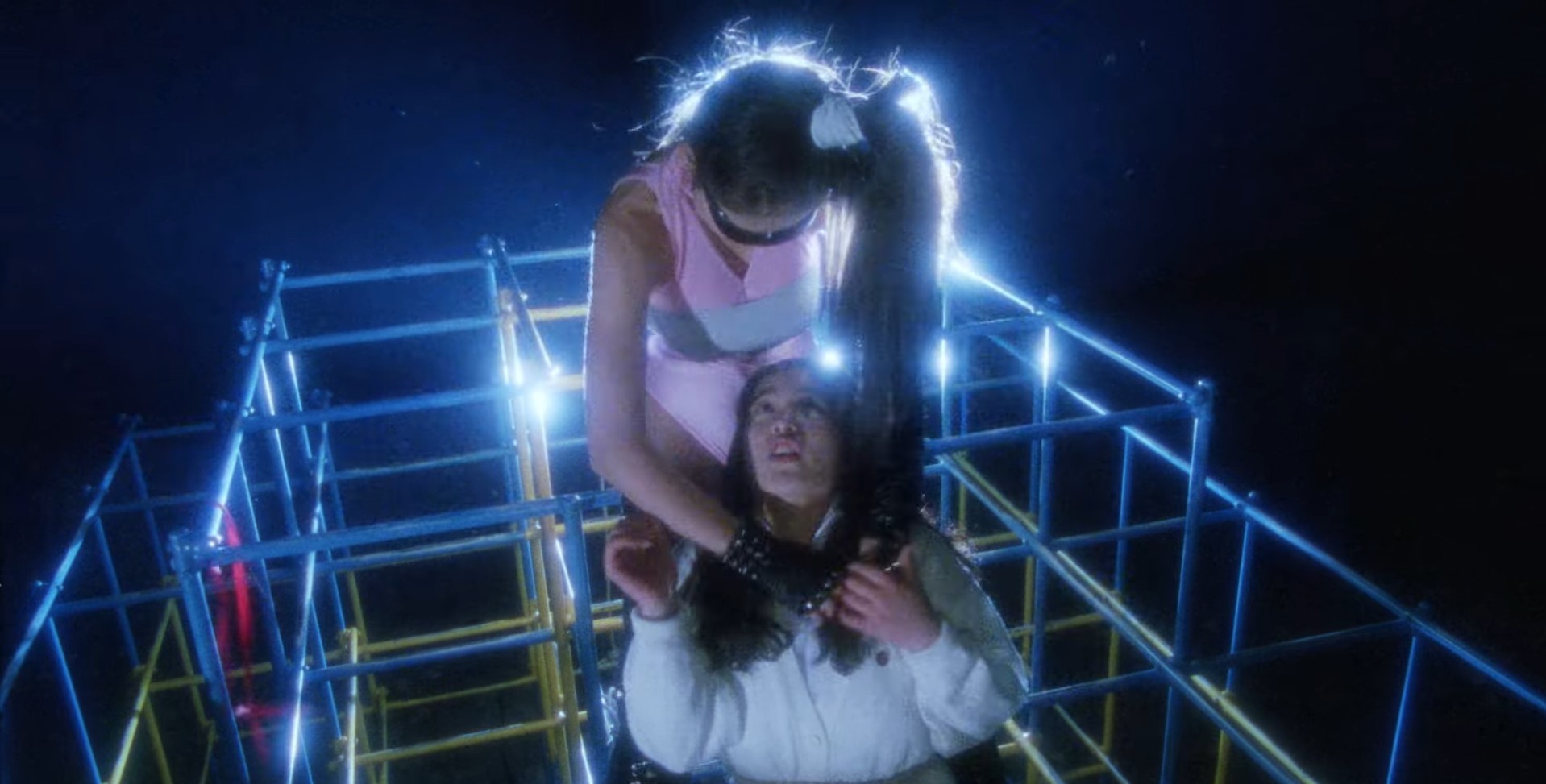
Elvira’s mother weds a wealthy estate owner to re-establish life and permanence in high society.  Alongside living with her sister Alma and her new, beautiful stepsister Agnes, Elvira keeps on smile on her braced teeth though she’s passively mistreated by those around her.  When Agnes’s father suddenly passes away and it’s unearthed the estate has no money to its name, the opportunity to attend the monarchy ball for the prince to select a wife from a pool of available the virginal maidens is Elvira’s persistent dream to marry a prince and get her family back in wealth and power.  Elvira attends finishing school to learn proper lady etiquette but her braces, round nose, and pudgy exterior pushes her aside of teacher’s attention in favor of the beautiful, blond Agnes.  Primeval cosmetic surgeries, tape worms, and no sympathy from her mother send Elvira down a path of obsession despite the harm to herself as she eyes the prize of landing the prince of her dreams over her stepsister. 

Based off the classic folk and fairy tale Cinderella, debut feature film director Emilie Blichfeldt takes a different perspective on the story that retains its roots in happily ever after but redirects the core narrative to the eldest stepsister in immense obsession, pain, and suffering to obtain the seeming unobtainable, to marry a prince.  “The Ugly Stepsister” the 2025 dark comedy and body horror from Norway that emphasizes the lengths one will take to become noticeably perfect in every aesthetic way.  Blichfeldt regularly visit the concept of a deranged perception of beautiful in her short films from the 2013 documentary “Do You Like My Hair?” that aims to spin a reinvention on beauty standards by finding it from within and the more body fantastical “Sara’s Intimate Confessions” that follows a big and tall disproportional woman exploring what it means to be feminine with her overly talkative vulva.  “The Ugly Stepsister” also tackles beautiful in a more painfully, cathartic way in order to achieve, much the same way a cheerleader sustains a lower body weight to make the squad or the self-harm models put themselves through to stay thin and beautiful.  The film, entitled in it’s native Norwegian as Den stygge stesøsteren, is a coproduction between Lava Films, Film i Väst, Scanbox Entertainment, Zentropa International Sweden, and Mer Film with Lizette Jonjic, Ada Soloman, Mariusz Wlodarski, and Maria Ekerhovd in the role of international producers. 

Though a beauty already in her own right, Lea Myren donned prosthetics and makeup for the titular Elvira to make the appearance of later teen, early 20s woman just on the verge of losing the baby fat.  Other personal traits added to Elvira’s character are braces, dark corkscrew curls, and muted toned outfits to further and contrast as a perceived ugliness within the context of the era, but in reality, Elvira’s beautiful young woman already with soft, large eyes, a curvy physique, and a natural gift of goodness within her that’s twisted by exterior conventions on what is defined as beauty. Shedding some of those elements, like the braces and weight, transform Elvira into a more desirable young lady now visible to all, from her draconian etiquette teacher who initially wouldn’t give her the time of day to the Prince who first looked upon Elvira with disgust in her natural state before become an exquisite creature stemmed from surgery and other unnatural body manipulations.  Myren wonderfully careens the character right into the dirt as Elvira cuts off her nose to spite her face, damn near literally, on the quixotic quest to change her outer shell that ultimately changes her from the inside.  Constants in Elvira’s life, or way, are Agnes, who’s only referenced as Cinderella once in a look that isn’t too cinder-y, played by Thea Sofie Loch Næss (“Arctic Void”) who doesn’t struggles with her character’s looks but contends with her new family’s acute empowerment, mostly rooted in family favoritism and jealousy, as well as Alma, Elvira’s younger sister with a by far majority much more comfortable in her own skin despite having dressed similarly with frizzier, unkempt hair by way of Fo Fagerli’s approach. Loch Næss doesn’t portray the as pure and innocence of the Disney classic, with her passionate romance with the stable boy in the hay barn, but the character is fairly close in all other regards with the more significant change to the characters being the stepsisters, especially Elvira’s reserved notions turned bitter when being compared to Agnes.  Alma is altogether out of the equation with no bitterness in her heart nor with any malice whatsoever to anybody but tends to her sister’s rise and downfall with little pushback.  Ane Dahl Torp (“The Wave”) is in the role of the mother Rebekka who will do anything to advance her daughter in society, mostly for selfish reasons as we’ll gather later on through a course of characters, such as the Prince Julian (Isac Calmroth), stable boy Isak (Malte Gårdinger), brutal plastic surgeon Dr. Esthétique (Adam Lundgren), and finishing school head mistresses/lesbian lovers (Katarzyna Herman & Cecilia Forss) who have contrasting approaches, both negative, toward Elvira’s waistline. 

“The Ugly Stepsister’s” body horror is more than just a serious manipulation in losing weight and cutting more than corners toward image perfection.  The real horror is in the shame, the shaming of the body that’s overlooked, called out, and humiliated and to make matters worse for Elvira, her body type is by all of today’s standards curvy in the right places and beautiful albeit a body double was used for her pre-trim down nude scene.  Prosthetics are in place around the face and arms to make Lea Myren appear a little weightier, but the difference is extremely negligible and that’s the real power of horror when it’s terribly subtle, an already beautiful young girl succumb to peer and societal pressures that induces crazy self-harm for opinionated ideals and appearances.  Blichfeldt’s ideas of body-shaming extreme measures done by Elvira are not a far stretch from what self-conscious people do today about their weight.  Instead of swallowing a tape worm egg, one can stick a figure down their throat to achieve the same effect.  Instead of breaking a nose to re-mold with a hammer and chisel, surgery and medicines are abused ot be the new, easy, fast weight lost solution.  Blichfeldt comparative shots linger on Agnes with Elvira seething with envy and with the director’s bold choice of provocative nudity, exposing genitalia and depiction of X-rated acts, engages an alluring perversity that sheds light on a superficial world of beauty and sex, shielding the core, deeper problem of societal shame. 

Second Sight Films brings the Shudder and Vertigo Releasing North American marketed  “The Ugly Stepsister” to 4K UHD Blu-ray.  The ultra high-definition release is HVEC encoded onto a BD66 and presented in HDR10 with Dolby Vision, at 2160p, and in it’s the original aspect ratio, a European 1.66:1 widescreen.  Match the dark toned nature, the grading also exacts a somber coating with mahogany and ebony wooden structures and dimly lit castles of a Victorian era to bask in an austere state were, more so with personal happiness, is hard to come by.  Details are hard to stomach, in a good way, with proximate detail in the special effects closeups, such as in the mutilation scene where a nearly severed toes are hanging on for dear life by what little skin in left tethered to the foot, that go into macrolevel detail and is accentuated by the additional pixels.  Skin tones appear natural and unique to each individual in a purposeful contrast of fair and tanned skin along with different layers of texturing between organic qualities and the fabric outfits they wear, such as Agnes more single block outfit with a smoother design compared to Elvira’s multiple layers and pattern garb.  The Norwegian DTS-HD Master Audio 5.1 has an eclectic powerhouse soundtrack of synth and string orchestra from John Erik Kaada and Vilde Tuv.  The story doesn’t have a great deal of direction use for the 5.1 mix with mostly a conversating piece with mostly diegetic ambience, leaving the 5.1 less immersive than required, but there is vitality and strength behind the dialogue and action, clear and unobscured in its clean presence.  The multitude of squishiness, again the severed toes and also the removal of the tape worm through an orifice, is highly emphasized more max effect.  Areas of depth mostly lingers around the front but there are opportune moments in medium shots for audio expression.  English subtitles are clean, accurate, and well-paced.  Special features on the standard 4K release include a new audio commentary with director Emilie Blichfeldt and filmmaker Patrik Syversen, a new audio commentary with critic Meagan Navarro, a new interview with Blichfieldt This is my Ball, a new interview with star Lea Myren Generational Trauma, a new interview with Cinderella actress Thea Sofie Loc Naess Take Up Space, a new interview with special effects artist Thomas Foldberg Character and Gore, a special effects featurette The Beauty of Ugly:  The Effects of the Ugly Stepsister, a visual essay from Kat Hughes A Cinderella Story, deleted scenes, and both the Blichfiedt short films mentioned earlier in this review:  “How Do You Like My Hair?” and “Sara’s Intimate Confessions.”  The review here is for the standard 4K UHD Blu-ray set but there is a limited edition set that includes the 1080p Blu-ray as well.  The black Amaray case features a character still of Elvira on the front cover in all her dark maiden and sweet-faced glory.  There are no physical extras inside.  UK certified 18 for strong sex, nudity, and gore, “The Ugly Stepsister” from Second Sight Films is region free and has a runtime of 109 minutes. 

Last Rites: “The Ugly Stepsister” is a yarn not yet explored in other Cinderella tales, especially when it involves body horror and a sexually explicitness that that will forever make watching the Disney classic now uncomfortable when a recalled thought from Blichfeldt’s film pops into the visual cortex. Yet, it’s a remarkably twisted story from a different perspective that isn’t magically fantastical but grim and tragic.

“The Ugly Stepsister” on 4K UHD Blu-ray from Second Sight!

One Man’s Love and Another Man’s Revenge Take on the Mothers of All EVIL! “Forgotten Pistolero” reviewed! (Carambola Media / Blu-ray)

“Forgotten Pistolero” Now Available on Blu-ray!

Rafael is a hunted man as he travels from Mexico to Texas searching for his childhood friend Sebastian, a son of a Mexican general who years earlier was slain by an unfaithful wife and her lover shortly after returning from war with the French.  When Rafeal happens upon a man living in solitude on the land, he identifies him as his long-lost friend who has forgotten about his traumatic past and decides not to revictimize his friend of the past, but when Rafael is captured by bounty hunters, Sebastian saves his life that spurs Rafeal into unveiling to his friend his real childhood tragedy.  Sebastian and Rafael set upon a mission of revenge and to save Sebastian’s sister Isabella, who Rafael has fallen in love with and who has had an arranged marriage to a humble shopkeeper to rein in her opposition to her mother’s betrayal.  As the two men battle unscrupulous gun-toting henchmen and deal with their own personal issues in their own way, the gunfighters unravel the truth about their Sebastian and Isabella’s parents while shooting their way toward those directly responsible for unending their tranquil lives. 

“The Forgotten Pistolero,” aka “Gunman of Ave Maria,” aka “Il pistolero dell’Ave Maria” is the 1969 Italian spaghetti western based on the converging of Greek tragedies from Aeschylus, Euripides and Homer.  Notable Italian western director Ferdinando Baldi, director of “Texas, Adios” and “Django, Prepare a Coffin,” pulls forth the betrayal and revenge tale out of the fourth century and into the 19th century set in the semi-arid landscape between Mexico and Texas with spears traded out for six-shooters.  The script is penned by multiple writers with Vencenzo Cerami (“The Silent Stranger”), Pier Giovanni Anchisi (“Hate is My God”), Mario di Nardo (“Aphrodite, Goddess of Love”), Federico de Urrutia (“Hour of Death”), and even director Baldi to grasp the immense drama of tragedy and place it inside the context of a western gunslinger.  “The Forgotten Pistolero” came at the height of the spaghetti western subgenre produced out of Italy with “Django” producer Manolo Bolognini as feature showrunner with Izaro Films and B.R.C. Produzione as production companies filming primary in Spain doubling as the Central and North American west.  

Like many Italian films of the era, especially in the spaghetti western and horror subgenres, the cast is comprised of multinationals with New York-born Leonard Mann at the lead actor credit.  Mann, who began his career in Italy and continued acting in a number of Italian films (“The Unholy Four,” “Death Steps in the Dark”), plays the titular pistolero Sebastian inexplicably haunted by his past while living in solitude until childhood friend Rafeal, played by Italian-born Peter Martell (“God Made Them… I Kill Them”), discovers his friend and reveals he truth that’s subconsciously plagued Sebatian for far too long.  There’s a show of unspoken connection between the two characters that time faded and is rekindled by mutual respect in both – Rafael’s intentions to not hurt Sebastian with the truth by running away after finding him and Sebastian’s tracking him down and saving him from bounty bandidos.  No words needed to describe their bond and through Mann and Martell’s acting do we see that connection solidify to be indestructible.  Completing the childhood friendship is Isabella, played by Spanish actress Pilar Velázquez (“Naked Girl Murdered in the Park”), who is forced to marry a humble yet good man shopkeeper Ignacio (Luciano Rossi, “Salon Kitty”) to be out of illicit lover Tomas’s way as he tries to woo back Anna, both of whom staged a coup and killed Sebastian and Isabella’s father, General Juan Carrasco (José Suárez, “Texas, Adios”).  Isabella adds crucial love interest to Rafael’s state of mind as the hunted gunman finds solace at the bottom of the tequila bottle with his life on the run and his love married to another man.  Rafael’s only hope is Sebastian, thought dead or believed to have vanished by his treacherous mother Anna (Luciana Paluzzi, “99 Women”) and her scoundrel lover Tomas (Alberto de Mendoza, “Horror Express”) who have drifted apart and have their own complex dynamic to which in itself is failing falling out to have permanently taken a father away from his children and have it result all for naught.  Sebastian slowly reconnections with Rafael and himself as his subdued vengeance is ironically rooted by a fierce craving to see those responsible pay. 

Ferdinando Baldi’s surface-layer retribution theme has a subaqueous depth of leagues-upon-leagues of combative and raw emotion, seeded by a singular event of betrayal, separation, and loss all in the life-altering blink of an eye.  Though crucial to thought processes and motivations of the character on either side of the moral coin, the story bypasses the long years between the assassination when Sebastian, Isabella, and Rafael are children and much later when the obligation of adulthood comes knocking.  What’s not depicted from those omitted years are the trials of Rafael’s passion for Isabella and his arduous ordeal to evade capture by Thomas’s goons nor the privy of Sebastian’s life since the death of his father other than it’s made known Rafael’s mother took Sebastian under her wing and died recently.  What’s also missing, and has becomes quite a negative plot hole in the story, is how Rafael and Sebastian learned to gun fight and do it extremely well that becomes key to their reckoning success.  Isabella too suffers living in close proximity to her mother and her illicit lover with a seething hate, especially for her mother, and her relationship with a timid but kind shopkeeper who aims to please her happiness without demanding much from her already shattered childhood.  Triggering trauma, down the bottle depression, suffering in silence, and a searing hatred coupled with perfected embattled showdowns and gunslinging escapades lead up to an unraveled, truth-be-told twist ending of scorching inferno on where it all started.  Baldi knew how to frame a shot that paired people with steady tension or to find their true North when it came to exposition and his gunfights, and though not inundated with rabid rapid-fire riddling with bullet holes, “Forgotten Pistolero” does stand firm in the turbulent ocean of western films, especially with flawed, hero-errant protagonists.

Catalogued title 001 for the IFD Films offshoot label, Carambola Media, distributed through Diabolik DVD, “Forgotten Pistolero” quick draws a new 2-disc, high-definition Blu-ray, encoded with AVC on a BD25 for the English ADR and a BD50 for the Italian ADR language version because it’s accompanied with extras.  The different languages are encoded on individual discs.  The extra pixels offer an extremely high level of detail that reproduces a competent saturation of a warmer graded film, complete with saddle brown and burnt sienna tones, brightly lit in exterior definition and really absorbed with the interiors from it’s 2K saturation of the 35mm print presented in a 1.78:1 aspect ratio.  No obvious print damage to the 1969 film, emulsified and preserved properly for later restoration efforts of today.  Often skin tones appear orangish, as seen in many DVD updates, but the color correcting process works wonders with “Forgotten Pistolero’s” verisimilar viewing.  As noted, each language track has its own disc that offer two audio options on each disc.  The English and Italian language discs come with a DTS-HD Master Audio 2.0 Mono mix and an uncompressed LPCM 2.0 Mono, both rendering ideal fidelity through the power of early Italian cinema ADR with only insubstantial studio inference and no hissing or crackling pops to note.  Either track will work with a seemingly natural flow, even the English track since some actors are mouth articulating English works, as any kind of desynch between the action of talking and the post-production audio has egregious control.  Gunfire has that distinctly rich ricochets effect, and the punches pack a nice wallop when struck, both typical in spaghetti western greats.  The interview with Leonard Mann and the original trailer is exclusively on the Italian language disc whereas the English track focuses just on the feature.  The standard Blu-ray comes in a standard Amaray with an extra lock-in flap for the second disc.  The sleeve art is of the film’s original poster art with a shirtless Leonard Mann, who’s never shirtless in the film, looking cowboy rugged with his gun holstered on his hip.  The hard A region encoded disc is not rated and has a runtime of 83-minutes.

Last Rites: Don’t mistake “Forgotten Pistolero” as an ordinary spaghetti western and don’t ever compare to it to The Man With No Name trilogy as a totally separate type of Italian western but the Carambola Media release is something special, pulled from the depths of Greek mythology, and spun to be a tale of tragedy, twist, and a torrent of gunfights and emotions.

“Forgotten Pistolero” Now Available on Blu-ray!

Sometimes Sacrificing for Satan for Favors Does More EVIL Than Good! “Sex Ritual” reviewed! (International Media Network / DVD)

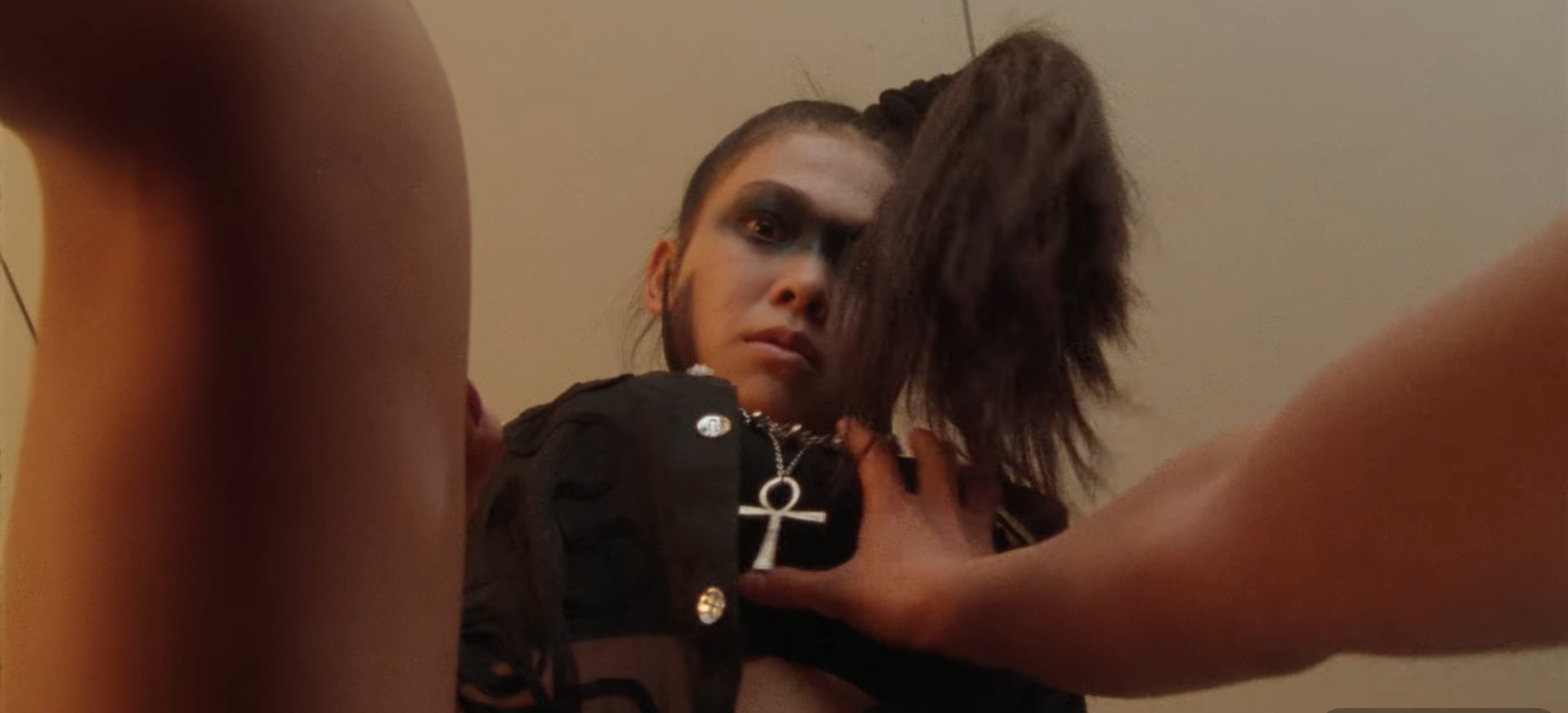
The sudden death of her mother has left Ceren in the hands of a pettish and immoral stepfather.  Smacked around and even possibly raped while unconscious, Ceren becomes reserved while being on defense whenever her stepfather is around.  She ultimately joins a satanist group at the behest of friend Tuna who has ulterior motives of human sacrifice for the 13th of the sacred year where a rare celestial alignment allows Lucifer to grant powers to his disciples in return.  Ceren’s reluctant to be the Satanists’ much needed fourth person for the ritual, involving drinking each other’s blood and eating a helpless kitten, has nearly pushed her to the limit but when a young woman, a promised sinner, is kidnapped, tortured, and murdered on a pentagram and all in the name of Lucifer, Ceren is pushed into immense guilt.  When each of their supernatural powers come to light, Ceren has the ability to resurrect her deceased mother who takes care of Ceren’s immediate problems, such as her abusive stepfather, as well as be a guide to help the falsely accused sinner, the sacrificed young woman, to take revenge on her satanic murderers.

Never in all my horror movie watching existence have I ever seen, or come across, a Turkish horror movie.  Well, there’s a first for everything and Özlem Yesilyurt is the first director to have his horror film from Turkey, entitled “Sex Ritual,” to cross my desk.   Granted, “Sex Ritual” is an eye-catching and provocative title with lots of loaded promises but the conspicuous title is a Westernized conjuring to lure viewers, like me guilty as charged, into an intriguing concept based off title alone.  The real title is “Seytanin Elçiler,” roughly translated as “The Messengers of Satan” a far, far cry from the more outshining “Sex Ritual” title.  The 2023 satanist horror that allures reclusive and repressed individuals into doing horrible things is a scripted story written by Askin Kartal (“Lilith Cinleri,” aka “Lilith’s Demons” and “Zina” aka “Other”).  Mert Ozan Düz (“Zina”) produces the film under his company, Mert Production Media.

The story is casted entirely with Turkish actresses and actors with Yalçin Cemre at the center of the conflict.  Life browbeaten with her mother passing away and she now dwells under the ignoble thumb of an abusive stepfather, Ceren has little-to-no options in life until the opportunity to escape with a new set of friends, friends of the Satanic kind.  Ceren agrees to join at the constant behest of friend Tuna (Atilla Karahan) who has ulterior motives other than to be a good friend to the downtrodden Ceren in a pure case of netherworld summoning exploitation.  Not sure what Ceren was expecting, or perhaps there is some conjecture lost in translation, but when the satanists, which round out with Caner Gölgüoglu and Yagmur Yenice, begin to cut themselves, drink a bowl of their own blood, kill and eat cats, and the event murder with glee satisfaction, a hesitant Certain eventually goes with all of it without much of a stern opposition that makes her just as accountable for all the ritualized death at the groups’ hands.  Yet, the story makes her out to be the duped heroine and the savior of the sacrificed’s spirit, played by Renas Işıklı in life and death as the unfortunate young woman Selin who has her nipples cut off (not shown but implied with edits) during the sacrificial ritual.  Ceren uses her demonic powers for anti-hero good by taking revenge on those who’ve done inherent wrong to others, such as against her stepfather Kazim Arslantas along with Selin, by resurrecting dead mama (Esra Vural) to take exact the revenge. 

Özlem Yesilyurt’s feature can be construed as a very limited budgeted film with only a handful of simple, repeated locations (a scare abode, a vacant warehouse, outside bench), skirted-by special effects, and less-than-effectual emotional and dynamic dialogue between characters to progress a natural story.  Ceren’s stepfather talks a big improper game with threats and innuendos toward Ceren’s youthful beauty, but his actions are rather mild and any physical abuse, other than a handful of open handed slaps, have been crudely implied, barely registering a sexual encounter.  Strobe lights and some clinging-for-dear-life scab prosthetics make up more than most of the special effects efforts coupled by ham-fisted, overexaggerated performances that are more into theatrical play melodramatics rather than embodying a sense of practical realism.  The satanic enthusiasm between Tuna, Berk, and Asli finds refreshing footing with a disturbing appetite to do all the unspeakable rituals just to be granted unnatural powers, ones that prove to be fruitless against Ceren’s revivification of the dead which begs the question of who exactly did the satanist sacrifice for?  You would think if it was actually for Satan himself, he would not have gifted the fourth wishy-washy acolyte Ceren with a formidable ability over his true followers, unless Satan’s a real son of a bitch and likes to see the world burn no matter who bends a knee to him.  The “Sex Ritual” title is pushed to the seams, stretched to sell copies on a provocative promise that isn’t fulfilled as there’s no sex – voluntary, influenced, or forced copulation – to bring about infernal Hell on Earth, or at least in an inner circle of the desperate to be devilish. 

“Sex Ritual” is a conjured up Turkish horror now available in North America on DVD.  The MPEG2 encoded DVD5 comes courtesy of International Media Network, aiming to bring worldwide horror to western audiences.  Presented in a widescreen 1.78:1 aspect ratio, IMN isn’t the pinnacle of transfer quality but the digital picture has a fair amount of inherent success that has already done the preinstalled work but “Sex Ritual” is a release that’s essentially from farm to table with an ungraded picture within the framework of a 720p resolution, possibly upscaled through your player and television setup.  To its advantage, the feature doesn’t have the scenic, action, or special effects range to test the format and that makes the picture look better, cleaner, and with greater emphasis on detail than typical effects boosted horror with a snappier pace to build the intensity and the terror.  “Sex Ritual’s” often slowed down, lingers on scenes, because of the budget limitations and this results in never challenging the compression.  The audio is an uncompressed PCM Stereo 2.0 mixed in the Turkish language with English subtitles that synch and pace just fine with no sign of misspelling or broken sentence structures.  The little devilry ambiance instilled is held at bay, reserved to be only accessorial to the maniacal laughing and victimizing screams, and the dialogue supplied has prominence and strength between a mostly conversating narrative contrived of pressure, abuse, and bullying with little substance in Ceren’s beset angst and a proper farewell to dear old dead mother.  The generic stock soundtrack from Ekrem Düzgünoglu (“Lilith’s Demons”) lacks vitality to be impactful and sounds as it pulled and edited directly from a generated percussion and synthesizer you find free online.  For encoded special features, there is only a chapter selection on the static menu.  The physical DVD comes in a standard Amaray case with a simple, yet bold and captivating sleeve art with a similar relevance to Ceren and the pagan act with “Sex Ritual” hovering over top, a good marketable look for the IMN release.  The 82-minute DVD comes unrated, though not listed, with region free playback. 

Last Rites: Between the poor taste westernized title and the stale progression of the narrative, “Sex Ritual” has no path forward in summoning its darkest qualities for power and glory in this Turkish-made, low-budget, forgettable thriller.

Sex Ritual Trailer (2026) on Vimeo