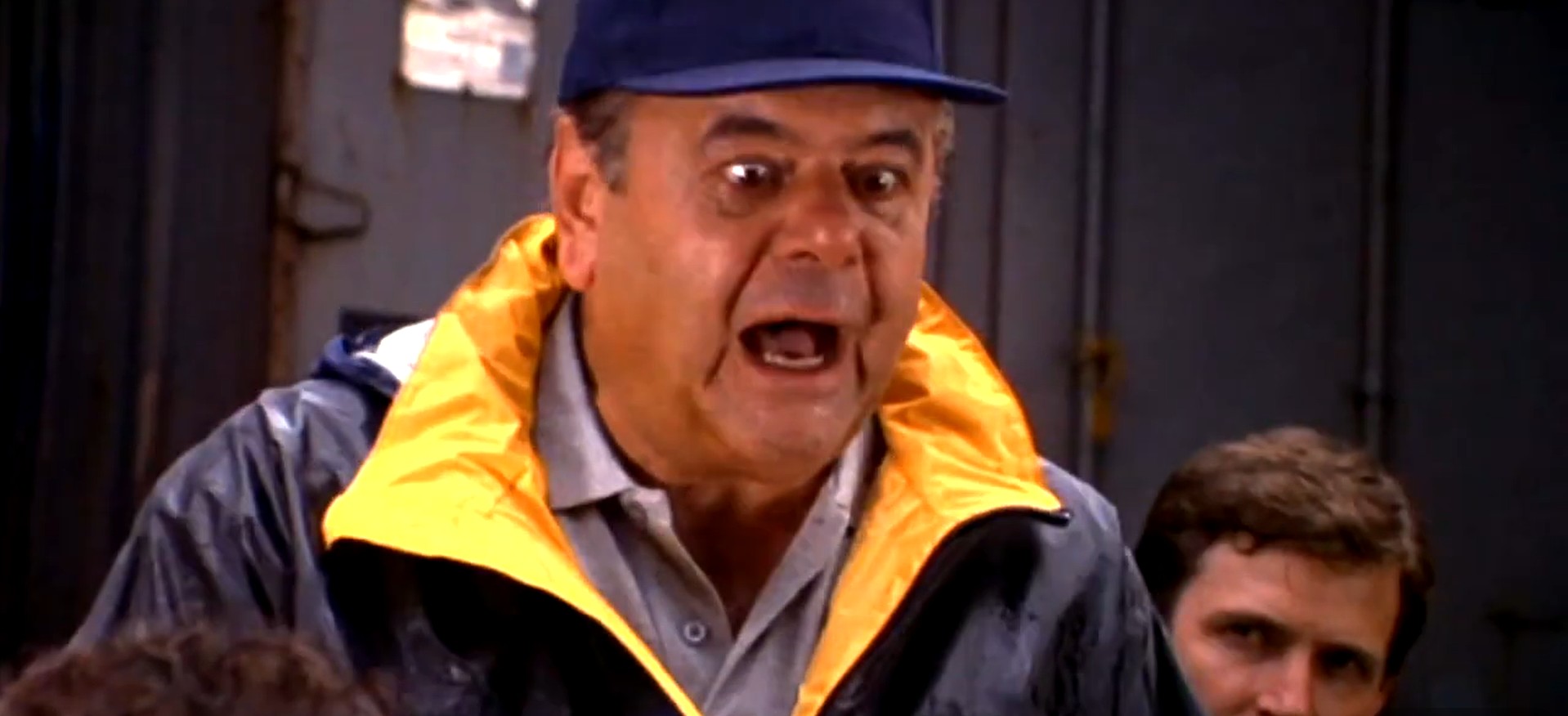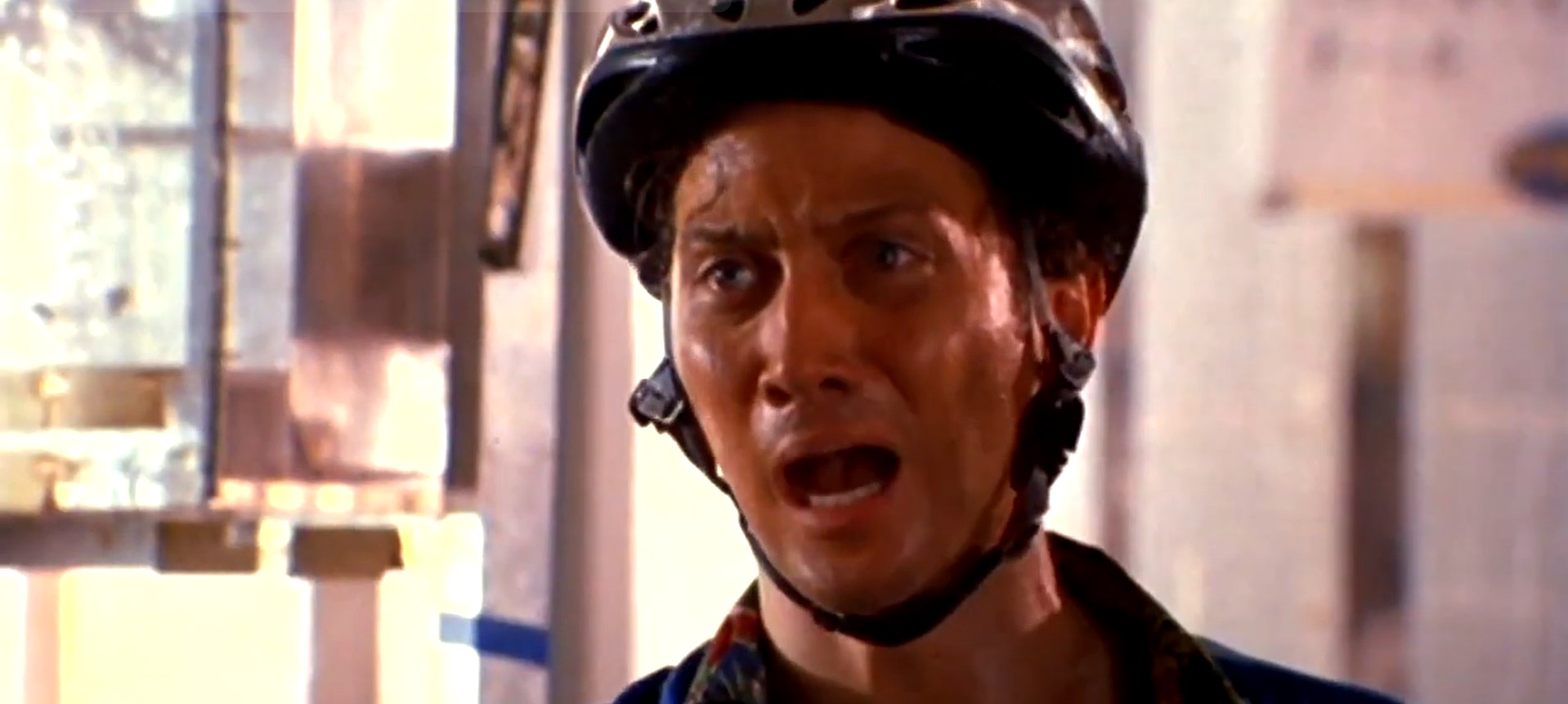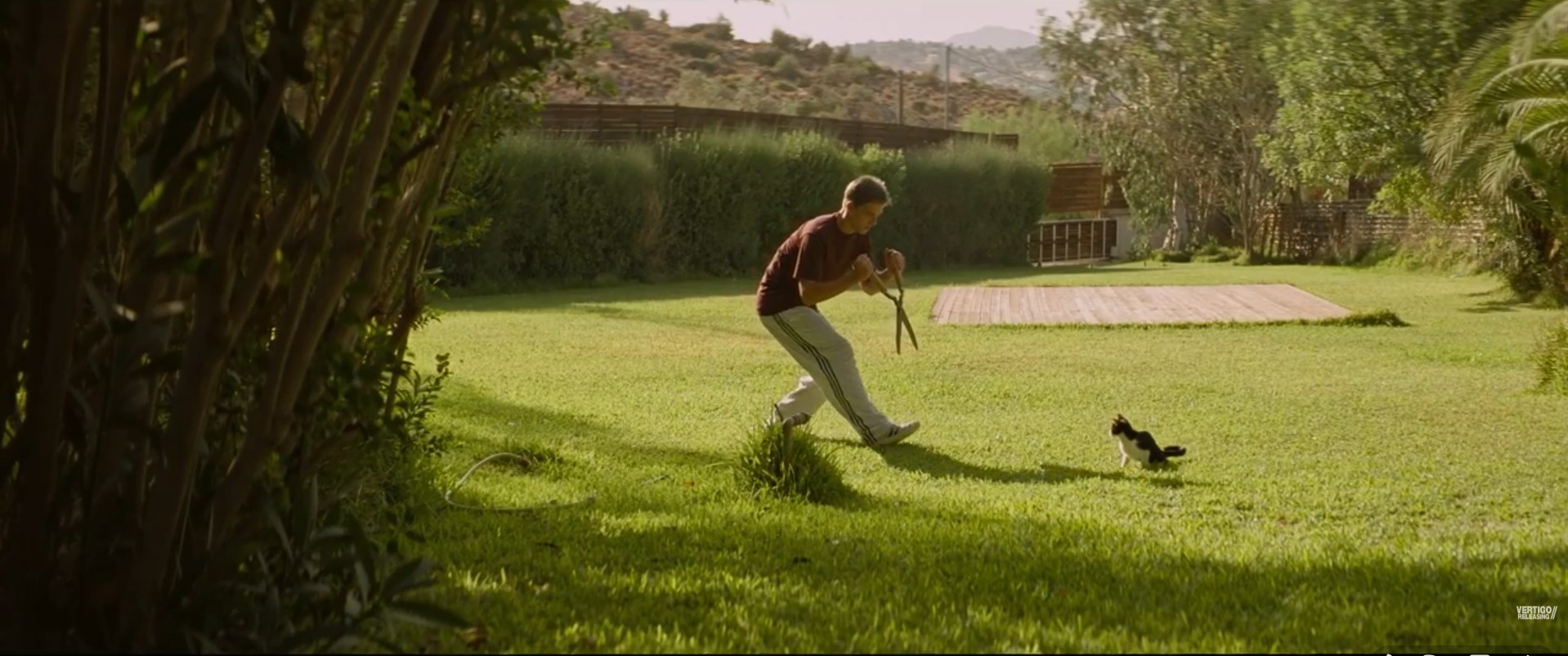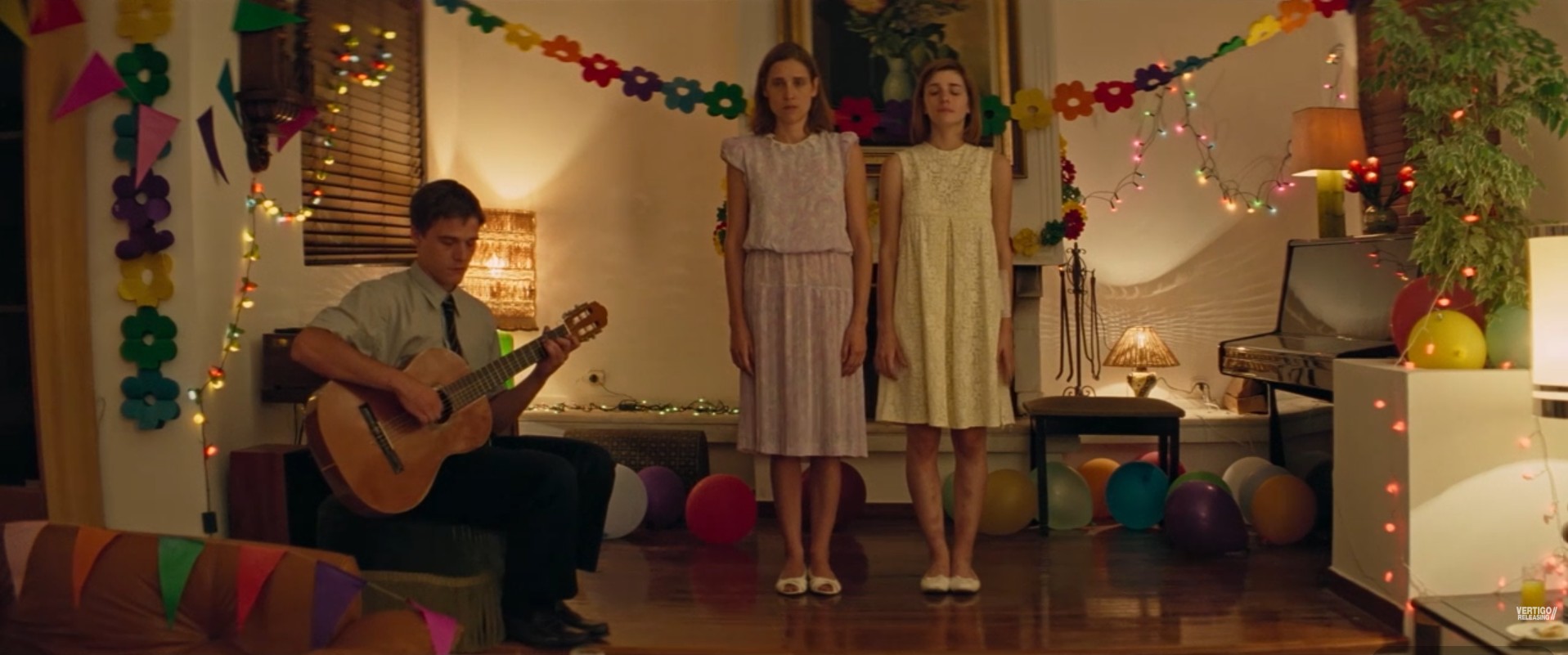
The Demon Concubine Is After the EVIL Power of Demon Summoning Upon Earth! “Saga of the Phoenix” reviewed! (88 Films / Limited Edition Blu-ray)

Own “Saga of the Phoenix” on Blu-ray from 88 Films!

For 660 years, Ashura, the Holy Virgin of Hell, has used her powers to resurrect demons from the underworld.  With the help of virtuous fighters Lucky Fruit and Peacock from the spirit realm, has renounced her temperamental intentions to use her powers for evil ever again and live beside the mortals under the warmth of sunshine.  When she accidently summons demons on Earth, Ashura is brought before Master Jiku and the Divine Nun to access the damage and reign judgement.  They sentence her to live in cell of the relaxed Buddha for all of eternity, but she persuades them one chance to live amongst the humans for seven days, just enough time to live under and enjoy the only thing she wants, the sun.  The Demon Concubine has a different plan for Ashura.  Seeking her demon resurrection powers, the Demon Concubine aims kill her but with the help of Lucky Fruit, Peacock, and her new human friends, Ashura will battle against the Demon Concubine and her demonic forces. 

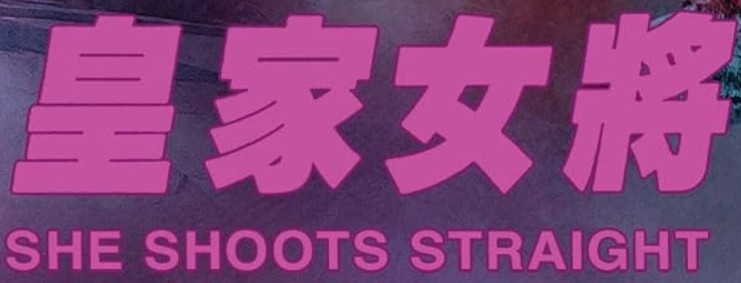
“Saga of the Phoenix” is the Golden Harvest produced, 1989 released sequel following quickly behind the 1988 released “Peacock King.”  Based off the Japanese manga “Peacock King” written by Makoto Ogino from 1985 to 1989, the action-fantasy film was codirected by returning “Peacock King” director Ngai Choi Lam (“Riki-Oh: The Story of Ricky,” “The Cat”), aka Lam Nai-Choi, and newcomer to the series Sze-Yu Lau (“Forced Nightmare,” “My Neighbors are Phantoms!”) with “Game of Death” actor Biao Yuen stepping away from writing the follow-up and be more involved on the acting by returning to one of the main roles from “Peacock King.”  The script is from a confluence of Japanese and Hong Kong screenwriters, initially scripted by Japanese manga adaptation to television screen writer Hirohisa Soda and then adapted by Tsui-Wah Wong, You-Ming Leung (“Once Upon a Time in China”), and Sau-Ling Chan, none of whom were involved in “Peacock King.”  Hong Kong’s cult and genre film product Lam Chua (“Erotic Ghost Story, “A Chinese Torture Chamber Story”) serves as producer on the Golden Harvest and Paragon Films Hong Kong-Japanese coproduction. 

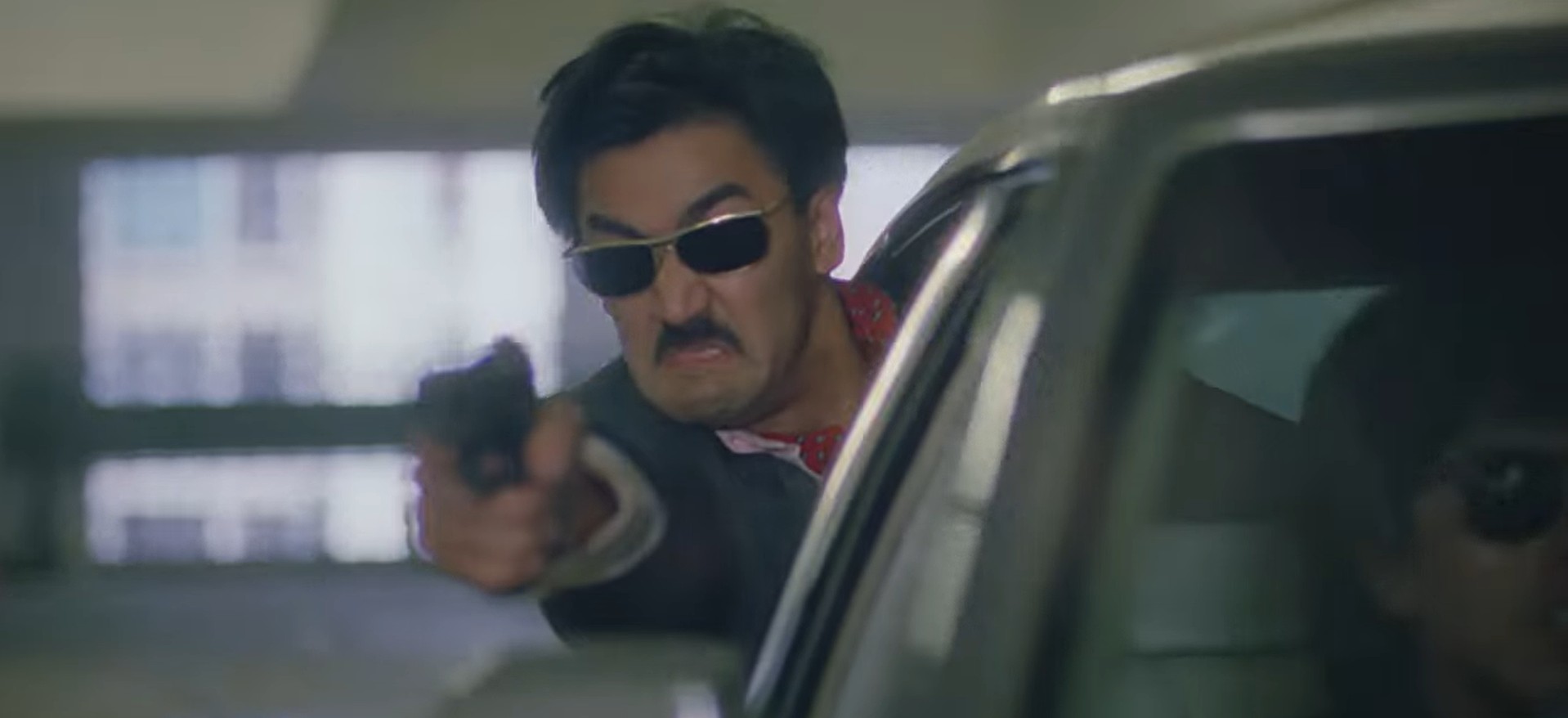
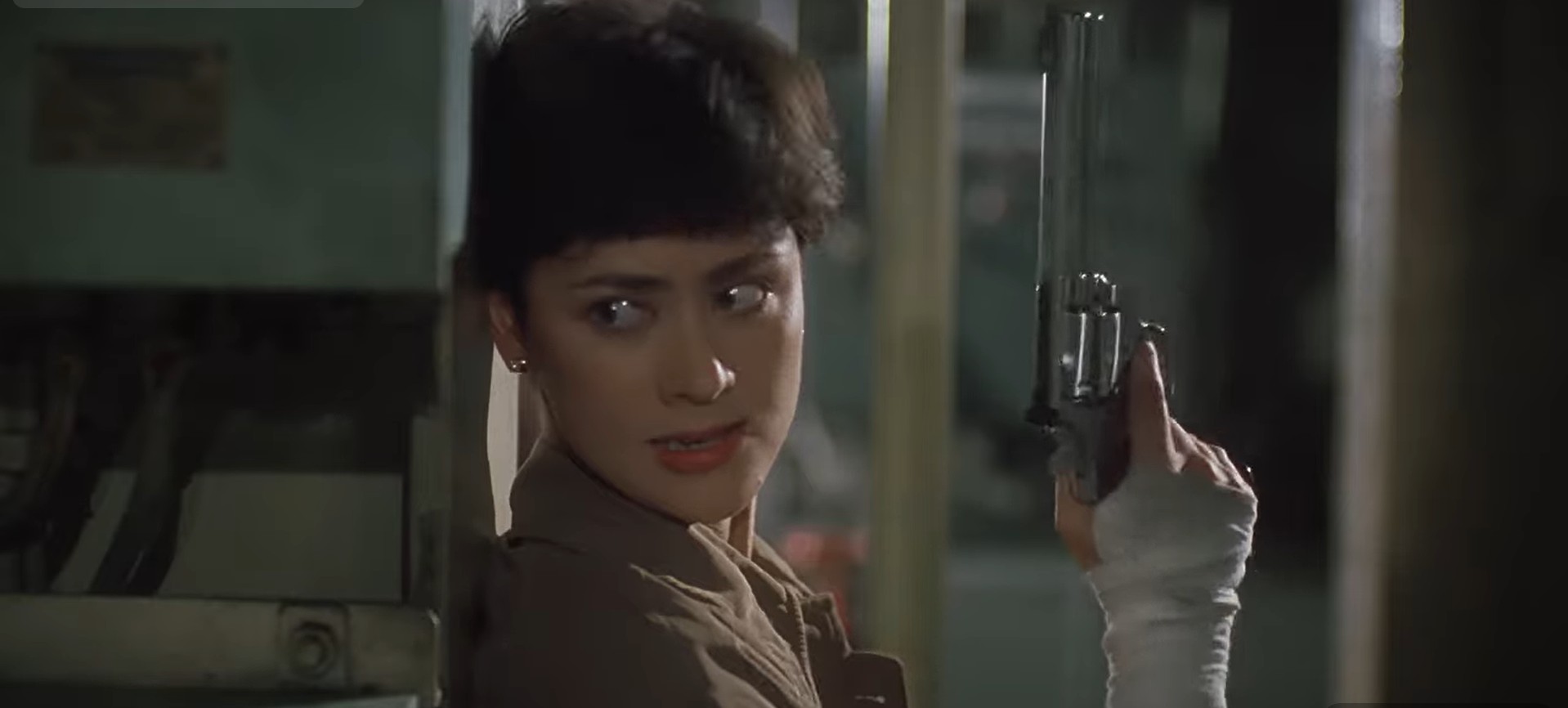
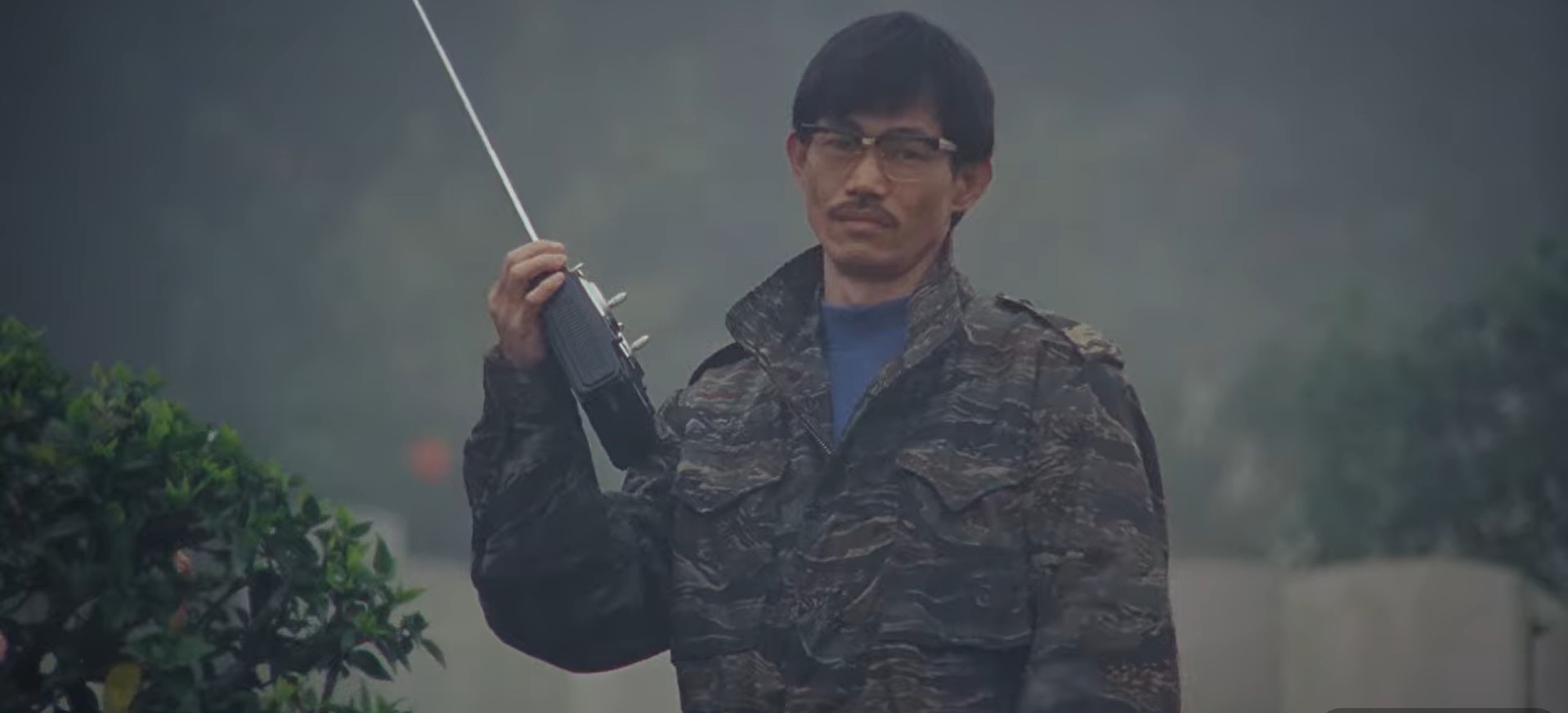
Gloria Yip returns as the Holy Virgin of Hell, Ashura.  Having never seen “Peacock King,” I’m not sure what type of temperament Ashura donned in a role where the character seems like one of the main antagonists according to the synopsis, but for “Saga of the Phoenix,” Ashura is joyful, childlike mischievous, and humble and is the center focus between the forces of good versus evil.  Als returning is Biao Yuen, but not in his screenwriter role.  Yuen, known for starring alongside female martial artist and star Cynthia Rothrock in “Righting Wrongs,” reprising Peacock, a fierce spirit realm guardian who befriends Ashura along with fellow guardian Lucky Fruit, played by Hiroshi Abe (“Godzilla 2000”) who replaced Hiroshi Mikami from the first film.  Much of Yuen is taken out of the story while being in frozen captivity by the Demon Concubine, leaving Abe and Yip to better struggle one-on-one connecting in the human world, facing human problem, and accessing the threat from the Demon World.  Yip’s candid antics exact the innocence of a young child like making snarky faces when corrected or obsessing over trivial things like sunshine, and especially when Ashura befriends a small, gremlin-like troll or creature named Tricky Ghost and holding it like a favorite stuffed toy, and this leaves Abe to be the role model, or the parental guardian if you will, stoic in stance and a reasonable thinker for his character.  It all comes off as silly until Ngai Suet and the Demon Concubine enters the frame.  The “The Ghost Ballroom” actress Suet takes on the evilly empowered role armed with seven demon subjects to do her bidding, such as trying to kidnap Ashura, and Suet runs with the role caked in a pale makeup, high pointy eyebrows that open up her eyes, and shoulder-padded dark dress.  Embroiled in the spirit world clash are two mortal siblings in Chin (Loletta Lee, “Mr. Vampire Saga IV”), who saves unintentionally saves Tricky Ghost, and her mad scientist brother Tan (Shek-Yin Lau, “Resort Massacre”) who finds himself in bitter rivalry with Tricky Ghost’s mischief ways spurring some comic relief into the fantastical brew and they represent the workable relationship between man and godlike individuals.  “Zatoichi” series actor Shintarô Katsu is in the role of Master Jiku, “Carmen 1945’s” Yûko Natori is the Divine Nun, and Noriko Arai (“Death Note”), Megumi Sakita (“Bodyguard Kiba”), and Yukari Tachibana (“The Scissors Massacre”) as the three nun warriors to round out the Hong Kong-Japanese cast.

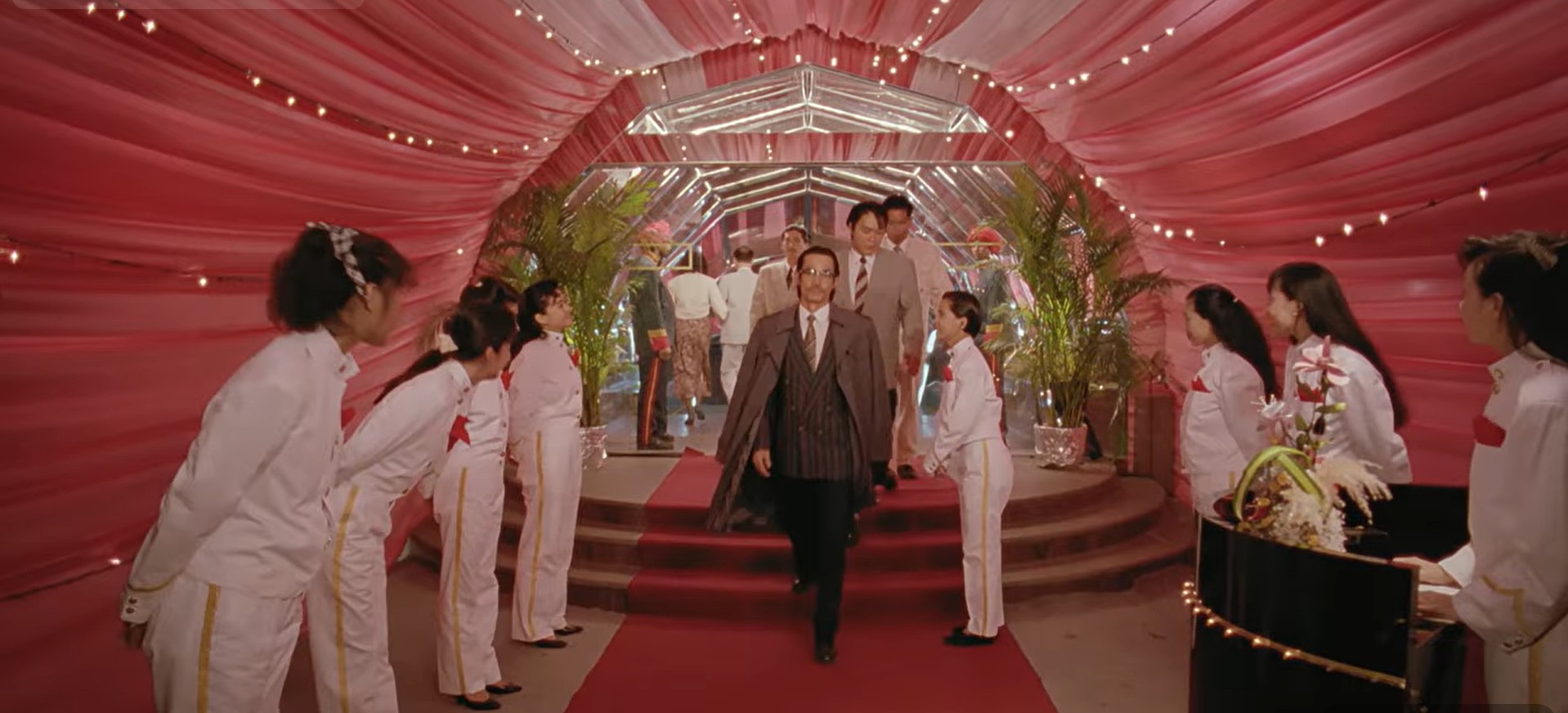
If you’re familiar with director Lam Nai-Choi, then it comes no surprise to you the kind of practical effects juggernaut “Saga of the Phoenix” can become and, in the end, doesn’t disappointment.  Choi often overscales the effort of tangibility, bringing unbelievable imagination and larger than life objects to manifestation without much, if any, assistance from computer generated imagery, and in the late 1980s, that technology wasn’t exactly perfected to what modern cinema sees today with skilled visual artistry and the introduction of artificial intelligence that’s on the verge of possibly shoving itself into the actor pool once the kinks are worked out.  In “Saga of the Phoenix,” the palpable physical presence involved is mostly at the finale third act where good versus evil face off between Ashura, Peacock, and Lucky Fruit and the ravenously aggressive Demon Concubine, the latter transforming like a Power Ranger Megazord into a gray-skeletal winged creature large enough to tower over the heroes and wide enough to swallow them nearly by three times.   Of course, this is not to say there hasn’t been other practical effects along the way which include demons inhabiting dragon statues, high wire acts of characters soaring during fight sequences, and the little mischievous imp, Tricky Monkey, from being a manipulated puppetry that weirdly reminisces Jim Henson’s “Labyrinth.”  The painted optical tricks to render color bolts of energy weaponry are a nice classic touch toward a pop of color as well as creating the inherent superhuman element of the principal players.  For someone going into “Sage of the Phoenix” headfirst without having seen or any knowledge of “Peacock King,” room for the film to standalone is rather thin but not egregiously reliant on the first film.  There’s a bit of recapping at the begging with narrative voiceover and get some clue-ins about the past from the dialogue but there’s still quite a bit unexplained, such as Ashura’s behavior fabled to be a powerful demonic necromancer who has somewhere along the way had a change of heart and we’re not privy to why.  That sense of uncertainly never really goes away through the comedy, action, and laser-firing, high-flying martial arts sinew, that something is innately missing from the story that’s saturated with wuxia themes. 

If looking to increase your bicep’s muscle mass, 88 Film’s limited-edition Blu-ray is weighty with content and it’s only one disc!  The AVC encoded, 1080p high-definition resolution, BD50 is encoded with a cherished updated 2K restored transfer from the original 35mm negative that looks unquestionably majestic on screen.  Vibrant and diffused evenly colors, high decode rate, and flawless textures, there’s nothing to dislike about this release, visually technical.  Deep in the color range and Chi-Kan Kwan’s sundry cinematography that offers vast length shots and a warm neon haze of blue and magenta through tint or gels, with a matted golden peacock rising against the monstrosities of the demon world, “Saga of the Phoenix” resurrects an aesthetic only Lam Nai-Choi could manifest from pure imagination.  The original negative is virtually pristine with no signs of damage or wear to note, nor any compression issues to note.  The uncompressed PCM Cantonese 2.0 mono offers a forward heavy diegetic sound that separate each layer favorably diversified. Clean and clear ADR make for easy discernability, capturing every bit of dialogue despite the post-production mis-synchronous acceptance. Laser action, creature roars, and other detailed measured sounds really give “Sage of the Phoenix” body, depth, and range that makes it an overall A/V highlight amongst its wuxia genre counterparts that tend to omit the smaller particulars of a scene. English subtitles pace just fine and are errorfree in a UK text. Most of the heavy lifting is done by the physical presence of the 88 Films Blu-ray that’s housed in a rigid slipbox and sheathed in a cardboard O-Slip, both containing new arranged illustrated artwork by R.P. “Kung Fu Bob” O’Brien that’s takes the true elements from the film and places them on the cover in a sure-fire canvas of what to expect. The clear Amaray cases also has O’Brien artwork as the primary cover art with the reverse side featuring the original Hong Kong poster art. Along with the O-slipcover, other limited-edition contents include a two-sided collectible art card and a 40-page illustrated book with color pictures and essays from Andrew Heskins (From Panel to Screen) and David West (The Japanese Connection), along with featured Japanese cover art Kujakuoh-Legend of Ashure. If the physical properties were not enough, the encoded content, available on the LE and Standard Edition, will bring this set home as it details with an audio commentary by Hong Kong Cinema Experts Frank Djeng and F.J. DeSanto, alternate footage from the Japanese cut of the film, executive producer Albert Lee discusses the international distribution plan from Golden Harvest Sage of Golden Harvest – The International Connection, an image gallery, and the original trailer. The 88 Films release is unrated, has region A and B playback, and has a runtime of 94 minutes.

Last Rites: Wuxia movies like “Saga of the Phoenix” are no surprise to where John Carpenter found influence for “Big Trouble in Little China” and it’s the director Lam Nai-Choi who didn’t shy away from the difficulties and inauthentic problems of physical effects but the film has its own innate issues with story that downgrade from a saga to just being an epic picture with winged creatures, bright energy blasts, and a lovely Gloria Yip succumbing to age, and status, regression with her Holy Virgin From Hell role.

Own “Saga of the Phoenix” on Blu-ray from 88 Films!

EVIL Will Do More Than Just Massage Your Hurt Foot! “Bitter Desire” reviewed! (Sector 5 / Blu-ray)

“Bitter Desire” on Blu-ray from Sector 5 Films!

Pursuing a dangerous criminal leaves police officer Steve injured, sidelining him from work for weeks, if not months.  Two weeks after the altercation, an at-home physical therapist tends to Steve’s painful injured leg and as he works toward recovery, fighting boredom along the way from being confined to home and limited in his movements, a revenge scheme is being plotted behind prison walls as the ruthless criminal Steve helped put away green light’s his sociopathic girlfriend Sasha to infiltrate Steve’s life and destroy it by all means necessary.  Removing the regular hired physical therapist from ever returning to Steve’s home, Sasha impersonates as his new therapist to get the lay of the land and buddying up to not only Steve to gain his trust but also his wife, Lexi.  Becoming closer than any therapist and patient should ever get, Sasha finds herself falling for her mark and will do anything to get him all to herself. 

Nathan Hill, the multi-faceted filmmaker from Australia, is back with a new feature length film, the erotic-thriller “Bitter Desire.”  Following suit from his last film, the melodramatic and science fictional invasion of the husband snatcher “Alien Love,” director Simon Oliver returns to the director’s chair and reteams the once Aliens-are-out-there documentary director with lead actor Hill.  Unlike “Alien Love,” Hill takes a backseat to penning the script, leaving that duty in the hands of Thomas Bodine in his debut feature length narrative after his credits with a pair of UFO and Alien documentaries in his little flying saucer black box. Hill also produces the film, not bucking the trend from over his last few productions such as with “Alien Love,” “Lady Terror,” and “I, Portrait,” with fellow mysteries of the universe documentary filmmaker, Charles Thompson, filling in a coproducer role position under Hill’s studio company, NHProductions.

Hill stars as Steve, introduced to audiences scouring through a burning building looking for a community-terrorizing criminal named Andrew.  “Hotel Underground” actor Tass Tokatlidis embodies Andrew as the mean-faced villain with a shaved head and a magnificent beard breaking Steve’s leg over-and-over again with a crowbar.  However, Tokatlidis, who is an Australian Professional Wrester that comes with some acting chops of showmanship, is not the chief threat as Steve’s direct antagonist.  That role is performed by Tokatlidis on screen girlfriend Diana Benjamin in the therapist infiltrating role Sasha and, in comparison, Benjamin’s wooden performance doesn’t convey or carry evocation and leaves her scenes’ vibe with less dramatic or arousing sway and Tokatlidis had more infliction of pain behind the eyes, more intimidating aspects, and a range of aggression .  Yet, sex sells and Benjamin wins out with a desiring figure that goes toward the story’s erotic thriller model.  Another area where sex sells in “Bitter Desire” strives and succeeds well in is with Shar Dee as Steve’s wife Lexi.  Lexi’s workplace professionalism contrasts against her more sexually aggressive nature at home by considerable pleasure with Dee going above and beyond with topless nudity.  Lexi’s also willing to take the fight to the next level when protecting what’s hers.  Wile the femme fatale and the strong wife have objectifying weight to the tale, Steve lacks a path or a goal in a character who frequently notes fighting boredom.  He dips his toes into alcoholism, idle hands activity of cataloging his unexplained equivocal collection of home movies, and skirts around naively with flirting with his therapists, even with his true hired therapist Harmony (Hao Dao) and while the sexual tension is thick between Hill and all the women he interacts with, Steve has no inkling of something amiss until it hits him in the face, literally.  Rounding out the cast are peripheral supporting characters that don’t add anything to the story but indorse sidebar scenes of random and unimpactful office gossip between Lexi’s colleagues (Natalie Rowe and Michaelle Dowlan) and a pretense of unheeded advice by Sasha’s semi-bosom close friend (Eden Madebo).

Premise wise, a convict’s sociopathic girlfriend committing to her boyfriend’s revenge plot but with a plot twist of her falling for her target is the very definition of erotic-thriller cinema, that may also dip into life imitating art in some areas of the world, that plays to the tune of “Fatal Attraction” or “Body Double.”  However, the script needed to be fleshed out in areas that don’t quite pan toward story positive reinforcement.   Areas such as Steve’s laid up days around the house where he lounges for long periods of time and audiences don’t need to be overexposed to Steven’s aimless lingering but rather just elucidate boredom which he does, multiple times, creating a double dipping aspect that makes his exposition unnecessary.  Steve also has a compulsive obsession in opening and checking the contents of his small safe that isn’t explained and because it’s not explained, his constant checks result in Sasha catching sight of his passcode.  Other things that go unchecked and unexplained are the arbitrary-to-the-story gossip between office colleague Annie and Phoebe, therapist Harmony’s unwillingness to warn the police or even Steve after being let go from Sasha’s theft of just her work badge, and the gold bar in Steve’s aforementioned safe.  Why does a police officer have a gold bar in his safe?  Too many questions weigh heavy on “Bitter Desire” to work effectively as intended, to arouse with eroticism between Shar Dee’s intimate moments with her husband Steve as well as Sasha’s simulated act of fellatio to stir up trouble and to thrill us with deceptive infiltration with a revenge plot that ends violently in its own form of antisocial obsession.  What’s required is more intimate, or close to intimacy’s edge, interactions between Steve and Sasha to really threaten Steve and Lexi’s marriage, to invite trouble head-on in parallel with the plot, and to have Steve conflicted of his choices and consequences that would truly have “Bitter Desire” live up to its title.

The Simon Oliver and Nathan Hill “Bitter Desire” is a killer love triangle and is now available on a Blu-ray home video from distributor by Sector 5 Films.  The AVC encoded, 1080p resolution, 25GB BD-R with the purple underbelly is presented in a widescreen 1.78:1 aspect ratio.  Not the smoothest digital result as details don’t emerge from their full potential in sharpened textures but the overall result is clear and distinct in its ungraded exhibition of a less-is-more approach to filmmaking.  Visual range begins and ends with CGI smoke and flames at the start of the film criminal pursuit, but why the building is engulfed is also a mystery that’s goes unsolved, and the flames are rough and ready ablaze in vf/x composition layering.   Skin tones are in natural tone through the ungraded coloring.  The English Dolby Digital 2.0 mix offers frontloaded sound and dialogue through the dual channels.  Dialogue is very much in the box, meaning it’s echo in large rooms with the reverberation bounce and dampened by the innate mic on the camera, like a handheld with a mic attachment.  Some post diegetic sounds contain corrected action and storyline flair with popping of a gunshot and the crackling of a flame, but that’s the extent of narrative that’s dependent on dialogue, an aspect that doesn’t fill all the moseying voids of downtime between interactions and plot moments.  Special features include are cold table reads with the actors reading through their roles, a Nathan Hil land Shar Dee audio commentary running in tandem with the feature, fight choreography, an interview with Nathan Hil land Shar Dee, an interview with Nathan Hill and Nathalie Rowe interview, a still gallery, and a trailer.  The all-region release has a runtime of 70 minutes and comes without a listed rating, assuming not rated. 

Last Rites: “Bitter Desire” has a decent enough foundation to be sate the erotic-thriller subgenre but above that is a house of cards structure ready to tumble around its stiff acting and mixed-in meandering.

“Bitter Desire” on Blu-ray from Sector 5 Films!

The EVILs that Lie Behind the Mask. “2551” Trology reviewed! (Deaf Crocodile / 4-Disc Blu-ray)

This One You’ll Need to See to Believe! “2551” Trilogy on Blu-ray!

In an underground dystopia ruled with by an ironfisted police state, dwelling creature-noid mutants violently clash with white-suited, gas-masked tactical units of a cruel despot.  One of the rioters, an Apeman, rescues a child with a burlap mask from being trampled between the two groups, injuring his hand in the process.  The child desperately clings to him, unwilling to part far from the Apeman who tries to turn over the child’s care to others, but as soon as the child is taken by the despot’s men, the Apeman goes through the depths of grotesque seediness to rescue the child forced into the training ranks of the police state.  He befriends and falls in love with luchadora who joins forces with him to rescue the child, but her betrayal whisks the child away from his grasp yet again.  Years later, the Apeman has become a salvaging source for an art purveyor’s gallery, but arrogant high society dismisses his efforts, and he’s thrust into violence, resulting him to face the despot’s capital judgement.  He’s saved from death by the child, now ga grown adult employed as a despot inspector, and when the inspector is given a traitorous execution, the Apeman’s immense adoration for the child sends him on a path of retribution to which there’s no coming back from.  

Born into an immense pro-fascism Austrian society a few years after World War II, influenced by political and societal unrest and protest of his time, and a devout mask collector, Norbert Pfaffenbichler construct a dystopian world unlike any other seen before.  Inspired by silent movie slapstick and black-and-white films, Pfaffenbichler channels the likes of Charlie Chaplin, Boris Karloff, and Lon Chaney into his trilogy of experimental grotesquerie of “2551.”  “2551” potentially references a futuristic, numerical year where a post-apocalyptic society, as we know it, has broken down into a sparring duality of survival, either as a penniless mutant driver to beg, sell, or give one’s body to live or a merciless enforcer to be wielded by an authoritarian ruler.  Set as a trilogy that began in 2021 and ended in 2025, Pfaffenbichler also wrote the screenplay for each installment, chaptered with decimal designations and subtitles: “2551.01:  The Kid,” “2551.02:  Orgy of the Damned”, and 255.03:  The End.”  Shot in Vienna, the trilogy is a production support of the BKA (Bundeskanzleramt), The City of Vienna’s Department of Cultural Affairs, and Land Oberosterreich with Pfaffenbichler producing “Orgy of the Damned” and “The End” while coproducing with Bianca Jasmina Rauch on “The Kid”

The ”2551” trilogy goes through the entire three features without a single piece of dialogue spoken from the main cast.  Though the characters may be roughly silent, albeit some added grunts, groans, and wails, added Foley action and movements along with an eclectic and often brooding industrial, punk-rock soundtrack ultimately tell the story coincided with impressive body expression and language.  At center stage, in his own petite personal plight in the aftermath of a devastated and derelict dystopia, is Apeman, a rebellious scavenger just trying to survive like all other half-creature, half-man mutants.  Played by Stefan Erber in all three films, Apeman is the only credit to Erber’s short breadth career but Erber’s very important to “2551’s” storytelling because even though he’s wearing a mask the entire time, his actions and reactions convey a broad range of emotions to where there’s no ambiguity in the scene.  Erber has a number of unique characters to interact with and each do not repeat across the films, such as David Ionescu in “2551.01:  The Kid” as the gunny masked child who clings in desperation to the initially reluctant to care Apeman, and after years passed into “2551.03:  The End,” the now grown child is an adult with Ben Schidla donning the mask as one of the despot’s inspector who helps Apeman escape the grasps of a tyrannical police state gunning for dissidence.  Both Ionescu and Schidla play into the different stage of their child and adult life; Inoescu’s awkward child movements and possessive need for Apeman is true child antics while Schidla provides the maturity and responsibility of being his own, self-reliant person now, one who doesn’t forget Apeman’s selfly act of rescuing him.  Veronika Susanna Harb wrestles as Apeman’s warring love interesting and street fighter in “Orgy of the Damned” and Manuela Deac is another strong female presence in the trilogy in a duel role in “The End” as the Apeman transitions into Apewoman in an anti-matter, alternate dimensional space that looks into the soul and she also is the hypnotic dancing deity near the beginning audience encircling with Apeman being chosen, or perhaps reminded, of his ward. 

When I say you’ve never seen a world like the one Pfaffenbichler pieces together, literally with pieces of severed limbs, stitched flesh, and an eclectic mix of masks, I mean it.  We’ve seen dystopian worlds before of desolate terrains, destructive and cruel authoritarian regimes, hunger, famine, and a dying race and there are obvious signs of influences pulled into “2551” from the likes of Phil Tippett animated and stop motion style to the comical ties of Charlie Chaplin, and the overall components of certain silent movie scenes and improvised, jaunty scores make the disgusting and derelict dark alleys and strange creatures more light-hearted and whimsical.  “2551.01:  The Kid” is a direct homage to Chaplin’’s 1921 “The Kid” by following along the lines of the same premise of a nomadic loner finds and cares for an abandoned child, their relationship jeopardized by their own problems with the law.  The sequels have a different direction but maintains the same bizarre world behind grotesque masks, a normalized consumption of dead animals and body parts, body horror fetishism beyond our comprehension, and a systematic oppression based off one person’s version of Tindr’s swipe right.  “Orgy of the Damned” mines the carnal shale with simulated sexual acts that go beyond missionary ways and into the sordid surgery and beastly BDSM while “The End” explores existentialism through past, present, and future that ultimately leads to a self-destructive revenge, hence the subtitle.  Bazaars of skulls, organic trinkets, and edible organs, flesh, and bone are a traversing theme of near desperation and survival within a concreted underground life where nothing grows, nothing thrives, and all succumb to its darkness.  Motifs of monkeys, including in the protagonists, are strung strongly through the trilogy in perhaps a reflection of the homo sapien within the de-evolved primate, aka the hidden humanity inside the beast.  Masks are the true and standard icon that obscurely hides the fact whether these people are real or whether their mask is their reverse personified reality.   Pfaffenbichler’s metaphorical social commentary is beautiful in its misproportioned and mutated state of mass oppression and the little good that glints through is all the hope in the world, and even in upside-down worlds, the need to recover its benignity is more important than ever.

In today’s society, especially in the U.S., autocratic governance is king or at least thinks it’s king.  For Norbert Pfaffenbichler, his “2551” trilogy parallels the present as well as the past.  Deaf Crocodile, under the playful label guise of Dead Crocodile because of the film’s subject matter, releases Pfaffenbichler’s trilogy on a 4-disc Blu-ray set that’s AVC encoded, 1080p high-definition resolution, on single layer BD25s.  The post-apocalypse is grim looking with a slightly tinged monochromatic experience, often with high levels of grain, and a fluttering of crisp detail through stroboscopic and rotoscope effects but that’s the entire intention of Pfaffenbichler and his cinematographer Martin Putz on all three films, creating a gritty, grungy, bunker-laden, desolate atmospheric that’s a hypogean house of horrors.  Most of the more grainer moments are when the image is blown up to focus on characters and some distress, alien scenes of a grotesque nature.  The black-and-white goes through periods of tint, muted coloring that run the hue gamut, with more traditional colorless scenes fining solace in their antecedent silent films.  Compared to a more austere impressed first film, the sequels do have a more polished appearance than “The Kid” when traversing through the sordid muck of a hazy underworld of flesh and fetishism in “Orgy of the Damned,” laced in tight leather, elegant lace, pastel pasties, and a myriad of masks and rags, while “The End” trades out tint for pure while in the interdimensional void Apeman navigates to find himself.  Each entry adds something a little different to mix up what could be a monotone milieu with bits of experimental panache that’s sustain the post-apocalypse colony.  Entirely shot without any production dialogue, Deaf Crocodile’s release comes with a DTS-HD 2.0 stereo mix to punctuate the action and to provide vitality through its punk and metal soundtracks and dark industrial whir and hum from composers Wolfgang Frisch and Simon Spitzer.   The added in effects applied after in the post sync very well and with the appropriate echo of being in tunnels and dark, hollow spaces.  So well in fact that you don’t realize it’s post-production sound.  The 4th disc is bonus features that include Pfaffenbichler’s seven short films, five new, individual interviews (Dir. Norbert Pfaffenbichler, Apeman actor Stefan Erber, cinematographer Martin Putz, stop motion and visual effects artist Paul Lechmann, and a Q&A hosted by Rolf Giesen with Pflaffenbichler answering), two visual essays (Angel of the Abject:  The 2551 Trilogy as a Necropolis of Cinema by film scholar Stephen Broomer and Don’t Let it Fester:  (Anti)Sentimentality in 2551.01 by Ryan Verrill), each film has its own commentary track that include input from film scholar Shelagh Rowan-Legg, film historian Eva Letourneau, artist and writer Anne Golden, and podcaster Mike White, a “2551.03:  The End” featurette Jam of the Damned is a behind the scenes look into the last film, the soundtrack score on all three films, three new trailers, new art by Beth Morris, and a prelude warning that states:  Trigger Warning:  all 3 films contain nightmarish images featuring simulated sexual and violent acts, as well las strobe lights and stroboscopic effects.  For adult viewers only.  The four-disc standard release is laid out two on each side and one overlapping one of the other in the thicker, clear Amaray with new cover art that’s a composition of stills arranged in a nonconformist arrangement that’s truly unnerving to behold.  The reverse cover art has an equally intense image but more simplistic red and black image with the film and Blu-ray spec info backside.  With a runtime total of 227 minutes, “2551” trilogy is not rated and is encoded for region A playback only.

Last Rites: “2551” is a myriad trilogy of influence and expression through Norbert Pfaffenbichler’s endless mask of hope in a world of oppression. The worldwide debut Blu-ray release from Deaf (Dead) Crocodile respects the subterranean story filled to the brim with sadomasochism, odd creatures, and authoritarian subjugation and the auteur’s unconventional and pallor style in its comprehensive 4-disc set of experimental, cinematic encomium.

This One You’ll Need to See to Believe! “2551” Trilogy on Blu-ray!

An Old Woman Coughs Up Blood and Smells of Death. That’s When EVIL is Afoot! “Death Ride” reviewed! (International Media Network / DVD)

“Death Ride” Available on DVD!

Nick’s about to board an overnight bus in Thailand with other passengers travelling toward the city.  As all passengers take their seats, luggage stowed, and the driver starting the engine, one last ticketed passenger boards, a quiet elderly woman who reeks of fermented fish and has a continuous cough.  What should have been a pleasant ride to the city has turned into an unbearable stench that’s seated right next to Nick.  When the woman dies after a severe coughing fit, neither passenger or bus staff know what to do when the body suddenly disappears, and the believed idea of ghost enters most of everybody’s assumptions.  With the small still strongly permeating inside the cabin, the driver agrees to stop at the next rest area and call for a replacement bus, but the dark road has seemingly no end and a strange curse of the old woman snatches the passengers one-by-one, providing a bus terminus of death.

“Death Ride,” aka “VIP Death Seat,” is the 2024 released commercial transportation ghost story hailing from Thailand.  One half of the “Black Magic Mask” directors, Pasit Panitijaroonroj, splinters off to helm the horror, credited in the title cards as Phasit Panitijaroonroj.  Known by various other interpreted titles, such as “Seat 204,” “The Seat,” and as “Rot Tour Wee Ai Phee” in native Thai, the feature is also written for cinematic screen by Panitijaroonroj with the conceptual story conceived by Wiroj Chotichiawong combines the already tense mass transit journey with a supernatural grim fated outcome that pits people not only against a malevolent and eerie force and terror but also seizes each other in a plight of fear of the unknown.  The production studio behind “Death Ride” is Arriya Film, who produced “Black Magic Mask,” “The Attic,” and “Check-in Shock,” and is distributed internationally by Antenna Entertainment. 

The “Death Ride” story has an ensemble cast setup that bounces between westerner Nick, a group of young people, an older narcissist, the pair of bus staffers, and briefly minor support characters who stand out but without expressed intent, such as the mother and son combo, Nick, who’s travelling solo on unmentioned grounds, has more attention as he wanders the bus stations, becomes the primary disgusted toward the old woman, and has an unaccompanied third act all to himself.  Nick is played by American Nathan Bartling, Youtuber of My Mate Nate, a bilingual prankster who actually was in Thailand authorities’ legal crosshairs for teaching Thai children how to flatten coins on a railway and he was threatened with railway obstruction and damage.  Bartling has since been promoting the Thailand in a positive light despite his expatriate infamy.  He goes on to star in the film as the ignorant and blamed party for the cursed bus ride.  Bartling is joined by Pawornwan Verapuchong, Nichapat Chaiaek (“Bangkok Dangerous”), Prasert Weangwichit, Innyada Yurot, and Jariya Rachomas as the group of youngsters on their way to the city and become intwined in the same mesas Nick but Nick ultimately becomes singled out for being a westerner, to stir up offensive requests to change seats, and because he’s an easy target as a lone travler whereas the group of young people travel in a pack.  Another social media personality-prankster in homegrown Jaturong Papho has a smaller but concentrated role as the trip’s first bus driver who must excuse himself from duty when the local cuisine bottoms out in the stomach.  Papho provides a lot, if not all, the comedy that’s been stitched into “Death Ride’s” loose haunting narrative with fart jokes, overreactions, and funny expressions.  The cast fills out with Pichet Iamchaona, Watsana Phunphone, Suchao Pongwilai, and Namgneun Boonnak as the sickly old woman. 

Panitijaroonroj pulls together an ensemble that audiences will have a difficulty relating to, will struggling favoring for in either demise or survival, and just plainly like as characters in general.  There’s nothing characteristically interesting about the ill-fated lot who come to the story without context to their lives or the reason why their on this bus trip the city anyway.  Nick’s is a solivagant who shares not one single tidbit of information about anything substantial to anyone.  In fact, Nick is brutally quiet for much of the duration.  The only time the principal character speaks is to question strange occurrences or be in complaint of the smelly old woman next to him.  The entire cast is written to complain, mostly about the decaying fish smell emanating from who the follow passengers constantly refer to as granny, and this leaves little room to get to know the players of the malevolent spirit misadventure who are trapped with it on a 22-ton bus careening into oblivion. There desperately needs to be some subtext conversations that reach deeper into their lives that sway their motivations or speak to their typology.  Instead, all there is is screaming, bickering, blame throwing, and just being a body just to be fringe fodder for the spirit.  The spirit itself lacks an understanding as the elderly woman is escorted to the bus stop by a boy, assumingly her grandson or nephew, but he wanders off the story at some point before disembarking. At least with the spirit, there can be assumptions made about it, such as a representation of death with the fermented fish smell and the bleeding from the facial orifices, and that suggest this bus fare could cost them everything.  “Death Ride” is also loosely similar to that of Jean-Baptiste Andrea and Fabrice Canepa’s better evolving and character steeping 2003 holiday-thriller, “Dead End,” but “Death Ride’s” ending steers wildly into a ghostly eldritch to resultingly shock viewers with its foreseeable twist ending.

Our first review coverage of an International Media Network distributed DVD begins with “Death Ride” with a DVD5 encoded with NTSC MPEG2 compression and presented in 720p and a widescreen 1.78:1 aspect ratio.  The first impressions are not off to a great start with a heavily aliasing with the lower bitrate that hangs around 3-5Mbps, creating an unnatural blur during active motion and reducing the detailed textures.  The story is entirely set at night that inherently produces the appropriately laid out negative spaces, casted shadows from key lighting, and a distinct higher contrast levels and while the negative spaces show some banding, there definitely some data loss with the image breaking down during the decoding.  Color saturation is left muted for a darker grading to set a bleaker tone and an eerie atmosphere.  The Thai PCM 2.0 Stereo track offers a front and center mix that retrieves and decodes dialogue in a precise and prominent reproduction with a range extended to the hum of the bus engine, the haunting echoes of a malevolent spirit, and perhaps the most asinine element, the hyperbolic hits passengers take against each other and from the angry spirit.  The ill-fitting score, uncredited, is what free stock music dreams are made of with an aggressive and overreaching tone harrowing score that was applied to every single situation the characters came to face.  Forced English subtitles appear error free and move along well enough with the quick Thai Siamese language.  IMN’s release is barebones with only a chapter selection in the static menu.  Also not impressive is the tangible DVD presence that doesn’t indicate even who the distributor is and luckily the IMN title card is presented precursing the feature.  What’s also missing is any kind of cast and crew credits from the back in what is rather also a bareboned informational and image design.  There is no MPAA rating listed but the assumption is unrated, if no rating is given.  The region free disc has a feature duration of 85 minutes.

Last Ride: “Death Ride” is a long, arduous trip to sit through. Lacking depth in story and in character, refunding the bus ticket is perhaps a better deal.

“Death Ride” Available on DVD!

Ai Nu the Most Beautiful Woman to Capture the hearts of both Men and Women’s but EVIL Has Other Plans for Her. “Intimate Confessions of a Chinese Courtesan” and “Lust for Love of a Chinese Courtesan” reviewed! (Imprint Asia / Blu-ray)

Order the #34 and #35 of a “Chinese Courtesan” from Imprint Asia’s Boxset!

Taken against her will while living off the streets, Ai Nu’s kidnappers take her and other snatched girls to the Four Seasons Brothel where the once homeless young girl is greeted by the elegant Chun-yi, the brothel head mistress whose cold and ruthless, but Chun-yi, despite letting Ai Nu be whip beaten and raped by her prestigious paying clients, falls for Ai Nu’s beauty.  The two women form a close, sexual relationship while Chun-yi continues to sell Ai Nu’s body to the wealthiest bidder.  All the while, Ai Nu plans her revenge, slow and steady to get back to those who exploited her.  That’s the harrowing and melodramatic exploitation premise, streaked with reality-defying Kung-Fu, from a Shaw Brothers production and its reenvisioned remake that diverges itself from the original story with additional elements that influence what type of revenge Ai Nu is plotting and provides alternate emotional context to the principal characters. 

“The Intimate Confessions of a Chinese Courtesan” and “Lust for Love of a Chinese Courtesan” are the 1972 original and the 1984 remake violent martial arts and brothel underbelly love, rape-revenge narratives brought together by Via Vision’s Imprint Asia sublabel.  These films pushed the moral fiber envelope with prostitution decadence, scandalous lesbian themes, and sexual violence displayed on Hong Kong’s cinematic screen.  “Haunted Tales’” Yuen Chor, credited as Chu Yuan, helmed the Kang-Chin Chiu (“Finger of Doom”) script of “The Intimate Confessions of a Chinese Courtesan” with Chor returning over a decade later to sit back in the director’s seal for the remake, “Lust for Love of a Chinese Courtesan” in which he wrote the script that keeps most of the core similarities that mildly varies yet significantly differs the emotive motivations that affect the finale and character outcomes.  Both films are a production of Shaw Brothers with Runme Shaw producing “Intimate Confessions” and Mona Fong, wife of Runme’s brother Run Run Shaw, produced the “Lust for Love” sequel of the “Chinese Courtesan.” 

Power, under an affluential and admired ruling thumb backed by the wielding of Kung-fu arrogance, is what Chun-yi of “Intimate Confessions” embodied and, eventually, is what blinded her to her undoing.  In her debut role, Betty Pei Ti creates an unforgettable impression that cements Chun-yi as a fierce and fixated force being a corruptor of young women and a criminal kingpin with her deadly mitts in just about every provincial authority and lawmaking body.  The “Police Woman” and “Succubare” actress seizes one-half control of the story with her beauty, acting command, and dynamic and complicated relationship with on screen actress Lily Ho as Ai Nu, a homeless young woman with equally fierce fight in her but not backed by any kind of authority or station.  Ho, a veteran actress with stardom success as the titular character from Chih-Hung Kuei and Akinori Matsuo’s female fatale picture “The Lady Professional” the year prior, brings a vulnerable ferocity to Ai Nu.  Like a scared cat back into a corner, Lily Ho claws the character through a no-win-scenario of survival in a tough role that involves multiple men thrusting themselves onto her but like a switch, Ho’s able to turn off Ai Nu from being an erratic rebel to save her life to actually saving her life by calmly weaponizing love.  Kuan-Chen Hu portrays the Ai Nu character a little bit different in the 1982 version.  Not as feisty and more brittle, Hu’s uno card reversal on the brothel mistress turns into a ménage à trois of greed in it’s underlaying of revenge.  Chun-yi, too, has varying traits to the “Intimate Confessions” counterpart as On-On Yu (“Black Magic with Buddha”) gives the brothel mistress, who goes by Lady Chun, a softer harshness when it comes to delicate and delegating dastardly business and personal affairs.  Lady Chun also doesn’t have a martial arts bone in her body unlike Betty Pei Ti’s fighters-of-death Chun-yi who is a more of a typical well-rounded, boss-level antagonist, but what Lady Chun does come with more is contextual backstory, a woman who rose from power but sees much of herself in Ai Nu and makes promises of reciprocal care with fellow orphan and childhood friend, and skillful hired sword assassin, Hsiao Yeh (Kuo-Chu Chang, “Killer Rose”).  On-On Yu’s version can be cruel but be cruel while exacting a tender heart to her fixation on Ai Nu, adding a deeper and different complexion to what we’ve seen Chor produce before more than decade before.  The cast of each film round out with kidnapping scoundrels, crooked officials, and one lone decent constable within a supporting cast that includes Yueh Hua, Lin Tung, Wen-Chung Ku, Fan Mei-Sheng, Chung-Shan Wan, Shen Chan, Alex Man, Miao Ching, and Kuo Hua Chang.

Watching the two films back-to-back can throw one for a loop as the remake is not a carbon copy of the original, but there is a lingering familiarity that can’t be shook as it hooks itself to “Intimate Confessions’” key plot and forcibly exclaims its remake existence.  Like many things that have a sense of duality, there are also stark and contrasting differences between them.  If personally favoring sadist measures, rougher sexual confiscating, and a confident villainous vixen, the original “Intimate Confessions” will be more to your like.  If personally favoring a slow-and-steady wins the race melodrama, brewed and stewed in romance and storytelling, with more wuxia fighting and swordplay, the “Lust for Love” checks the boxes.  Compositionally, Chor’s vivid backlighting through a hazer fog with different spectrum colors is evident in both films but “Intimate Confessions” has profound designed objects and background combinations that work with the choreography that tells the mood of the story:  the windy and hazy night of Ai Nu and the good natured constables first meet that tells of a foreboding fate, the the bright and joyous revelry of exciting patrons of on the verge of copulating with exploited, kidnapped young women, or the darker streaked toned of betrayal and death in the finale showdown between principal players.  “Lust for Love” also has a tone about it that’s more in tune with the melodrama with expensive looking sets accompanied by a delicate palette of gold, white, and softer reds and yellows.  Plenty of third act loving making from the love triangle showcase told through a sequence of surrealism and teeing up fantasy desires heightened by the glisten outdoor tub water sloshing side-to-side in their passion, on the dewy moss the half-naked roll in, and in the gold rimmed adorned bedrooms where lesbianic lovers flirt.  Chor first ventures the rough rape-revenge thriller only to chuck the indelicacies of the original film and replace with swirling succulence of sex and self-indulgence, a contrasting brilliance formed and reshaped only a dozen years apart.

Imprint Asia knows all about courtesans, or at least about the Yuen Chor courtesans, in “Intimate Confessions of a Chinese Courtesan” and “Lust for Love of a Chinese Courtesan” with a new 2-disc Blu-ray boxset from Australia.  The 1080p high-definition transfers are pulled from the original 35mm negatives and are AVC encoded onto a BD50s and presented in their original aspect rations of 2.40:1 (“Intimate Confessions”) and 2.35:1 (“Lust for Love”), compressed by spherical anamorphic, widescreen lens with the noticeable curvature in the image.  Both presentations offer an ideal image experience with neither damage showing signs of damage or age, palpable textiles of the silk-spun and cotton blend garbs that sheen as expected and absorb a gratifying amount of reflected light within its respective fabric.  Grain appears light yet organic with skin tones and textures with an organic display, unlike in the Shaw-Shock Volume 2 set where skin coloring appeared orange in quite a few scenes.  The spherical lends offers depth despite its slightly warped edging as if looking in a corner convex mirror.  The audio formats include a Mandarin LPCM 2.0 Mono mix with burned-in English subtitles.  There’s also a Cantonese language option of the same spec but the English subtitles are optional.  Subtitles synchronization is on point with the ADR track that’s retains a clear and discernable dialogue albeit the gurgling quality of recording interference present through. The over exaggerated transcript on top of its equal over exaggerated performances, especially with the googly-eyed and giddy older village officials looking to score handsomely with the courtesans, is present in every inch of a less-than-seductive prostitution rendezvous.  Soundtracks boast a melodramatic and action pack score with an extremely westernized design only fiddling slightly with traditional Chinese melodies and with Fu-Liang Chou adding some harsh guitar during the spicier segments of Ai Nu’s lesbian grooming.  Chin-Young Shing and Chen-Hou Su provide a more classic and harmonically sound for “Lust for Love” to exact more passion and heart and less depravity.  Special features or “Intimate Confessions” include a new audio commentary by author Stefan Hammond and Asian film expert Arne Venema, a new informational and highlight discussion from film historian Paul Fonoroff, an archived featurette directed by Frederic Ambroisine Intimate Confessions of 3 Shaw Girls takes the female perspective and review from journalistic critics and actresses including one actress for the films, an archived interview featurette with critic and scholar Dr. Sze Man Hung, critic Kwan King-Chung, and filmmaker Clarence Fok, and rounds out with the original theatrical trailer and DVD trailer.  “Lust for Love,” in comparison, is more barebones in bonus content with an audio commentary by film historian Samm Deighan and the DVD trailer.  The physical presentation is similar to Shaw-Shock Volume 2 but just a slightly be slimmer with a jagged tooth topped, rigid slip box with a line split down the middle of the front cover depicting illustrations of characters for each film in either a contrasting blue or pink background.  The backside has a compilation of melded together pictures from both films.  Inside, two clear case Amaray, complete with their own original one sheet as cover arts with a reverse side having pulled a scene from their respective film, sit snug inside the slip box.  The boxset has a total run of 3 hours and 6 minutes, is not rated, and is region free.

Last Rites: Yuen Chor’s dichotomy of the two films is an odd and rare accomplishment of the filmmaker’s re-envisioning of his own work but “Intimate Confessions of a Chinese Courtesan” and “Lust for Love of a Chinese Courtesan” have idiosyncratic merit despite the same underlining premise and now it’s showcased in a brilliant boxset from Imprint Asia for you to decide Ai Nu’s revenge and motivations in the fray of brothel captivity.

Order the #34 and #35 of a “Chinese Courtesan” from Imprint Asia’s Boxset!