EVIL Follows the Virtuous. “Justine” reviewed! (Blue Underground / 4K UHD & Blu-ray)

Own Your Piece of Virtue with this 2-Disc “Justine” set from Blue Undergrounda and MVD Visual!  

Unable to continue their religious education, left with a meager currency to afford room, board and food, and holding no station or options for social pursuit, Justine and her sister Juliette are put out to the streets of 18th century France.  While Juliette recruits herself into a Madame’s established brothel for money, shelter, and sleight of hand opportunities, leading a life sinful in flesh, murder, and exploit that reaps luxurious benefits into high society, a more chaste Justine finds her path to be far less desirable.  Her virtue becomes the object of obsession, lust, and is taken advantage of for other’s personal gain.  No longer protected by her parents or the convent’s shelter, Justine is exposed to the wickedness of the world in every form and fashion with only slithers of bliss here and there as a reward of her decency only to be immediately snatched from her grasp before she can even enjoy a second.  Accused of stealing and murder, tortured and branded, imprisoned and convicted, labeled an escaped enemy of France, and with her virtue corrupted by a cult of pleasure seekers, Justine questions a life led in chastity and overall goodness that has brought her nothing but pain and strife. 

On the heels of my own personal overseas trip to France, a trip for pleasure if you must know, I found it timely and fitting that the Jess Franco directed film, the Marquis de Sade’s “Justine,” would be the next celluloid critique of enticing pulpy obscura.  A part of a pair of Marquis de Sade-themed productions from producer Harry Alan Towers, the other being “Eugenie,” the Eurotrash sexploitation is based off Marquis de Sade’s 1791 novel Justine, or The Misfortunes of Virtue and is adapted for screen by Towers from an original treatment penned by Arpad DeRiso (“Death Steps in the Dark”) and Erich Kronte. “Justine” is one of Franco’s most ambitious visual epics with ornate time period customers, elaborate and grand locations, and an anthology of sorts of the titular character’s misadventures through France that disenchant her chastity. Corona Filmproduktion and the Aica Cinematografica S.R.L. served as the co-productions of this Italian-Spanish 1969 film.

Perhaps the most recognizable and most notable adaptation of Marquis de Sade’s novel, “Justine” is also popularized by its identifiable cast with big names in not only Europe but also in America. The opening scenes with Klaus Kinski, in a wraparound narrative as the Marquis de Sade himself imprisoned and suffering visions of bloodied and bound naked women, immediately draws you into the “Nosferatu the Vampyre” and “Schizoid” actor’s character plight and muted damnation into writing about virtue, a misfortunate respectability. The other famous face in the film, one that spans from Europe to the U.S., is Romina Power as the titular “Justine.” Power, daughter of actor-songwriter Tyrone Power, was, in her own right, a well-known Eurovision singer after the release of the Franco film, but it was her father’s musical talents who landed the sweet-faced Romina into the denigrated young woman role. While Kinski acts on pure facial expression alone, using his iconic, distinct facial features, Power offered a more rigid approach like a child locked by confusion and while unintentional and usually not what any filmmaker wants in a devoid of relaying vicarious expressive emotions, Power naive innocence proves key to Justine’s, well dare I say it, naive innocence. Power’s beauty alone could have stood ground in making the attack from angles perversity film work like a charm. One of the more surprising casted members is Jack Palance. Yes, Curly from “City Slickers” or Jake Stone from “Cops and Robbersons” outlines the formidable pleasure-seeking cult leader Brother Antonin with such gusto flamboyance, the must-see and most-enjoyable performance seemingly feels alien to the usual stoic and stern typecasted actor who could rival Clint Eastwood with a fierce thousand-yard stare. Having co-starred in the Franco-de Sade film “Eugenie” a few years later, Maria Rohm, aka Harry Alan Towers wife, plays the role of Juliette and while the story is ultimately a dichotomy of virtue and sin, there’s an imbalance between the two characters for screen time. The Marquis de Sade’s novel was named “Justine” after all. For her alotted screen time, Rohm provides a suitable sinful scarlet woman climbing the aristocratic ladder by cheating, stealing, and killing her way to the top. The cast fills out with Harold Leiptnitz (“The Brides of Fu Manchu”), Horst Frank (“The Cat o’ Nine Tails”), Gustavo Re (“Horror Story”), Sylva Koscina (“Uncle was a Vampire”), Akim Tamiroff, Rosalba Neri (“The French Sex Murders”), and “99 Women’s” Mercedes McCambridge in an unforgettable role as a nasty gang-leading woman whose high-velocity cruelty rockets are so homed in on Justine it’s explosively devastating to watch.

Having seen the elegance of interior architectures inside Paris’s Opera house, walked the cobblestone streets surrounding the monumental Eiffel Tower, and taking in the laissez-faire of the French way of life, I can honestly say Jess Franco captures France impeccably well for an self-exiled Spaniard known more for his sleaziness and horror than his efforts in cinematic expressionism.   Arching with one big showcase revolving around the idea that virtue will get you nowhere and will be nothing but trouble, ultimately putting to question the validity of the decency concept, the narrative is broken up into a mini-scenarios, mostly of Justine being completely subjugated to the wicked whims of others and a handful of Juliette erecting a better life off the backs of others she’s duped or snuffed.  Franco mastered false hope and misconceptions with each of Justine’s encounters as they lure her in with promises of salvation to then only kick her when she’s down and reap full advantage of her inexperience and gullibility that the world is full of good people.  Sordid and cruel, “Justine” is a contradiction of actionable cynicism in the foreground of depicted magnificence in location, costume, and cinematography choices that hews into the coarse callousness; one particular scene comes to mind involves Jack Palance’s Antonin arranged with hand positioning that abbreviates the name Jesus Christ and as Antonin is holding this hand arrangement, he seemingly glides or floats down the stone corridors toward Justine, demonstrating religious imagery as a form of abusive power or corrupted guidance to serve one’s own deviant devices.  Though labeled in some circles a sexploitation film and certainly full of skin from Romina Power, Maria Rohm, and Rosalba Neri amongst others peekabooing their assets through cut potato sacks during the sex slave orientation scene, much of the sex is heavily implied with a limited gratuitous outcome.  Before going fully into an Eurotrash market by the late 70s and all the way through to the 90s, Franco made every effort to be a considerable filmmaker for a broad audience in numerous countries and his dislike for censorship shines through to his work, despite the likelihood of costing him acclaimed fame as a director. 

“Justine” arrives on 4K UHD in a Blu-ray combo set from Blue Underground.  The two disc set is AVC encoded Blu-ray 50gig and a triple layered Blu-ray 100gig with 1080p (standard BR) and 2160p (UHD) high-definition resolution, and presented in the original European widescreen aspect ratio of 1.66:1.  The brand new 4K restoration from the uncensored original camera negative of the 35mm film with Dolby Vision HDR is a foremost upgrade to the highest power, an ultra-balanced grading that reels in a wide variety of colors from interior to exterior that helps bring the ornamentation of 18th century France to a vivacious life on screen.  The saturation is enriched and finitely retuned to deliver the best and naturalistic grading as humanly possible, or as current technology allows.  The Blu-ray offers a just as reasonable presentation but does lack that high attention to detail because of the lower pixel count.  Bitrate decades are a comfortable average in the high 30s to low 40s.  The UHD and standard Blu-ray offer a clean and free from compression artifacts with immeasurable format capacity to render an unimpeachable picture. Both formats come with an English DTS-HD mono, dubbed in English by voice actors and not the original cast. No hissing, popping, and only a slight interference hum. Dialogue is dub boxy but clean, clear, and right forefront without question of what’s being discoursed and is well-folded into the ambient and Bruno Nicolai epic vein-coursing score that triumphs a military march over a classical base. English SDH are optional. In regard to special features, both formats include a new audio commentary with film historians Nathaniel Thompson and Troy Howarth and the French trailer, but the Blu-ray contains archive interviews with director Jess Franco and writer-producer Harry Alan Towers, an interview with author Stephen Thrower of Murderous Passions: The Delirious Cinema of Jesus Franco, a new interview with actress Rosalba Neri, in Italian with English subtitles, On Set With Jess, a newly expanded poster and still gallery, and a Jess Franco dreaded censored cut of the Americanized shorter version of the film under the “Deadly Sanctuary” title in HD and clocking in at 96 minutes, a nearly 30 minutes shorter. The physical features mirror the “Eugenie” 4k/Blu-ray release with a black Blu-ray snapper case with similar thickness. A shackled Justinne graces the front cover, as with the previous DVD Blue Underground release, and has the same cardboard slipcover with an oval shaped like mirror cutout to not block the half-naked Romina Power. Back covers are both the snapper case and cardboard cover have the same layout design but different still images on each. Inside, there is a disc on each side of the case held in by a push lock. The UHD is a sizzling infrared and sultrier posed version of the snapper cover while the Blu-ray, in the same red hue, is a composition of characters clustered together in a circular design. The film comes not rated, region free, and has the presentation feature with a runtime of 124 minutes. The Marquis de Sade divulges a sardonic, topsy-turvy belief that the more you stay virtuous, the more trouble follows as it’s the way of the world and the more you swindle, the more headway you make in life. Jess Franco brings the Marquis’s vision to cinematic life with a grand and sordid tale, dissevering the two ways toward their individual soul crushing path, and discovering morality within the immoral.

Own Your Piece of Virtue with this 2-Disc “Justine” set from Blue Undergrounda and MVD Visual!  

Time Travelling Tourists Just Want to See the Spectacle of EVIL! “The Grand Tour” reviewed! (Unearthed Films / Blu-ray)

Unearthed Films Stopped a Disaster by Going Back in Time and Re-releasing “The Grand Tour” now on Blu-ray!

Widowed contractor Ben Wilson and his daughter, Hillary, are a many 2×4 and paint bucket deep into a renovation of a dilapidated inn on the outskirts of town. Haunted by his wife’s death violent death and reminded of it by an angry father-in-law, Ben tries his best to be the best father to Hillary that a single dad can be despite his urge to drink and forget about the horrors of that fateful day. Unexpected and eccentric guests arrive at his doorstep demanding to pay handsomely to stay at his unfinished inn, regardless of the condition, and eager to be present for the secret spectacle to come that makes his inn more desirable than all the amenities of the hotel in town. The guests’ odd behavior, strange belongings, and secret talk lead Ben to believe these so-called tourists are not from his time and that the spectacle their awaiting for is tragedy in the making.

For an extreme film label such as Unearthed Films, Jeff Daniels is not necessarily a headlined name I would see on the cover art. Nor, and more surprisingly so in this instance, would I ever have thought that a PG-13 rated film would be in the same assemblage of titles as “Slaughter Vomit Dolls,” “Philosophy of a Knife,” and “Christmas Cruelty.” Yet, here we are today, the year 2023, over two decades of extreme horror distribution, and David Twohy’s “The Grand Tour” has been released. The 1992 time-traveling clock-racer, that also went by other titles such as “The Grand Tour: A Disaster in Time” or “Timescape,” is written for filmic treatment by the “Riddick” franchise director, adapted from the novella “Vintage Season” by the husband and wife writing team, Henry Kuttner and C.L. Moore. “The Grand Tour” is a production of Channel Communications and Drury Lane Productions, the companies behind Brian Thompson starring “Nightwish” which became also another Unearthed Films’ vault release and is produced John A. O’Connor (“Steel Justice”) and Robert Warner (“The Return of Swamp Thing”).

“The Grand Tour” stars the aforementioned Jeff Daniels who at this point was coming off the phobic-inducing success of the itsy-bitsy film called “Arachnophobia.” Daniels brings the same family man charisma, sarcastic wit, and unnerved intensity to the widowed construction contractor Ben Wilson. The character of Ben Wilson is unbuttoned from the beginning with only nightmares of an accident involving a horse drawn sleigh and verbal tit-for-tats with his bristly former father-in-law concluding the death of his wife only a short time ago. Wilson’s marked as a drunk and a shirker though barely do we see only a slither of the former; instead, Wilson’s rather astute, loving, and fearless in his time of time designed duress. Perhaps, Wilson’s arc has already been puzzled together and Twohy only mirrors into his once shameful soul to showcase how much he’s learned and how far he’s come to be more than just an abashed single dad and though Wilson is unbuttoned from the beginning of the story, Daniels buttons up the role with nothing less of perfection. Wilson’s daughter Hillary is played by pre-“Jurassic Park” screamer Ariana Richards who solidified her round-eyed concerned, over-the-shoulder look first in “The Grand Tour.” Hillary becomes the crux torn between the loving father that Wilson’s portrayed to be and an overreaching grandfather, who’s also the town judge (George Murdock, “The Death Squad”), holding a longstanding and personal grudge with his daughter’s ambivalent death. The youngster is also the reason Wilson is willing to risk the perfect future to save an ill-fated past. “The Grand Tour” enlists a versed lot of talent to round out the cast with Marilyn Lightstone (“Heavy Metal”) as the voluble tour guide, David Wells (“Society”) as a tourist with a conscious, and Jim Hayne (“Sleepwalkers”) as a down-to-Earth bus driver caught in the middle just like Wilson. There’s also Nicholas Guest (“Dollman”), Time Winters (“Skinner”), and Anna Neill.

Temporal manipulating or time-travelling films will undoubtedly always have faults as time is a finicky thing, some films accomplish time loops better than others, but I personally feel that as long as the narrative is entertaining enough and the time theory isn’t ludicrously idiotic, all can be forgiven or overlooked on the stretched fabric of time and place concept that can have easily spotted loopholes.  “The Grand Tour” is one of those divertingly pleasurable narratives with calamity hanging in the balance, a central do-or-die performance, and theme that hits at the core of a numb human perspective when seemingly life is nothing less than perfect.  The script bypasses the whole negating physics of the narratives time-travelling and butterfly effect piece with Daniel’s character verbally damning the hypothetical’s inaccuracies in a fit of life- and time-saving panic to not hang up on the details and keep the story churning.  Twohy never offers too much too early when the intrusively eccentric inn guests appear without concern for their surroundings but are increasingly curious about minor, trivial things that when compared to the small town residents, people would take such things for granted, yet their curiosity isn’t exactly appreciation for the humbler things as it’s more of a naively morbid reflection on how who these well-dressed and fit-as-a-fiddle travelers call “bygoners” lived and died.  Historical catastrophes have become looking glass sideshows for the bored or how the event is termed as a spectacle is if the disaster is an extravagance performance for others to reap the benefit from its grim amusement.  Twohy pulls off the massive feat of catastrophe without the use of computer-generated imagery that we see heavily in his later films to create galactic worlds and creatures.  There’s composite motion paint work and diorama miniatures to create the illusion of a small town in turmoil that works just as well, if not better.  The whole “Grand Tour” package sells the sleight of hand devastation but also the intrinsic emotion and passion that follows it, or in this rewind the clock case, before it as well. 

Though I’m wigged out by the tame release from Unearthed Films, I’m still glad the out of print and sci-fi jarring “The Grand Tour” has booked an excursion back to the physical media outer rim!  A brand-new AVC encoded Blu-ray, released as the 11th cult classic under the Unearthed Classics sublabel, shepherds a new in-print North American option.  Sold as a Hi-Def release with 1080p, there’s honestly nothing that can be really done or to improve upon a Betamax 350 resolution by 480 pixels in a stretched 1.85:1 aspect ratio.  Certainly better video and audio quality compared to VHS, and likely the best quality “The Grand Tour” will ever be in to-date, the release remains a deficient for detail with blurry, soft-glowing traits.  The Blu-ray’s bitrate is also erratic, dipping as low as upper DVD, 8-11 Mbps, to shooting up as high as lower 20s which tells me the storage capacity of the BD25 likely isn’t enough to properly decode the film and, in certain frames, compression artifacts show with smooth surface, color blurring that eliminates sharper edges amongst other issues, such as faint banding and blocking nothing to really warrant discouragement. The English PCM 2.0 stereo mix is commensurable with the original Betamax audio recording and though soft around the audible gills, the dialogue, ambient, and soundtrack mixes satisfy the need but in case you need an English SDH option, the Unearthed Films’ Blu-ray has you covered with a well-synched and timed error-free translation. The special edition bonus features include the “Timescape” title sequence, production stills, various posters and one-sheet artworks, a new Lost in Time: Cannes promo discussion with Ed McNichol who worked on the pre-production Cannes promotional trailer with Jeff Daniels but isn’t available in the special features here, and Unearthed Classics trailers. The physical aspects of the release include a cardboard o-slip with a front image reminiscent of outside region 1 DVD covers of Jeff Daniels running between two periods in time. The slipcover sheaths a clear Blu-ray case with latch, the inserted cover art is the same slipcover but is reversible with a mockup of the Canadian released DVD cover. The disc print image echos the reversible cover art image. “The Grand Tour” is Blu-ray has a region A playback, clocks in at 99 minutes, and the film is rated PG-13. An obscure Jeff Daniels film lost in time, unable to reach back into the past for a new, refreshed release, is paradoxically meta in its own right but luckily for us, Unearthed Films has our best interests in mind while keeping the blood and guts at bay for only for a single, solitary stitch in time.

Unearthed Films Stopped a Disaster by Going Back in Time and Re-releasing “The Grand Tour” now on Blu-ray!

The Picked-On Runt Can Be EVIL Too. “Little Corey Gorey” reviewed! (SRS Cinema / DVD)

“Little Corey Gorey” Uncut and on DVD home Video at Amazon.com!

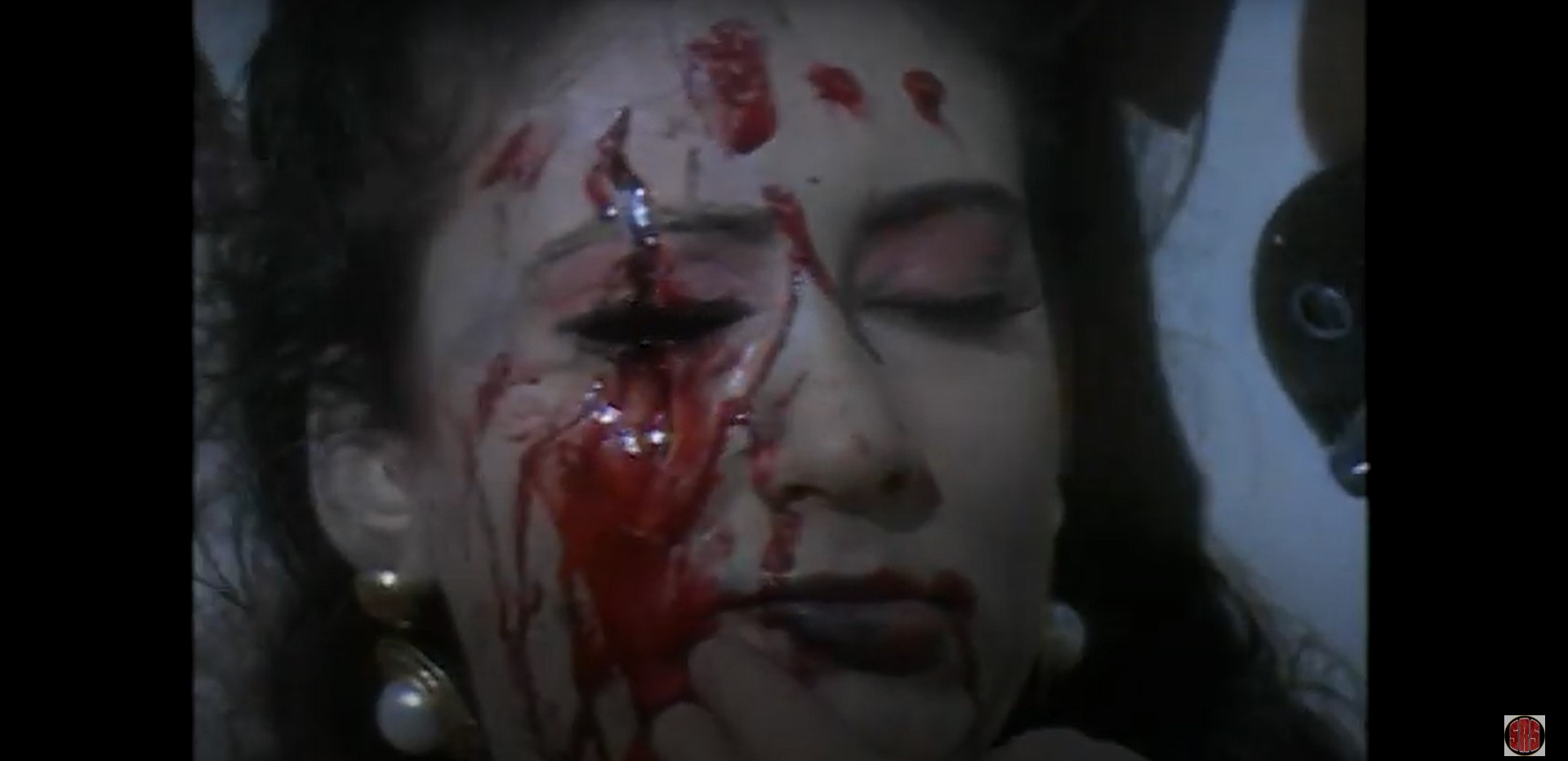
After losing his father to a fatal accident, little Corey Gorey is forced to relocate to a new home with his overweight, alcoholic, and verbally abusive stepmother and similarly so, racist brother-in-law, Biff.  Constantly receiving the short end of the stick, Corey tries to retain a normal life by buying Ozzy Osbourne concert tickets and meeting girls at high school, but when his bigger, older Biff raids Corey’s broom closet of a room searching for a pinup one-sheet, he discovers the concert tickets and hooks up with Corey’s dream girl from school.  In a fit of rage, Corey accidently kills Biff as the two scuffle and with that Corey sows the seeds of salvation as the teen who was constantly tormented and afraid to talk back now is eager to take his life back.  Keeping his stepmother tied to the couch and gagged from making noise, Corey dismembers what’s left of his brother into the storage freezer and includes the sociopathic girl of his dreams into the fold but when a nosy mail carriers begin to snoop around and a drug dealer is seeking payment for the cocaine he fronted Biff, the bodies begin to pile up and Corey finds himself over his head.

Talk about your unhappily ever after Cinderella story, “Little Corey Gorey” goes from rags to wreaking havoc by way of severing limbs and meat grinding body parts all the while trying to sweep a rebellious older high school girl off her feet in an attempt to run away from all the carnage and abusive adults.  Bill Morroni, credited as William Morroni in the film, wrote and directed his debut feature in sunny California that is anything but sunshine and good vibes in this 1993 released, dark horror comedy obscure to many horror fans. A real highlight of early 90’s low-budget horror done right with smartly placed and highly effective practical effects, “Little Corey Gorey” is a begrimed gem waiting to shine, produced solely by Morroni under his self-funded principal production over the course of a few weekends. 

What makes “Little Corey Gorey” half as enjoyable as it turns out to be is because of the cast.  Once plagued by unfortunate circumstances, such as an example with the untimely death Divine (“Multiple Maniacs,” “Pink Flamingos”) who was to have a lead role, that one might consider the film be cursed celluloid even before principal photography, Morroni was able to overcome with a perfectly suited set of talent to tackle Corey Gorey’s gruesome exploits of dysfunctional family survival.  The titular role was awarded to Todd Fortune whose diminutive size really plays against the larger and towering figures that make his life a living hell.  Divine would have stepped into the shoes of wicked stepmother Betty and even though Divine would have done phenomenally in a constant-drunk state of a barraging verbal abuse and torment, Pat Gallagher filled the cankerous role with despicable-inducing results and gives a real witch of a woman performance to not only Corey but also her actual on-screen son Biff.  Greg Sachs might be stiff as a board as the older brother with racist overtones and a compounding dislike for Corey, but Biff turns out twisted enough to be an antagonizing accomplice in building Corey’s pent-up survival garnished with ghastliness.  One of the more scene stealers is Brenda Pope as the bitchiest high school narcissist Jackie who has somehow swooned Corey’s rationality and has him hanging on her tongue with every lie.  From special feature commentary by Morroni, Pope was a real life true-to-form unpleasant person behind-the-scenes as well as in front of the camera but that doesn’t stop her good looks and devilishly delectable moodiness and conceitedness from drying out.   As a group, you can feel every resounding personality types and cluster of chaos that spits out sympathy for Corey despite the curated torture from those who are supposed to care for him and also feel not one ounce of pity for Corey’s tormentors turned minced meat at the hands of the water treading teen.  “Little Corey Gorey” has a neighborhood ensemble featuring parts by Edenia Scudder, Sabino Villa Lobos, Kristin Caruso, Bernice Smiley, John B. Tomlinson, and William Linehan has an escaped prisoner and mass murderer being built up by the news media with his convenient store killings only to be the only part of “Little Corey Gorey” to fizzle out in a subplot to nowhere. 

With a spiffy name, a thematically onboard cast, and some really good editing and camera work, “Little Corey Gorey” surprisingly has a lot going for it despite being shot on 16mm variational stock and using scratch audio, aka studio dubbing, that makes the 1993 feel and appear more rough and ready than necessary, like a wrinkled, toothless middle-aged man after smoking and drinking heavily for half his life, but in the grand scheme of things, “Little Gorey Corey” has held up moderately well in quality and in story.  Through the spikey colored wigs, cut off sleeve shirts, mullets running rampant, and good seat concert tickets with a price tag of $18 might have run their course over father time, bullying remains a hot topic to this day.  Dysfunctional family dynamics, blind and fatal obsession, drugs use, and being in the friend zone with a haughty hottie also hasn’t changed much.  You can’t help not feeling pity for Corey and the excruciating awkwardness of him pulling out all the stops in order for Jackie to notice his heartfelt, romantic gestures and advances only to be immediately blown out of the sky like a Chinese weather-spy balloon gliding over Montana.  Everything that happens to the thick-skinned kid culminates to a head, to a finale of penetrating his usually impenetrable, encrusted scar tissue of a shell that just seems right or justifiable that when the world pisses on you, you cut off its penis with a corded circular saw.   

“Little Corey Gorey” receives a new scan (upscaled?) of the 16mm source material and drops onto a re-release from SRS Cinema!  Though still framed in a full screen 1.33:1 letterboxed aspect ratio, the transfer looks much clearer than the original VHS release with brighter grading and an enriched image that delineates edges and some details.  The variation in 16mm stock is obvious, more so in only a handful of scenes in comparison to others, with only a very select few offering a shoddy, nearly obstructed view of focal objects.    One thing about the SRS Cinema DVD back cover is it lists a new HD transfer from original camera negative, but DVD can’t be high definition. Since the DVD and the limited-edition Blu-ray share the same cover, I assume this speck of information wasn’t removed, redacted, from the Blu-ray back cover. The English Dolby Digital 2.0 scratch track, aka dub track, is what it is – an on-budget audio format that has doesn’t quite run in the same space to the image but is still an impressive parallel audio track that synchs nearly identical to the actors’ mouths. There’s an obvious electronic hum throughout that never quits so the interference often drowns out slightly any ambient noise, if any, were added for depth and weakens the dialogue strength, which was not entirely robust at the beginning. Hair metal becomes “Little Corey Gorey’s” soundtrack to slashing with featured tracks from Creature because if you can’t hire Ozzy Osbourne to score your film, you get the 2nd, 3rd, or 10th best thing that brings the metal. The bonus features include a directory’s commentary, a 77-minute William Morroni interview that unboxes all the aspects of the film from individual cast bios to equipment availability and issues to marketing woes and to the whole kit and kaboodle in regard to his little movie, and SRS Cinema film trailers, including this “Little Corey Gory”. The DVD sports a beautifully grisly illustrated cover art, similar to what SRS Cinema accomplishes with all their other titles, with an accompaniment mustard yellow, retro-grading design. The disc art is duplication of the front cover art and there is no inserts inside the traditional DVD snapper case. The region free DVD comes with an uncut version of the film that has a total runtime of 91 minutes. “Little Corey Gorey” is a big gory lorry that drives a mean-spirited, misanthropic marvel right out of the 90’s and into our television sets as this forgotten film can no longer stay forgotten.

“Little Corey Gorey” Uncut and on DVD home Video at Amazon.com!

Tromaville’s Gynos Fight EVIL With Pussy Power! “Divide & Conquer” reviewed! (Troma / Blu-ray)

“Divide & Conquer” Tromaville with a New Blu-ray Release Available at Amazon!

Three kickass, misandry women, known as the Gynos, find themselves in a pickle after crushing the skulls of three misogynistic white supremacists a part of a group known as the Knights of White.  With a target now on their back, the scantily-cladded and unshaved privates women must defend themselves around every corner, using their unique feminine superpowers to thwart evil men from pulverizing their pretty faces.  The root of this evil leads them back home to Tromaville, New Jersey, a cesspool of corruption and ill-repute but not all is lost as the three heroines brazenly face the forces against them with the help of what thinly-tethered friends they have left in town.  With a deadly stormtrooper assigned to rid the planet of the Gynos once and for all, they must root through the mazelike Tromaville to unearth the big, boss bigot and put an end to his tyranny of hate for all, especially women. 

Troma is back fighting the Nazi image again with a trio of unpolished, underwear-garnishing femme fatales in the zany, Tromaville exclusive, action-comedy, “Divide & Conquer.”  Out of the underground kink milieu and into the creative fire of the independent film scene, Mercedes the Muse, or otherwise known simply as Mercedes, helms her latest offbeat beat off of unwanted, unprovoked, and unjustified antagonism with featured gendered fluidity and strong-flavored feminism.  Having gained mentorship and encouragement under Troma co-founder and president, Lloyd Kaufman, found success with Troma as a distributor of her debut feature film, entitled “Honor Killing,” and had subsequence success with Troma continuing handling the marketing and distribution of Mercedes’ other films, such as “Gruesome Twosome” and “Evul Twinz,” Mercedes brand of dark humor, fetishism, and gore made a whole lot of sense for the industrious pair to collaborate yet again on another feature film that added to Troma’s radical rage against the machine repertoire of cinema chaos as well as to, in conjunction, refine and tag Mercedes the Muse as a franchise filmmaker for the independent company that has survived for nearly 50 years.  “Divide & Conquer” is the first production not to be under Mercedes’ Underground Front label and is the first production go full-blown Troma, hence all the subtle and not so subtle references to the Troma empire and catalogue, with founders Michael Herz and Lloyd Kaufman serving as producers. 

Mercedes the Muse not only writes and directs her latest film, but she also co-stars as one of the superheroines of the Gynos.  As tech-whiz and badass underground hacker named Toxie (remember that not so subtle Troma references I was talking about?), Mercedes is only scripted to act out her role who hasn’t spoken in years living on the streets alone.  What we learned through a spot lit, soapbox monologue of exposition in combination with an illustrated storyboard split screen is that the women were all abused in one way or another in the past and have found each other to become a messed up, mixed lot of torqued-twisted women that resembles some uncouth and foul-mouthed family with a deep-rooted love and connection for one another.  The other two in the trio of tantalizers is Athena, named after the Greek Goddess of war and wisdom, and Lilith, named after the banished first wife of Adam for not heeding to him, live up to their misandry and mighty-against-the-man-grain women monikers and I have a sneaking suspicion the alternative vixens and adult social influencers, Knotty Peach and Irie Divine, don’t stray away from their true selves to perform these roles for the camera and thus enslave a natural emission of libel charismatic conduct that fits the crude and callous “Davide and Conquer’s” Troma-verse to the point of seeing it not work in any other context.  Bushy pubic and underarm hair and a skimpy, straps and lace wardrobe picked out of the Rocky Horror Picture Show closet, Athena, Lilith, and Toxie battle through the slew of master race acolytes with their God-given and street-smart abilities which include a hypnotizing pussy waft.  Mark Torgl makes another notable appearance in Tromaville as the pre-Toxic Avenger wimpy janitor, now grayed and heftier, is dominated white national scum who shoots-his-shot as the nosy and untrusty motel manager.  The fill of “Divide & Conquer’s” cost is a menagerie of underground geeks, kinks, and neoteric bohemians with transgender extreme horror adult star Wolvie Ironbear (“LoveDump”), the jack of cybernetic and cultural arts trade Jade Theriault, wrestlers Rick Scott and Scott Rick Stoner, aka The Stoner Brothers,  Tromette Vada Callisto, performance artist and glam rocker Kembra Pfahler, and, of course, Lloyd Kaufman doing the voice of King Trash, the King Moonracer of sorts who leads the sewer dwelling misfits of Tromaville.

Amongst the rumblings inside the horror community and amongst independent filmmakers, Troma has always been on both sides of the opinionated coin. At one end, Troma’s a safe haven for those seeking freedom of expression, to have total autonomy over their own work, and be a minute piece of a globally recognized distribution institution. At the other end, others view Troma as sharks and conmen who pay pennies on the dollar for distribution rights and the filmmakers won’t see anything that resembles a return on their own out of pocket investment; the most recent example that comes to mind is William Morroni’s “Little Gorey Corey” (review soon to come) was worked into a distribution deal that eventually fell through and Morroni had strong words and opinions about his potential business partners. The reason I say this is because films like Mercedes the Muse’s “Divide & Conquer” is a full show of love and appreciation for Troma, an absolute go-wild cunnilingus between Troma’s let-it-loose legs, that embodies the spirit of today’s independent Troma studio. Yet, that’s not necessarily a good thing. Though Troma’s always been wild and wacky, “Divide & Conquer” is just one more poop joke away from being unbearably rank, even for Troma. Mercedes does a solid job with the overall appeal of the characters looks and abilities as confident underdogs battling an uphill war against a clandestine nationalism but doesn’t extend beyond much else. There’s also a soapbox moment for Lloyd Kaufman in puppet form to dig into the mainstream and preach the wonders of independency and while that fits into the narrative, the whole dang narrative is an elective indie movement to the soaring nth degree that doesn’t require a soliloquy about it. A lot of the special effects are more avant garde and on the slim effort side than going for realistic gold, but the gilt is in surrealistic style that Mercedes paints with a psychotropic brush and you can actually feel yourself sinking into the rabbit hole with every obscene and off-center act.

Based off a platform of extreme social division and fighting hard to conquer it as well as a loose homage to the 1943 War World II propaganda film of the same name, “Divide & Conquer” arrives onto a high-definition, 1080p, AVC encoded Blu-ray home video for insanity on masculine toxicity.  Presented in a widescreen 1.78:1 aspect ratio, “Divide & Conquer” ranks approximately the same as any other modern day, digitally recorded Troma release with a slight tendency toward compression artefact issues.  Micro macroblocking and banding in the negative spaces are the culprits here that try to decade the film’s slurry of neon lighting, lens diamonding effect, and the up lighting to maximize the zeroing in of characters in a noir-esque, dramatic way.  Details come-and-go.  In some instances, details look sharp and finished, such as in the underground sewer scenes, whereas other instances, such as in the infrared gender-bending strip club, softer edges and washed-out textures appearances reign supreme but that can be more or less standard with the said lighting.  Skin tones have a natural look when not splayed with primary neon color hazes of gel lighting. Despite the opening scene that’s a glorious wide and deep landscape shot of flat terrain, the rest of the feature sticks to medium and closeups that narrow the focus. The English Dolby Digital 2.0 favors more of the film’s eclectic indie metal rock and hip-hop groups, including Soul Grinder, Oh! The Horror, Born Twice, and Twiztid, that segue between the Gynos traverses to-and-through Tromaviile.  Dialogue keeps up with a clean and clear comprehension despite being boxy and unpolished.   Like with most Troma features, a vary amount of highly colored sound effects and Foley keep the punches a-popping and the farts a-pooping like an ACME cartoon with IBS. Though there is no audio setup off the main static menu, the play button transitions to an English subtitle option.  “Tromatic” extras include a cast and crew audio option commentary, Making a Damn Movie – a behind-the-scenes, raw footage of making “Divide & Conquer” with various cast and crew members, The Three Muses featurette that borders being slapass pornography of Knotty Peach, Irie Divine, and Mercedes the Musa shaking their butts, kissing, and posing provocative and naked in front of a video and photography camera for half an hour, a Los Angeles Q&A with Lloyd Kaufman and Mercedes the Muse, the premiere of the film at The Balboa Theater, Troma Trailers and campaigns, including the Return of Gizzard Face and American Cinematheque Honors Troma, and wrapping up with a live and hilariously dubbed introduction by Uncle Lloyd on the beach with spliced beach scenes of Mercedes The Muse undressing out of her swimsuit bikini and revealing more than just her film to be a distraction to the purposefully horrendous dub.  The physical artwork, an unknown artist illustration of the three Gynos depicted in Nose Art wearing a schoolgirl-navy sailor blend outfit and wielding various weapons and kitchen appliances with a smirk on each of their faces, is a popping vibrant and interesting cover fit snugged within the clear casing of a Blu-ray snapper with latch.  The disc art features a few more the same illustrated characters of the story.  There is no slipcase or insert.  The release is region free and the 93-minute film comes unrated. “Divide & Conquer” quality is far from the Troma of yore but the nuts and bolts of autarky filmmaking are still very much present in this heteroclite-toris, women’s lib renegade of feminine wiles versus Nazi scum.

“Divide & Conquer” Tromaville with a New Blu-ray Release Available at Amazon!

Norwegian EVIL Has Women Issues! “The Thrill of a Kill” reviewed! (Wild Eye Releasing / DVD)

Enjoy the “Kill” on DVD now Available on Amazon.com

Out of work Kimsy and her irritated mother butt heads over Kimsy’s lack of effort in trying to find a job and help out with responsibilities around the house.  After a particularly nasty argument, Kimsy storms out to walk off her frustration in the quiet surrounding woods.  Instead of lowering her blood pressure, Kimsy’s blood runs scarred and runs down her head as she’s knocked out and picked up by a playful serial killer with an irreparable hate for women and takes gratification in degrading them by any means possible.  Sadistically bred by unconditional motherly abuse, the killer treats each of his prized possessions like dogs to submit to his every beckon and call.  Kimsy’s mother and sister, Camilla, grow concern for Kimsy who hasn’t returned home and set off to find her.  When they realize she’s been abducted, they’re able to track her to a remote, vacant cabin used as a kill house and as they set foot inside the cabin to save Kimsy, a killer lies and waits to strike. 

Lars-Erik Lie’s Norwegian torture porn, “The Thrill of a Kill,” resonates with the old and true proverb, what comes around, goes around.  Filmed in and around Norway’s largest ski destination and resort, the Scandinavian mountain town of Trysil becomes the backwoods abattoir for the director to set his exploitation workshop for the bleak Norse horror.  “The Thrill of a Kill” is the first feature length fictional film from the Norway-Born Lie who has digs into the indie underground and gory storytelling, self-funded by his own banner, Violence Productions, and is coproduced by Morten K. Vebjørnsen and Arve Herman Tangen, Morten Storjordet, and Linda Ramona Nattali Eliassen serve as executive producers.

Dichotomizing “The Thrill of a Kill” into two stories set during two different time periods, Lars-Erik Lie’s focal point is not the hapless victims caught in a deadly spider’s web of perversities.  Instead, Lie’s story formulates the theory on how the sociopathic killer was ill-nurtured into a monster with an interweaving plot set in 1968 of a young boy (Carl Arild Heffermehl) neglected and abused, verbally and physically, by an alcoholic and sexually promiscuous about town mother (Sonja Bredesen) who would bring home another town drunk to bed. Missing his (deceased?) father and tired of being bullied by his own mother, the boy mental state snaps like a twig under immense emotional, family-oriented pressure and descends into a murderous madness. Years later and all grown up, the maniac mountain man abducts young women as a direct result of the hate toward his mother and her mistreatments. Arve Herman Tangen becomes the goateed face of the grown man gone haywire. Tangen develops his character with purposeful intent and with a nonaggressive tone to persuade his bound quarry to remain subdued. The role is nothing short of typical that we’ve seen in other films of its genus where a screwed-up child-turned-adult runs a deviancy amok sweatshop of imprisoned flesh and torture devices and Tangen really adds nothing meaningful to derangement. In her debut and only credited role, Kirsten Jakobsen, former Model Mayhem model from Oslo, succumbs to being the unlucky alternative girl, Kimsy, that runs into the big, overwhelming man while strolling through the forest. One would think Kimsy would have suffered brain damage after being struck and knocked unconscious not once, not twice, but three times by the killer who undresses her after each time with the third and final blow putting the final touches on his toying with the girl and bringing her back for a visit to his hen house of brutalized women. After the first blow or two, Jakobsen doesn’t show that much concern for Kimsy’s attentive wellness or concern as Kimsy continues to just wander as if nothing major has happened. Camilla Vestbø Losvik is a much more reliable and realistic rendition of the situation as Kimsy Sister, Camilla. As another alternative and attractive woman, Camilla shares a strong kinship with Kimsy despite their mother’s disciplinary differences toward them, to which eventually their mother (Toril Skansen) comes around as the patron saint of motherly worriment that’s likely a contrasting parallel to the killer’s unaffectionate mother. With an ugly-contented subgenre, “The Thrill of a Kill” has various compromising positions for its cast with rape and genital mutilation that there’s some shade of respect give to those who can mock play the unsettling moments we all are morbidly curious to see. The film rounds out with a lot of half-naked women strung up in bondage or chained to the wall with Linda Ramona Nattali Eliassen, Veronica Karlsmoen, Veronica Karlsmoen, Madicken Kulsrud, and Ann Kristin Lind with Raymond Bless, Niclas Falkman, and Jarl Kjetil Tøraasen as drunk, male suitors.

“The Thrill of a Kill” recreates the simulacrum of SOV horror as Lars-Erik Lie pulls out his handheld video to follow Kimsy’s journey through the jollies of a madman and the mother and sister’s rout out for their lost Kimsy. The beginning starts off with a zombie-laden dream sequences that places Kimsy in a field with a killer and his mutilated corpses that reanimate in a bit of foreshadowing of what’s in store for the spikey haired damsel. By dismissing her vividly horrifying dream of diminutive meaning, just like she does with everything else, Kimsy falls easily into the killer’s hands signifying one of the films’ themes to never take things for granted, especially those things that are important to you as exampled later on in the story. That’s about as much purpose I could pull from out of Lie’s film that floats like a feather on surface level waters. There is one other tangential offshoot Lie attempts to explored but never fleshes out fully is the unbeknownst to Kimsy and Camilla’s perverted hermit of a father who lives on the outskirts of town. Their mother thought he would have insight on Kimsy’s whereabouts but instead he tries to forcibly coerce Kimsy into his shack for involuntary lovemaking and then the exposition ensues after Camilla barely escapes his axe-chopping in (sexual?) frustration clutches. That exposition literally goes into a tunnel leading to nowhere and doesn’t alter the actions of Camilla or her mother to do anything different, expunging any kind of knowledge to utilize for a complete character arc and just comes to show Lie’s written bit parts don’t define the narrative of learned opportunities or gained instinct but rather are just additional sleazy show. The same sleazy show can be said about the rape scenes as they won’t ascertain the intended reaction of squeamish uncomfortableness. Now, while rape is no laughing matter or accustomed at any degree, there’s a level of numbness to these scenes that carry a severe flat affect to doesn’t display the anguish, the terror, or the hurt these women are going through as the killer decides upon himself to violate them. There’s literally no fight in these undrugged, still vigorous, young women who have just been snatched and made into his plaything and while some seasoned BDSM partisans may get aroused, the emotional receptor in me wants to empathize what their strife agony, but maybe that’s why the film is titled “The Thrill of a Kill,” to be an emblem of fun, cheap thrills.

Coming in at number 70 on the spine, the Norway schlocker-shocker, “The Thrill of a Kill” lands appropriately onto the Wild Eye Releasing’s Raw & Extreme banner. The 2011 released film finds a vessel for its North American debut over a decade later after its initial release and presented in a 1.33:1 aspect ratio, with vertical letterboxing on 16×9 televisions, despite the back cover listing a widescreen format and being released in 4:3 is a bit surprising as other countries display in anamorphic widescreen and the lens used in the film is definitely anamorphic as you can tell with flank falloff that distorts the image and makes the picture appear rounded. Color grading is slightly washed and lives in a low contrast. Again, I have to wonder how aesthetically different the transfer is on the outer region product. Soft, SOV-equivalent details don’t necessarily kill the image quality, but you can obviously notice some pixelation in the frame inside the shack and in wider shots of the landscape amongst the low pixelated bitrate. The Norwegian Golby Digital Stereo 2.0 comes out clean, clear, and about as full-bodied as can be with a two-channel system. Some of the Foley is overemphasized production which comes off sillier than the deserving impact of a thrown punch or a meat hook going through the lower mandible. English subtitles are burned/forced into the picture but are synched well without errors though the grasp maybe lost a little in translation. Bonus content is only a trailer selection warehousing select Raw & Extreme titles, such as “Hotel Inferno,” “Acid Bath,” “Morbid,” “Bread and Circus,” “Absolute Zombies,” “Whore,” and “Sadistic Eroticism.” Continuing to achieve maximum controversial covers, Wild Eye Releasing doesn’t hold back for “The Thrill of a Kill” DVD with a crude, yet fitting DEVON illustrated cover art that is a platterful of unclasped splatter while in the inside is a still frame of one of the more tongue biting scenes. No cuts with this unrated release and the film clocks in at 85 minutes with a region free playback. A grating gore gorger with mother issues, “A Thrill for a Kill” redundantly recalls our attention back to the subservience of what makes horror horrifying and while what terrifies us is pushed aside, the free-for-all fiend-at-play treats the death-obsessed to a buffet of blood and defilement.

Enjoy the “Kill” on DVD now Available on Amazon.com