To Bring Life into Existence, One Must Go Through the unscrupulous EVIL Trials and Tribulations. “The Last Frankenstein” reviewed! (DiabolikDVD / Blu-ray)

“The Last Frankenstein” on Blu-ray from DiabolikDVD

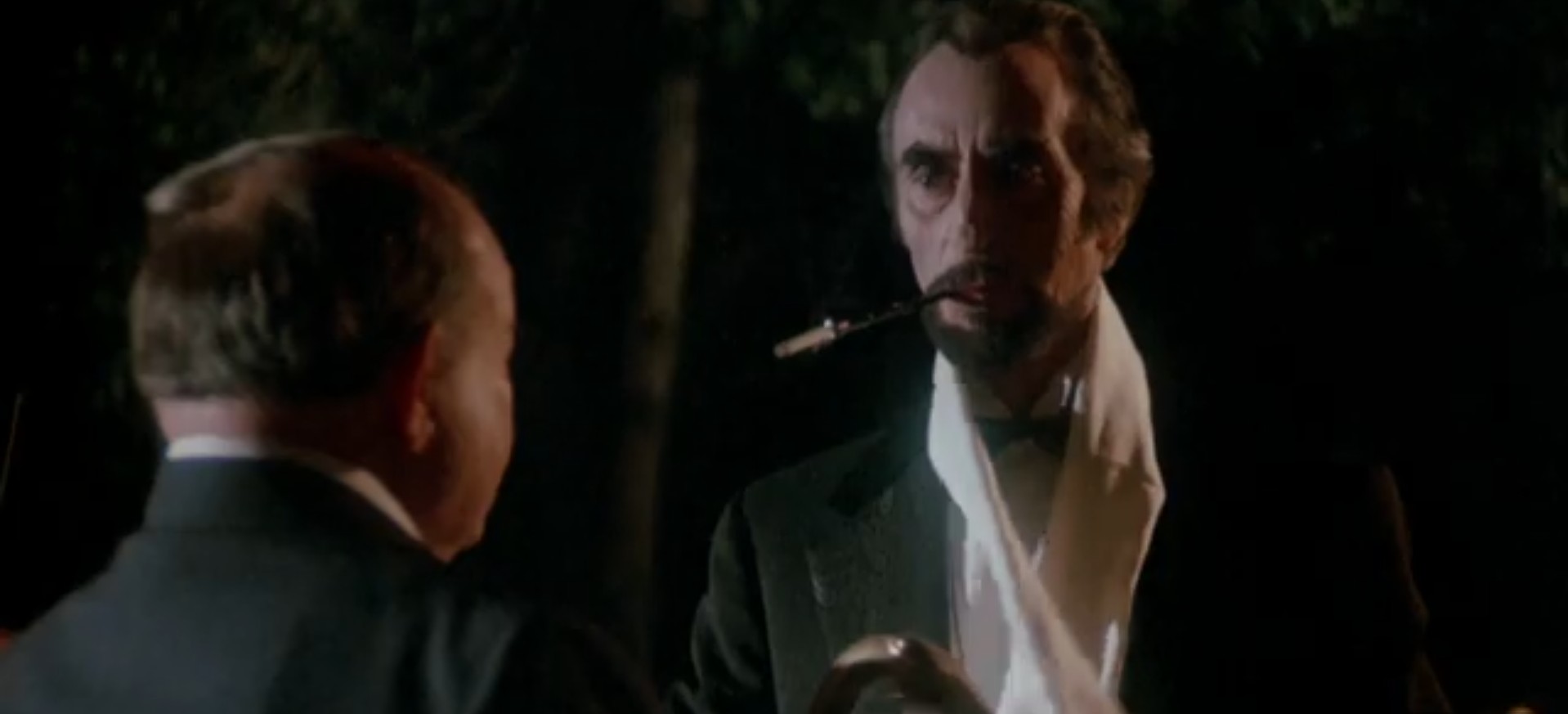
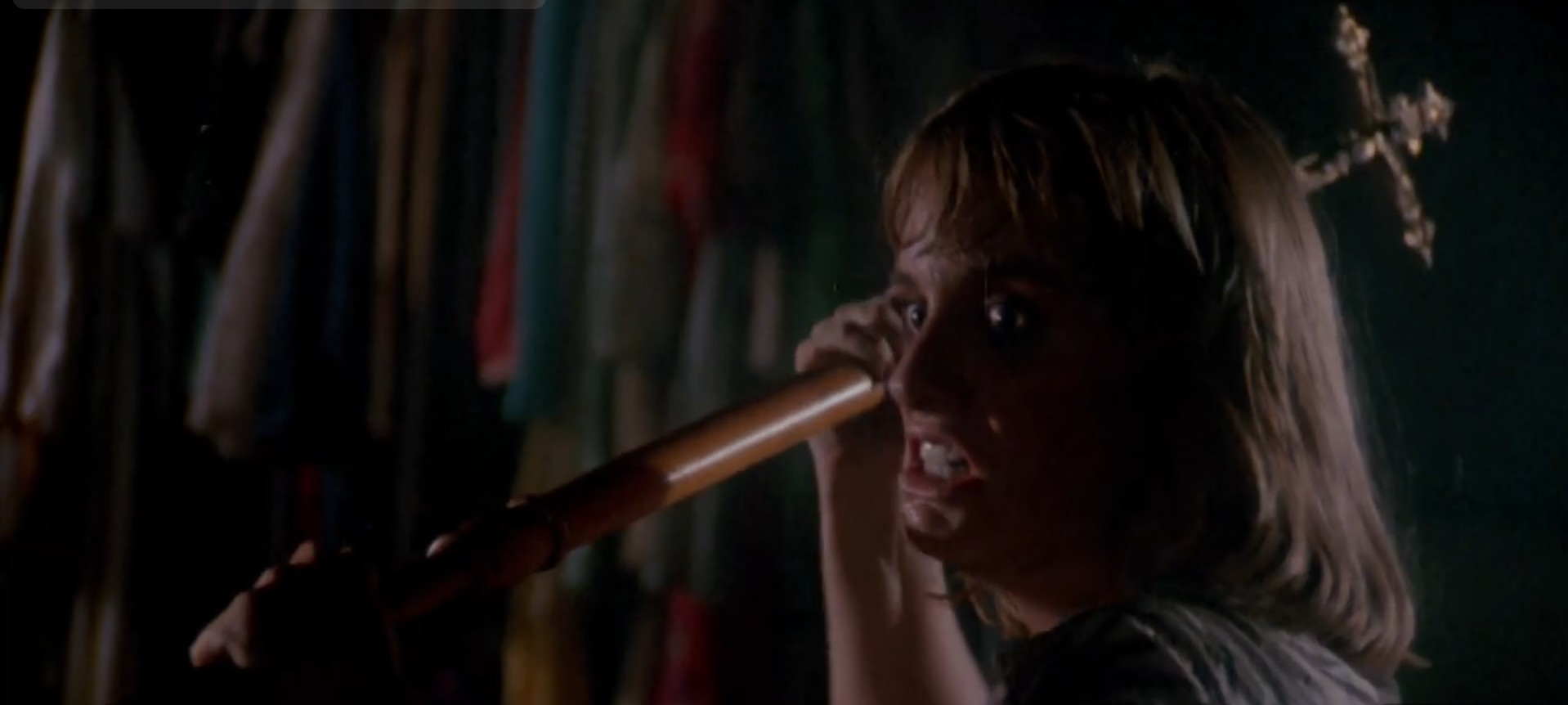
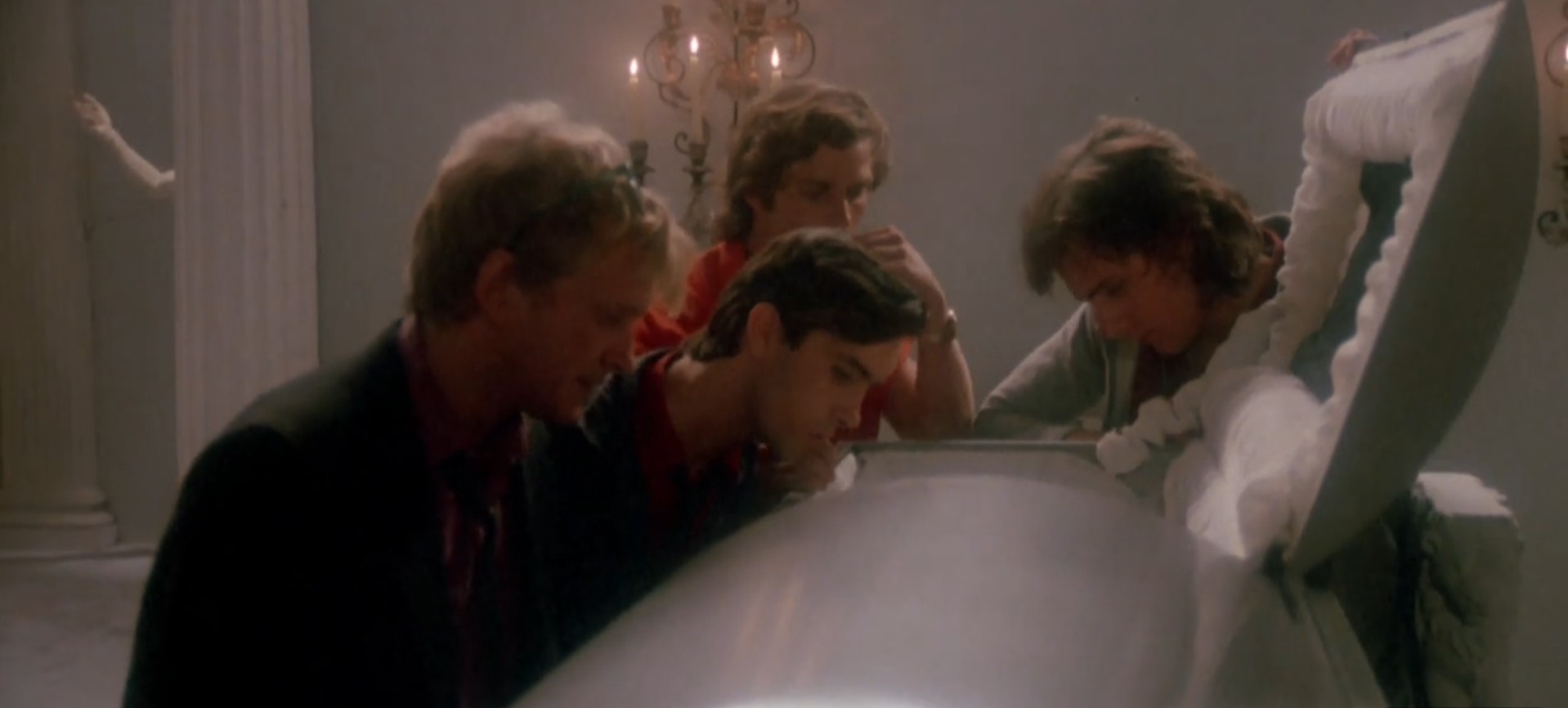
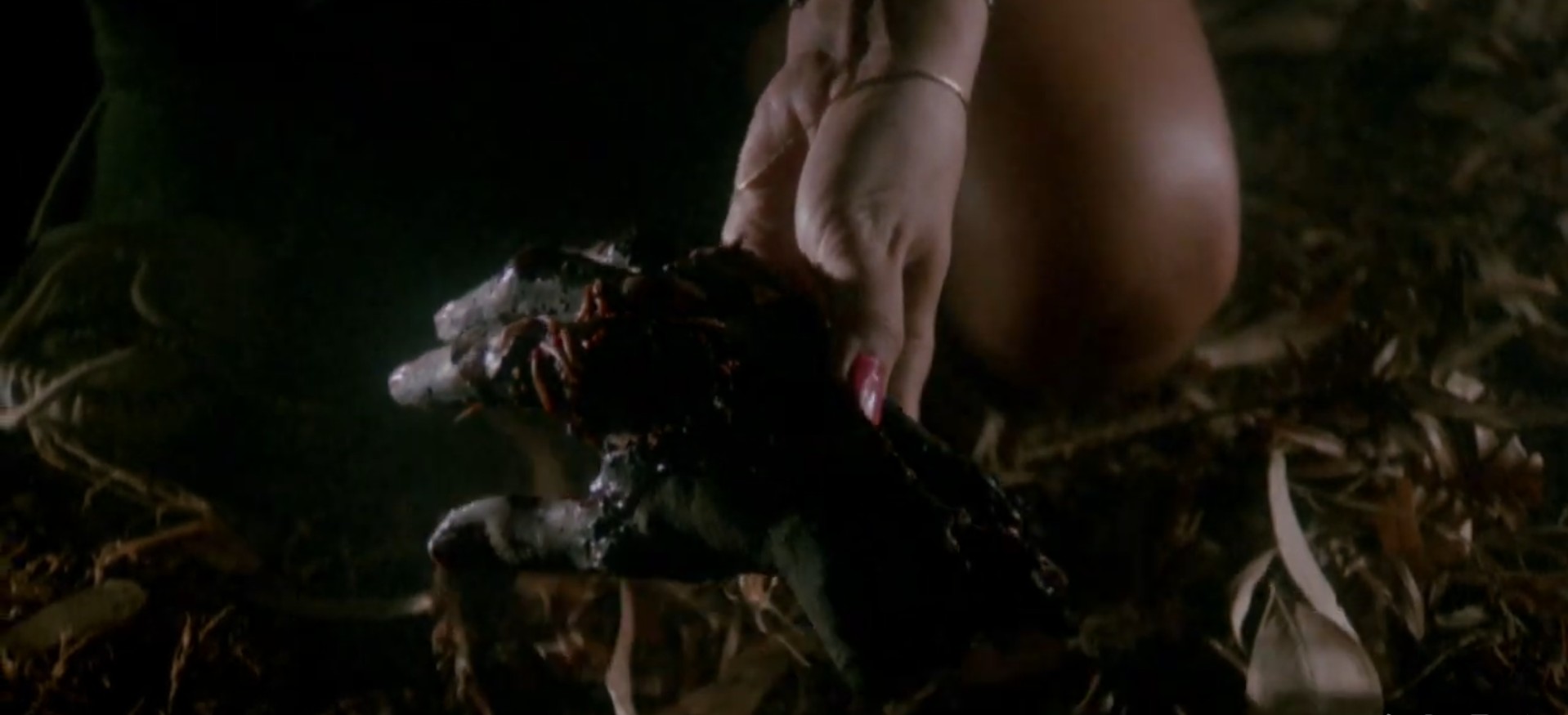
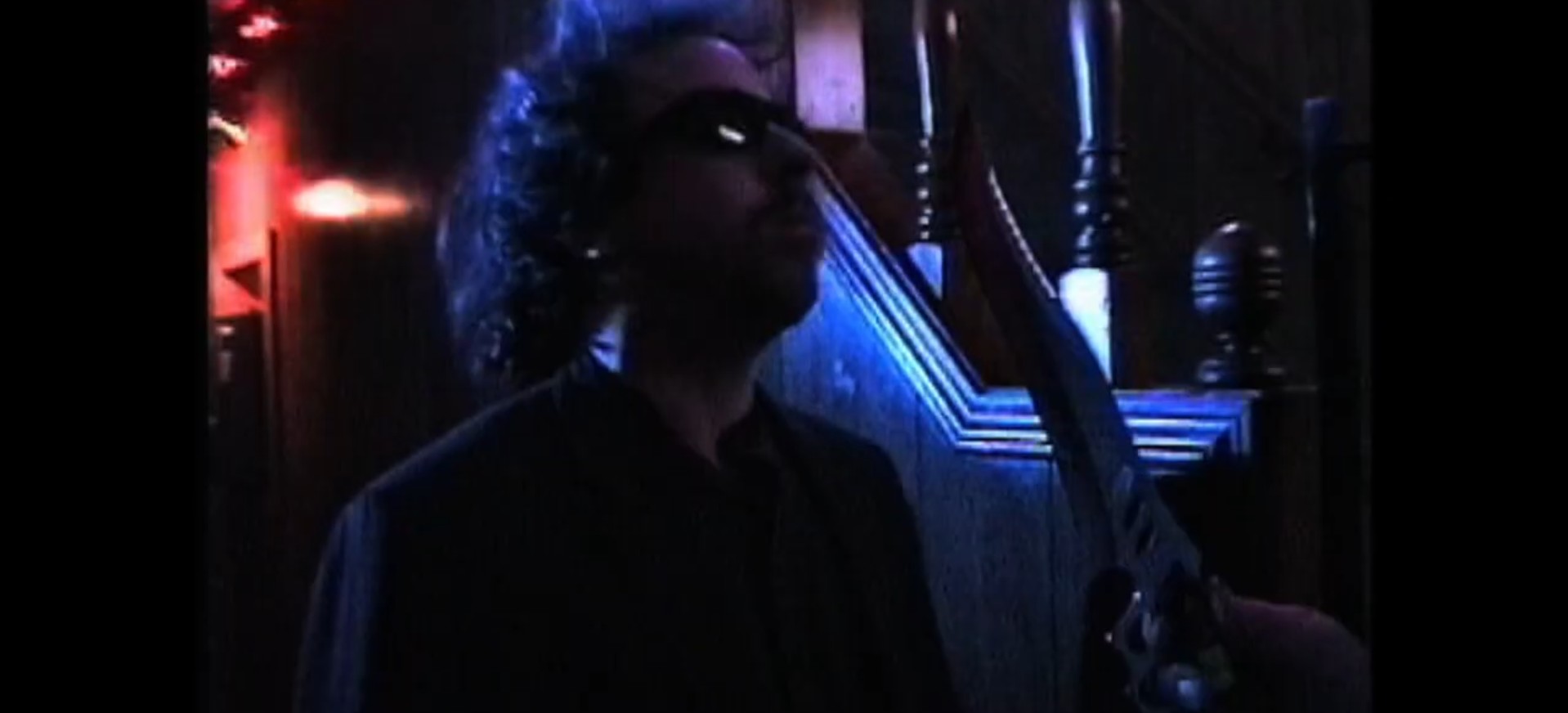
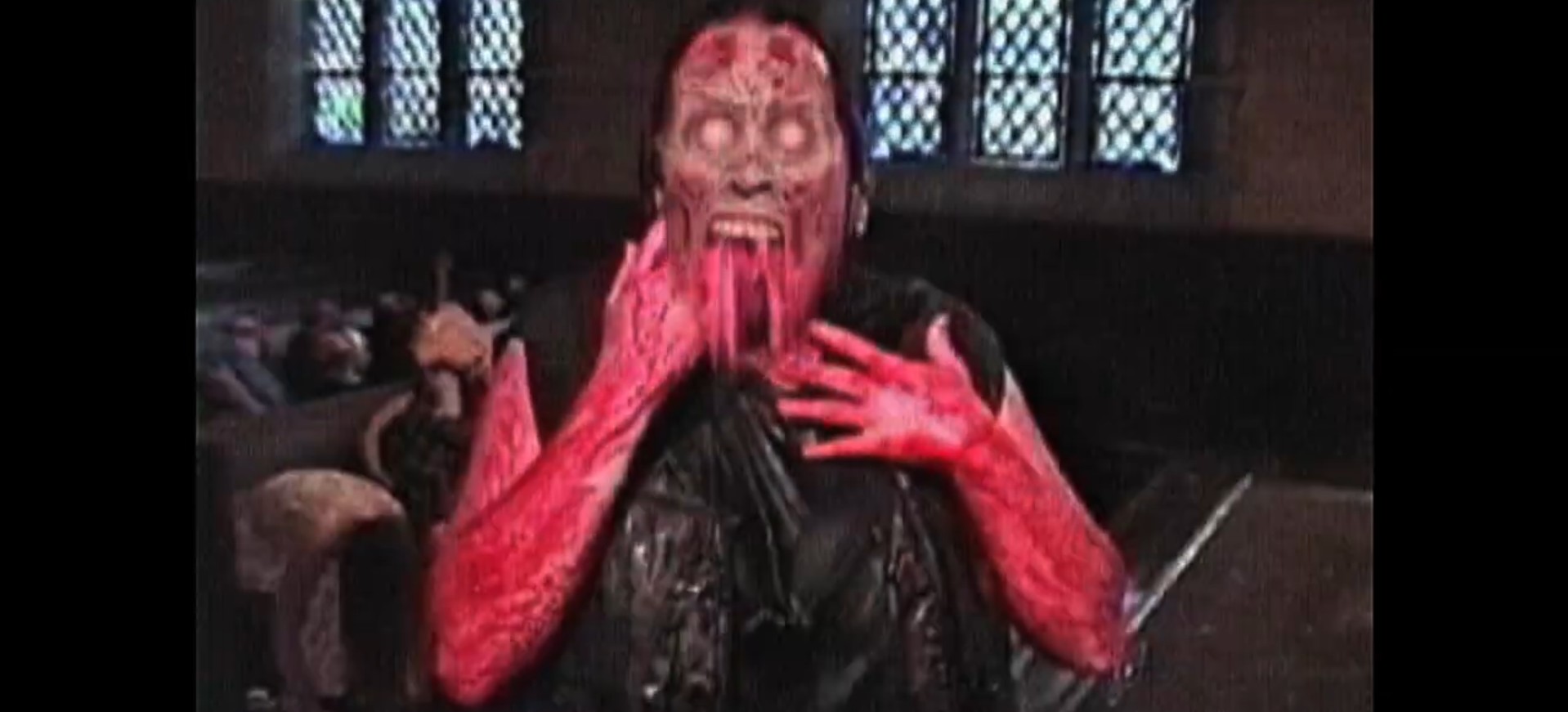
Jason Frankenstein is the great grandson from a long ancestorial line of corpse reanimators.  Feeling unfulfilled in life and his destined legacy, Jason goes through the motions of being a hospital’s physician assistant and putting up with his less ambitious girlfriend, Penny.  When a disfigured serial killer is brought into his hospital, Jason immediately recognizes the shell of a man as his grandfather’s reanimated corpse brought back to life with the family’s secret elixir, Adrenarol.   Hiring two crooked, drug-dealing EMTs to do his kidnapping bidding in exchange for medical grade drugs and with the assistance of a confidential nurse with a disreputable past, Jason sets to complete what his grandfather started by creating his own living, breathing, thinking monster with the family reanimating formula.  Selective hacked up body parts, double-crossing henchmen, and a troublesome manmade man goes against his birthright grain with the only path forward soaked in the blood created by his own hands. 

Resurrected from the depths of just a concept and electrified by crowdfunded, “The Last Frankenstein” is alive, ALIVE!, from writer-director David Weaver in his debut feature length film.  The U.S. film from 2021 was set and shot in Weaver’s hometown of Amsterdam, New York, just northwest of the state capital of Albany.  Labeled as an existential slasher, extracted from Mary Shelley’s classic gothic novel, Weaver sought to recreate exploitation films of the 1970s-1980s with a raw façade, gruesome practical effects and gore, and an assortment of cynical characters in a story that tells of generational expectations, the pressures of living up to greatness, being the last of one’s family surname.  The Kickstarter production raised $13,500 for mostly the shooting costs with much of the post work being completed by Weaver to maintain low costs and is a production of Gila Films with Jay Leonard producing.

“The Last Frankenstein’s” acting tone is a curious one.  Complex with the desire to conquer death with footnotes of drug peddling and murderous EMTs, longing relationships and carnal stress releases, and death, much death, there’s a severe lack of emotion amongst the character pool, delivering a consistent and constant cadence of flat intonations.  The same expression is pretty much splayed onto each face with attitudes and personalities to match in a widespread of white bread acting.  In a way it works toward the story’s apathetic and cynical nature but while Frankenstein’s monster lives with a new life, “The Last Frankenstein” cast utterly is lifeless, beginning with the lead actor William Barnet in the titular role and though a doctors are conventionally attributes plainspoken, carry an unbiased inflection, and eve have some sense of being on the spectrum, perhaps, Barnet’s lukewarm woodenness extends beyond his reach and to the rest of the lot.  There’s no concern or fear in Nurse Paula’s (Keelie Sheridan) eyes when her acquaintance is killed by Jason Frankenstein or that the doctor is trying to resurrect the dead, no anger, resentment, or guilt from the two stoic ambulance drivers (Jeff Raiano and Ulisses Gonsalves) covertly dealing drugs and doing Frankenstein’s dirty work, and there’s definitely no life behind Frankenstein’s monster’s eyes, neither his grandfather’s nor his, that’s very opposite to the legacy portrayals by Boris Karloff’s sadness, Robert De Niro’s revenge, or Peter Boyle’s joy and fear.  This different take on the canopied story has the creature boiled down to a Jason Voorhees type, especially with eldest creature (Roderick Klimek) that looks very much like hockey mask slasher from the backside and even kills like him too.  Jason Frankenstein’s version, played by Michael Wetherbee, at least shows some reserve, some kind of calculation happening behind the flesh-stitched face, and does abide by his apathetic opportunity to kill but also resists the juggernaut chase to slaughter even if detrimental to his existence.  What that resistance is that holds him back goes without exposition or a vague sense of implicit explanation but it’s a performance that renders the most feeling in a rather frozen stiff guild of actors.  Jana Szabela plays Jason’s girlfriend Penny, Brett Owen plays Jason’s father in flashbacks, and cult actors Jim Boelsen (“Strange Behavior,” “The Curious Case of the Campus Corpse”) and the late Robert Dix (“Forbidden Planet,” “Horror of the Blood Monster”) also costar.

The creature’s Gothically enriched surroundings, darkly and bleakly trimmed with elaborate castles inside sinister castles and grotesque in unordinary shapes, styles, and hauntings, are more than replaced by David Weaver’s backwoods entry into the electrified monster.  Trading castles for cabins and grandiose laboratories for makeshift surgical rooms, “The Last Frankenstein” utilizes what’s immediately around, and in this case it’s Weaver’s hometown of Amsterdam, New York, a quaint, post-industrial smalltown surrounded by brick homes, rundown factories, and woodland that gives the story an unconventional look and approach while keeping true to the basic principles of Frankenstein and his monster.   With the idea that small towns hold secrets, “The Last Frankenstein” leans into the problematic drug problem less populated areas encounter with most turning a blind eye or ignorantly keeping their blinders down to the transgressions that are happening right underneath their noses.  In this instance, the drug dealing EMTs are utilized via blackmail but deal to come out better than before with more peddling product than before without risking exposure through a doctor approved sign out sheet for narcotics, which is how Frankenstein caught onto their scheme.  To dig deeper into that latter statement, Frankenstein is the smartest amongst his living peers but can’t seem to understand and figure out his and his ancestor’s creations that go against his family tree in a visceral and violent protest of what it means to live, promoting once again that anti-God actions spoil the fruits of man.  There’s a show of arrogance and false omnipotence to cheat the natural course of death found in all the Frankenstein subject films and those who create variations of the filmography, such as with “Re-Animator” and “The Lazarus Effect.”  

The film may be called “The Last Frankenstein” but it’s the first title with the DiabolikDVD label as a company release.  The AVC encoded, 1080p high-definition, BD50 Blu-ray is presented in the original widescreen aspect ratio of 2.35:1.  “The Last Frankenstein” favors a neutrally saturated raw image, capturing a lot of the natural greenery and aesthetic of nearby woods, creeks, and other characteristics of rural America, including trailer parks, post-industrial buildings, and wood paneling interiors.  The surrounding intricacies of a clearly puttied and latex mask used for the Frankenstein grafted facial skin looks like a true mask instead of skin but that’s the very intention of a created being, pieced together in slapdash stitchwork to add a layer of differentiation much like the original monster’s scars or bolt.  General particulars around exteriors and interiors are clearly defined with the consistent laid out image quality that produces ordinary smalltown charm contained to limited landscapes and mostly the direct environs that are not exactly cinematically picturesque but does depict the visual boredom of the vicinity.  The sole audition option is an English LPCM 2.0 stereo that reproduces faithful fidelity of the dialogue and diegetic action within the front channels.  The foley and Steve Noir’s poignant trance of a synth score are a little more girthier bodied to fill the entire medium that get to being comical in action (in foley) yet powerfully bleak and hypnotic (in score).  Dialogue is clean, clear, and in the forefront mostly, often vying for position with Noir’s repetitive and pulsing soundtrack portions. English SDH are optionally available.  Special features include feature-length commentary with writer-director David Weaver and producer Jay Leonard, a second commentary track with Weaver, a making-of featurette Reanimating the Last Frankenstein that goes through cast and crew interviews, the Kickstarter campaign, and a creation thought process for the concept and its materialized conception, deleted scenes, outtakes, still gallery, and a mentioned bonus easter egg listed on the back cover but unable to locate it on the disc. The reviewed copy isn’t the DiabolikDVD exclusive with limited slipcover, but the standard Blu-ray comes one-side cover art that actually requires the slipcover in its muted and dark composition of characters with no title, only the subtitle Nothing Lasts Forever, which makes me believe the slipcover is the one and only primary cover art. The 102-minute featured release comes not rated and region free.

Last Rites: Not to be a wash, rinse, and repeat of the canonical Frankenstein films, “The Last Frankenstein” is creature feature-lite in toneless, small-town adversities of creating an existence that requires life and limb…many, many limbs.

“The Last Frankenstein” on Blu-ray from DiabolikDVD

To be a Rich and Famous Rockstar, You Must Sign with EVIL! “Hell’s Bells” reviewed! (SRS Cinema / Blu-ray)

Sign Your Soul To Satan for the “Hells Bells” on Blu-ray!

A pair of middle-aged best friends and rockers named Arthur and Herb have minimum waged jobs, no ambitions, and two level-headed wives on the brink of divorcing them if nothing changes.  All the friends have is their band, Devil Music, and their glam rock music. Out of the blue, a music talent agent signs them in a heartbeat and before they know, Devil Music is rocking out to a packed-full arena full of adoring fans and obsessed groupies, raking in money beyond their capabilities of higher counting.  What they’re oblivious to is the band’s collective souls now belong to the Devil under the contract terms with the servile music agent doing the Devil’s fear-based bidding and whose life and soul hangs in the balance.  When the Devil comes to collect, sending his demonic minions to slay each member of the band, Arthur and Herb must find a way to save themselves from the Devil cancelling their life show forever. 

For over a decade now, filmmakers Jim O’Rear, who’s minor zombie role in George Romero’s “Dawn of the Dead” has launched a career in indie horror in front and behind the camera with “Hayride Slaughter,” “Three Tears of Bloodstained Flesh,” and the “Cruel Summer” trilogy,” and Scott Tepperman, who’s more recent filmography into the indie market also saw highlights of horror, have been in business together ever since co-starring in the 2013 haunted hospital flick, “Hospital.”   From then on, the two had formed their own production company, Los Bastardz Production, specializing in low-budget horror with a select entourage of talent.  The devil and his contract film, underscored with a rock-n-roll fame theme, released in 2020 is duo’s “Hell’s Bells,” a horror-comedy built around if it seems too good to be true, it probably is narrative.  “Hell’s Bells” is also produced by the two filmmakers.

Like most of their produced product, it comes to no surprise that the Los Bastardz themselves, Jim O’Rear and Scott Tepperman step in the principal leads of a Beavis & Butthead or Bill & Ted type of heavy metal music centric duo who are daft beyond repair.  Any innovation aimed for the setup is instantly dissolved by the derivative tepidness as we’ve seen these characters before over the decades now, but O’Rear and Tepperman make for a good dimwitted and guileless pair with a gullibility and an innocence that makes them appear sympathetically simpatico, even when their levelheaded wives (Rebekah Erb, “Death Care,” and pornstar Layla Dawn. “Slumber Party Slaughter Party”) use threatening divorce language to motivate their one-track mind toward another desire in life.  The jokes are a bit long in the tooth and there are a handful of needless fart jokes, but the overall gags do land even if the terrain they contextually touch down on is rocky at best as they play to their individual character strengths of being a grocery bagger enthusiastic about making it big and a loafer who actualy has some intelligence underneath his Jesus hairstyle.  Their band mates, the cocky loudmouth drummer Vic (Paul Van Scott), the butch backup singer Shirley (Lisa Kirk), and the catatonic bassist Gary (Cameron Scott), all have their own quirks, and all are played by actors familiar with El Basterdz having donned roles in previously produced films from the company, such as the “Cruel Summer” series.  As the band Devil Music, they are targeted for soul reaping as a part of a contract byproduct against their music agent Caleb (Tom Komsar), drawn up by the devil himself in Marc Price (“Trick or Treat”) by duplicitous means with deceitful promises.  Without the horns, pitchfork, and red skin, Marc Price makes for a good Devil in human skin with only the economized visual effects fashioned glowing eyes.  Harold McLeod II preludes the story as a victim of contract, Cayt Feinics draws attention with a show of toplessness as Shirley’s lover, Jerry Reeves plays the demon x many going after Devil Music, and a sorely underutilized Jimmy Maguire, as the exasperated grocer manager tired of Arthur and Herb’s lack of common sense, fill out “Hell’s Bells” cast.

To preface with my previous experience with El Basterdz films, “Cruel Summer” didn’t do it for me with a dowdy slasher that’s didn’t leave impression.  Yet, “Cruel Summer” has two sequels plus a 4th soon to be on home video, making this series their most popular commodity.  What can I say?  Cinema is subjective.  That bad taste didn’t deter “Hell’s Bells” from the ever-growing review pile and a second chance to get this long-time horror fan aboard with Jim O’Rear and Scott Tepperman’s blithe outlook toward the horror genre, one that doesn’t take itself too seriously.  With that understanding, going into “Hell’s Bells” was rather easy with no expectations for commentative material and top-notch gags and laughs, but what El Basterdz provides has been long appreciated and continuously favored in genre films:  decent VFX, decent practical effects, and, of course, the provocation of nudity.  There may be times when films can get away with having only one of those key elemental pieces present with great immensity and intense projection that the film can’t be denied it’s due right to seen and heard as a well-made film but have all three and the formula works like a charm amongst genre fans no matter how bad the storyline gets and no matter how bad the acting is portrayed, leveling up a mediocre production to potentially the penthouse of the independent skyscraper.  To be fair, neither the story nor the acting in “Hell’s Bells” is atrocious but the technical aspects during principal photography and post-production throw the film off-balance into slapdash hogwash and that can be rather off-putting right out the gate for most audiences.

“Hell’s Bells” finds itself being a story having been told before, many times over in its airheaded budding duo faced with great task none think possible to complete, but O’Rear and Tepperman manage to befit themselves satisfactorily in archetype with a rock-n-roll nightmare by sticking to their character quirks and incorporating the backbone preferences of shoestring genre filmmaking.  SRS Cinema is a distributing house built on shoestring films and “Hell’s Bells” is another brick in its schlock-sturdy foundation with a Blu-ray release.  Encoded with AVC compression, presented with 1080p high-resolution, on a 25GB BD-R with the purple underbelly, “Hell’s Bells” looks pretty good for commercial grade encoding and minimal capacity.  Details are sharp enough to cause no concern to capture skin variations, the contrasting wardrobe textures, and the shifting compositions between reality and fantasy stemmed from visual effects and fade-in/fade-out montage sequences.   Scenes are mixed bag of grading, some more intense than others that are set with a brighter natural veneer, but all retain their intended quality without any substantial issues from compression.  The English language LPCM 2.0 stereo renders a mix of feeble commercial equipment and green technical knowledge that permits a large noticeable swing in all areas of principal sound recording with most of the pain points affecting dialogue with retreated vocal presence in certain scenes while robust in others, and even an in-moment change of the same scene at times.  Post sound design isn’t marred by the same scenarios that’s a clear as crystal with the added rock soundtrack, crowd cheers, and demonic gutturals.  No English subtitles are offered.  Special features include a commentary track with writer-directors Jim O’Rear and Scott Tepperman, a behind-the-scenes featurette, Arthur and Herb’s Devil Music music video, blooper reel, the feature trailer, and SRS Cinema catalogue trailers.  SRS Cinema’s Blu-ray mirrors their limited 100 count release without the director’s signatures, retailed with a regular Blu-ray Amaray case with illustration composition artwork of mostly the chief principal characters, and as always, the graphic artistry SRS uses is always 100x better the film.  There are no other physical accompaniments.  The not rated release has a runtime of 80 minutes and has region free playback. 

Last Rites: Throw up the sign of the devil horns for “Hell’s Bells’s” comedic contract with a hair metal Satan, but don’t let this narrative fool you by hawking new something old and done before.

Sign Your Soul To Satan for the “Hells Bells” on Blu-ray!

A Bond of Friendship Formed Over an EVIL Annual Contest. “The Long Walk” reviewed! (Lionsgate / Blu-ray)

“The Long Walk” on Blu-ray for the Holidays!

Over a decade ago, a divisive civil war nearly tore the United States of America apart, leaving in it’s wake a country on the brink of financial ruin and its place in the world behind other nations.  To help heal the nation back into an industrial superpower, an annual long walk was enacted to be a show of encouragement, an act of bravery, and to instill a sense of duty and production amongst the citizens of America.  Voluntary participants of young men, one from each state, must walk continuously at 3 ore more miles per hour with a military escort.  Last man standing will be bestowed a large cash prize and granted one wish of their choosing.  Those unable to continue their trek at the required pace will be issued three warnings before being gunned down, punching out their ticket.  Home state’s Ray and Georgia’s Peter form a bond on their walk that’ll test not only their friendship but their will to live in hopes to change the contest’s cruelty.  

“The Long Walk” has itself been on a long walk to being adapted on film from the first official novel by the prolific and renowned suspense writer Stephen King under his pseudonym of Richard Bachman.  I’ve italicized official because the late 60’s novel wasn’t published and released until 1979, five years later after “Carrie” was published in 1974.  Through the hands of George Romero and Ridley Scott, neither could materialize a filmic rendition of what is considered his most grim work.  That is until “Constantine,” “I Am Legend,” and “Hunger Games” director Francis Lawrence came along, acquired the rights, hired “Strange Darling’s” JT Mollner to script the project, and produced perhaps the most disturbed dystopian film of 2025.  “The Long Walk” feature is a collaborative production from Spooky Pictures, Electric Lady, and Miramax, is produced by Steven Schneider, Francis Lawrence, Roy Lee, Cameron MacConomy, Rhonda Baker, Ellen Rutter, and Carrie Wilkins, and has been given executive producer Stephen King’s blessing for minor, yet impactful, creative control.

“The Long Walk” courses with a young but up-and-coming cast with a veteran icon bringing up the rear as coxswain spurring the unpleasant action.  “Licorice Pizza’s” Cooper Hoffman, son of the late Philip Seymour Hoffman, and English actor David Jonsson whose just came off his part in a big science-fiction horror franchise with “Alien:  Romulus” from last year.  Together, Hoffman and Jonsson play the central characters of Ray Garrity and Peter McVries, two young men who formulate a bond while voluntarily participating in the annual deadly contest that traverses for hundreds of miles through heartland portions of an undisclosed state.  Right from the get-go, Ray and Peter hit it off as the check in for the contest simultaneously upon arrival with the story quickly introducing and discerning a select sundry of other walkers that are either in it to make friends, be an in-it-to-win-it antagonists, or be a formidable indifferent with a spectacular end to their ticket or otherwise arc toward either direction.  In these walk-along parts are Ben Wang, Charlie Pummer (“Moonfall”), Joshua Odjick, Tut Nyuot, Roman Griffin Davis, Garrett Wareing (“Independence Day:  Resurgence”), and Jordan Gonzalez supporting the Ray and Peter narrative with their own in-state regionalism and dialect backstories and motives for sacrificial strutting, which their exit that much more poignant.  Then you have Mark Hamill, who needs no introduction, in a performance on a totally different plane of existence than the young man walking for their very lives.  Blind to compassion and stern on his belief sacrifice is necessary for the greater good of the nation, Hamill as no nonsense brass, known only as The Major,” is a mythical figurehead initially held in high esteem and awe or overall indifferent amongst the young men.  All except one with Ray being the firm outlier of contrarian using passive aggressive measures that build to an endgame goal.  Sporting large aviators, green fatigues, and occasionally holding and firing a sidearm, Hamill’s method ways really come alive within The Major’s gung-ho disposition inside an authoritarian America.  Judy Greer (“Jurassic World”) and Josh Hamilton (“Dark Skies”) round out the cast as Ray’s parents. 

No matter how grim “The Long Walk” spans the 108-minute runtime, the story isn’t necessarily all bleak.  While the time period is unknown and the war that has seemingly divided the nation goes unsaid, one can assume the decade is late 1960s to early 1970s based off the military fatigues and weaponry, the dialect and slang vernacular, and the outer shell of the world with clothing, cars, and storefronts that speak to a simpler time where no cell phone exists, transmitter radios are the news and music, and the presence of any modern-day convenience lost amongst the vast fields and deprived brick-and-mortars of small town America.  Yet, the story walks along the lines of some alternate, dystopian reality, pre-dating a “Hunger Games” like contest involving the permanent elimination of young people in effort to better society.  Fortunately for “The Long Walk,” director Francis Lawrence directed “Hunger Games” and that gives him a leg up on the tone this adaptation needed for the big screen but although the two share a similar theme, the differences between them are vast with “The Long Walk” set in a past instead of a future dysphoria, objects and places are established and grounded by reality rather than creative fiction, and the violence is by far the grislier.  Often, violence can be gratuitously supplemental and unaffecting but Lawrence’s intention to show closeup executions contrasts with weight against the boys’ bond building during their fear and their ambition test.  With every explosion of brain matter and bits of flesh the stakes are real and the tension is thick even if the panic is subdued amongst the walking competitors.  Yet, with every ticket punched, that tightness starts to show signs of shuttering in conjunction with fatigue and that carries on for miles.  Much like the film adaptation of Frank Darabont’s “The Mist,” the ending for “The Long Walk” has been altered from the novel with prior Stephen King approval and while “The Mist” absolutely shatters all the hope with tons of despair and irony in a blaze of glory ending where one’s heart drops like a cannonball in the ocean, “The Long Walk’s” finale barely fizzle to make the same impact and can even be said to be a predictable modern moving ending. 

“The Long Walk” puts one foot in front of the other toward a new Blu-ray release from Lionsgate.  The AVC encoded, high-definition presentation in 1080p, is stored on a BD50 with a widescreen 1.39:1 aspect ratio.  Sharp detail in the small percentage desaturated picture offers a mid-20th century America air along with the costuming and production sets and locations.  Fabric textures result better in sweat-induced cotton Ts overtop a variety of muted shaded pants and solid army fatigues while the rest of the landscape has a green, brown, and tan landscape of a scarce Midwest, harnessing widescreen and medium shots for the open terrain that equally freeing and beautiful yet also confining and harsh in the grim, dystopian contest; however, the textures take a back seat to the chunky bits of exploded flesh, blood, and brain matter splattering either in gray and painted asphalt or spreading amongst the wind.  While the detail doesn’t provide all the gory bits and pieces there’s enough there to really cause alarm from within.  The English Dolby Amos is the primary English track for best to enclose the immediate space surrounding the 50 State participates feet hitting the pavement and the escorting military convoy tank and wheel tracks.  Gun shots are jolting that tear into the audio senses in step with the graphic nature of the scene of apathetic militaristic executions.  There are curious post-execution sounds from the blood pooling on the street in what sounds like a continuous gush of blood that hits the side channels; its an odd action for sound to take audible shape, especially in scenes that are not an extreme close up but rather materialize out of medium shots.  Dialogue is perfectly suitable in the conversational piece between the young men and the gruff Major.  Other audio format choices include a Spanish Dolby Digital 5.1 and a French Dolby Digital 5.1.  There are also an English 2.0 descriptive audio and subtitles in English, Spanish, and French.  Special features include feature length documentary Ever Onward:  Making the Long Wal” with crew – such as director, writer, and DP – and cast – including Cooper Hoffman, David Jonsson, Garrett Wareing and more – interviews discussing the depths of “The Long Walk” from A-to-Z, from it’s previous adaptation concept rights held in limbo down to the individual character mindsets.  Two theatrical trailers are the only other special features encoded.  Lionsgate Blu-ray Amaray case is encased a O-slipcover with straightforward (pun intended) artwork that’s also on the case artwork.  The digital copy leaflet is inside for digital moving watching pleasure.  The 108 minute film is encoded region A and is rated R for strong bloody violence, grisly images, alcohol, pervasive language and sexual references. 

Last Rites: An intense and somber America born out of division and fear is a reverse reality, an alternate take on what could have been or could be soon, as “The Long Walk” glorifies sacrifice as a scapegoat for national pride, strength, and the greater good in a warped sense of authoritarian rule and industrial encouragement.

“The Long Walk” on Blu-ray for the Holidays!

EVIL’s Casting Couch Could Be the Last Audition! “Young Blondes, Stalked and Murdered!” reviewed! (Anchor Bay / Blu-ray)

Not Red Heads, Not Brunettes, Blondes! “Young Blondes, Stalked and Murdered!” on Blu-ray!

Stacy and Josie are two aspiring young actresses living in Los Angeles.  Both women are blonde and both ambitious to make it big in acting while being friends vying for the same work in the difficult industry that involves casting couches and who-knowing-who to get even just a foot into the door.  As Stacey’s journey to fulfil her acting career stumbles role-after-role, especially after a unique pre-casting session with a film director named Sasha, she finds that Josie receives role interest from the same director.  The pressure gets under Stacey’s skin to where nightmares evoke jealousy and a thin layer of fear, raised by the widespread terror of blonde women, also aspiring actresses, being discovered horrible murdered by a killer who records every kill.  Stacy pushes forward but her friendship with Josey wanes with her casting success and the news of more blonde actresses found gruesomely murdered unlock her nightmares to their full potential. 

“Young Blondes, Stalked and Murdered” catches the eye with a lustrous, vice-drenched title, but the narrative layout is anything but candidly conventional.  The film can be described as a reverse slasher that keeps the serial killer of young, blonde actresses in the peripherals integrated ever so delicately inside a character study of the principal lead, in this case with Stacey, a Minnesotan with stars in her eyes.  Those stars eventually lose their sheen, but the desire doesn’t dull amongst a deficiently of roles for an overabundance of the same type of actress going for them.  For writer-director, “Young Blondes, Stalked and Murdered” is Nick Funess’s first feature-length production based loosely on the trials and tribulations of young women cat scratching their way into the business with a hairline hook of a maniac with a murdered type.  Silence Films serves as the production company with Corentin Leroux and Matt Morello co-executive producing alongside Funess for the L.A. shot film.

Inhabiting as the primary character learning the curve of your desired trade is Samantha Carroll in her second full-length feature role but first at the helm as the star.  However, as Stacy, Carroll plays a character who doesn’t feel like her longed dream of being a star.  Instead, Stacy plays by the rules as if there’s a guide or a playbook to becoming a successful on-screen thespian.  Carroll’s range of emotions can peak from mile excitement to absolutely feeling crushed by the weight of failure.  Disdain and jealousy also rear their ugly heads in between inside a structure that isn’t exclusive in following Stacy as Josie runs a parallel course with less touch-upons in the grind that is to follow one’s dreams.  Elle Chapman’s more dolled up for the role by accentuating her natural beautiful for perkier and more cosmetically inclined haughtiness to contrast her conceit against Stacy’s honest efforts.  Though Funess essentially wraps the story around two actresses, the extent of supporting actors is limited to the exact same number with Gemma Remington as another blonde, actress acquittance and/or rival to Stacy and Zachary Grant as a casting filmmaking who has unspoken quirks about his character Sascha that are told through his rather distinct distilled friendliness and the way Funess and Corentin Leroux frame him by cropping out portions of his body by the frame itself or by objects, as if hiding bits and pieces of his truth in obscurity.  Both Remington and Grant’s scenes are brief and spliced in to add to the stress of an actress’s day-in-a-life, to terraform the the gossipy, cutthroat world, and, in earnest, to be more a grounding third-dimensional force that doesn’t allow Josey to be the only other character for Stacy to bounce off of, yet the characters do add impact with the peripheral killer with Remington’s gruesome news update of another blonde-headed body found as well as hinting at the killer’s possible modus operandi of how he selects, hunts, and dispatches his victims and Grant going further with that idea with a seemingly irrelevant and odd casting couch method depicted with Stacey on screen and with Josey off-screen told anecdotally through her perception, and from both experiences may leave breadcrumb clues toward a suspect without ever divulging concrete evidence toward an unnamed and masked killer rarity making an appearance in the film.

Like most moviegoers might experience, my eyes bored with interest into the unique title.  So much so, my mind started an imagination factory of possibilities there could be inside the encoded disc.  A true-blue slasher initially became settled on with a conventional killer stalking, hunting, and the eventual demise of the titular, ill-fated blondes and while that sort of terminus concept is hackneyed beyond repair, excitement still bubbles to the surface because the method itself sells from it’s tried and true history with genre fans and general audiences alike.  “Young Blondes, Stalked and Murdered” is not that kind of film.  You can label it a deconstructive or backwards slasher, but the subgenre thriller has deeper drama roots in the grounded character conflict garden, blossoming more toward a psychological thriller with a rear mirror, background view of a niche specific serial killer.  Funess’s film is akin to some apocalyptic thrillers of an impending, world-ending devastator on the horizon that you know is coming but it’s the interpersonal dynamics, or maybe even political and authoritarian moments, leading up to that catastrophe that are the heart-and-soul of the story.  Funess’s film is very much a slice of life rather than a slice of flesh with an eye for framed shot, the draw of contention through personal hindrance and envy, the melting mindset stemmed by failure, and it’s an overall celebration of performance by the cast in a story with minimal violence because the violence itself is at the very back of the mind, forgotten almost as these young blonde women continue to strive for just an ounce of limelight no matter the cost that stares directly at their faces. 

Anchor Bay continues to release rebellious films on their revamped label with “Young Blondes, Stalked and Murdered” now available on Blu-ray.  Stored on a single-layered BD25, the AVC encoded high-definition film, 1080p resolution, is presented in widescreen 1.78:1 aspect ratio.  Image wise, the picture captures natural appearances with a soft grading that lightly brightens the image.  There is some excellent use of blacks that are solid and deep with crush but works to the advantage of the scene to create a void tension of what’s inside’s it’s inkiness.  Skin textures are fair with some smoothing over of texture, but the tones appear organic and consistent throughout; the same can be said about fabric and surface textures in a range of settings and outfits that add unconscious concentrated coatings to the mise-en-scene.  The English 5.1 DTS-HD MA audio is overkill for a dialogue and score-driven soundtrack narrative but does provide clean conversation with plenty of clarity and no interference.  The back and side channels are less utilized with most of the action held within camera lens view, reducing any kind of non-diegetic milieu activity to the flutter of soft intrusions.  Sergei Kofman’s delicate perceptible score hangs in the rafters for the most part but does come down form time-to-time when needed to either build tension and show discourse in Stacey’s life/wellbeing as she struggles to get ahead with acting gigs. The special features include a scene-by-scene breakdown audio commentary from writer-director Nick Funess and executive producer-cinematographer Coretin Leroux. Anchor Bay’s Blu-ray is encased in a standard Blu-ray Amaray with a white, yellow, and poker hot red artwork of a splattered star with Stacey’s face inside staring back out at you. A leafy insert depicts the same primary artwork plus additional, similar artwork. Clocking in just above an hour at 65 minutes, “Young Blondes, Stalked and Murdered” has region free playback and is unrated.

Last Rites: “Young Blondes, Stalked and Murdered” is a hard sell as a backwards slasher but the unsettling disseminating of ruthless Hollywood is a methodology projecting hopelessness, defeating, and hostility, metaphorically represented by a killer on the hunt for blonde actresses and could pop into frame at any moment.

Not Red Heads, Not Brunettes, Blondes! “Young Blondes, Stalked and Murdered!” on Blu-ray!

Football, God, Family, and EVIL! “Him” reviewed! (Universal Pictures / Blu-ray)

“Him” Collector’s Edition Now Available from Universal Pictures!

Cameron Cade’s father has been firmly preparing his son to be a football GOAT since Cam was a young boy.  Inspired by the 8-time champion Isaiah White, star quarterback of the Saviors, Cam had trained and played through the years and ranks to be the game’s next promising rising superstar athlete.  When a mascot-dressed manic derails Cam with a head trauma-induced attack, Cam takes a step back from competing in the football showcase but receives hope when he receives an invitation from the Saviors to work with Isiah White at his isolated training camp deep in the desert.  Before long, a dream-come-true turns into a terrifying nightmare as the training sessions go deeper into something far more sinister and Isiah’s greatness may be contributed to unnatural forces bound by limited contracts.  How far and how much will Cam have to sacrifice to be the best football player ever and to live up to his idolized hero before the game and those who control it swallow his own soul. 

Jordan Peele, once skit comedian with Keegan-Michael Key in “Key and Peele” turned provocative social commentary director of such films as “Get Out” and “Us,” produces the next potshot at cultural critiquing with 2025 released “Him,” a football themed psychological horror that puts sacrifice for the game over family, intensifies the pressures of equating performance with success, and a misguidance from fatherhood/mentorship that intends on grooming a young person into superstardom.  “Him” is the sophomore feature length film for Justin Tipping who also cowrite the script along with Two-Up Productions cofounders Skip Bronkie and Zack Akers as the first major movie release for the company associated with Peele’s Monkeypaw Productions that not only produces his Peele’s own films but also invests into minority-driven projects, such as “The Candyman” remake, “Monkey Man” with Dev Patel, and Spike Lee’s the “BlacKKKlansman.” 

At top bill of “Him’s” roster is an established comedian, writer, and producer with an even more well-established and famous last name.  Marlon Wayans’s breakout project was the sketch comedy TV show “In Living Color” that also highlighted and rocketed the career of Jamie Fox and Jim Carrey but was also considered a family affair as Marlon’s siblings, Shawn, Kim, Keenan Ivory and Damon Wayans, cohosted with him the African-American centric comedy show.  In “Him,” Marlon plays the 8-time champion quarterback for a football team that is as venerated as his character Isiah White playing for the Saviors.  Wayans, known for his comedic role stints in favorites “Don’t Be a Menace to South Central While Drinking Your Juice in the Hood,” “Scary Movie,” and “White Chicks,” has a surface scratched darker side to his onscreen personas that leave him no stranger to a role like Isaiah White that’s dispassionate yet ferocious – his drug addiction role in  “A Requiem for a Dream” is one of those examples.  Opposite Wayans is the strong, muscular facial features underneath soft, piercing eyes of Tyriq Withers.  The then mid 20-year-old is in peak physical condition for his rising star quarterback Cameron Cade under the pressure cooker of family, agents, and a football league that expects greatness on every level.  Withers’ recent principal parts in perceptively pointless and under-the-radar remakes of classic cult films, “Don’t Tell Mom the Babysitter is Dead” and “I Know What You Did Last Summer,” didn’t elevate the Florida born actor into the spotlight, preparing him for an upcoming lead in a more visible original psychological horror themed around one of America’s favorite sports, but Withers meets the challenge with a promising performance for his promising character that makes “Him” standout above the rest and being his biggest role of his career catalogue.  Wayans and Withers battle out with testosterone trumping into a gray area of occultism that’s not so unlikely from the reality of professional sports.  The principal leads are supported by an eclectic supporting cast of eccentric oddities of the isolated training camp with Julia Fox (“Presence”) as Isiah White’s fast-and-loose, high-end wife Elise, standup comedian Jim Jefferies as White’s personal athletic physician Marco with baggage regrets, Tom Heidecker (“Us”) as Cade’s hype manager Tom, Indira G. Wilson (“The Perfect Host”) as Cam’s mother, and Richard Lippert (“Scare Us”) as the saviors behind-the-scenes owner. 

“Him” came and went from its theatrical run so fast it feels like only yesterday trailers were being played on commercial breaks and on online previews, denoting Justin Tipping’s movie offering not finding a significant audience for the anti-pro sports treatment of players message.  That’s what “Him” powerfully engrosses with is an anti-football message of dog-eat-dog cruelty that cannibalizes itself for what’s best of the sport and discard those who give the sport it all once their eliteness has been completely emaciated, as if the sport is a vampire and drains their athleticism through the carnivorous canines of fans, team, and ownership.  Tipping and his cowriters integrate religious and Roman motifs that relate the gridiron as Church or the blood of the GOAT coursing through another that offers divine playing sacrifice and supremacy while certain aspects of the film regard the football fields as coliseum with players being gladiators with even the finale reenacting scenes similar to that of “Gladiator.”  Along with those strong imageries, iconographies, and representations, Tipping’s linear telling of the story feeds off the phantasmagory and being on the edge of experimental that, in turn, puts into question Cameron Cade’s reality as everything he experiences from the ominous weirdness pulsating his path forward in football to the macabre training and cultish indoctrinations of Isiah White’s desert training camp don’t come about until Cam’s whacked over the head with a long handled and ornate hammer.  Then, the question becomes, is Cam in dead and a warped purgatory?  Is Cam hallucinating?  Or is Cam actually experiencing the darker side of a game he’s been bred to believe in and be the best at.  All of those existential and surreal components overload “Him’s” highbrow and social commentary horror that will fly over the audiences’ head like pre-game ceremony fighter jets. 

“Him” arrives onto a collector’s edition Blu-ray and digital combo set from Universal Pictures.  The AVC encoded, 1080p high-definition, film is stored on a BD50, ensuring room for a visually and audibly stimulating tryout of pigskin piety.  Infused darker tones of shadows, Brunswick greens, and plenty variations of brown from the football to the desert located training camp, there are a very few contrasting moments that embolden cinematographer Kira Kelly (“Skin in the Game”) to emerge out from the hefty draping shadows that obscure much of the compounding and confounding irrationality of the insular football fanaticisms.  Kelly utilizes an array of long to closeup shots from different scenes or even the same scene to throw off the balance and provide depth when needed for the moment.  In addition, the same moments can be implanted with a personal bubble of surrealism through Cameron’s perception of events, never leaving other characters to define the atmosphere or the behaviors that are inherently set by the principal lead character, who or who may not be suffering from an intense concussion untreated unintentionally by the internal turmoil of family politics.  Detailed textures and skin tones have organic qualities, and the X-ray vision has seamless segue with all its intensified bone crunching hits.   “Him” is presented in a widescreen 2.39:1 for an extra stretch of spherical sighted surroundings that work to enclose on Cameron the deeper he’s in with the mentor’s program as well as to fully embrace his destiny with obstinance in the grandest of finales.  The Blu-ray has encoded four audio option a with English Dolby Atmos, a Dolby Virtual Speaker 2.0, a Spanish Dolby Digital Plus 7.1, and a French Dolby Digital 7.1.  All options offer extended reach into the audio localization areas of the compressed, multiple channel formats, and even the DVS adds a little extra to throw sound inside a three-dimensional space which is important for “Him’s” haunting and bizarre oneiric structure.  The Atmos provides more depth and richer lagniappe effort where it comes with Cameron’s perceptive discords of racing arguments and whispering inceptions.  Dialogue is clean and clear throughout, and no issues imposed on The Haxan Cloak aka Bobby Krlic’s subtle descent of a score.  English, French, and Spanish subtitles are available.  Bonus contents include feature commentary with director Justin Tipping touching upon production areas and the cast to create his footprint as a movie artist, an alternate ending, a removed end credits scene, a handful of deleted scenes, two deconstruction of scenes on how they’re made, Becoming Them looks at Tyriq Withers and Marlon Wayans transformation into elite athletes, The Sport of Filmmaking featurette offers a behind-the-scenes look at production of “Him,” and the Hymns of a G.O.A.T. has composer Boby Krlic’s detailing the elements in creating his movie score for the film.  The collector’s edition also comes with a digital code insert to stream or download from anywhere on any device.  The physicality of the collector’s edition is more to the tune of a play fake that doesn’t allow the release to run with an overloaded package.  Instead, Universal laterally passes with a cardboard slipcover with an embossed title for some smooth font texture.  Instead, the standard VIVA case houses the same artwork as the slipcover without the raised lettering and the disc is translucently pressed with the title and film and format technical credits.  “Him” has a runtime of 97 minutes, region A encoded playback, and is rated R for strong bloody violence, language, sexual material, nudity, and some drug use.

Last Rites: If you’ve ever thought professional sport players were commodities before, “Him” brings the blitz of putting football above it all by bringing divine blood, sweat, and tears into a cult of sadists and stardom.

“Him” Collector’s Edition Now Available from Universal Pictures!