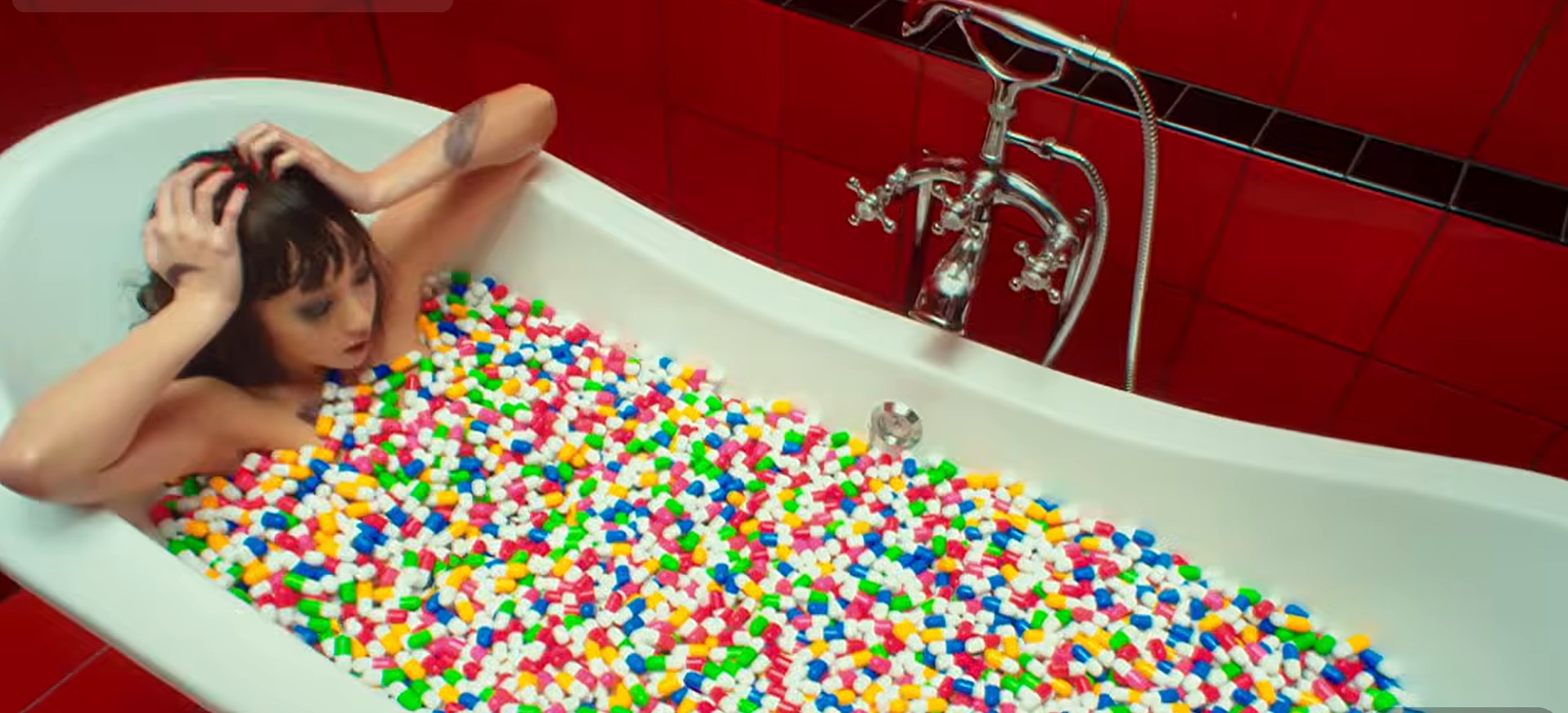
One EVIL AI Knows Our Ultimate Fears, We’re all Doomed! “Jitters” reviewed! (Reel2Reel Films / Blu-ray)

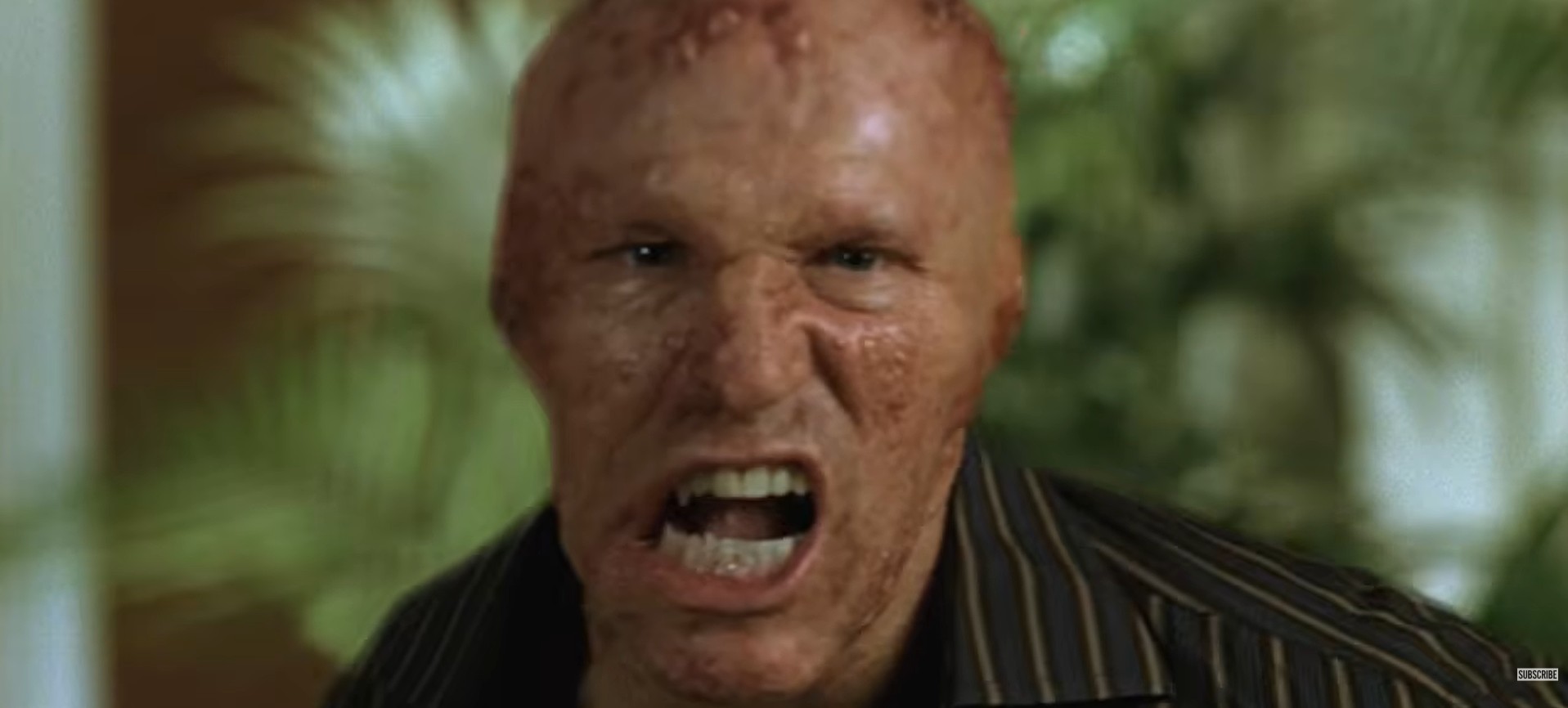
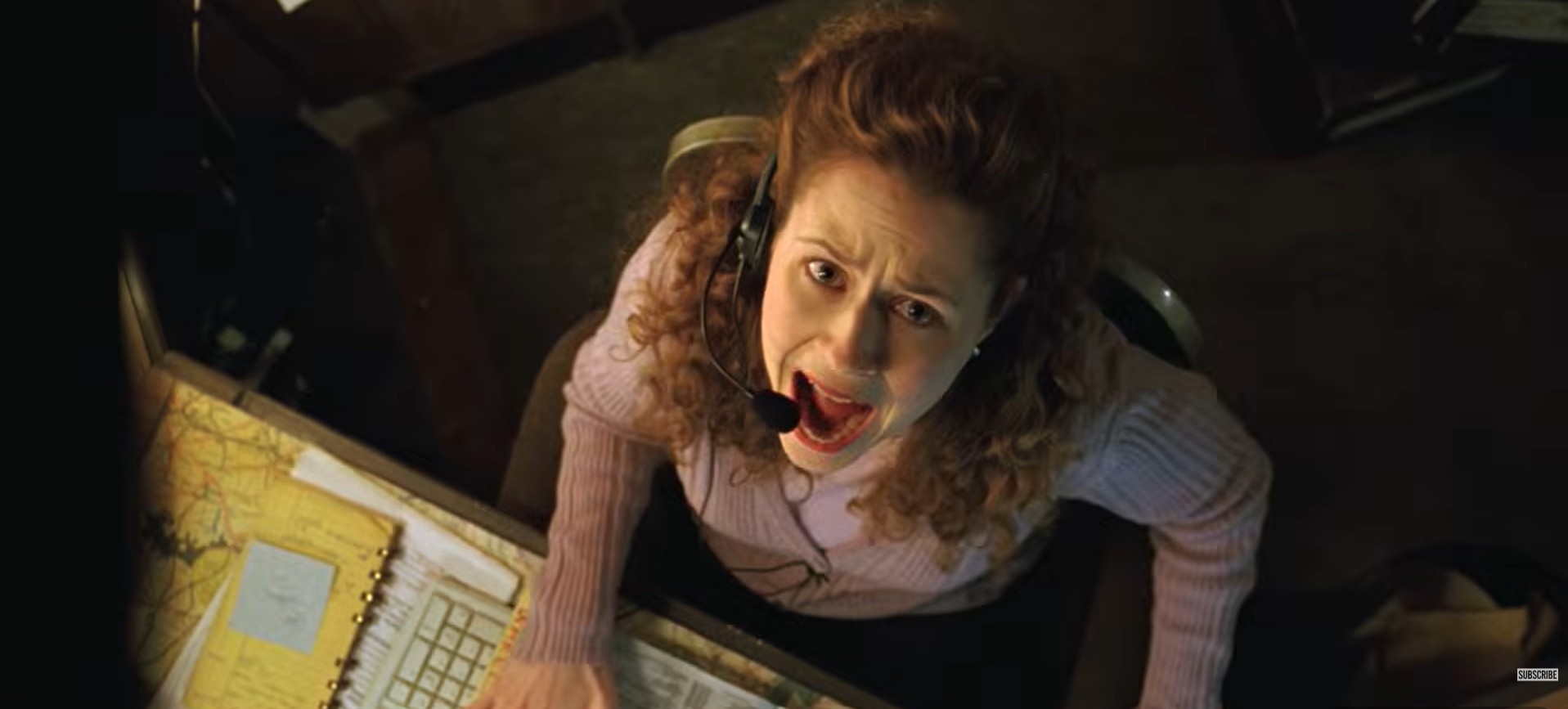
After being suspended for roughing a fellow detective, Collymore returns to the middle of a nightmarish case of people killing themselves within the throes of their worst fears.  Struggling through a terminal health issue and sharing his young daughter in shared custody, Collymore focuses his efforts on the case with evidence pointing directly toward a new immersive video game called Jitters that uses brain scans and artificial intelligence to infiltrate the network of the human brain.  A maniacal clown with a twisted sense of humor and electrifying headgear presents players with a riddle and if they can solve it, players will be free from his delusion-creating hold that’ll eventually send a person gravely mad to death with fear.  Collymore plays the game to try and stop Jitters from spreading across the city, protecting his daughter from being exposed, but he must investigate through a team of infected developers puzzled by their tailored riddle before they meet their fate. 

Clowns are not a new trope to horror – “Killer Klowns from Outer Space,” “Funhouse,” and we can even through in the infamous, now-mostly banned “Clownhouse” – but in the past five years there has been a reemergence of the killer clown, thanks to one Art the Clown of the “Terrified” films who put the funny bone back into the assortment of removed human bones with a bone saw.  “The Jester,” “Clown in a Cornfield,” and “Helloween” use the bright blue, red, white face paint to mask their malevolent Jokesters outside the circus tent and into our safe space to crank up the coulrophobia in “Terrifier’s” wake, and perhaps with a little help from Pennywise in the “IT” remakes.  “Jitters” is the next clownsploitation feature with a sophomore screenplay by George Wilcox (“Homeless Ashes”) and directed by Marc Zammit (“Witch”).  The 2016, United Kingdom film is an Aptitude Films production and crowdfunded by Indiegogo patrons with nearly £13,000.

In the role of a Jitters, the clown face riddler with ostentatious electro-lit up headgear, is Daniel Jordan (“Witch,” “Embryonic”) harnessing his best virtual AI assistant from Hell, infiltrating every software system to organic system with mischievous jester poise with wicked wordplay.  Jordan can be jaunty enough to make the clownish killer be mad with a “Virtuosity” spread of fear through the global cyberspace network but there’s room for terror toying improvement as the fear doesn’t carry over much to the audience.  Opposite Jordan is Fabrizio Santino (“Are We Dead Yet,” “Witch”) as the black sheep detective Collymore hot on his first case back with the investigation of a girl scared to death while playing a computer game.  Santino’s low gruff and breathy tone naturally gives me the leg up on Collymore’s terminal ailment that has the detective coughing up blood in private.  Yet, that illness never has a purpose to the story other than to garner sympathy from ex-wife Julia (Lauren Budd, “Cinderella’s Curse”).  As Jitters rival, or as another play in the Jitters deadly game, Collymore’s determination to beat the AI clown levels the playing field but the detective is hardly challenged by Jitter’s strong and influential manipulating powers others succumb so easily to in their own version of fear-induced hell.  “Jitters” supporting cast rounds out with Boo Miller (“Afraid of the Dark”), Guillaume Rivaud (“Big Bad CGI Monsters”), Jessica Impiazzi (“The Tombs”), Russell Shaw (“The Lockdown Hauntings”), Richard Wisker and introducing Chloe Hews.  There’s also Anto Sharp (“Witch”) who I follow as a comedic content creator and who did a phenomenal job as Collymore’s partner as I did not realize it was content creator Sharp, suggesting good acting to step into a less funny role. 

“Jitters” is not a direct riff on the “Terrifier” series or any other notable previous killer clown movie but adding a clown mascot to a not-so-carnivalesque AI program can seem like a bandwagon move to cash-in on clownsploitation craze that’s currently happening.  However, with the “Brainscan” edge to the story, the clown getup has unnecessary written all over it.  What Jitters does very well is the themes it tackles, such as video game brain rot, an artificial intelligence takeover, and facing one’s fears no matter how overwhelming they can be.  Jitters, the clown, toys with players’ intrinsic fears that can affect so much on a granular level that they don’t even know exactly what they’re afraid of and that gives the narrative more suspense when time ticks away toward an inexplicable runout threshold and the clown brings an end to the game in stylish fashion involving their fear.  There’re some on-screen gory bits but “Jitters,” overall, is tame on the blood and violence that leaves a few moments to the imagination but leaves just enough to sate the primal, gut-level reaction.  While the story adds a layer of hypothetical futuristic technology that doesn’t quite make sense when you think about it but glad to indulge for the sake of movie progression, I found more distracting detective Collymore’s life complexity to be a softball toss up that never challenges his being or puts his back against the wall.  Collymore evokes workplace violence against an unscrupulous, yet lawfully acquitted, officer that goes without receiving himself a severe managerial punishment for socking him in the office other than some unpaid leave, Collymore also has terminal cancer that’s a narrative non-key element that spurs no action and no conflict.  Lastly, ex-wife Julia gives him too little pushback on their former marriage and how he raises their daughter when she’s with him, and there’s an almost near reconnection between them that’s hastened toward dye to the lack of contention in what’s mostly amiable co-parenting.  Julie and their daughter Chloe never face true peril and have become also naïve or ignorant to Collymore’s pursuit of ridden the world of “Jitters” and that seems task is too big to let potential collateral damage be ignored. 

101Films and Reel2Reel’s AI-gone-bad and videogame rot thriller “Jitters” arrives onto Blu-ray home video with an AVC encoded 1080p Hi-Def resolution, BD25.  Presented in a widescreen.  Presented in a 2.40:1 widescreen aspect ratio, “Jitters” has compressed cinematic coveralls that’s noir polished with a darker grading of blues, greens, and browns.  The digital image delineates details more than fine within the Blu-ray codec with no compression issues to note.  Textures and fabrics are tangibly perceived; there’s great detail on Jitter’s electric headgear that has a heavier appearance than it probably is in reality, and this is a testament to the fabricated work of the production and art design crew.  Surprisingly, the 2026 release only has an encoded uncompressed PCM 2.0 Stereo track and not surround sound.  The omnipresent AI infiltrator of hardware and organic hookup gives “Jitters” ample range and breadth of depth but instead of a multi-channel 5.1 or 7.1 surround sound, the release is limited to a dual output between the audio of dialogue and everything else.  Usually, stereo formats are adequate, but “Jitters” requires the extra legroom as the boisterous soundtrack does insidiously creep onto the other audio layers, diluting the dialogue strength to an elucidating mumble and barely perceivable.  English subtitles are available for selection.  “Jitters” is a feature only release with only the trailer as a title menu option.  The 101 Films and Reel2Reel Blu-ray is housed in a clear Scanova case with a one-sided sleeve that’s detailed and contrast heavy of the titular villain.  The 94-minute film is region encoded B as it’s a UK release with UK certified 15 for strong horror, gore, violence, suicide, self-harm and language.

Last Rites: “Jitters” pulls off being an AI-inspired horror in another round-about of us set on destroying ourselves with our own creation but the added clown element can’t help but think the killer clown craze has struck again, this time negatively.

What’s Fashion Without a Little EVIL Behavior? “Helter Skelter” reviewed! (Radiance Films / Limited Edition Blu-ray)

Beauty is Pain. “Helter Skelter” from 88 Films!

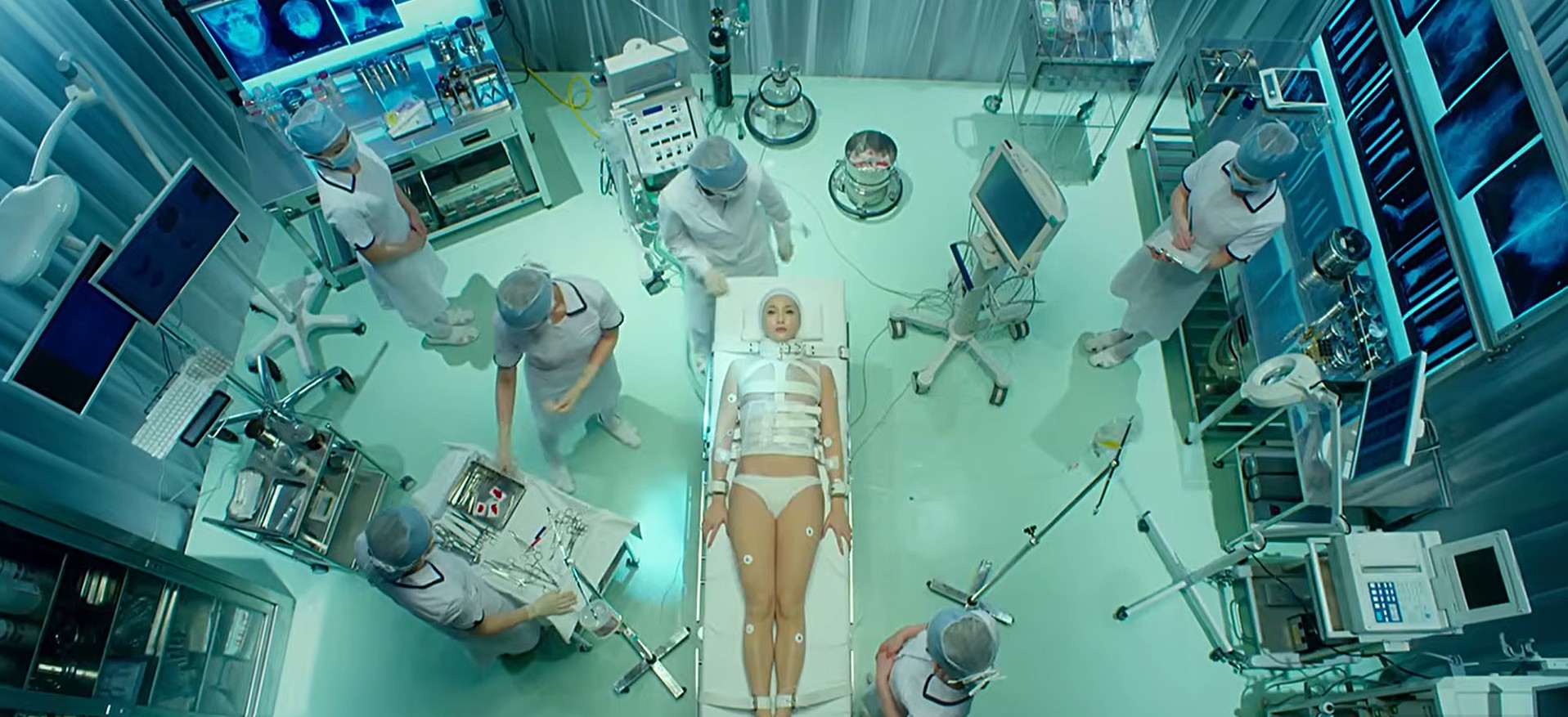
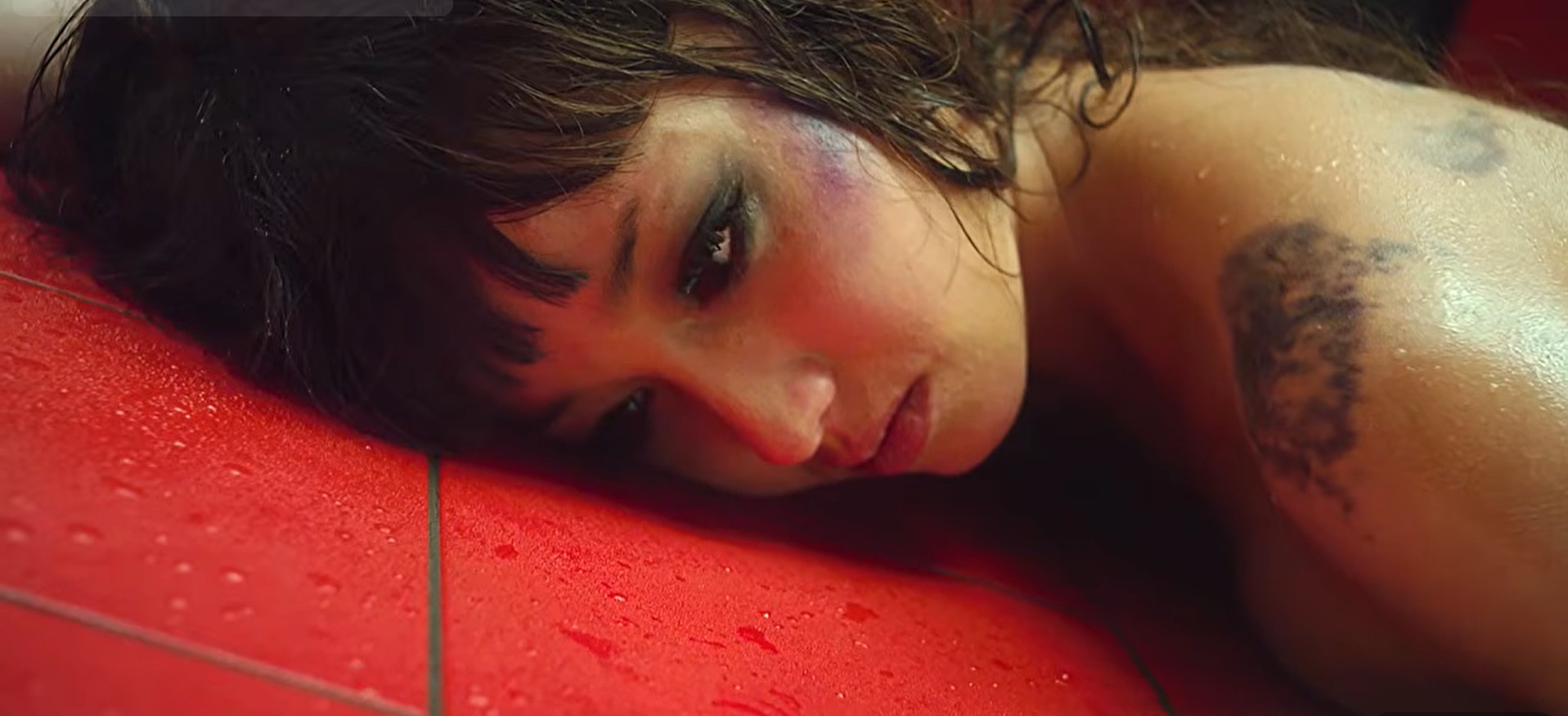
Lilico is the hottest Japanese fashion icon.  Fans adore her, brands want her, magazines crave her, and paparazzi and photographers yearn to shoot and work with her beauty that inspires all and commands undivided attention.  However, her astonishing beauty isn’t entirely organic as multiple surgeries through unorthodox surgical procedures that enhance her from a forgettable nobody to an unforgettable somebody.  Her radical surgeries begin to show blight side effects of the surface of her skin, sending her into vanity driven sociopathic spiral of sex, mental torture, and self-destruction, also affecting those closely around her, especially her assistant Hada who takes the brunt of her maltreatment.  When a new, hot model is presented by her manager and the world begins to fall in love with her, seemingly dropping Lilico from being the face of the fashion industry, the model’s snowballing and necrotizing surgical side effects can’t be stopped from becoming all but public. 

Social commentary horror movies like “The Substance,” “The Neon Demon,” and “The Ugly Stepsister” underline the vast awfulness and extreme lengths of beauty standards.  How to keep youthful, how to manipulate the face and body, and how envy can be weaponized from the worst of counterparts are just some of the attributes, which are very accurate outside the cinema, used as tropes for the body horror subgenre where attractiveness is the core catalyst that motivates monstrosities.  These late 2010s and early 2020 films might not have been directly inspired by Mika Ninagawa’s “Helter Skelter” but definitely pulls from the same cloth.  The 2012 Japanese fashion industrialized body and psychological horror is adapted by Arisa Kaneko based off the Kyôko Okazaki manga of the same name with established manga-to-film experienced producers, Morio Amagi (“Cutie Honey”) and Mitsuru Uda (“Xxxholic”), producing the WOWOW, Parco Co. Ltd, and Asmik Ace Entertainment film.

Objectification perspective isn’t always from the outside looking in but can be looking out as well.  In “Helter Skelter,” model Lilico believes in her self-importance, treating others in subordinate to her illustriousness career as the hottest flavor in Japan’s fashion society.  Society objectifies Lilico as nothing more than a stylistic Goddess who can do no wrong and even have the smallest bit of her in their space, whether be the hot topic of conversation or to the be face of their magazine cover, whereas Lilico objectifies those all around her with eviscerating self-proclaimed eminence and dominion over their mind, body, and soul.  “Ghost Train’s” Erika Sawajiri has the perfect look and approach to celebrity derision without blatancy toward others as her expressionless face never contorts with anger, never smiles without the devilish smirk and piercing eyes, that makes the fashion icon unreadable and to sway of control during bi-polar scenes where happiness and disgust swing rapid on a totalitarianism pendulum.  Personal assistant Michiko Hada, under the performance of “R100’s” Shinobu Terajima, takes the brunt of abuse during on-the-clock and off-the-clock professional and personal time.  Terajima’s ordinary bearings for Hada make the character an easy target in contrast to Lilico’s ornate wardrobe and lavish style of living spurred by ruthless nature to be best and most beautiful, taking an authoritative sovereign stance of control in the fashion hierarchy.  Lilico’s spoiled prince behavior coincides by a fueling Kaori Momoi in a queen-like mother figure as the talent agent who mostly advises her star pupil an instigating misconduct mindset with pro-surgical advice and like-minded guidance that artificially influences her body despite the pain and dangers as well as providing a mimicking behavior of dejecting and downcast harm.  Nao Ōmori (“Ichi the Killer”), Gô Ayano (“Woman Transformation”), Kiko Mizuhara (“Attack on Titan”), Hirofumi Arai (“The Neighbor No. Thirteen”), Anne Suzuki (“Returner”), and Mieko Harada (“Ran”) all play a role in the rise and fall of Lilico.

Much like Lilico’s quickly deteriorating fractured state of mind, and body, Ninagawa utilizes a cinematic style that’s overly brilliant with neon colors and a sharp polished look that contrasts reality and distorted perception, creating a disjointed narrative digression Lilico experiences.  The hyper stylization keeps in tandem with the fashion world of flash photography and gaudy maximalism, the ultra-violence and promiscuous behavior depict the cutthroat competition of remaining beautiful and the ugliness that’s truly inside, and the sheer flaunting of indifference and superficiality lingers throughout in and out of favor of our terrible protagonist who is actually the villain and the victim of her own tale.  Each character is flawed beyond reproach and having no redeemable qualities that make them appear strong or promising to be a virtuous type.  Not even the meek and eager-to-please personal assistant Hada who takes the punishing commands of her employer and manager in a purely pitiful subjugation of oneself to not lose a job position and be in the presence of stardom.  Hada even lets Lilico invade her personal life and continues to let it happen with no choice in the matter.  “Helter Skelter” embodies the very definition of the term with its confused and hurried chaotic state in design and in story while, in the same baroque breath, disenchanting the illusion of the fashion industry and beauty standards as not glamourous and genuine but fickle and fabricated with a heavy dish of backstabbing and self-destruction. 

In the same spirit as photogenic magazine models, UK label 88 Films releases a beautifully crafted, limited-edition Blu-ray release.  The numbered release Blu-ray is AVC encoded, 1080 high-definition resolution, onto a BD50 that was already shot digitally with a Red One MX camera through Zeiss Ultra Prime and Angenieux Optimo lenses under cinematographer Daisuke Soma.  This gave “Helter Skelter” a glamorously polished look to accentuate the hyper-stylized and contemporary look that starkly discolor the centralized characters as ruthless people of fashion and high society.  When good finally enters the picture, a young model stepping to Lilico’s high heels as the next young, hot model, the harsh design of modernism is scaled back to simple and sterile aspects with more of the dramatics being held locally to the downfallen characters.  Higher contrasts create deeper shadows amongst a medium-heavy color saturation that primaries strong statement colors like fire-engine red and Duke blue.  The curvature of the anamophoric lenses, presenting in a 1.85:1 aspect ratio, do show intentional signs of wrapping at the sides to capture the entirety of the wide shots in smaller spaces but adds to the surrealistic effect and is implemented at the right moments to make it all sensible.  No compression issues to note.  The Japanese DTS-HD 5.1 Master Audio and 2.0 Stereo tracks are the only two formats encoded.  The 5.1 has formidable attention to the side and back channels with the chaotic fashion-industry ambiance with erratic behaviors steering the scene.  Every action detail is highlighted to bring quieter scenes more tension and every tumultuous moments a fuller body.  The dialogue is crystal clear and layered appropriate with environmental track and soundtrack.  Moods rise up and down with the fluctuation soundtrack that pulsates in breath-holding, provocative, turning-point scenes that while melodies play in more of shocking portions to entice attention during climatic notes.  The newly translated English subtitles have no synchronization or grammatical issues to note and pace well with the visuals.  Special features include a feature in tandem audio commentary with Tori Potenza and Amber T., interviews with star Erika Sawajiri and director Mika Ninagawa, a behind the scenes of raw footage making the film, the Japanese premiere stage greeting, an opening day stage greeting, the Q&A from the Taipei Film Festival with director Mika Ninagawa, the original rehearsal footage, an image gallery, and the teaser and official trailers.  Like Ninagawa’s film, 88 Films tangible release is also hyper-stylized with newly commissioned art by Luke Insect that’s surreal, color, and slightly disturbing.  The clear Scanavo cases comes with an gold Obi strip with film and Blu-ray details and the sleeve is dual sided with original Japaense compositional design on the inside.  Inserted inside is a 23-page color booklet with a chaptered essay by Violet Burns, complete with color photo stills and promotional photos with the front and back art contrasting the two model women in a good and evil, light and dark, way.  The not rated, limited-edition Blu-ray has a runtime of 127 minutes and is A and B encoded to support playback in the Americas as well as Europe. 

Last Rites: There are plenty of horror as well as commentary films about fashion, but none do it with style quite like Mika Ninagawa and still develop an unrivaled cynicism of self-implosion.

Beauty is Pain. “Helter Skelter” from 88 Films!

An Expedition to Hunt EVIL is now EVIL Hunting the Expedition. “The Yeti” reviewed! (Well Go USA Entertainment / Blu-ray)

“The Yeti” Stomping Its Way onto Blu-ray!

Alaska, 1947 – an oil tycoon’s expedition goes missing after the team doesn’t report to the return boat and a SOS is transmitted days later.  The oilman’s son gathers his own team of uniquely skilled experts to track down the whereabouts of his father and the rest of the missing expedition.  Ellie Bannister, a washed out of cartographer and explorer, is hired to lead the trip because her estranged father Hollis was a part of the first expedition.  Despite her own self-doubting hesitations, Ellie agrees to aid her services but when they arrive, they’re met with a force of evil long thought of urban legend.  One-by-one, they’re being picked off, chewed apart, and spat out in a heap of blood and guts as the creature after them is hunting them down as intruders and pillagers of their snowy forest land.  It’s up to Ellie and the remaining survivors had to contact the boat in the midst of a storm in order to escape with their lives and bodies still intact. 

Horror films about the Abominable Snowman, or even his forestry cousin Big Foot, are always hit or miss, with most of them being duds that don’t do the urban legendary big fellas justice.   And don’t even get me started on those grandiose-embellished documentaries.  Co-writers-and-directors Gene Gallerano and William Pisciotta are taking their shot on the snowy sasquatch with their latest 2026 film, “The Yeti.”  The film is Gallerano and Pisciotta’s first feature length film after having a decent, more than a decade’s worth of short film credits to their name.  The U.S. production builds snowy, forest-filled stages inside Buffalo, New York’s Buffalo FilmWorks to double as the harsh, snowy landscape of Alaska, avoiding long and wide shots in full light to make it more claustrophobic while and contained to effectively represent a location in the 49th state. Torfoot Films and Hardscrabble Film Company serve as the film studios with Johnathan Browniee (“Satanic Panic”), Frank Coppola (“Givers of Death”), Ross Meyerson, and Romano Natale producing. 

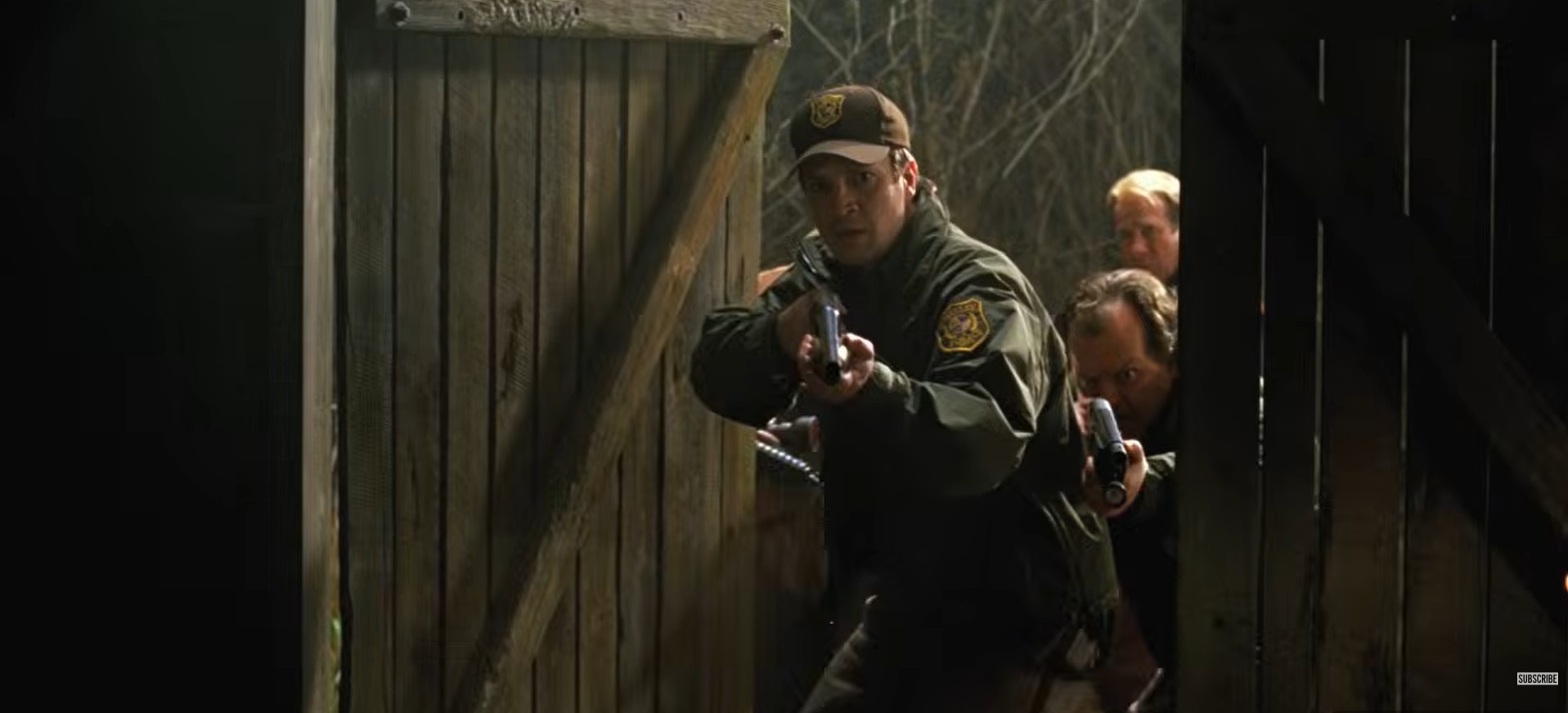
“The Yeti” is compromised of an ensemble cast of mostly rescue expeditioners heading into the unknown parts of Alaska to make contact with another expedition team who fell off the radar.  The story is female-led by Brittany Allen (“Jigsaw,” “What Keeps You Alive”) as an afraid of failure Ellie Bannister with haunted history and a bum leg due to polio.  Though deeply flawed in a traditional sense, this doesn’t stop Bannister from accepting the position of expedition leader and cartographer-explorer and while Bannister is rising to the challenges to meet her character arc, Allen doesn’t exude the attributes of heroism with freezing in fear, drifting off with music, and never really coming toe-to-toe with the titular villain and, instead, having more complex conversations and actions with her estranged father as part of a rekindling process.  The rest of her team shows more guts – literally and figuratively – without much of a backstory to them and that wastes the potential to have some sort of strong feelings toward their characters, such as war vet Leander Coates (Linc Hand, “The Other Side”)) who wears a half-mask painted with a crude imitation of a human face, Daniel ‘Dynamate’ Hewitt (Gene Gallerno) as a spacy, good ol’boy drunk and explosive expert, Booker (Jim Cunnings, “Halloween Kills”) as the silent and stoic radio ma, Merriell Sunday (Eric Nelsen, “Nightmare Cinema”) as the missing Tycoon’s son who either has a hidden agenda or has ants in his pants, Margaret Lamb (Christina Bennett Lind, “Calico Skies”) as an animal expert who doesn’t get to use much of her skills and knowledge, and Belle Parker (Elizabeth Cappuccino, “Super Dark Times”) as…well…I don’t really know, assistant to the Tycoon’s son possibly?  Parker’s contribution to the expedition team is never really explained.  The film rounds out with two big hitters in Corbin Bersen (“Major League”) as the oil Tycoon who does have a hidden agenda and William Sadler (“The Shawshank Redemption”) as Ellie’s father trying to stop that agenda. 

Yeti centric stories should exhibit the ugliest, ferocious, hairiest, tallest, and meanest, white furred primate to ever walk the Earth in folklore.  “The Yeti” accomplishes that in a modest level that tries to meet eye-to-eye with Ryan Schifrin’s 2006 film “Abominable” that truly does have a ruthless creature in its blood soaked and gory entrails.  Gallerano and Pisciotta’s Yeti, brought to life by Wayne Anderson (“The Predator”) and Ali Gordon (“Hellraiser” ’22), is tall, stringy and matted hair, large mouth with razor teeth, sharp claws, and an overall, an oversized, white gorilla on steroids.  Couple this beast’s design with gory practical effects by Anderson and Gordon as well and you have potential breathing down your neck!  Yet, “The Yeti” fails to impress despite a visually visceral creature and buckets of bloodshed as the story can’t hold the pieces together even in its rudimentary and predictable state.  Characters are never given the opportunity to make an impact, becoming quick Yeti fodder for the sake of impressive on-screen kills – one man eaten in half, another perforated by a claw, and another’s arm is ripped right off as the Yeti compresses his foot down onto his chest.  There’s little to like about the actions taken and the lack of empathy in their behavior that snag “The Yeti’s” success for an indie product that tries, and to the point, succeeds being larger than its creature mythology.  The creature has more depth and understanding, holding onto a rationality universally understandable, while the characters, who are supposed to be the protagonist and principal good guys on the side of nature or humanity are terribly murky to the point trying to relate to them felt futile. 

Well Go USA Entertainment brings Gene Gallerano and William Pisciotta’s “The Yeti” to physical media with an AVC encoded, 1080p Hi-Def resolution, BD25 Blu-ray.  I’m curious why the decision was made for a smaller capacity Blu-ray because aesthetically, “The Yeti” uses low light, fog, has plenty of tenebrous portions that tend to wreak havoc on the compression decoding.  Same can be said here as “The Yeti” suffers from obscurity infractions that reduce the detail considerably.  If looking at the backside of the physical release, as we’ll also go over later, the stills are quite sharp, suggesting the master to have peak quality whereas the Blu-ray sees a reduction in quality.  Joel Froome’s cinematography is an initial mix bag of harsh lighting, black-and-white, and lower color saturation to be more a period pieces of the 1940s-1950s but once the rescue team is out in the field, Froome switches gears quickly to a claustrophic and cold color mise-en-scene that doesn’t expand landscapes, keeping the area tight amongst the trees with poor visibility due to the blizzard-lite conditions.  The film’s aspect ratio is a widescreen 1.78:1.  The release comes with two English audio tracks, a primary DTS-HD Master Audio 5.1 and a Dolby Digital 2.0 Stereo.  The lossless 5.1 is hands down the option to go with with plenty of atmospherics wind gusts, tree rustles, and off-screen Yeti sounds to build tension and isolation.  Dialogue renders over nice and clear with prominence amongst the rest of the layers.  The soundtrack is also equally balanced and integrated but also camouflages in the background, never really becoming a character itself nor being remarkably memorable.  English and French subtitles are optionally available.  Other than trailers and Well Go USA Entertainment previews, the Blu-ray is a feature-only release with no bonus content or stinger scene.  An O-ring slipcover with a telling image of size and ferocity sheaths the standard Blu-ray Amaray.  The same slipcover image art is also the single-sided sleeve and there are no tangible extras within.  Rated R for bloody violence content and some gore, “The Yeti” Blu-ray from Well Go USA Entertainment has a feature runtime of 93 minutes and is region A locked.

Last Rites: “The Yeti’s” a strong enough entry to viciously vilify the snowbound mythical urban legend but directors Gene Gallerano and William Pisciotta don’t finish the job giving the narrative feeble legs on the stand where it counts as blood and guts alone can’t make an abominable snowman film worth watching.

“The Yeti” Stomping Its Way onto Blu-ray!

EVIL Never Expected to Fall For Another EVIL! “Date With a Vampire” reviewed! (Visual Vengeance / Blu-ray)

“Date With a Vampire” Now Available on a Collector’s Edition Blu-ray!

Chuck and Violet end their official date with them at Violet’s ancestral New York City home for a little alone time and conversational foreplay.  Enamored with other ever since meeting in the bar weeks ago, the sexual tension between them in palpable and dripping with anticipation.  Their love making deep into the night is peak erotic sensuality that goes on for hours between multiple sessions.  During one of their sessions, Violet bites Chuck on the neck, puncturing his veins, and draws out blood to taste it.  Upset, Chuck tries to leave her only to fall down the stairs, slumping over from being weak by her neck nibble.  When Chuck awakes, he’s tied to Violet’s bed but unphased about her being a vampire.  There’s something about Chuck that disturbs Violet, but she can’t find resist him and continues to make love to him.  Also – what ‘s that creature moaning in Violet’s basement? 

“Date with a Vampire” is the Jeffrey Arsenault picture of erotic submersion but with fangs.  Released in 2000, the “Night Owl” director continues the train of infatuation of a vampire film quest that began in 1993 with the John Leguizamo starring thriller but ever since the release of “Date wit a Vampire,” Arsenault’s evolution slid heavily into eroticism as he become the forerunning directing for sultry nightcrawlers like “Crimson Nights,” “Crimson Kisses,” “Crimson Desires,” and “Vampire Playmates” with softcore scream queens Misty Mundae, Vera VanGuard, and  Cynthia Polakovich.  Like for the director’s aforementioned films, Arsenault helms “Date with a Vampire” under the pseudonym of Gregory Cabot, presumably for the highly erotic nature content, and the film is penned by B-movie scenarist and director Kevin J. Lindermuth, writer-director of “Vampires and Other Stereotypes.”  Produced by Arsenault, the shoot was filmed on location in Brooklyn, New York under the vampire-fittingly named production banner of After Midnight Entertainment. 

“Date with a Vampire” is centrally focused on Violet and Chuck who are quickly moving toward a love-struck romance that would usually take weeks to build with normal couples.  There is tenderness and passion between them, placing hearts onto sleeves for the forlorn thoughts of long finding a different kind of lover as well as offering affectionate compliments toward each other to build that strong amorous connection.  Lori Thomas and Robin Macklin do a fine job leading up the lovers towards laughs, longings, and a lustful lay, multiple in fact of the latter, with an organic dynamic that doesn’t feel soap opera-y nor forced and jagged as the conversation, though sappy at times,  never cringed upon egregious kitschy pillow talk.  Thomas, who went on to costar alongside Mundae in Arsenault’s “Crimson Nights,” brings a softness, almost too delicate, to Violet’s comportment as a vampire looking for love rather than a next meal, but one of the real reasons Thomas’s in this role, or rather two real reasons, is her hefty top-figure that’s deep with cleavage and copiously exposed for the softcore scenes with a fit Eli Roth-lookalike in Macklin.  Violet and Chuck go at it quite a bit and when I say it I mean the double entrendre it of a love and hate relationship with slowed down sexual foreplay to visceral dream of sucking blood and eating hearts.  There are also two other characters in this story – a wandering woman (Cynthia Polakovich, “Vampire Playmates,” “Daddy”) who squats and takes a shower in Violet’s house and a chained-up basement vampire (Joe Zaso, “The Bloody Ape,” “Evil Streets”) with horrible acne.  Neither one of these characters ever interact with Violet and Chuck in what is likely filler scenes with it’s only little substory to flesh out a full-length feature and provide more T&A with a shower scene and another vampire in a vampire film but adds more unnecessary questions to an already stale plot. 

If looking for a bloodsucking bloodbath of Gothicism, “Date with a Vampire” will not scratch the itch at all.  If you hear the title out loud and understand that it infers more toward the ideas of romance and vampirism that’s akin to the likes of Twilight except these vampires don’t sparkle and or have gel stiff hair overtop pasty-pale skin.  Arsenault leans a deep tissue elbow into the eroticism rather than the bloodthirst, which like a deep tissue massage can often be painful.  The crux of the film is also it’s pitfall with too frequent slow-motion scenes of the same two bodies getting it on in the same house and bed, resulting in a lack of vital story substance to glue these sexualized highlights into place where it can be peppered appropriately.  I would be so bold to say the vampire element is abstemiously light on the intake with a couple of scenes with fangs, a cheaply edited sunlight death scenes, and even the bite marks on the neck are in the wrong place compared to the bite scene.  There’s more horror in the added in the brief basement scene with the chained up and xeroderma vamp and his hapless house-squatting victim without a spoken word other than a moan, groan, and scream being said between the two in a seemingly unconnected scenes to the core tale.  The soundtrack adds additional detrimental value as the sex scenes are so long that the generic stock score breaks for a moment and starts over and there are a handful of these extended eroticisms that, and I’m surprised to say this myself, dull the sharp blade’s edge.  “Date with a Vampire” ends without a climatic point and just fizzles down to a sojourn between Violet and Chuck that one will ultimately question to themselves, is that it?  Yes. Yes, it is. 

A narrow and threadbare vamp-erotic line won’t stop genre boutique label Visual Vengeance from releasing a brand-new collector’s Blu-ray pulled from the standard definition master of the original tape elements with the usual precursing warning message in front of each title of the standard and commercial quality you’re about to behold.  The AVC encoded BD50 reflects the SOV image in an upscale from 480p to 720p with softer details but generally clear yet flat image.  Skin tones are warmer, leaning toward a dull orange, and that’s usually associated with magnetic tape degradation from the analog compression of VHS.  Textures too are affected by color distortion but not to the extreme as with skin tones, leaving textures mostly with a slight variance, and the low pixel count has already put a dampening on the definition levels.  Again, Visual Vengeance had warned us, preshow.  “Date with a Vampire” is presented in full screen, a 1.33:1 aspect ratio, and has optional English subtitles available.  The innate audio track is an English LPCM 2.0 stereo that has subtle electronic interference but on the whole is clear for exhibition.  “Date with a Vampire” is mostly verbose and guttural add-ins with little-to-no operationalized sounds of action and those action sounds that did make it into the final product are post-production implemented, which entails an exaggerated volume and some desynchronized and outlandish effect to the visual.  The rough and ready soundtrack is a slow, bottom end, rhythm composed for erotic scenes through, and I assume this, a simple beat and music editing software and, aforementioned, the scenes are too long for the audio tracks that have to pause and repeat once the track runtime lapses.  Special features are typically abundant with any Visual Vengeance release and “Date with a Vampire” is not exception with an in tandem with feature audio commentary by director Jeffrey Arsenault, an interview with Arsenault, interview with screenwriter Kevin J. Lindenmuth, an interview with silent-squatter actress Cynthia Polakovich, interview with the Basement Vampire actor Joe Zaso, Date With a Vampire Memories interviews location manager Nathan Thompson in the Brooklyn location, a video interview with the Buckingham Manor Location manager Nathan Thompson, an Arsenault bonus film “Blood Cravings” from 2002, an Arsenault commentary, interview, image gallery, and original first draft trailers for “Blood Cravings,” an image gallery for feature presentation, the original trailer and bonus trailers from Visual Vengeance, and an After Midnight Entertainment trailer reel.  Lastly, like all other catalogue releases from the company, a very cool animated menu hypes up the energy and makes the prospected feature potentially entertaining.  Visual Vengeance always supplies a great physical release and “Date with a Vampire” continues the trend beginning with another gorgeously commissioned slipcover artwork by Rick Melton that’s sells sex as well as being horrific.  The clear Blu-ray Amaray case also has new artwork as the primary cover by Brother Belial.  The sleeve is reversible with another original Rick Melton artwork for Jeffrey Arsenault’s bonus feature “Blood Cravings” on the special features.  Tucked in the interior insert is a mini-folded poster of the Basement Vampire and his victim as well as a retro VHS sticker sheet.  The region free, unrated, 88-minute Blu-ray is certainly fetching for the eyes. 

Last Rites: More melodramatic than sucking blood, “Date with a Vampire” is much more a power struggle between the sexes as it is between the sheets as it is between good versus evil. Plenty of long, drawn out softcore scenes offer up skin and erotic invitation but there’s plenty about the Jeffrey Arsenault’s feature that’s more filler and less traditional and that can be hurtful.

“Date With a Vampire” Now Available on a Collector’s Edition Blu-ray!

Two Van Damme’s Take on Twice the EVIL! “Double Impact” reviewed! (MVD Rewind Collection / 4K UHD and Blu-ray)

“Double Impact” 4K UHD and Blu-ray Will Having You Seeing Double the Damme!

The assassination of their parents separates infant twins Chad and Alex from Hong Kong to different parts of the world, living very different lives.  Chad trains Karate and stretching while living the high, comfortable life in Los Angeles with this uncle while Alex, abandoned at a covenant orphanage, grows up to be a street-savvy importer of illegal and luxury goods.  They’re reunited in Hong Kong by Chad’s uncle, who’s not their uncle at all but their father’s former bodyguard and close friend, to bring down a criminal organization collaborating with their parent’s killer who orchestrated the hit with the Chinese triad.  Outmanned, outgunned, and at odds with each other’s different persona, Alex and Chad must find common ground to stand on to fix the wrong done them, to inflict payback for their murdered parents, and claim his stolen legacy, an underwater passage way between Hong Kong and mainland China, as their own in observance of their birthright from what they’re engineer father had built.

If one Jean-Claude Van Damme wasn’t enough to handle, try your hand at double the Van Damme!  “Double Impact” is the first film Van Damme gets to show his range inside the context of martial arts action film and to break, ever so delicately, the typecast he’s been filled repeatedly to perform by taking on converse brothers.  The 1991 action-thriller with comedic morsels was shot in Hong Kong, one of a handful of films the now 65-year Belgium native did in country, coming in between “Bloodsport” and “Knock Off,”  with years in between, and is written-and-directed by Sheldon Lettich with cowritten credits by Van Damme as well.  “Double Impact” is the sophomore collaboration between Lettich and Van Damme and the two have worked on a number of project since the film’s release, such as “Perfect Target” and “The Order.”  Van Damme also produces the film alongside Paul Michael Glaser, Ashok Amritraj, and the one and only Michael Douglas under his co-founded company Stone Group Pictures (“Flatliners”) in association with Vision International. 

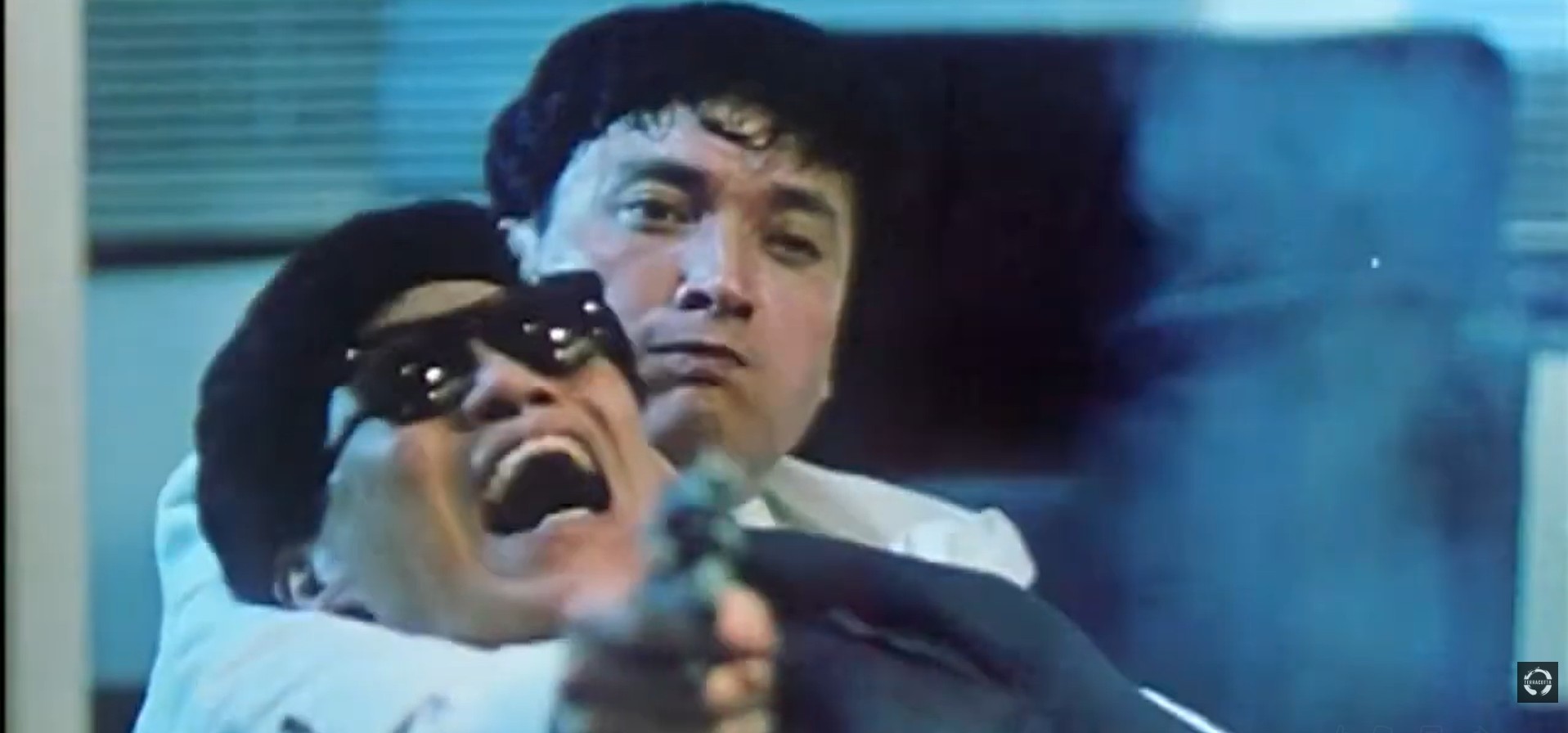
“Bloodsport” Van Damme pulls double duty with ying-yang characters Chad and Alex.  Chad’s an easy-going, well-dressed, expensive-taste, slightly naïve, student of Karate who’s living comfortably in L.A. while brother Alex with slick back hair, leather attire, greasier-appearance and cynical attitude has him pegged as more Hong Kong street smart in his transgressor affairs as a illegal importer.  As far as exhibiting the desired range goal, Van Damme does provide the persona separation to make Chad and Alex individuals but he’s still playing characters he’s been in previous films and the only difference between Chad and Alex is their hair styles.  To ensure their differences, the story is woven for them to compete each other a little bit with evoking some jealous around Alex with the fear Chad may still his woman, Danielle, played by the tall and beautifully blonde “King of New York” actress Alonna Shaw.  Fueled by alcohol and a wild imagination, a wedge drives Alex to view his brother as more feminine than him and shows it with pejorative name calling and brotherly spat violence while in an intoxicated schoolyard tiff.  I will say that one the many glaring plot holes between the two characters is both have the same fighting style, which is Van Damme’s kick heavy Shotokan karate, and while that fits Chad’s backstory, it does not fit Alex who was too busy selling stolen cars rather than learning Karata in a studio.  Geoffrey Lewis (“Night of the Comet,” “The Devil’s Rejects”) dons the forced parental role as Chad and Alex’s former friend and bodyguard Frank who must reunite and rekindle the twins’ harmony with shared, common foe.  That foe, or rather foes, being corrupt businessman and British socialite Nigel Grifith (Alan Scarfe, “Murder by Phone”) and Hong Kong triad boss Raymond Zhang (Philip Chan, “Bloodsport”).  However, the real villains of the story are more interesting and standout with Bolo Yueng (“Bloodsport”) as the scarred face hitman and brute enforcer Moon and six-time Ms. Olympia Corinna Everson as a muscular henchwoman. 

Though Van Damme essentially plays the same person, I wouldn’t necessary dub “Double Impact” a replica of his previous work as it does mix up the narrative formula with dual roles with a one-half antihero theme and the scenes themselves where both Chad and Alex are in together, face unobstructed, present, and forward, are done exceptionally well for a late 90’s production with little-to-no seam and coloring imbalance or weird facing angles from Chad or Alex looking at one another – often times it’ll appear one character is looking at something totally offscreen instead of the appearance of looking at themselves.  The action is also palpable and fun to watch Van Damme go through the motions of making the opposition look foolish with his grunted elbows and roundhouse jumpkicks but there’s really no decent opposition for him in the choreographed mix.  Aside from Bolo Yeung, all the other major playing villains are no real equal match against Van Damme, not even Corinna Everson, who’s a physical and perceived threat, doesn’t provide the satisfactory fight in her brief combat interaction with the Muscles from Brussels.  The fight and action are also more grounded in reality unlike Van Damme’s last Hong Kong venture earlier in the decade in “Knock Off” that had an implausible cartoony design to it’s nonstop physicality.  There are no high-flying rope acts or escaping the inescapable devastation case by nano-explosives; instead, “Double Impact” is truly a fair 1v1 with gunplay and martial arts doing most of the heavy lifting and anything else that’s outrageous is left at the door. 

MVDVisual releases “Double Impact” on a new 4K and Blu-ray dual formatted release on their Rewind Collection sublabel.  As a part of the 4K LaserVision Collection, that emulates the mock trimmings of the antiquated but still celebrated LaserDisc video format, the MVD release 4K is HVEC encoded with 2160p ultra-high definition HDR – DolbyVision – onto a BD100 with the standard Blu-ray encoded with AVC with 1080p resolution onto a BD50.  Presented in it’s original 1.85:1 aspect ratio, the new, director’s approved 4K scan and restoration comes from a 16-bit scan of the original camera negative and looks pretty flawless with image presentation, immersive depth, skin and fabric textures and tones, inky negative space, and a diffused color palette that’s mediumly saturated, slightly muted for a harder, gritty appearance.  Neither format shows areas of concern with compression artefacts in a clean transfer and decoding.  The main audio track is an uncompressed English 2.0 Stereo.  The dual channel audio has enough impact to provide a wide berth of action points with the kick and punch added hits, dialogue is clean and unobstructed even though Van Damme’s heavy Belgium accent which seems more egregious in this feature, and the soundtrack’s your staple culture blend of a Jan Hammer synth-pop rock and traditional notes of Hong Kong influence.  Depth is limited as well in stereo that front loads the action and dialogue with not a terribly immersive ambient track of a bustling Hong Kong city that would be the chief spatial and directional culprit for depth.  UHD special features are limited due to space and, in fact, the 4K disc is feature only.  All your extras are on the standard Blu-ray disc, including a near hour long Making-of featurette segmented in parts I and II that provides retrospective interviews from cast and crew, such as Jean-Claude Van Damme, director Sheldon Lettich, fight coordinator Peter Malota, producer Ashok Amritraj, and more.  The bonus content continues with director a short Sheldon Lettich interview Anatomy of a Scene, a behind-the-scenes featurette with Van Damme interviews archived from 1991, deleted and extended scenes, a raw footage B-roll with behind-the-scenes moments, television promotional clips, and an electronic press kit (EPK) that contains more interviews with Van Damme, Moshe Diamant, and Charles Layton.  The Rewind Collection always comes with a substantial exterior style that begins with the black background of a O-ring slipcover that mirrors the crinkled sleeve of a LaserDisc and has the original poster/home media art of the “brothers” Van Damme.  The black 4K UHD Amaray case has the same front cover image sans mock crinkles with the discs inside pressed with LaserDisc appearance imagery on the UHD and VHS texture imagery on the Blu-ray.  There’s also a folded mini-poster of the slipcover image tucked inside.  The 17th title on the Rewind Collection also has a reversible sleeve of the unwrinkled image.  Rated R for strong violence, sexuality, and langue, “Double Impact” has a runtime of 110 minutes and is region A locked.

Last Rites: You need double the media formats to enjoy double the Jean-Claude Van Damme in “Double Impact!” Double time it to get your copy in stores now!

“Double Impact” 4K UHD and Blu-ray Will Having You Seeing Double the Damme!