To Be a Star, the EVIL Past Must Be Erased! “MaXXXine” reviewed! (Second Sight Films / 4K UHD Blu-ray)

Grab Your Limited Edition Set of “MaXXXine!”

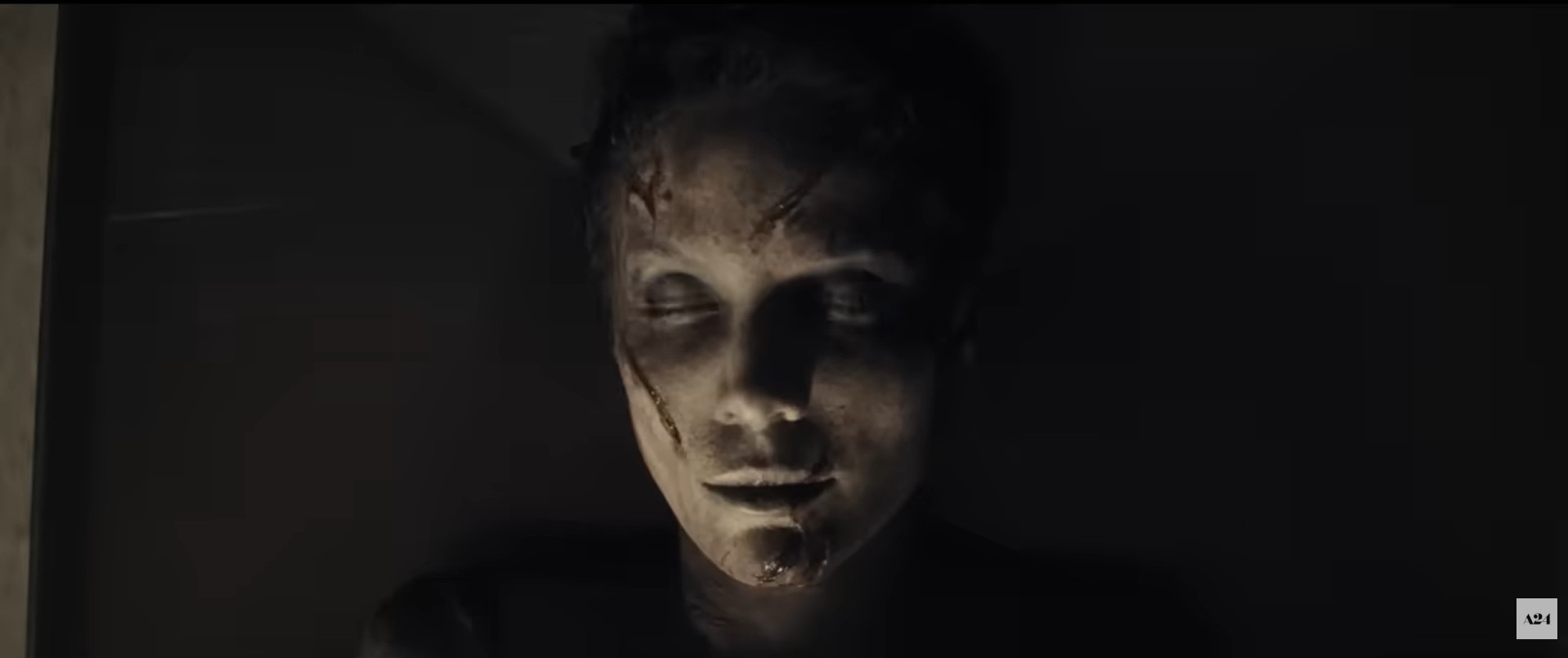
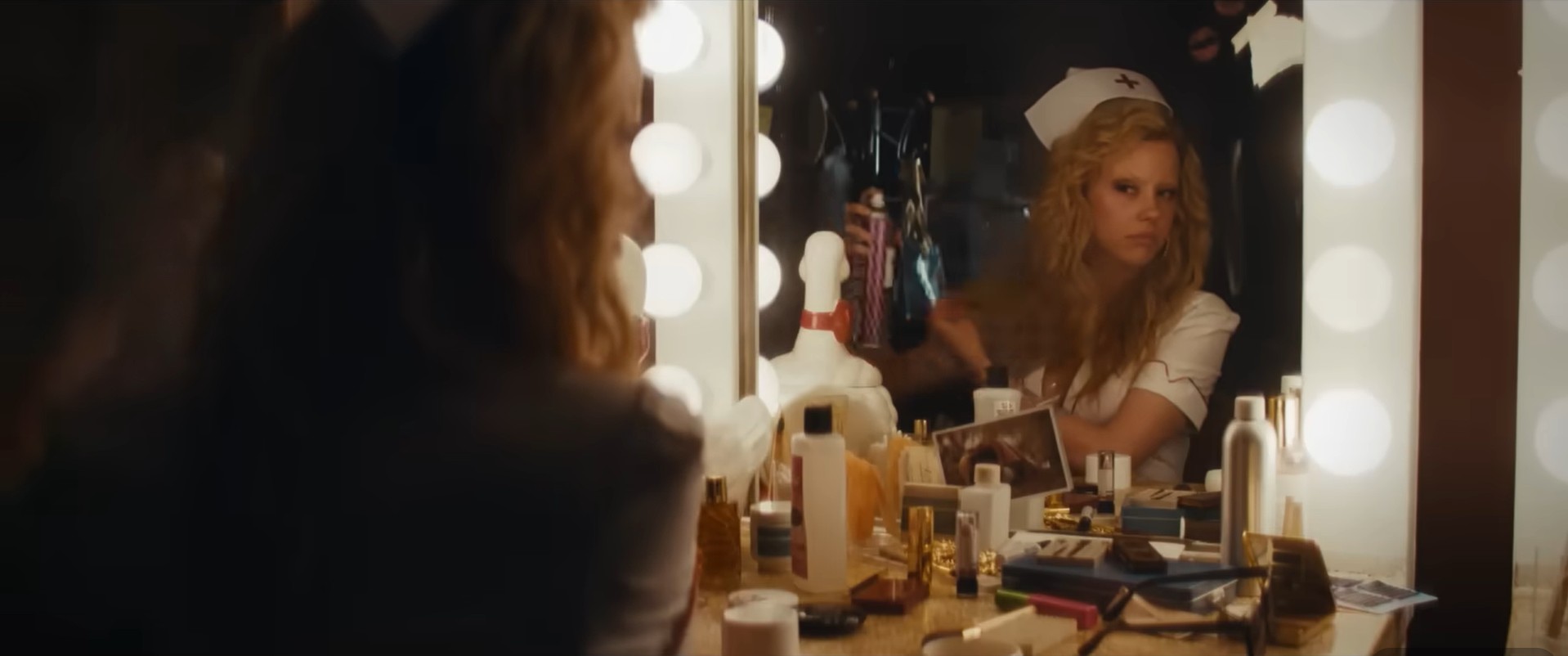
After the harrowing events in Texas, Maxine moves to Hollywood where she finds tremendous success as a famous 80’s adult film star but that’s not enough for the pious-raised Maxine who has an ambitious eye to make it big as a legitimate movie actress.  The crossover won’t be easy as her past creeps up on her after being awarded a role in an upcoming horror sequel, and not just any role but the leading role that’ll solidify her name as an actress.   When those close around her wind up brutally murdered and a seedy private detective hounds her for more than he’s paid for, Maxine juggles her ambitions with a tough director with trying to stay alive in a cutthroat town that’ll spit her out of the golden opportunity as soon as it swallowed her up into it.  Having already survived a deranged bloodbath in Texas, nothing will stop Maxine from being a silver screen star. 

Ti West’s “X” trilogy concludes with a sequel directly tied to the aftermath of “X” but years later, bringing back the hard-fought and harden survivor of a Texas porn shoot gone waywardly wild and a few people end up dead.  That sequel is known as “MaXXXine,” focusing entirely on the titular character’s drive to get out of triple-X films and into the elusively lustrousness of Hollywood acting set in the lively grime of a neon-torched 1980s Tinseltown.  The “House of the Devil” and “The Sacrament” director writes-and-directs the 2024 released, giallo-inspired suspenser, keeping in suit with the first two films, that takes a backlot tour of the sordid side of newfangled fortune and possible fame.  The roundup film behind “Pearl” and “X” in the trilogy is produced by series star Mia Goth as well as Jacob Jaffke, Harrison Kreiss, Kevin Turne, and Ti West with musician Kid Cudi serving as one of the film’s executive producers, all of whom were involved in “X.”  A24 presents the Motel Mojave and Access Entertainment coproduction.

Mia Goth, who broke onto the scene in Lars von Trier’s hypersexualized art film “Nymphomaniac” and as a fellow dancer at a prestigious ballet school with a dark, witchy secret in the 2018 remake of “Suspiria,” has quickly become a household name amongst genre and cult film fans, especially in the last four years thanks to Ti West’s “X” trilogy.  Unabashed in pushing the envelope with her performances, as the titular character Maxine, Goth immerses herself in the starlet’s ambitious arrogance and libertine lifestyle with resolution.   There’s so much determination in Maxine that it takes mysterious VHS tapes and dead bodies to recollect a deadly past and for first time audiences unaware of the trials and tribulations the character went through in Texas; that historic side of her life from “X” contains threadbare context in “MaXXXine,” nearly splintering the third film into an isolated entity without reliant on “X” to be a crutch into Maxine’s next traumatic chapter full of decade appertaining characters, unsavory underbelly types, and it can’t be the 80’s hair metal and video nasty period without the fervent of satanic panic.  Kevin Bacon (“Tremors,” “Hollow Man” ) plays a prominent opposite in an unscrupulous Cajun private detective John Labat, hired to do track down the untrackable Maxine Minx and even catch himself in her cobweb of strife when she breaks his nose for snooping too close for comfort.  Labat brings the physical manifestation of an omnipresent threat that not only targets Maxine but terrorizes the entirety of Hollywood with a serial killer known Night Stalker who kills, maims, and even dismember victims at random.  While Labat isn’t the Night Stalker himself, he certainly could be the hired hand behind the serial killer or an entirely different danger riding the fear wave in tandem.  The cast rounds out with kill fodder, entrenched accomplices, and stubborn vocation types that include Elizabeth Debicki (“The Cloverfield Paradox”) as the dedicated live by the film director, Giancarlo Esposito (“Harley Davidson and The Marlboro Man”) as Maxine’s do-anything talent agent, Moses Sumney as Maxxine’s video store clerk friend, Simon Prast as Maxine’s zealot father, singer Halsey as Maxine’s unfortunate adult industry friends, and Sophie Thatcher (“Companion”) as Puritan II’s SFX mold caster. 

“MaXXXine” is no churn-and-burn, fly-by-night, 80’s inspired horror.  Ti West puts in the aesthetic work to build the decade with a production value that extends above colorfully tacky outfits, teased hair, and bold and geometrical VHS visual graphics and into entire sets of building facades and concreted avenues, boxy-shaped cars upon cars, and the quintessential performances accompanied by gum smacking and antiquated gestures in this well thought out and well adored decade design surrounding Maxine.  The story plays out like an Italian giallo, Americanized for the licentious space nestled in the protest of prejudicial morality that sets the state for the satanic panic movement of the time where the belief that rock music and horror movies had insidiously, devilish intentions toward America’s youth.  West firm leans into that setup with historical footage of musicians as defendant or advocates for their and their peers’ music in courtrooms, broadcasts sponsoring the harmful effects of these entertainment outlets, and others that build a background stage in conjunction with the factual attacks of the greater Los Angeles serial killer, the Night Stalker.  An obscure killer with masked gloves, a cloak-and-dagger danger of dalliance between the shadowy figure and our heroine Maxine, violent and sexy, and plenty of dread building surrealism and creative artistry are all subgenre hallmarks used by West to flavor “MaXXXIne” differently by adding his own gritty 80’s seasoning.  There’s enough back alley and dim-lit ambience to set the treacherous atmospheric tone that quickly immerses the titular starlet into nearly being a victim of her own unintended instigation but the story eventually loses steam near the climatic apex, faltering just at the precipice of a perfect suitor to accompany “Pearl” and “X” in a new age, throwback trilogy for the horror genre.  The stumble comes when West tries to do something too ambitious with Maxine’s mental approach with an outer body experience that helps her see her true North, a vision that isn’t preluding by much or at least provided an inkling of starry eyed connection through the entire harrowing ordeal that’s put her life on the line for a career she’s willing to die for, and that scene, that moment, just seems too far out of place. 

Lout and proud, gory and storied, “MaXXXine” is a fitting finale for female badass survivalism.  Now available in the UK on 4K UltraHD from Second Sight Films, “MaXXXine” receives the HVEC encoded, 2160p ultra high-resolution treatment, presented in a widescreen 2.39:1 aspect ratio on an encoded BD50.  With 24 frames per second and equipped with DolbyVision, Second Sight’s release can keep up with “MaXXXine” whipping narrative and fast-paced editing, especially in the variety of media clipped montage opening.  The encoding appears to sustain compression excellently, leaving no issue hanging for audiences and cinephiles to catch notice.  Details are fine and distinct of a showy, gaudy 80’s texture, fabric, and skullduggery with a slight color desaturation toward a grindhouse aesthetic layer of grittiness for its exploitational exerts.  The English language audio tracks included are a Dolby Atmos 7.1.4 and a DTS-HD Master Audio 5.1.  Both have a quantitative immersion to provide the best all-around surround sound, filling in the side and back channels with ambience direction that drop you right into the bustle L.A. city scene as well as the quiet touch of more intimate atmospheres between a single character to a handful in a single space.  Dialogue is brutally present, meaning all is clear as it clears away for “MaXXXine’s” genuine curtness and confident demeanor, as well Kevin Bacon’s emulated Cajun accent.  The decade-specific, medley soundtrack, which includes tracks from Animotion,  ZZ Top, Frankie Goes to Hollywood, Judas Priest, and New Order, embarks on a journey of synth and what is now considered classic rock interspersed between Tyler Bates more cinematic, if not innocuous, notes.  English subtitles are available for selection.  Second Sight includes an abundance of new special features, including a new commentary by Bill Ackerman and Amanda Reyes, a new interview with writer-director Ti West Back to the Blank Page, a new interview with producer Jacob Jafftke Money on the Screen, an interview with director of photography Eliot Rockett B-Movie Aesthetic, an audio interview with production designer Jason Kisvarday Curating Space, Kat Hughes’s MaXXXine video essay The Whole World’s Gonna Know My NameBelly of the Beast and XXX Marks the Spot are behind the scenes look at the making of the film, Hollywood is a Killer dives deeper into the special effects, and rounding out with a nearly half-hour Q&A with writer-director Ti West.  Second Sight releases a limited-edition box with rigid slipbox and the standard release, the latter of which is reviewed here, and that includes the standard 4K UHD black Amaray with an illustrated front cover art of the titular character that’s a slight variant to the film’s real character-driven theatrical poster.  There are no other physical contents.  The UK certified 18 film for strong bloody violence, gore, sex, and sexualized violence has a runtime of 104 minutes and is region free for all players.

Last Rites: “MaXXXine” is powerful feminism, a powerful maverick, and a powerful throwback to a great time to be alive, to listen to music, and to be a star of the 1980’s. “MaXXXine” overcomes a troubled past that’s more personal and heavily influential in its noir world, but determination is a powerful drug, matching perfectly for an equally powerful decade of sex and stardom.

Grab Your Limited Edition Set of “MaXXXine!”

Enjoy The Last Night in EVIL’s Hotel. “The Innkeepers” reviewed! (Second Sight Films / 4K UHD Blu-ray)

Book a Copy of “The Innkeepers” on 4K Ultra High-Definition!

The Yankee Pedlar is a historic hospitality hotel with over 100 years of service that comes with its own notorious past and haunted tidings.  On the verge of closing for good, the Yankee Pedlar has one more weekend to remain open and house guests but with only a handful of rooms occupied, there’s not much else to do for the two innkeepers, Claire and Luke.  As a way to pass the time, Claire is eager to video capture spooky events to feed into Luke’s website based off the hotel’s history in the death of Madeline O’Malle, a bride to be who committed suicide on her wedding day when the finance no-showed and her corpse was left to rot for 3 days in the basement as hotel owners feared for bad publicity, but when eerie begin to plague, call for her, with visions of a bloodied O’Malle in a white gown, Claire finds herself in the dangerous company with a permanent guest at the dying hotel. 

Ti West, the established genre director with the famed “X” trilogy, kept audiences pale in fear and the hairs on the back of their neck stiff and straight up with his written-and-directed horror films that retained staying power amongst fans.  2009’s “The House of the Devil” is considered one of the more recent better throwback horrors of our time surrounding classic tropes like a satanic cult and a home alone babysitter.  West’s 2011 film  “The Innkeepers” comes at a rebound time when his commercial picture, “Cabin Fever 2:  Spring Fever”, sequel to Eli Roth’s breakthrough hit from 2002 about a flesh-eating virus, didn’t quite feel like his film and “The Innkeepers” also hit a little different by shielding audiences from any type of horrific, on screen splatter violence and be concentrated on pure fear of the senses.  Though narratively set in perhaps Pennsylvania due to some references of towns an hour outside of Philadelphia, “The Innkeepers” was actually filmed more North in Connecticut with the real-life Yankee Pedlar building.  Larry Fessenden (“The Last Winter,” “Rehab”) of Glass Eye Pix and Derek Curl of Darksky Pictures co-produce the film along with Peter Phok and Ti West. 

In the two principal roles of Claire and Luke is “Barbarian’s” Sara Paxton as an unmotivated hotel clerk coasting until the very, bitter end and “Cheap Thrill’s” Pat Healy as a blasé and uninterested front desk colleague interested in getting on the popular haunted house train with his own website about their employer’s centenarian hotel.  Paxton inarguably shoulders much of the screentime as the girl who cried wolf when she experience’s the sounds of a wolf, aka the spooky serenades of one Madeline O’Malle, and the visual eviscerations of her bloodied corpse that would scare the bejesus out of anyone.  However, the frights are not enough to seemingly strike fear in Paxton’s shield of composure or even enough to put West’s story to rest with a simple I’m outta here as most of us chickens would flock toward the exit on the first instance waking from a vivid dream too real for comfort.  Healy ultimately steals the primary performance away from Paxton with his own gruff and irritated by everything:  the hotel, the guests, his own pitiful existence.  Healy does a nice job creating that subtle tension between Luke and Claire, knowing Luke’s own hangups lie somewhere in between and haven’t been exposed yet, all the while being a sarcastic boor for most of the time.  There are also side characters in the form of random guests occupying the skeleton-crewed hotel bringing with them their own set of baggage.  One of guests is Kelly McGillis and the “Top Gun” actress, in a bit of a meta-role of an aging actress turned mystic.  There’s also Alison Bartlett (Gina from various Sesame Street shows and specials) and Jake Ryan (“Asteroid City”) as scorned wife and her son and the peculiar older gentlemen, played by George Riddle, who requests a special room and will not take no for an answer.  One of the more curious castings is Girls’ Lena Dunham as a coffeeshop barista in a one and only brief scene that doesn’t add really anything to the whole in a pointlessly random interaction with Claire that, perhaps, plays off Claire’s repetitiveness and stasis life of going there everyday but not really knowing much about the barista, who is apparently always there too. 

Juggling between the blended tones of comedy and horror, Ti West doesn’t commingle the two directly into one scene, keeping distinction for one or the other in their individualized moments.  This leaves little room for alleviating dread levity inside the scare moment after building tension and fear of being chased or waiting for the silence to be broken but an unsuspected jump scare.  Outside the context of the fright-filled moment, back and forth quips and playful antics between Luke and Claire as two bored and starved for company innkeepers in the hotel’s waning days are delivered in brightly lit rooms and mostly shared with another person to be a telltale safe space against the malevolence of serrating spook-house intensity that often lingers and waits on with bated breath.  In the innermost between is Claire’s internal struggle to cope with the impending outcome that there is nothing on the horizon for her.  No secure job, no ambitions, no plans of any kind are seemingly providing the character with no hope and in that stagnation, she desperately holds onto what’s nearby – Luke’s interest in the Yankee Pedlar’s hauntings.  Enhanced by the odd actions and placement of the modicum of guests – McGillis as a crystal charm intuitive and Riddle as a strange-enough older man with a specific room fascination – Claire motivation to reveal Madeline O’Malle becomes tenfold because of her unconscious lack to move forward in life, which then spurs the question, is Claire’s experiences grounded in truth or are they just a downspout of manifestations induced compensation?  You’ll have to be the judge.

Like “House of the Devil,” another of Ti West films makes the Second Sight Film cut onto a newly restored 4K scanned UHD Blu-ray release.  “The Innkeepers” HVEC encoded, 2160p ultra high-definition, BD100 has the true presence of quality video with a gradual improvement in the finer details of a greater pixel count inside the HDR with Dolby Vision.  Though digitally recorded with a no imperfections to note from previous releases, Second Sight’s release does appear sharper and deeper around the black levels that often improve with better resolution and suitable compression and with a good portion of the story taking place in the dark recesses of a hotel basement and the in the shadows of unlit rooms, there’s no visual compression issue or loss of expected detail.  Contrastively, darker scenes appear more lit by a lower contrast but still, the details are there in depth and in closeup.  The English DTS-HD 5.1 surround sound audio track diffuses the spread of atmospheric creepiness – ghosts whispers, nondiegetic bangs and clangs, and a Jeff Grace building orchestral score that keeps the heart bumping (think Richard Band’s “Re-Animator” but with more lulls”).  Dialogue is prominently clear and in front of the aforesaid layers with depth mostly between Claire and Luke’s conversing in the lobby and range limited to, again, the aforesaid.  English subtitles are available.  Though this review is catered to the limited edition, rigid slipbox release full of tangible goodies, the standard release does have encoded a small army of special features that has two audio commentaries with the first including Ti West, producer Larry Fessenden of Glass Eye Pix, producer Peter Phok, and sound designer Graham Reznick and the second commentary also West but with principal actors Sara Paxton and Pat Healy.  A slew of new interviews provide a well-rounded, in-depth look at the creative design as It West A Lasting Memory, Pat Healy Let’s Make This Good, Larry Fessenden Our Dysfunctional World, director of photography Eliot Rockett Living in the Process, composer Jeff Grace Cast a Wide Net, and line producer Jacob Jaffke A Validating Moment contribute to the retrospective.  Special features round out with archival behind-the-scenes and the trailer.  The physical presence of Second Sight’s “The Innkeepers” keeps in-line with previous standard edition 4K releases with a black Amaray case and a monochromic grayish illustrative cover art setting audiences up for ghostly expectations.  The UK certified 15 release contains strong horror, gore, language, and sex reference – though the gore is subtle and definitely not over-the-top or even explicit.  This particular UK release, that has a runtime of 101 minutes, is region free and presented in a widescreen 2.40:1 aspect ratio.

Last Rites: “The Innkeepers” works, if not wriggles, into the brain, much like the invasive worthlessness inside Claire’s swirling mind, and the Second Sight Films’ 4K UHD Blu-ray is an ultimate celebration of not only the film itself, but also the venerable work of the horror genre’s freshest master Ti West.

Book a Copy of “The Innkeepers” on 4K Ultra High-Definition!

Rash Decisions Permeate EVIL’s Presence. “When Evil Lurks” reviewed! (Second Sight Films / 4K UHD Blu-ray)

“When Evil Lurks” 4K UHD Blu-ray for Purchase!

Two brothers in a small, remote community discover a neighboring man infested and rotting with a demon inside the body.  Fearing evil will spread once the birthed demon is free from the bloated and pus-oozing human host, they move the body miles out of town with the help of an impatient and bellicose farmer, but when they lose the body, a dark violent force spreads across their rural outlook, beginning with the horrendous death of the farmer and his pregnant wife.  Escaping to the city, the two brothers hightail out of town, picking up family along the way, only to unintentionally spread evil from contamination by the rotting body.  Local folklore has a set of established rules, seven rules in fact, when face-to-face with a demon and they enlist a reclusive woman, a proper cleaner of the rotten, to help them against the clinging evil determined to never let their family go unscathed. 

The 2023 released, heavy demonic and folkloric horror from Argentina, entitled “When Evil Lurks,” tells the whole story of a family’s past regrets, the road-splitting life choices they make, and the consequences that follow using graphic, unabashed violence and a campiness that’s corrosive to the soul.  Demián Rugna writes-and-directs “When Evil Lurks,” aka “Cuando acecha la maldad,” after his breakout hit “Terrified” from 2017.  The Buenos Aires filmmaker continues to push a singular amalgamate of wide-range tradition and horror to the extent the world has never seen, and he continues to shoot on location from his own country, mostly in or around his home municipality.  Fernando Díaz of Machaco Films alongside Roxana Ramos under her founded production company Aramos Cine with the support of the national cinema institute, the Instituto Nacional de Cine y Artes Audiovisuales or the INCAA, and the streaming horror service and productions, Shudder.

“When Evil Lurks” primarily follows Pedro and Jimi, two brothers living on the outs of their own lives stagnantly inside their rural family home.  Ezequiel Rodríguez (“Legions”) sports a grizzly beard as the lead, older brother Pedro who frantically and desperately needs to get his family away from the spreading evil while returning to collaborate with Rugna “Terrified” actor Demián Salomón tracks as a more youthful footloose, Jimi, not tied down by a family or even a girlfriend but rather is dialogued as free lover amongst women.  Every character they encounter exposes them to the evils that lie ahead, or generally around the vicinity, as the this rotten, as they label the formless rotten presence that is solely an inhabitant of people and animals alike, can jump to another host if the rules are not followed, with the most common rule being broken is using gun powder to kill the possessed rotten.  Up for to be demonic fodder is Pedro’s estranged family who have alienated him because of his ambiguities’ surrounding possible unforgivable crimes and family abandonment.  The latter speaks more specifically to his severely autistic son Jair (“Emilio Vodanovich, “Fever Dream”) Pedro once hated himself for spawning, per his ex-wife and restraining order enacting Sabrina (Virginia Garófalo, “La Vagancia”), but his Pedro’s pre-narrative occurred change of heart sends him frantically into the fire to save his children Jair and younger brother Santino (Marcelo Michinaux, “Fever Dream”).  Also demonically targeted is Jimi’s once city affair now turned socially isolated former cowwoman-turned-rotten cleaner Mirta (“Silvina Sabater, “The Wrath of God”).  Mirta pivotally provides audiences insight by solidifying what other characters only know by hearsay or try to understand intuitively about the rottens, or the possessed, and how it spreads and what rules to follow.  Without Mirta, a lot of the supernatural circumstances involving children, the insidiousness, and the mindset of evil.  Other cast members interlocked with the gruesome violence and gut-wrenched storytelling is Luis Ziembrowski (“The Rotten Link”), Paul Rubinstesztein (“Portraits of the Apocalypse”), Isabel Quinteros (“High Heels”), Lucrecia Nirón Talazac, Ricardo Velázquez, Desirée Salgueiro (“Luciferina”), Federico Liss (“Portraits of the Apocalypse”), and Berta Muñiz (“Plaga Zombie”) as the voice of the bloated rotten Uriel.

“When Evil Lurks” accompanies with it a strong theme of children replacing their parents or adults in a metaphorical, supernatural demon enriched context.  Children are drawn to the demon as the demon is drawn to children, a verbatim more-or-less statement said by Mirta about the rotten, or demon, that shows children as it’s bewitched devoted servants and protectors, like little underage Renfields, who try and trick adults off the rotten’s hidden location or carry out for more sinister acts.  One of those acts is literally devouring adults which becomes a regular theme throughout seen with Jair and Eduardo, and even in anecdote told by Mirta about a previous witness to a rotten’s case of regurgitation.  In a way, the demon is a child itself being birthed into the world under a swelling and oozing Uriel’s sinew and viscera and indulges in childish acts of fibbing, mischievous tricks, and playful portents that happen right under our noses and can be shocking to the system as we want to believe what our children, our flesh and blood, have to say but there’s always that inkling of untruthfulness in our minds. Rugna couples the manipulation with bold, visceral violence, even some on children, and a grotesque folklore inflamed by poor and naïve choices by those who don’t understand or are unwilling to fully comprehend the extent of consequences that follow because of their hastiness to act, solve, and be rid of a threat.  “When Evil Lurks” clearly points out our innate flawed existence and makes abundantly clear our mortality with our progeny to dominate the world. 

Second Sight Films emerges “When Evil Lurks” onto a 4K UHD Blu-ray.  The BD66 is HVEC encoded with an ultra high-definition, 2160p resolution and presented in the original widescreen aspect ratio 2.39:1.  Second Sight Films produce the high dynamic range with Dolby Vision, approved by director Demián Rugna.  The result is immense image immersion that inarguably has the wherewithal for a fluently stable color timing, a range of depth, and phenomenal detail.  Every aspect of what is on screen is crisp to the bone and Rugna’s violence, under Mariano Suárez’s eclectic cinematographer eye that builds toward suspense, benefits from the grisly faced display.   Audio fidelity through a Spanish DTS-HD 5.1 Master Audio holds and delivers exact reproduction.  Plenty of back and side channel clinks and clunks to establish a presence created coincidingly with the image.  Dialogue is unobstructed, confidently paced, and above the layers whenever appropriate with Pablo Fuu’s score sneaking int folkloric tones and a despairing timbre and tempo there in the mix but subconsciously eats away the soul of the viewer.  Optional English subtitles are available and accurate but in moments of great hasty dialogue, the rhythm of display can be quick.  Special features include a new audio commentary by cinematic academic Gabriel Eljaick-Rodriguez, four new interviews with director Demián Rugna It Was Always There, actor Ezequiel Rodríguez Tragedy is Inevitable, actor Demián Salomón We Made a Movie, and actress Virginia Garófalo Stripped to the Bone, and a video essay by UK film podcaster Mike Muncer Terror and the Unknown in When Evil Lurks.  There are no during or after credit scenes.  The 4K UHD Blu-ray release comes in a black UHD Amaray with a new monochromatic art rendition of young Vicky holding the leach of the French Mastiff, same as the pre-release promo still for the film.  There are no internal supplements with the region free release that has a runtime of 100 minutes and is UK certified 15 for Strong Horror, Bloody Violence, Gore, and Language.

Last Rites: There’s no stopping death. Our children will replace us no matter how hard we try. A seemingly evil accursed death will come for us all and the choices that are made will be the design to our destruction. Director Demián Rugna sees the path and knows “When Evil Lurks” it has us completely encircled with no escape, no hope, and no compassion. How soon we choose to parish depends on how rash and unwise our decisions are in the grand scheme of life.

“When Evil Lurks” 4K UHD Blu-ray for Purchase!

Babysitter Wanted….by EVIL! “The House of the Devil” reviewed! (Second Sight Films / Blu-ray)

University student Samantha is strapped for cash when trying to express her independence from an invasive and inconsiderate college roommate by renting a house.  In need of quick money to put down the first month’s rent by upcoming Monday, Samatha answers a babysitting billboard ad that leads her to an isolated house outside city limits on a night when the moon is going to be fully eclipsed.  Misled by her employers, the Ulmans, that the care job is not for a child, but rather Mrs. Ulman’s elderly mother and in her desperation, Samantha accepts the odd job for the money needed to secure her new home.  Alone in a dark old house, Samantha’s nerves quickly tingle and recoil at every sound and strange occurrence, quickly coming to realize the Ulmans may be lying to her more than she knows, especially behind the locked rooms where satanic secrets reside and she’s the key to their black practices during the occultation. 

Perhaps one of the hottest directors in the horror genre today with his “X” trilogy, within the trilogy is also “Pearl” and “MaXXXine,” Ti West has been a consistent genre filmmaker since his first feature “The Roost” two decades ago.  Yet, before the “X” trilogy, the year was 2009 when West caught the attention of horror fans with his 198’s inspired and veneered satanic panic film, “The House of the Devil.”  Shot in Connecticut, primarily in an older woman’s gothic Victorian style home, West wanted to bring back the alone babysitter and old dark house theme from decade the story is set, shooting entirely on 16mm that, too, provides that grainy image and darker aesthetic through each frame of the stock.  Initially called just “The House” in initial script treatments, Ti West’s completed film is a production of Larry Fessenden’s Glass Eye Pix (“The Last Winter”) in association with RingTheJing Entertainment and Construtovision with MPI Media Group (“Henry:  Portrait of a Serial Killer” presenting and is produced by Fessenden, Josh Braun (“Creep”), Derek Curl (“Stake Land”), Roger Kass (“A History of Violence”), and Peter Phok (“X”).

In her western, button-up plaid shirt and high-rise mom jeans, Jocelin Donahue (“Doctor Sleep,” “The Burrowers”) epitomized the look of young college girl of the 1980s and with her dialogue and her eclectic 2-minute dance session through the Ulman house proved she has the speech and movements that resemble the timeframe as well.  Donahue is extremely good of taking her character, Samantha Hughes, from a panic scale of one straight up to panic scale of ten in this slow burn, tension-building thriller that isn’t a rollercoaster ride of the next attention deficient disorder event but rather a steady increase of anxiety and anticipation that nags in the back of one’s mind.  Donahue has good reason to be as frightened as she appears on screen with the towering presence of the ever something’s-terribly-off-about-this-character portrayal by “Manhunter’s” Tom Noonan and the malicious grim of a steely wolf under a pearly sheep’s wool from “Night of the Comet’s” Mary Woronov as a pair of satanists.  Noonan and Woronov don’t have immense screentime and are behaviorally underused in the interactions with their babysitter Samantha as West intended target is for Samantha to dynamically degrade within the shadows and creaks of a creepy old house rather have characters be the foremost formidable, focused fear.  In the peripherals is Samatha’s wealthy and vocally blunt friend Megan (Greta Gerwig and, yes, the same Greta Gerwig who wrong and directed that “Barbie” movie) who provides that calling of rationality toward a strange situation only to find herself too wrapped up in her friend’s choices rather than seeing the danger that’s in front of her and there’s also fellow Satan cultist Victor (AJ Bowen, “You’re Next”) who is more or less the son in this Ulman trio of terror.  The cast rounds out with Heather Robb (“The Roost”) as Samantha’s inconsiderate roommate and the genre actor Dee Wallace (“Cujo”) in a small cameo role of the Landlady who, refreshingly, isn’t part of the core plot to burden the actress as an accelerant to pulse the heart of the story faster.

Ti West really did harness and recreate the dark, solemn energy of the alone babysitter and/or the old dark house subgenres that propelled films such as “When a Stranger Calls,” “Black Christmas,” and even “Halloween” into the cult favorite cosmos.  These particular horror categories are obviously nothing new to diehard fans but they have unfortunately been, for a lack of a better term, forgotten, conjured up only in stored memory banks of those old enough, like me, to have lived consciously through the 70s and 80s and, maybe because of West, audiences starting to see a revival of sorts with modern day retrograding to relive the golden age of the slasher renaissance, popularized by hardcore and gory scares with films like “All Hallows Eve” and the “Terrifier” trilogy,.  Yet, “The House of the Devil” is not an overly gory and squirmy disgusting feature as West meticulously structures the narrative to be evidently tense in an uncomfortable, unfamiliar environmental setting of an antiquated house owned by equally antiquated, and frankly weird, bunch in Tom Noonan and Mary Woronov and West guides audiences step-by-step very slowly up to craggy edge before pushing us violently into the infernal grips of satanists and the demons that seek a female vessel for, whom we presume will be, their unholy lord and destructor.  The third act rips ferociously in contrast to earlier acts in a spiral fit of rite and sacrifice that incorporates more characters, more blood, and a cynical ending that requires no more exposition, no more scenes, and no further explanation in its wayward wake. 

Second Sight Films delivers Satan to us with a new UK Blu-ray release.  The AVC encoded, 1080p high-definition, BD50 is jam-packed with bonus content and a more than satisfactory A/V package.  Presented in a widescreen aspect ratio of 1.78:1, the colorist reproduction leans into that of an 80s horror with a diffused, mid-level saturation of frame cells on 16mm stock, bestowing the image quality with more noticeable grain elements because of its smaller size blown up.  The seemingly white fleck-riddled darker areas or clustering grain experience may discourage audiences of a broad digital generation but for those who know, know how great “The House of the Devil” aesthetically looks as a whole, complete with era appropriate wardrobe and set dressings.  Textures and details do come through despite the stock naturalities but they’re not terribly overpowering or as substantially present an a mostly tan or brown color scheme in a lower contrast.  The English language DTS-HD 5.1 Master Audio offers superb audio reproduction and spatial dissemination, especially through the wood-laden house to where the strain creaks of wood floors and doors offer a side and back-channel chill.  There’s plenty of front loaded, two channel action between the dialogue and the rest of the meium-to-close range shots with a range of diegetic effects – i.e. gunshots, telephone rings, and other actionable movements within the frame – and non-diegetic effects that include demonic whisper through moveless lips and, of course, those creaky noises amongst the empty house.  Dialogue is clean, clear, and prominent throughout.  There are English subtitles optionally available for selection.  Second Sight films did a ton of legwork here for special features, conducting and encoding new interviews with director Ti West The Right Vibe, actress Jocelin Donahue Satanic Panic, actor AJ Bowen Slowing Down is Death, producer Peter Phok A Level of Ambition, producer Larry Fessenden An Enduring Title, director of photography Eliot Rockett It All Feels Appropriate, and composer Jeff Grace Hiding the Seams, sound designer Graham Reznick Writing Through Sound.  There are also a pair of audio commentaries with 1) writer-director Ti West and actress Jocelin Donahue and 2) West with producers Larry Fessenden and Peter Phok along with sound designer Graham Reznick and the rounds out with a making-of featurette, deleted scenes, and original trailer.  Since we’re reviewing the standard Blu-ray release from Second Sights, this version does not call with all the physical bells and whistles associated with the limited, rigid slipbox releases that contain lobby cards and booklet, usually.  Instead, the standard release is a streamlined, green-hued Blu-ray Amaray with uncredited illustrated artwork of Donahue’s character overtop of the titular house with the dark and spooky moon in the background.  Instead, is just the disc pressed with the same front cover image of the house sans Donahue and the moon.  The UK certified 18 release contains strong violence and gore, is hard encoded B for regional playback, and has a runtime of 95 minutes.

Last Rites: The 80’s knock back with Ti West’s satanic panic inspired alone babysitter thriller with a sleek new Blu-ray, overflowing with new retrospective interviews, from Second Sight Films!

After EVIL Was Executed, A Movie Was Released! “Monster” reviewed! (Second Sight Films / Blu-ray)

Own Second Sight Films’ Blu-ray of “Monster.” Order Here!

Aileen had big dreams and big ambitions to be someone in life.  Growing up, she did what she had to do to get ahead, even if that means selling her body at a young age when she had no advantages unlike her peers.  Now getting longer in the tooth, Aileen still unhappily hooks to live hand-to-mouth, day-by-day, just to survive cruel circumstances.  When she meets Selby, a young, lonely lesbian looking for friend, the two become attached at the hip becoming exactly what each other need at that moment.  The two become intwined was not only friendship but passion as Aileen promises to quit the streets and make a better life for her and Shelby but when one of the last nights of prostitution winds up almost killing her and her unloading bullets into attacker, Aileen succumbs to a taste for murdering sleazy men in order to satisfy Selby’s love.  How far will Aileen go to achieve her dream?

The sad story of Aileen Wuornos life is much more than the serial killer segment she’s most infamous for.  Wuornos unlucky dealt hand could be considered the archetype of white trash narratives being born to teenage parents, practically raised without role models or stable parents, sexual and physically abused by those close to her, impregnated during the middle of her high school teen years, kicked out of her grandparents’ house, and learned to survive through the old profession of prostitution.  Yet, all that tragedy is not in the story that is about to unfold before you in “Monster,” the 2003 biopic thriller from “Wonder Woman” director Patty Jenkins.  Mostly authentic with bits and pieces adjusted to protect individuals from the public eye, “Monster” accounts for what Aileen is responsible for, the multiple slayings of clients who were accused by Aileen as rapists and abusers during their sexual transaction.  Also touch upon, and in a very heart-rending sense, is Aileen’s love for another woman and how their relationship crumbled under the stress of life’s tremendously unfair hard knocks.  Jenkins writes-and-directs the film with Wuornos’ blessing under the multiple production umbrella of Media 8 Entertainment, New Market Films, Denver & Delilah Films, K/W Productions, DEJ Productions, and, in association with, MDP Worldwide. 

To play labeled America’s first female serial killer, Patty Jenkins sought after Charlize Theron who, at that time of the early 2000s, was hitting the height of her career having starred alongside Keanu Reeves and Al Pacino in “The Devil’s Advocate,” Johnny Depp in “The Astronaut’s Wife,” and Mark Wahlberg in the remake heist film “The Italian Job.”  Theron, a stunning woman who became the epitome of glamour and beauty in the eyes of Hollywood, put herself through a transfiguration for the role of Aileen Wuornos.  Gaining weight and capturing Wuornos mannerisms and thoughts-process to play, as close as possible, the woman who would go on to murder 7 men in late 80s, early 90s.  Play is perhaps too broad of term for Theron who depicts a drastic overhaul of her looks and her idiosyncrasies to recreate Wuornos in the flesh and in the mind, creating a lifelike illusion of Wuornos on screen that garnered her an Oscar.  Theron’s costar, however, did not dress the part of Aileen’s real-life lover who opted to remain in the shadows of a private life, disconnected from her past sordid by true life crime.  That costar is none other than Christina Ricci.  The “Addams Family” and “Sleepy Hollow” star adds a slender, petite, fictional companion as lonely-lesbian Selby Wall against, who we know more about today, was a heavier set and butch woman that was Aileen’s romantic partner, Tyria Moore.  Jenkins invokes a sense of loneliness between the two women who find each other when they need each other the most, at the lowest point in their lives, and when their journey together seems hopeful, bright, and prosperous, life’s muck and judgement comes raining down life hellfire.  Aileen’s series of johns make up the rest of the cast and a few have familiar faces, such as Pruitt Taylor Vince (“Identity,” “Constantine”), Scott Wilson (“The Walking Dead”), Marc Macaulay (“Wild Things”) and Lee Tergensen (“The Texas Chainsaw Massacre:  The Beginning”) with Tim Ware, Brett Rice, Marco St. John, and the Oscar winner Bruce Dern (“The Burbs’) rounding the cast out. 

Having been released over two decades ago, “Monster” still retains relevance even when the real-life Aileen Wuornos no longer breathing after her execution in 2002.   “Monster’s” focus isn’t about the episodic killings of a laundry list of varietal behavioral clients who either seek sex out of loneliness or seek it for other devilish, wicked means as Patty Jenkins hones in on a more strung along motif of loneliness that connections not just our principal characters but, in a way, most of the Aileen’s men, the clients.  Baked and weathered by the hot Floridan sun and about as vocally turbo-charged as they come, Aileen isn’t the most beautiful street girl, and not even the most pure and refined soul, but provides a service, a service of warm skin, closeness, and pent-up relief.  In turn, that same service becomes her jailor and her undoing, shackling and imprisoning her growth form an early age, stemmed by a childhood she didn’t have, that didn’t allow her to become somebody and to make something of her downtrodden existence.  The murders are in a backseat, second fiddle to that blossoming love story between her and Selby that engulfs and drives the violence that seeks no end.  Itty-bitty details shine through into Aileen’s humanity, as a perk of the person rather than the monster she’s perceived after the fact, after the trail, and after her capitalized death.  Patty Jenkins sought to make an homage as the reason rather than just the basic news coverage of Aileen Wuornos and achieved eye-opening success.

Second Sight Films invests into a new Blu-ray release with new content encoded onto AVC, 1080p resolution, 50-gigabyte disc, scanned in 2K from the original 35mm film and presented in a 1.85:1 widescreen aspect ratio.  What’s impressive about the Second Sight release is retaining the natural looking grain of celluloid film.  Hues are approached organically without an overabundance of grading and this release sees to preserve “Monster’s” hard-edge and enough definitional nooks-and-crannies, especially around the weathered skin and fibrous features of Aileen Wuornos biological appearance.  The Blu-ray comes with two lossless, English audio options:  DTS-HD Master Audio 5.1 and a LPCM stereo 2.0.  Both offers true fidelity through the layers of range and depth but whichever A/V setup you have will dictate the format you choose.  However, the Stereo option is a good, well-rounded, full-bodied option for all as “Monster” is more a talking narrative than a caffeinated spear of action, but the rear and side channels due funnel a nicely diffused environmental ambience of highway traffic and some supplementary crowd noise underneath a well-verbose and amply clean and clear dialogue track.  New, exclusive content line the special features option on the fluid menu, such as a new interview with Patty Jenkins Making a Murderer that goes into depth about her relationship with muse Aileen Wuornos through conversation and letters as well as Charlize Theron’s transformation and performance, a new interview with producer Brad Wyman Producing a Monster, and a new interview with Director of Photography Steven Bernstein Light from Within that captures a late 80s-early 90s without infusing artificial concealer.  Other supplementals available are an audio commentary with director Patty Jenkins, actress Charlize Theron, and producer Clark Peterson, the evolution of the score featurette, deleted and extended scenes with Patty Jenkins commentary, a making-of featurette that bases the film out of being a true story, and the original theatrical trailer.  For a standard Blu-ray release, Second Sight provides a ton of content; however, there are no physical goodies, nor does the standard release come in a rigid box.  Inside a green Amary case, the single sided front comes, in what has become a prolonged motif amongst Second Sight releases, with a two-tone of black and blue or black and purple and austere cover art of Theron’s portrayal of Wuornos looking worn down.  The UK certified 18 release for strong violence and sexual violence has a runtime of 109 minutes and is hard encoded region B locked so you’ll need either a region B or region free player for playback in the Americas.

Last Rites: A beaut of a Blu-ray for the now over 20-year-old “Monster” that sees new content and insights that cast less shade over a troubled existence that inflicted real life killer Aillen Wuornos. Patty Jenkins and Charlize Theron do the story justice and Second Sight Films just follows suit with enhancing its story told quality.

Own Second Sight Films’ Blu-ray of “Monster.” Order Here!