As Videogame Adaptations Go, This Ones the EVILEST! “Exit 8” reviewed! (Blu-ray / Visions Home Video)

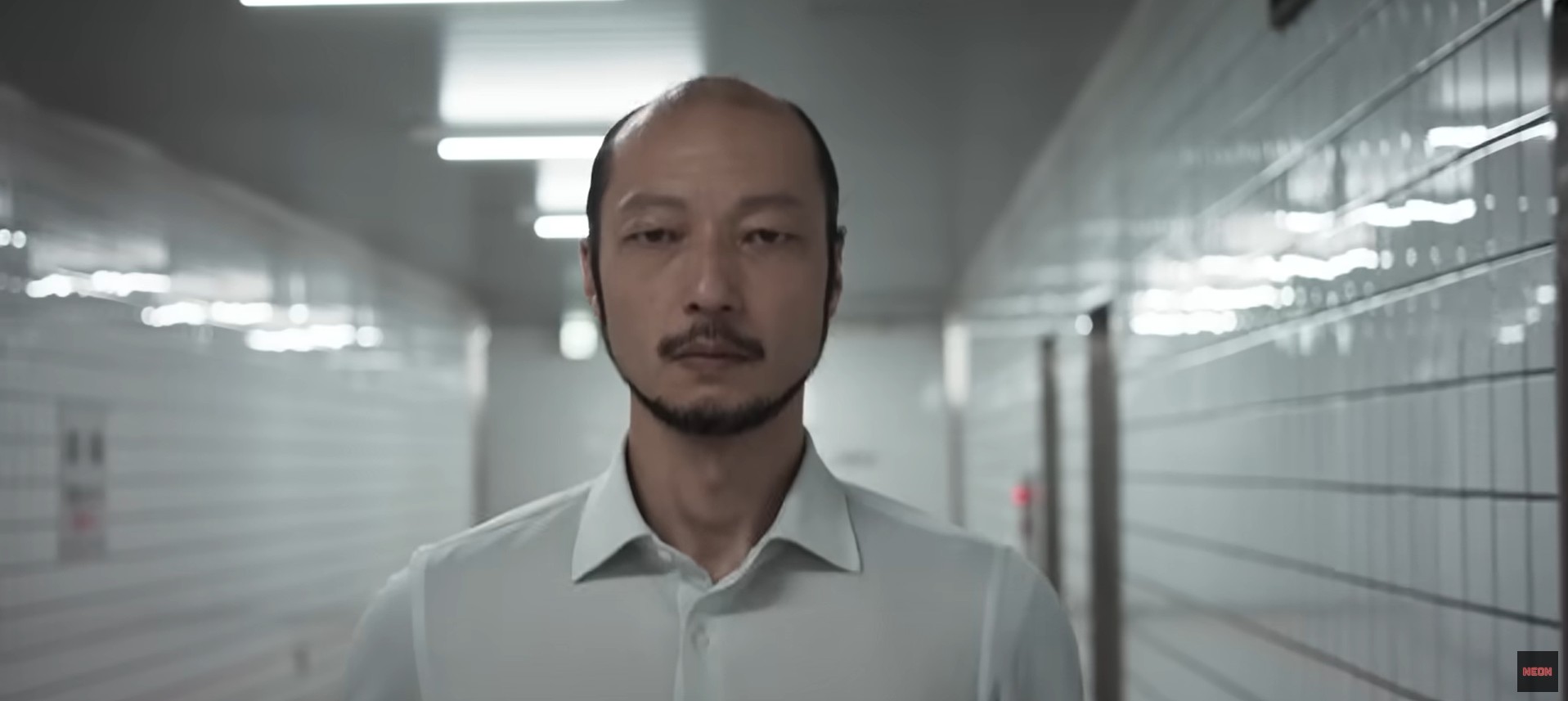
Keeping to himself and listening to music on a subway car, just like everyone else, a man exits the train car at his stop and learns his ex-girlfriend is pregnant with their child when she unexpectedly calls him.  Undecided how to feel about the news of being a father, he walks up a flight of stairs to exit the subway station only to find himself trapped in a zigzag hallway that loops the same series of advertisement images, directional signs, and a businessman walking intently down the seemingly sterile and ordinary, tiled corridor.  After reading the hallway’s information sign, noting specifically to not ignore any anomalies and providing the direction to take when an anomaly is discovered, the lost man realizes he’s trapped inside some sort of twisted game and must determine if 8 hallways are either anomalous or not to be free and exit.  If he misses an irregularity, he must start from zero again and not every anomaly is as harmless as a sign out of place.  The anomalies can psychological, monstrous, terrifying, and deadly.
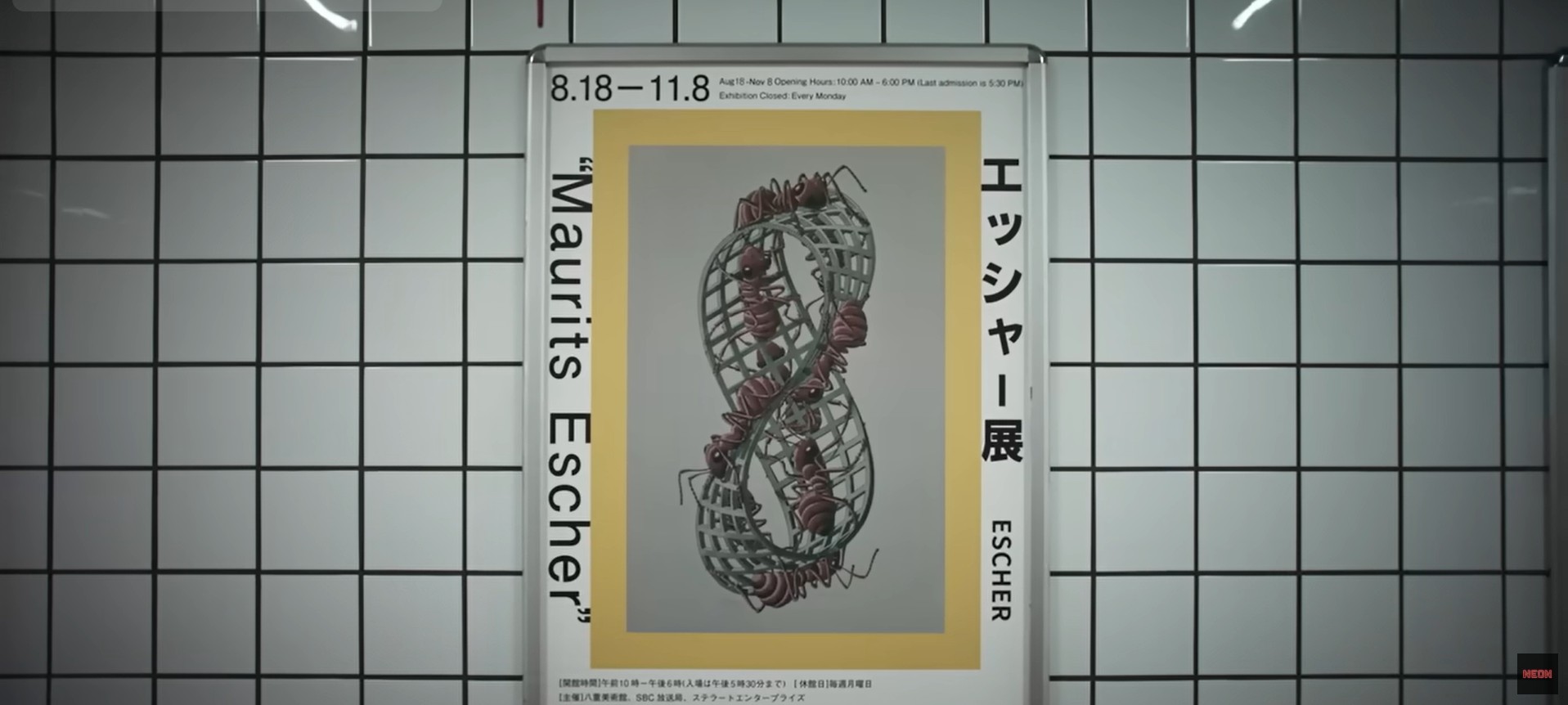
Based off the Japanese horror and psychological video game of the same title, “Exit 8,” the film, also originates out of Japan.  Kotake Create is the indie video game developer behind the “Exit 8” concept and its sequel “The Platform” from 2023 and 2024.  The 2026 film is the sophomore directed film by Genki Kawamura who co-wrote the filmic adaptation “Sai:  Juchang ban” co-writer and director Kentaro Hirase.  Both the video game and movie indulge into the theme of the Noble Eightfold Path, a teaching core of Buddhism that serves a guide from suffering to enlightenment through eight corrected attitudes, such as mindfulness, intention, and effort.  A conglomeration of producers, including Yoshihiro Furusawa, Minami Ichikawa, Taichi Itō, Yuto Sakata, Taichi Ueda, Kenji Yamada, Akito Yamaoto, and director Kawarmura, bring the film to fruition under the Toho Film Corporation and AOI Pro. Inc. and in association with Story Inc. 
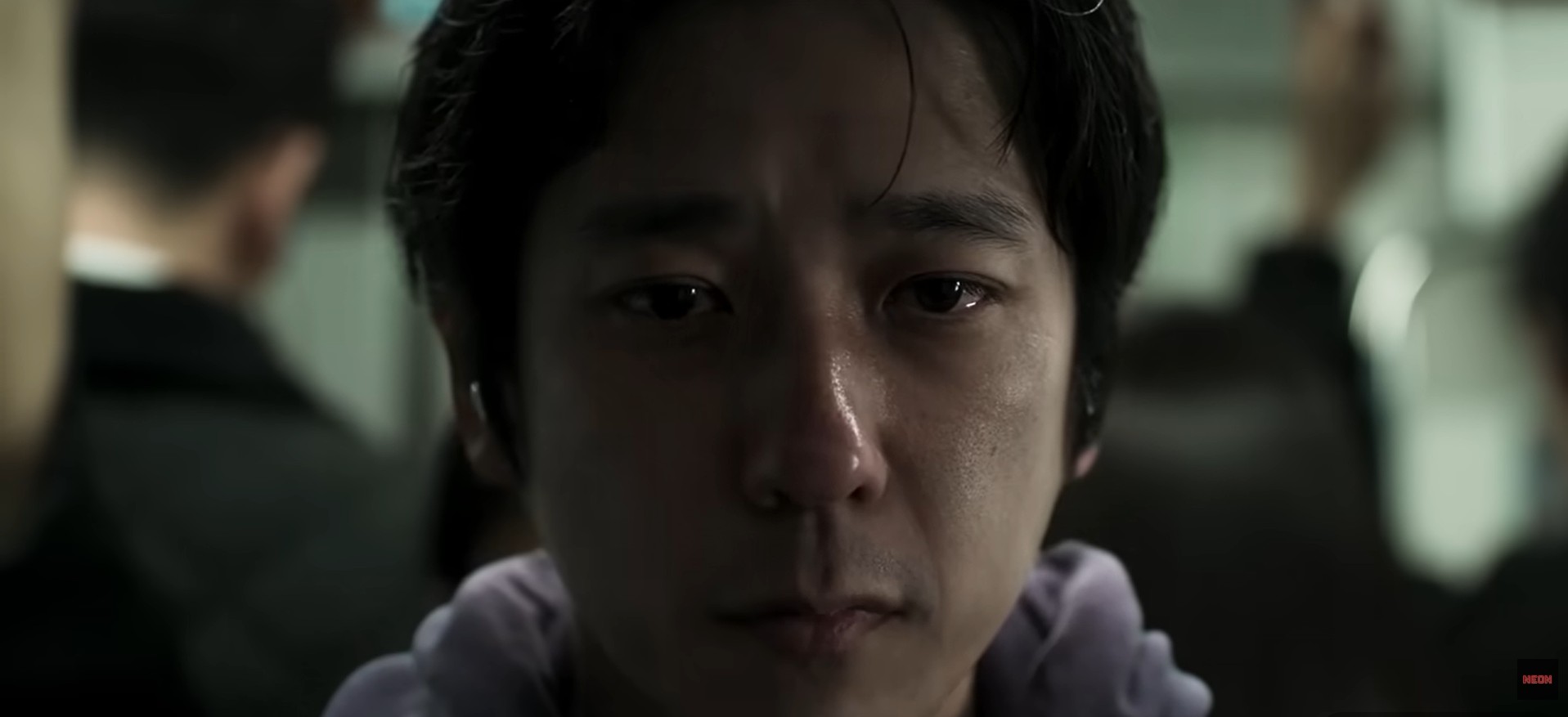
“Exit 8” has a limited cast of key characters, mostly trapped inside the sterile, tiled subway walls, playing real and unreal characters depending on the perspective in turn.  Mostly, the center focus is around a male character only known as The Lost Man, a young man who shrugs off responsibility to his fellow man as well as being undecisive when it comes down to important decisions; we see examples of this on the subway train of a businessman yellow at a mother who’s infant is crying and when his girlfriend phones him to inform him of her pregnancy in which she poises a pivotal question he can’t either fathom, process, or ultimate just decide upon.  “Letters from Iwo Jima” actor Kazunari Ninomiya plays the nameless Lost Man to character arc his way from skirting responsibility to fill him with purpose and round the character out as a person of great attention, detail, and decision.  The only downside to the Lost Man is with how he’s written on the initial experiences of the hallway loop in what’s an obvious disturbance in reality he quietly absorbs without freaking out, even to the point he’s able to quickly red and process the rules of the scenario and understand their purpose.  This, in itself, is an anomaly of human processing and rationality as the average person would be overwhelmed by surreal receptiveness and break down before they could build themselves up.  Ninomiya performance lifts the Lost Man with a more positive performance that sets the emotional rollercoaster back on track and when the audiences to get that break of the character’s mental state, its crippling effect translates and is greatly empathetic.  In the loop, the Lost Man meets the Walking Man (Yamato Kochi) who cycles passes through the anomalous-or-not corridor at an expressionless pace, but we also get his backstory too as he was once real and trapped just like our protagonist.  Another character the Lost Man meets is The Boy (Naru Asanuma), another victim playing the game, and has an eye for detail despite his quiet demeanor.  The Boy also represents the Lost Man’s future being the protector and parent to the boy as they try to escape together through the harsher anomalies.  “Exit 8” rounds out the cast with more minor parts from Kotone Hanase, Hirota Ôtsuka, Tara Nakashima, and Nana Komatsu. 
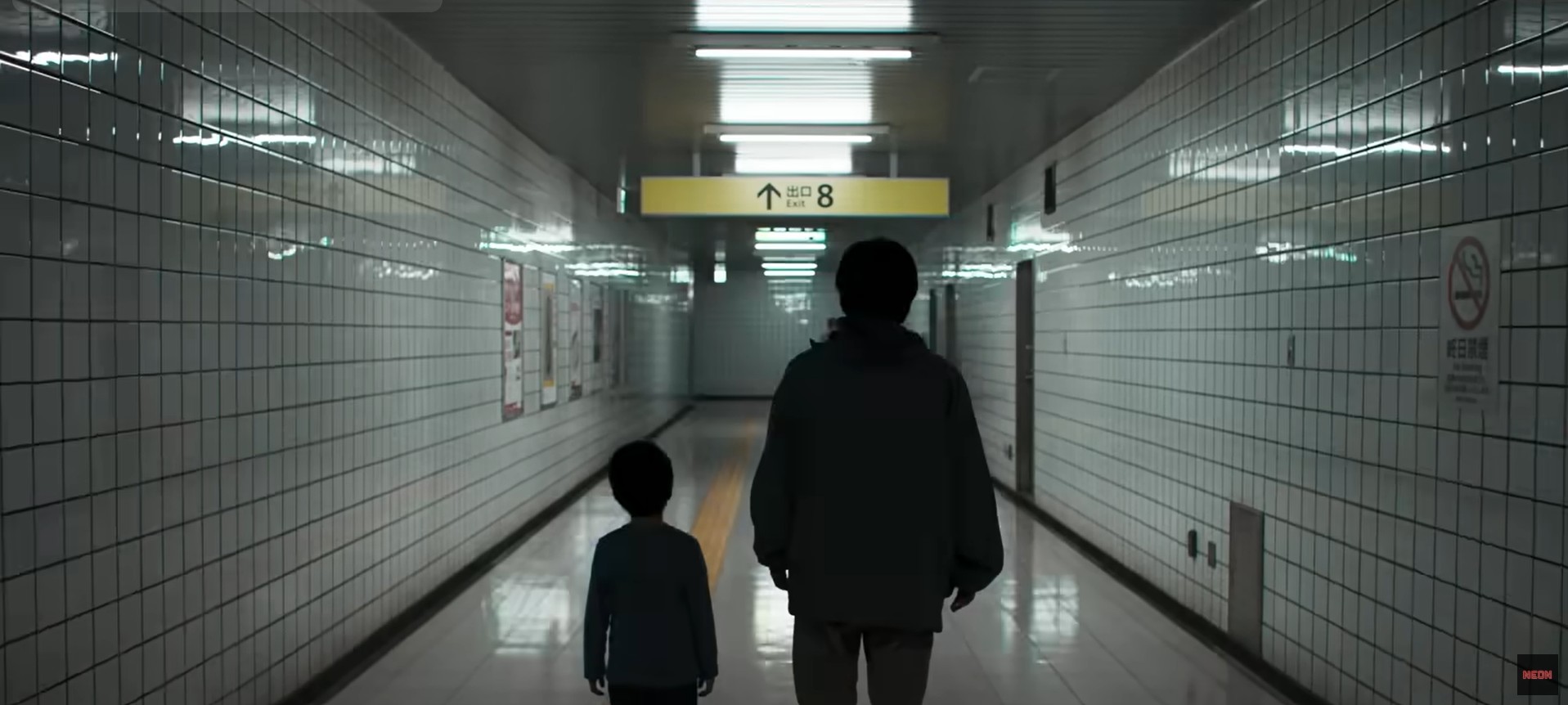
An uncanny and ambiguous horror, providing no explanation for why the man is trapped inside a loop, “Exit 8” serves to be a metaphor for life’s hard decisions, ones that affect fate in the futre.  Paying attention to the small things have the same direct result as paying attention to the much larger, obvious ones despite the being blatant and the threatening anomalies, no matter big or small, can have disastrous consequences.   Kentaro Hirase is an obvious fan of the game by rendering a faithful adaptation of Kotake Create’s creation that walks, talks, and acts just like the mystery horror and existential crises symbolizer.  There’s even a first-person perspective at the beginning of the film that provides more homage to Create’s first-person game.  After that, the switch to omnipresent third person has its own distinct brand of tension and it also achieves grabbing the fearfully fret expressions on the actors faces, that’s if they’re human or otherwise it’s creepier and menacing in the surround sterile environment that can be subtle or flooded with odd occurrences only to go back to normal in a matter of a few steps and one left turn away  Aside from vague purpose of the 8 level loop, there are more creepypasta anomalies that don’t make a lot of sense on its face but share an underlying connection to those cut off from the rest of normalcy in what’s can be considered a subconscious ensnarement of personal strife that has put them in a precarious position with unexplainable and terrifying results.  The acting carries with a repetitiveness about that that is not tired or mundane as the Walking Man walks the same corridor, at the same time, and in the same manner at least ten times in the duration, an exemplary one-note performance by Yamato Kochi to never break the automaton gait and persona no matter how involved the Lost Man gestures or speaks to him.
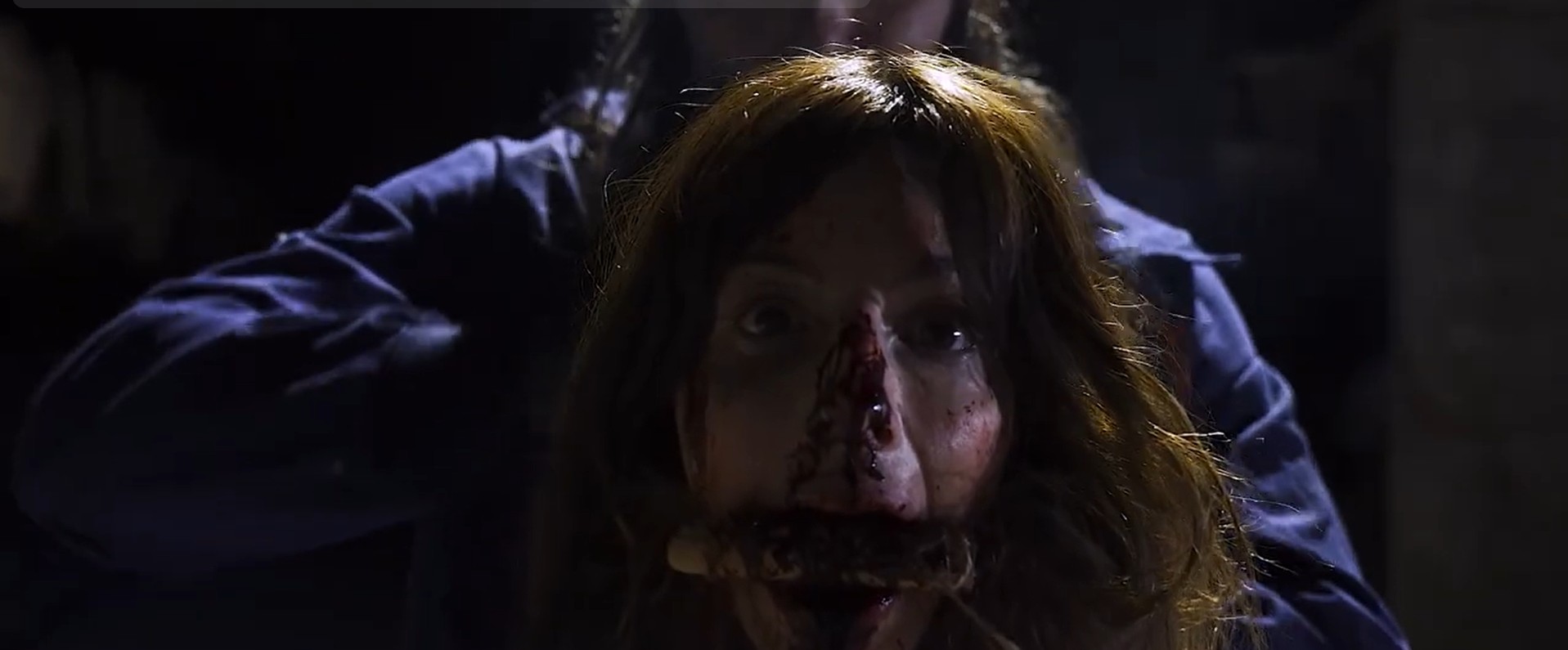
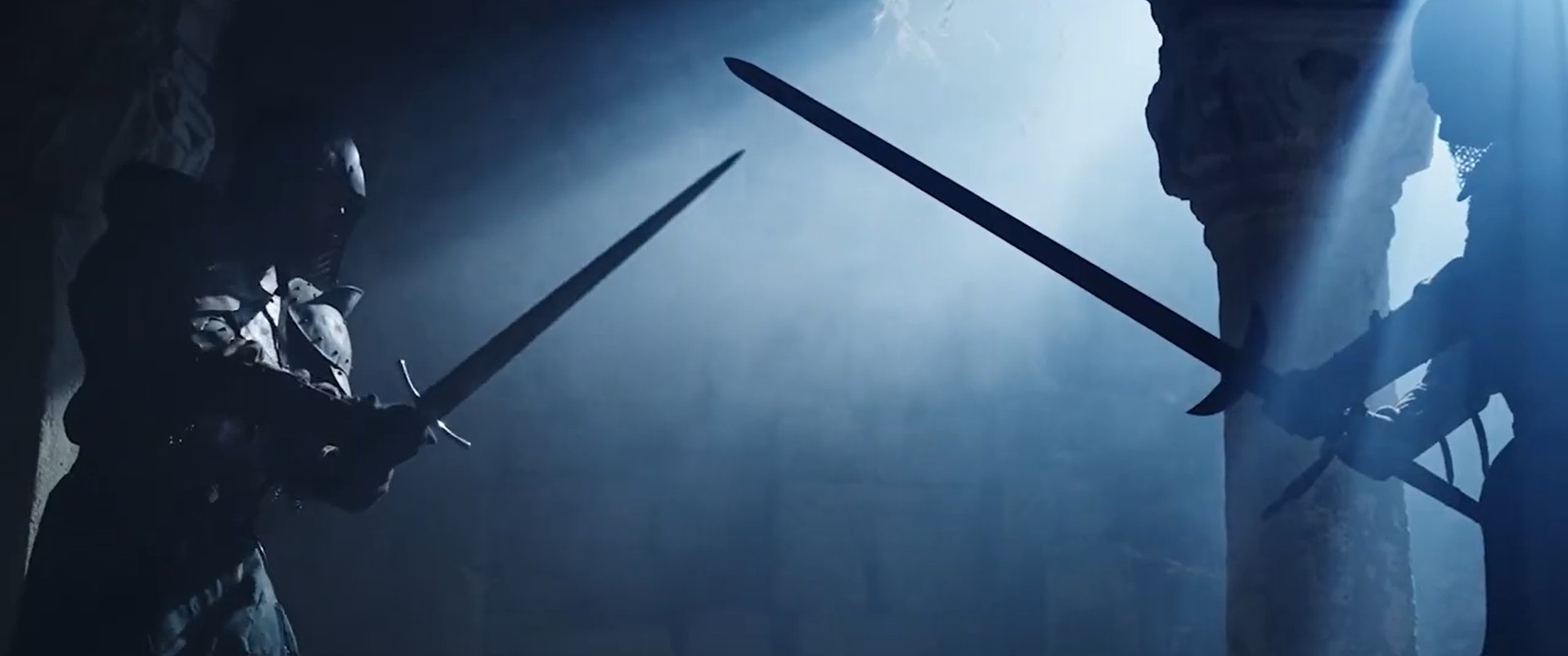
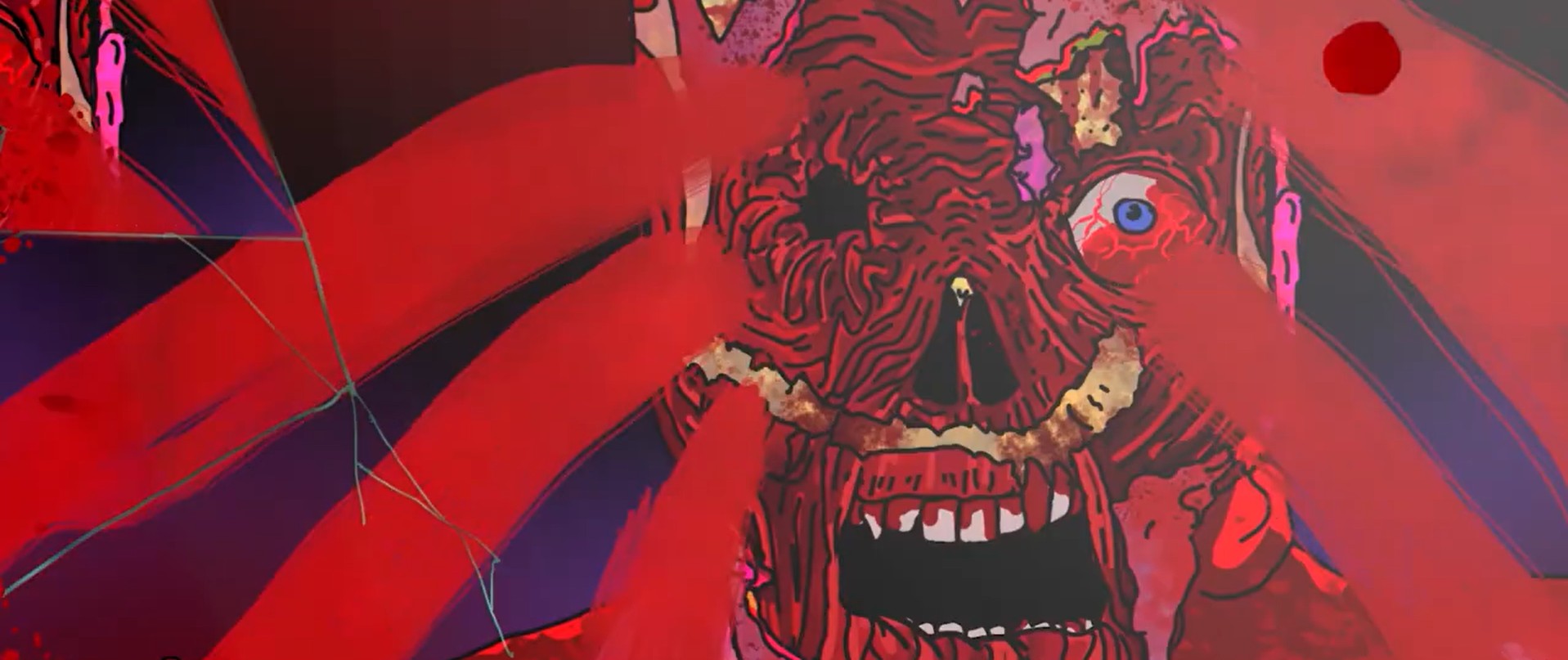
Visions Home Video’s “Exit 8” Blu-ray is a great addition to anyone’s collection of Japanese modern cinema or overall film library.  With a 1080p high-definition resolution, the AVC encoded BD50, presented in a widescreen 1.85:1 aspect ratio, has natural, run through digital brilliance meaning the walls are sterile white, the color saturation has an innate organic measure through primary grading, and skin tones render like they would off camera but all with the clean look of digital.  There is some noticeable aliasing on the tile that lose some of the definition and blurs as objects move through the scene, effecting in at least a couple of scenes the texturing.  The Japanese DTS-HD 5.1 Master Audio has a kick with a sound design that plays with the perspective of the Lost Man’s environment, providing excellent directional and immersive audio space from the diegetic and non-diegetic muffled and non-muffled sounds from first person perspective with earbuds in to the intensity depth of walking from background to foreground.  Dialogue has strong presence and is clear.  Subtitles are well paced and contain no noticeable grammatical mistakes in the UK English translation.  There may be some key vocabulary differences as anomalies is perhaps more British than the word used in Japan. The English subs come in two options:  SDH and audio descriptive.  The special features include a behind-the-scenes of “Exit 8,” an On the Carpet at Cannes Film Festival featurette, an On the Carpet Busan Film Festival featurette, the UK trailer and the Japanese trailer..  The stark physical presence of “Exit 8” is eye-catching with a mostly golden O-ring, cardboard slipcover with an illustrated figure eight, tiled like the subway corridor with illustrated story characters standing on it.  Sheathed is the clear Scanova case with the same primary image from the slipcover on the sleeve but drops the sheeny gold coloring for more canary yellow.  The reverse side of the sleeve has a creepy image of the Walking Man.    A double-sided, folded mini-poster and art cards of the corridor wall signs are inside the clear case with more yellow themed display pressed on the disc.  The UK 15 certified film lists two different explanations between the slipcover and the clear snaplock case.  The slipcover has strong horror while the clear case has infrequent strong language.  The region B locked region has a runtime of 95 minutes. 

Last Rites: Personal growth is hard. It’s even more difficult when a subway tunnel becomes the ultimate mind-messing and deadly trap to steer you in the right direction. “Exit 8” is a guileful guide of molding moral behavior done with a twisted circumference. This video game adaptation is one of the better ones in a long time!
This Movie is So EVIL, It’s Real! “The Paranormal” reviewed! (Visual Vengeance / Blu-ray)

“The Paranormal” is a 3-D Experience Without the Glasses!

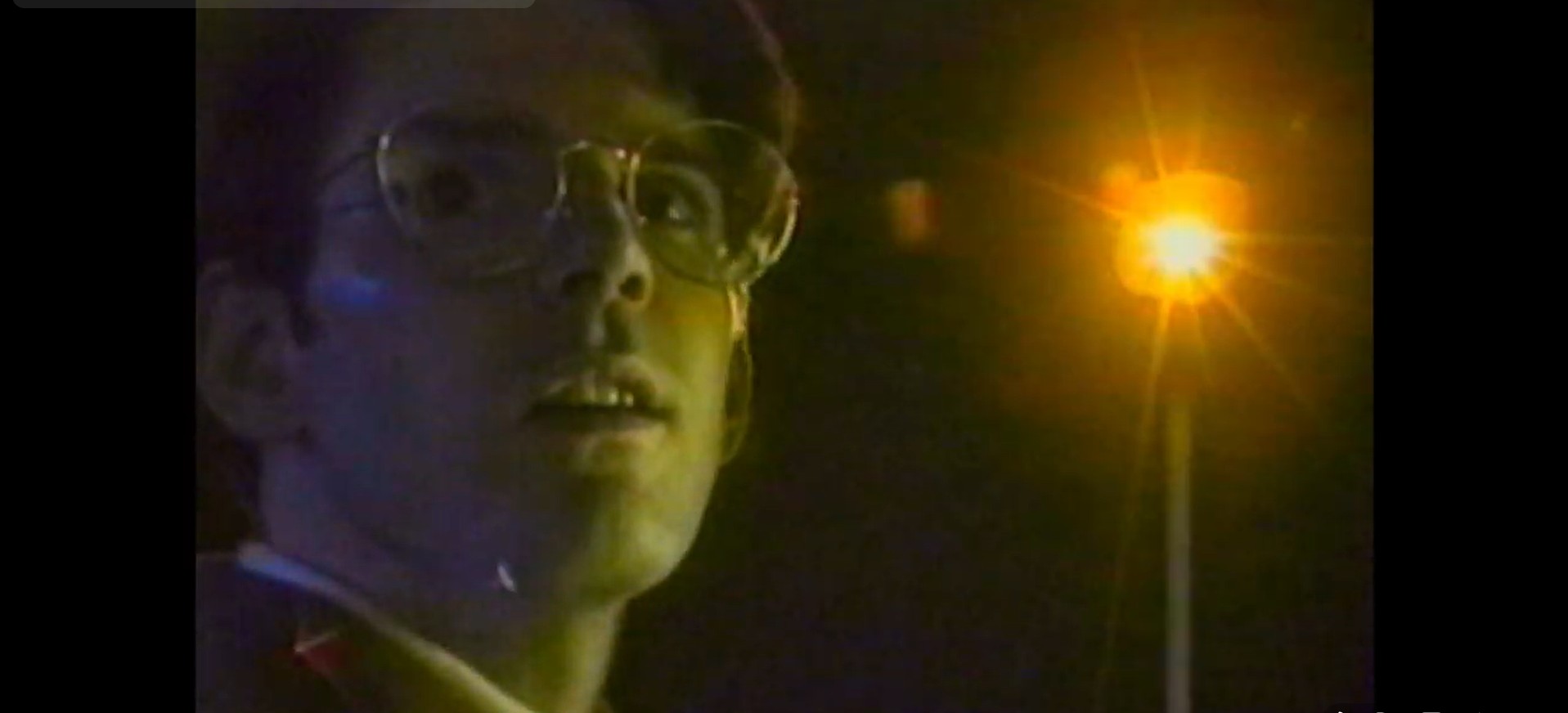
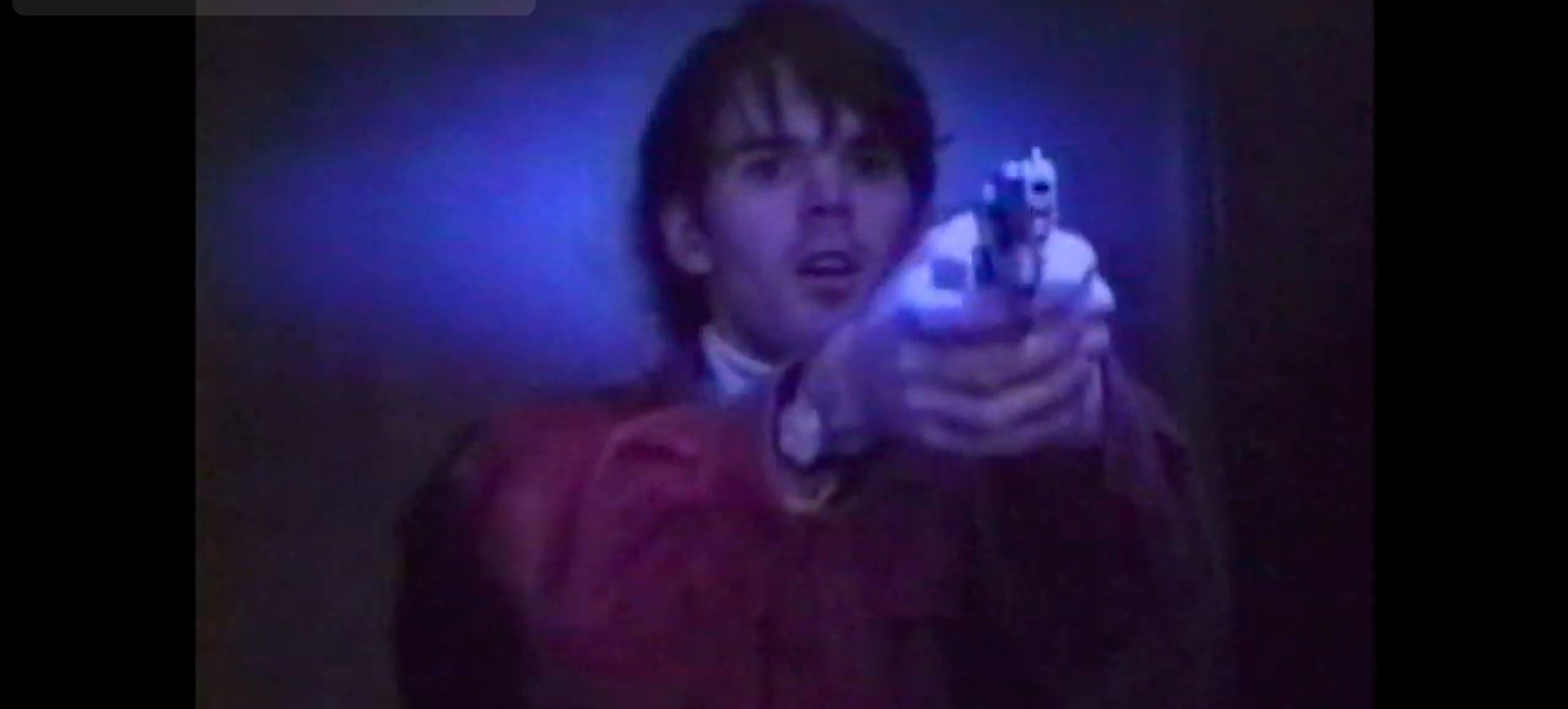
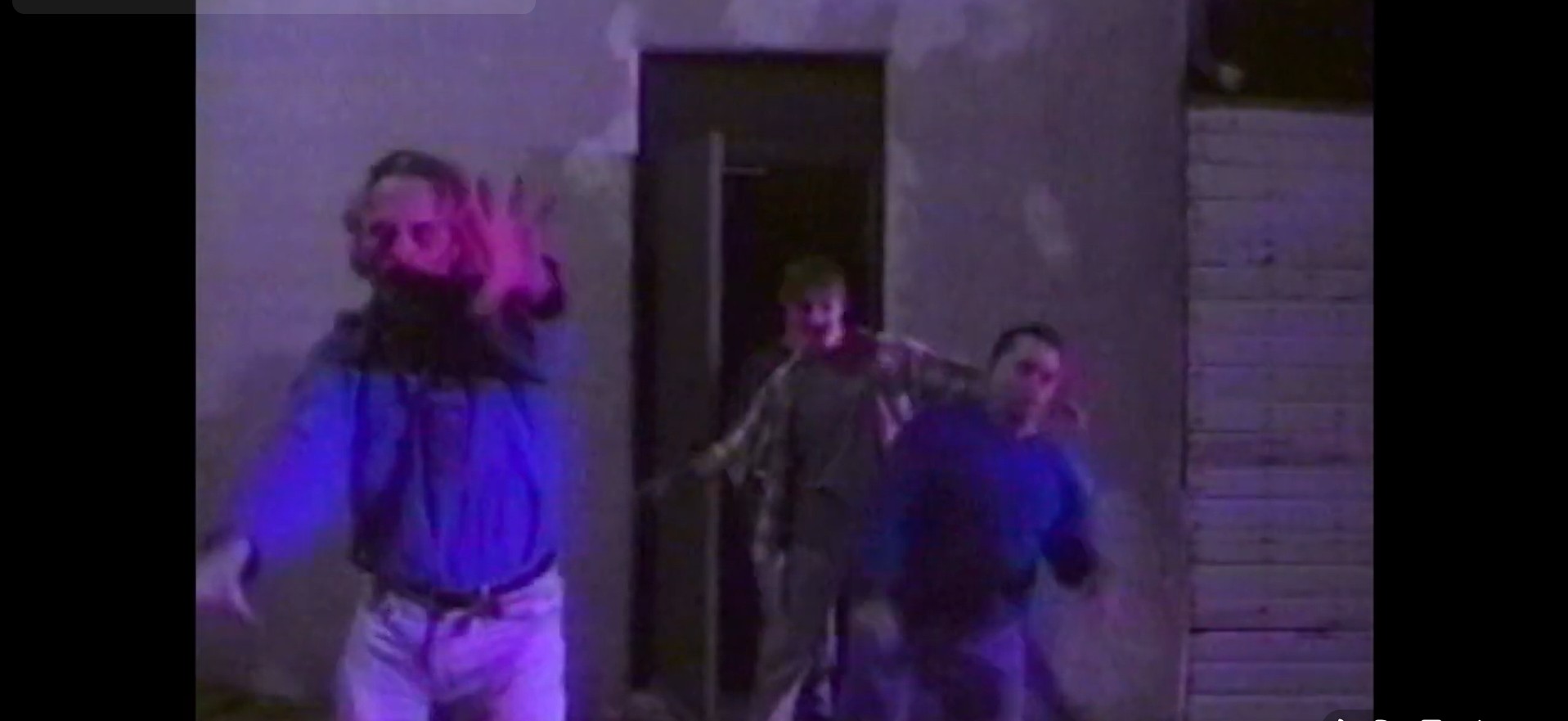
Kyle Jennings is a struggling pro-paranormal scientist unable to convince the department head for more research funding without repetitive, physical evidence.  Jennings’ paranormal hypothesis is put the test when an old movie theater in Englewood, Ohio spikes to the cycles the eager researcher has previously recorded.  Accompanying his fact-finding examination of theater is the department head with her own theories to explain the phenomenon.  With the assistance of two theater employees, they experience unexplainable occurrences of movie reels coming alive and playing themselves, unlockable doors mysteriously locked, and a ghostly apparition lurking in the attic, all surrounding an old nitrite film reel with immense paranormal energy.  The foursome find themselves trapped inside a theater with the film reel causing rifts into another dimension through every reel change and splice of a cheap zombie movie.  Before movie zombies step into their reality from off the screen, Kyle must journey to the other side and stop them simply by locking an unlocked door but that’s easier said than done when every act Kyle does in film changes the narrative significant and not in their favor.   

Every once and awhile you’ll come across an obscure, independent made film that just knocks your socks off in all categories.  Todd Norris’s “The Paranormal” is one of those very films.  Norris writes-and-directs the 1998 film alongside cowriter C. Wayne Owens, marking their first and only collaboration together.  Norris went on to do be an accomplished short film editor and cinematographer, working on select cheeky horror full-length features such as “Cadavella” and “Bonnie & Clyde vs. Dracula.”   “The Paranormal” is the debut film of Todd Norris, filmed in the America Midwest, Kansas City, Mirssouri to be specific.  Riding the device of being a mise en abyme, or more loosely described as a meta-film, “The Paranormal” has a novel concept that makes this film something special. 

Norris not only writes and directs, the then late 20s filmmaker also starred as the lead character, a pro-paranormal scientist named Kyle Jennings who, from the opening, introductory scenes, struggles with validating his department and research that is seen as nothing more than a joke, or is even suggested to be a pseudoscience amongst cross-departmental peers at an undisclosed shared university.  As an actor, Norris never flinches from his nerdy-confident persona, dressed down to seem like a normal man with an equally dressed down obsession toward his research.  The approach and reaction of rejection is a very real-world view and response to being denied opportunity, but he’s given the chance once an unexplained occurrence in Englewood has a striking coincidence to his theorized research on paranormal activity.  Jennings is challenged by theoretical physics and science department chair head Cass Charbonneau (Lisa Winegar) who has this underlying want to believe, in a stoic, scientist indifference type way but can’t swallow the truth that something might more unexplainable out there.  We don’t really get a satisfying character arc with her character as she never really displays the change of heart or update from her rigid persona to welcome Jennings into the university scientific community.  Does he finally get accepted?  We don’t know.  Audry Crabtree and Gina Tarantino respectively play theater owner as well as Jennings’s love interest Lynne Meredith and projectionist Johnnie, providing additional strong female roles unafraid to face the supernatural front alongside Winegar.  The cast rounds out with Jennings’s colleagues and zombie movie characters with C. Wayne Owens, Carol Koehler, Brain Stubler, Jeffrey Sisson, and Davide Baldin who either support a broad pro-paranormal acceptance as we see with C. Wayne Owens moving persuasive speech to convince a reluctant Jennings to investigate Englewood and to support parts in a narrative that changes with every decisive action to keep movie zombies from entering reality. 

For a SOV film, “The Paranormal” is a case study for what to do right during principal and post photography.  Editing and special effects on tape can be cumbersome and clumsy, but Norris makes it look easy with effective sleight of hand tricks and use of multiple video tape recordings to provide overlapping effects that turned out quite well and was quite effective.  Couple that technical success with a fascinating, movie-within-a-movie storyline, there’s little to dislike about this indie feature with a big budget heart.  Horror fantasy becomes reality as supernatural forces bring the movie to life, an idea that germinated before Arnold Schwarzenegger’s 1994 action thriller “The Last Action Hero.”  While Schwarnegger’s narrative crossed realities in a bigger, more explosive way, “The Paranormal” teases the threat with brief windows of opportunity that could potentially send fleshing eating zombies into the real world.  Every time I thought the story would falter under its own narrative weight, Norris surprises me with continuous persistence in making the sequences work.  The only downside to “The Paranormal” is the mystical reel that generated the supernatural rift.  The nitrite-filmed reel didn’t receive much of a backstory on how and why it causes the in-movie movie “Z is for Zombie” to be the chosen destructor of the Englewood Theater inhabitants and, potentially, the world.  There’s a flash of a woman apparition that in conjunction with the reel’s unyielding power that, too, isn’t explained.  These inexplicable elements leave plot holes in a what is otherwise a near flawless picture. 

Visual Vengeance continues to drop SOV gold right into our hands.  “The Paranormal” is not only a fantastic meta-horror but now it has sex appeal with profound physical qualities.  The single disc, Blu-ray set comes AVC encoded with 1080p high-definition resolution, encoded on a BD50.  The original tape elements were scanned with director supervision and the quality of the tape retained for its original aesthetic, complete with tracking lines and a distorted, warm coloring amongst the analog anomalies associated with tape.  There’s clearly no hard-edge definition or textural allowance so you can get the feeling that you’re watching magnetic tape just as the media gods intended, exhibited in the full frame 1.33:1 with pillar boxes.  The English LPCM stereo cleanly discerns dialogue, soundtrack, and certain action aspects without the presence of sidetracking distortion, and that’s saying something for an innate original audio recording, but there’s noticeable subtle electrical interference in it’s not so robust reproduction of audio.  The A/V should come at no surprise as Visual Vengeance continues to be upfront with their releases with a precautionary statement before every feature regarding the commercial and inferior equipment used to make these types of films.  Optional English subtitles are available.  Special features are aplenty, as usual with Visual Vengeance, with a Todd Norris feature-length commentary, a second commentary with Norris and composer Paul Roberts, various cast and crew interviews produced by Norris a video interview between Norris and Lisa Winegar and subject interviews with Jeffrey Sisson and Davide Baldin, an interview session between Todd Sheets and Todd Norris as The Two Todds of Kansas City SOV filmmaking, “The Paranormal” channel 5 TV airing, blooper reel, deleted scenes, original script excerpts, a storyboard gallery, short films “The Closed, “I…,” “Night of the Growling,” and “Parallax,” and trailers for other Visual Vengeance at home releases.  The clear Amaray Blu-ray case comes with a limited-edition O-ring for the first pressing with art by graphic artist Uncle Frank.  The original sleeve art is done by The Dude and inside is a mini poster by Giorgio Credaro.  Three graphic artists given the chance to shine on one release is pretty neat.  There’s also the original VHS cover on the reverse side of the sleeve.  Inserts alongside the mini-folded poster include an faux advert for faux movie “Z is for Zombie,” a Ghost Finder for viewing entities (think a slim-downed Viewfinder but can’t see through it), and the usual retro VHS sticker sheet.  The 70-minute feature is unrated and is region free.

Last Rites: Acting, special effects, and the meta concept are all what makes “The Paranormal” a solid film of immersive fantasy becoming an on the verge of a zombie apocalyptic reality.

“The Paranormal” is a 3-D Experience Without the Glasses!

The Mountains Are Alive With the Sound of EVIL! “Cold Prey” trilogy reviewed! (Second Sight Films / 3-Disc Limited Edition Blu-ray)

“Cold Prey” limited edition trilogy set! Get it while it lasts!

Five snowboarding friends travel to a remote mountain to shred the best scenic power Norway has to offer.  When one of them hurts their leg, the group hunkers down in an abandoned hotel for the night, a hotel with a horrible history of a child and his parents who went mysteriously missing decades earlier.  As the night carries on, a mountain man living underneath the main floor hunts them down.  A lone survivor of the night is taken to a closing down hospital with a skeleton crew.  The mountain man had followed her, prolonging her ordeal of terror, and continues his murderous killing spree through a new batch of medical staff and police officers.  Decades earlier, the mountain man’s abused backstory sets a coming-of-age path of homicidal tendencies as he lives in the woods 12 years later after departing his parents and the hotel.  A group of hikers wander into his woods where he can’t differentiate man from animal game and begins his thirst for the kill that would claim the lives of many years to come.

What I’ve just given is the three basic plotlines for all three of the Cold Prey films, a trio of Norwegian-made slashers with a murderous mountain man at the center of it all.  Including a sequel and a prequal, the films were all produced in a relatively short amount of time of four years between 2006 and 2010.  For the original film, Thomas Moldestad (“The Conference”) wrote the script based off a story he wrote alongside Martin Sundland (“The Wave”) and Roar Uthaug, the latter directed the film and would later go on to direct the 2018 reboot of “Tomb Raider” with Alicia Vikander in the Lara Croft role.  The sequel, “Cold Prey 2,” directly follows the first film but helmed by a different director in Mats Stenberg with Moldestad returning to pen the project.  The prequel innately disconnects the continuous nature of Cold Prey I and II for more history on the homicidal mountaineer with Sundland taking a backseat story idea role to Peder Fuglerud and Lars Gudmestad with Mikkel Braenne Sandernose bringing up the rear in the director’s chair.  The real-world location used in all three shoots was the Jotunheimen mountains and the studios connected to each project are Helgeland Film, SF Norge A/S, Norsk Filmstudio, Film i Väst, Storyline Studios and with the Norsk Filmstudio subsidiary, Fantefilm, involved in all three as the movie’s presenting studio. 

Ingrid Bolsø Berdal (“Chernobyl Diaries”), Thomas Alf Larsen (“Troll Hunter”), Viktoria Winge (“Inside the Whore”), Rolf Kristian Larsen, and Endre Martin Midtstigen play the five friends venturing to the mountains to shred some nice powder but wind up finding themselves stranded with a madman in their company.  That madman is played by Rune Melby, not to be confused with Sweden’s national hockey team player of the same name, to impose his large stature and husky look to be a formidable, silent antagonist that doesn’t need vocals to be threatening.  Surface level inspect of “Cold Prey” has it pegged as another typical slasher but this slasher rolls back the tropes, desaturating the themes and motifs to a reasonable amount and in a more realistic approach rather than having established personas, such as the nerd, jock, slut, etc., having gratuitous sex scene moments, and reduce the bonehead moves that ultimately result in their demise.  The sequel houses a new cast apart from Ingrid Bolsø Berdal making her return as a survivor recovering in a soon-to-be-closed hospital following the events of the first film.  She’s joined by Martha Snorresdotter Rovik, Fridtjov Såheim, and Johanna Mørck as the skeleton crew hospital staff, Kim Arne Hagen as Camilla’s boyfriend and utility emergency service person, Mats Eldøen, Per Schaanning, Andreas Cappelen, and Mads Sjøgård Pettersen as the limited bandwidth local law enforcement, Vetle Qvenild Werring as a boy patient, and Robert Follin replaces Rune Melby as the killer.  A larger cast equates to a larger body in this direct story follow-up and really capitalizes on the killer’s brute force and unstoppable grit that sets up a delusion of him against the world as a misanthropic maniac with some underlying superhuman force, like we see with Michael Myers. Berdal takes on the true survivor and heroine role helping those unaccustomed to the fight and even takes the fight to her tormentor, solidifying more of the final girl trope.  The rest are stuck in the middle as potential kill fodder and support to provide emotional capital as lives hang in the balance in their various relationships, which reminds me one relationship that’s hint at but never explored is the seemingly undercover or seedlings of affection between two medical staff that is quickly squashed by the rise of a killer in their midst.  The scene interaction would have stirred up controversy wither another involved character but never had a change to be problematic.  The prequel doesn’t involve any returning characters and really invests into the mountain man’s background more.  Played by a different actor in Endre Hellestveit and having an appearance more akin to the WWF Undertaker instead of a pelt and parka-cladded mountain man, each filmic version has varying style that almost feels heavily contrasted to the previous one and that can be jarring to that connective tissue for some.  A new band of friends become the hunted prey as they stumble into the mountain man’s forest home under the rough tutelage of illegal game hunter Jon (Nils Johnson) whose brother, police officer Einar (Terje Ranes), pieces the puzzle together the disappearance of the backpackers and Jon’s involvement in something more than poaching.  The backpackers play more into conventions without many complexities in their depth chart with Ida Maria Bakkerud, Julie Rusti, Kim Falck, Pål Stokka, Arthur Berning, and Sturla Rui are put into the mountain man’s crosshairs.  

As you’ve might have noticed, the prequel doesn’t receive high marks but it’s an entertaining bloodbath nonetheless, overshadow by the predeceasing counterparts because of the developing characters and the more interesting story that plays to a similar tune of the first two “Halloweens” and even more so with the continuation storyline between the first and second film with the latter set inside a sparsely populated hospital that definitely gives off “Halloween II” vibes.  That’s not to say the “Cold Prey” films are a carbon copy of notable classics and their sequels as “Cold Prey” brings a Norwegian staple into play with the summitting Jotunheimen mountains and their existence within that snowy terrain and mountain air, building a story around a mountain code that’s often spoken of, a code about safety that goes in deadly contrast toward the inexperience and nativity of youth believing they’re invincible to their surroundings when in reality mother nature, a natural evil within the mountain man living off the land, leaves more than a dent into their humility.  “Cold Prey” will often feel unoriginal with a severe lack of gore as that has almost become intrinsic to contemporary slashers but it’s refreshing to see a step back in the violence, though it’s nonetheless harsher.  Audiences will not be treated to impact violence that creates squeamish reactions and ghastly shock.  Instead, implied violence is the name of the game that results in the same blood-spattered crime scene look without the initializing, violent show of the blade sliding into the sternum.  These stylistic choices, executed perfectly by DoPs Daniel Voldheim (“Cold Prey”) and Anders Flatland (“Cold Prey 2”) in their camera work and expertly cut by Jon Endre  Mørk, are sold convincingly to ensure death is impenetrable when the pickaxe strikes while still flaunting a good amount of practical effects in makeup wounds, prosthetic props, and gallons of fake blood.  “Cold Prey III” dabbles in the same inferences and off-screne violence but shows a lot more too as we see a machine pierce and then slice away the insides of man and that knife going right int between the rib cage of a poor young woman, keeping up with the times of a modern slasher.  

The three film, Blu-ray set comes from Second Sight Films.  The UK label rolls out the red carpet with their high-definition release that’s an AVC encoded BD50, presenting each film with 1080p resolution and in a compressed widescreen aspect ratio of 2.39:1 to capture the majestic Jotunheimen mountains.  Despite having three different directors of photography in Daniel Voldheim, Anders Flatland, and Ari Willey, each “Cold Prey” entry has the same gray sepia grading with a solid reducing of color saturation in attempt to harness cold and bleak surroundings of a harsher landscape.  IN the same breath, each DoP also tries to make the mountains and forest feel awesome and breathtaking while coursing its perilously imposing strength in size and, ironically enough, confining isolation.  You may find the Blu-ray details and textures on “Cold Prey” and “Cold Prey 2” not to be a sharp as expected for an early mid-2000s slasher as both were shot on 35mm for a better film cell texture rather than a captured texture to accentuate the landscape in a cinematic view rather than the digital polish that often downgrades pictures with a one-note aesthetic.  Since the snowcapped mountains were not used in the prequel, replaced with a forest setting, digital film was used to flesh out more raw textural details amongst the dense foliage and in the midst of a dilapidated mountain property.  No compressions issues in the codec to note.  Each film is fitted with a Norwegian language DTS-HD Master Audio 5.1 surround sound, suited to bring the soundtrack and the directional tension to the frontlines of the sound design to setup an impacting impression when the action saunters into frame.  Diffused nicely throughout, depth and direction of sound creates not only the atmospheric of a malevolent presence, it also creates environmental anxiety when sounds go bump in the night or just in the abandoned motel or echoing forest setting.  Dialogue is crystal clear and the English subtitles pace well with the speed and have no noticeable grammatical errors.  Each disc comes with its own special features:  “Cold Prey,” Disc one, has a new audio commentary with Director Roar Uthaug and actress Ingrid Bolsø Berdal, a new interview with Uthaug This is the Vibe, a new interview with Ingrid Bolsø Berdal Draw the Process, an alternate ending shown in storyboard that extends the final cut ending, a behind-the-scenes look at the visual FX of the film, additional car scenes, blooper reel, two short films: “Mountain Rose Run Amok” and “An Evening in the Green,” and Bloodlights’ music video for their hit “One Eye Open.”  “Cold Prey 2,” Disc Two, has a new audio commentary with director Mats Stenberg, a new interview with Stenberg A Blessing and a Curse, new interview with actress Berdal Dissociation, a new interview with fomer director turned solely producer Roar Uthaug Stepping Aside, behind-the-scenes, blooper reel, and extended and deleted scenes.  “Cold Prey 3,” Disc 3,” has a new commentary by Christer Andresen and Phillip Escott of an outsiders’ perspective looking in on the film prequel and a behind-the-scenes featurette.  The limited-edition rigid slipbox is massive and perhaps one the biggest physical copies for a 3-disc production.  James Neal provides new artwork for the front cover that truly represents the story as well as the aesthetic to expect.  The trifold jewel snapcase holds all three discs and have dramatic character portrays from all three films.  Also inside are 5 collector art cards and a 120-page book with new essays from Matt Donato, J.A. Kerswell, Just LaLiberty, Paul Le, Ariel Powers-Schaub, and Nathaniel Thompson, plus the book comes with new artwork, stylized stills, cast and crew acknowledgements, and Blu-ray production acknowledgments and thanks.  The Blu-ray holds a UK certified 15 rating for strong horror, bloody violence, language, sexual threat, injury and abusive behavior.  This particular release is region locked on B and has a total runtime of 278 minutes.

Last Rites: The “Cold Prey” trilogy doesn’t flash new spins on the slasher genre that’s as old as horror itself. Instead, “Cold Prey” a satisfactory slasher that scratches the killer maniac itch with its mountainman maniac!

“Cold Prey” limited edition trilogy set! Get it while it lasts!

A Father and an Assassin Fight Against EVIL Corruption! “On the Run” reviewed! (88 Films / Blu-ray)

“On the Run” Now Available from 88 Films!

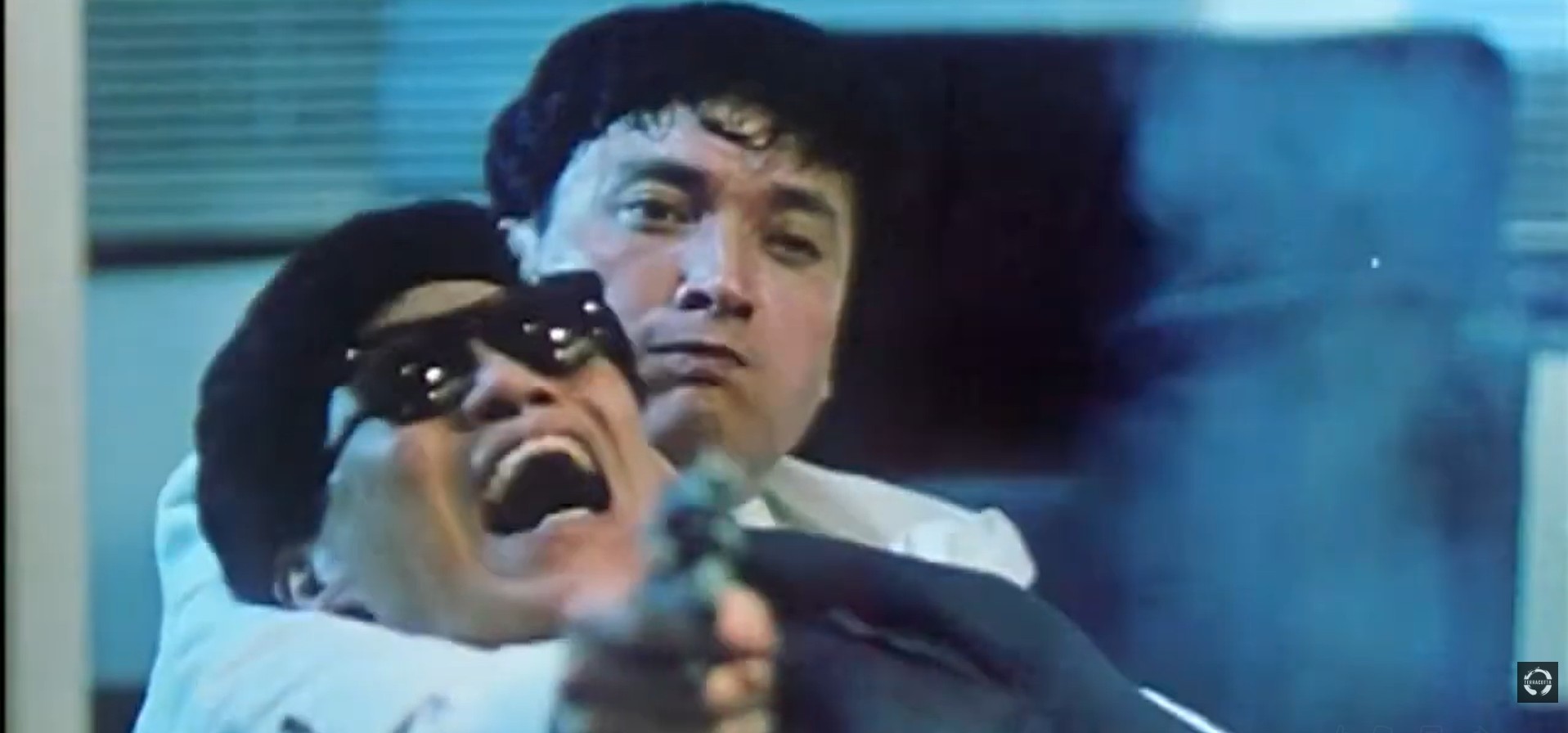
CID special operations police officer Hsiang Ming is going through a separation with his wife, who also works for the CID in the narcotics division.  As the two attempt to work out an amiable agreement with their young daughter before she moves to the U.S., his wife is brutally slain by a female assassin, a hired gun employed by corrupt cops involved in a large drug smuggling operation.  One of those cops is her new boyfriend, a high ranking CID officer.  Accused of murder, Ming is on the run with his youngest daughter and even tracks down his wife’s murderer, Miss Pai.  Extenuating circumstances leaves Ming at the mercy of Pai who didn’t know her target was a cop and has immense sympathy for Ming and his daughter, a problem she’s directly responsible for.  Outnumbered, outgunned, and friends quickly diminishing. Ming has no other option but to accept the deadeye Pai’s help and the two quickly form a bond that goes beyond just surviving insidious corruption.

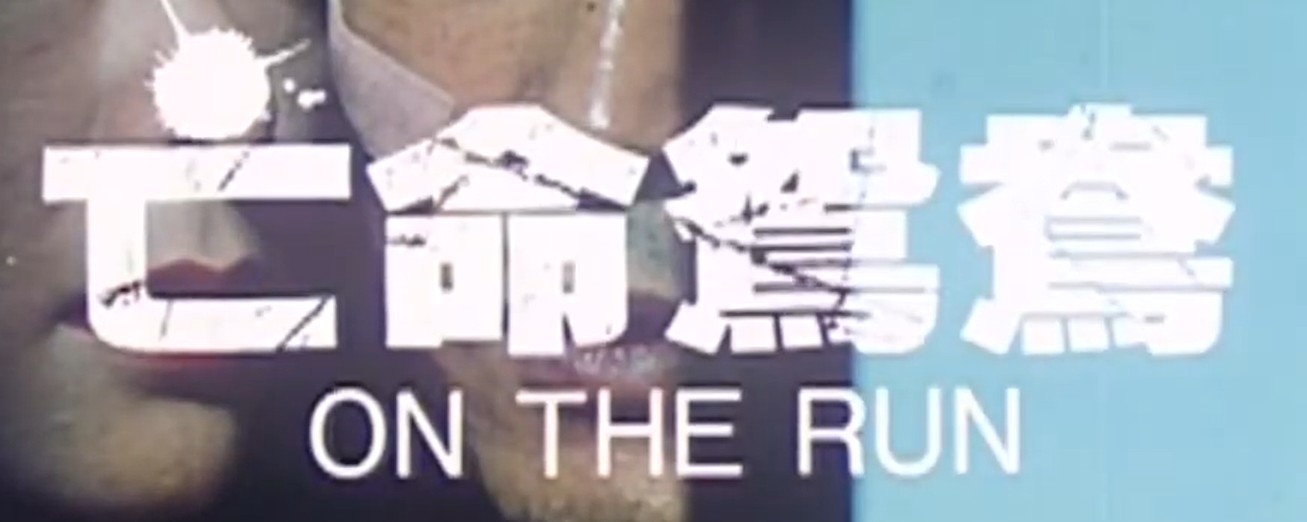
In 1988, Bo Ho Film Company and Golden Harvest Productions released the Alfred Cheung-directed, Hong Kong heroic bloodshed flick “On The Run,” penned by Cheung alongside cowriter Keith Wong (“Her Fatal Ways” trilogy). “Mong ming yuen yeung,” aka “Fleeing Couple,” is the literal title which also included another alternate title, “Hong Kong Connection – On The Run,” in more broad English titles.  The fast-paced, action-packed fight or flight thriller told a narrative of ingrained corruption within the ranks of the law, bonded unlikely heroes with conflicting professionals and a sore point connection, and really pushed the exodus, or export, of emigration at the time because of the seedlings of British rule coming to an end with a handover of Hong Kong back to the Republic of China, an act that eventually took a decade to complete.  Anhtony Chan, Leonard Ho, and Sammo Kam-Bo Hung produced the film with Paragon Films and Mobile Film Production as associated studios.

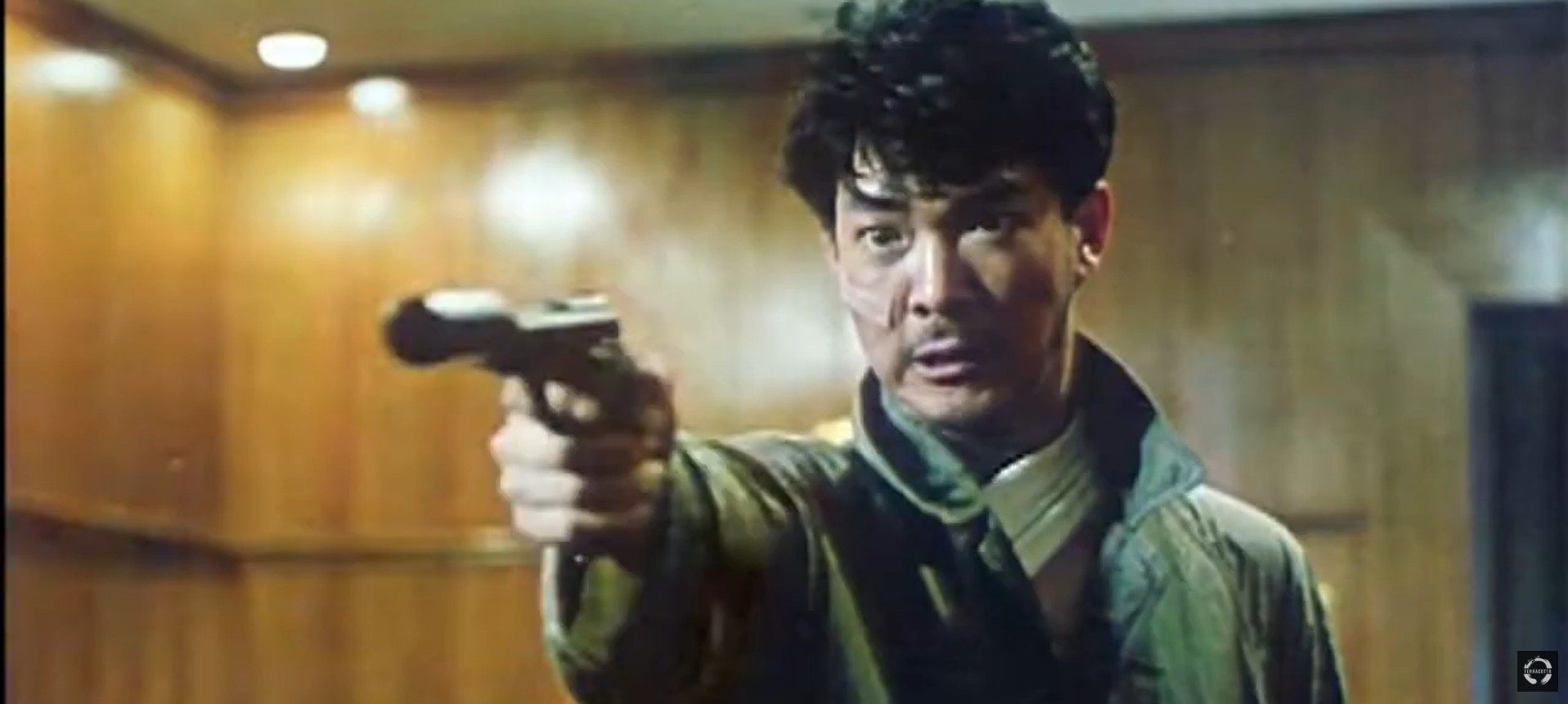
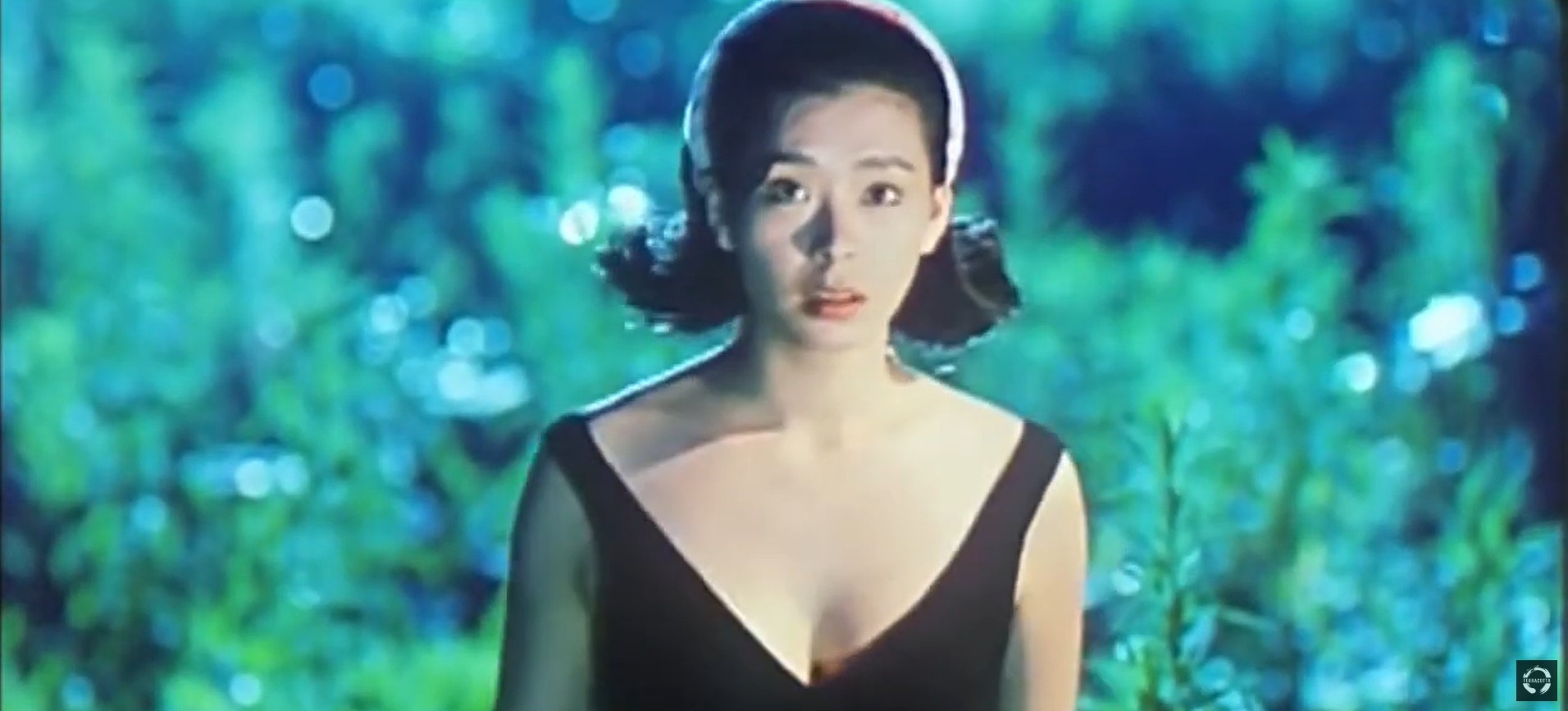
“Picture of a Hymph” and “The Peacock King” martial arts action star Biao Yuen is a sorely underrated action star from the 1980s, overshadowed greatly by the versatile Jackie Chan and the quickly rising through the heroic bloodshed ranks Chow Yun-Fat.  Though immensely popular in Hong Kong for his contribution to the acrobatic style of fighting and palpable stunt work, Yuen should be a household name in the States with select films that carried over.  The only problem was Yuen was never really a part of those niche works unlike the aforementioned stars and amongst others, but Yuen never stopped working, starring in a co-principal production as Hsiang Ming, a CID officer whose special operations department is being phased out, mirror his own life as he is being phased out amicably by his emigrating wife (Idy Chan, “The Siamese Twins”) and child (Chan Cheuk-yan, “Bless This House”).  As Ming, going through a separation is already difficult enough and Yuen’s able to show the meek and reserved desperation that initially stunts him as a husband but breaks through that limitation when she’s shot in the head and he must step up to be the protective father for his young daughter.  The father -daughter aspect is a narrative opposite that strays from the typical damsel in distress device.  Instead, Patrica Ha (“Flaming Brothers”) embodies the strong protector as the assassin Miss Pa.  Quiet natured and a crack shot, we’re introduced to Ha’s unique solitude of naked contemplation and, later, her retro appearance of a woman plucked from the 1960s with the flick up hairstyle.  Ha’s portray adds a lot to Pai’s mysterious past and her cold nature but her character’s arc travels across a sympathetic bridge when Miss Pai’s target ends up being an law officer with a cute family being hunted by money greedy and morally corrupted officials in Lu played by Charlin Chin (“The Imp”) and his entourage of varied goonies (Lo Lieh, “The Untold Story III”) – Wah Yuen, “Mr. Vampire” and Phillip Ko, “Cannibal Curse”) who are so individualized they are worth more than just the general and broad charactered henchmen that tend to be forgettable.  Bowie Lam, Kam Kong Chow, Peter Pau, Lap Sal Lam, Yung Kwan, Cheuk Yan Chan, Shek-Yin Yau, Kwai-Bo Chun and Heung-Kam Lee costar. 

Cheung’s “On the Run” is not only fast-paced, hard-boiled, and well-executed, the story is also dark and unforgiving.  No one is safe from the ingrained corruption even when lives are already upended through a natural course of hardships between sentient people making conscious choices that best suites them, such as Ming and his wife’s separation involving a small child.  Good guys are bad, bad guys are good, “On the Run” doesn’t define and cement the roles of the players as cops turn out to be corrupted drug smugglers and ruthless killers and an assassin for hire becomes a life savior for a father and his daughter with immense sympathy.  Each one of them are looking to escape one way or another:  Ming’s wife wants to move to America, Miss Pai wants to go back to Thailand, Lu’s looking to get away with murder and money, and Ming is open to explore the possibility of either moving to American before all the chaos ensued or flee to Thailand with his wife’s assassin in attempt to not only be out of the reach of Lu and his men as a witness to their treachery and victimizing transgressions but also to escape from his accusations of murder as well as be with his new found affection for his wife’s killer.  This speaks to the current Hong Kong climate of the looming power change and the state of affairs that drive denizens to abscond an unwanted change in rule with Lu and his men likely representing Chinese corruption of a communism power.  The film’s neo-noir veneer capitalizes suspense and danger around every corner and the level of trust certainly wavers in a directional wind that gives a scent of deceit.  “On the Run” is not gun-fu nor is it straight up martial arts; instead, the conflict basis is strictly melee and projectile based without the heavily influenced martial arts action of Hong Kong historical cinema, grounding “On the Run” with more realism in it’s darkest, grittiest narrative that makes the Andrew Cheung thriller more intense.   

88 Films releases “On the Run” onto a new Blu-ray home video that’s AVC encoded with Full HD 1080p high-definition resolution on a BD50 capacity disc.  The new 2K transfer from the original film elements has no qualms about it with a clean picture quality underneath it’s naturally healthy grain and diffused color palate that’s designs around shadows, neon lighting, and low-key lighting.  The negative spaces are often pleasantly inky without any decoding blotches or issues to divide into a couple of shades of black.  Skin and fabric textures are nicely highlighted with full perspective of the grime that builds up on the characters put through the violent wringer.  Patrica Ha is stunning with her character’s introductory getup much to the thanks of the transfer’s refined detail from her retro hairdo to the equally attributed outfit ensemble that’s plain, but she wears plain in a cool, sexy fashion.  The film is presented in a widescreen 1.85:1 aspect ratio.  The uncompressed Cantonese LPCM mono track funnels right, left, and center audio through a singular speaker so there’s an unfortunate lack of spatial direction, but this cleanly presented ADR track still offers strong, robust audio in its action and in its unobstructed dialogue albeit some low buzzing interference from the studio recording.  This strength of quality also extends to the action that has powerful measure despite being held in a crowded, single audio design.  The new remastered, optional English subtitles are of the UK lexicon with 88 Films being a UK label.  Special features include an audio commentary by Kenneth Brorsson and Phil Gillion from their Podcast on Fire Network, a second audio commentary with Asian cinema expert Frank Djeng and F.J. DeSanto, an interview with director Alfred Cheung Running Away, an interview with David West Predicting the Future, an alternate ending that cuts shaves off scenes on the tail end, and the Hong Kong trailer of the feature.  Graphic artist Sean Langmore continues to supply 88 Films with tremendously detailed slipcover and primary sleeve art compositions of characters and memorable moments meshed into a single image.  The reversible sleeve inside the green Blu-ray Amaray case houses the original Hong Kong poster art, which is more simplistic and not as busy as Langmore’s.  The region A/B encoded Blu-ray is not rated and has a runtime of 89 minutes.

Last Rites: Hong Kong heroic bloodshed and noir is defined by many filmic entries but “On the Run” has paradoxical attractiveness about it that separates it from the rest as it treads a gloomy disposition and an expat dream.

“On the Run” Now Available from 88 Films!