Oh, Unholy, EVIL Night! Oh, “Silent Bite” reviewed! (Cleopatra Entertainment / Blu-ray)

Santa Clauses vs Vampires in “Silent Bite” Now Available!

Four armed bank robbers hold up in a sleepy hotel on a snowy Christmas night as they hunker down and wait for their police-diverting and getaway driver to double back for them.  With the front deskman on the take, a quiet place to shelter, and no cops in sight, the eclectic bunch of thieves believe they’ve escaped scot-free from the long arm of the law with $1 million dollars in cash.  Unbeknownst to them, the desk clerk didn’t disclose the other guests staying at the hotel, a vampire mistress and her three daughters who have been hidden away waiting for the felons’ arrival to feed on their blood.  Refuge becomes an inescapable trap as the nearly unstoppable and ruthless force of beautiful, deadly women bear down on the scantily armed thieves whose automatic rifles are no match against the vampiric bloodsuckers.  With options limited, they rely on each other and a bitten young woman to survive the night.

Christmas time is upon us.  Joy to the world!  While cheerful idols of Saint Nick and Jesus Christ are erected for one of world’s holiest of days, while candy-canes, gumdrops, mistletoes, and wreath deck the brilliantly warm, primary-punchy colored lights, and while neatly wrapped presents present themselves under the garishly garnished evergreen tree with neat little tied ribbons and bows for all the good little boys and girls, the rest of us unsavory lot have blood red and scary monsters still on the brain.  This is where Christmas themed horror movies come in handy, a little blend of both worlds and holidays to sate our dueling desire to enjoy each holiday.  To begin this year off right, Taylor Martin’s 2024 vampire horror, Christmas comedy, “Silent Bite,” is the first genre-splitting seasonal movie to come across our desk!  Martin, actress of “Till Death Do We Rot” and “Anathema” turned director of short films, helms her first feature from a script by British writer-actor Simon Phillips, who is no stranger to the possible malevolence of a good Christmas horror film having penned and starred in a serial killer couple Mr. and Mrs. Clause “Once Upon A Time in Christmas” and it’s sequel “The Nights Before Christmas.”  Filmed at the Jolly Roger Inn & Resort hotel of Otter Lake, Ontario, Phillips produces the feature alongside Mem Ferda (“K-Shop,” “Bonehill Road”) and executive producers Ern Gerardo and Anubandh Lakhera under the Nox Luna Media Group, 9I Studios, EAG Enterprises, and Dystopian Films labels.

Not only does Phillips write and produce, he stars in the principal role of Father Christmas, the leader of the armed thieves who perhaps is the most even-keeled to bear the competency of a bad guy constitution.  The British national adds a morsel of mercenary radiancy to his role but can’t quite be all that he can be because Father Christmas is too busy babysitting a squabbling, bambino-acting crew too hopped up on booze, drugs, insults, and their social awkward hangups to level up to Father Christmas cool, calm, and collected.  The randomly selected pool of eclectic elves with codenames for hired robbery include the monolith muscle of the feral Snowman (Michael Swatton, “Snow and Blood”), the rootin-tootin’ hardnose Grinch (Nick Biskupek, “Until Death”), and the technological-savvy and brilliantly awkward Prancer (Luke Avoledo, feature film debut).  Phillips, Swatton, and Biskupek have collaborated in more recent projects, such as “What Lurks Beneath” and “The Mouse Trap,” with all three men also having a piece of the two Adrian Langley “Butchers” films pie in their own regard between original and sequel, evoking a comfortability in line and action delivery dynamic when they bicker amongst each other.  There’s a fifth member of the crew, Rudolph (Dan Molson, also from “Butchers Book Two:  Raghorn”), who is not directly described as the leader but led us to believe the decoy driver hand selected all members of Santa’s purloining party pitted against a stronger, deadlier, and more conniving coven of women vampires with Sayla de Goede (“The Nights Before Christmas”) playing the matriarch.  Goede really hams up the performance of a Victorian vampire who’s snobby and seducing by leaving threatening and opposing at the door.  Mother rears three women turned vampires turned daughters in Lucia (Louisa Capulet, “Butchers Book Three:  Bonesaw”), Selene (Sienne Star, “Fear Street:  Prom Queen”), and Victoria (Kelly Schwartz, “The Bermuda Triangle Project”) and, once again, are failed characters to bring the intensity required as hungry seductress for blood and sex, said as much in the exposition between Mother and daughters.  The caboose of the “Silent Bite” cast has Camille Blott and Paul Whitney (“Blood and Snow”) play the recent bitten, love interest of Prancer and a graceless Renfield-type hotel clerk, respectively.  

What started out as a high energy concept of a comic-book style opening credits, providing audience the background bank robbery and chase epilogue, quickly decelerates to brisk walk of more-or-less the two groups intermingling amongst themselves until what basically becomes the climax of the story.  For a tale that plot parallels the Robert Rodriguez-directed, Quentin Tarantino-penned “From Dusk till Dawn,” a severe lack of ceaseless combustible action gives way to just a bunch of roundabout buildup to avoid spending bank on blank cartridges, violent effects, and choreography.  Instead, the AR-15s and handguns are rarely fired, gory effects are reduced to CGI spurts and theatrical blood rivulets down the chin, and a bunch of exposition, which in all fairness is written well and has concentrations of amusing tongue-and-cheek wit.  Developing the characters to their full potential is wasted because conflict between mortal and immortal arrives too late into the story and all that rev-exciting, rock soundtrack-blasting title card illustration at the beginning pseudo-fed a spoonful of high-octane snake oil.  The overall aesthetic of the story indulges in the festivities of the yuletide season of snowy exteriors, garish garlands and other Christmastime decorations, and our five anti-heroes in Santa themed suits but the visual themes and motifs are limited to such and are interrupted by grinchier clunkers of the aforesaid blood spurts and UV light incineration visual effects.

Arriving on an AVC encoded, 1080p, single-layer BD25 on a bloodsucking sleigh is not Santa Clause but Santa Clause with fangs in Cleopatra Entertainment’s “Silent Bite.”  Presented in a widescreen 2.39:1 aspect ratio, the wider lens isn’t put to good use for a story that’s mostly set inside the tight confines of a hotel interior.  Even the pool room, where an opportunity to expand across a full-length swimming deck, is an opportunity that’s missed.  There are some exterior scenes of the Jolly Roger Resort & Inn as well as Rudolph’s eluding of the law that take the wider aspect ratio for a ride but are limited to these peripheral portions.  What really stands out are the colorful Christmas motifs of brilliant red, greens, and blues amongst the scantily cladded seasonal décor and while those areas are limited, the palette is vibrant and saturated to create a warm and cozy atmosphere contrasted against the dark snow.  Details are generally pleasing albeit select scenes where speckling occurs, such as Snowman dunking himself underwater that loose quite a sum of the previously clean image.  Two English audio options are available, a lossy Dolby Digital 5.1 mix and an uncompressed LPCM 2.0 Stereo.  Once again, Cleopatra Entertainment, the movie entertainment subsidiary of Cleopatra Records, continues to restrain their releases from full fidelity potential with not only a lossy surround sound format but also, compositionally, with combined tracks that rise and dive in bitrate, suppressing the audio quite a bit and then, randomly at varying intervals, relieves the pressure to provide a full-bodied, atmospheric contingent of diegetic sounds.  The notifiable difference is staggering and greatly exampled by Simon Phillips voice that sounds anemically high at a lower decoding rate then, all of the sudden, booms with accented resonation and vitality in it’s true uncompressed state. The uncompressed audio layer may not be as expansive but contains no stark erroneousness.  English captions are optional.  A scene clip fluid Blu-ray menu, framed by that same dark red, jet-black delimitation has a special features section only to offer little of said special features with a theatrical trailer and pictorial slideshow.  The physical release has a nice and simplistic black and red illustrative cover that’s a tell-all of what to expect.  The Blu-ray Amaray that holds the disc pressed with the same front cover art has no other supplements.  The region free Blu-ray has a runtime of 90 minutes and is unrated.

Last Rites: “Silent Bite” may not be the main present in Santa’s sack of sordid slayers but it’s definitely a stocking stuffer worthy of kicking off the Christmas season.

Santa Clauses vs Vampires in “Silent Bite” Now Available!

EVIL Has the Right to Remain Dead! “Magic Cop” reviewed! (88 Films / Blu-ray)

No Two-Bit Magician In ‘Magic Cop” on Blu-ray!  

Hong Kong cops are confounded by a chaotic drug bust when learning that their female suspect, who had managed to overpower an entire unit of male officers and even take a bullet ambling deadpan into the streets, had died 7 days prior.  An outlying officer, and practicing Taoist, Uncle Feng is called to Hong Kong to not only quickly solve the narcotic crime but also investigate the unnatural properties of the case.  Feng is accompanied by his city eager niece Lin and two Hong Kong cops, a Taoist devotee and skeptic of Ancient Chinese spiritual mythologies.  Together, they track the drug trail to The Sorceress, a Japanese witch with powers that rival Feng and that can resurrect the dead into zombies and vampires to do her bidding, such as trafficking narcotics.  When the investigation closes in her business, The Sorceress and her right arm, skilled fighter plan to remove the only man worthy of stopping her.

Fans of Ricky Lau’s “Mr. Vampire” will once again be amazed and entertained by the fantastical and mystical action of Stephen Tung Wai’s “Magic Cop.”  Tung, a fellow martial artist and stunt man who had roles in “The Fatal Flying Guillotine” and John Woo’s “Hard Boiled,” helms his debut directorial penned by Chi-Leung Shum (“Vampire vs Vampire”) and the longtime Stephen Chow script writer Kan-Cheung Tsang (“Shaolin Soccer,” “Kung-Fu Hustle”).  The screenwriting duo brought lighting quick comedy to the mostly fictionally invented yet sprinkled with slivers of hard-pressed veracity and definitive entertaining occultism and what resulted resurrected “Mr. Vampire” semblance out of the being a period piece and into the modern day, backdropped in the year of 1990 when the film was released.  Long rumored to be the fifth sequel of the “Mr. Vampire” franchise, “Magic Cop” is a coproduction between Movie Impact Limited, Millifame Productions Limited, and Media Asia Film with star Ching-Ying Lam producing.

“Magic Cop,” and even “Mr. Vampire,” wouldn’t have such a cult following if it wasn’t for the Vulcan eyebrows and thin mustache of Ching-Ying Lam in costume.  The short-statured, Shanghai-born Lam delivers the same vigorous choreography and tranquil demeanor to this particularly stoic character of Uncle Feng, a Taoist practitioner to essentially wrangle unruly entities and please the spirits in the in-between our world.  Feng is old world and finds himself in surrounded by modernism when in Hong Kong, goaded by the young lead sergeant attached the case.  Practical as well as disrespectful, Sgt. Lam (Wilson Lam, “Ghost for Sale”) epitomizes today’s, or rather back then the 1990’s, modern man who has forgotten tradition and deference to those who came before.  Though padded with a fair amount of comedy coursing throughout, balanced against the impeccably edited tango fight sequences, Sgt’ Lam’s partner, known only as Sgt. 2237 played by “Centipede Horror’s” Kiu-Wai Miu, risibly wants to understudy Uncle Feng’s powers while Feng’s niece Lin, played by Mei-Wah Wong of “The Chinese Ghostbusters,” provides the subtle and quirky opposite sex that catches of the philandering eyes of Sgt. Lam.  The ragtag quartet of influx mindsets and personalities become challenged by their single common goal, to stop whoever is behind breathing life into the formidable dead and stop the unorthodox method of drug smuggling.  Former Japanese bodybuilder Michiko Nishwaki (“City Cops”) embodied that very dark magic antagonist.  Nishiwaki handles The Sorceress character with ease despite not having a surfeit army under her thumb; instead, this forces Nishiwaki to become the entire villain body with the slight, full-contact support for her right-hand bodyguard (Billy Chow, “Future Cops”) and a couple of undead lackeys, including Frankie Chi-Leung Chan of “Riki-Oh.”  “Magic Cop’s” cast rounds out completely with well-versed and seasoned, late actor Wu Ma (“Mr. Vampire,” “Return of the Demon”) as the chief inspector polarized in a complicated history with Uncle Feng.

What director Stephen Tung Wai boils down in essence is another variation of good executants of spirit humbled caretakers versus the wicked necromancers existing inside the fabric of the highly praised and cult-following “Mr. Vampire” universe.  Frankly, there’s nothing wrong with that derivativity since Ching-Ying Lam, Mr. Vampire himself, produces and stars as the titular hero.  Lam can conjure whatever-the-hell he wants in order to battle Hell itself.   “Magic Cop” is also a well-made, entertaining story, balanced between the contest wizardry, slapstick comedy, and the character dynamics, and stacked with improbable yet gratifying step-intensive fight orchestration that has gawked early martial arts films a wonder to behold and continues to do so to today but now trickles with pizzazz more-after-more due to put in place industry safety measures.  “Magic Cop” contains that lost art of potentially hazardous palatable physicality that beguiles more than the movie’s faux magic exhibited on screen.  To add to the authenticity, very little painted composited visual effects were used with makeup and the actors doing much of the heavy lifting with the editing team of Ting-Hung Kuo and Kee Charm Wu in full cut-and-paste fortifying mode to button up each sequence with comprehendible continuity of each punch, kick, and magical chopsocky.  One overtone made well known in “Magic Cop” is the unfillable chasms between old and new, respect and disrespect, and myth and science from whence solves no problems until some unified common ground can be reached in order to succeed, in this case, to stop a bitch of a witch.    

An age-resistance 35mm print scanned onto a buffed 2K Blu-ray that extracts the best print elements to-date. The AVC encoded, 1080p, Blu-ray presents Stephen Tung Wai’s picture in a widescreen 1.85:1 aspect ratio. A fine-tooth comb through the celluloid couldn’t unveil any major issue with the 88 Films release. Colors are richly grafted within the sabulous surfaces that are exceedingly defined with delimited, shadow-creating depth. Decoding speeds average around 35Mbps on a BD50, securing categorical choiceness amongst other releases and formats (that is until the potential 4K release). The release comes packed with four audio options to explore: The original Cantonese DTS-HD master audio 2.0 mix, a Cantonese DTS-HD 2.0 home video mix, an English DTS-HD 5.1 master audio dub, and an English DTS-HD 2.0 dub. Between the variated audio mixes, we preferred the original Cantonese DTS-HD 2.0 due to its cadence with the image and welcoming exactness through the lossless compression process. You can make do with the other three options, but the fidelity is much better with the original mix and only anti-subtitle sectarians would be pleased with an English dub. English subtitles are optional and synch well the dialogue but be prepared to speed read as the pacing is quick much like the dialect. Software special features include an audio commentary with Hong Kong film experts Frank Djeng and Marc Walkow, an alternate, standard definition Taiwanese cut of the film with alternate score, an interview with director Stephen Tung Wai, image gallery, and trailer. Endowed with a limited-edition, cardboard slipcover, the dark green Blu-ray snapper has newly illustrated, front cover artwork by Manchester graphic designer and 88 Films resident artist Sean Longmore, which is also on the cardboard O-slip. The reversible cover art has a reproduction of the original Hong Kong poster art. Stuffed in the insert is a mini-folded poster of Longmore’s front cover and a disc art, a scene moment captured in spherical rotunda, of the opening sequence. Available with a regional playback limited to A and B, the 88 Films release is not rated and has a runtime of 88 minutes. ‘Magic Cop, perhaps, wasn’t the sole proprietor of influence but certainly had a black talisman plying hand in the substrata of more Western favorites like “Big Trouble in Little China” and is a crucial cornerstone in representing the best of the Hong Kong Golden Age of cinema.

No Two-Bit Magician In ‘Magic Cop” on Blu-ray!  

Is He an EVIL Vampire or a Just a Disturbed Young Man? “Martin” reviewed! (Second Sight / 4K UHD & Blu-ray)

Note:  Screen Caps do not reflect the Second Sight's A/V on this release.

“Martin” Limited Edition Second Sight Release Available at Amazon.com! 

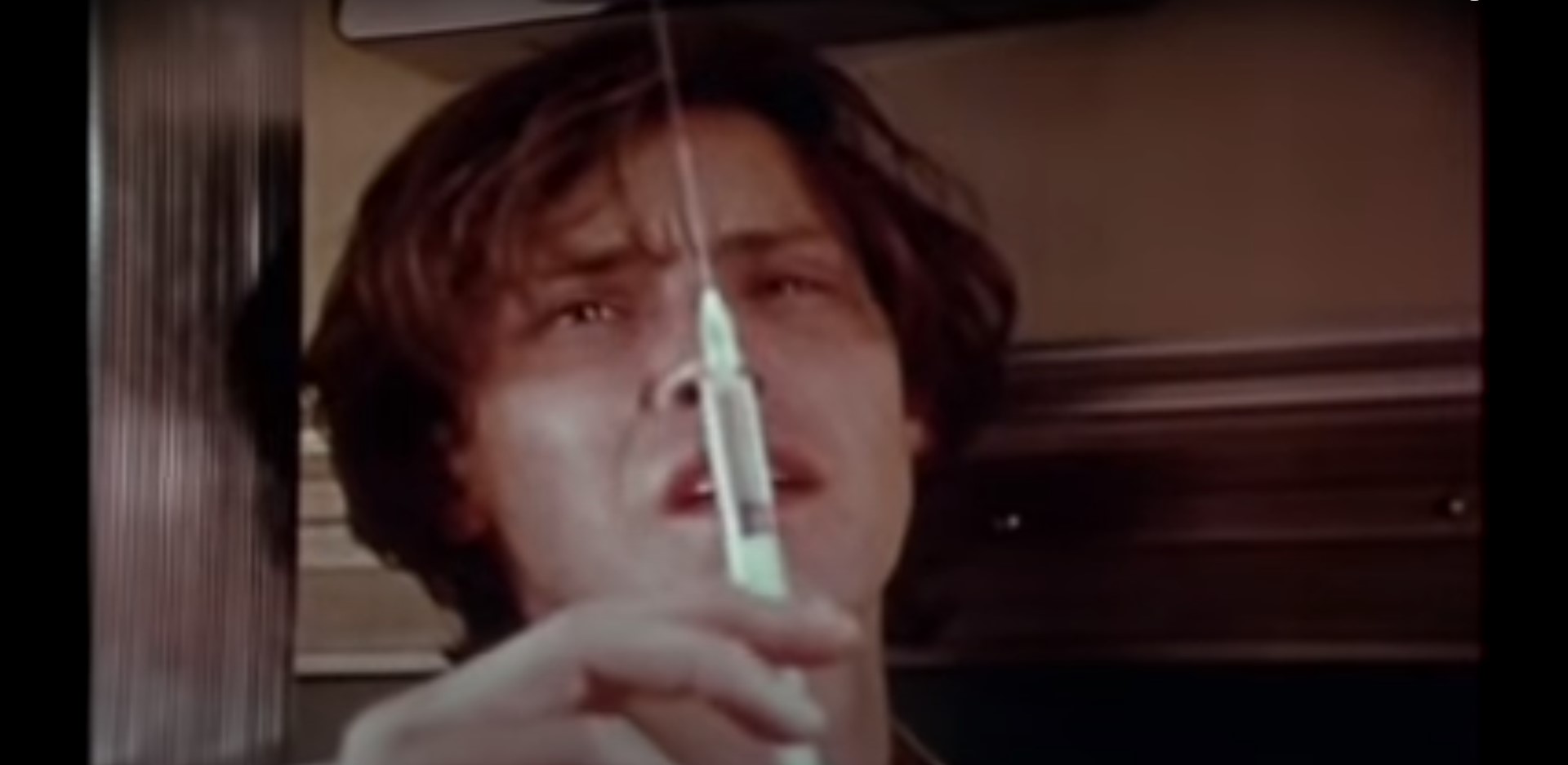
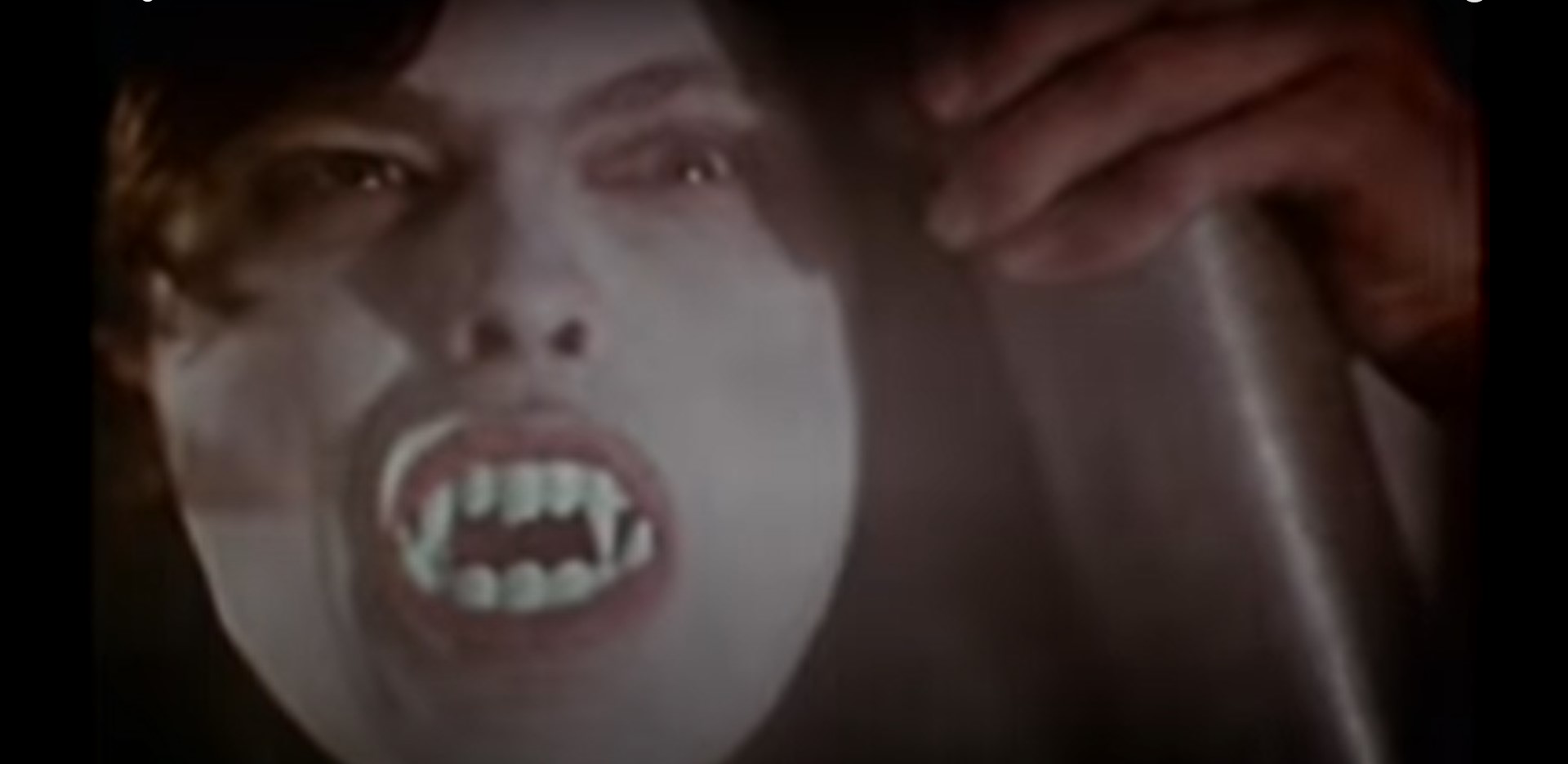
Martin, a young man from Indianapolis and upon recently lost his mother, travels by train to Braddock, Pennsylvania where he’s greeted by his elderly cousin Cuda, an old world believer that Martin has been selectively plagued by the family curse of vampirism and will take Martin in under his roof to cleanse his soul of evil, even if that means destroying him.  Though he doesn’t believe in the vampiric superstitions and the movie depictions, Martin truly believes he’s an 84-year-old vampire and does kill young, beautiful women to intimately drink their blood.  Being reserved and shy gives Martin an advantage to observe his potential victims from afar after gaining employment working as a delivery boy out of his cousin’s shop.  Cuda’s granddaughter, Christina, believes her lonely cousin’s mental illness is being exacerbated by grandfather’s archaic and draconian beliefs, fostered by a family history based off tradition rather than science.  When Martin meets an interested housewife on one of his delivery runs, the need to consume blood trickles when sex enters the picture, but also induces slipups in his well-oiled drug and drink operation whenever the need to feed becomes too much.

By now, “Martin” needs no introduction.  The father of the flesh-eating zombie, George Romero, delivered a neo-realism take on the vampiric mythology nearly 50 years ago in 1977.  “Martin” became the writer-director’s first all around filmic success after being royally screwed by the Walter Reade Organization for having failed to copyright the prints on the trailblazing and timeless classic “Night of the Living Dead,” the reason why you see so many Tom, Dick, and Harry remakes, revisions, sequels, and such of the 1968 black-and-white film that introduced zombies as flesh eaters, and a pair of box office failures that kept Romer in severe debt until slipping into business bed with producer Richard P. Rubinstein, the associate producer for Romero’s “The Amusement Park” and who would collaborate with Romero as a producer for the next subsequent decade years.  Filmed on location in the societal and industrial crumbling Western Pennsylvania town of Braddock, “Martin” remains one of George Romero’s quintessential and provocative pieces of work outside The Living Dead series under Rubinstein and Romero’s The Laurel Group production company.

In the titular role is the introduction of John Amplas who was discovered by Romero after watching Amplas in a play and the entire lead principal was reworked to accommodate Amplas boyish youth.  Amplas is instrumental to Martin’s success in a handful of ways:  the Pittsburgh native knew how to properly slink in an unsuspecting manner, he also didn’t overbear scenes and costars with a larger-than-life presence and could dip into this awkwardly retrieved guilt for the premediated murder to fulfill a need that either’s supernatural or unnaturally mental.  Amplas could walk that thin line that keeps the audience wondering how much Martin says and does is actually true or a misconception because of mental illness and this is coupled nicely with Romero’s direction, splicing in black-and-white scenes of gothic-laden, theater-esque vampire flashbacks that could either be a delusional reality or a very real backstory to Marin’s cursed heritage.  Polarizing external family forces in his elderly cousin Cuda (Lincoln Maazel, “The Amusement Park”) and age akin cousin Christina (Christine Forrest) combat on an emotionally taut and verbal levels between their corresponding character qualities of superstition and science that parallel Martin’s eventual damnation or salvation.  The principal trio are tightly compacted to strain the dynamic with a back-and-forth debate over which truth is behind Martin’s troubles.  Romero pens a good case for both by never fleshing out a legitimate truth all the way through to the end; instead, it’s a battle of save Martin from himself who understands the problem, wants to deal with it, but barely takes up arms to combat or even face his issues.  Special F/X legend Tom Savini, pre-trademark inky black mustache and goatee, makes his debut role as Christina’s boyfriend Arthur who serves only as a device to pull reason away from the table in a conflicted measure to pressurize Christina’s capacity beyond the limits of also caring for herself.  Eventually, Christina has to make a decision and, ultimately, choses herself to save, leaving Martin to fend against a sternly superstitious and old world Cuda.  Sara Venable, Roger Caine (“Dracula Exotica”), Donaldo Soviero, Francine Middleton (“The Love-Thrill Murders”), and Elyane Nadeau make up the supporting cast.

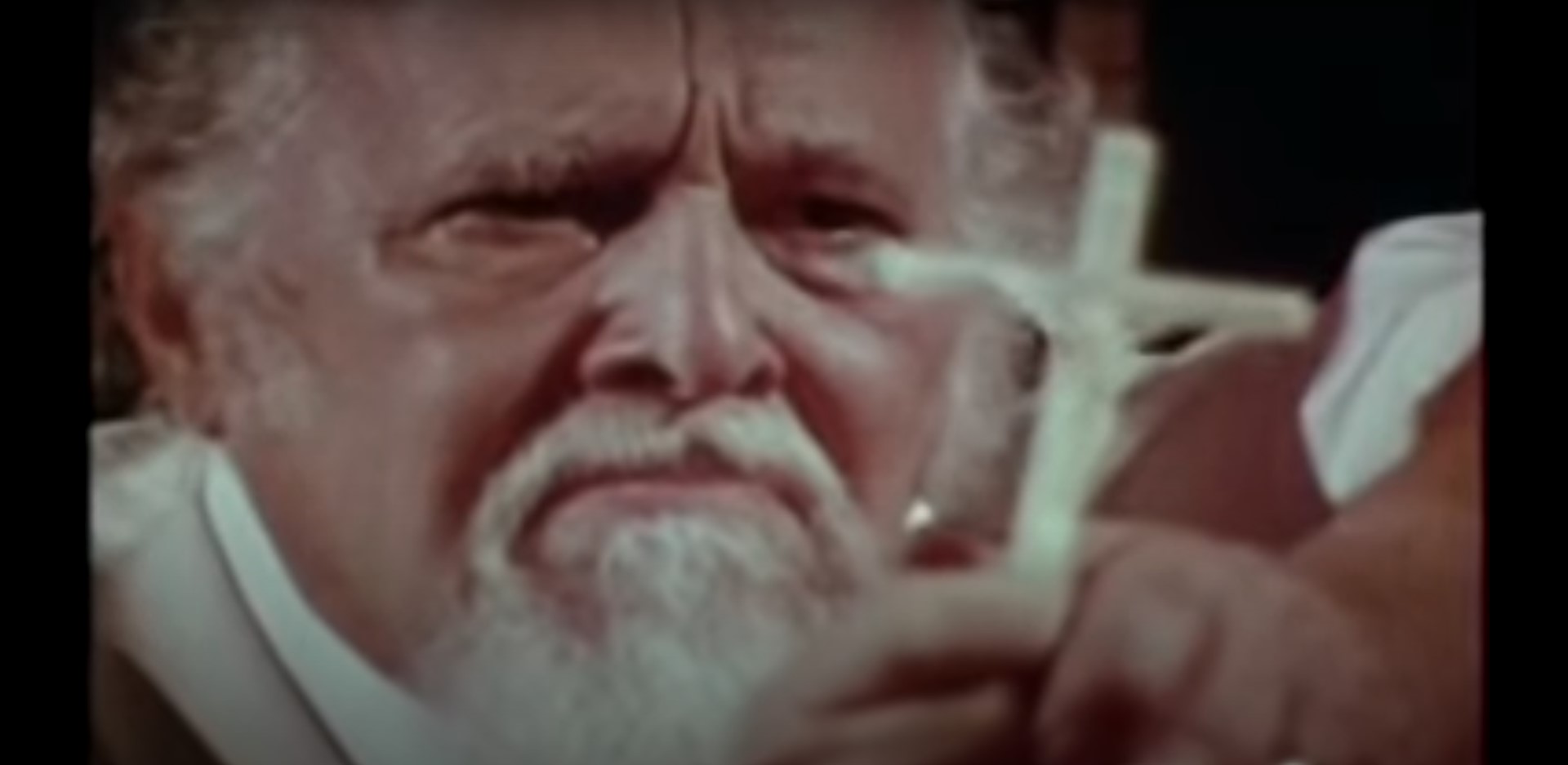
George Romero, again, redefines, or in a more fittingly descriptive – revamps, classic horror villainy that replaces the supernatural element with a realistic approach to weave the very fabric of horror into possibility while still hinting at something beyond the limits of reason.  “There is no real magic.  There’s no real magic, ever!” says Martin about the theatrical stereotypes used to display vampires in attempt by Romero to disenchant us from the ideologized mythos, the habitual characteristics, and the physiognomies of what we consider to be a night bloodsucker.  During that scene between him and Cuda, the words are potently effective in disapproving myths about vampires, but the words are supported with fact as Martin casually debunks garlic, crosses, and sunlight as vampiric weaponry at the expense of humiliating and entertaining Cuda.  “Martin” is at the forefront of being an allegory for loneliness and is a driving reason for presumably the real vampire’s gruesome habit to slice open wrists and drink blood.  Martin only targets young, beautiful women and becomes intimate with them while they are limp under sedation.  When he meets an equally lonely Mrs. Santini, a depressed housewife on the verge of an emotional collapse, and the two embrace each other with comfort against what dispirits them; disinterested in stalking her, Martin’s need to kill dampens and Mrs. Santini unhappy marriage in nullified by the young who listens more than speaks.  Maturity and youth meld together in a moment of peace between them but their bond still shows micro fissures of incompatibility that puts doubts into Martin’s 84-year, carefully planned practice and also doesn’t save Mrs. Santini completely from her too-little-too-late despair.  Braddock, Pennsylvania, a small town sinking into the slumps of becoming forgotten, is a once industrious backdrop integrated as a metaphor for being a forsaken place where things go to die.  Martin is sent to Braddock to paradoxically be cared for by a cousin determined to destroy him because of a family curse that afflicts select generations in what can be perceived as butting of heads between the defiance of angsty youth versus the traditions of an older individual set in the world with their linear ways of thinking.  

As aforementioned, “Martin” is a cult classic from one of the most notable masters of horror and as a film, “Martin” can stand on its own two feet on any format.  However, with that being said, UK home entertainment distributor, Second Sight, celebrates this early George Romero razor-edged thriller with a definitive 3-disc, 4K and Blu-ray release jammed back with software and firmware bonus content that fans can really sink their teeth into for a lifetime.  The limited edition UHD and Blu-ray O-slip box presents a 4K and 2K scan and restoration of a 35mm duplicate negative (note:  not from the original 16mm source) that has been supervised and approved by director of photography Michael Gornick and presented in the Academy aspect ratio of 1.37:1.  Considering the blown duplicated source of a 16mm grade, the 4K UHD scan on the BD66 won’t live up to 4K potential, as some may expect.  There’s quite a bit of varying levels detail discernibility, some shots look better than others, but the overall restoration renders a better than it’s ever looked product with natural grain and damaged reduced to some blue stock flaring around the side and edges, especially during night scenes.  Shadows looked deeper than previous versions, meaning that tenebrism isn’t lost amongst a softer image but rather creates depth with the additional of better sharpened edges to outline objects between the light source  Some speckle debris filters through at times but not enough to cause major concern with the overall experience watching and enjoying the restoration that has HD enhanced grading to make blood that richer technicolor coral color used in my subsequent Romero “Living Dead” films up to “Day of the Dead.”  The Blu-ray’s 2K works just as well due to the scrappy source equipment of what the budget allowed, delivering a fine product of the best transposed transfer known to fan kind and beating out the Lionsgate’s warming grading with a cooler, more hardline detail and delineation picture. The massive release comes with three audio options – an English DTS-HD 5.1 surround sound, an English DTS-HD 2.0 stereo, and an English DTS-HD 1.0. Though Martin audiophiles will likely gravitate toward a multiple channel output, “Martin” is one of those select features that does better in a less-is-more return by not forcing the limited and stronger signals, such as the dialogue and Donald Rubenstein’s experimentally spiritual score, to encoding competition with the milieu ambient and boom recorded sound effects, that for the most part, are background support for the bigger, better one-two punch of clean, clear, and presently full dialogue and a consciously curated soundtrack to walk with Martin every step of his journey. There’s a pinch of popping and a low-emanating droning that very discreet and negligible that won’t affect the experience on bite…I mean bit. English SDH are optional. Bonus materials are what shape the Second Sight releases to be greatly desirable amongst fans as the company continues to produce high-quality encoded bonus features as well as carefully and professionally organized tangible items inside the box. Both 4K UHD and Blu-ray have the same encoded bonus features that include four audio commentaries of old and new. The two archived commentaries include George Romero, John Amplas, and Tom Savini in one set and the other with Romero, Savini, Richard P. Rubenstein, and Michael Gorrick. The new commentaries are with Kat Ellinger, editor-in-chief of Diabolique Magazine, and the second with the recently deceased film curator, Travis Crawford. A vintage 2004 documentary from the Lionsgate release is included in the set with remarks from Romero, Savini, Gorrick, Donald Rubenstein, and Christine Forrest along with a new documentary echoing much of the 2004 doc, in collaboration with Severin Films, with John Amplas, Michel Gorrick, and Tom Dubensky strolling through Braddock, which hasn’t seemingly changed from the depths of poverty, on a raining day recalling nearly every moment of production during principal photography. The new doc includes other insights from Forrest, Savini, Tony Buba, and Sarah Venable in what feels like a complete celebration and overview of their entire journey through Romero’s personal favorite film. Donald Rubenstein also has a new interview discussing his score and meeting and working with Romero on a positive level. The disc features round out with one of Tony Buba’s short films “J. Roy – New and Used Furniture” revolving around the town of Braddock and the trailer, TV and radio spots. The third disc is the CD form of Donald Rubenstein’s soundtrack laid out in 22 distinct musical numbers. The limited-edition exclusive contents include a rigid O-slip case with a simple, yet effective sterile while and red font color contrast with MADE IN U.S.A. augmented razor blood with vampire teeth and blood dripping from the bottom right corner and a blood dripping cross squarely centered on the back. Inside the slipcase, a thick 104-paged color booklet with new in-depth essays and insights from Daniel Bird, Miranda Corcoran, Heather Drain, Kat Ellinger, Andrew Graves, Alexandra Heller-Nicholas, Elena Lazic, Stephen Thrower, Jon Towlson, Simon Ward, Tony Williams and an interview with Tony Buba by Travis Crawford. The booklet also contains colorized, behind-the-scenes photos of production and numerous one-sheets, promotion poster and ads, and a beautifully, expressionistic illustrated front and back cover. Adam Stothard illustrates 5 character lobby cards, including John Amplas’ Martin, Christine Forrest’s Christina, Tom Savini’s Arthur, Lincoln Maazel’s Cuda, and George Romero’s Father Howard. All 3 disc arts are the same as the front cover the release and contained a trifold, punch-lock case in reverse colors of the slipcase. The 4K UHD is region free but the Blu-ray is confirmed region locked B so you’ll need a region free or region B player. The runtime clocks in at 95 minutes and is certified 18 for sexualized violence and sexual threat. Second Sight must be a Disney fan with their monstrous beast of a limited edition that is also a thing of beauty; “Martin” deserves every square inch of this physical and digital display of expressionistic vampirism of underrated performances and from the mind’s eye of a dauntless George Romero, unafraid to take risks, show blood, and understand the human condition.

“Martin” Limited Edition Second Sight Release Available at Amazon.com! 

A Grand Tour of EVIL Only Costs Your Life. “The Curse of Dracula” reviewed! (MVDVisual / DVD)


Own the Curse….The Curse of Dracula on DVD at Amazon.com

Con-artist brothers Bojan and Marjan whip up a quick-cash scheme by price gouging tourists to roam the Slovenian grounds of the infamous Valburga castle, a restricted and vacant manor estate that was once owned by a ruthless inhabited, known by the people as the Baron of Blood, believed to be a cousin of the vampiric legend Count Dracula.  The lore itself would bring in lucrative customers and lucrative cash would be easily raked in or at least the brothers thought so until the types of tourists attracted to visiting Valburga castle are anything but easy targets with a pair of German alcoholic partiers looking for a good time, a sleazy Russian porn director scouting locations to shoot his two beautiful starlets, than demonists, goths in search to become vampires themselves, and Swedish demonists on the hunt for ultimate power.  Biting off more than they can chew with their new venture, Bojan and Marjan must also contend being trapped with an industrial-sized circular saw wielding maniac roaming the mazelike passageways of the castle. 

Let us preface this review with the “The Curse of Dracula” almost entirely has little to do with Count Dracula.  The original film title, “The Curse of Valburga” was altered to “The Curse of Dracula” in an appeal to a broader, Western audience who may not have a clue what or where Valburga is on a map and for those who do not know, Valburga is a quaint little settlement area in Slovenia, the birthplace of the 2019 film and the birth home of “Killbillies” writer-director Tomaz Gorkic.  Gorkic plays the Americanized game of Seven Degrees of Kevin Bacon with a story that links Count Dracula to a mysterious Baron of Blood who once resided and laid down massacring roots in Valburga, but instead of a grave tone surrounding one aristocrat’s austere penchant for sadism, “The Curse of Dracula” plays out a dark horror-comedy with a cynical sense of humor and a punk-attired killer.  Gorkic coproduces the film with fellow “Killbillies” producer Nejc Saje for 666 Productions in association with Strup Production, MB Grip, NuFrame, Supermarket Production, and Sonolab.

The opening driver of the story is setup like a buddy comedy revolving around two brothers Marjan and Brojan (Jurij Drevensek and Mark Mandic) joined by business associate Ferdo (Ziga Fodransperg) who has the keys to their castle con and when I say keys the toe castle, I mean it literally as the owner of the security company that services over the grounds.  Sifting through their snarky teasing, you get the senses the three are close despite their tough guy act and jabs at one another who leveling onto Marjan price gouging unrestricted tourism plan.  While Marjan and Brojan are seemingly being carved out as principal characters, that feeling quickly diminishes upon the arrival of the tourist group that includes Sven (Niklas Kvarforth), a Swedish neo-necromancer clandestinely on the scour for the eye of the baron – yet, we’re never told what the eye of the baron is or specifically why Sven is searching for it other than it can summon demons, connecting back to the prologue scenes of staticky, post-industrial score with him conducting satanic-like ritualistic hand movements and unheard chanting verbiage. Then, you have the Russian porn director Vasily (Luka Cimpric) with his two floozies, Dasha (Zala Djuric) and Anastasya (Sasa Pavlin Stosic) trying to make sexy-time promo happen on the Baron’s rundown manor. However, a favorite out of the bunch are the German man (Jonas Znidarsic) and wife (Tanja Ribic) who just keep pulling beer from the wife’s tiny purse – a good gag by the way – and treat the whole contention and violence as one big party. Despite all their idiosyncrasies and motives, not a single one of them are redeemable from out of their petty and conceited intentions. “The Curse of Dracula” rounds out with Katarina Stegnar, Gregor Skocir, Odina Kerec, Matevz Loboda, Neza Blazic, and Anton Antolek as a one-of-a-kind subjugator of souls with his wild circular saw blade slingshot and Nazi helmet.

Now, the title already irks me. Insinuating or, better yet, incepting an idea that hapless tourists will be become victims of Dracula’s curse was a terribly misleading campaign strategy to get the Dracula, or just simply the vampiric, fanbase to hop aboard a quick cash in on the Lord of Darkness. However, “The Curse of Valburga” is an apt title for a slasher-survival tale around the sawblade killer who hunts trespassers for his crypt-dwelling clan in the cellar. Gorkic never fleshes out the enjoyable turn of events with the mysterious group that causes all of the tourists’ troubles in full disquisition and tries to sneakily skimp by with just a rudimentary, flyby explanation that doesn’t clearly paint the picture or really denote a reason. One thing Gorkic didn’t convey confidently was the appearance of the chief who wore a MM35 or MM40 style German helmet on top of a metal and chainmail masked face and sported a cutoff sleeve shirt while flinging giant-saws from a handheld slingshot rifle. I wanted to know that guy’s backstory! Yet, each character is cut short and never massaged with arc to care about and, frankly, wanted them all to feel the serration of the saw from how terribly poor they’re written. It’s as if the characters were farmed to be massacred, having no sense of purpose to live or garner audience sympathy to overcome the struggle, and just like the characters, the story is also equally deprived of a proper concluding finale that leaves us hanging, waiting for that satisfying high-five. The script written by Gorkic might be poor in arc development, but I will say the Slovenian filmmaker does have a small taste for comedy as there are moments that will have you chuckling, especially the phone call between Sven and Gregor Skocir in what’s llike a classic Abbott and Costello dialogue gag.

If you’ve never seen Slovenian horror, then I suggest checking out the bloody chuckles of Tomas Gorkic’s “The Curse of Dracula” now available on DVD distributed by MVDVisaul in collaboration with Jinga and Danse Macabre. The poorly designed DVD cover of a wide-eyed, gaping mouth vampire with fangs drawn superimposed behind a cracked open upright coffin with dirty/bloody hands stretched straight out overtop and bats positioned adjacent to the coffin on both sides doesn’t do this story an ounce of actual justice, but the DVD is presented in a widescreen 16X9 aspect ratio with a solid 5 to 6 Mbps of data transmission, rendering the picture fair for DVD image quality. Some of the details in the background and even on the characters are not as finely crisp but the picture maintains an above adequate quality. The English, Slovenian, Swedish, Russian, and German Dolby Digital 5.1 surround sound is nicely robust but offers the same quality as there Stereo 2.0 when toggling back and forth between the two audio options and never distinguishing the difference between the two. Dialogue is clear albeit the broken English and thick accents when characters are speaking English. There are option English subtitles; however, they do contain a handful of errors and are text size is a bit small so if you have a 42″ or smaller TV, you may need to squint. The release is region free, has a runtime of 82 minutes, is unrated, and does not contain any special features or bonus scenes during or after credits. “The Curse of Dracula” is a slaughter-horse of a different color with a fascinating villain and a blindsiding coven of flesh-craving basement dwellers that pivot the narrative in a wild direction but the story lacks comprehension that results dissatisfaction.

Own the Curse….The Curse of Dracula on DVD at Amazon.com

EVIL Infiltrates to Seduce All Your Women! “The Vampire Lovers” reviewed! (Scream Factory / Blu-ray)

“The Vampire Lovers” Now Available at Amazon.com!

The Karnstein family’s notorious legends of evil spread vast throughout 18th century Germany. Once thought their wicked leeching of nearby villages exterminated after the Baron Joachim von Hartog dispatched all the villainous vampires after his sister fell victim to their seductive fangs. However, years later, the aristocratical General von Spielsdorf and his niece Laura find themselves in the unexpected company of a houseguest with Marcilla, the beautiful daughter of a new neighboring countess. Days later, Laura unexplainably dies from continuous nights that drain her of energy and flourish her mind full of nightmares of being strangled by a large wild animal. In the wake of her death, Marcilla also disappears. Sadden by the news of her friend’s death, Emma and her father take in the daughter of a travelling countess named Carmilla to provide Emma with cheery, distracting company in a time of distress, but the mysterious cycle of enervation and nightmares start back up all over again and it’s up to the survivals of Laura’s death to stop death before it’s too late.

Unlike any other Hammer horror film you’ve ever seen before prior to 1970, “The Vampire Lovers” blazed the trail for permissiveness of the era’s newly reformed certification system that moved the bar from 16 years order to 18 and kept in line with society’s leniencies toward the favoring sex and free love.  “The Vampire Lovers” opened up to not only a new line of exploitation and violence at the turn of the decade but also introduced the longtime fans to new faces, especially actresses, who would accumulate labels and prominence inside the genre that last until this day.  Based from the story of “Carmilla” from Irish writer Sheridan Le Fanu, relatively new at the time Hammer director Roy Ward Baker (“Scars of Dracula,” “Dr. Jekyll & Sister Hyde”) took the Harry fine and Michael Style adapted original story and ran the distance with the screenplay from Tudor Gates whose writing forte was not specifically well-known within horror genre nor was horror Gates’ personal interest, yet Gates tweaked the Le Fanu female vampire tale to accentuate more of lesbian themes in a very turmoiled time when lesbianism, or just being gay, was seen as a disease or an unstoppable influencing evil force amongst the young people.  Fine and Style serve as producers in this co-production between Hammer Films and American International Pictures.

“The Vampire Lovers” comes under an atypical rule of the protagonist role or roles.  Previous Hammer films oriented themselves with a male lead from Christopher Lee’s domineering monster Dracula to the fearlessly courageous vampire hunter played by Peter Cushing, but “The Vampire Lovers” has Hammer trade in the masculinity presence for femme fatale with the introduction of Ingrid Pitt (“Wicker Man”) in the role of the hungry Karnstein vampire, Carmilla as well as Marcilla and Mircalla as the sneaky creature of the night infiltrates estates. Pitt’s exotic look and uninhibited attitude discerns obvious sex appeal for the Polish actress who can also act with gripping emotion that develops compassion for her malevolent facade. Add another pretty face and innocently sensuous woman arm-to-arm to Pitt with then 20-year-old Madeline Smith (“Frankenstein and the Monster from Hell”) and you have a two-front protagonist made up of women. Tack on the dark features and piercing blue eyes of Kate O’Mara (“The Horror of Frankenstein”) and “The Vampire Lovers” evolves into the something unlike anything we’ve ever seen from Hammer horror trifecta as once the scene settles into the narrative’s girth, the dynamic turns into a love triangle of unspoken women intimacies and jealousy, under the guise of supernatural persuasion, rears its ugly head. The menfolk really do feel absent from the excitement despite being pivotal pieces to the story and despite being the iconic representation in face and name of Hammer films. Peter Cushing’s longstanding work with the company has branded him forever legendary in the eyes of horror fans young and new. As the benevolent General von Spielsdorf, “The Horror of Dracula” Cushing looks wonderfully regal, gentlemanly dashing, and epitomizes the very essence of a strong male figure who also takes a very noticeable backseat for much of the second and into the third act. Same can be said for that other vampire portrayer who’s not Christopher Lee, Ferdy Mayne (“The Fearless Vampire Killers”) as the village doctor with a scene plopped here and there to inch the story along as a motivational vessel and another player caught in the Karnstein fang-game. “The Vampire Lovers” sees through to move plot significant characters, played by notable actors, to and from the storyline with performances from George Cole (“Fright”), Jon Finch (“Frenzy”), Dawn Addams (“The Two Faces of Dr. Jekyll”), Pippa Steel (“Lust for a Vampire”), Harvey Hall (“Twins of Evil”), and Douglas Wilmer as the Baron Joachim von Hartog who give a great opening expositional prologue that sets the background and tone of the film.

Laced in the traditional gothic style we all know and love from Hammer Films, “The Vampire Lovers” has grandiose late 19th century interiors and costumes with the latter gracing the starlets with strikingly bright tropical colored dresses that are elegant beyond the more stiff, and sometimes more imperialistic, outfits representing the period.  In a way, the outfits contrast against the brooding gothic prominence that speak of subversive liberation much paralleling the very thematic elements of lesbianism, sexual motifs, and a nearly an all-encompassing female lead.  If sex was ever a subtle insinuation in previous Hammer film it was not so subtle in “The Vampire Lovers” that consistently and constantly thickened the sexual tension and produced blunt scenes of eroticism between two or more women.  Even with the powerful commingle of womanhood desires, as much as it was depicted to be devasting to their lifeblood, Tudor Gates’ narrative still pit them up against nearly impossible odds when the male characters, no longer duped by the formalities of chivalrous intentions, figure out what’s really happening under their noses, in their households none the less, and band together to put a to a heart-staking stop to the macabre madness aka metaphorical lesbian evil.  The story has the women’s lusts and desires, whether their choosing or not, be an outlier from normalcy, yet on the other hand, nudity flourishes within the new laxed certification guidelines that see in some way, shape, and form four actresses baring skin in what what would have been considered risqué X-certificated scenes prior to 1970.  “The Vampire Lovers” is by far a perfect film with a lack of character context, such as with the male vampire on horseback indulging his penchant for observing Camilla’s attacks from afar and doesn’t proceed to explain further or with more insight to who he is and what his position may be within the Karnstein family ranks, as well as the narrative format with early on into the story being bit choppy and disorienting when Carmilla assaults nightly the General’s fair niece as a furry beast in the confines of a lurid nightmare.

Deserving of a collector’s edition, Shout Factory subsidiary horror label, Scream Factory, presents a new Blu-ray release of “The Vampire Lovers” scanned in 4K of the original camera negative.  Scream Factory should be extolled for their color grading toward Hammer transfers as the release looks stunning with quality stability and richness that brings the era alive.  Transfer also appears free from any kind of major blemishes and barely of any smaller ones. The English language DTS-HD Master Audio mono has resolute fidelity in the best possible audio offering “The Vampire Lovers” will likely see now and in future releases with a clear dialogue track and a Harry Robertson score that relives the classic studio orchestra in compelling fashion. The release comes with a slew of special features including an exclusive new interview with film historian Kim Newman, who also shows up again in archived interviews in the “Feminine Fantastique: Resurrecting ‘The Vampire Lovers'” (Scream Factory lists it as Femme Fantastique on the back cover) featurette commentary snippets from John-Paul Checkett and David Skal and other historians and collectors of Hammer Films. Audio commentaries with director Roy Ward Baker, star Ingrid Pitt, and Screenwriter Tudor Gates, audio commentary with film historians Marcus Hearn and Jonathan Rigby, two interviews, one of them new, with co-star Madeline Smith that span about 10-15 years apart, Trailers from Hell: Mick Garris on “The Vampire Lovers,” a reading of Carmilla by Ingrid Pitt, a single deleted scene of Baron von Hartog radio spot, still gallery, and the theatrical trailer round out the bonus material. The 89-minute, Region A encoded, R-rated version runs solo as the only main feature and the transfer Scream Factory uses, or licenses, is the edited version of Ingrid Pitt’s bath scene that cuts away to a medium closeup of Madeline Smith holding a towel for Pitt who’s standing up in the tub and then cuts back to Pitt’s bare backside. However, in the “Feminine Fantastique” featurette, you can experience the unedited brief full-frontal of Ingrid Pitt standing up in the tub if that tickles your fancy. The collector’s edition sports reversible cover art with original poster art on the inside and a newly illustrated, and superbly beautiful in its simplicity, front art by Mart Maddox sheathed inside a cardboard slipcover of the same Maddox art. Turning a corner into vast opportunities for more violence, explicit nudity, and unrestrained vampire gore became a new dawn for Hammer Films without entirely prostituting themselves with wayward tactics to the point of unrecognition as “The Vampire Lovers” still emitted gothic characteristics and a partial token cast and now made even more alluring with a feature packed collector’s edition from Scream Factory!

“The Vampire Lovers” Now Available at Amazon.com!