It’s Not Freddy. This is a Different Kind of EVIL in Your Nightmares! “Dream Eater” reviewed! (The Horror Section / DVD-Bluray Combo)

“Dream Eater” Will Watch You In Your Sleep! Check It Out Here on Blu-ray!

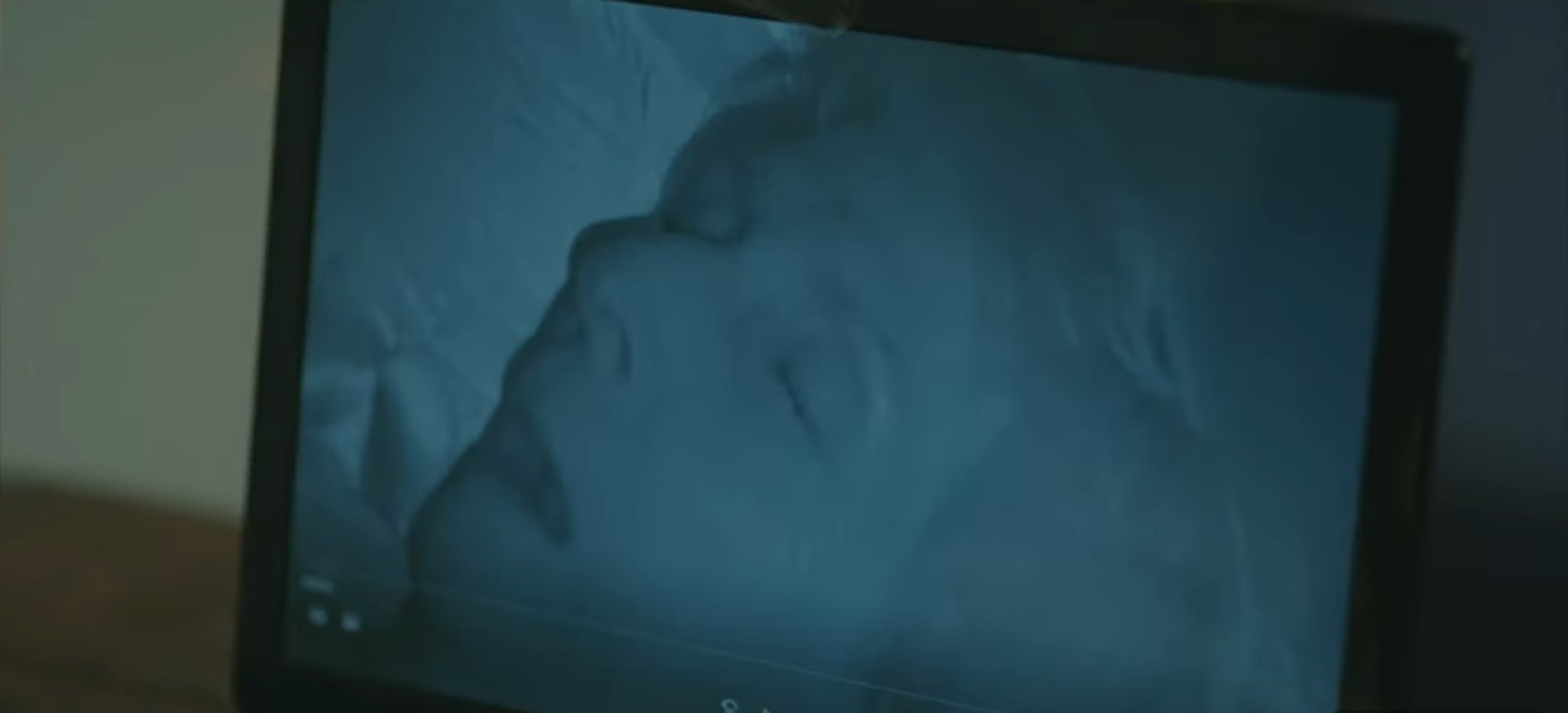
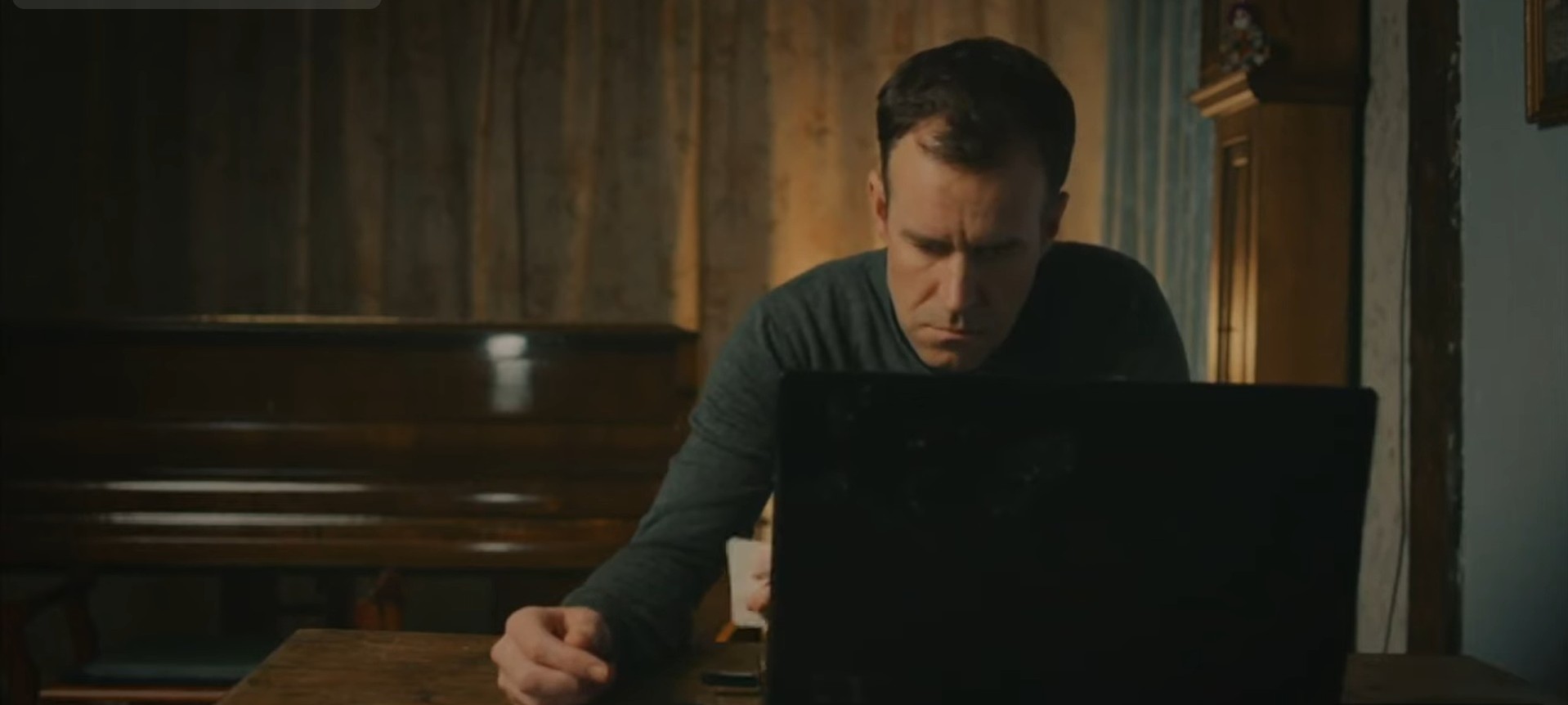
Alex suffers from parasomnia, a sleep disorder condition that causes him to sleepwalk, talk and act erratically, and even produces violent behavior while seemingly conscious during his sleep cycle.  When one particularly violent bad episode nearly kills him, his girlfriend Mallory, a documentarian, rents a snowy, isolated cabin for a little rest and relaxation while also video documenting Alex awake and asleep per medical request from his doctors.  Over the course of a week, Alex parasomnia events become more frequent and even more strange when Alex refers to a man trying to get into the house but has no recollection of events when awake next morning.  As Mallory digs deeper into the conversations of his dreams, her investigation leads her beyond scientific explanation as there lies an evil influence possessing Alex family line, one where Alex was left orphaned and adopted as a child.  Alex’s uncovered past is key to his sleepwalking terrors that are insidiously taking him over. 

Trio collaborating filmmakers Jay Drakulic, Alex Lee Williams, and Mallory Drumm independently controls the market when it came to their script for “Dream Eater,” a modest cosmic horror that took the elements of the unknown and other terrifying Lovecraftian lore and put them into a found footage terrifier themed surrounding sleep disorders and how the science is not exact nor is it taken seriously to a fault within its frighteningly fantastical context.  The trio not only wrote-and-directed the 2025 released film but they also played key roles because of the real physical scenes involving snow and ice enveloping the isolated cabin.  The Canadian production was filmed in late winter of the Laurentian Mountains of Quebec to achieve the helpless sensation of being trapped with no signs of civilization to help.  Blind Luck Picture serves as the production studio with Drakulic, Williams, and Drumm in the executive producer roles under the company alongside “Godsend” actor Thomas Chambers as co-producer. 

Alex Lee Williams and Mallory Drumm spreadhead all the major areas of production, including acting as the parasomnia inflicted Alex and his worried documentarian girlfriend Mallory.  Yes, their character names didn’t stray at all away from their actual names, likely to be as natural as possible while character conversing, and because they’re already familiar with each other, the on-screen relationship doesn’t stick out and into the sides of our viewing pleasure as an odd couple; instead, Alex and Mallory, the characters, project examples of engrained compassion, fear, and loyalty.  However, I do feel Alex and Mallory, as a couple, also has an artificial aspect as they’re only boyfriend and girlfriend when they’re interplay more plays to the tune of a married couple that, in a way, feels like a one-sided relationship with little-to-no intimacy between them other than a couple of pecking kisses.  Mallory has the patience of a saint and it’s not because of Alex’s continual night walks and terrors that are getting more and more erratic each day, it’s more of Alex during the day that doesn’t express much love and care for Mallory’s endurance during this tough time.  Alex is quite endurable, insufferable, and aimless as a person with no ambition, job, or adoration for much of anything.  So, instead of an easiness of the presence that beleaguers them, much of the anxiety is created interpersonally that’s perhaps an intentional play by the filmmakers to metaphorically materialize troubling inner demons into an actual demon-like creature.  Brief supporting roles from Kelly Williams, Dainty Smith, David Richard, and Robin Akimbo fill in the gaps with video calls and photographical sequences while the third director Jay Drakulic implements his voice talents as a 911 operator in the prologued turmoil of Alex’s frantic self-harm during one of parasomnia episodes.

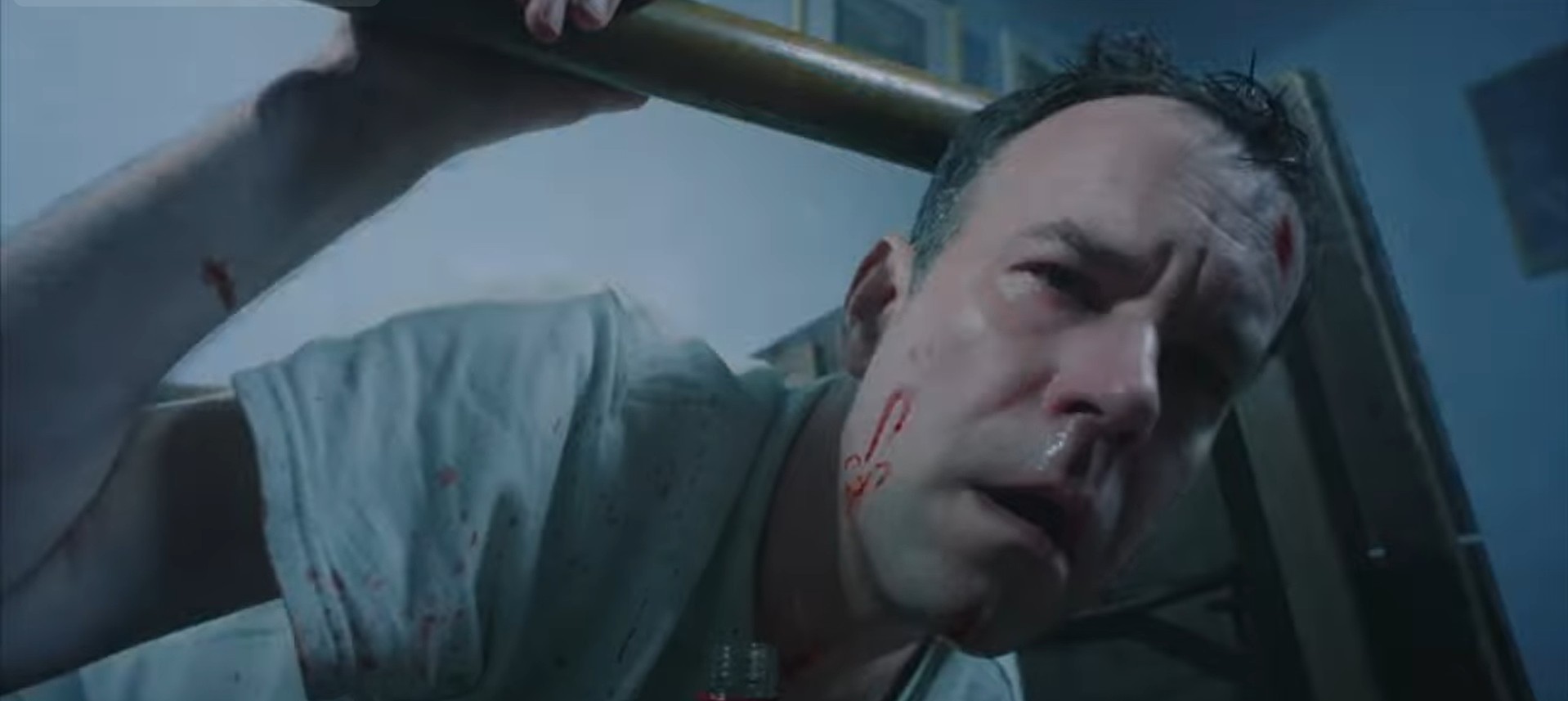
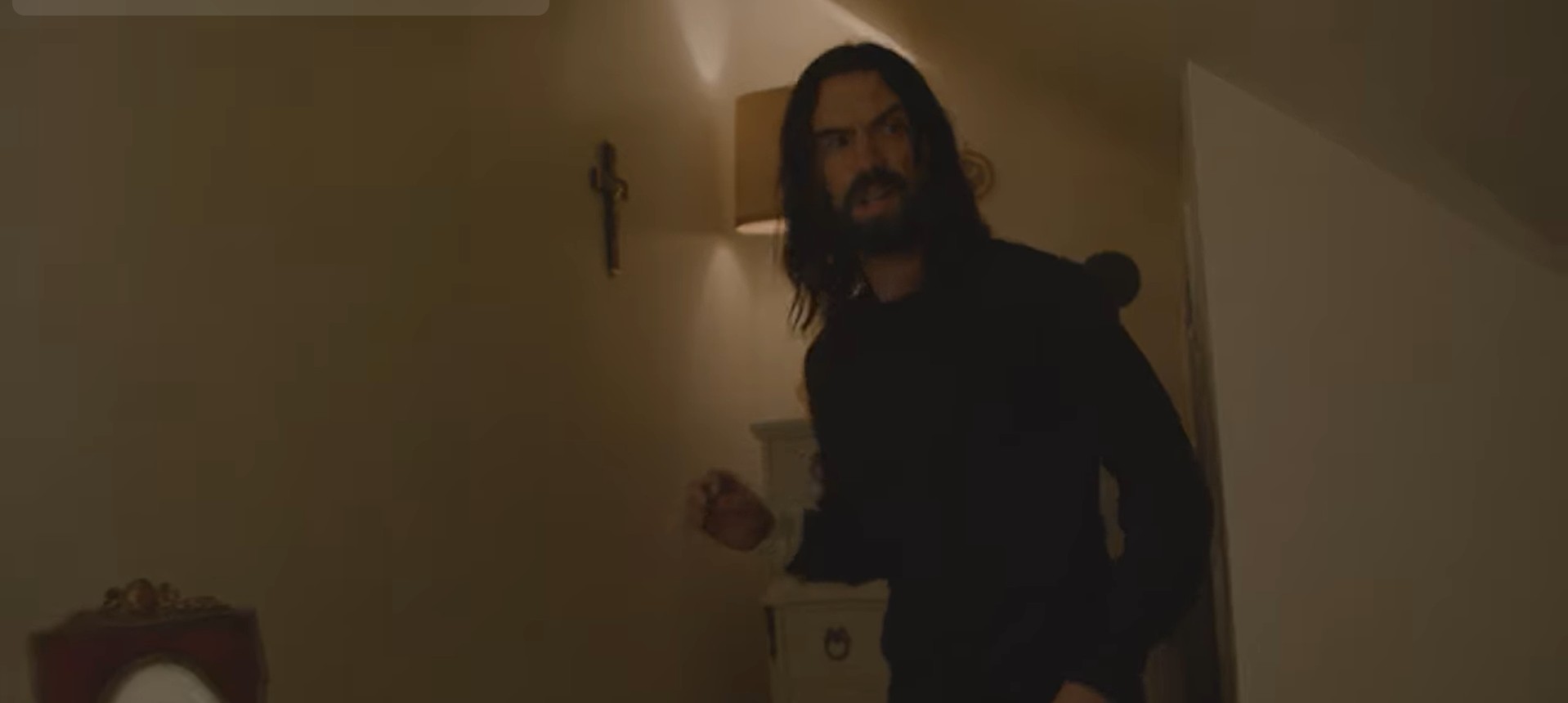
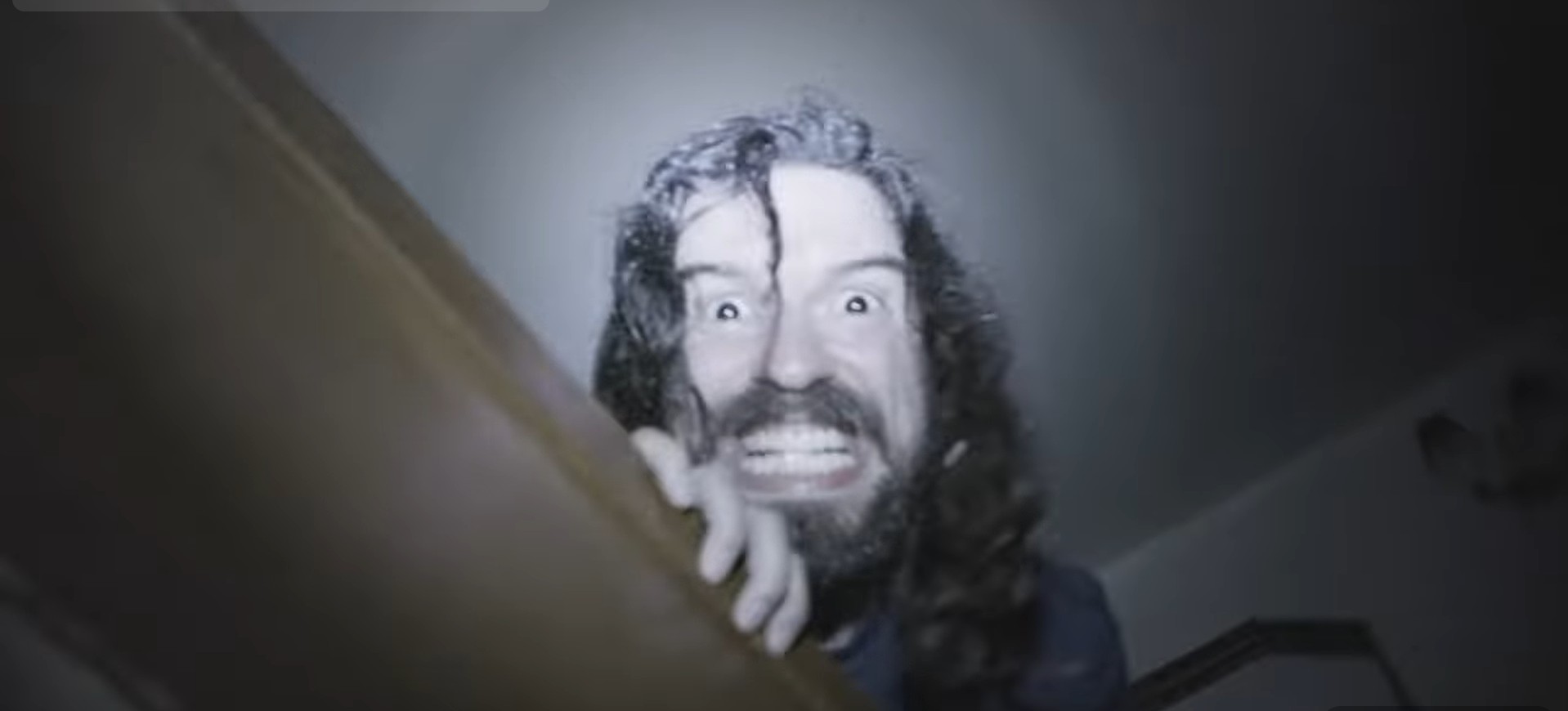
“Dream Eater” is one of those small but might films that has a larger-than-life concept beyond our realm and existence but contained to only a handful few.  Yet, the impacting result, by not only the story but also the Michael Caterina cinematography, has extensive reach to be massive and full of impending doom.  It’s “Dream Eater’s” cosmic horror that draws and builds as the reality hasn’t set in on the exact root cause for Alex’s increasing nightly episodes.  Once that corner has turned and there’s something more sinister, unnatural, at play, “Dream Eater” hooks securely with the enticing bait that reels in a timeless malevolent being on the precipice of all hell breaking loose as it slips into reality using susceptible Alex as the meaty vessel.  Viewers will know it’s coming but they won’t be prepared for it and that’s a welcome kink to work and chew on as Alex slowly becomes inhabited, or possessed, or manipulated by some thing. The found footage format doesn’t waste digital reel seizes the jump scare moments with max force, especially when Williams’s is grinning ear-to-ear and wildly abrupt in chase lurking just off frame to suddenly pop into view on cue.  The aesthetic of a snowy bleak setting adds to rise of calamity and ominous come forth and even the cabin as an austere interior without the comforts of modern security and technology in its mostly wooden veneered structure, rustic shed, and industrial-metal play equipment outside.  Where “Dream Eater” cheapens out is the finale scene that has a forced feel about it as if the Williams, Drumm, and Drakulic didn’t quite no how to end the story on any type of note and rushed a crude fate separated from the trunk of snow, cabin, and isolation.   

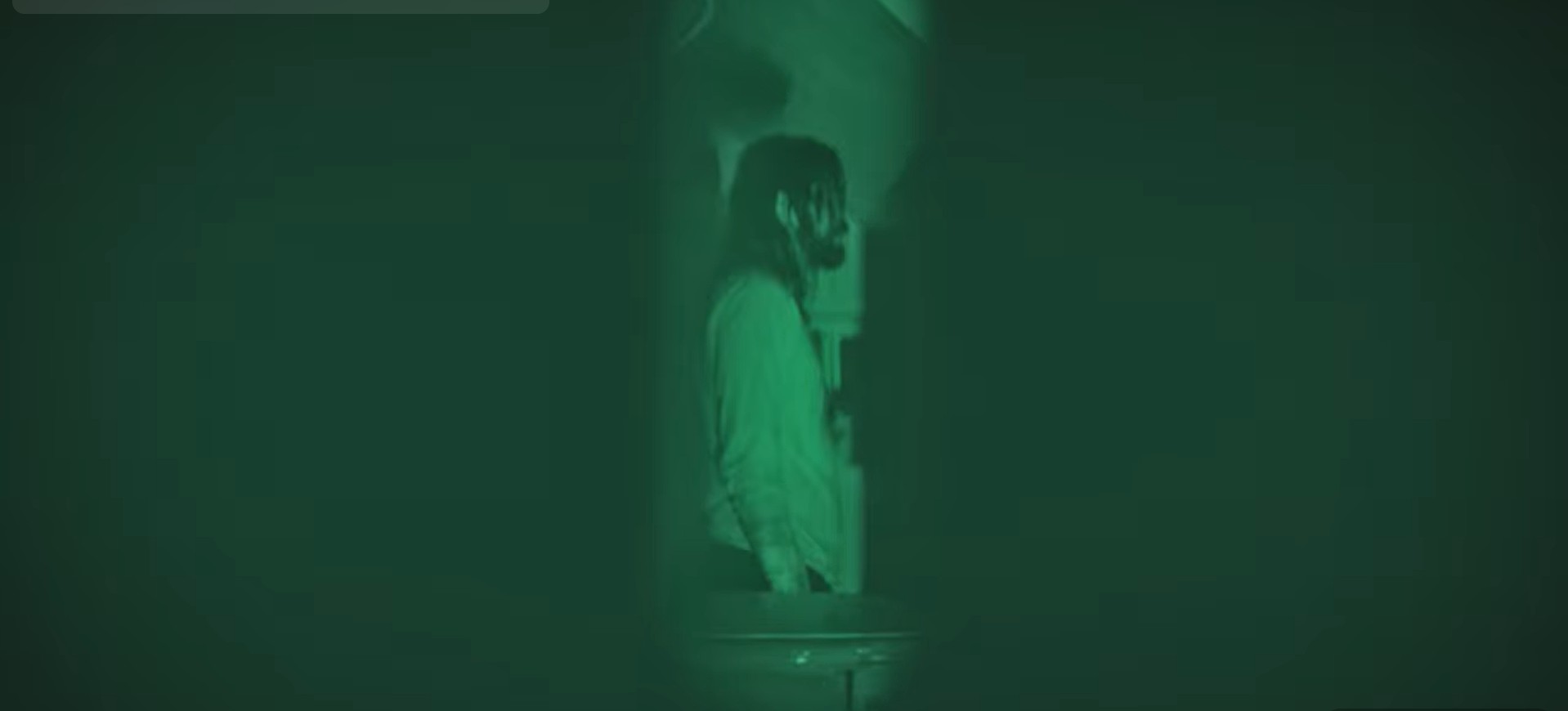
The self-funded film catches the eye of Eli Roth (“Cabin Fever,” “The Green Inferno”) and his media outlet The Horror Section as the one of three films produced by Roth’s company, sandwiched between “Bliss” director Joe Begos’” body horror “Jimmy and Stiggs” and the upcoming remake of the Clint Howard cult film, “Ice Cream Man,” helmed by Roth.  In association with Alliance Entertainment, the company releases a 2-disc, dual format set with DVD and Blu-ray.  The Blu-ray is AVC encoded BD50 with 1080p resolution and the DVD is MPEG2 encoded DVD9 with 720p resolution to upscaled resolution on the right system.  Both films are presented in a widescreen 1.85:1 aspect ratio.  The found footage image is what it is, or rather what its supposed to be, a hectic and erratic camera shuffle of ungraded film produced in lowlight and not a lot of contrast and that in itself can be a character of the story within the found footage trappings.  There’s no feigned rupture or distortion of the image because it’s set in more modern times with recent video capture tech.  The same descriptive qualities can be said about the audio where there’s no crackling, popping, or cuts in the formatted English language DTS-HD 5.1 Master Audio that produces a clean sound with measured depth and a diffusion of atmospheric directionals from around the surround sound.  Dialogue has clarity under less than a full-bodied of potential with uncured found footage and some of the nondiegetic dialogue can sound more omnipresent and asynchronously afloat from any point of origin but does hit the side and back channels nicely for directional awareness. The environment sound has a delicate but effective touch with the swirling wind and snow and the motif sound cues that provide direction and rising tension, such as the door open announcement.  The DVD comes with a lossy Dolby 5.1 Sound Sound mix not reviewed in this coverage.  English subtitles are available.  Special features include director’s commentary, a behind-the-scenes featurette with Eli Roth presenting as more of sales pitcher of the project, a behind-the-scenes still gallery, and the trailer.  Underneath the video screen blue and white designed cardboard O-ring slipcover of William’s maniacally crazed screaming face is a traditional Blu-ray Amaray housing the DVD and Blu-ray on each of the case’s interior sides.  The one-sided sleeve art is exactly what I’ve described above about smallness felt amongst a larger impending setting with a near stark white cover and Alex’s silhouette standing small bottom-center.  There is a mini folded poster inside between the slipcover and the case that fits nice enough between the discs when you need to store it more securely.  The 89-minute film comes unrated and though unlisted, both Blu-ray and DVD are region locked in A and 1. 

Last Rites: As a micro cosmic horror with its Lovecraftian influence and fear of the unknown, “Dream Eater” is the perfect nightmare, a found footage of atmosphere fear and sanity dysphoria with an impending doom kicker.

“Dream Eater” Will Watch You In Your Sleep! Check It Out Here on Blu-ray!

When EVIL Messes with a Family of Blue, There’s No Other Choice Than Street Justice. “She Shoots Straight” reviewed! (88 Films / Blu-ray)

“She Shoots Straights” and She Never Misses! On Blu-ray Today!

A widowed mother has four daughters and one son whom all work for the Honk Kong national police, more specifically called the CID, Criminal Investigation Division.  Her only son, Huang Tsung-pao, marries another cop, a promising officer named Mina Kao who is quickly rising up the ranks between her supervisor husband and the superintendent.  One could say the Huang family bleeds a brotherhood and sisterhood of blue, but none of Tsung Pao’s sisters approve of Mina despite her being a colleague in arms with the belief she’s stealing their brother away from them and receiving special treatment and recognition from a flirting superintendent who has eyes for her.  When the investigation team tracks down a dangerous, transgressing gang of Vietnamese refugees planning on robbing a night club at gunpoint, Tsung Pao is tragically killed in the one of the tussles, leaving Tsung-pao’s sisters, wife, and mother to seek revenge-seeking justice before the killers flee the country.

If you thought female-driven action films weren’t prevalent enough in the 1990s, 皇家女将,aka “She Shoots Straight,” aimed to prove that theory incorrect.  The Hong Kong production by “Yes, Madam!”) director Corey Yuen is nothing but women-in-action in this gun-fu actioner penned by Yuen, Kai-Chi Yuen (“Once Upon a Time in China”) and Barry Wong (“Mr. Vampire,” “Hard Boiled”).  The action dares with high wire acts that are kept grounded in reality but there’s plenty of intense hand-to-hand skirmishes made to be not only appear feasible on screen but awesomely cool while doing it.  Sunt coordinator and filmmaker Sammo Kam-Bo Hung, who we just covered as the stunt coordinator and second unit director in our review of Jean-Claude Van Damme’s “Knock Off,” produces the 1990 released venture to ensure palpable contact fighting with Pui-Wah Chan serving as co-producer and Leonard Ho serving as executive producer under the Sammo Kam-Bo Hung and Leonard Ho studio, Bo Ho Film Company.

Men certainly take a backseat to “She Shoot Straight’s” policewomen with a vendetta, removing all the substantial and good out of the few male roles assigned, and spearheading the task to Joyce Godenzi.  “The Ghost Snatchers” actress finds herself lead aggrieved party, the widow Mina, in grief and out for revenge her way.  She’s joined by her late husband’s closest sister Huang Chia-Ling whose character arc began loathing Mina’s acute entry into their large law enforcement family.  Played by “2046’s” Carina Lau, the two women compliment their initial oppositions while solidifying their bond over a tragic commonality that shows being an officer is more than just a pageantry rise to the top, it’s, as Dominic Terretto would say in “Fast and the Furious,” family.  Even the on the villain side of characters, the main Vietnamese agitator and all-around bad guy Nguyan Hwa (Wah Yuen, “Kungfu Hustle”) is overshadowed by his sister Nguyen Ying, a peak physical specimen of physical strength, courage, and loyalty to her brothers.  Agnes Aurelio is a pure picture of strength as Ying who is not only a presence on screen with her muscular look and large curly hair, she also takes the final one-versus-one showdown with Mina in a dusty exhibition of martial arts skill but it’s Hwa’s sister who also breaks him out of refugee camp, sets up his escape plan, and gives more a fight with physicality than her gun-reliant brother.  The other male parts are equally as overshadowed with the superintendent (Chi-Wing Lau, “Police Story”) a horndog for the married Mina, Sammo Kam-Bo Hung in perhaps the least as the dismissed Huang relative on the force who’s continued to be mocked for his in-law status, and even Mina’s husband (Tony Ka Fai Leung, “Flying Dagger”) is killed in the most transfixing way right in front of Mina and Chia-Ling to harden their character story’s broken relationship.  Pik-Wan Tang rounds out the chief cast as the respected matriarch Mother Huang honors her late husband with five children who follow his footsteps and as a mother hyper aware of her family dynamic-suspended micro drama between the women.  Anglie Leung (“Vampire Buster”), Lai-Yui Lee (“School on Fire”) and Sandra Ng (“Ghostly Vixen”) found out the sister siblings. 

This Yuen entry of heroic bloodshed has deeper shades of comedy that wade around the waters of slapstick rather than be an abyss of tenebrous noir.  While the comedy is apparent and can be considered outrageous in the action-comedy framework, there’s an underlining serious tone with the demonstration of violence with blood squibs and even a body being impaled multiple times.  There’s no skirting around the violence that shows little result from the martial arts portion of the action, leaving flying projectiles to be the ill-fitting, carnage-laden lifetaker.  Yet, the sibling squabbling, the flirtatious foreplay, and the snarky remarks tone down the severity, cleaving the intensity in two for the film’s bifold persona that makes “She Shoots Straight” an interesting little film aside from the strong heroine aspect in a male dominated era of martial art films that began to incline with the likes of Michelle Yeoh, Cynthia Rothrock, and Cynthia Khan to name a few.  Joyce Godenzi’s name is definitely on that list with her performance in “She Shoot Straights” that deliveries a diversity of fast and hard moves with a beauty and grace in tandem.  The story’s lose approach with the unlawful Vietnamese refugees keeps plot pliable to change on a moment’s notice, such as an undercover operation turning into a deadly consequence that pivots from the lighthearted antics with slivers of action to a grittier payback overreaching the law with vigilantism, that results and retains a positive and fresh narrative progression.

“She Shoots Straight” has a brand new 2K restoration Blu-ray from UK label 88 Films for the North America market.  The AVC encoded, 1080p high definition transfer is scanned from the original 35mm negative and stored on a BD50.  In a nutshell, 88 Film’s transfer is impeccable and flawless to present the naturally graded cinematography.  Colors are balanced in a diffused saturation, details are highly visible and charted with precision for the best-looking image, and the print restoration is one of the better products I’ve seen lately from a pristine original print from the Fortune Star Asian film archive.  The freshened image could even rival most shot-on-film movies of today, if not exceed it. The film is presented in the original aspect ratio of 1.85:1 widescreen.  The language ADR track is the original Cantonese mono with English subtitles.  The post-production audio hits all the necessary markers between action, environment, and dialogue, capturing with balance a crisp and clean dialogue that syncs very well with the subtitle pacing and is error free in t’s King’s English.  The fight hits have palpable impact with low muffled effects rather than the traditional chop-socky slappy whacks that all sounds alike in kicks and punches.  There’s never a time the action doesn’t synch with the audio and this create an authentic product rather than an evident post-production track that can be off-putting and feel disingenuous for viewers.  If subtitles are not your thing, there is an English dub available in 5.1 DTS-HD Master Audio and a LPCM 2.0 mono.  Special features include an in tandem commentary by Asian film expert Frank Djeng, an interview with scriptwriter Yuen Kai-Chi, alternate English credits, an image gallery, and the original Hong Kong trailer.  An impressive characteristic of the 88 Films’ Blu-ray is their ever color, ever stylized, and ever showcasing slipcover with a rigid O-ring that has some great artwork by graphic artist Sean Langmore that is also as the primary art on the reversible inner sleeve of the Amaray case.  The reverse side has the original Hong Kong compositional design that shows off more of Agnes Aurelio muscular definition and badassery.  The not rated film is region A locked, which is surprising only the North American rights are acquired because it’s a UK-based company, and clocks in at 92-minutes.

Last Rites: 88 Film’s 2K restoration of “She Shoots Straight” looks astonishing that elevates this police action comedy with a violent edge from Hong Kong. With a perfect blend of humor, gun-fu, and emotional weight, director Corey Yuen’s fortunately legacy lives on, now in Hi-Def, for future generation moviegoers.

“She Shoots Straights” and She Never Misses! On Blu-ray Today!

One’s Cool, One’s Crazy, Both Are Chasing EVIL. “Cutter’s Way” reviewed! (4K UHD and Blu-ray Combo / Radiance Films)

“Cutter’s Way” 4K UHD and Blu-ray Now Availble!

Cruising through life and women without much purpose, Richard Bone finds himself the prime suspect of a young woman’s murder.  Realizing he may have witnessed and seen the killer deposing of the body in a back alley where his car broke down on a raining night, he confides in his longtime best friend Alex Cutter, a crazed and paranoid disabled Vietnam veteran with a drinking problem.  Alex sinks his teeth into the case to exonerate his friend’s good name when Richard possibly recognizes the killer, a powerful oil tycoon revered by society and an employer to many and won’t let up on proving to Richard his suspected guilt by pieces the clues together.  Richard’s amuses Alex’s obsession, stemmed possibly from his trauma delusions, alcoholism, or his passive aggressiveness toward Richard’s infatuation with his wife Mo, but when Alex’s evidence becomes more and more convincing, Richard can no longer ignore his lunatic friend’s fixation as just a waste of time and conjecture. 

Based off the novel “Cutter and Bone” by novelist Newton Thornburg, the 1981 comedic-whodunit-drama “Cutter’s Way” is an unorthodox buddy gumshoe mystery with themes of the pitiful and nearly forgotten veterans of Vietnam War, the magnate power of whitewash and concealment, and to have purpose in life before life is taken away from you.  The late Ivan Passer, director of crime dramas “Law and Disorder” and “Crime and Passion,” focuses paper-to-screen transgressional energy to the pen-to-paper script by Jeffrey Alan Fiskin in the screenwriter’s sophomore feature film following the 70’s biker-exploitation and revenge caper “Angel Unchained.”   “Revenge’s” Fiskin tones down the ruffian violence, trading it for another type of irrational behavior in the form of the half-bodied war veteran drowning what’s left of himself at the bottom of a bottle while his best friend, a full-bodied, red-blooded, ladies man, ironically enough wants the one unavailable woman the vet married  and could keep in his possession despite her own form alcoholism and depression.  Once titled “Cutter and Bone,” changed to “Cutter’s Way” to appear less like a medical horror production, the film is produced by Paul R. Gurian (“The Seventh Sign”) under his namesake production company, Gurian Entertainment, shot in Santa Barbara, California.

“Big Lebowski’s” Jeff Bridges has the story’s focal point being Richard Bone, the happenstance victim becoming a murder suspect while trying to coast through life by walking away from hard problems and not taking the steps to advance.  The Bridges of 1981 is certainly a different breed than of grizzlier Bridges of more than four decades later, and even nearly two decades later around “Big Lebowski’s release, with a slender cut and tall physique, baby-smooth shaved skin, and a head full of dirty blonde hair that certainly makes him the ladies’ man as shown in the opening scene of him dressing himself after a bedroom romp with a slightly older woman.  Bridges embodies both Bone’s lackadaisical commit to himself, his friends, to woman he loves, and even to the conspiracy surrounding the real suspect concocted and presented by his friend, Alex Cutter, but when the tone starts to shift more toward the evidence of a coverup and all the dots begin to connect to Cutter’s alcoholic rantings and ravings that could be construed as convincing conjecture, you see the Bone begin to care more than he’s ever allowed himself to.  Bridges’ Bone is actually not the most interesting, complex character as that accolade goes to John Heard as Alex Cutter.  The “Home Alone” actor deserved to be praised for his performance as the untamable and wildly convincing Veteran horribly disfigured by his service in Vietnam that fuels his drinking problem, causing a seemingly impenetrable yet sociable wall between him and his wife, and always seems to put tolerable Bone in the middle of his trouble, such as his use of the derogatory N-word in a joke at a bar where we first meet his uncouth, drunken, yet surprisingly together state.  Heard’s intensity has range and emotional standing in the character’s cocky hop-a-log swagger that gives the big ability middle finger to his disability that doesn’t stop his motivational obsessions.  Caught in the middle is Mo, played by Lisa Eichorn who would later costar with Jeff Bridges over 20-years later in the mystery-thriller “The Vanishing” alongside Kiefer Sutherland and Sandra Bullock.  Also an alcoholic in a less look-at-me kind of way, Mo has the heart of both Bone and Cutter as Bone walked away from their romance years earlier and she marries pre-war Alex, but Bone and Mo’s spark lingers, teases, and eventually comes to fruition as the damn breaks with Cutter’s behavior that leaves Mo isolated and lonely in a pit of depression.  One character that has girth in the first two acts is the murder victim’s sister Valerie from the girl who yelled SHARK! In “Jaws 2” in Ann Dusenberry and while Dusenberry has a sizable part as part of Cutter’s investigating team, almost like an instigator to his whims, Valerie ultimately disappears in near the tale end of act two and completely from act three, making this one of the biggest mysteries alongside the possible murder suspect itself.  “Cutter’s Way” rounds out the cast with Stephen Elliott (“Death Wish”), Arthur Rosenberg (“Cujo”), Nina van Pallandt (“The Sword and the Sorcerer”), and Patricia Donahue (“Paper Tiger”). 

“Cutter’s Way’s” powerhouse duo of Jeff Bridges and John Heard couldn’t be more perfect with two contrasting walks of life that somehow fit and work, drawn together like strong magnets despite their odd shaped and conflicting personas.  At some points during Cutter’s insane theories and aggressive, uncivilized touting, you would think a calm demeanor and conservatively rational Bone would distant himself from Cutter, or even try to stop his stare-induced antics but Cutter’s shenanigans fuel something in Bone that makes this relationship hobble along without any sign of slowing down and that likely is largely in part to Mo being the connective tissue.  There’s perhaps some guilt residing in Bone who escaped the draft whereas Cutter did not, resulting in losing eye, limp, and leg for a country he obviously has contempt for by going against societal norms.  Cutter convincingly lays the framework of suspicion against the big time oil tycoon with intrinsic connections to not only society by to Bone and Cutter’s friends that makes their meaningless existence in comparison to the oil man’s own feels diminutive and impossible to rise up and action against with the evidence toward a police department that already has Bone in their sights because his car was nearby.  However, the investigation follow-up, as well as the acute disappearance of the victim’s sister Valerie, stamp the story with difficulties of resolve and being a well-rounded narrative. These poofs of key parts differ from the death of main character that goes without explanation, or rather has too many explanations that mold in speculation, that adds to story’s deep misgivings of who was there that dark and stormy night of the murder and culminating to a dramatic finish that impresses a linger skepticism and perhaps even a little bit of cynicism between all left involved. 

“Cutter’s Way” has sorely fell under the radar amongst aficionados of cult classics and UK distributor Radiance Films is looking to expand the Ivan Passer directed adaptation to a broader audience of not only to fans of Jeff Bridges and John Heard but to the fans of thought provoking and open-ended features that get the rusted mind gears turning once again for storytelling and not glaze over with immense computer generated special effects.  Radiance Film’s new restored limited edition 4K UHD and Standard Blu-ray set is pretty deluxe with a 4K restoration presented in HDR/DolbyVision.  The 4K is HVEC encoded with 2160p on a BD100 and the Blu-ray is AVC encoded at 1080p on a BD50.  The ample space allows the restoration to fly without constraint with a vibrant and nicely diffused picture through the dynamic coloring with a slight contrast on its essential organic grading that dips into a bluish tone and low light noir here and there when the moment calls for it.  Impressive detail measurement along the texturing as John Heard looks every bit as grizzly as his character entails with a course, unkept beard, long straggly hair, and ill-fitting military-esque attire whereas Bridges has primary color pristine and neat lines about him.  The Panavision spherical lens used creates a natural concise look, often flat but not unnatural, as it doesn’t try to squeeze the framing.  There were no damage spots to note on a well looked after 35mm print.  The English DTS-HD Master Audio mono track is too flat with frontal space only for the enriched dialogue of the script between mostly Bone and Cutter.  The suitability of track doesn’t change despite a lesser vigorous mix that has competent job performance and is adequate to the type of contemporary noir.  Jack Nitzsche’s soundtrack too makes the film more alluring with a blend of Latino influences and an oxymoronic harmonic dissonance of a musical saw and harmonica that plays into the noir undertones.  English subtitles are optionally available.  On the 4K special features coverage there is an introduction by Jeff Bridges and three audio commentaries with novelist Matthew Specktor, assistant director Larry Franco and Production Manager Barrie Osborne, and an archived conversation between film writer Julie Kirgo and late producer Nick Redman.  There’s an isolated soundtrack from Jack Nitzsche formatted in a DTS-HD Master Audio 2.0 compared to the feature’s mono track.  The Blu-ray houses a little more bonus content with all of the above on the UHD and continues with an analyst featurette Piety, Patriotism, and Violence:  The Legacy of Cutter and Bone by film writers Megan Abbott, Jordan Harper, and George Pelecanos, an Ivan Passer interview from 2015, a Lisa Eichorn interview from the Fun City release, an interview with producer Paul Gurian from the Australian Imprint release, an audio only interview with former United Artist exec Ira Deutchman, Cut to the Bone:  Inside the Score is a featurette that interviews music editor Curt Sobel, Bertrand Tavernier is a Sidonis Calysta’s interview of admiration from the French film director, a still gallery, the trailer, and an alternative title sequence with the original “Cutter and Bone” title sequence.  Radiance Film’s physical presence is substance with this limited-edition release held all together in a rigid slipbox with new commissioned artwork by Time Tomorrow on both sides and comes with an obi strip with credit and technical information.  Inside is a clear Scanova Blu-ray case with reversible artwork with the primary art a split still image, one image for either side from the feature, with the reverse containing new artwork as well.  The overlapping stored discs are pressed with a blood red tint.  A 78-page mini book is inserted alongside the Scanova with cast and crew acknowledgements, transfer notes and release credits, and essays from Nick Pinkerton, Christina Newland, and Travis Roberts with an Ivan Passer Q&A by Jerry Roberts.  The book also contains color images as well as composition artwork on the bookends.  The region A locked release doesn’t have a rating listed, assuming not rated, and has a 109 minute runtime. 

Last Rites: Jeff Bridges and John Heard are the dysfunctional detective duo you never thought you needed. “Cutter’s Way” is a cathartic comedy and crime thriller refreshed and renewed for ultra-high definition from the fan’s favorite boutique labels, Radiance Films.

“Cutter’s Way” 4K UHD and Blu-ray Now Availble!

EVIL Does Not Sit and Rollover. “Good Boy” reviewed! (Visions Home Video / 4K UHD Blu-ray)

“Good Boy” Now Available on 4K UHD Blu-ray from Visions Home Video

Indy is a good boy, a loyal nova Scotia Tolling Retriever pet and friend to his owner Todd who’s had him since being a puppy.  When Indy senses trouble, a troubling shadowy figure lurking and following his owner, he tries to do all that he can to protect the one he loves the most.  Struggling with a chronic illness, Todd retreats to his grandfather’s isolated cabin deep within the woods for a little rest and relaxation after a medical scare that put him in the hospital.  Indy senses the supernatural force has followed them away from the city and into the rural family home.  As the presence moves about the house, moving closer and closer toward his friend, Todd’s chronic illness becomes increasingly worse, and Indy’s nightmares bend reality as the shadow begins to take a horrifying shape.  Todd’s disease has him nearly incapacitated and unaware of the dangers that surround him, leaving Indy as the last line of defense against the looming dark force that wants to take him.

Pet owners rejoice!  A horror movie with a story from the perspective of its star, a dog.  The 2025 supernatural thriller “Good Boy” has Indy, the then 8-year-old dog’s real name, headlining the film, directed by Indy’s owner Ben Leonberg, horror short filmmaker with such recent credits as “The Fisherman’s Wife” and “Dead Head” from within the last decade.  Leonberg also wrote the script alongside Alex Cannon and took over three years to make due to the complexity of working with untrained animal actors, a task that’s easier said than done, to accomplish Indy’s character narrative from his point of view, and, of course, the rigorous A-to-Zs of creating a feature length film. Leonberg coproduces “Good Boy” with Kari Fischer and Brian Goodheart.  “Good Boy” is a self-referential studio made film with the company name called “What’s Wrong With Your Dog?”

If casting an animal with a hesitation stillness and pensive piercing eyes, Indy is the four-legged fur baby on the short list.  This specific Nova Scotia Tolling Retriever, a breed known for his hunting qualities and retrieval of gunned down carcass and not acting, is an untrained thespian by all means but has a multitude of expressions that work toward the menacing supernatural sense of dread and uneasiness.  When Indy stares into a dark corner, it’s shadows expanding slow across the walls and floors, the stare does convey concern.  When Indy cries and whimpers in apprehension of being left alone or his owner unaccompanied outside the house, those high-pitched cries and frantic movements from window-to-window bring narrative tension to unsafe separation from man and his loyal best friend-protector.  It’s clear that director Ben Leonberg treats his star pup with star focus, providing a dog-level perspective view that incepts and evokes a reaction just like any human character.  This applies even to the interactions with Todd (Shane Jensen) and his swaying, emotional reactions working through his own ebb-and-flow pain of a mysterious illness that plagues him.  Our first scene with Todd has him sitting motionless on the couch, in the dark, and drooling blood from his mouth in an indistinguishable view of his face, a motif amongst all human characters in frame to keep the focus on Indy’s facial Rolodex of emotions.  We never do know what’s wrong with Todd, whether be cancer, organ failure, or perhaps even the supernatural’s malevolent exposure, but it’s made clear he’s on death’s door in more ways than one.  The only human face shown is through the VCR playback of Todd’s grandfather and it’s the unique bone structure of horror friend Larry Fessenden (“Habit,” “Jakob’s Wife”) who often seems to be in, in some way, shape, or form, in a number of Shudder distributed films recently.  Arielle Friedman and Stuart Rudin bring up the small cast rear. 

“Good Boy” is simply not a novel concept.  There have been a few animal centered and perception movies throughout the decades, to name a few we start with “Babe,” the loveable little pig who finds friendship with a barn spider, then there was the tearjerking one with an orphaned bear cub who hitches to an adult male to avoid game hunters in “The Bear,” and, lastly, “Homeward Bound” was an adventurous return home with human voiceovers for two dogs and one cat team.  The element “Good Boy” does differ from those aforesaid examples.  Aside from giving Indy a voice, the non-personified canine is dropped into an intensely atmospheric horror framework that removes the safety net of having opposable thumbs and the misunderstanding between man and animal that makes the tense situation that much more riveting when Indy can’t express to his human the danger that lurks.  There’s a heavy theme of animal sensing danger or something amiss with someone carrying an unseen disease, that disease in “Good Boy” manifests as the shadowy figure that acts like the harbinger of death, or to the dark tune of a grim reaper, lying-in-waiting and eventually reaching for Indy’s human pal, Todd.  In this concept is the tragic downhill of Todd and the heartbreaking care Indy tries to protect and care for his unsuspecting master but in between all of that concern and drive for Indy is a steady fear something isn’t right, looking past Todd’s ailment toward a showier threat that, to an extent, plays like a device of ignorance for Indy, one that truly distracts him for the real danger plaguing Todd that bets the question, do dogs cope with trouble by creating a diversion? 

Visions Home Video, a premium home media label from UK’s Vertigo Releasing, retrieves “Good Boy” for a UK-Ireland 4K UHD Blu-ray release that’s supported on a HEVC encoded, 2160p ultra high-definition, BD100.  Through surreal nightmares, inky darkness, and graded with primarily dark gray and bluish tones, “Good Boy” faces images challenges with an indie production attempting to instill atmospheric fear and subtle bumps in the night.  That challenge is ultimately met its match with DolbyVision that’s able to decode those type, often blocky, negative spaces and darker color scheme in its high dynamic range.  Texturing works to fiber explicate Indy’s golden coat but much of the other details are kept in the dark as Indy’s, with his coloring, is represents almost like a bright spot amongst the color palette, even Todd is obscured in darkness, rain, or mist, but the details that do show do emerge.  Two English audio tracks are encoded with a 5.1 DTS-HD Master Audio and a LPCM 2.0 Stereo.  In regard to the surround mix, back and side channels diffuse the atmosphere non-diegetic sounds to create an immersive environment of a creaky old house pitter-pattered by rain and gusts of wind.  Coupled with the front work dialogue and the forceful jump scare moments creates a cinematic bubble that puts viewers right into the dark and stormy eeriness while sitting in their living room, if the viewer has the appropriate audio setup.  Dialogue is clean, clear, and prominent albeit ambiance tries to nudge it out of the way at times to but unsuccessfully.  Minor instances of depth of Indy, or even the presence, scurrying about the house have leveled balance in what is mostly a still air progression of Indy’s voiceless communication efforts. English is the only available subtitles. Special features include a making-of featurette Making an Indy Film and the theatrical trailer. There are more attractive physical features within Visions Home Video’s black and silver two-toned cardboard O-ring slipcover that leans into the shadow motifs. The same image art is also on the Scanova one-sided sleeve but inside, in the insert, is a double-sided folded mini poster with the same art plus an additional design. There are also four post cards with stills from the feature. The UK 15 certified release has strong horror and bloody images in its brisk 72-minute and region free runtime.

Last Rites: In horror, animals are mostly the perceptive ones, able to see and sense danger that can’t be seen with the human naked eye, and Ben Leonberg captures that phenomena through a fear-induced illness metaphor, one that lies and waits until terminal lucidity knows there’s no escaping the inevitable. Not even man’s best friend can stop it.

“Good Boy” Now Available on 4K UHD Blu-ray from Visions Home Video

Yorgos Lanthimos Early Day EVIL is Not to be Missed! “Dogtooth” reviewed! (Visions Home Video / 4K UHD)

“Dogtooth” Available on 4K UHD Blu-ray from Visions Home Video!

Three adult children remain on home grounds by their manipulative father to protect them from the outside world and keep them suspended in a childlike state.  Educated on a basic level and even educated incorrectly to strategically keep their spongy intellect pure and from asking too many questions about the curiosities beyond the front gate, the children must complete chores and workouts under their father’s regimental thumb, earning tokens to keep them engaged with simple activities and rewards, but the outside can’t be stopped from seeping in with exterior influences raising more questions than the father can keep up with lies, excuses, and fabricated stories.  If he finds his children entertaining an inspiration, his immediate reaction is to manipulatively redirect or even use violence if necessary to put his children back in a stationary line, scaring them of dangers outside the home, such as the killer ferocity of a household cat as it’s curiosity that killed the cat.  Or is it the other way around, did the cat kill the curiosity? 

Way before his 2026 Oscar nominated film “Bugonia,” way before his quicky dark-comedic Frankenstein variation “Poor Things,” way before the shapeshifting deadline of forced relationships in “The Lobster,” offbeat and provocative Greek filmmaker Yorgos Lanthimos directed “Dogtooth,” the 2009 psychological horror-drama that displayed a disturbing power-dynamics of a nuclear family by a manipulative father of three.  Lanthimos co-wrote the script alongside Efthimis Filippou, a regular collaborator with the director from Filippou’s debuting “Dogtooth” script up until 2017 psychological, life invasion thriller “The Killing of a Sacred Deer.”  “Dogtooth,” or “Κυνόδοντας” in the native Greek vernacular, is filmed in the heart of Athens, coproduced between Lanthimos, Yorgos Tsourgiannis, and “Do It Yourself” producer Katerina Kaskanioti, and is a collaborated studio project of Boo Productions, Greek Film Center, and Tsourgiannis’s Horsefly Productions. 

“Dogtooth” consists of a tight cast of six actors between the parents, three kids, and a security guard employed at the father’s manufacturer.  Some would say Christos Stergioglou plays one of the worst manipulating parents on screen of our generation with a calm demeanor and a convincing nature while having a ferocious side of physical punishment against those going against the grain.  With a small cast, those taking the beatings can be his children.  “Singapore Sling’s” Michele Valley is in the mother role, an equal schemer in her abetting of the problematic parenting, but it’s quite unclear whether the Mother is either in on the Father’s paranoic protective plan or whether she too is a victim of his deceit.  While she can be seen deriding her children in seldom words and violence, she too follows Father’s strange ways:  pretending to be a four-legged guard dog like her kids, never leaves the house, succumbs to Father’s sexual habits, etc.  The sex never extends from parent to child, leaving most of Father’s perversities kept intact by Mother and a good old fashion VHS stag tape, but there’s still exploitation done amongst the children.  Treated to his own arranged woman to bed, overseen by his Father, the son’s sexual hormones and desires are made docile by the security guard Christina (Anna Kalaitzidou) from his father’s work and is seen as an act of transactional duty rather than having a presence of affection.  Christos Passalis does embody his character with a young, pre-adolescent boy with tempers, sibling competitiveness, and appropriate reactions to all things that accompany a young boy.  Eventually, after Christina is let go exploiting and influencing the younger daughter with sexual tradeoffs and forbidden contraband, the son is forced to have sex with one of his sisters to maintain the stability of a pure environment.  Angeliki Papoulia and Mary Tsonia are the Older and Younger Daughter with similar appearances and attributes, too exemplifying childlike qualities, that make them also like twins in how they act and how they act with each other with the Eldest naturally, without purposeful intent, trying to break free of her father’s grip in the way children do – in irritational and hurtful ways.  Other than Christian, none of the main principal characters have a name, leaving them to be a representation of any family of any kind out in the world.  Steve Krikris, Sissi Petropoulou, and Alexander Voulgaris round out the film’s supporting parts.

Yorgos Lanthimos takes helicopter parenting to the extreme but in subtle, death-by-a-thousand cuts techniques simply by sheltering in place his entirely family for years and himself teaching his children lessons of his own fabrication.  Taught the world is a dangerous place, where cats are the most feared and deadly animal who killed their exiled “brother”, the children fear what’s beyond their sprawling compound so much they don’t dare cross the gate line.  Vulgar worlds like pussy are defined with innocuous objects, such as lamp light, and lesser provocative vocabulary, in this case zombie, is given the designation to little yellow flowers.  The children’s minds are so brainwashed, their identity is also erased along with their names, mostly busying themselves in the same sterile clothing that evokes no emotion whatsoever.  Lanthimos extends this common place sense of being into the character interactions, whether between family members or the supporting characters, that make the entire tone feel that more unsettling and perfunctory.   The sexual tension is chronic, even between the siblings it’s uncomfortably prevalent, but never malicious on the surface as the acts are kept dutiful and necessary to sustain dominion over the children and perhaps even the wife despite its icky film coating.  The whole idea of the titular dogtooth is a rite of passage from childhood to adulthood, the latter suppressed by the weaponization of sex, education, and threat, for when the permanent adult canine, or dogtooth as Father puts it, falls out is when a child can leave the next and in that is manipulative false hope that one day, the strongest tooth, it’s ability to rip through meat and sinew, will fall out on its own accord, essentially making the children a metaphorical dogtooth that needs forceful extraction from its rigid system of enameled manipulation.

Courtesy of Visions Home Video, a premium home media label from Vertigo Releasing, “Dogtooth” arrives on 4K UHD Blu-ray in the UK-Ireland.  Presented with 2160p in the original aspect ratio of 2.39:1, the HEVC encoded BD100 has a superior encoding compared to previous models and other region 4Ks with a Yorgos Lanthimos approved transfer of the 35mm negative that’s contains and controls the grain that once had issues in previous releases with ill-defining effects on darker sections of the scene, establishing corrected contrast where intended and needed other releases failed to accomplish.  A natural light grading shines through with immersive coloring from the monochromic, or achromatic, outfits to the saturation of greens of the compound estate, a dynamic range of the metadata, DolbyVision.  There’s very minor speckling off some individual cells on the stock but the overall product is the best “Dogtooth” has looked and deserves it.  There are a pair of audio layers available:  a DTS-HD Master Audio 5.1 and a LPCM 2.0 Stereo both in Greek with optional English subtitles.  The monotonic dialogue alleviates many issues associated with these tracks as there are no inflections, tones, forced accents, or any other shaded types of vocal manipulation.  The plainspoken, forth-right conversing creates a naturally prominent layer that’s clean and concentrated above all else.  That’s not the say the soundtrack or the ambience drags or lacks behind though it is slightly less dynamic in its diegetic range.  You won’t be fully immersed with audio hits through side or back channels, but every layer has a stronger and bolder presence than before in previous releases.  Special features include a film in tandem audio commentary with stars Angeliki Papoulia and Christos Passalis, an archived interview with Yorgos Lanthimos from 2009, a 2025 London Film Festival stage interview with more in-depth insights from Lanthimos, three deleted scenes, and two original trailers.  Visions home video release is a vision in itself starting with the beginning layer, a cardboard O-ring slipcover with a somewhat glossy, upscaled image of one of the female children locked behind a bar-cell of bare legs.  The same image is represented as the primary sleeve art inside a Scanova case (no Blu-ray logo at the top).  Inserted inside are four collectible cards of high-quality stills from the film and a double-sided folded mini-poster.  The region free release is UK certified 18 for strong sex and nudity inside the duration of 97 minutes. 

Last Rites: “Dogtooth’s” disturbing fan outs, spreads like an infection of manipulation, but is localized in and around the property that’s become a cage, or an invisible fence, with the latter being more poignant to the storyline with the father having them bark and be on all fours like a dog, a pet symbolism indictive of egocentric power over those one can control from the beginning. The new Visions Home Video 4K UHD release is a new and improved upgrade for any collector’s wall.

“Dogtooth” Available on 4K UHD Blu-ray from Visions Home Video!