EVIL’s Blonde, Beautiful, and Without Genitalia! “Darbie’s Scream House” reviewed! (Wild Eye Releasing / DVD)

Uh Oh Darbie! “Let’s Go Buy “Darbie Scream House” on DVD!

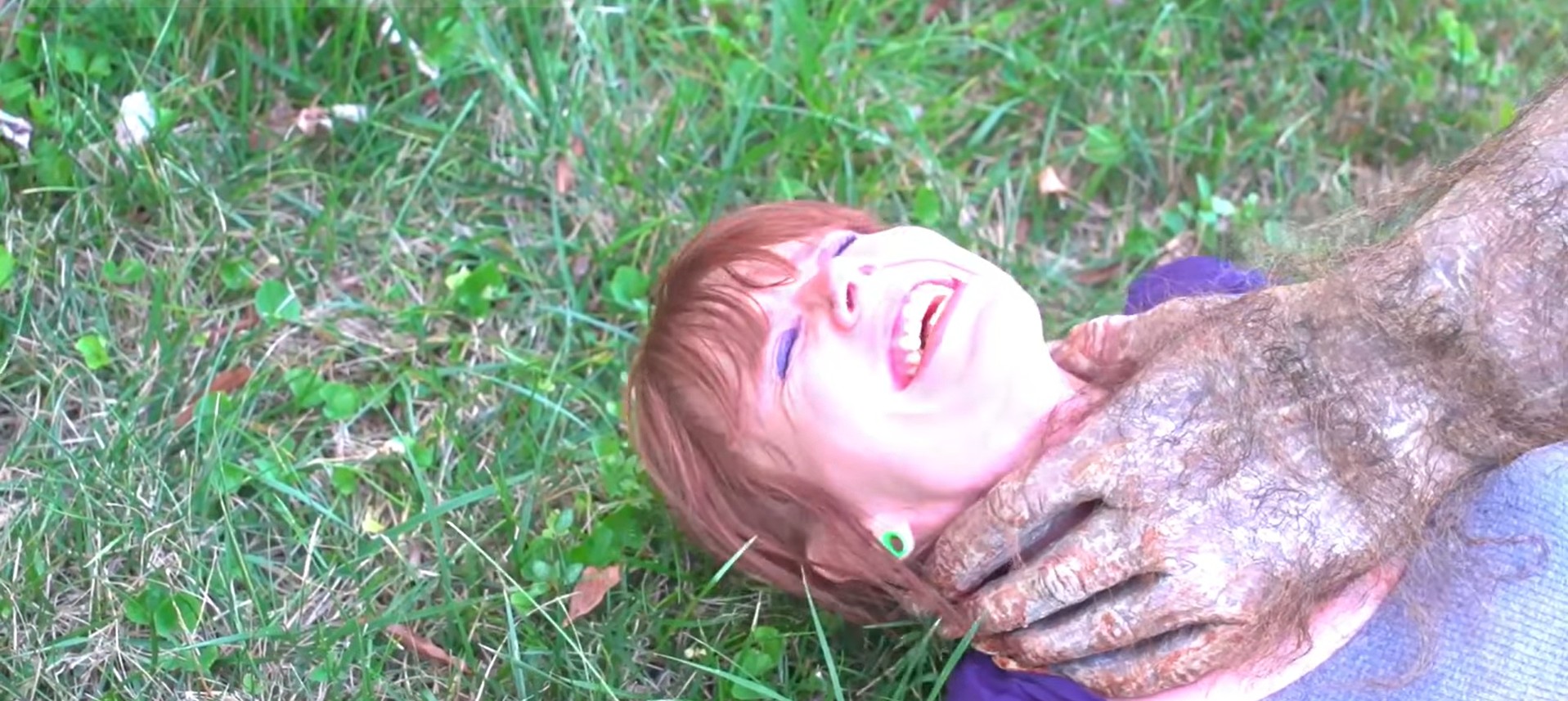
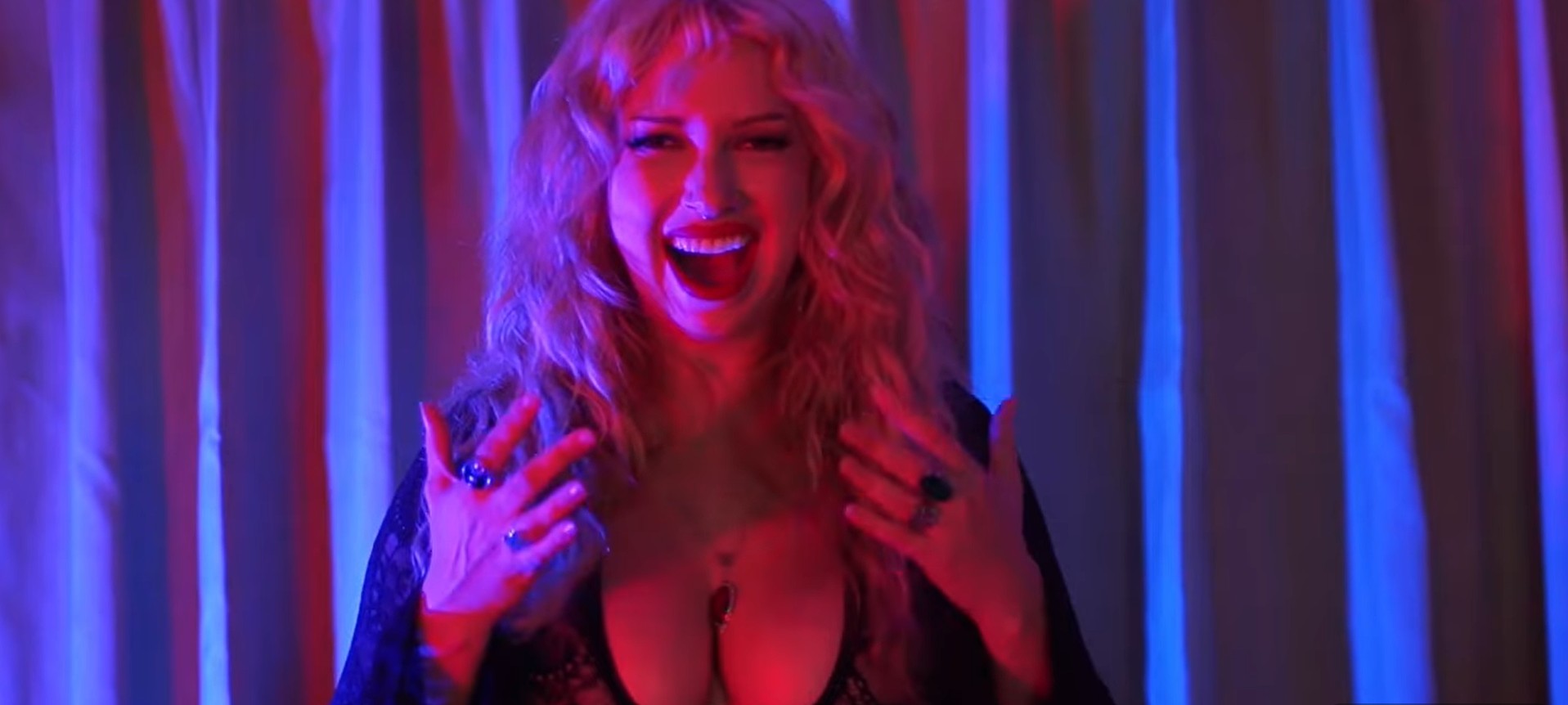
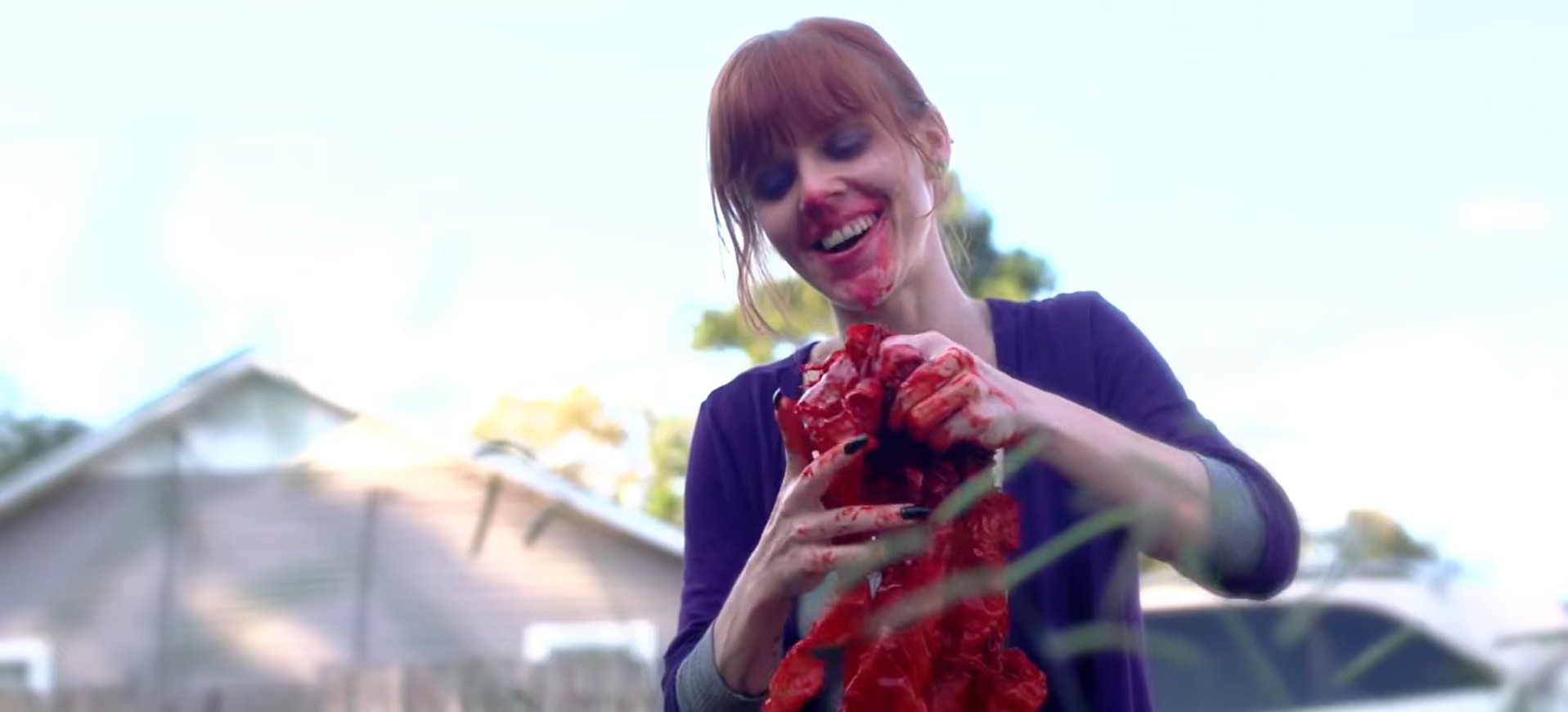
In Doll Town, Darbie is the most popular doll around.  Blonde, beautiful, and busty, Darbie lives a perfect plastic existence.  When her boyfriend Ben wants to plan a surprise birthday bash for Darbie, Tripper, Darbie’s helpful yet gossipy little sister, interprets Ben’s interactions with Darbie’s friends – Danger Darbie, Ditzy Darbie, and Rodeo Darbie – as infidelity despite no evidence of sexual activity, as well no doll in Doll Town having genitalia, and reports back to Darbie with the unpleasant news.   With her perfect world seemingly crumbling down, Darbie pledges to rid Doll Town of her now ex-best friends by taking a big knife to them in vengeful spite, turning her dream life into a spiral nightmare based off a simple misunderstanding and an obsession with contentment, that drives her insane and no one from her friends to boyfriend Ben, to even her sister Tripper, are safe from her accessorial wrath.  

Former, or current depending on how you look at it, alternative adult content creator turned this next generations cult film scream queen, Jessa Flux (“Murdercise,” “Onlyfangs”) co-writes and co-produces her latest venture “Darbie’s Scream House,” a comedy-horror lampooning of Mattel’s Barbie universe.  Flux’s independent film talents hop aboard a legendary name of the same market in Donald Farmer.  The “Cannibal Hookers,” “An Erotic Vampire in Paris,” and “Hi-8 (Horror Independent 8)” filmmaker co-writes and produces with Flux while helming at the seat of the director’s chair.  Together, Flux and Farmer materialize a plastic doll world full of jealousy, rage, scandalmongering, debauchery, and homicidal tendencies.  Crowdfunded through Indiegogo, the campy horror parody.  The 2026 film is a production of Stratosphere Entertainment. 

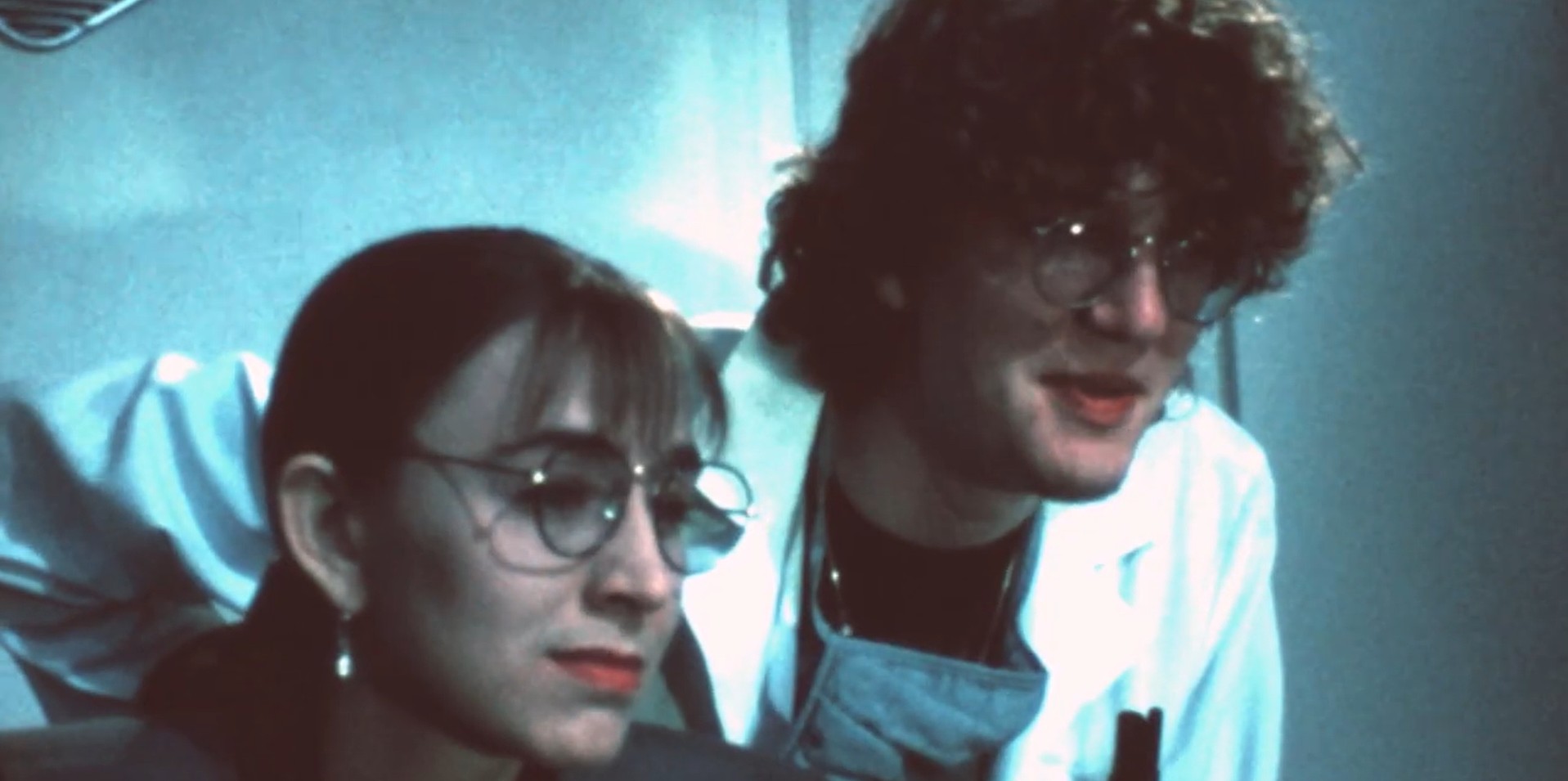
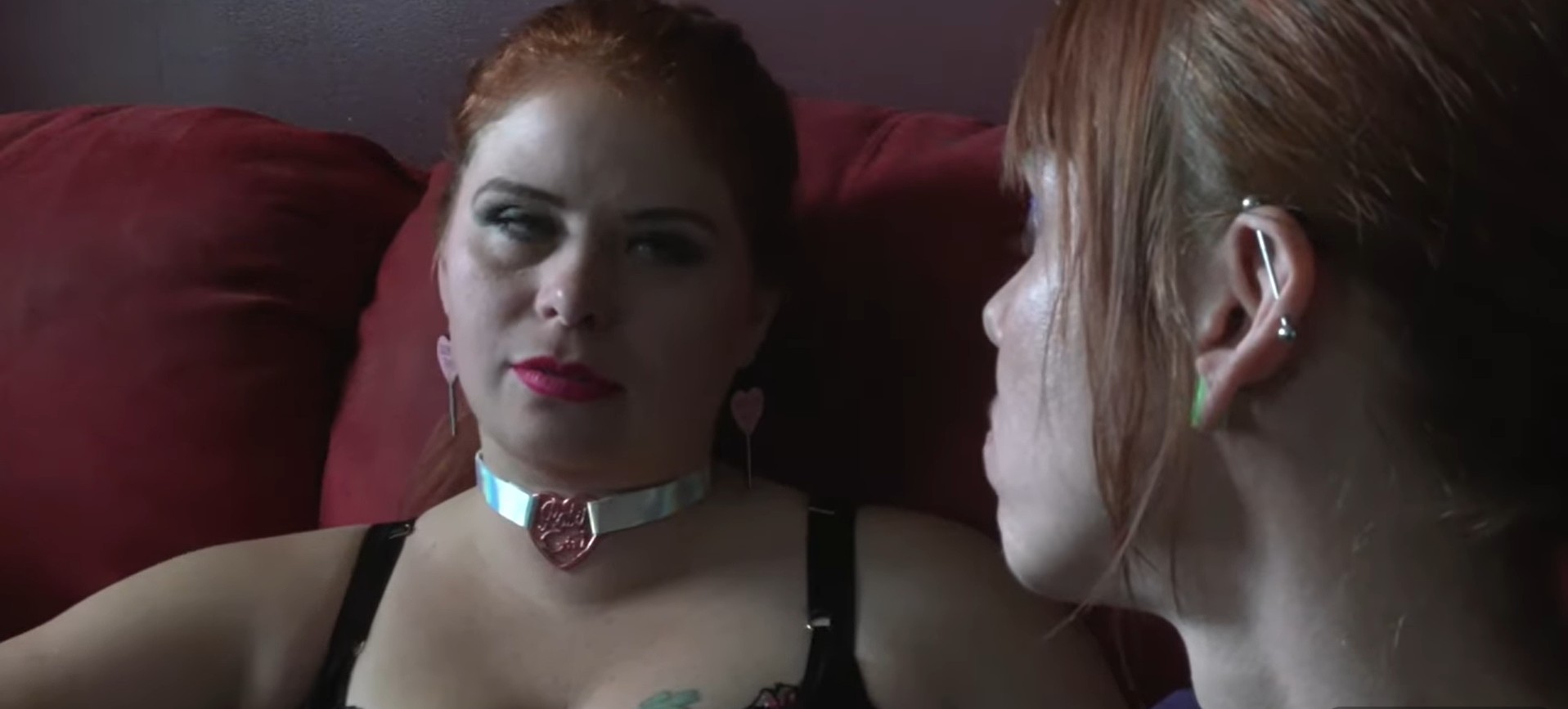
Not only collaboratively writing and producing the feature, but Jessa Flux also stars as the titular character Darbie, the buxom queen of Doll Town with an amiable personality up to a point.  That point is when boyfriend Ben comes under the scrutiny of Darbie’s nosy, troublemaking sister, Tripper.  Claude D. Miles has collaborated with Farmer and Flux on a few other projects, such as Donald Farmer’s “Debbie Does Demons” and “Scream Queens Weenie Roast,” and between Flux and Miles, their rapport doesn’t seem forced as it’s flexed to work as comedic love interests in a parody setting.  Ana Xaden, another indie alternative horror actress, also has worked with Farmer, Flux and Miles on “Scream Queens Weenie Roast” from the year prior, turning the trio into a regular entourage for the “Cannibal Hookers” director.  Xaden also busts out along with Flux as the two become elementary with their dialogue, by that I mean their conversations, whether written in the script like this or just the style of acting incurred by spontaneity upon filming, has an artificiality to it with monotonic delivery and exposition.  Funny thing is, you only really see this flat conjecture between Darbie and Tripper, and maybe even a little bit from Ditzy Darbie (Ashleigh Amberlynn, “Night of the Dead Sorority Babes”) but that’s more expected because of her dunce character.  Ben conversing with Beach Blanket Ben (Joe Casterline, “Shark Exorcist 2”  Unholy Waters”), or any other minor male character, has more natural back-and-forth without any fabricated flavoring, and it’s curious to think that maybe “Darbie Dream House” has a layered depth to that nuisance that speaks to the fake talk and gossip associated generally around women and men letting it, generally again, hang all out.  The cast rounds out with Mel Heflin (“Scarlet Rain”) as aggressive lesbian Rodeo Darbie, Fallon Maressa (“Bloodrunners:  Vampire Wine”) as Dream Date Darbie, and Kasper Meltedhair (“Hooker with a Hacksaw”) as a Doll Town reporter with Kimberly Lynn Cole (“Bloodthirst”) listed in the credits but her scenes cut and placed in the special features’ deleted scene. 

This is not one of those This Is Not Barbie:  An XXX Parody type of film but “Darbie Scream House” very much cold have been with it’s dolled up and naked-positive female cast, male characters with bad wigs and depraved names like Sleazy Steve, and a premise around creeping sexual promiscuity.  However, blood axe-wielding aggression, reared by jealousy, fill in the gaps to level up a cheap stag production to a barebones indie horror that doesn’t take itself very seriously in this meta-existences for the chief characters who are playable dolls of a young, imaginative young girl but who are also moving autonomous with their movements and affairs that are not sanctioned by Barbie or Mattel for that matter.  “Darbie” is a different kind of female empowering doll but in the same breath lacks the informed judgement of a jump-to-conclusions partner, insecure and obsessive over people and ideals.  “Darbie Scream House” caters to that what if scenario if Barbie didn’t have mental positivity and broke into sociopathic tendencies?  The core of the story is there but does heavily rely on the gratuitousness of Jessa Flux, Ana Xaden, and Ashleigh Amberlynn to carry it over the finish line, yet the shoddy effects, poor acting, and mishandling of the meta perspective sink this Donald Farmer production like cemented pink platform and rhinestone shoes. 

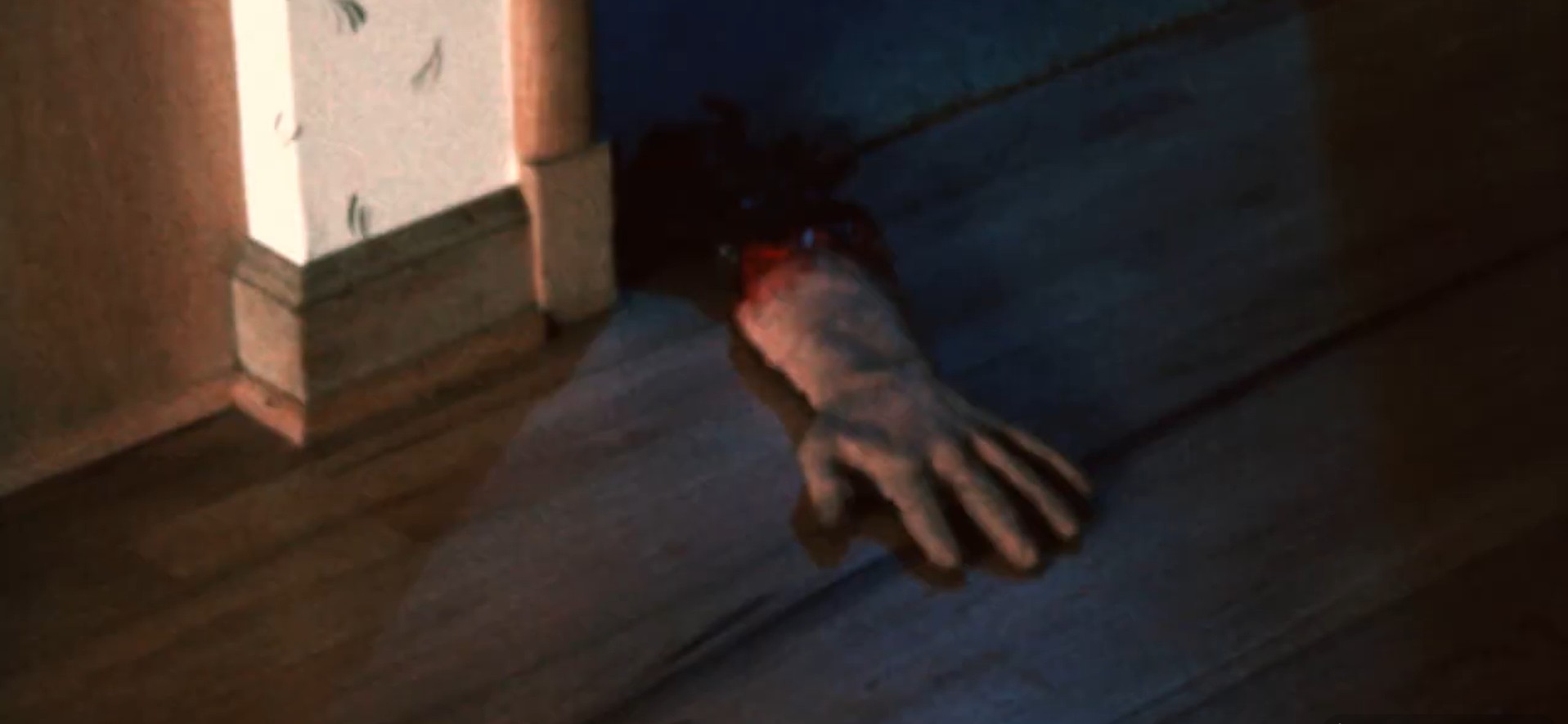
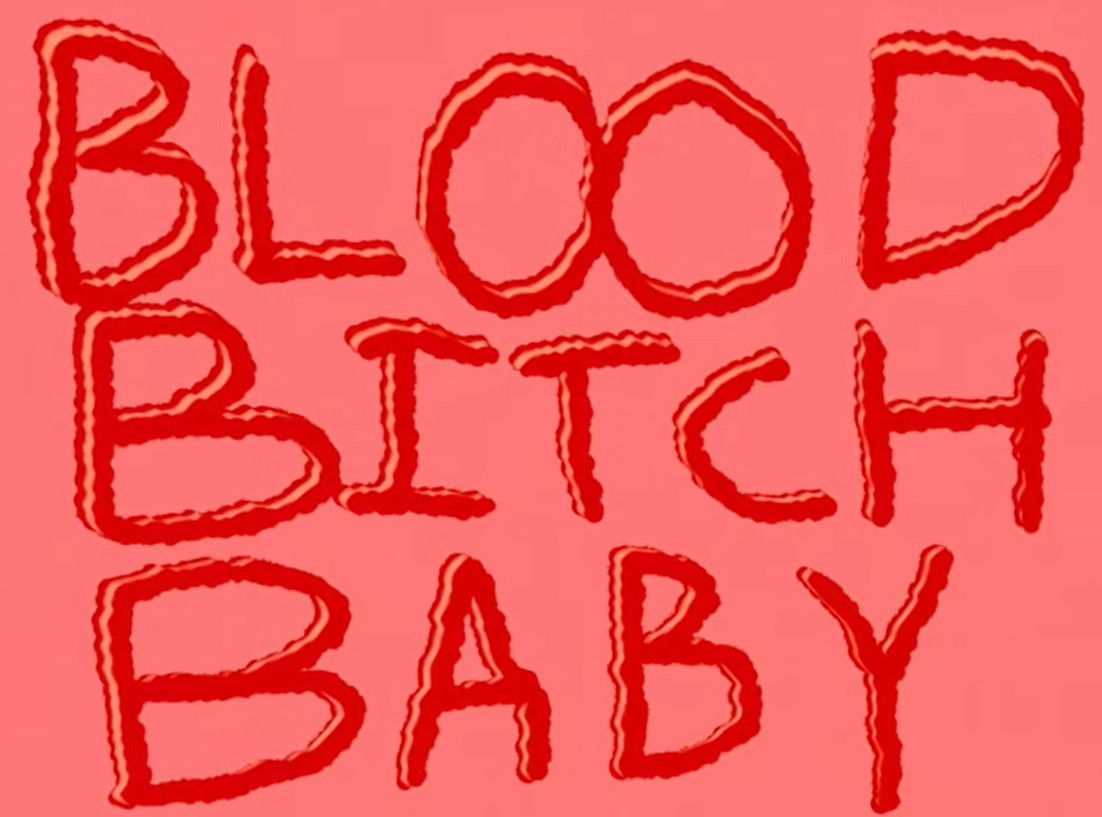
This is a no playtime, you can be anything Barbie movie with a house in Malibu and driving a pink convertible.  This is “Darbie’s Scream House,” a bizarro, alternative universe mined form the same vein as the classic children’s characters, such as Winnie the Pooh, Mickey Mouse, and The Grinch, turned into monstrous villains of your nightmares.  “Darbie’s Scream House” is right up Wild Eye Releasing’s alley with plenty of against-the-grain filmmaking, attitude, and shlocky satire, now available on a DVD home video that’s an MPEG2 encoded DVD5 with 720p resolution.  Even if you’re player + television combo can upscale the quality, the image quality is limited to the commercial grade equipment with passable delineation and detail that offers immersive detail but gets the job done. Lots of the details are washed away also but the use of blue or pink saturating gels that flood tense moments of Darbie’s life on the downspin and much of the exteriors are ungraded, using natural the deflection of natural light to the best of their ability.  The English PCM Stereo 2.0 carries an unbalanced depth that’s inconsistent on keeping characters dialogue level within the shot.  Those closer to the camera often have strength priority with the second person only a step or two back sounding as if they’re a good ten yards away in the closeup-to-medium marked shots.  The recording mic also can’t sustain sounds beyond its limitations, such as screaming that breaks the reproduction into bits of static and distortion at high peaks.  Special features contain a blooper reel, a deleted scene, and feature and other Wild Eye Releasing trailers with the physical package sporting an embellished, AI generated cover, which I aways appreciate the fluffing-up of an indie film.  In this instance, the art doesn’t stray from the truth per se but aggrandizes the finer details quite a bit; however, the nice touch here is the Barbie font used for the title.   The reverse sleeve image inside the clear Amaray isn’t afraid to be gory with a severed head from the story that has been lightly touched up for effect.  The not rated DVD is region free for all players and has a runtime of 75 minutes, enough to satisfyingly slay. 

Last Rites: Jessa Flux’s “Darbie’s Scream House” skewers Barbie into an unperfect, deranged universe of emotional unstable killer toy dolls but leaves much on the table of possibility and has a hard time gluing together an airtight campy story that’s too reliant on the kink than the gore.

Uh Oh Darbie! “Let’s Go Buy “Darbie Scream House” on DVD!

Add This EVIL SOV to Your Halloween Watch List! “V/H/S/Halloween” reviewed! (Acorn Media International / Blu-ray)

Spend Halloween With What Scares You on Blu-ray!

A new soda from the Octagon company is about to hit commercial retail shelves but before it does, voluntary testing is recorded for posterity with test subjects examined as they drink Diet Phantasma, a spirt-infused carbonate drink surely to die for.  In between the mopping up of test subjects, four more tales of terror penetrate the safety of the soul.  Two high school seniors go out trick-r-treating for one last mischievous hurrah only to find themselves trapped inside with Mommy, a matriarchal creature from the afterlife that kidnaps bad children on Halloween and makes them her own kids.  A night of revelry trespass onto the mansion grounds of a past gone necromancer who communicated with the dead and when the partygoers pickup the calls from the dead, a tremendous terror can’t go unanswered nor unseen.  Another group of adult trick-r-treater comes upon an unattended bowl full of obscure chocolates only to find themselves suck into the bowl itself and inside a desolate factory where the candymaker toys with his new fun size ingredients.  A media service aims to protect children with their videography services, especially from an unidentified abductor who mutilates and kills kids, but the service may be doing much more harm than good collecting children’s information as they walk through the store.  Lastly, a waning father-and-son bond over their makeshift Halloween maze turns into a nightmare when a record incantation brings to life each of the maze’s horrifying scenarios from ghosts to zombies, to child-eating witches.

For over a decade, the horror anthology series “V/H/S” has been terrifying audiences with short, original tales that break the scale of reality and enter a new dimension of horror that illuminated the careers of modern horror directors Ti West (“X”), Adam Wingard (“Godzilla vs Kong”), and David Bruckner (“Hellraiser” ’22), to name a select few.  The concept created by Bloody Disgusting’s founder Brad Miska in 2012 has one more installment with a new focus, Halloween.  All Hallow’s Eve already has a spooky air about it with a bit of treat to counteract its trick but in the 2025’s “V/H/S/Halloween,” there’s more sinister means than there are chocolates and sweets for new blood enters the series with filmmakers Bryan M. Ferguson writing-and-director “Diet Phantasma,” Anna Zlokovic writing-and-directing “Coochie Coochie Coo,” Paco Plaza directing and co-writing “Ut Supra Six Infra” with Alberto Marini, Casper Kelly writing-and-directing “Fun Size,” Alex Ross Perry writing-and-director “Kidprint,” and R.H. Norman helming a cowritten script of House Haunt” with Micheline Pitt-Norman.  Miska returns as producer alongside Michael Schreiber (“V/H/S/94,” “V/H/S/99”), Steven Schneider (“V/H/S/Beyond), Roy Lee (“V/H/S/Beyond),, James Harris (“V/H/S/85”), Josh Goldbloom (“V/H/S/94,” “V/H/S/99”), and Derek Dauchy (“Late Night with the Devil”) making his producing debut into the franchise.  “V/H/S/Halloween” is a coproduction of Shudder Films, Cinepocalypse Productions, Imagenation Abu Dhabi, and Spooky Pictures. 

In true “V/H/S” fashion, the anthological shorts include a cast few would be familiar with, fresh faces for the grinder as each short touches Halloween night in a different, diabolical way than what we’re use to seeing.  The wraparound story “Diet Phantasma” opens with the Octagon corporate COO Blaine Rothschild being escorted into the manufacturing and testing plant devising the experiment.  David Haydn takes charge of his COO character that flashes a false grin but conveys an authenticity directive while doing it that leads a number of testers to their carbonated demise, from a cast comprised of UK and American actors.  In “Coochie Coochie Coo,” mother knows best as minor hooligan high school friends Lacie (“Samantha Cochran) and Kaliegh (Natalia Montgomery Fernandez) embark on their last night of mischief before moving away to college and stumble upon a light-pulsating house where they discover milk-induced deform adults acting like babies and their six-breasted mother has more milk to give!  Cochran and Fernandez are in the shoes of characters you wouldn’t root for as they’re more rulebreakers than young women with healthy goals and desires as they smoke weed, steal candy from children, and overall take life for granted and the two actresses do criminal-type behavior with justice, pun intended.   Underneath Mommy’s unnatural milkers, talk stature, and evil grin, all underneath a white nightgown and bonnet, is Elena Musser’s phenomenally creepypasta take on fictional lore for the short.  The Spanish-language “ Ut Supra Sic Infra” opens with a back and forth between an interrogation of sole survivor Enric and his eye-removed, bone-crushed friends strewn about a medium’s sacred chamber where Enric, detectives, and his lawyer return to unearth what went down that night.  Spaniard Teo Planell runs polar opposite with his centralized character Enric who begins in fear and ends in wicked confidence as the re-enactment of events turns into a repeat of that fateful night.   One of the more unfavorable performance stories is “Fun Size,” a quirky, corporate consuming double entendre that teleports four friends into a human meat manufacturer that turns their smallest body parts into chocolate covered goodies.  Lawson Greyson (“Herman”), Jenna Hogan (“Surviving the Sleepover”), Riley Nottingham (“The Demoness”), and Jake Ellsworth’s (“Party of Darkness”) performances hit the nail of artificiality and not-so-fun sized corniness.  The cringe acting coupled with stilted dialogue will have audiences root for the antagonist, a candy-headed, crown-wearing, suit-sporting supernatural entity named Fun Size provided with his best “Terrifier” like playfully menacing movements by Michael J. Sielaff with “V/H/S/Halloween” not being his first rodeo with the series having played Pale Face & Babysitter in the “Stork” segment of “V/H/S/Beyond.”  “Kidprint” perhaps has the most disturbing and realistic tale of a child abductor and murderer with a storyline set in the late 80s-early 90s.  Stephen Gurewitz (“The Scary of Sixty-First”) plays Tim Kaplan, owner of Kaplan’s video services where parents can record VHS tapes containing their children’s appearance and information in case they go missing for XYZ reason, and the do-gooder shop owner becomes intertwined with the real killer, someone close to him, who has access to all the tapes and all the information needed to indulge his sociopathic whims, a role “Hostile’s” Carl Garrison was born to play.  Last short shows through home video the decaying stability of a son’s bond with his father over a shared interest in what is a natural progression of coming of age with the now teen boy who’s tired of being bullied by his peers for his dad’s obsession over a Halloween haunt maze he builds every year.  Jeff Harms and Noah Diamond are father-son Keith and Zack in the throes of phasing out their once beloved bond because of teenage angst and peer pressures.  That tension and rebinding of affection is interrupted by the sudden personification of their inanimate horror show that goes straight for the throat in a show of supernatural and classically-creaturfied blood shedding within a homemade maze, leaving teenage angst to be wiped up with a mop. 

Like most “V/H/S” installments, each entry has hits, and each has misses, and this first of its kind holiday-themed ‘V/H/S” anthology produces the same effect.  Spanning across decades from the 80’s to the 2000’s with a series no longer cornered by a particular era, each SOV production produces an original tale all of which grab a handful of disturbing and unsettling content, most with a gore edge.  “Coochie Coochie Coo” and “Fun Size” are two good examples with each carrying opposite elements that make horror horrifying.  Though both shorts are my personally my least favorite of the six, “Fun Size” offers that grossly disturbing factor that invades a person’s private parts for candy making satisfaction but the while the story is short and sweet, there’s nothing shuddering about it where as “Coochie Coochie Coo” trades the vulgar gore for another unsettling factor, pure creepiness that feels like one of those cheap survival horror PC games but can jump scare the hell out of you.  “Ut Supra Six Infra,” “Kidprint,” and “House Haunt” seize a more traditional inlaid suspense with a properly encased twist moment, quickly downgrading a tense by calm story evolution to spiral out of control with madness of monsters, maniacs, and mayhem violently gnashing what’s left of a good around the campfire spooky tale.  “Diet Phantasma” is also a neat premise with an evil spirit infused soda under a corporation eager for obedience and mind control, a metaphor for soda companies running the world as we see such situations in other countries where Coca-Cola is the leading provider of clean purchasable water.  Ferguson also treats fans with an homage to Tommy Lee Wallace’s “Halloween III” by riding a similar plot but with trick-or-treat masks that kill children to resurrect Gaelic, or Samhain, sacrifices.  The COO is also seen reading a Fangoria magazine with hee John Carpenter penned off-shoot sequel on the front cover, suggesting further the idolizing connection.

Acorn Media International distributes the Shudder production onto an AVC encoded, 1080p high-def resolution, BD50.  Like it’s predecessors, the imitated and authentic SOV shoots go through periods of interlaced distortions and static snow that simulate the signal interference, tape artefacts, and low quality, low-graded detail and saturation with some shorts elbowing their way into the cleaner digital camcorder era.  No issues with the true compression of the Blu-ray format; audiences will be pleased to see they will get exactly what the filmmakers’ intended, a harried shaky cam first person view that has it’s monsters looking right back at you under a veil of vagueness and to be a hostage to the purposed angles that translate immense fear just out of frame, presented in a widescreen 1.78:1 aspect ratio rather than the organic 4:3 framing for the stories from the 80s to mid-90s with videotape.  The English and Spanish language DTS-HD 5.1 Master Audio has no issue delivering a vigorous and balanced mixed layers of sound depth based on design short that may contain areas of static, a weaker strength, and certainly a lot of screaming that reaches the mics physical limits to capture and reproduce the sound.  Dialogue is clear and prominent but, like I said, lots of screaming and wailing when events turn southward that it doesn’t matter often what is being said when it all just comes out of as chaotic cacophony.  I will say that “V/H/S/Halloween” is one of the better sound designed productions with more attention to the individual layering.  English subtitles are optionally available as well as French.  Special features include a director’s commentary for each short, a behind-the-scenes featurette for “Diet Phantasma” and “Coochie Coochie Coo” that’s is a swing between mostly raw footage during in between shots and some during shots with commentary here and there, a deleted scene from “Kidprint,” “Diet Phantasma” uninterrupted without the cut-to other shorts, “Diet Phantasma” faux commercial, and a gallery for the Ferguson short.  The physical appearances have the traditional “V/H/S” themed skull front and center on its one-sided sleeve art, sheathed inside the plastic of a Blu-ray Amaray.  There are no other tangible accompaniments.  The UK certified 18 film is region B locked and has a runtime of approx. 115 minutes. 

Last Rites: “V/H/S/Halloween” has original spooky tales centered around the holiday but as a collection, this anthology is a mixed bag of often great knee-buckling terror with considerable absurd tailspin that tries too hard to be scary out of the most unalloyed.

Spend Halloween With What Scares You on Blu-ray!

EVIL Pays High Dollar to Hunt, Kill, and Play With their Prey! “Game in the Woods” reviewed! (Jinga Films – Danse Macabre / DVD)

Survive the “Game in the Woods!” Buy the DVD!

After her grandfather’s death, Ash travels through Texas with her brother Ted and girlfriend Sam to his isolated ranch cabin to be the first to claim his most valuable possessions before their Ash’s cousin, Bobbie Jo.  They arrive to find the cabin unlocked but about the same as it always been and go into woods for a little rest and relaxation, enjoying nature with a little alcoholic to supplement the relief of tension between the turbulent odds of Ash’s fast-and-loose ways and Sam’s more strict conservatism in regard to their relationship.  When they found a spray painted, screaming woman with a metal collar around her neck and a bear trap lodged into her ankle, they found themselves in the middle of a hunting party of masked men with melee weapons.  Ran by The Game Warden, Ash’s grandfather leased the land for a deadly game of sadistic clients hunting down non-English speaking immigrants for sport and depravity with their bodies no matter if they were alive or deceased. 

A surely bastardized version of “The Most Dangerous Game,” a novel that’s been re-imagined many times over about one man’s obsessive hunting for man, director Mike McCutchen follows up his debut violent chase thriller film “The Next Kill” with “A Game in the Woods” as his sophomore feature that eases him into the horror and exploitation subgenre.  McCutchen cowrites the script with Drew Thomas, the first feature film writing credit for the “Sex Terrorists on Wheels” cinematographer, and is based off a story by the collaboration between McCutchen and Drew Guajardo set in the boondocks of nowhere, Texas where land is aplenty and help is scarce if cried for.  The 2024 produced picture is a product of McCutchen’s Austin, TX based Fault Pictures and is produced by J.J. Weber (“The Next Kill”) with Andrew Bragdon and Kyle Seipp serving associate producers with Lonnie Seipp in the executive producer role. 

Eleanor Newman and Emily Skeen play the lesbian couple Ash and Sam and I make it a point to call out their characters’ sexuality because it feels inherently important to the story.  Newman comes to light in the sophomore Mike McCutchen feature that takes her from out of a minor role to a key lead, if not near final girl protagonist, in the unconventional fearful female but rather head-on heroine in “A Game in the Woods.”  Skeen’s more sensible Sam becomes a quasi-damsel in distress without the distressing part but tries to formulate plans on the fly to escape her demented captors.  Ash and Sam have a palpable troubled relationship like oil and water but find themselves commingling when the right sadistic additives are involved, spearheaded by the apathetic Game Warden from John P. Crowley who also finds himself in a more visible and prominent principal role.  Crowley’s Game Warden harnesses a Bill Moseley energy and sarcastic tone but not in a carbon copy way that adjusts just enough to make confident and cocky Game Warden is own.  The lesbian portion of Ash and Sam does feel engrained into the narrative, especially with two women with shortened names for Ashley and Samantha but it also implies a male identity, as if equal sex.  All the women in the story have a common them about them too, they all have tenacity and a fighting spirit from Ash and Sam’s battling Crowley and the masked hunters to the captured women who fight and kill, to even Ash’s cousin, Bobbie Jo (Grace Robbins), who joins in on the offensive fight for survival.  There are zero helpless women, which is an amazing elemental theme and characterization.  As mentioned, all the male hunters wear masks, hiding themselves behind theiran masks, and the hunted men are tied to an object, make poor decisions, and just have no fight in them.  Even Ash’s brother Ted (Jamison Pitts) doesn’t put up resistance when confront and is more of the farting, comic relief.  Aside from the Game Warden, the male presence is weak charactered by far.  The hunters and the hunted fill out with Gary Kent, Steve Wilson, Kevin Corn, Caroline Schmitt, Doug Field, Scott Kimbrough, J.J. Weber, Ray L. Perez, Kyle Seipp, Yane Carvalho, Lonnie Seipp, Morgan Faber, and Michelle Mendiola with Lloyd Kaufman (“The Toxic Avenger”) making a cameo appearance. 

Working on one’s relationship with their partner usually takes a time, some self- reflection, or maybe even a little therapy.  For Ash and Sam, they come together be means of violence, tossed into the throes of their grandfather’s ghastly involvement in man’s flawed thirst for the cruel and unusual sadism, and though there’s never a come to Jesus epiphanic moment that they can overcome anything, the blood-soaked trial by fire is proof enough.  McCutchen immerses the women, and explosive collar device and spray-painted prey, into a whole new world of hurt in Earth’s backyard.  The clandestine organization the Game Warden works for laces are slightly untied and unkempt with the full scope of their national, maybe even international, chapters of a snuff wonderland where murder is king and nearly anything goes from chopping up bodies to molesting corpses.  McCutchen brings enough gore to the table without it being over gratuitous and overkill, literally.  Exploding heads, a chainsaw eviscerated torso, body parts strewn here, there, everywhere are what to mostly expect as the game devolves with the hunters becoming the hunted as the emotional depth is quickly pushed aside for the conflict ensued rising action, leaving no time for Ash and Sam to master their relationship troubles as the spider never contemplates life when winged food is snared in it’s web. 

From Danse Macabre and Jinga Films LTD comes “A Game in the Woods” on region free, R-rated DVD.  Encoded with MPEG-2 compression onto a single layer DVD5, the film is presented in with an upscale 720p resolution and a widescreen 1.78:1 aspect ratio.  Basking in the warmth of a dessert brown and tan, Cinematographer Zedrick Hamblin DiMenno opts for a natural approach aesthetic that focuses heavily on the medium-close to extreme closeup shots of gory bits and pieces of tear away flesh.  There’s nothing too terribly stylistic to note with only a hint of television glow and a momentarily use of key lighting with interior scenes.  Compression encoding goes without a hitch that captures image reproduction just find for viewing pleasures, losing only some minor background details of blended foliage and objects viewed from afar.  The English audio formats include a PCM stereo 2.0 and a 5.1 Surround.  The surround sound mix will be the preferred option dependent on your audio setup as the environment layers diffuse evenly through the back and side channels, leaving dialogue and proximity action, such as the kill scenes, to translate with full-bodied effect to squeeze out every squish and squirt from the practical effects carcass.  There are ideal pitch, tone, and range with the clear and prominent dialogue without any underlining interference or hissing effect through the clear, digital recording.  English subtitles are available for selection.  Aside from the feature trailer on the main static menu, there is no other encoded bonus content.  Though the movie is engaging enough through evisceration through torture and there’s a a glimmering theme of women empowerment, if I saw this DVD on the store shelf, the cover art isn’t attractive enough to pickup with its dark imagery of a shadowy hunter drawing his bow toward something off scene.  The façade doesn’t offer a flutter of fancy and there’s no other physical features to warrant a second glance if physical media shopping.  However, give this region free film a once over and there’s a solid film underneath’s it’s dull shell. 

Last Rites: Despite the run-of-the-mill, uninspired DVD cover, check out this sadistic Jinga Films and Danse Macabre “Game in the Woods” where the hunt is solely for the thrill to kill.

Survive the “Game in the Woods!” Buy the DVD!

EVIL Sleeps with Women to Anticipate the Antichrist’s Arrival! “Violent New Breed” reviewed! (Visual Vengeance / Blu-ray)

“Violent New Breed” is a violent Visual Vengeance video available now!

The city of New York is under siege by a new drug as the narcotic Rapture sticks in the arms of his addicts, leaving them mindless and helpless to the effects.  At the head of the snake, a demon race known as Breeders are responsible for trafficking Rapture across the city.  Jack and Steve are part of a covert government operation well versed with the Breeder’s stimulation scheme of the junkie community. Going undercover at a Breeder establishment front, Jack concealed effort is blown and he falls to the Breeder’s vile ways, leading partner Steve, along with Jack’s teenage daughter Amy, down in the underbelly of the Breeder lair where cyborg servants are constructed and human women are led to breed more demonic spawn, one in particular in plan to be the birth of the antichrist.  In a hellish, NYC basement, amongst viscera and body part leftovers, Steve and Amy must complete the mission and stop the antichrist from reigning hell down on Earth. 

Independent horror filmmaker Todd Sheets has become a master of the microbudget horror scene since the mid-1980’s.  His evolution began with humble shorts, such as “Blood of the Undead” and “Dead Things,” with the latter being re-imagined by Sheets a decade later, and those early years really sowed the seeds of his behind-the-camera love for extreme and outrageous gore and horror as he creates low-budget horror through the years a rapid, breakneck pace, releasing titles such as the lycanthropic “Moonchild,” the anthological horror “Hi-8 (Horror Independent 8) that brings eight of the best indie filmmakers together to tell their tales of terror, and “Clownado.”  Yes, “Clownado” is, you guessed it, a tornado swirling with murderous clowns in it’s vortex.  My personal favorite has always been “Dreaming Purple Neon” for its off-coloring performances and survival-esque storyline with demons and drugs.  “Violent New Breed” is in the middle of his career having been released in 1997 with Sheets gaining traction on multiple filming locations, employing more principal and supporting cast members as well as an abundance of extras, and upping the violent tone and degenerate microcosms that transport viewers to seedier and deadlier worlds.   “Violent New Breed” is written and directed by Sheets under his early production label, Trustinus Productions, securing him a producer credit too.

Sheets has never been the type of filmmaker to follow conventional guidelines when it comes to his characters, often switching them around or executing a red herring to flesh out the real protagonist or anti-hero.  “Violent New Breed” plays into the former with a switcheroo of the principal protagonist, initially beginning with Jack going undercover and infiltrating the Breed’s strip club bar used as a front for their demonic dealings and ending with partner Steve taking the antichrist to the finish line.  The audience will get pretty far and involved with Jack’s life as he struggles with his divorce and custody of daughter Amy (Rebecca Rose).  Mark Glover, who has worked with Sheets on “Bloodthirsty Cannibal Demons” and “Zombie Bloodbath 2,” lands the subconscious weight of personal strife as he inevitably becomes the lone cop sheep in a den of demonic wolves that leave Amy fatherless.  That’s when Nick Stodden (“Clownado”) steps into the fold as Steve.  Steve’s not terribly present in the fist half of the film but is thrust into the Breed labyrinth by duty and by promise to his partner to keep Amy safe.  Strodden plays an average hero with Steve’s bravery in plenty of supply, but the character lacks the hand-to-hand combat skills or weaponry for a government agent trained to deal with supernatural killers.   Embracing entirely Asmodeus, the slick-rick head honcho of the demon hierarchy, is “Moonchild’s” Dave Miller who rather dons the nice suit, cocky attitude, and twisted demon leader suitably despite some reckless decision-making faux-pas moments that ultimately cost the character everything he’s worked toward.  The characters a mostly filled in with little human survivors of the foreboding infernal uprising, such as with Tamara (Jenni Geigel, “The Shivers”) and Trixie (Becky Stodden, “The Shivers”) who find themselves caught in the middle, and with Rod Will (“The Shivers”), Joel Hedge, Jody Rovick (“Prehistoric Bimbos in Armageddon City”), and Andrea Ureno as numerous demons, even one that has a carcinization lower body while still resembling a humanoid at the top-half with protruding mandibles, an absurd radical efforted pulled off successfully by Sheets and his limited budget. 

Sheets’ vision has always been larger than his funds, but the ambitious indie horror filmmaker can’t be contained or constrained by the size of his wallet and the size of his heart for the genre that inspires his creativity.  “Violent New Breed” epitomizes that Todd Sheets ingenuity and the image of a horrifying tomorrow with a large cast, lots of blood, and a striving story set on the streets of New York City while not actually taking one step in the Big Apple.  Yes, “Violent New Breed” is completely filmed in the Midwest, more specifically in Sheets’ hometown and state of Kansas City, Missouri, but the urban jungle is sold through the editing with interjected NYC cityscapes. However, none of the action really happens on the streets but in enclosed bars, basements, and backalleys that could sell to be anywhere, USA. Like many other Todd Sheets productions, there’s not a ton of backstory to chief characters, such as with Jack and Steve’s covert company of infiltrating and obliterating Breeder operations in what is considered an off-the-books undertaking, not recognized officially, yet the pre-apocalypse of the Breeders’ mission isn’t worth the money or resources to warrant the assignment more than two men. Breeders also outweigh hundred-fold, have abilities to invisible-phase, and have an army of Cyborgs all with the influencing poison on the streets to control most of the human population. Sheets sets up a David vs. Goliath narrative without much fight in the heroes and heroines with the Breeders’ shortcomings breed essentially from them tripping over their own shoelaces by not taking advantage when advantage appears opportune. The heroes’ dumbluck constantly and consistently happen through the film and becomes tiresome to watch weak torchbearers fumble to save all of humanity against domineering supernatural terror from Hell!

‘Violent New Breed” gets a violent-illustrated new release from Visual Vengeance. The new Blu-ray glorifies Sheets’ SOV artistic style through an AVC encoded, 1080p high-resolution, BD50. The precursing title card warning of the film’s technical imperfections through commercial or economical equipment, a wonted service by the Wild Eye Releasing’s SOV label, are not egregiously touched up but rather accentuate a cleaner, meaner version for show, presented in its original pillarbox full screen 1.33:1 aspect ratio. The world-wide debut Blu-ray contains the director approved transfer of the SD master tape elements. The faded details incline toward a warmer tone that almost seems ablaze with a glowing heat lamp just out of frame and this also, along with the 720p video, suppresses finer textures with notes of aliasing around character actions. Sheets’ color gels and hazy lighting work to an extent but there’s little pop to the graded coloring. The English Dolby Digital 2.0 Stereo offers more bite than expected out form it’s two-channel output but has some difficulty deciphering distinct layers inside the scene. Dialogue echoes and varies in volume sporadically through the picture with it also melding into the diegetic environment in a less-than-refined sound. However, dialogue does push through to an extent and is discernible with a rock soundtrack scoring through more effectively like a hot knife through butter. There are English subtitles available for selection. Packed with 12 hours of bonus content, Todd Sheet fans will receive a comprehensive look on not only a “Violent New Breed” but as the filmmaker as a whole. Those with older format copies of the film with be familiar with one of three commentary tracks on the Visual Vengeance release that includes director Todd Sheets and actors Nick Stodden, Antwoine Steele, and Becky Stodden. There’s a Tony Strauss of Weng’s Chop magazine commentary and a Visual Vengeance produced 2023 remastered commentary with Sheets and Rob Hauschild, founder of Wild Eye Releasing. Other bonus content contains an interview with actor Jerry Angell and director Todd Sheets, Sheets discussing working with the late “Dolemite” actor Rudy Ray Moore who plays the last-standing city cleric, a behind-the-scenes documentary, a 2023 Q&A session at the Nitehawk Cinema / Visual Vengeance screening, a blooper reel, a behind-the-scenes image gallery, the original Kansas City local news spot, an uncut version of the strip club entrance sequence, Todd Sheets’ 2014 short zombie-western “Fistful of the Undead” from the 2016 anthology “Grindsploitation 2: The Lost Reels,” and the original and Visual Vengeance trailers. Also included are two alternate versions of the film: the DVD version and The Movie Channel’s R-rated cut. Three movies from the prince of one! Now that you’ve gone through 12-hours of encoded content, next stop is the hefty physical content beginning with graphic artist Heavy J’s Ghana-inspired artwork on the pink carboard O-slipcover that unveils inside a more traditional-approach to Visual Vengeance’s orange, yellow, and black, character-compiled primary art for the standard, clear Blu-ray Amary. The reverse side has the original poster art of a blue-tinted negative image of an axe-wielding Breeder cultist. The insert section has a single-sided folded mini poster of the Ghana art, a trifold essay from Tony Strauss with a bio on Todd Sheets, his filmography, and on “Violent New Breed” that also includes behind-the-scene and movie stills, a single fold, cardboard birth announcement for the coming of the antichrist, and a retro sicker sheet. The 114-minute feature is not rated and is region free encoded.

Last Rites: Todd Sheets enlarges an evil urban with an insidious poison coursing through the city, taking women when they please, and bring forth the antichrist and there’s only a handful of ill-equipped humans to stand in their way. “Violent New Breed’s” Visual Vengeance release, packed with extra content and a spiffy physical presence, is a victory for Todd Sheets and all independent filmmakers like him.

“Violent New Breed” is a violent Visual Vengeance video available now!

The Demon Concubine Is After the EVIL Power of Demon Summoning Upon Earth! “Saga of the Phoenix” reviewed! (88 Films / Limited Edition Blu-ray)

Own “Saga of the Phoenix” on Blu-ray from 88 Films!

For 660 years, Ashura, the Holy Virgin of Hell, has used her powers to resurrect demons from the underworld.  With the help of virtuous fighters Lucky Fruit and Peacock from the spirit realm, has renounced her temperamental intentions to use her powers for evil ever again and live beside the mortals under the warmth of sunshine.  When she accidently summons demons on Earth, Ashura is brought before Master Jiku and the Divine Nun to access the damage and reign judgement.  They sentence her to live in cell of the relaxed Buddha for all of eternity, but she persuades them one chance to live amongst the humans for seven days, just enough time to live under and enjoy the only thing she wants, the sun.  The Demon Concubine has a different plan for Ashura.  Seeking her demon resurrection powers, the Demon Concubine aims kill her but with the help of Lucky Fruit, Peacock, and her new human friends, Ashura will battle against the Demon Concubine and her demonic forces. 

“Saga of the Phoenix” is the Golden Harvest produced, 1989 released sequel following quickly behind the 1988 released “Peacock King.”  Based off the Japanese manga “Peacock King” written by Makoto Ogino from 1985 to 1989, the action-fantasy film was codirected by returning “Peacock King” director Ngai Choi Lam (“Riki-Oh: The Story of Ricky,” “The Cat”), aka Lam Nai-Choi, and newcomer to the series Sze-Yu Lau (“Forced Nightmare,” “My Neighbors are Phantoms!”) with “Game of Death” actor Biao Yuen stepping away from writing the follow-up and be more involved on the acting by returning to one of the main roles from “Peacock King.”  The script is from a confluence of Japanese and Hong Kong screenwriters, initially scripted by Japanese manga adaptation to television screen writer Hirohisa Soda and then adapted by Tsui-Wah Wong, You-Ming Leung (“Once Upon a Time in China”), and Sau-Ling Chan, none of whom were involved in “Peacock King.”  Hong Kong’s cult and genre film product Lam Chua (“Erotic Ghost Story, “A Chinese Torture Chamber Story”) serves as producer on the Golden Harvest and Paragon Films Hong Kong-Japanese coproduction. 

Gloria Yip returns as the Holy Virgin of Hell, Ashura.  Having never seen “Peacock King,” I’m not sure what type of temperament Ashura donned in a role where the character seems like one of the main antagonists according to the synopsis, but for “Saga of the Phoenix,” Ashura is joyful, childlike mischievous, and humble and is the center focus between the forces of good versus evil.  Als returning is Biao Yuen, but not in his screenwriter role.  Yuen, known for starring alongside female martial artist and star Cynthia Rothrock in “Righting Wrongs,” reprising Peacock, a fierce spirit realm guardian who befriends Ashura along with fellow guardian Lucky Fruit, played by Hiroshi Abe (“Godzilla 2000”) who replaced Hiroshi Mikami from the first film.  Much of Yuen is taken out of the story while being in frozen captivity by the Demon Concubine, leaving Abe and Yip to better struggle one-on-one connecting in the human world, facing human problem, and accessing the threat from the Demon World.  Yip’s candid antics exact the innocence of a young child like making snarky faces when corrected or obsessing over trivial things like sunshine, and especially when Ashura befriends a small, gremlin-like troll or creature named Tricky Ghost and holding it like a favorite stuffed toy, and this leaves Abe to be the role model, or the parental guardian if you will, stoic in stance and a reasonable thinker for his character.  It all comes off as silly until Ngai Suet and the Demon Concubine enters the frame.  The “The Ghost Ballroom” actress Suet takes on the evilly empowered role armed with seven demon subjects to do her bidding, such as trying to kidnap Ashura, and Suet runs with the role caked in a pale makeup, high pointy eyebrows that open up her eyes, and shoulder-padded dark dress.  Embroiled in the spirit world clash are two mortal siblings in Chin (Loletta Lee, “Mr. Vampire Saga IV”), who saves unintentionally saves Tricky Ghost, and her mad scientist brother Tan (Shek-Yin Lau, “Resort Massacre”) who finds himself in bitter rivalry with Tricky Ghost’s mischief ways spurring some comic relief into the fantastical brew and they represent the workable relationship between man and godlike individuals.  “Zatoichi” series actor Shintarô Katsu is in the role of Master Jiku, “Carmen 1945’s” Yûko Natori is the Divine Nun, and Noriko Arai (“Death Note”), Megumi Sakita (“Bodyguard Kiba”), and Yukari Tachibana (“The Scissors Massacre”) as the three nun warriors to round out the Hong Kong-Japanese cast.

If you’re familiar with director Lam Nai-Choi, then it comes no surprise to you the kind of practical effects juggernaut “Saga of the Phoenix” can become and, in the end, doesn’t disappointment.  Choi often overscales the effort of tangibility, bringing unbelievable imagination and larger than life objects to manifestation without much, if any, assistance from computer generated imagery, and in the late 1980s, that technology wasn’t exactly perfected to what modern cinema sees today with skilled visual artistry and the introduction of artificial intelligence that’s on the verge of possibly shoving itself into the actor pool once the kinks are worked out.  In “Saga of the Phoenix,” the palpable physical presence involved is mostly at the finale third act where good versus evil face off between Ashura, Peacock, and Lucky Fruit and the ravenously aggressive Demon Concubine, the latter transforming like a Power Ranger Megazord into a gray-skeletal winged creature large enough to tower over the heroes and wide enough to swallow them nearly by three times.   Of course, this is not to say there hasn’t been other practical effects along the way which include demons inhabiting dragon statues, high wire acts of characters soaring during fight sequences, and the little mischievous imp, Tricky Monkey, from being a manipulated puppetry that weirdly reminisces Jim Henson’s “Labyrinth.”  The painted optical tricks to render color bolts of energy weaponry are a nice classic touch toward a pop of color as well as creating the inherent superhuman element of the principal players.  For someone going into “Sage of the Phoenix” headfirst without having seen or any knowledge of “Peacock King,” room for the film to standalone is rather thin but not egregiously reliant on the first film.  There’s a bit of recapping at the begging with narrative voiceover and get some clue-ins about the past from the dialogue but there’s still quite a bit unexplained, such as Ashura’s behavior fabled to be a powerful demonic necromancer who has somewhere along the way had a change of heart and we’re not privy to why.  That sense of uncertainly never really goes away through the comedy, action, and laser-firing, high-flying martial arts sinew, that something is innately missing from the story that’s saturated with wuxia themes. 

If looking to increase your bicep’s muscle mass, 88 Film’s limited-edition Blu-ray is weighty with content and it’s only one disc!  The AVC encoded, 1080p high-definition resolution, BD50 is encoded with a cherished updated 2K restored transfer from the original 35mm negative that looks unquestionably majestic on screen.  Vibrant and diffused evenly colors, high decode rate, and flawless textures, there’s nothing to dislike about this release, visually technical.  Deep in the color range and Chi-Kan Kwan’s sundry cinematography that offers vast length shots and a warm neon haze of blue and magenta through tint or gels, with a matted golden peacock rising against the monstrosities of the demon world, “Saga of the Phoenix” resurrects an aesthetic only Lam Nai-Choi could manifest from pure imagination.  The original negative is virtually pristine with no signs of damage or wear to note, nor any compression issues to note.  The uncompressed PCM Cantonese 2.0 mono offers a forward heavy diegetic sound that separate each layer favorably diversified. Clean and clear ADR make for easy discernability, capturing every bit of dialogue despite the post-production mis-synchronous acceptance. Laser action, creature roars, and other detailed measured sounds really give “Sage of the Phoenix” body, depth, and range that makes it an overall A/V highlight amongst its wuxia genre counterparts that tend to omit the smaller particulars of a scene. English subtitles pace just fine and are errorfree in a UK text. Most of the heavy lifting is done by the physical presence of the 88 Films Blu-ray that’s housed in a rigid slipbox and sheathed in a cardboard O-Slip, both containing new arranged illustrated artwork by R.P. “Kung Fu Bob” O’Brien that’s takes the true elements from the film and places them on the cover in a sure-fire canvas of what to expect. The clear Amaray cases also has O’Brien artwork as the primary cover art with the reverse side featuring the original Hong Kong poster art. Along with the O-slipcover, other limited-edition contents include a two-sided collectible art card and a 40-page illustrated book with color pictures and essays from Andrew Heskins (From Panel to Screen) and David West (The Japanese Connection), along with featured Japanese cover art Kujakuoh-Legend of Ashure. If the physical properties were not enough, the encoded content, available on the LE and Standard Edition, will bring this set home as it details with an audio commentary by Hong Kong Cinema Experts Frank Djeng and F.J. DeSanto, alternate footage from the Japanese cut of the film, executive producer Albert Lee discusses the international distribution plan from Golden Harvest Sage of Golden Harvest – The International Connection, an image gallery, and the original trailer. The 88 Films release is unrated, has region A and B playback, and has a runtime of 94 minutes.

Last Rites: Wuxia movies like “Saga of the Phoenix” are no surprise to where John Carpenter found influence for “Big Trouble in Little China” and it’s the director Lam Nai-Choi who didn’t shy away from the difficulties and inauthentic problems of physical effects but the film has its own innate issues with story that downgrade from a saga to just being an epic picture with winged creatures, bright energy blasts, and a lovely Gloria Yip succumbing to age, and status, regression with her Holy Virgin From Hell role.

Own “Saga of the Phoenix” on Blu-ray from 88 Films!